Dining Tables
Dining tables, sized to the room
A bespoke dining table is the largest single object in most schemes and the most photographed. It carries the line of the room, sets the scale of the dining chairs, and determines how the room reads when the room is empty. The standard dining-table dimensions are set against the space — length to seat the household plus guests, width sized for comfortable across-table conversation, height matched to the chair set — and the table is then designed around the brief rather than the brief around the table.
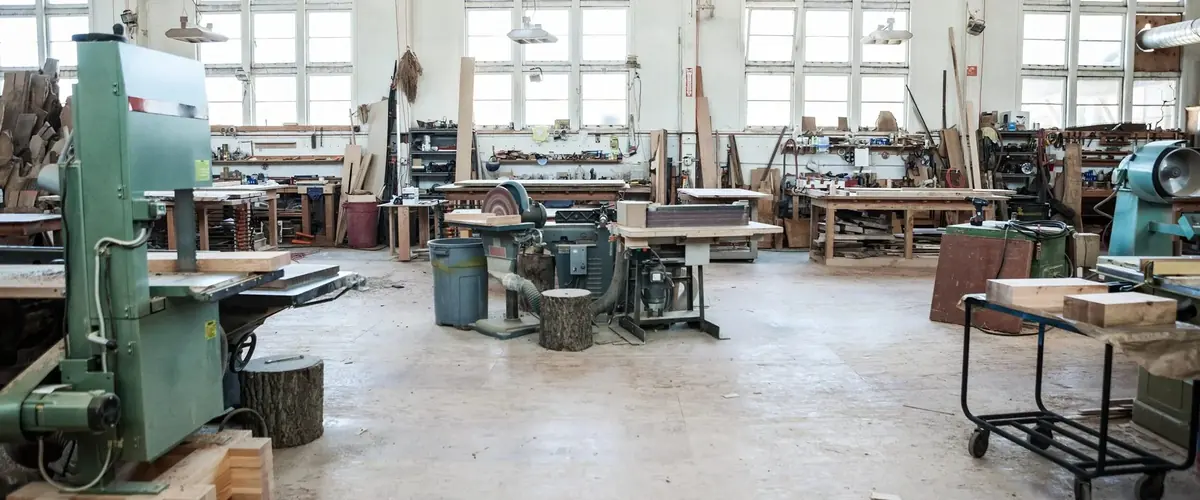
The workshop builds dining tables in any wood, any stone, with or without inlay, fixed or extending. The engineering varies with the top: a single-slab walnut top is built differently from a marquetry top, which is built differently from a stone top. The construction is the same one set out on the casegoods page, with the top, leg and joining specified per piece.
The dining tables we build
Most dining-table briefs land within a handful of established forms.
Single-slab and bookmatched tops
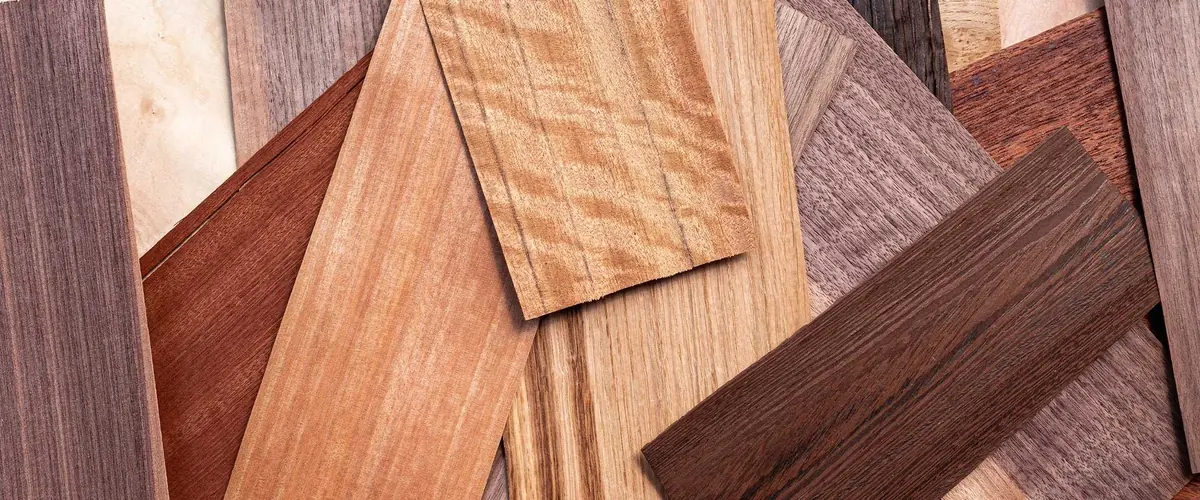
A dining-table top cut from a single slab of timber, or from two slabs bookmatched along the centreline so the figure mirrors across the centre of the table. Single-slab tops are the strongest visual statement a table can carry — the natural figure of the wood becomes the design event. Specified widely in residential briefs where a particular slab is sourced for a particular room.
Marquetry and inlaid tops
Tabletops with pattern work cut from contrasting timber, brass, mother-of-pearl, shell or stone. Marquetry tops range from simple banded inlays around the perimeter to fully patterned tops with sunburst, parquet or geometric figures. Each pattern is cut from veneer, laid into the top by hand and finished flush before the top is polished.
Stone-topped dining tables
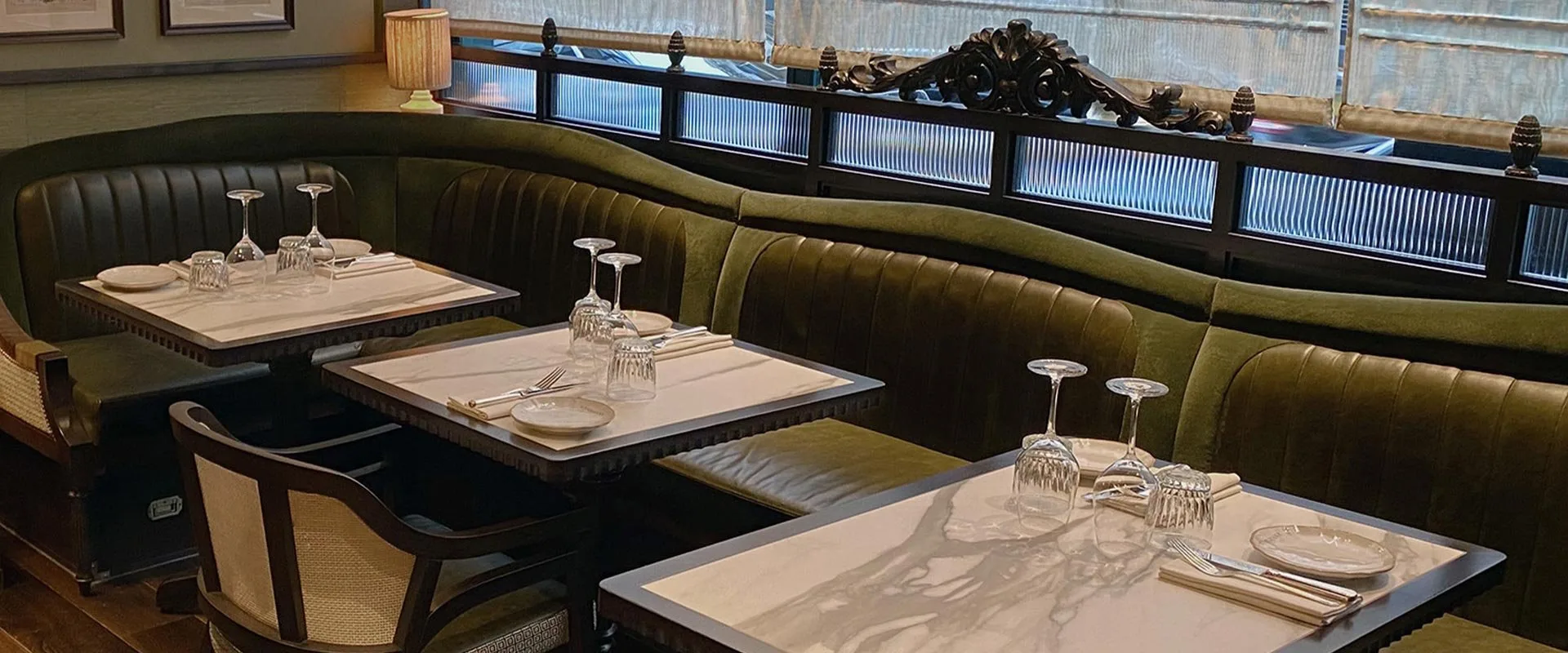
Marble, granite, travertine and onyx tops set on hardwood or metalwork bases. Stone tops are templated from the base, fitted with hidden brackets, and finished with polished or honed edges. The base is sized to take the weight — a 240 cm marble table top can weigh 250 kg — and shipped separately from the top to be assembled on site.
Extending dining tables
Dining tables that extend at the centre with leaves stored under the table or in a separate cabinet. Extending mechanisms — telescopic runners, butterfly mechanisms, central drop-leaves — are specified at design and tested before the top is finished, so the join lines sit flat and the leaf colour matches the rest of the top.
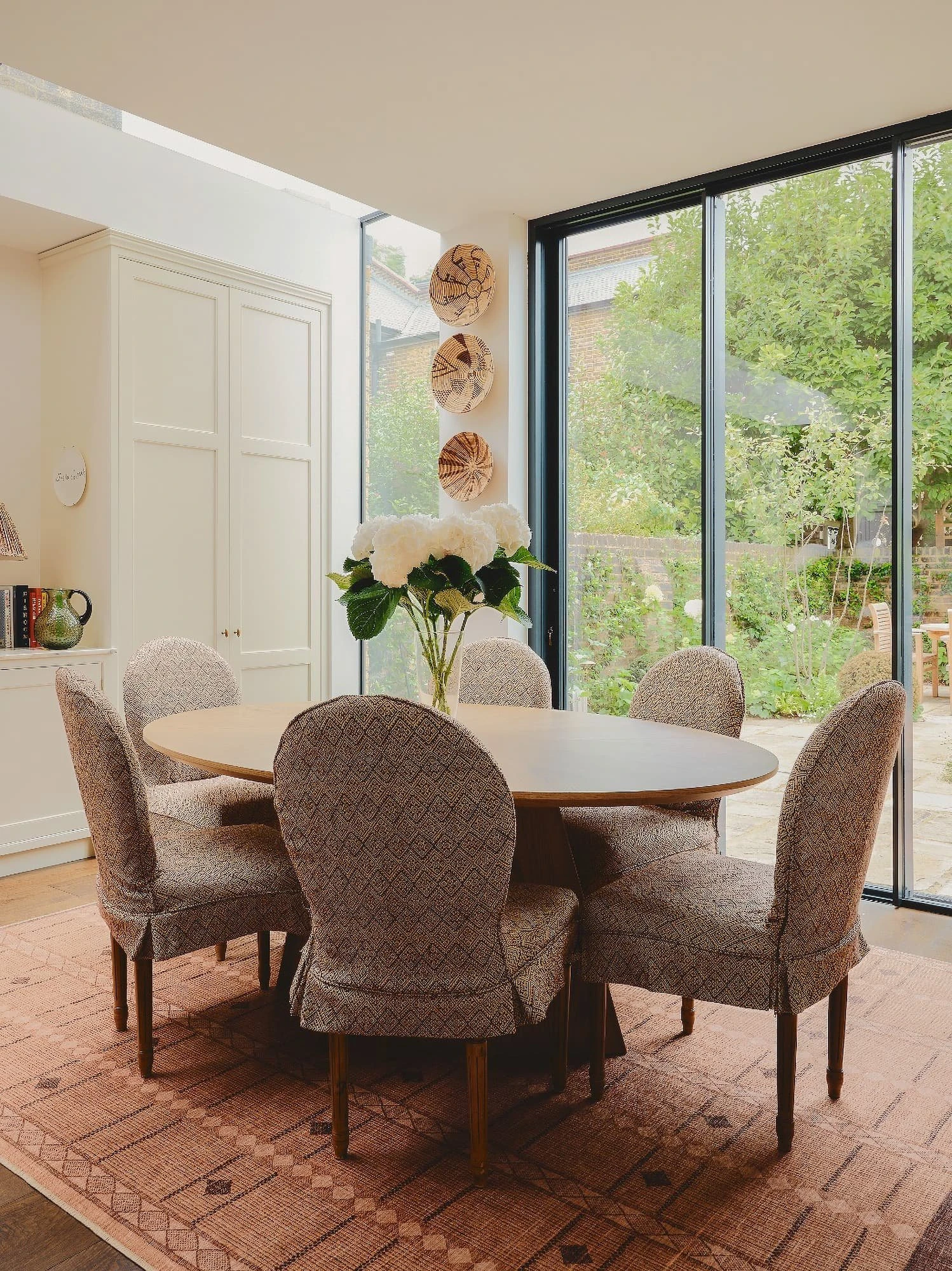
Round and oval dining tables
A round dining table at 130–160 cm diameter seats 6–8 in conversation that includes everyone at once. Oval tables stretch the round form to take more seats while keeping the centreline length-of-conversation feel. Round tops require careful timber selection — quartersawn boards laid in segments to control movement, or marble templated with the grain matched at the joints.
Specifying a dining table
Dimensions are decided against the room and the chair set. A 240 cm rectangular table seats 8–10 comfortably with one chair at each end; the same table at 280 cm seats 10–12. Width sits at 100–110 cm for residential, 90–100 cm for hospitality (narrower is more conversational). Height is 75 cm against most dining chairs.
The top is the dominant decision. Single-slab tops are sourced specifically for the project; the slab is selected with the client, the cut is mapped, and the top is finished to match the rest of the scheme's timber. Marquetry tops are drawn at full scale before cutting. Stone tops are templated, and the underside is engineered to support the load.
Lead times run 10–16 weeks from approved drawings for standard timber tops; sourced slabs and marquetry can extend the schedule depending on the brief. Dining tables ship in one piece up to 280 cm and in sections above that — joined invisibly on site with the join line under the top finish.
Where this sits
This page covers one of the pieces in the casegoods catalogue. The broader range — credenzas and sideboards, drinks cabinets, dining and coffee tables, console tables, boardroom tables, bedside tables, chests and commodes, writing desks, dressing tables and display cabinets — sits under casegoods furniture. The cabinetry behind every piece is set out on the woodwork workshop page; surfaces and finishes are covered under materials.