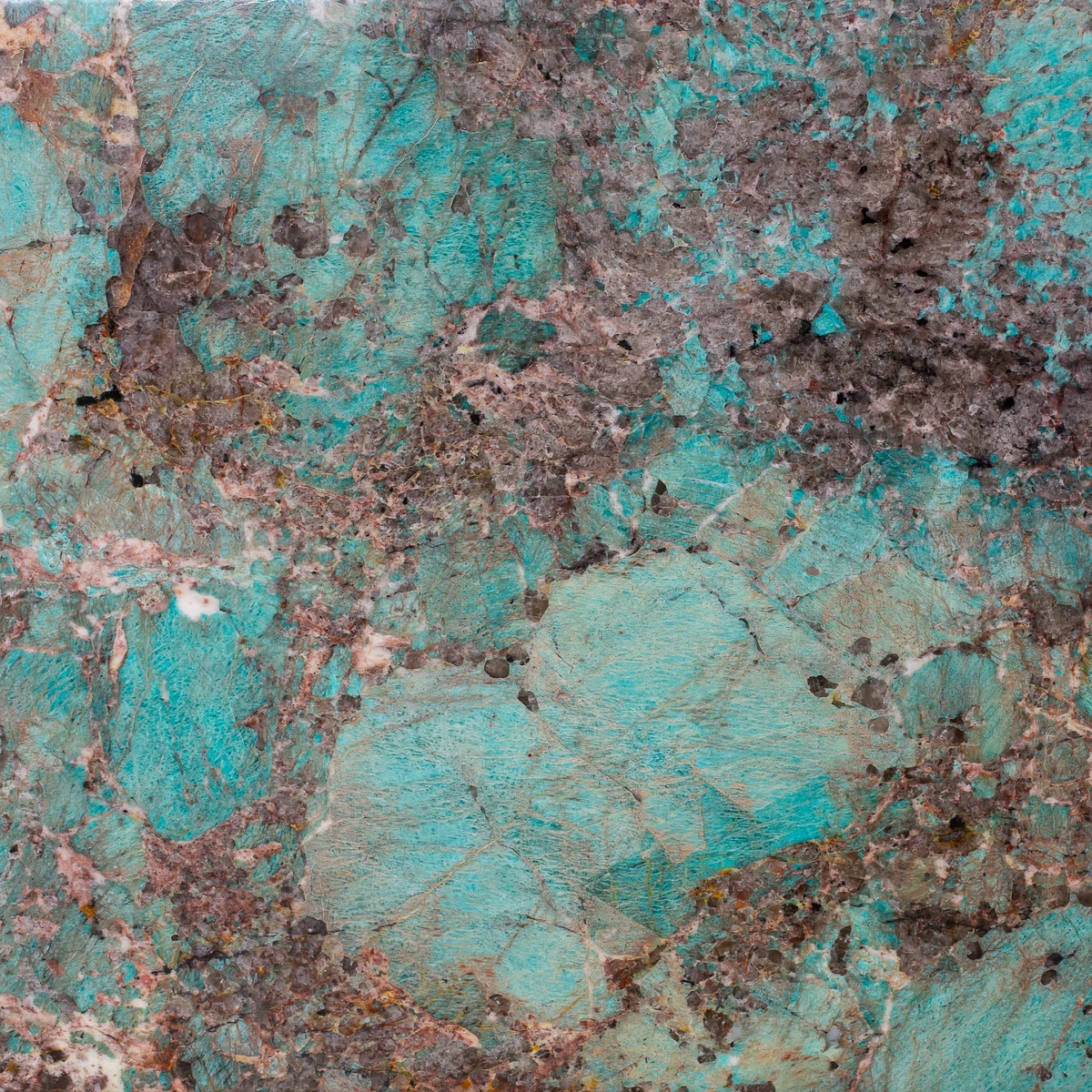
Quartzite
Quartzite is a decorative stone and may be used as an alternative to marble
Quartzite is a metamorphic rock which is almost entirely composed of quartz and created through intense pressure and deep burial during the formation of mountains at convergent plate boundaries. It is twice as strong as granite, highly resistant to staining and scratching when sealed, and resistant to acids, heat and UV rays.
The natural beauty of Quartzite adds an aesthetic appeal to any space that cannot be replicated by other materials. Available in grey, white, beige, pink, yellow, blue, purple, orange and brown with irregular and inconsistent veining.
Quartzite contains 99% quartz, as well as traces of iron oxide, zircon, rutile and magnetite. It features low porosity and water absorption rate and does not etch when exposed to citric liquids. Available in polished (glossy, reflective) and honed (smooth, satin appearance, scratch-resistant) finishes.
Uses of Quartzite
- Kitchen work surfaces
- Bathroom vanities
- Bar tops
- Dining table tops
- Fireplace surrounds
- Feature flooring
Patterns and Colours of Quartzite
Quartzite is a natural metamorphic rock. It begins as sandstone and is transformed by the heat and pressure of mountain-building, until its sand grains recrystallise into an interlocking network of quartz. That geology is the whole story of its performance: a stone that reads like marble but behaves like something far tougher, with centuries of use in hard-working architecture. It is a single natural material, quarried in blocks and cut into slabs, not a manufactured or resin-bound product.
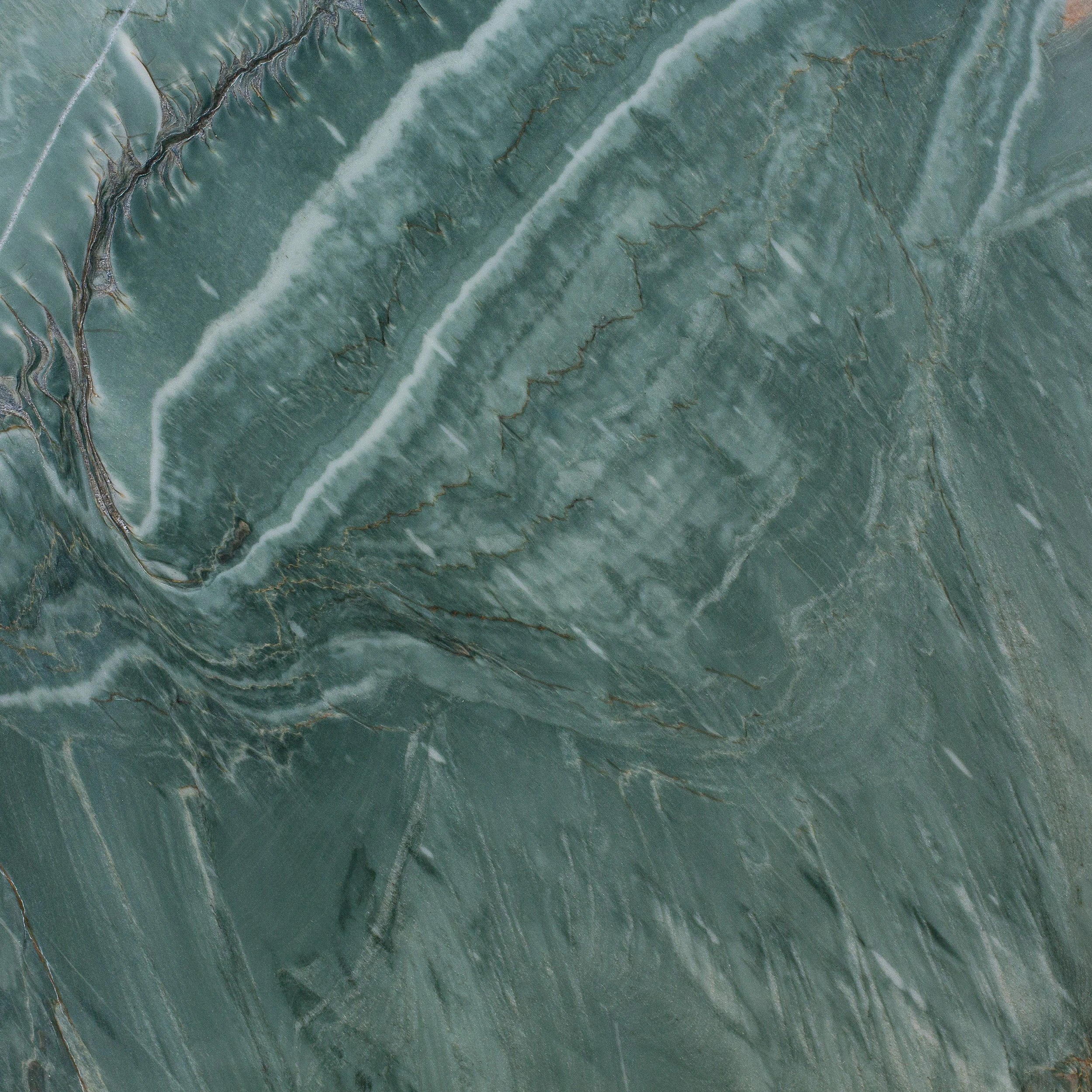 01 / 14Amazzonia Green
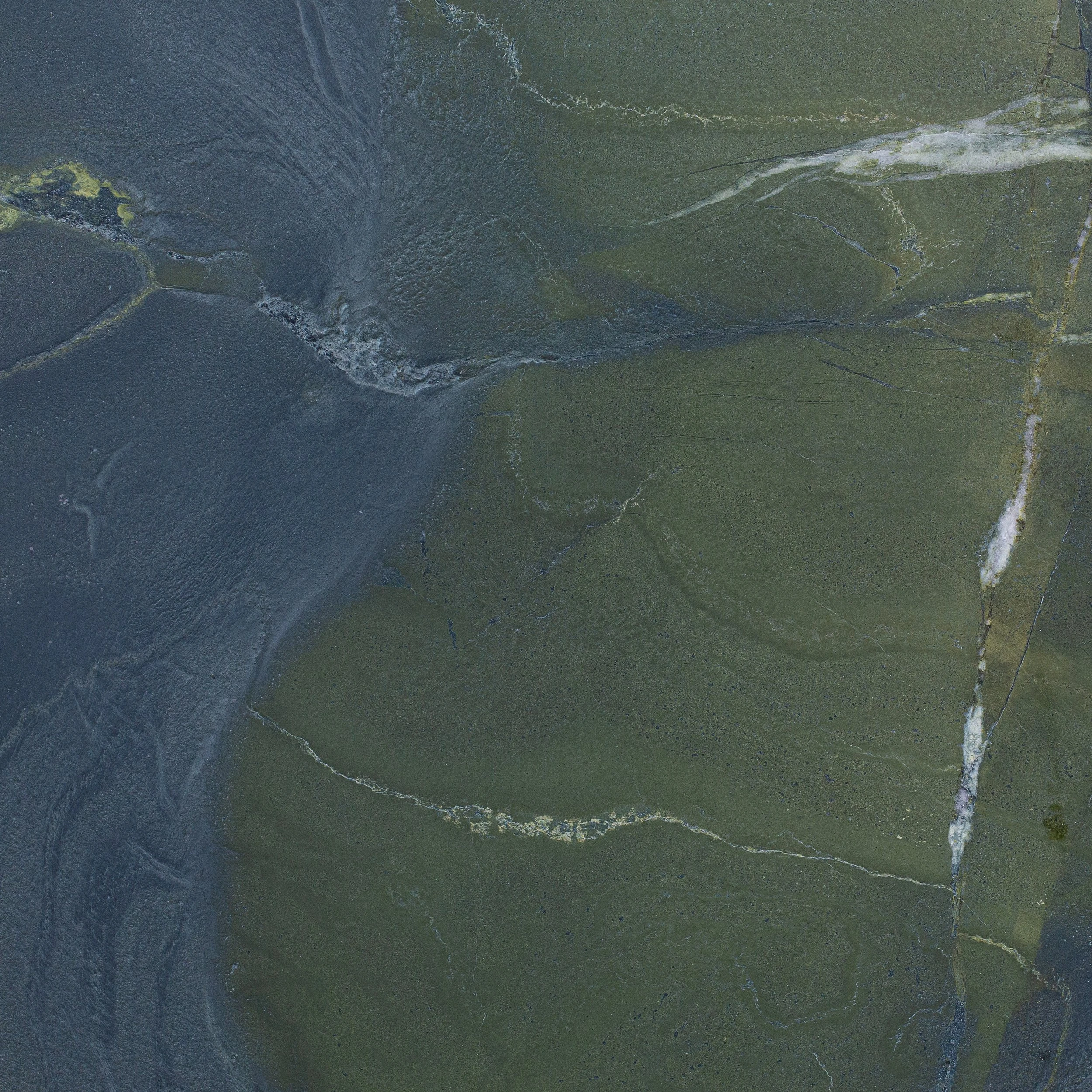 02 / 14
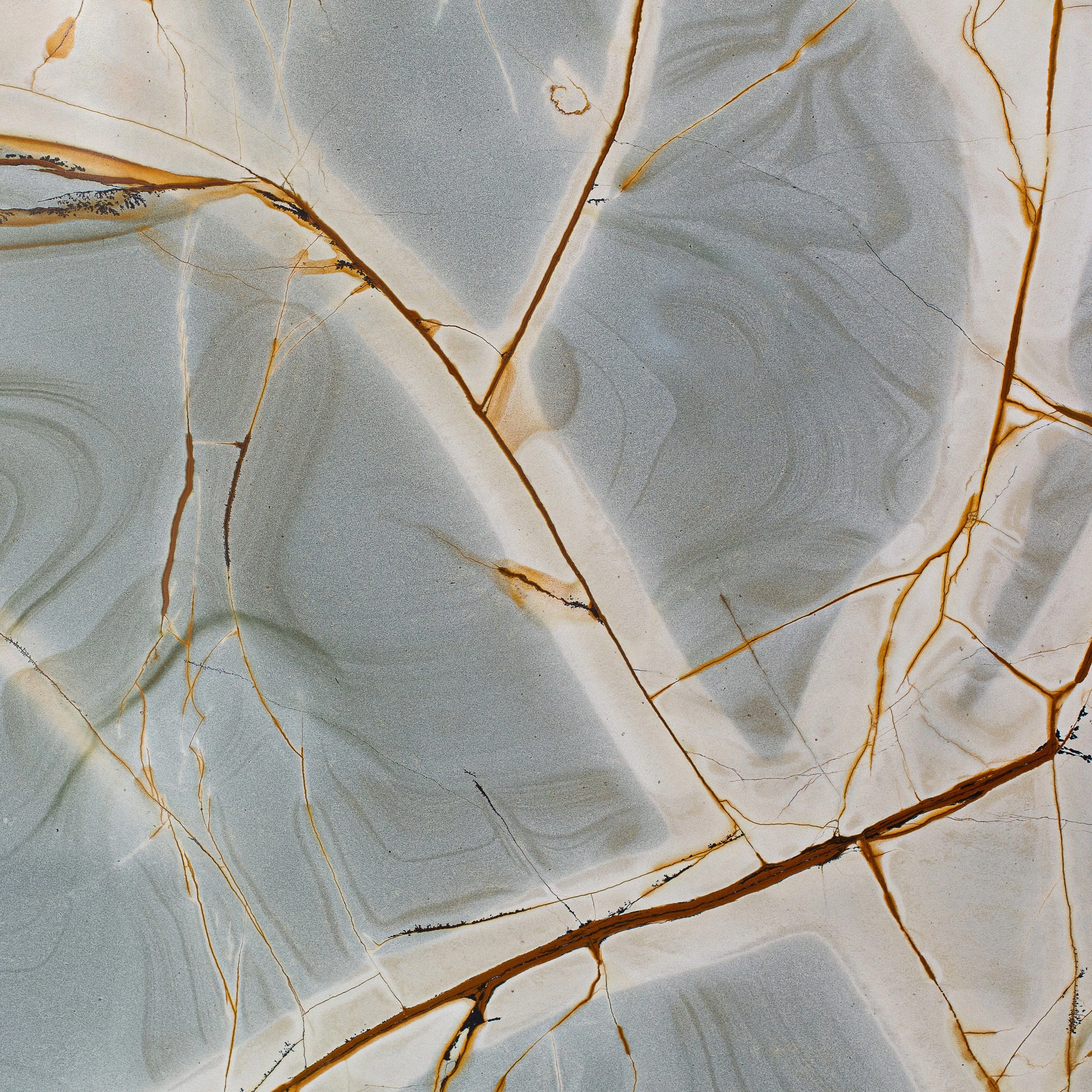 03 / 14Blue Roma
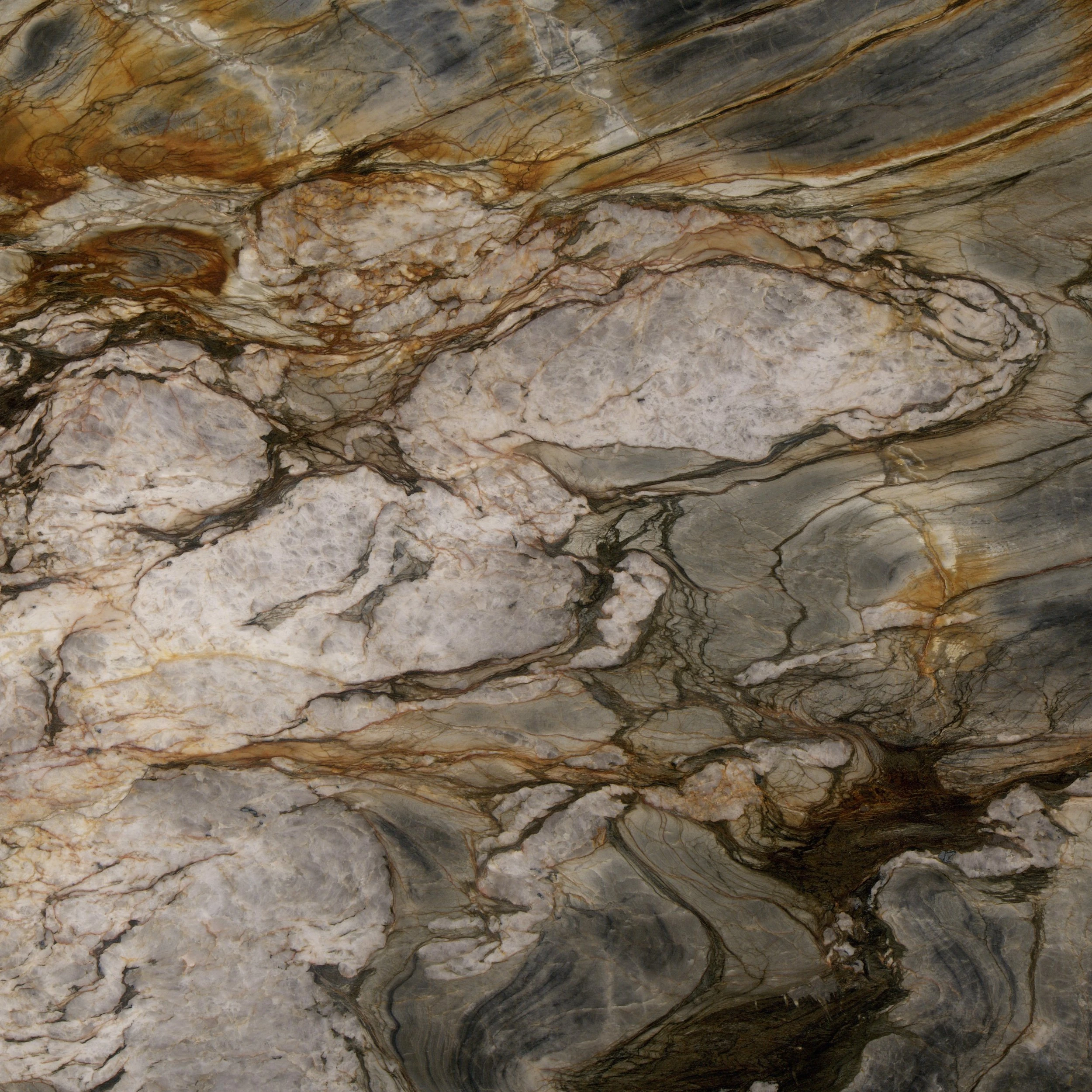 04 / 14Blue Tempest
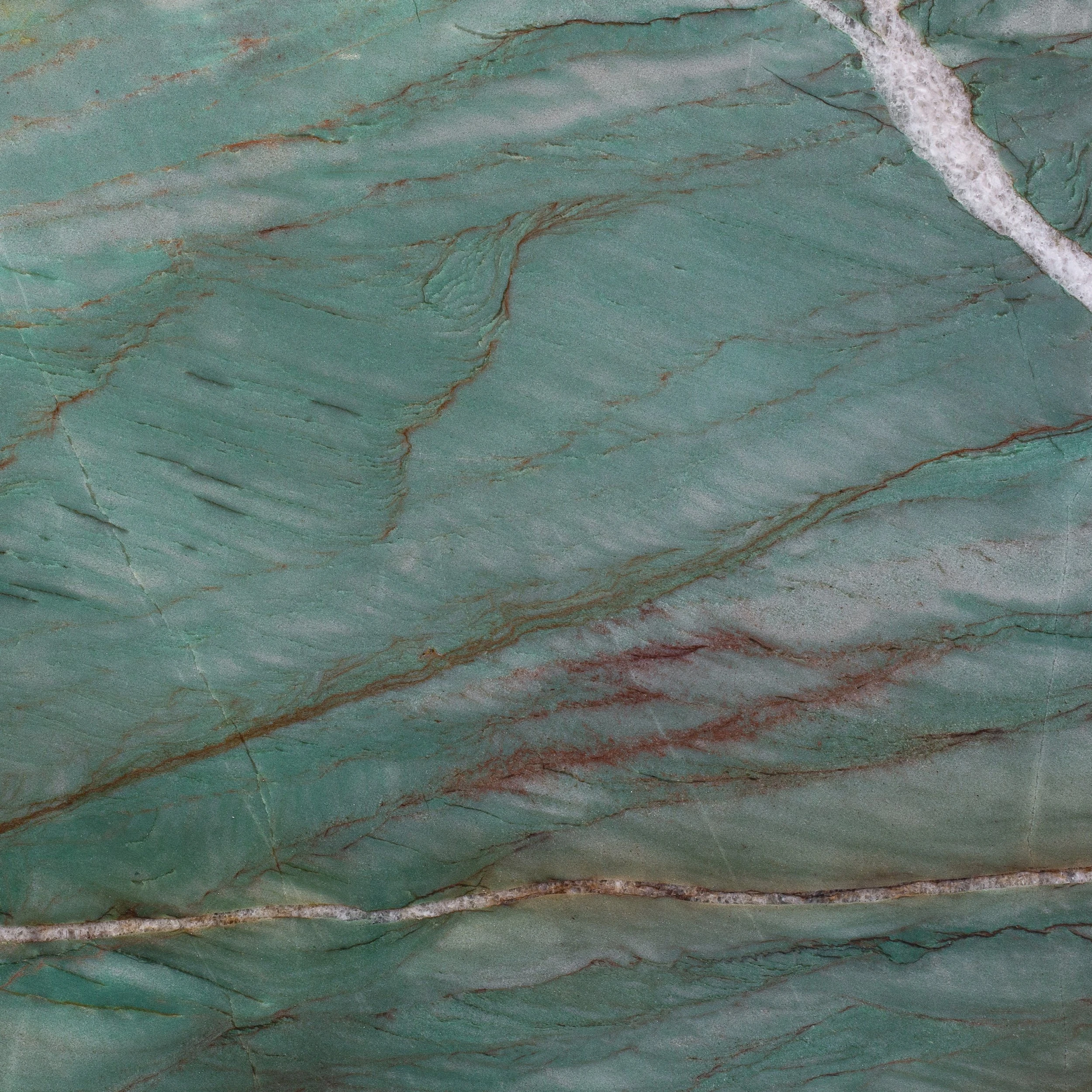 05 / 14Botanic Wave
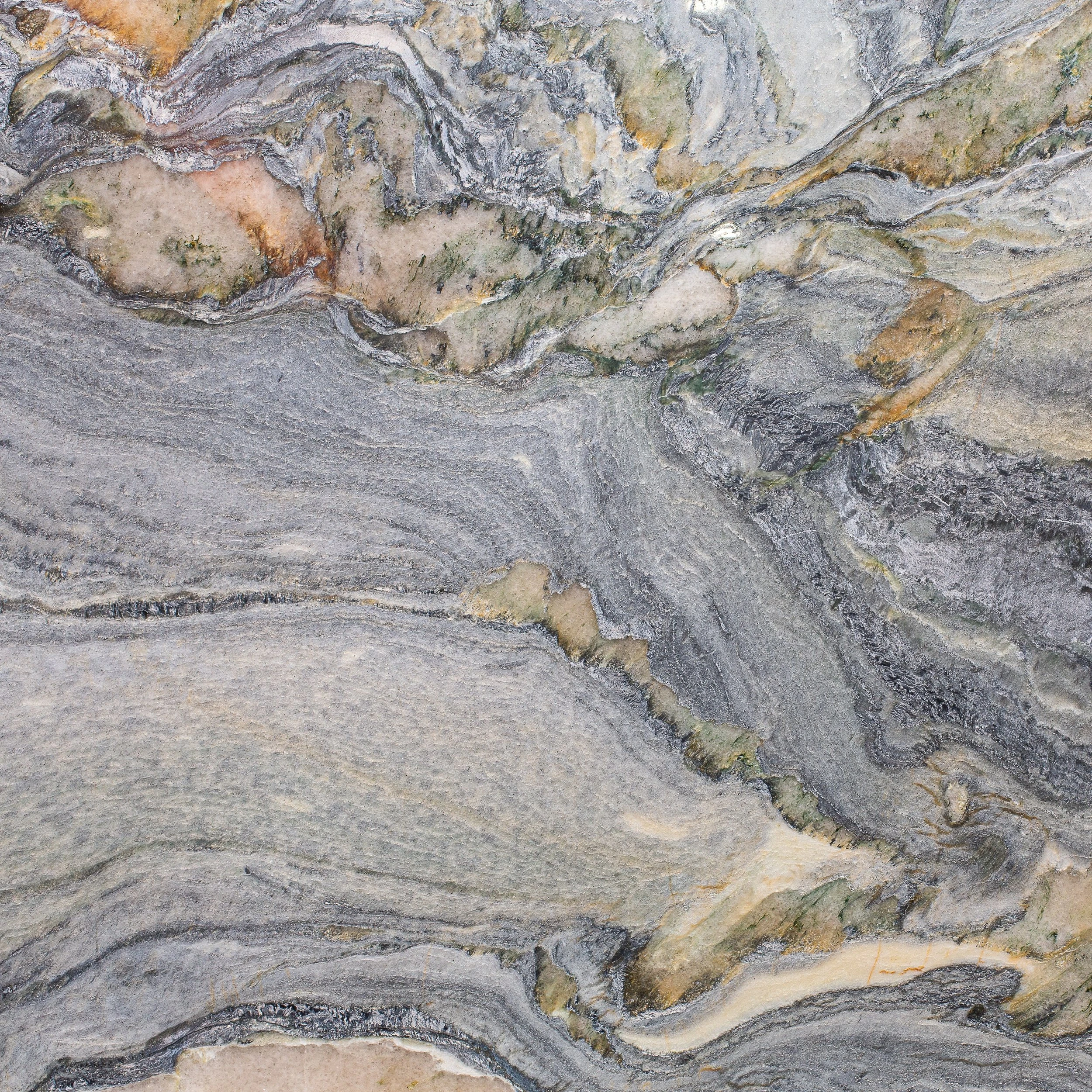 06 / 14
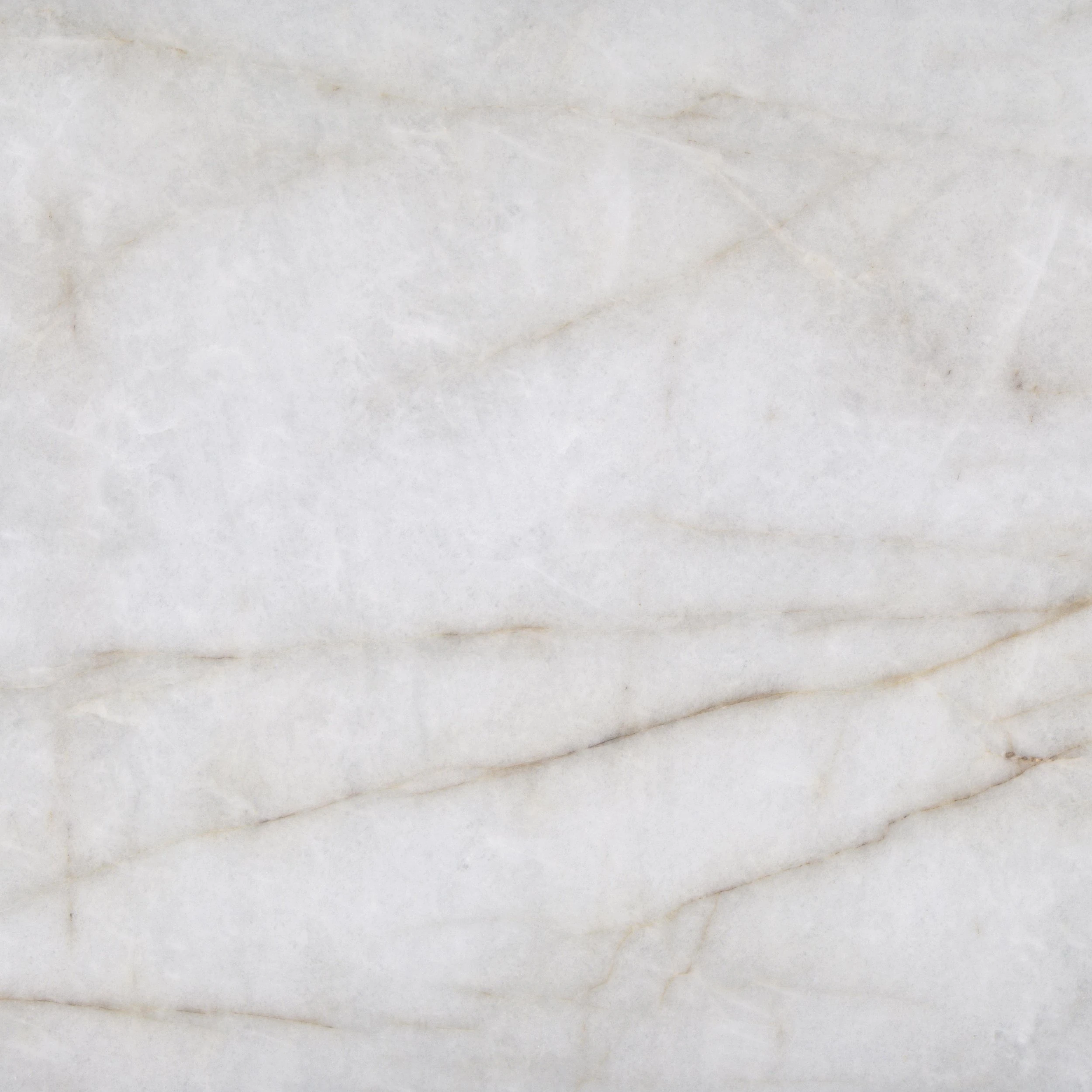 07 / 14
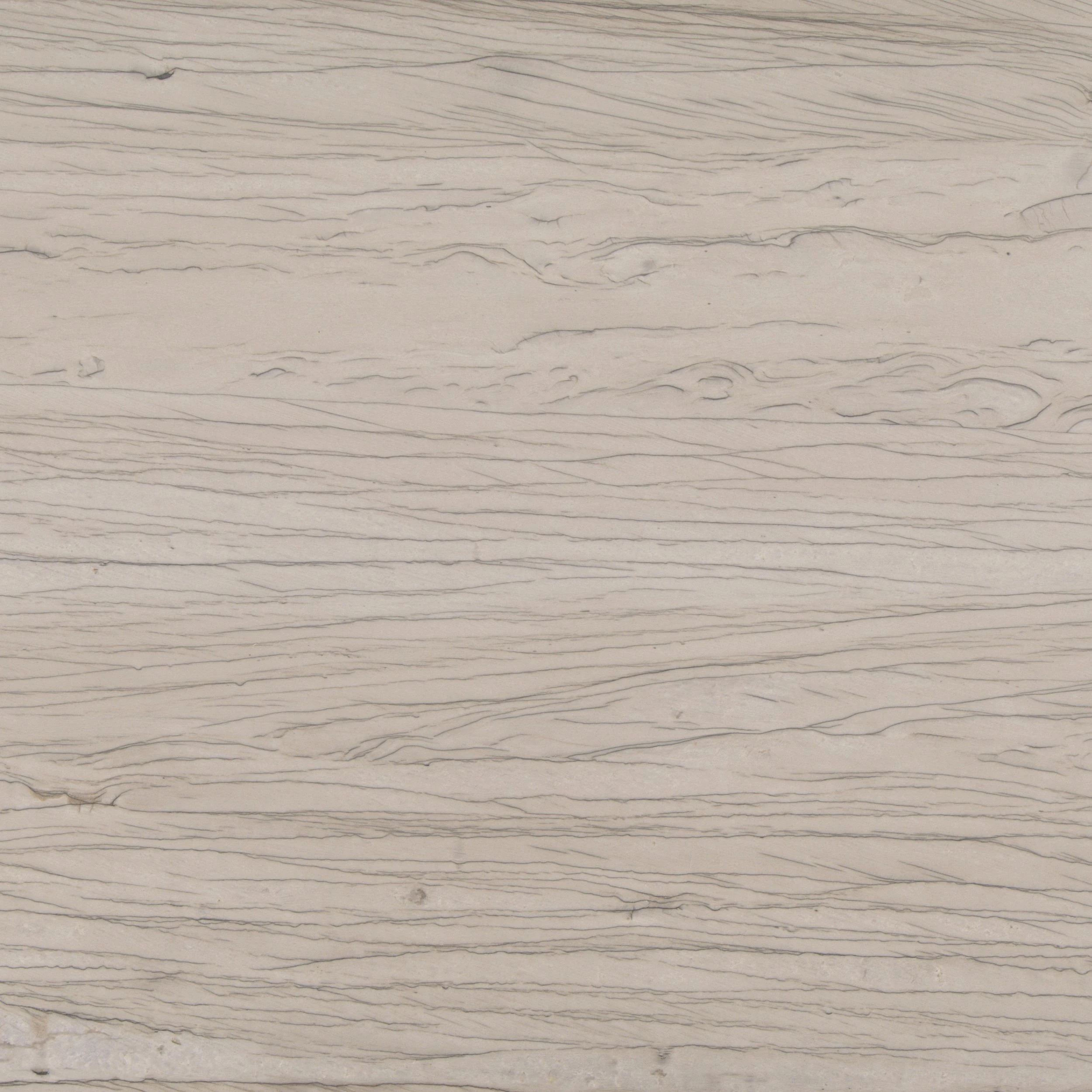 08 / 14
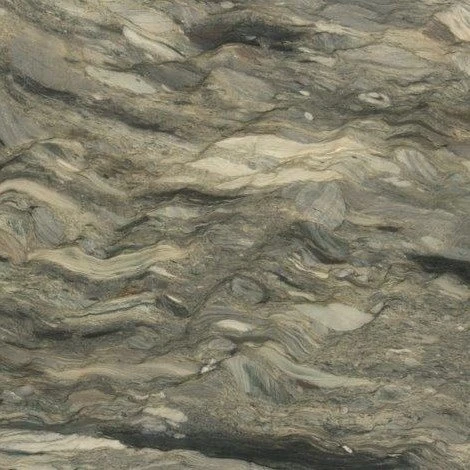 09 / 14
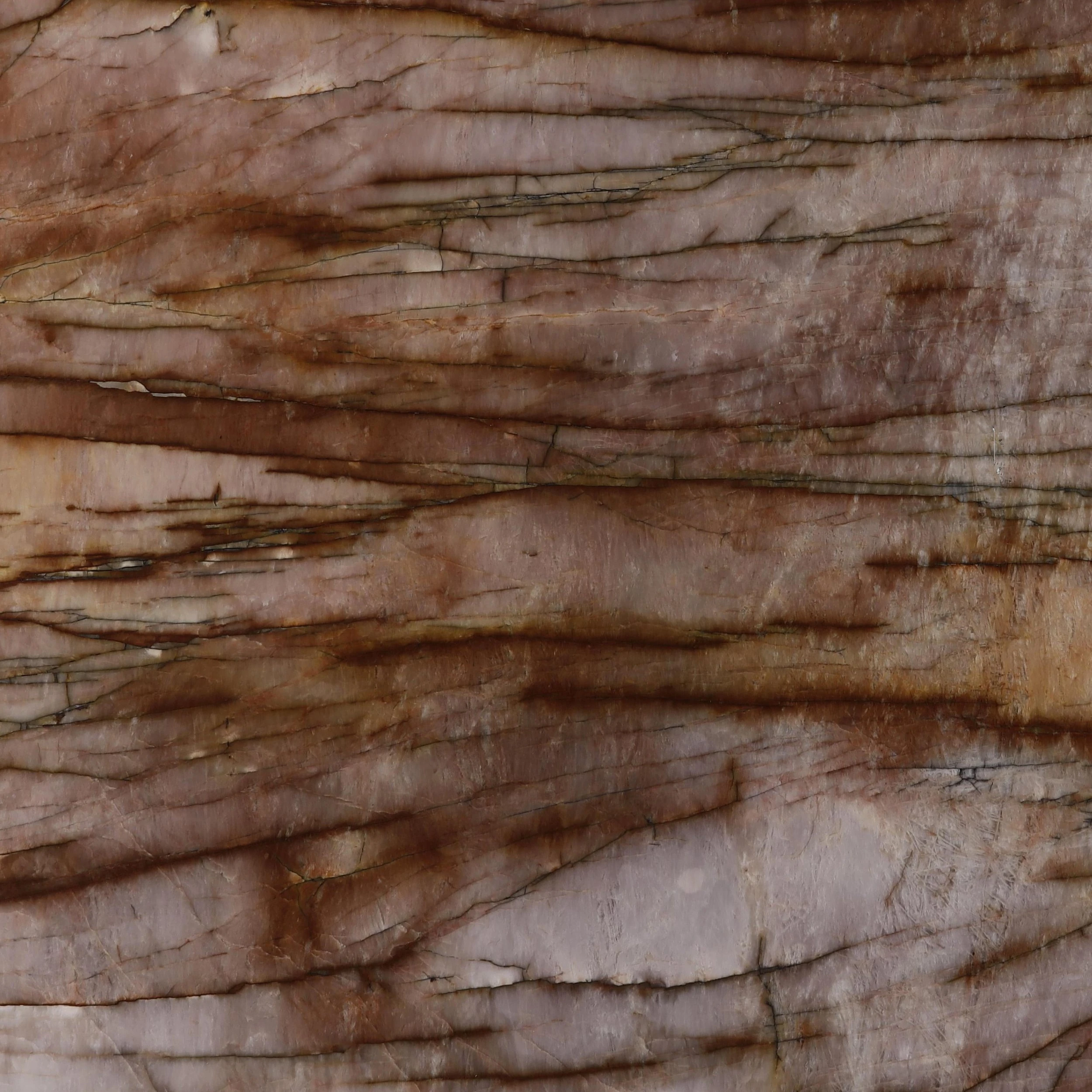 10 / 14
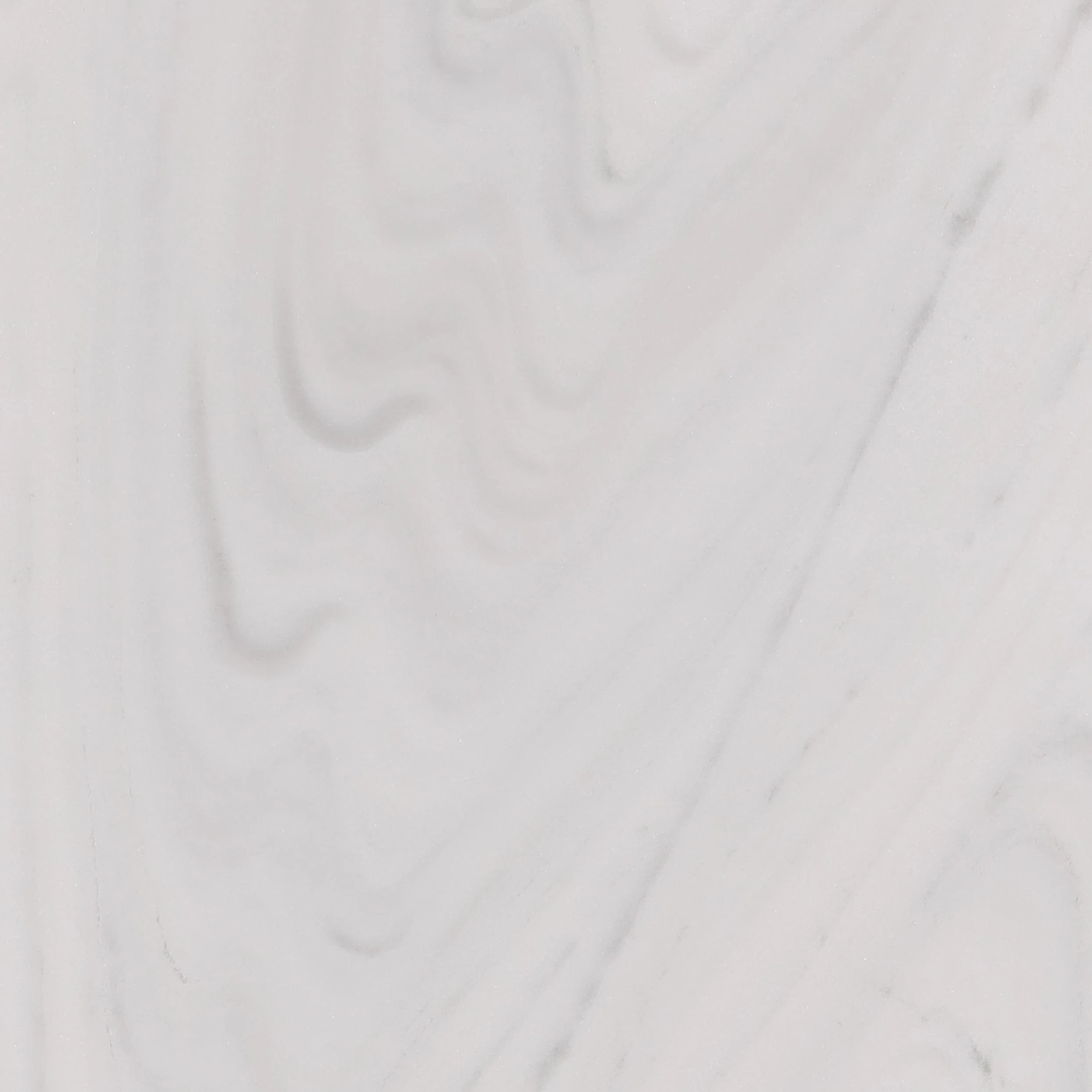 11 / 14
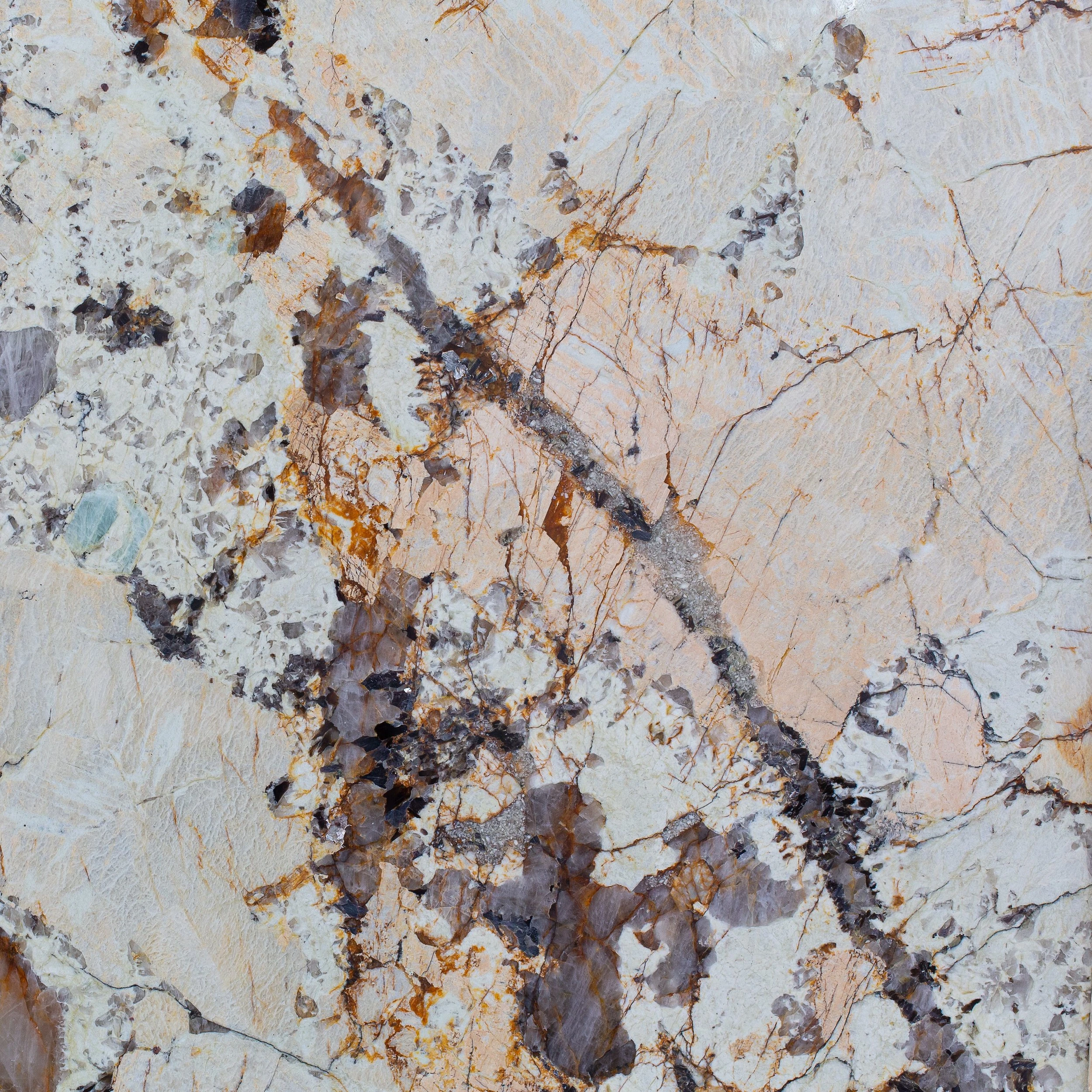 12 / 14
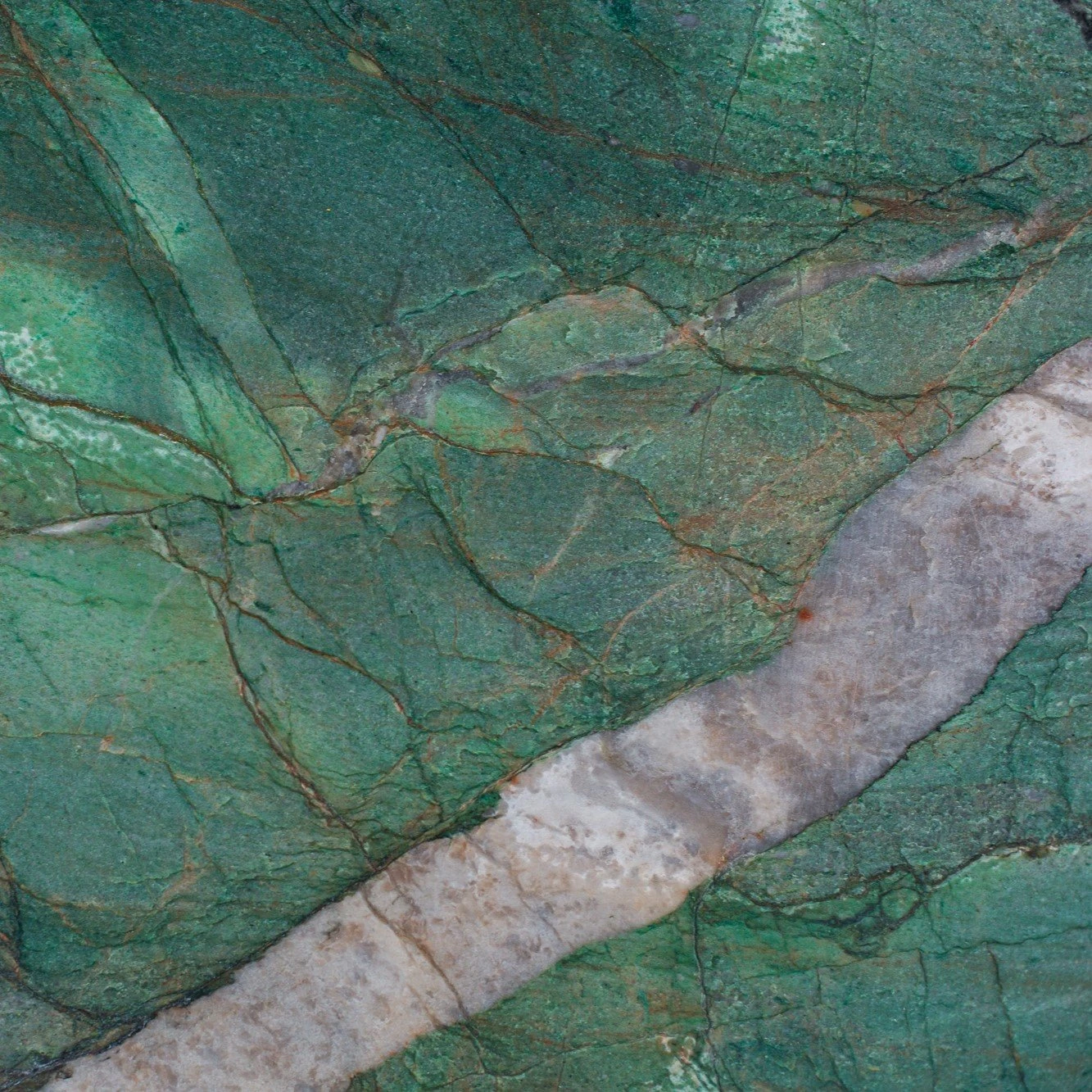 13 / 14Patagpnia Green
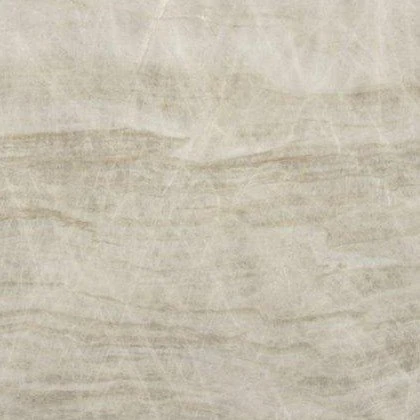 14 / 14Taj Mahal
Hardness and durability against marble
The practical difference between quartzite and marble comes down to composition. Marble is calcite based, which means it is relatively soft and reacts to acids: lemon juice, wine and many cleaning products etch dull marks into a polished marble surface. Quartzite is composed almost entirely of quartz, which sits at around 7 on the Mohs scale, harder than a steel blade and harder than the feldspar in granite. In day-to-day terms that means a quartzite worktop resists scratching far better than marble, does not etch when acids are spilled, and tolerates the heat of a pan straight from the hob. It also holds colour under UV, so unlike many stones it can be used outdoors without fading. For a worktop that is not stone, see Foresso, a timber terrazzo, or Corian.
One caution worth stating plainly: some slabs sold as quartzite are in fact dolomitic or part marble, and these behave more like marble than true quartzite. We work only with verified material and can confirm the geology of a given slab before it is committed to a commission.
Quartzite for a worktop, a table or a wall?
Tell us about the project.
Appearance and veining
Quartzite carries the flowing veining and luminous ground that designers associate with marble. The base ranges through whites, greys and beiges into blues, greens, pinks, ambers and browns, coloured by traces of iron oxide, zircon, rutile and other minerals present when the stone formed. Veining is irregular by nature, so no two slabs repeat. Translucent varieties can be backlit to glow, which suits island fronts and bar faces. Because pattern varies across a single block, slabs are best viewed and selected as whole pieces rather than from a small sample.
Finishes
- Polished. A glossy, reflective surface that shows the stone’s colour and veining at their most vivid. It is the most common choice for worktops and feature pieces and is easy to wipe clean.
- Honed. A smooth, matt to satin surface with no shine. It is quieter in a room, more forgiving of fingermarks and fine scratches, and reads as a softer, more contemporary stone. This is our usual recommendation for dining tables and high-use kitchens.
- Leathered. A lightly textured finish that follows the natural grain of the stone, giving a soft sheen and a tactile surface. It hides marks and water spots well and adds depth to darker and more dramatic slabs.
Applications
Quartzite suits any surface where the look of natural stone has to coexist with daily use, acids and heat:
- Kitchen worktops, islands and splashbacks
- Bar tops, vanity tops and bathroom surfaces
- Dining and console table tops
- Fireplace surrounds and hearths
- Feature walls and cladding
- Feature flooring and outdoor surfaces
Large-format slabs allow long runs and waterfall ends with minimal joints, suiting the seamless geometry of contemporary kitchens. Its weather resistance extends the palette onto outdoor kitchens and terraces.
Sealing and maintenance
Quartzite has low porosity, but it is a natural stone and most slabs benefit from sealing. A penetrating sealer is applied on installation and refreshed periodically, more often for lighter or more porous varieties and for heavy-use surfaces. A simple water test shows when resealing is due: if water beads on the surface it is protected, and if it darkens into the stone it is time to reseal. Day to day, clean with warm water and a pH-neutral cleaner. Avoid acidic and abrasive products, wipe spills promptly, and use boards for cutting, since quartzite will blunt a knife long before the knife marks the stone.
Practical considerations
A few points are worth weighing at the design stage. Quartzite is dense and heavy, so cabinetry and supporting structures must be specified to carry it, particularly for islands and long unsupported spans. Because it is very hard, fabrication takes more time and specialist tooling than softer stones, which is reflected in lead times. As a natural material it carries variation and the occasional fissure, which are inherent to the stone rather than faults. Selecting whole slabs early, while a block is still intact, gives the best control over colour matching across a larger project.
How we work with it
Finishes are sampled as actual stone offcuts, not printed swatches. For a commission, slabs are selected and reserved so the veining is approved exactly as it will install, and book-matched or continuous patterns are planned across joints before cutting. Edge profiles, cut-outs, drainage grooves and integrated sinks are detailed with our makers, and stone surfaces are coordinated with the timber, metal and upholstery of the wider piece by our workshop network.
Is quartzite better than marble for a kitchen?
For a working kitchen, generally yes. Quartzite resists scratching, etching and heat far better than marble while offering a similar appearance. Marble remains a fine choice where a softer patina is welcome, but quartzite is the more practical surface for daily use.
Does quartzite need sealing?
Most quartzite is sealed on installation and resealed periodically. Its low porosity means sealing is less frequent than with marble, and a quick water-bead test tells you when it is due.
Can quartzite be used outdoors?
Yes. Quartzite holds its colour under UV and tolerates weather, which makes it one of the few decorative stones suited to outdoor kitchens, terraces and exterior cladding.
Uses of Quartzite
Quartzite has many uses due to its strength and durability. It can be used in both residential and commercial settings and is often used as a building material for walls, floors, countertops, and other surfaces due to its resistance to weathering and abrasion. Quartzite countertops are highly resistant to UV rays, making them suitable for outdoor use without fear of discolouration or fading. The surface can be polished to bring out the beautiful colours and textures of the stone, creating a glossy finish that reflects light well. Quartzite is a natural stone with the look and character of marble, making it ideal for surfaces. It is twice as strong as granite and highly resistant to staining and scratching when sealed. With its resistance to acids, heat and UV rays, quartzite is an ideal material for many home and commercial projects. Quartzite is light and large-format, allowing for minimalistic spaces with no joins.
Patterns and Colours of Quartzite
The natural beauty of Quartzite adds an aesthetic appeal to any space that cannot be replicated by other materials. Quartzite not only offers outstanding durability but also a stunning range of colours. From grey, white, beige, pink, yellow, blue, purple, orange and brown quartzite can be found in almost any colour imaginable. The veining and patterning of quartzite is irregular and inconsistent which adds to its unique beauty. Some quartzite stones may have pinkish or reddish hues due to the presence of iron oxide.
Where it's used
Composition Quartzite is a metamorphic rock composed mainly of quartz, with other minerals present in smaller quantities. It is formed when sandstone undergoes extreme heat and pressure, resulting in the recrystallization of quartz grains. Orthoquartzite contains 99% quartz, as well as traces of iron oxide, zircon, rutile and magnetite. Quartzite may also contain clay minerals and other impurities such as feldspar fragments. This composition gives quartzite its unique properties that make it an ideal material for construction projects.
The strength of quartzite is further enhanced by its low porosity and water absorption rate. This means that the stone is highly resistant to staining and damage from water or other liquids. The stone's durability also ensures that it can withstand extreme temperatures without cracking or chipping, making it an excellent choice. Quartzite is a heat-resistant stone that is ideal for use in kitchens and other areas where it may be exposed to high temperatures. Its resistance to heat makes it an excellent choice for countertops, backsplashes, and other surfaces that may come into contact with hot items. Quartzite is also resistant to acidic substances, making it a great choice for areas where food or liquids are present. It does not etch when exposed to citric liquids, so it can be used in areas such as bathrooms and kitchens without fear of staining or discoloration.
The most common finish for quartzite countertops is a polished finish, which is created by sanding the surface with finer grit sandpaper until it has a glossy appearance. This finish allows the colours and texture of the stone to stand out vibrantly while also being easy to clean as it is sealed. A polished quartzite countertop offers better reflection of light than other stone finishes, creating a pristine look. A honed finish is a great way to protect quartzite countertops from scratches and etching. This finish is achieved by sanding the quartzite surface until it has a smooth and satin appearance. The honed finish helps to reduce the risk of scratching and etching, making it ideal for table tops that are subject to regular use. The honed finish also makes cleaning easier, as dirt and grime will not stick to the surface as easily as with other finishes. With proper care and maintenance, your quartzite table top will remain looking beautiful for years to come.
Please do get in touch if you would like to discuss using this finish for a project:
Seen in
Have a scheme you'd like to build?
Need samples? Get in touch and tell us about your project.