Terrazzo
Pick and choose what to add to your bespoke terrazzo
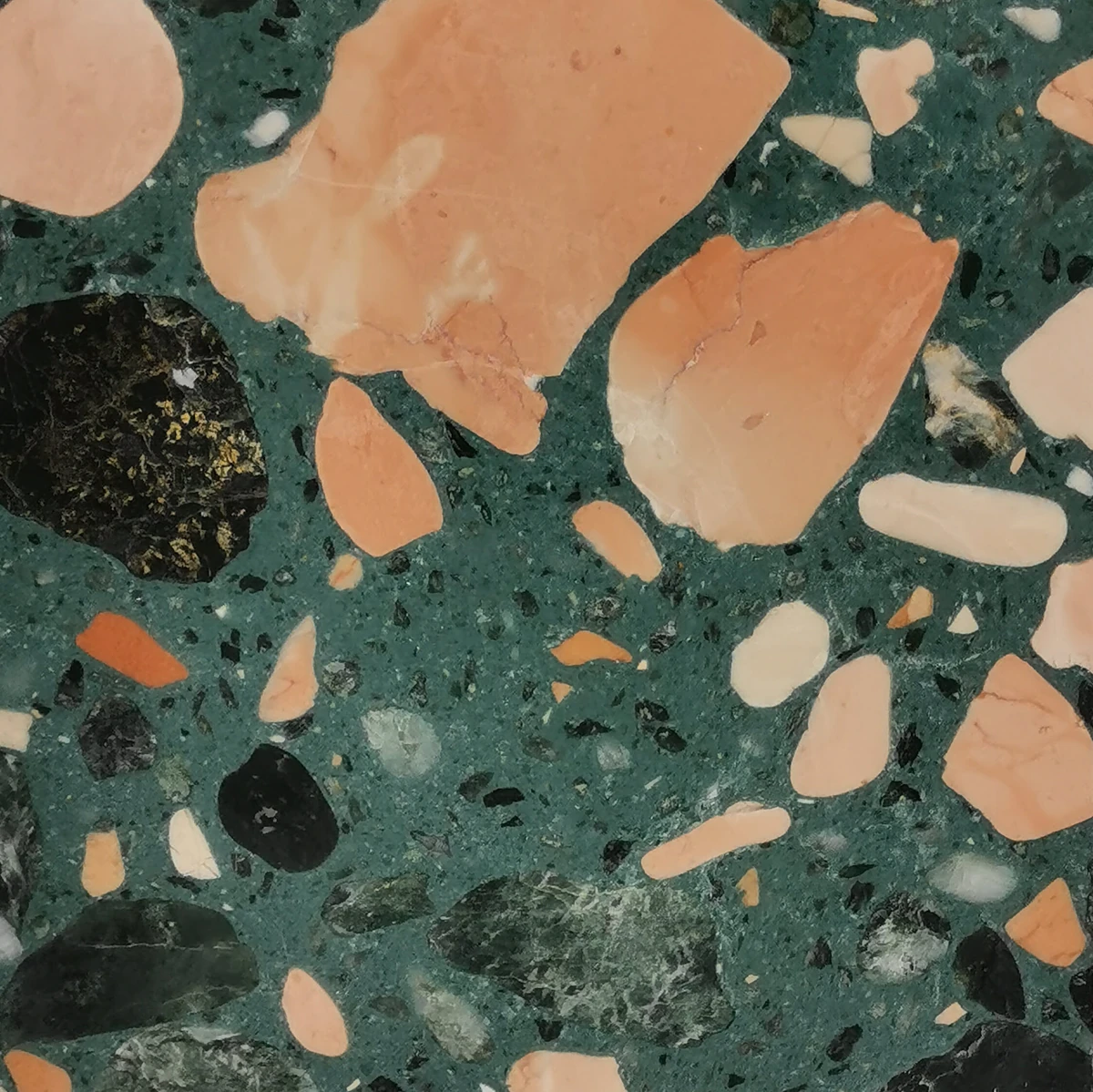
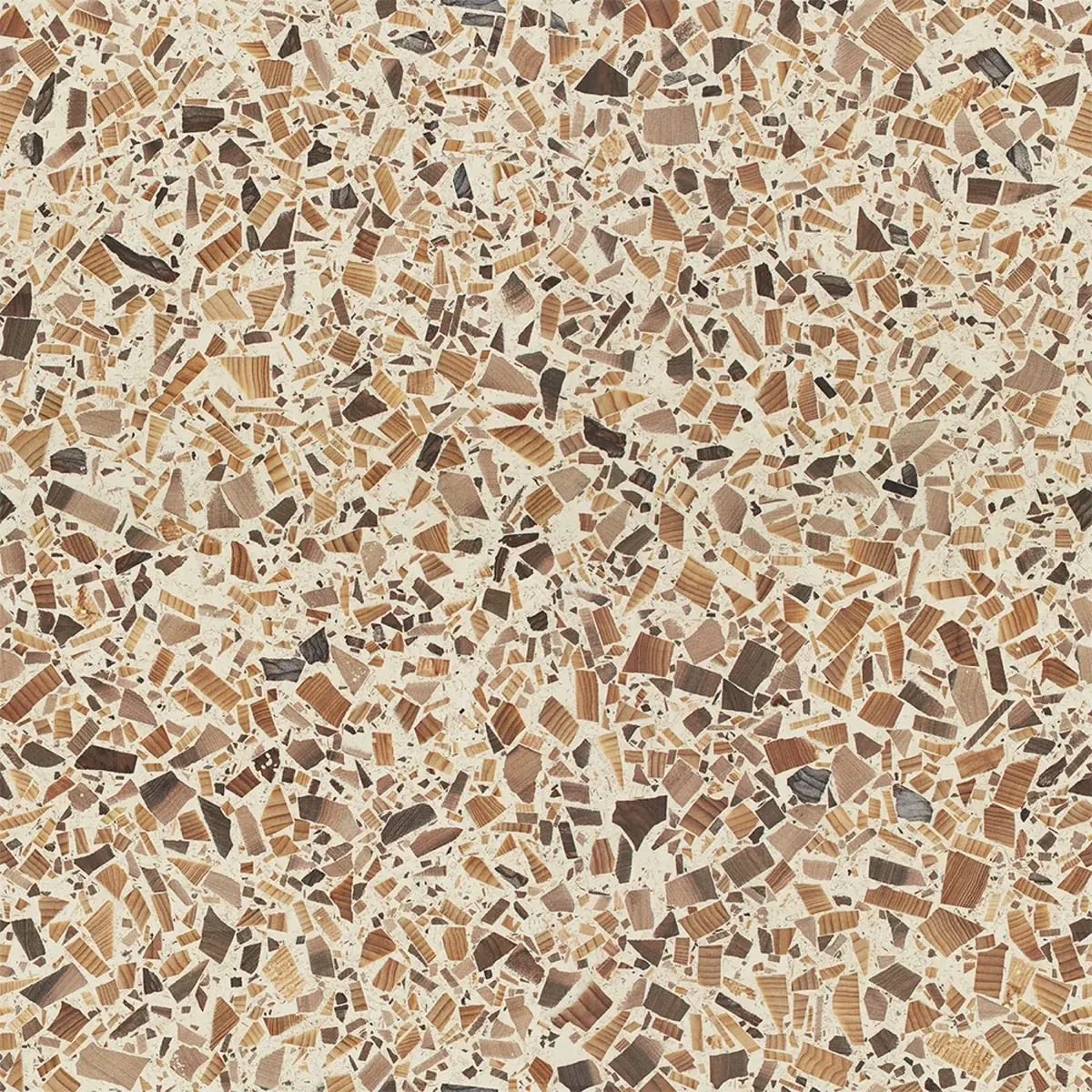
Terrazzo is a composite surface: chips of marble, granite, glass or stone set into a binder, then ground flat and polished to reveal the aggregate in section. The result is a continuous field of pattern, where every chip reads as a small piece of stone suspended in a coloured matrix. Because both the aggregate and the matrix are chosen by the client, no two specifications need look alike.
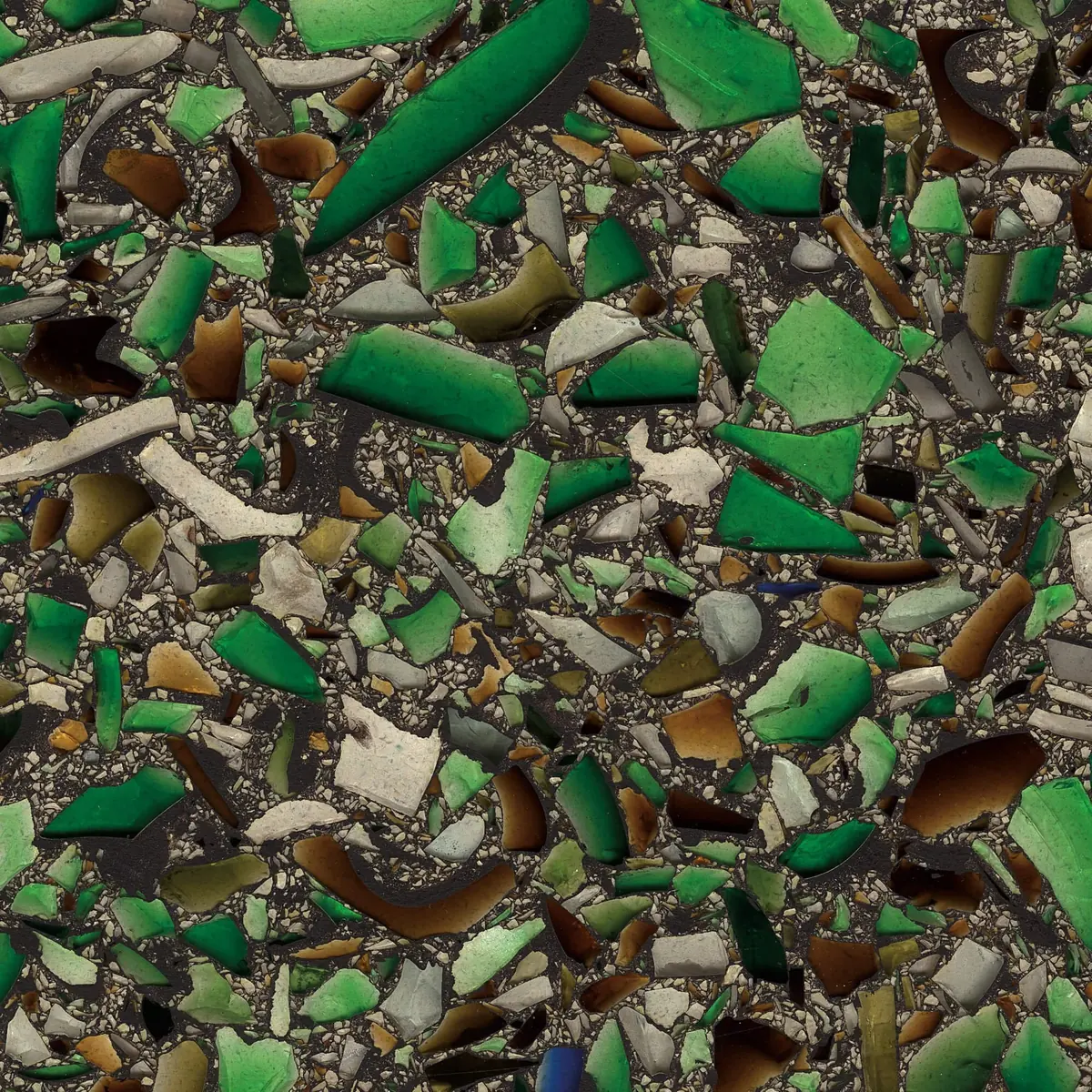
We work with a network of specialist terrazzo casters whose hand-casting skills have been honed over many years. With hundreds of slabs of marble and granite to browse in their yard, clients have the opportunity to pick and choose what to add to their bespoke terrazzo. Our makers have cast terrazzo featuring broken bottle glass, seashells, semi-precious stones and recycled metal washers, as well as curved and ripple-effect pieces, so the scope is wide.
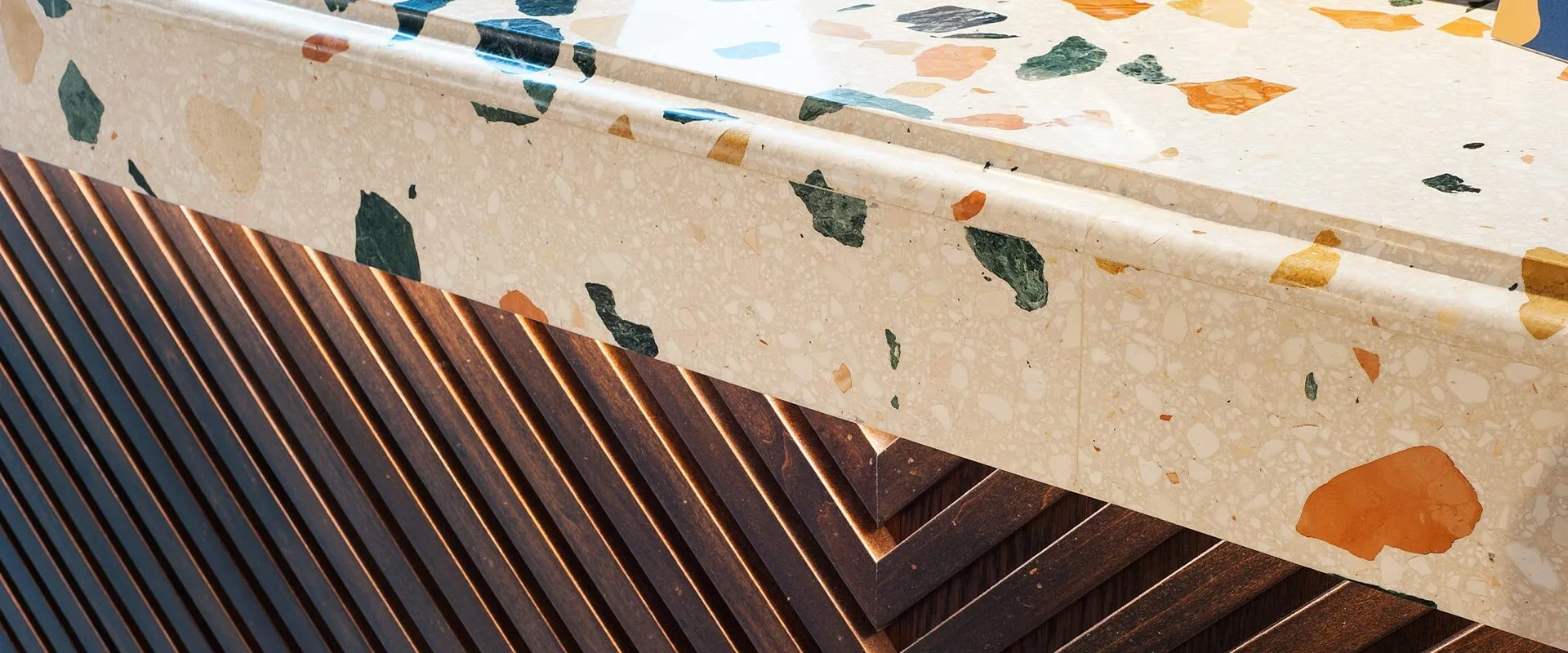
We specify this hand-cast terrazzo for furniture tops, bar surfaces, flooring and decorative panels across hospitality and residential commissions, particularly where a project calls for a surface that is both visually distinctive and genuinely hard-wearing. Aggregate and matrix combinations are agreed with the client and design team to match the colour and tonal palette of the wider interior, so the terrazzo reads as an integral element of the scheme rather than an afterthought.
Terrazzo for a floor, a table or a wall?
Tell us about the project.
- Feature flooring
- Bathroom and spa surfaces
- Bar and restaurant table tops
- Kitchen work surfaces
- Reception desk surfaces
- Decorative wall panels
Pick & choose your terrazzo
Every mix can be tailored — pick and choose what goes into your bespoke terrazzo, from marble, granite and glass chip to the pigment of the cement ground. The samples below are a starting palette; each can be adjusted, or a mix developed from scratch for your scheme.
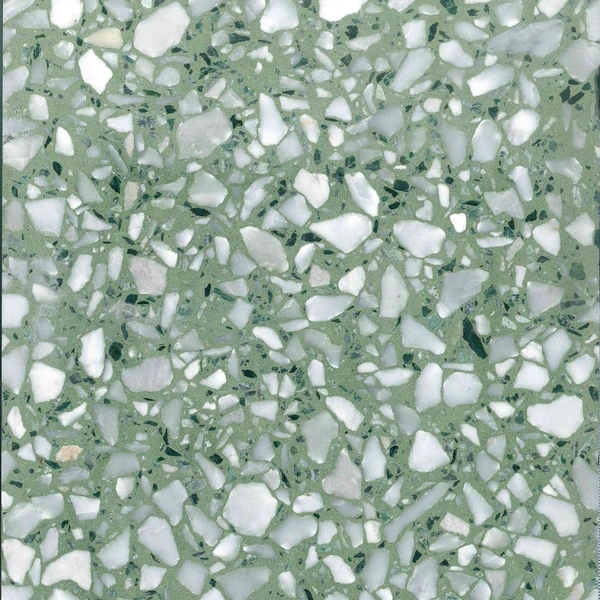 01 / 23BT105
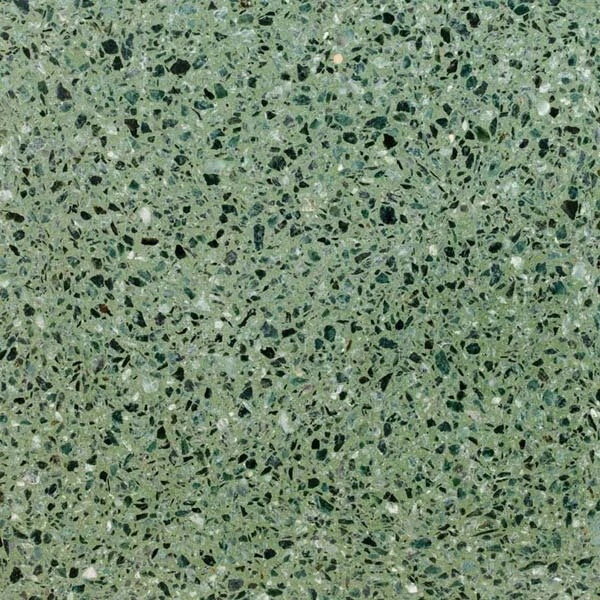 02 / 23TE050
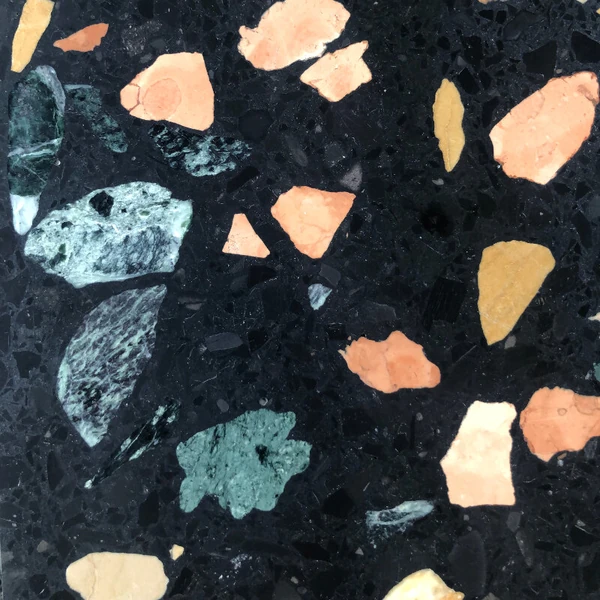 03 / 23TE06
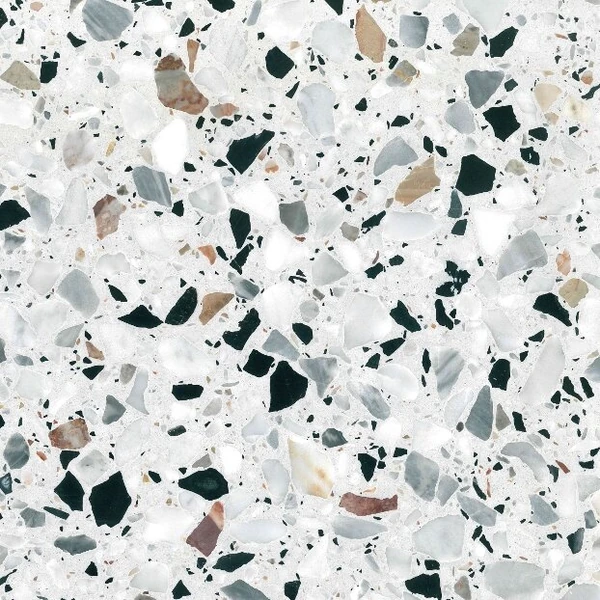 04 / 23TE007
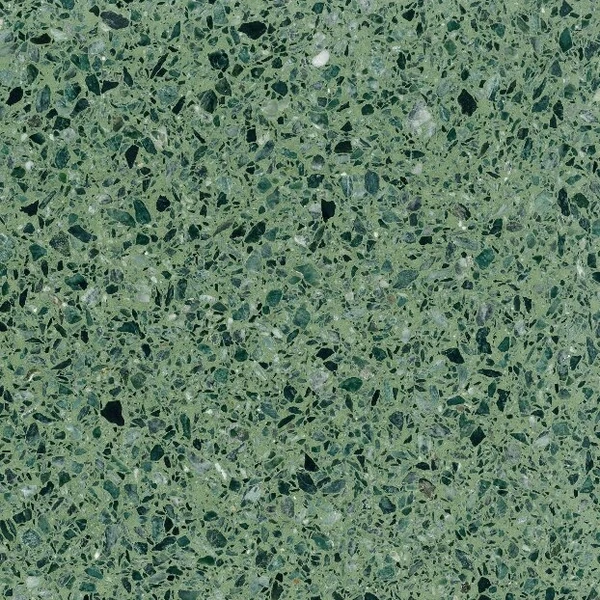 05 / 23TE030
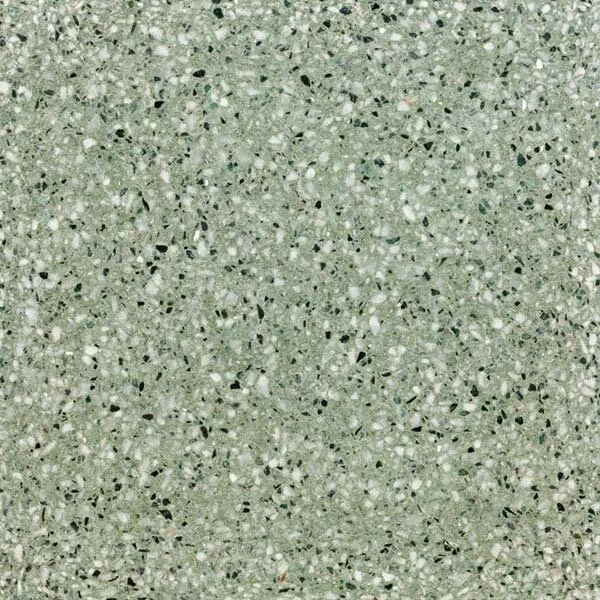 06 / 23TE051
 07 / 23TE052
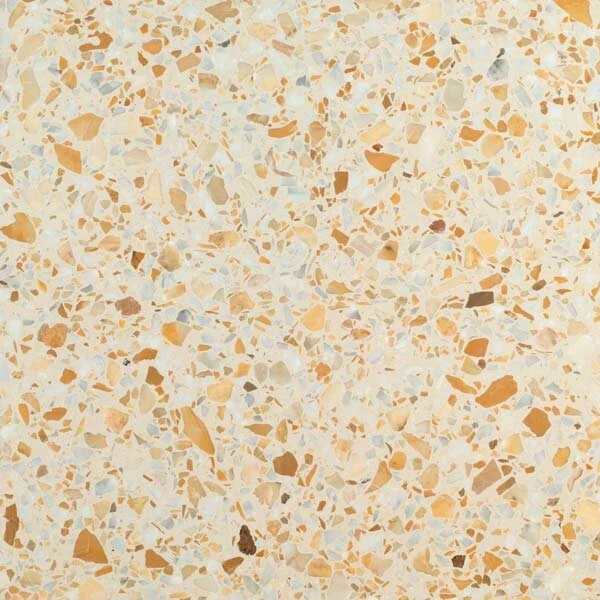 08 / 23TE073
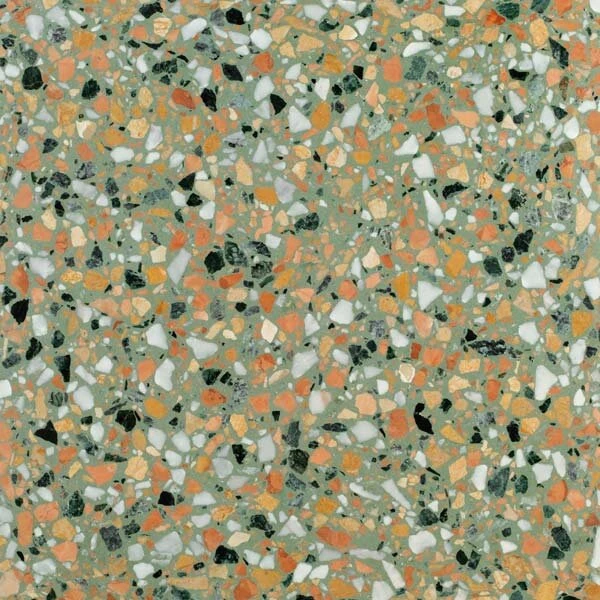 09 / 23TE074
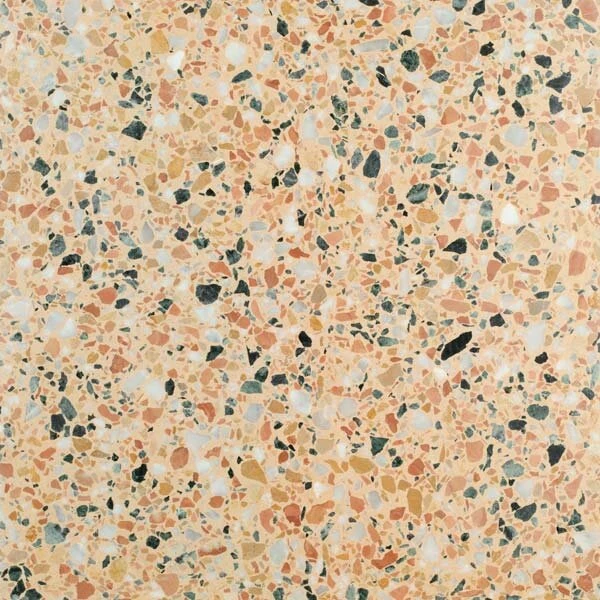 10 / 23TE077
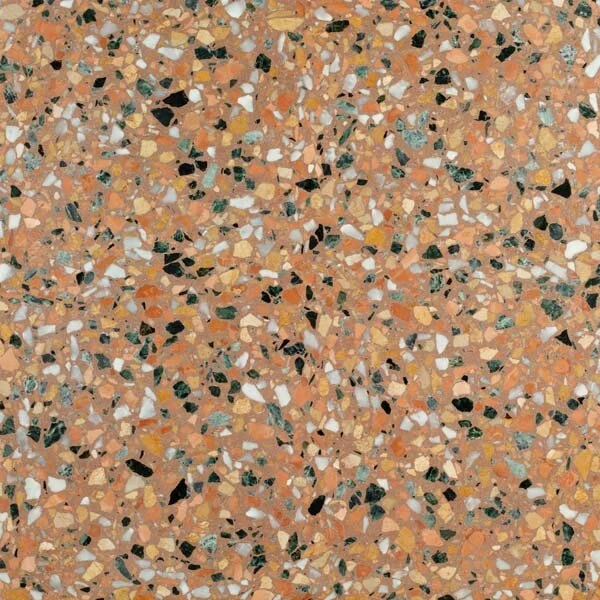 11 / 23TE079
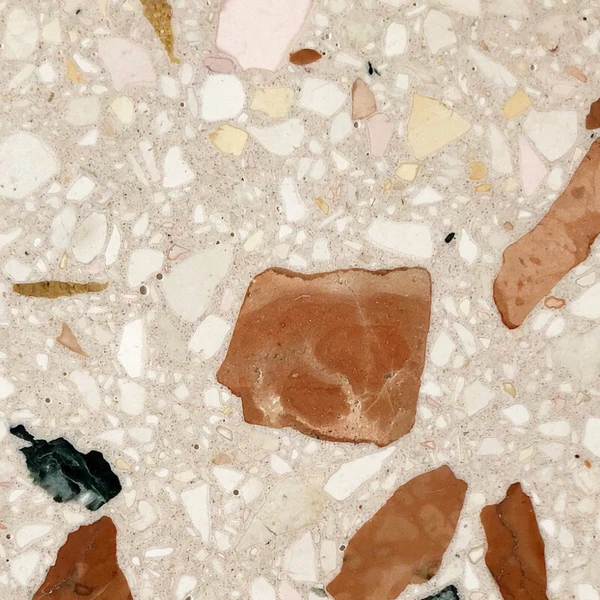 12 / 23TE081
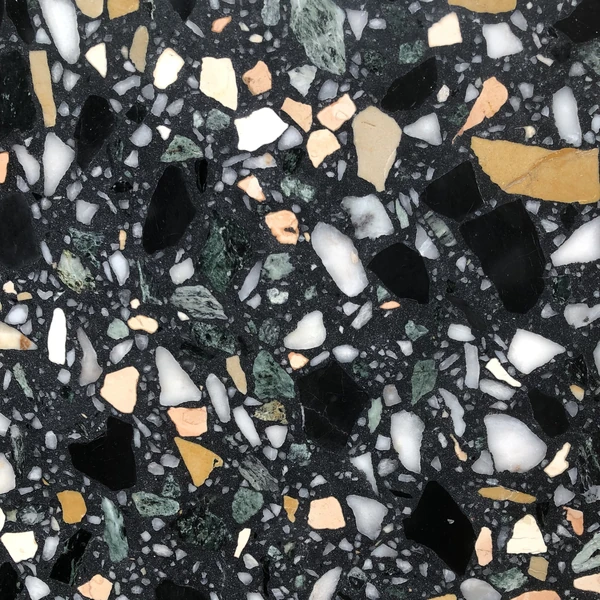 13 / 23TE106
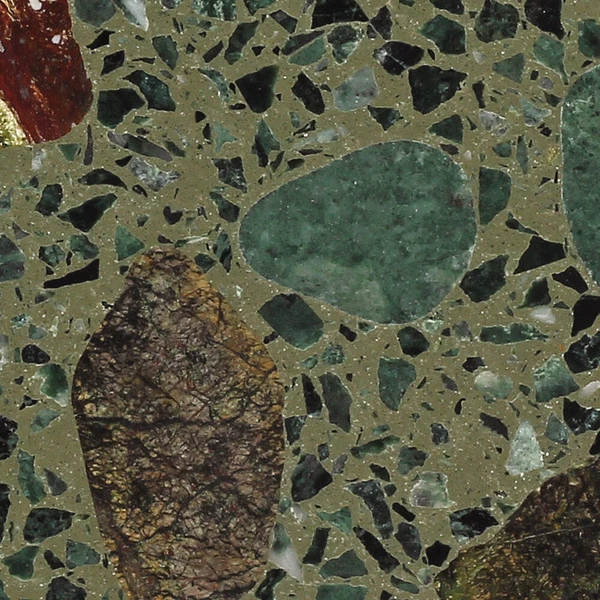 14 / 23TE111
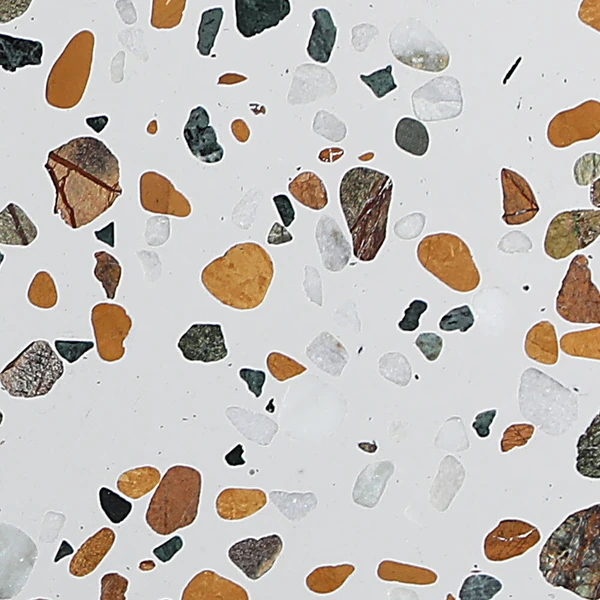 15 / 23TE113
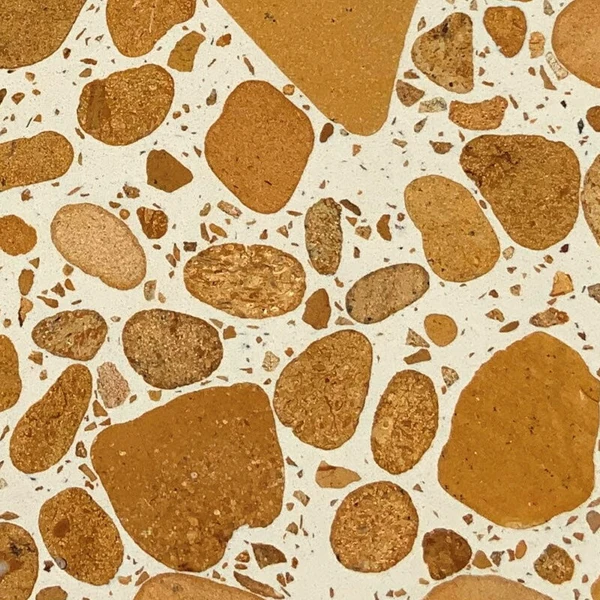 16 / 23TE119
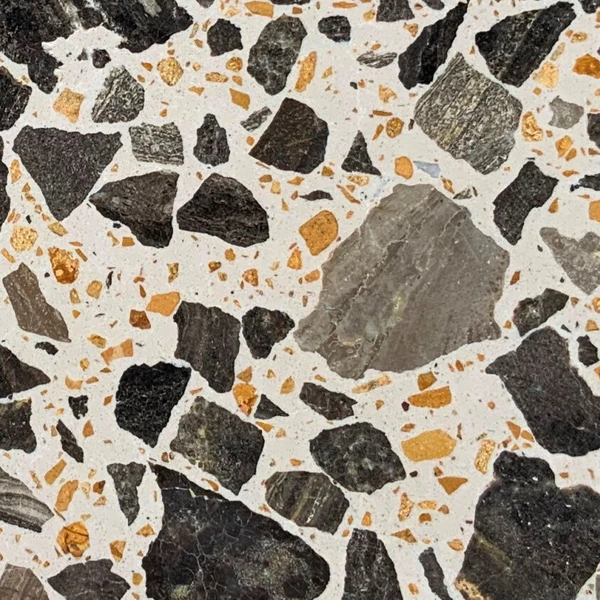 17 / 23TE120
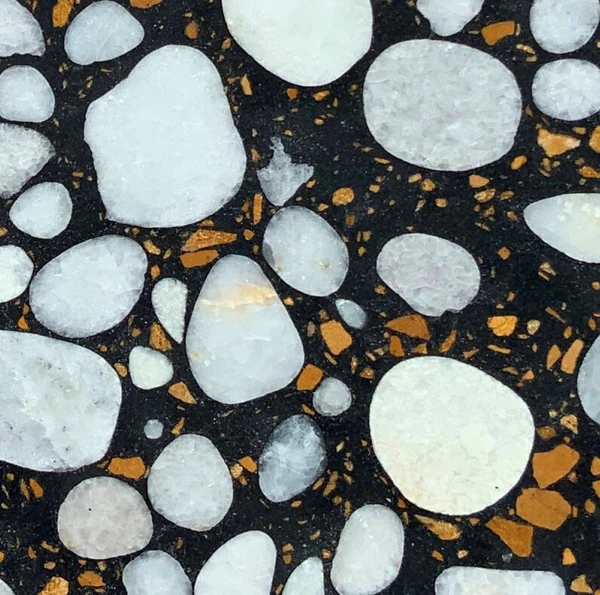 18 / 23TE123
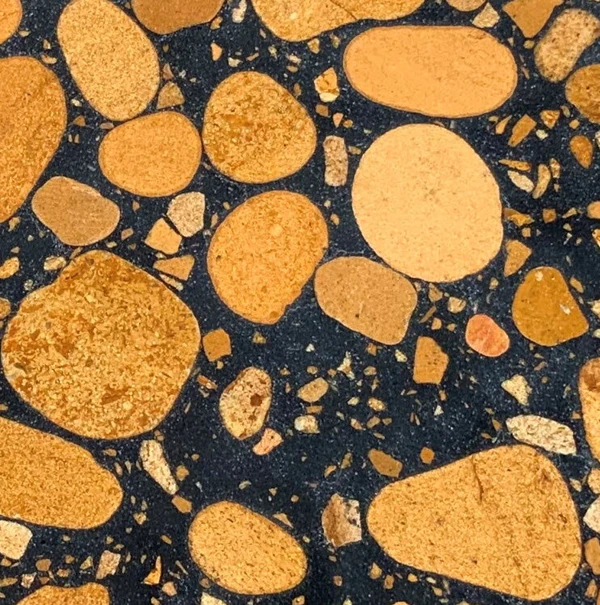 19 / 23TE124
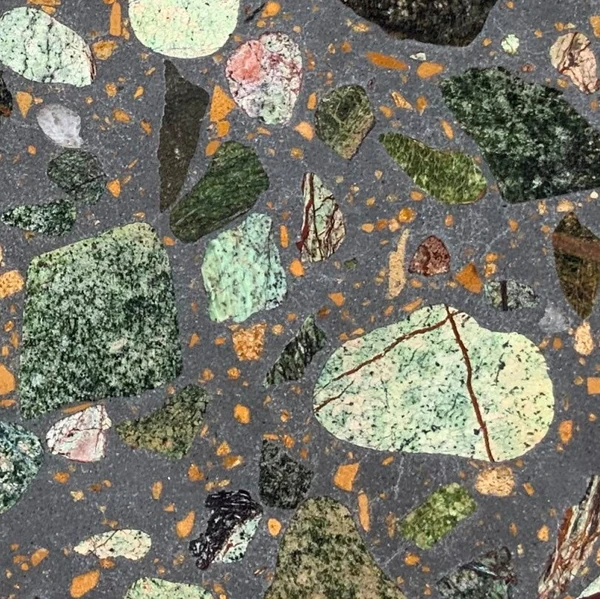 20 / 23TE125
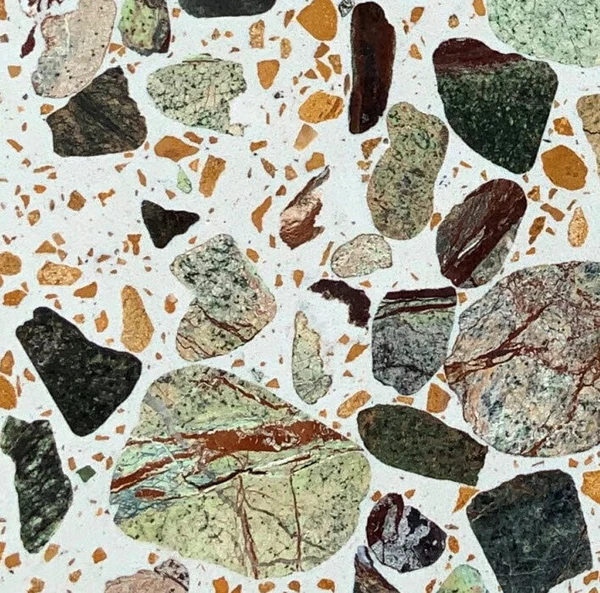 21 / 23TE126
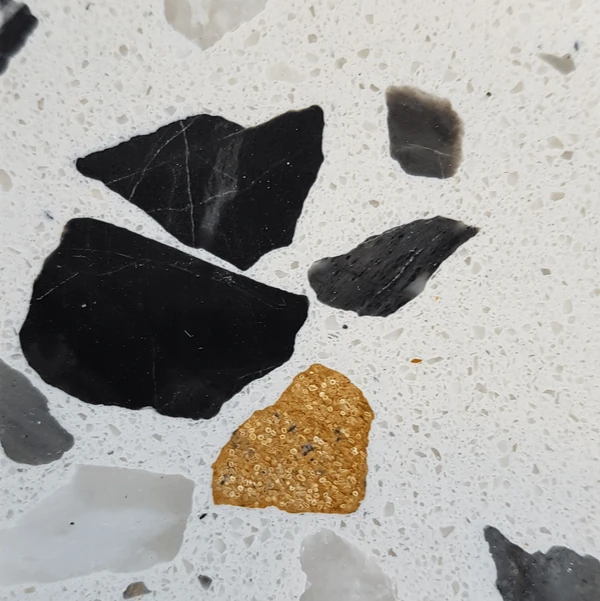 22 / 23TE135
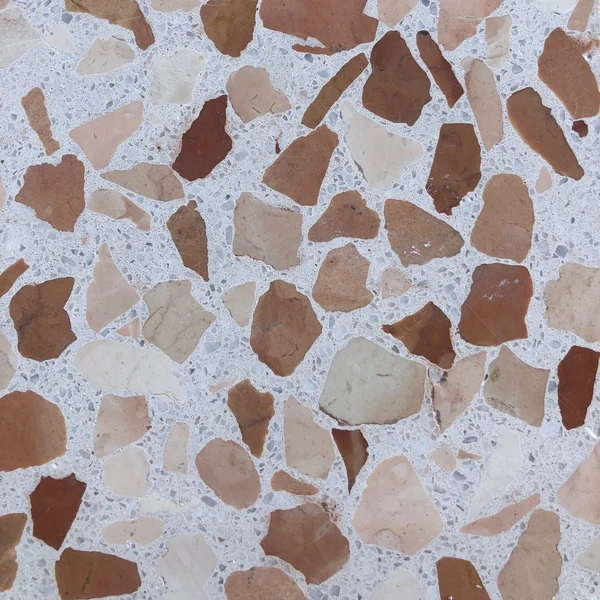 23 / 23TE152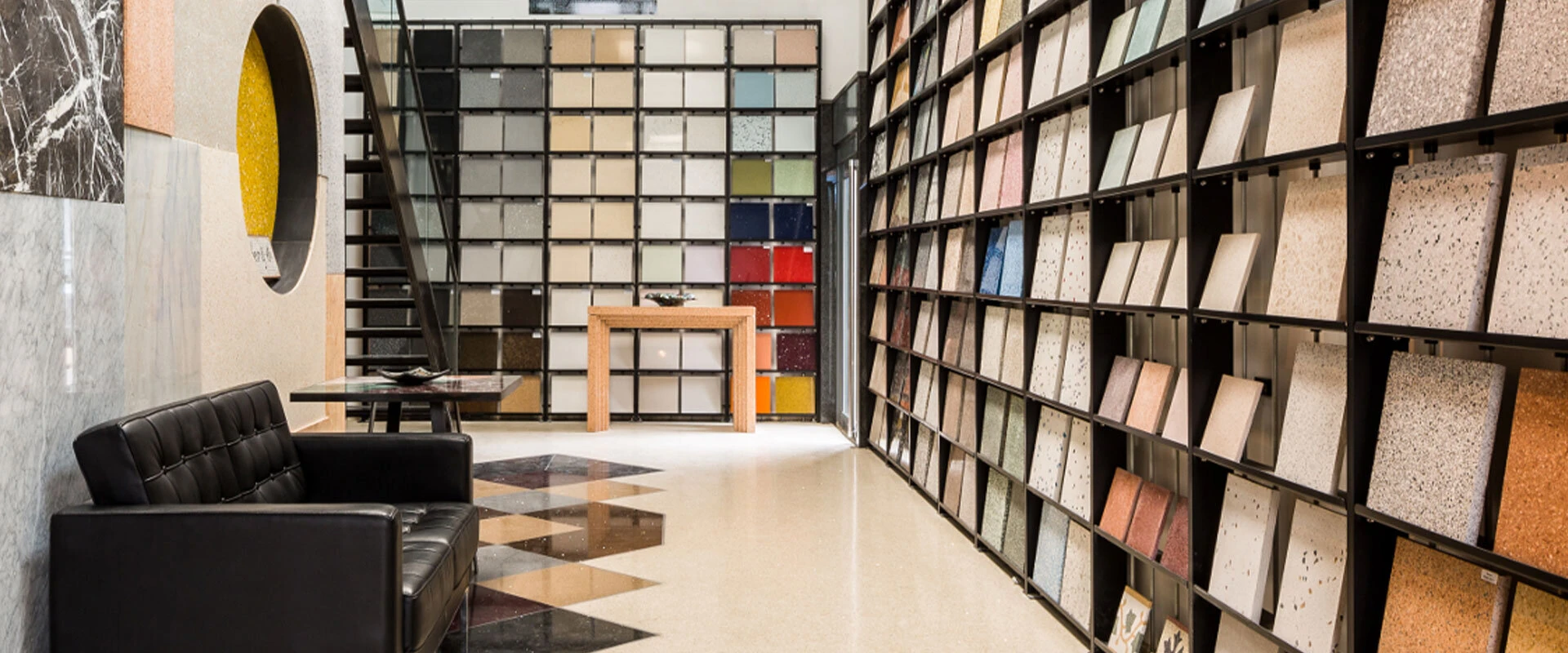
Terrazzo is built in two parts: the aggregate and the binder. The aggregate is the visible chip content, typically marble, granite, glass, mother-of-pearl or other hard stone, graded by size from fine grit to large statement pieces. The binder, or matrix, holds the chips together and sets the background colour. Traditional cement-bound terrazzo uses a pigmented cement matrix and is valued for its weight, depth and long working life. Resin-bound terrazzo uses an epoxy or polyester matrix, which allows thinner sections, brighter pigments and a non-porous surface.
In casting, the chosen aggregate is mixed through the matrix and either poured in situ or cast as panels and tiles. Once cured, the surface is ground back in successive stages with progressively finer abrasives, which cuts through the chips and exposes them flush with the matrix. Voids opened during grinding are filled and the piece is reground until the field reads evenly. A sealer or polish completes the surface.
The look of a terrazzo is set by three decisions: the matrix colour, the aggregate mix and the chip size. A pale matrix with closely matched chips reads quiet and stone-like, while a dark matrix with bright glass or contrasting marble reads graphic and bold. Chip scale ranges from a fine, almost speckled grain to large-format pieces several centimetres across, sometimes called Venetian or palladiana when broken slabs are laid in. Pigments allow the matrix to be tuned to most colours.
Surface finish is a separate choice. A honed finish gives a matt, low-glare surface that suits floors and busy areas. A polished finish lifts the depth and colour of the aggregate and is common on tabletops and bar surfaces. Lightly textured or anti-slip finishes are available where flooring requires them. Terrazzo can be supplied as poured seamless areas, as precast panels for tops and cladding, or as tiles, and our makers can also produce curved and ripple-effect pieces where a design calls for it.
Terrazzo is hard-wearing and well suited to surfaces that see daily use. The aggregate is stone or glass, so the surface resists abrasion and holds its finish over many years. Cement-bound terrazzo is heavy, which is worth planning for early: tops, panels and floors may need supporting structure and careful handling sized to the piece. Resin-bound terrazzo is lighter and can be cast in thinner sections, which makes it a practical option for furniture and for cladding where weight is a constraint.
Porosity depends on the matrix. Cement-bound surfaces are porous and should be sealed, then maintained with a neutral-pH cleaner; acidic cleaners can etch both the cement and any marble aggregate. Resin-bound surfaces are effectively non-porous and need little beyond routine cleaning. Both types can be reground and repolished in place if a surface is scratched or dulled over time, which is one of the material's practical advantages. We advise on the right matrix and finish for each setting, including kitchens, bathrooms and high-traffic floors.
Each commission begins with samples. We agree the matrix colour, aggregate mix and chip size with the client and design team, then cast trial pieces so the surface can be assessed in the light of the actual interior before any panel is made. From there our makers cast tops, panels, tiles or poured areas to the dimensions of the scheme, and detail edges, cut-outs and junctions with adjoining materials.
Terrazzo is often integrated with the other elements we make, set into a metal frame, paired with a timber base, or run alongside stone and joinery so the materials meet cleanly. Because the recipe is defined per project, a terrazzo specified for one commission can be matched again for later phases. We handle fabrication, finishing and coordination through our workshop network.
Can terrazzo be used for kitchen worktops?
Yes. We generally recommend a resin-bound matrix for worktops, as it is non-porous and resists staining, and a polished or honed finish to taste. Cement-bound terrazzo can also be used but should be sealed and maintained with neutral cleaners.
Can we choose the colours and chips?
Yes. The matrix is pigmented to your palette and the aggregate is selected from marble, granite, glass and other materials. We cast samples so the combination can be confirmed before production.
How is terrazzo maintained?
Routine cleaning with a neutral-pH product is enough for day-to-day care. Cement-bound surfaces benefit from periodic resealing. If a surface is scratched or worn, it can be reground and repolished in place rather than replaced.
Have a scheme you'd like to build?
Need samples? Get in touch and tell us about your project.