Chests & Commodes
The chest, and the drawers that run smoothly
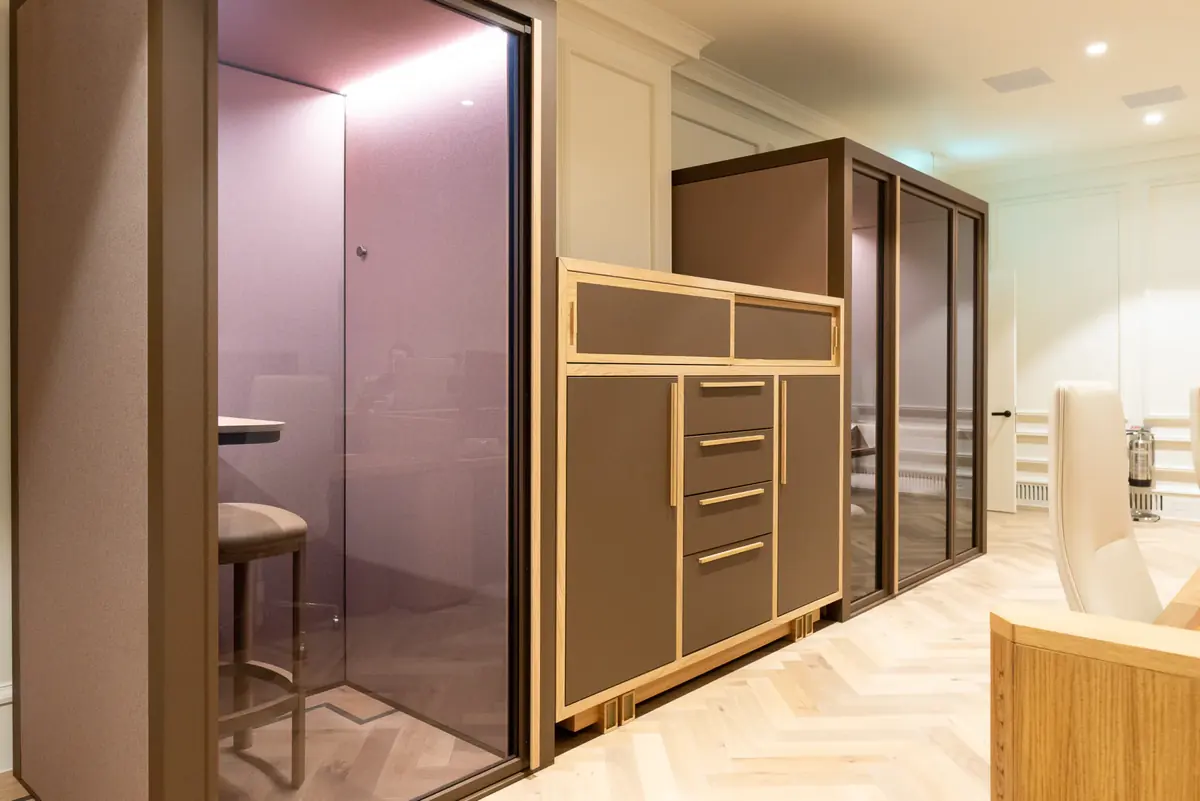
A chest of drawers is one of the oldest forms of furniture in the upholstery and joinery vocabulary, and one of the most demanding to build well. Every drawer runs through the same opening twice a day for decades; the carcass has to hold its line through that movement; the drawer fronts have to align across the cabinet front; the drawer interiors have to take what the household needs to store. The workshop builds chests at the same quality as a piece of period cabinetry, in a contemporary or traditional form.
Chests sit in bedrooms, dressing rooms, halls and feature corners. Commode is the older word for the same form — a chest with a more decorated front, often used as a feature piece in a drawing room. The two share their construction; both are set out on the wider casegoods page.
The chests we build
Most briefs fall within a handful of established forms.
Tall chests of drawers
The standard bedroom form — a chest 100–130 cm high, 90–120 cm wide, with four to six drawers stacked in a single column or two columns side by side. Tall chests work well against a long wall or in a dressing room where height gives storage volume without taking floor space.
Low (long) chests
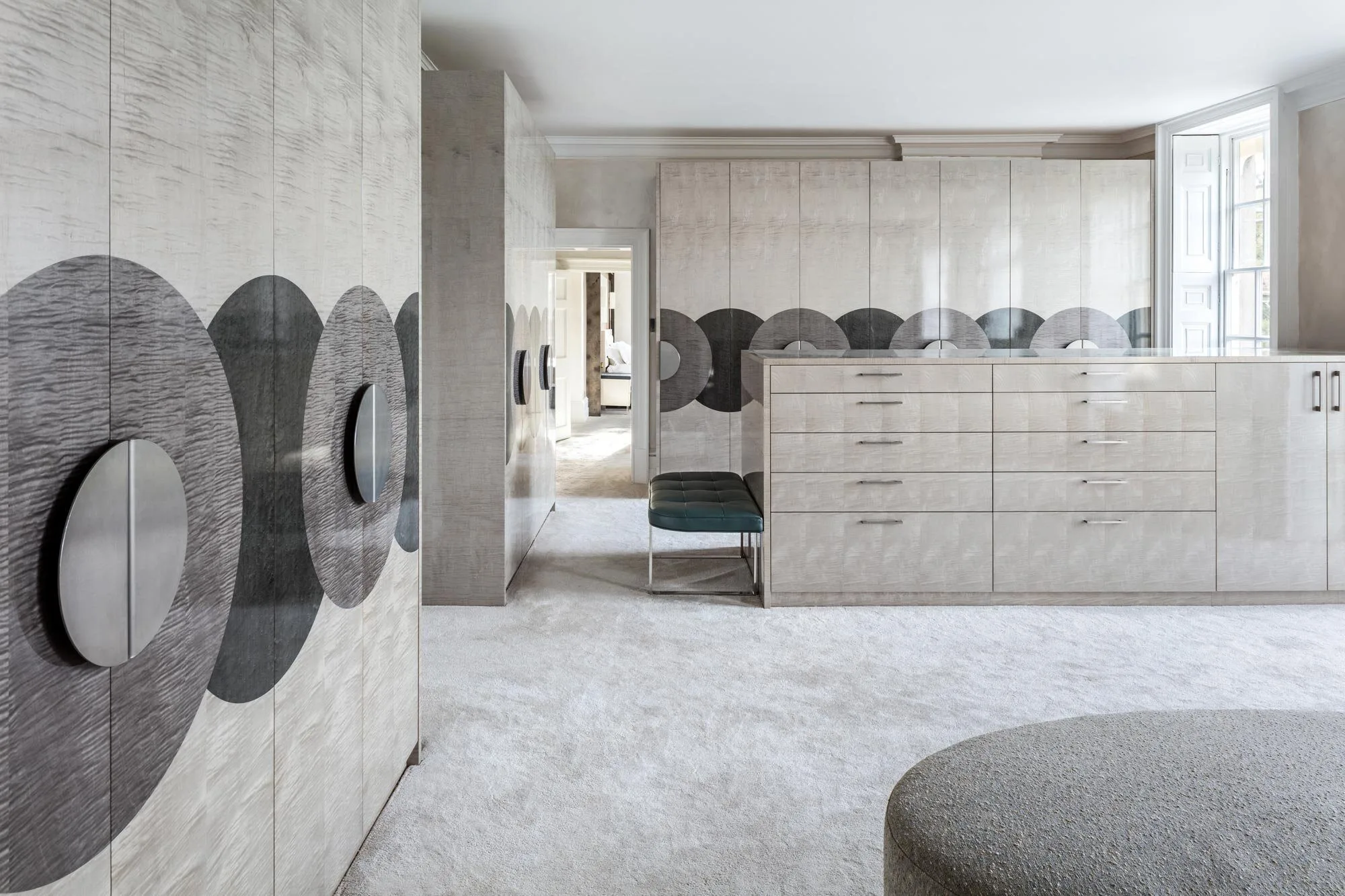
A wider, lower form — typically 75–90 cm high, 140–200 cm wide — with drawers running across the cabinet rather than stacked vertically. Low chests double as a surface for a lamp, sculpture or photographs; specified into halls, dressing rooms and the foot of a long wall.
Lingerie chests
A tall, narrow chest with many small drawers — typically 7–10 shallow drawers, each sized for folded clothing or accessories. Lingerie chests are dressing-room pieces, sized to fit between hanging rails and other dressing-room joinery.
Commodes and feature chests
More decorated forms — bombé fronts, marquetry panels, ormolu-style hardware, lacquered fronts with painted detail. Commodes are typically single statement pieces in a drawing room, a hall or at the end of a corridor, where the chest reads as a piece of art as much as storage.
Chest-on-chest
Two chests stacked, the upper smaller than the lower, sometimes with a moulding between. Chest-on-chest is the highest of the chest forms — useful where vertical storage volume is wanted in a small footprint.
Specifying a chest
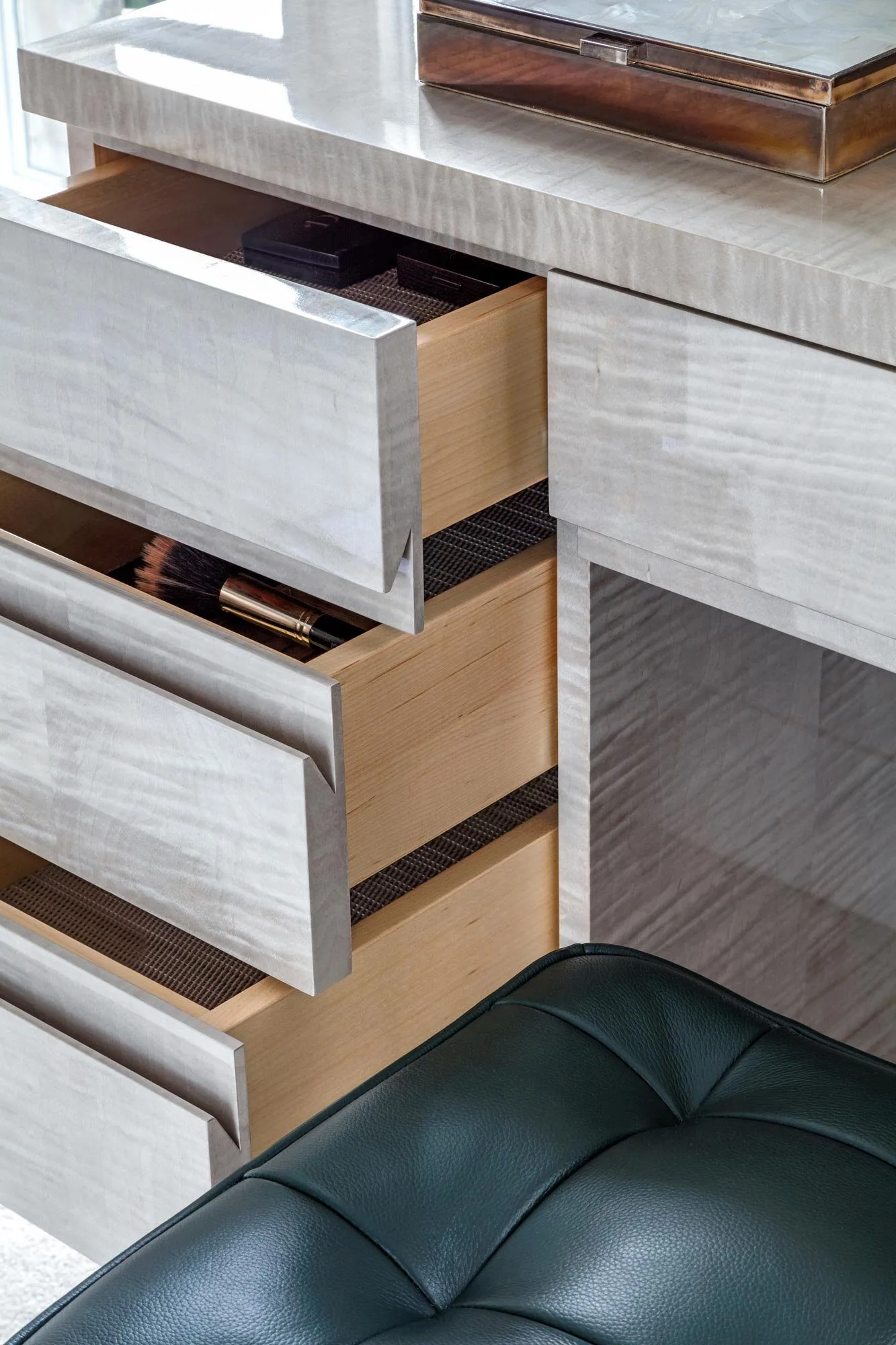
Drawer construction is the most important decision. Dovetailed drawers — hand-cut or machine-cut to a hand quality — last several decades of daily use and are the standard specification across the workshop's chests. Drawers run on hand-fitted hardwood runners (traditional) or on soft-close hardware (modern); both are valid, and the choice is set by the brief.
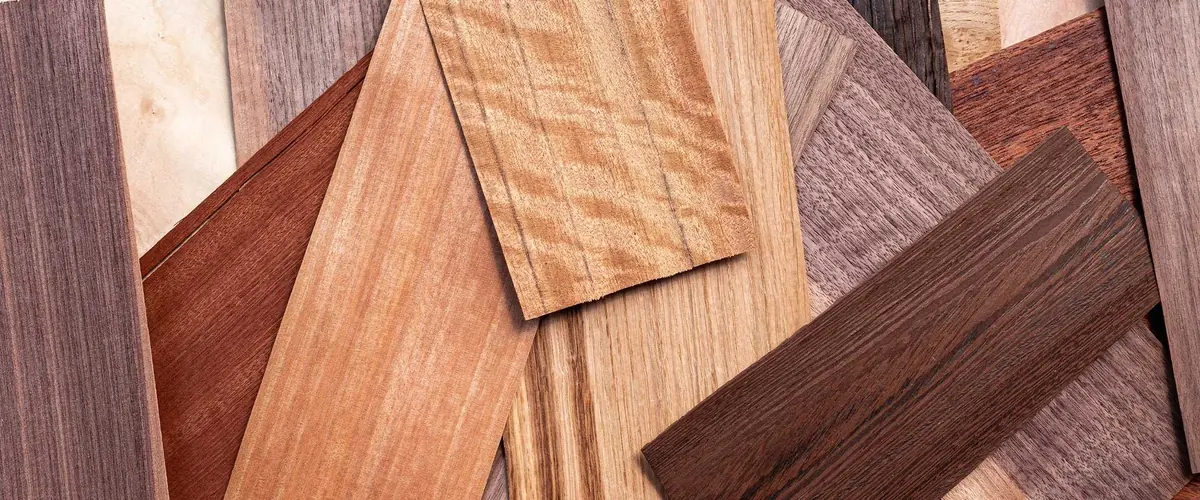
Surfaces follow the brief: book-matched veneer fronts read as continuous figure across the drawer fronts; lacquer fronts give a clean, contemporary line; painted fronts allow any colour. Hardware — drawer pulls, knobs — is finished to match the room's wider metalwork. Interior linings can be specified in cotton, linen or leather for a softer drawer interior.
Lead times run 10–14 weeks from approved drawings, longer for commode fronts with applied marquetry or carving. Chests ship complete; chest-on-chest assembles on site.
Where this sits
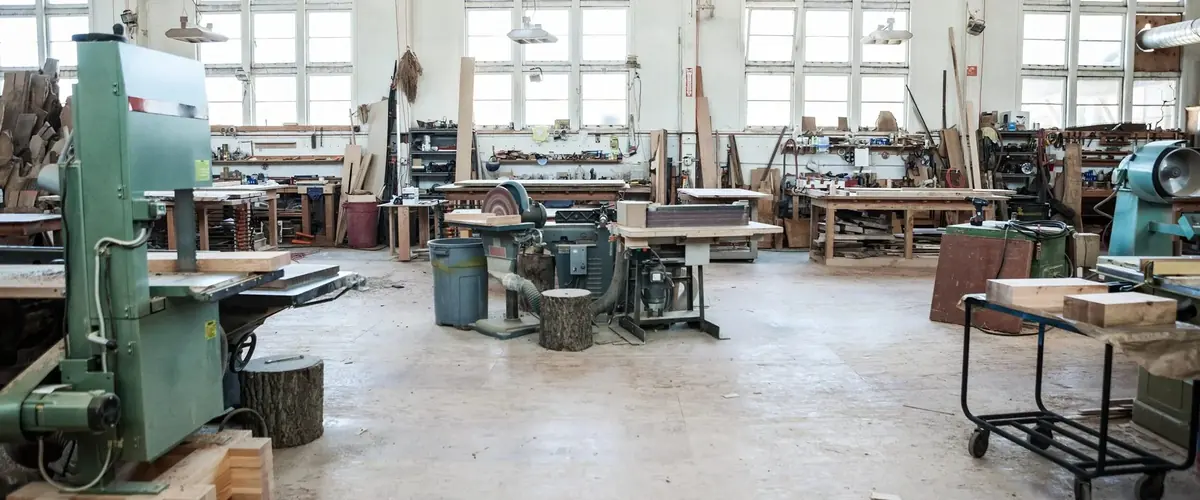
This page covers one of the pieces in the casegoods catalogue. The broader range — credenzas and sideboards, drinks cabinets, dining and coffee tables, console tables, boardroom tables, bedside tables, chests and commodes, writing desks, dressing tables and display cabinets — sits under casegoods furniture. The cabinetry behind every piece is set out on the woodwork workshop page; surfaces and finishes are covered under materials.