Khatam Kari
An ancient Persian inlay technique from Isfahan, tiny triangles of wood, bone, brass and silver wire assembled into intricate geometric star patterns of extraordinary intricacy.
A single square centimetre of khatam can contain more than a hundred individual pieces. The geometry is mathematical; the execution is entirely by hand.
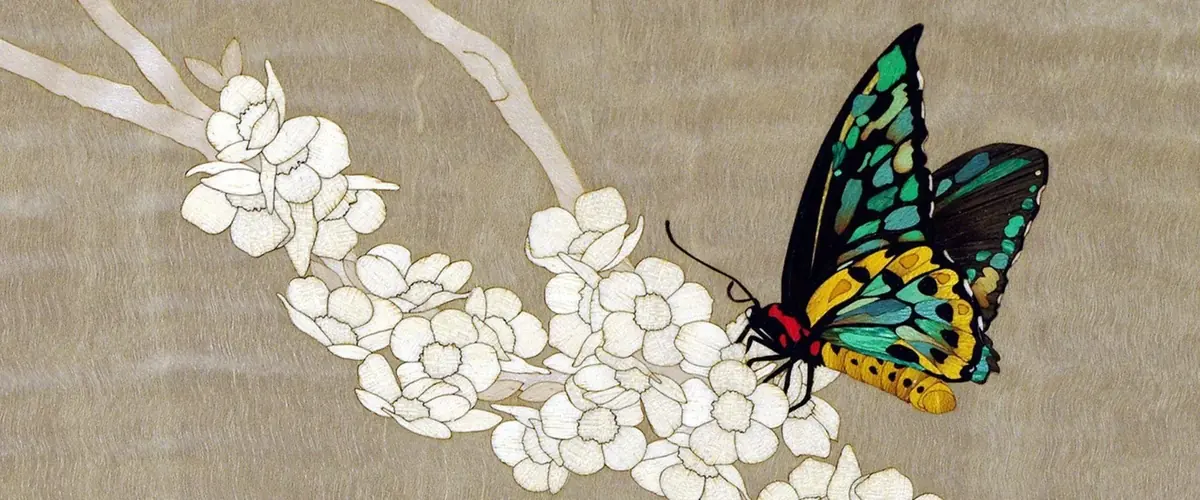
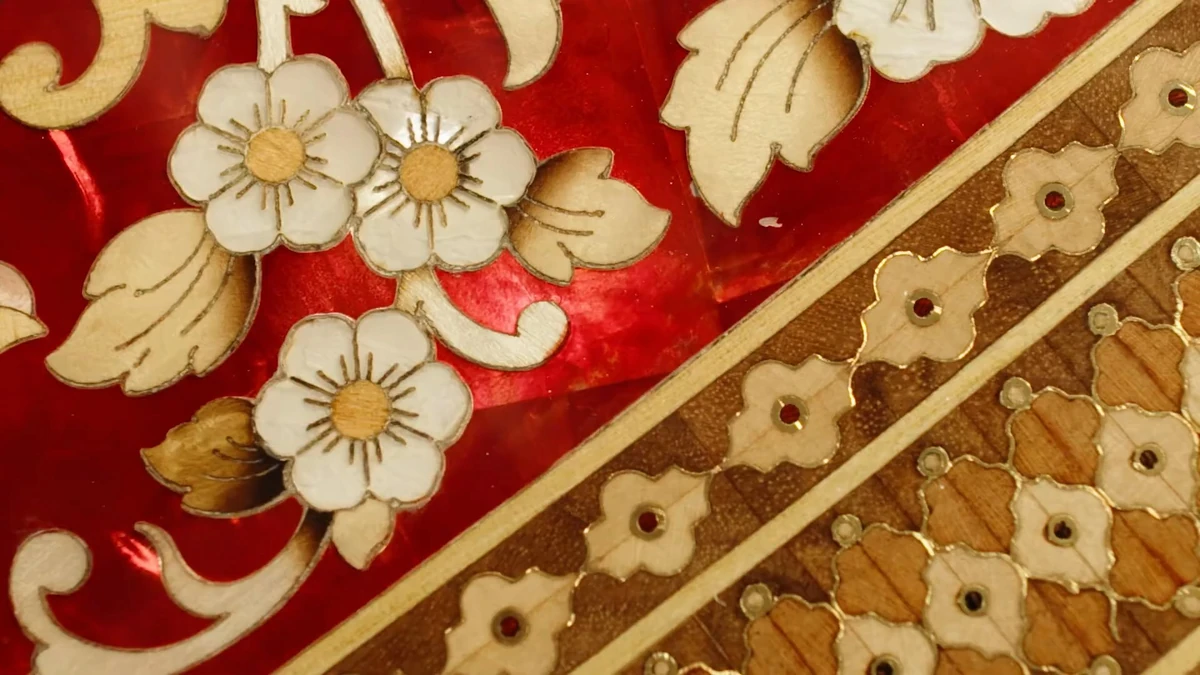
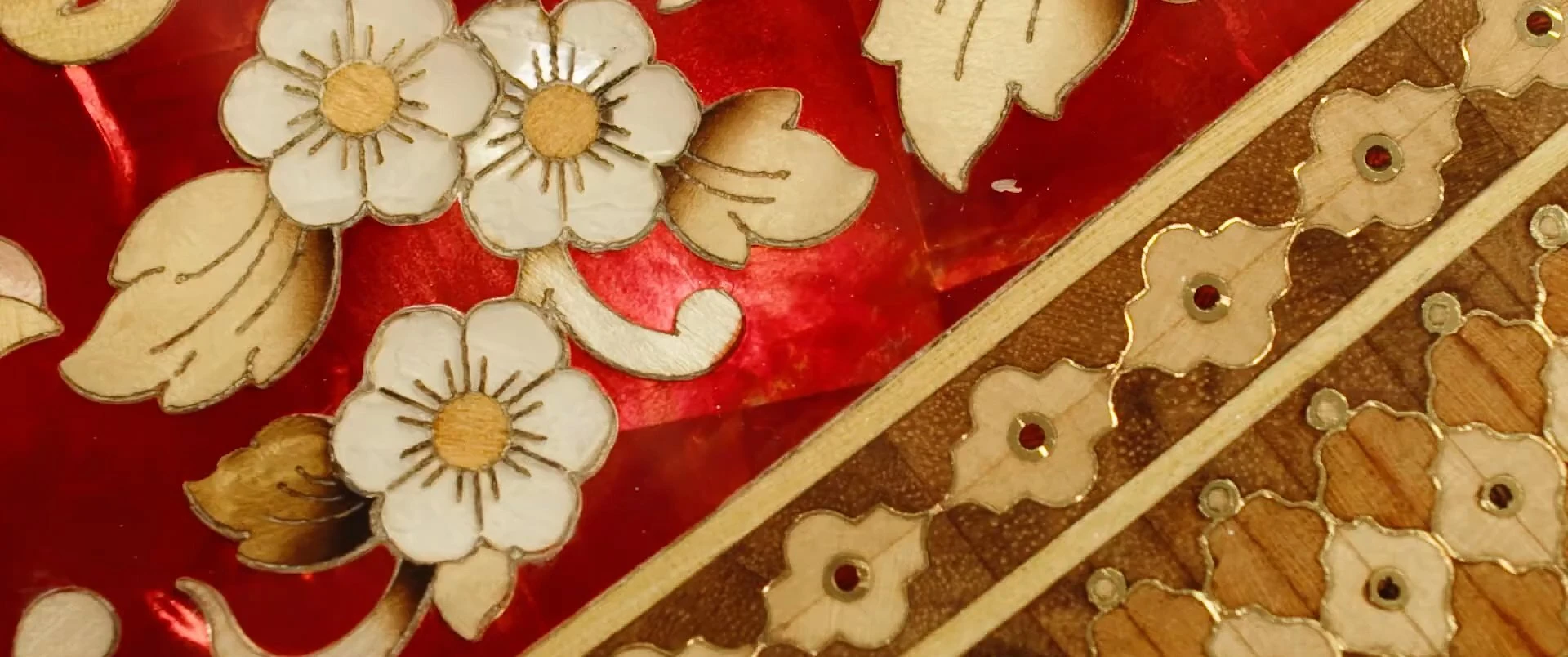
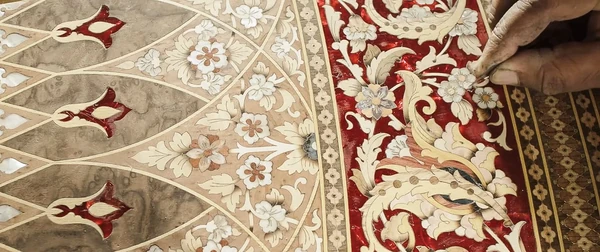
Khatam kari (خاتم کاری, also written khatamkari) is one of the great decorative arts of the Persian world — a micro-mosaic form of marquetry. The name translates as "inlaying" (khatam, "incrustation", plus kari, "work"), and the tradition has been practised continuously in Isfahan, Shiraz and Tehran for at least 700 years. The work consists of assembling tiny triangular pieces of wood, bone, brass, silver wire and ebony into complex geometric star and polygon patterns on the surface of an object. A square metre of khatam may contain several hundred thousand individual pieces.
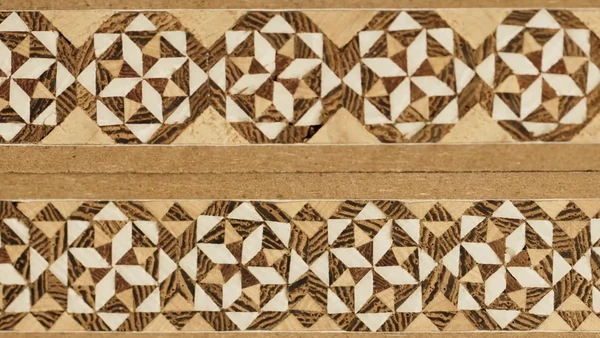
The characteristic unit is the six-pointed star, constructed from six equilateral triangles of alternating materials. Skilled khatamkars also execute five-, eight- and twelve-pointed star compositions and interlaced polygon patterns of great intricacy. The quality of khatam is measured by the accuracy and consistency of the geometry — a well-made panel holds its character at both close range and across a room.
Make Bespoke Studio sources authentic khatam from Isfahan craftspeople working within the master-apprentice tradition. It is applied to furniture surfaces, screen panels, cabinet insets, decorative boxes and frames. Each commission is developed in collaboration with the khatamkar, who advises on pattern scale and material composition relative to the piece.
Get in touch if you’d like to elevate your project with a touch of khatam.
Tell us about the piece and where it will live.
How khatam is made
Material Preparation
The component materials — typically walnut, orange or jujube wood, brass wire, silver wire and bone — are drawn or cut into long triangular prisms of precise dimensions. The accuracy of these prisms determines the geometry of the finished panel.
Assembly into Bundles
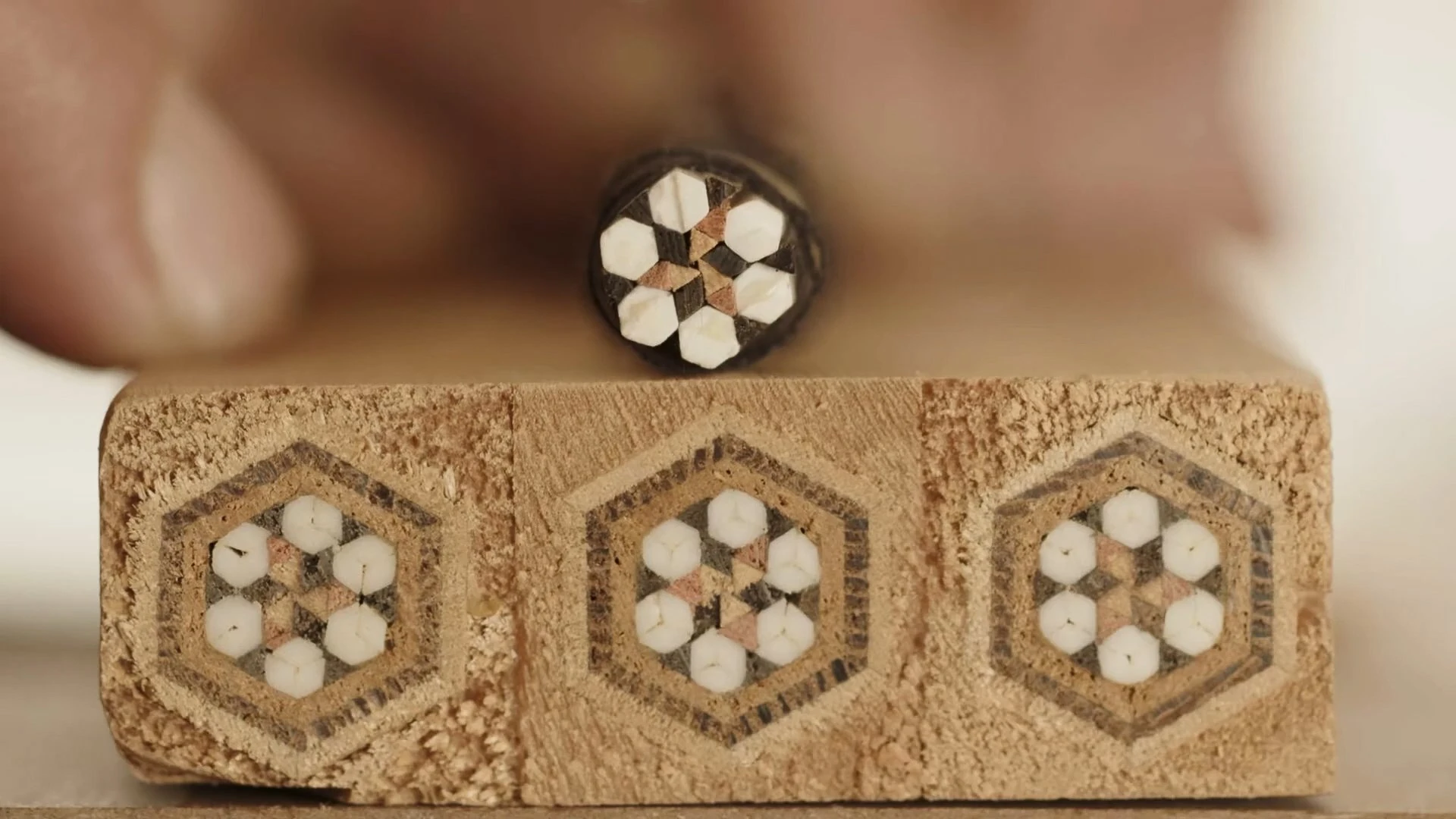
The triangular prisms are assembled by hand into star-pattern bundles, without adhesive, and held together with wire or cord while the pattern is built up.
Slicing
The assembled bundles are sliced across their width with a fine saw, producing thin discs of the completed star pattern. These are laid side by side onto the panel, building up the surface section by section. A single square centimetre can hold more than a hundred individual pieces.
Pressing & Finishing
The panel is pressed flat, sanded smooth across the face, and finished with oil or lacquer to seal and protect the surface while maintaining the depth of the inlay.
The workshops
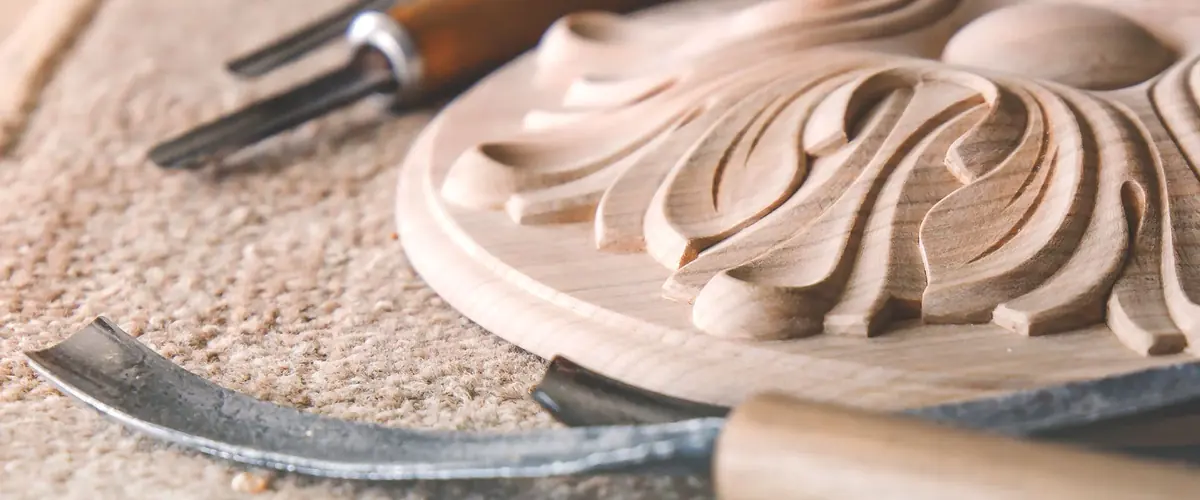
Woodcarving is currently being practiced mainly Isfahan, Shiraz, and Tehran. This delicate art has seen great innovation by preserving its noble qualities. Special attention is given to the design aspect of this skill, wherein magnificent patterns are etched into wood, ivory or bone with simple or more distinguished shapes.
The masters
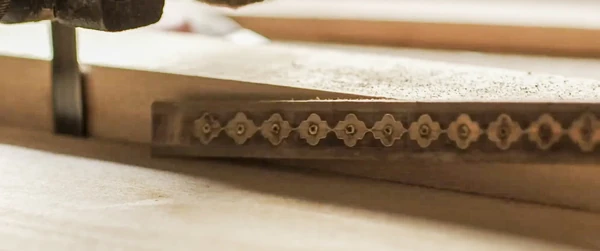
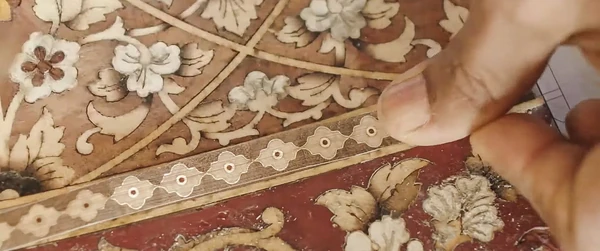
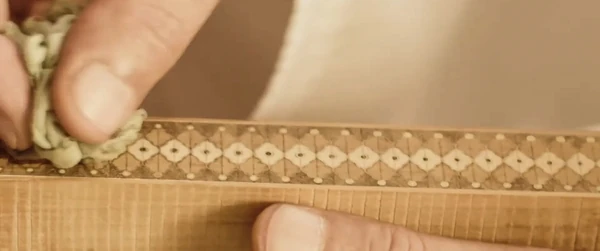
Mohammad Bagher Hakim-Elahi was a master of the art of Khatam. He learned from Master Sanee-Khatam in his youth in Shiraz, Iran and taught his youngest brother, Asad-ol-lah Hakim-Elahi. In the early 1950s, Mr. Hakim-Elahi moved to Tehran where he stayed until his death in March 2012. He crafted numerous Khatan works, from small frames and jewelry boxes to larger pieces like coffee tables and chandeliers. His works are now in a variety of locations around the world such as museums in Iran and private collections.
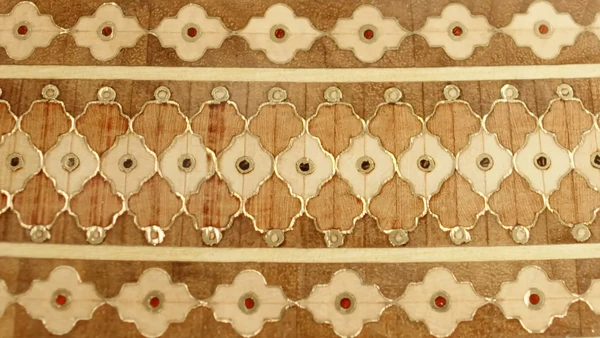
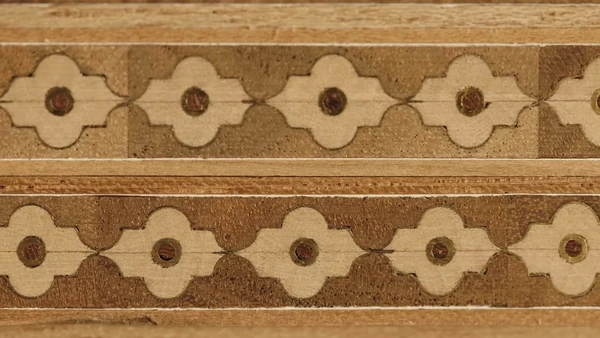
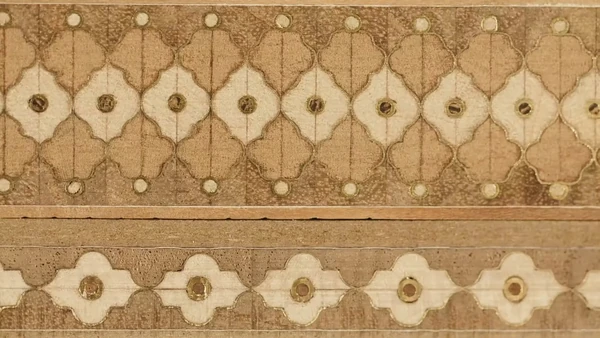
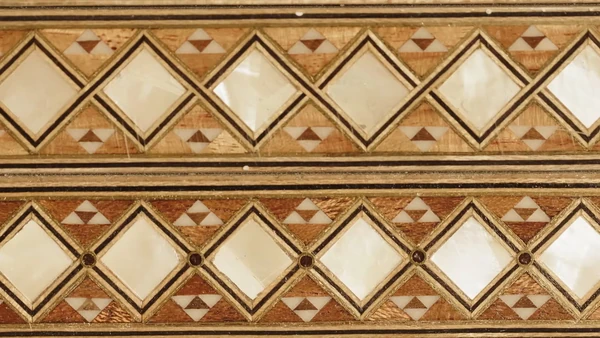
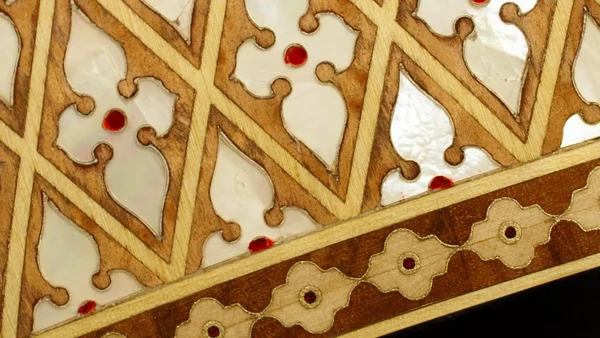
Wood carving is a popular art form seen around Iran, especially on mosques, palaces and ancient buildings. Images of rose leaves, birds and animals are commonly depicted, as well as latticework which is handmade. Iran is renowned for its old lattice doors and windows. Another type of art is sudorific woodwork - which involves intricate designs carved out of various colors of natural wood. This produces an even surface with interesting images that can include trees, flowers and animals. The Cultural Heritage Organization of Iran funds workshops to preserve this craftsmanship, while it continues to be passed down within private workshops.
Where khatam
appears.
Khatam suits objects and surfaces where the detail can be appreciated at close range. Coarser pattern scales read well at larger dimensions — table tops, cabinet fronts; finer patterns suit smaller pieces and decorative objects. The technique works in both contemporary and heritage interiors — the geometry is non-Western in origin but reads as architectural ornament in any context.
- Decorative table tops
- Cabinet and armoire door panels
- Decorative box and case surfaces
- Frames for mirrors and artwork
- Screen panel inserts
- Bedside table and occasional furniture surfaces
- Architectural niche and alcove linings