Liquid Metal
Real metal powder,
applied directly
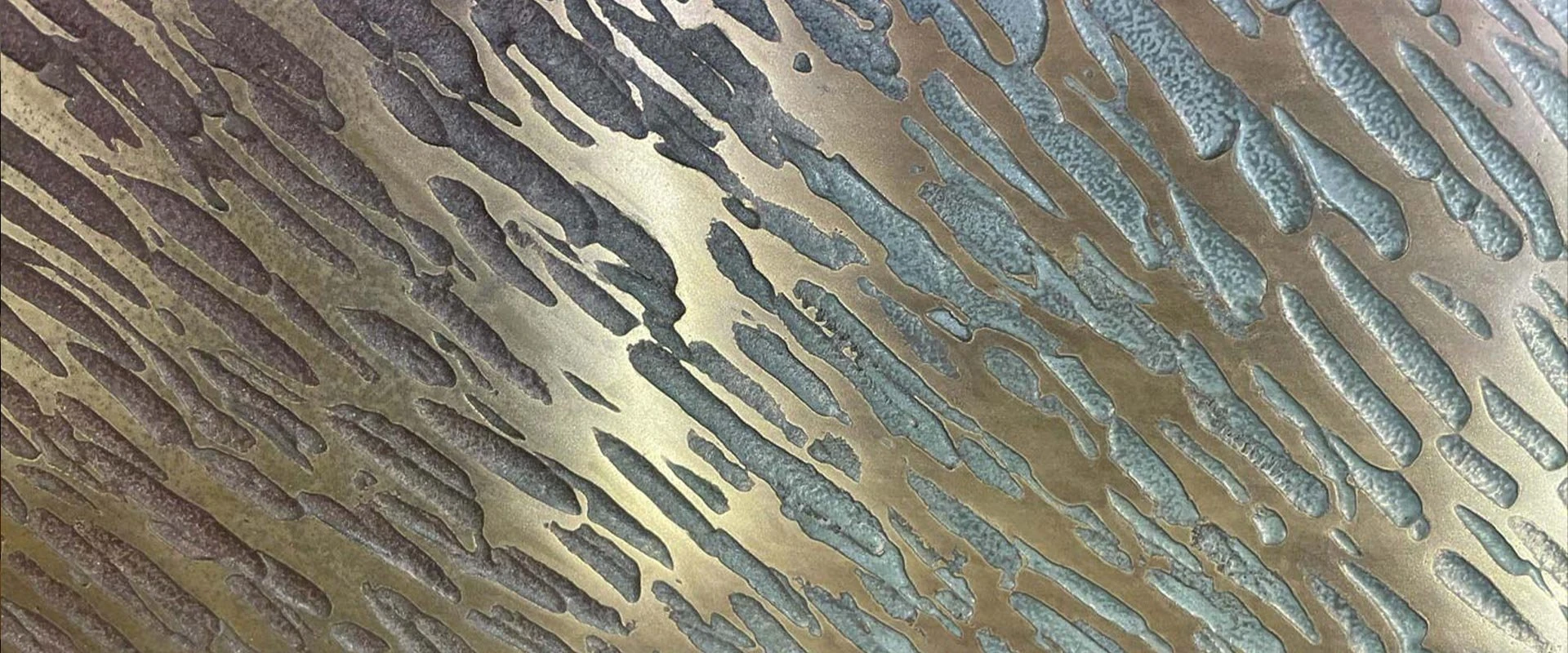
Liquid metal — sometimes searched as liquefied metal or sprayed metal — is a specialist surface that combines real metal powder, bronze, brass, copper, nickel or iron, with a binder, applied directly over a prepared substrate. It is a genuine metal layer rather than a paint or an imitation. Once cured and finished, the surface can be polished, brushed or patinated like solid metalwork, and it reads as cast or fabricated metal at close inspection.
The appeal is that it brings a true metal face to forms where solid metal would be impractical. A large reception desk, a curved bar front or a sculptural wall panel can carry the weight, cost and lead time of solid bronze, or it can be built from a lighter substrate and given a real metal surface. The finished piece behaves like metal at the surface because it is metal.
Because the metal is applied rather than cast, it follows the form beneath it. Flat panels, tight curves, returns and three-dimensional objects all take the same continuous surface, with no seams or visible joints across a face. This makes liquid metal suited to complex joinery and to pieces that need to read as a single mass of metal.
Liquid metal for a feature or a whole surface?
Samples are made for each project, so tell us about yours.
Where liquid metal
is used
How the surface
is built
The work begins with the substrate. This is usually timber, MDF, resin, fibreglass or a composite, shaped and prepared to the final form. Sharp arrises, joints and any surface flaws are addressed first, because the metal layer follows the substrate faithfully and will record whatever sits beneath it.
Real metal powder is then combined with a binder and applied by hand or by cold spray across the prepared face, built up in coats to a workable thickness. The term cold applied is accurate: there is no foundry and no molten metal, so heat does not threaten the substrate or the surrounding joinery. The metal cures at room temperature.
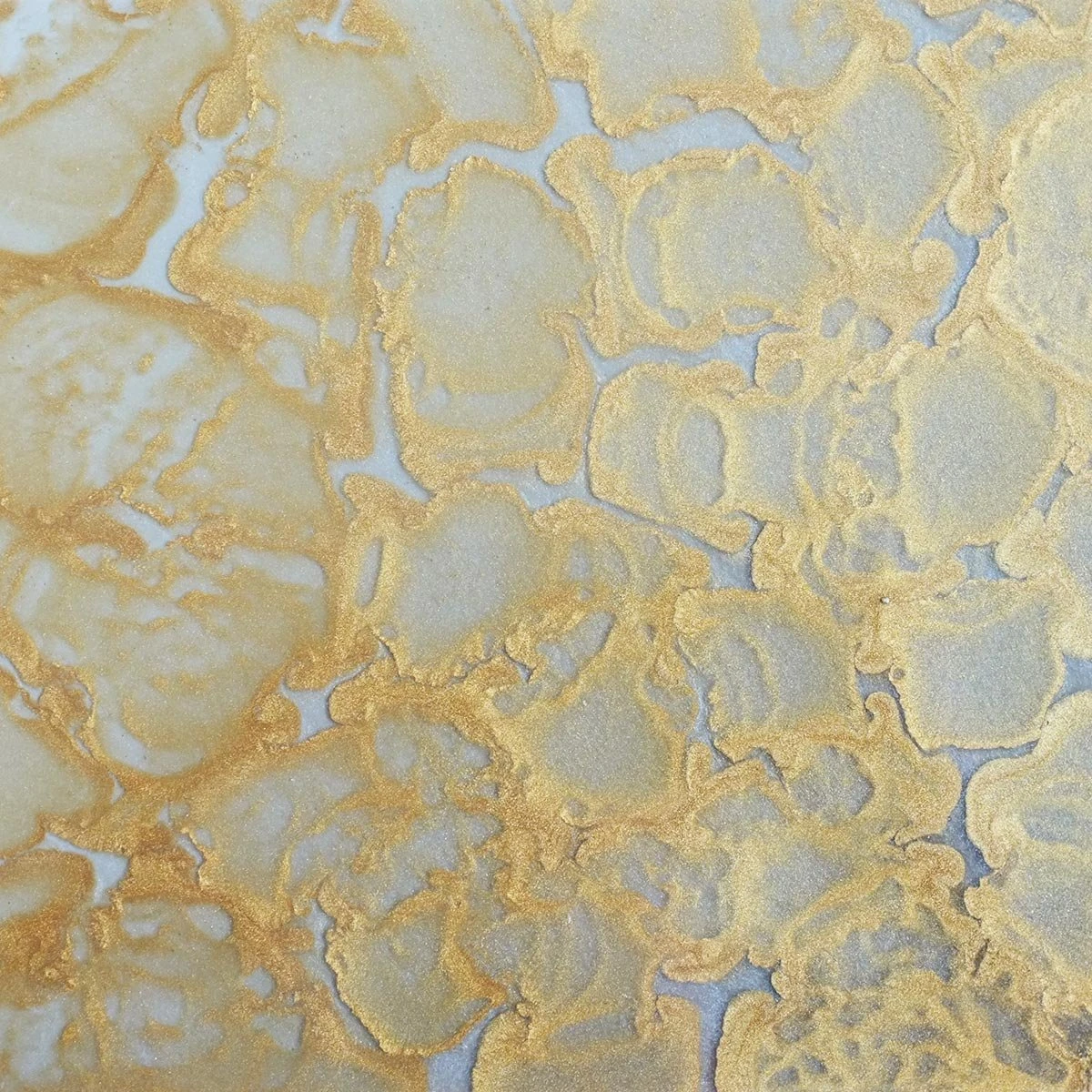
Once cured, the surface is worked back. It can be ground, sanded, polished, brushed or wire-brushed to the chosen finish, and chemical patination can be introduced to age the metal and draw out colour. A protective seal is applied last where the setting calls for it, balanced against the wish to let the metal continue to move over time.
Metals and the
finishes they take
The common metals are bronze, brass, copper, nickel and iron, each with its own base colour and its own response to patination. Bronze and brass run warm and golden, copper turns from salmon-pink to deep brown, nickel reads cool and pale, and iron gives a dark, industrial grey that can be allowed to rust.
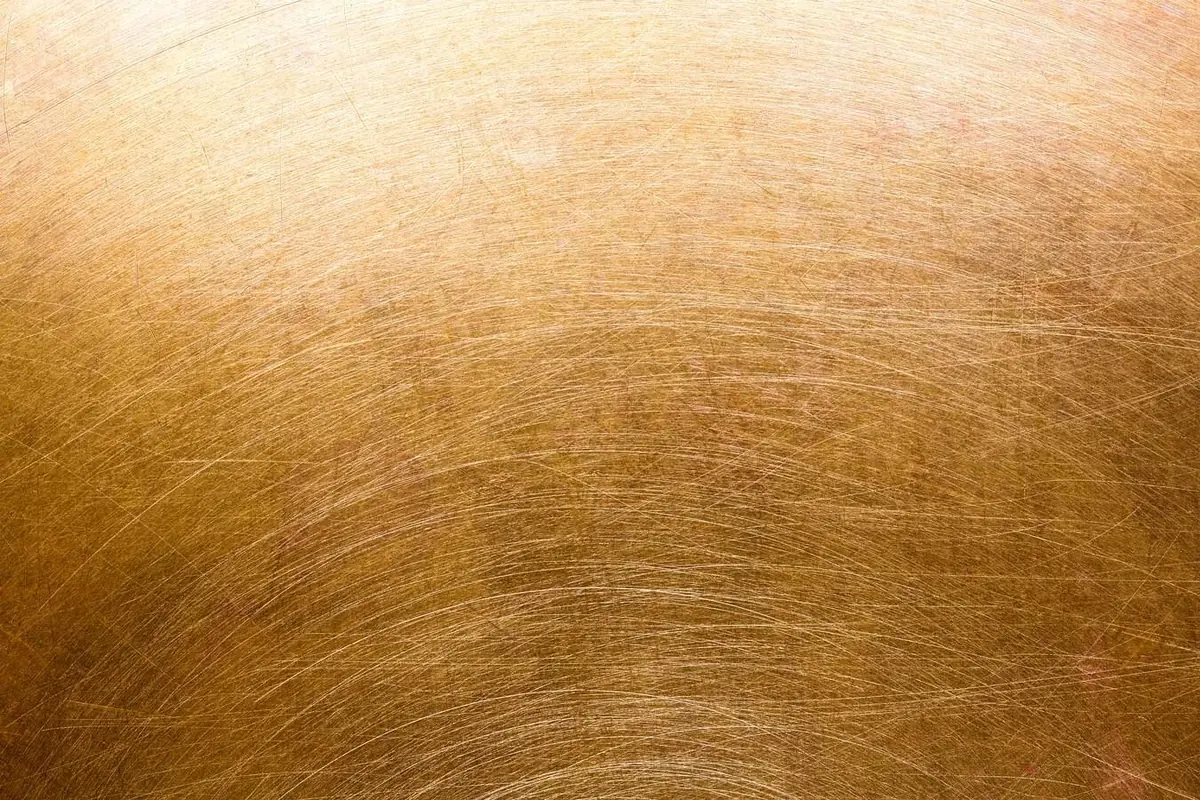
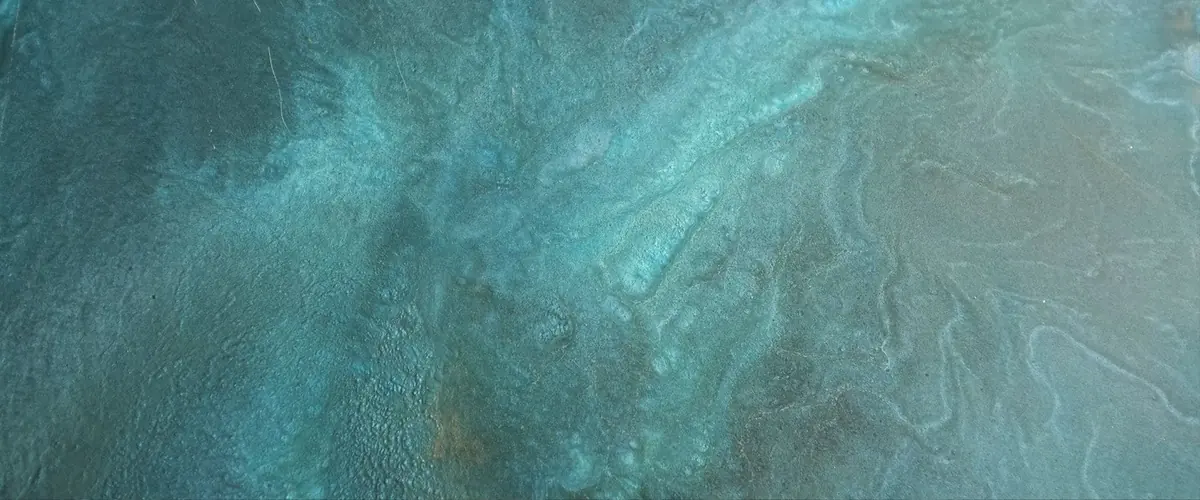
A polished finish brings the metal up to a reflective face that shows its true colour. A brushed or satin finish softens the reflection into a directional grain. Patinated finishes use controlled oxidation to age the surface, deepening bronze and brass toward brown and black. On copper, the same approach can be pushed further into verdigris, the blue-green bloom that copper develops over years outdoors, achieved here in a controlled way.
Because the finish is worked by hand, two pieces are rarely identical, and a single piece can carry a graded finish across its face. Samples are prepared so that colour, sheen and degree of ageing can be agreed before a piece goes into production.
Living with
liquid metal
The surface is real metal, so it carries metal's character. Polished and patinated finishes will mark, fingerprint and develop a patina with handling, which many specifiers want and choose the finish to suit. On heavily used surfaces such as bar tops and reception counters, a brushed or patinated finish hides daily wear more readily than a high polish.
Weight stays close to that of the substrate, so a metal-faced panel remains far lighter than its solid equivalent and is simpler to fix, transport and install. The applied layer is robust but not structural: it is supported by the substrate beneath, and sharp impact can chip or dent in the same way solid metal can deform.
Maintenance is straightforward. A dry or barely damp cloth suits most finishes, and abrasive cleaners and harsh chemicals are best avoided, as they will cut into sealed and patinated surfaces. Sealed finishes hold their appearance; unsealed metal will continue to age, which is part of the material's appeal where that is the intent.
Working with
the material
We treat liquid metal as a finish specified to a piece rather than a product taken from a shelf. The starting point is the form and the setting: how the surface will be touched, lit and used, and which metal and finish answer that. From there our makers prepare samples for the metal, sheen and degree of patination, so the result can be judged in the hand before it is committed.
Within our workshop network the substrate, joinery and metal finish are coordinated as one piece, which keeps surfaces continuous across curves and returns and lets a metal face run seamlessly into the rest of a scheme. Liquid metal can also be paired with solid metalwork, glass, stone, timber and lacquer, so a single surface treatment can carry across an interior.
Is liquid metal real metal?
Yes. The surface is formed from real metal powder, so it is a genuine metal layer that polishes, patinates and ages like solid metal. It differs from a metallic paint, which only imitates the look.
Can it be used on curved or complex shapes?
Yes. Because the metal is applied over a substrate rather than cast, it follows curves, returns and three-dimensional forms with a continuous, seamless surface.
How is it maintained?
Wipe with a dry or barely damp cloth and avoid abrasive cleaners. Sealed finishes hold their appearance, while unsealed metal will continue to develop a patina over time.
Explore further
Have a scheme you'd
like to build?
Samples are made for each project. Get in touch and tell us about your project.