Marquetry
Wood marquetry and bespoke veneer marquetry — the art of cutting and fitting thin veneers of wood, shell or metal to form decorative surfaces, from geometric marquetry designs to pictorial compositions on bespoke furniture and joinery. We produce marquetry furniture, panelling and doors, using both hand-cut and laser-cut marquetry for interiors across the UK and internationally.
Marquetry is the decorative technique of cutting thin pieces of wood veneer, and sometimes shell, metal or bone, and laying them edge to edge onto a surface to form a pattern or picture. Each piece is shaped by hand, the joins are seamless, and the finished panel is flat rather than carved in relief. The design reads through grain, figure and tone, not depth. The technique has been used in fine furniture since the seventeenth century, was central to the Italian Renaissance and the French Art Deco interiors of the 1920s and 1930s, and is now applied to cabinet doors, table tops, drawer fronts, headboards, screens and wall panels. It remains one of the most demanding decorative surfaces in luxury furniture: the work is judged at close range and unforgiving of error.
New to the craft? Our guide, What is marquetry?, explains how marquetry differs from inlay and parquetry, how it developed and how it is cut and laid.
Marquetry is one of the oldest decorative crafts applied to furniture and interiors. Thin slices of wood veneer — and sometimes shell, metal or bone — are cut and assembled piece by piece to form a picture or pattern on a flat surface. The technique demands close reading of each material: grain direction, figure, tonal weight and the way adjacent pieces read against one another.
The studio's marquetry work spans geometric inlay, pictorial panels and mixed-media compositions combining wood with mother of pearl, abalone, dyed veneer and metal foil. More complex work uses hot sand shading — veneer edges are pressed into heated sand to create a gradated burn — to introduce tone and depth without paint or dye. For the shell itself, see what mother of pearl is.
Marquetry panels are applied to furniture tops, drawer fronts, headboards, wall panels, cabinet doors and decorative screens. Designs are drawn to scale in collaboration with the specifying designer, and samples are made before production begins.
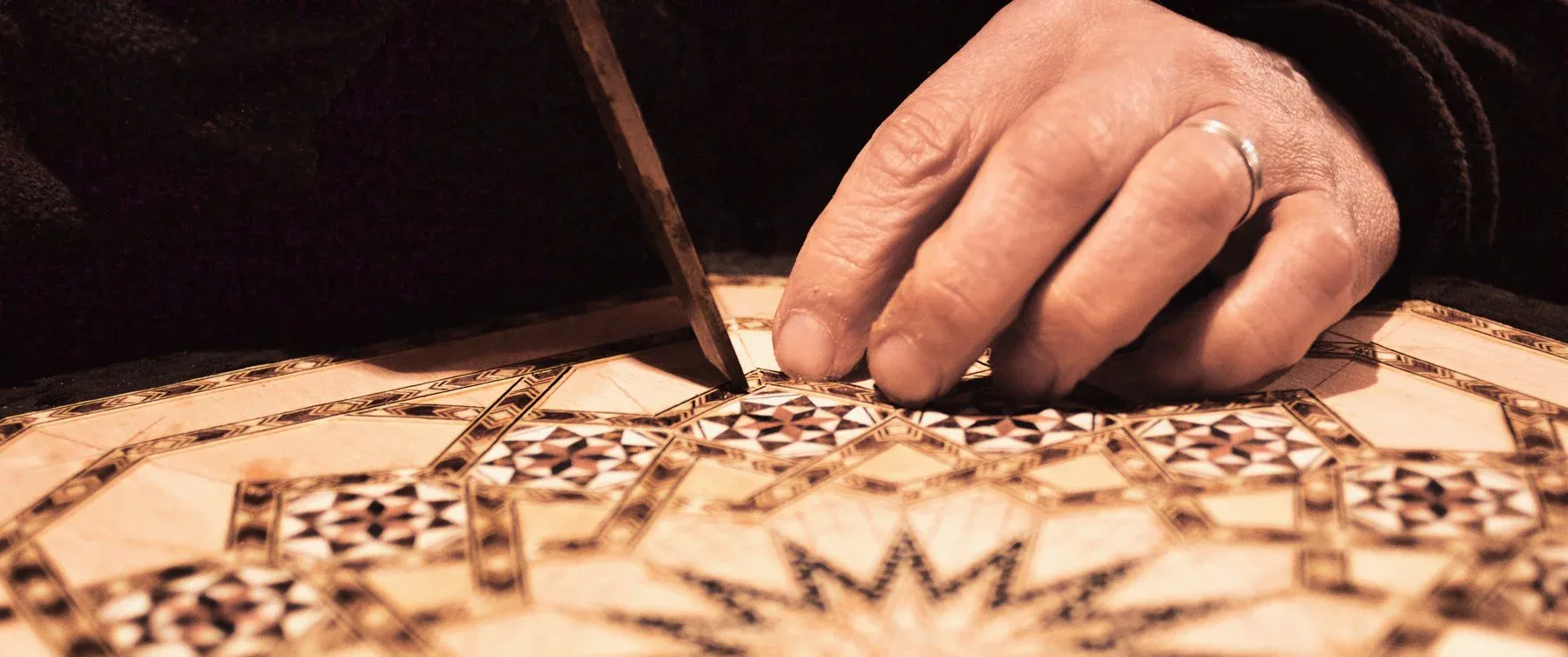
The process
Design & Layout
The pattern or composition is drawn to scale, with each element mapped to a specific veneer species. Grain direction, figure and tonal contrast are planned at the drawing stage, and samples produced before cutting begins.
Veneer Selection
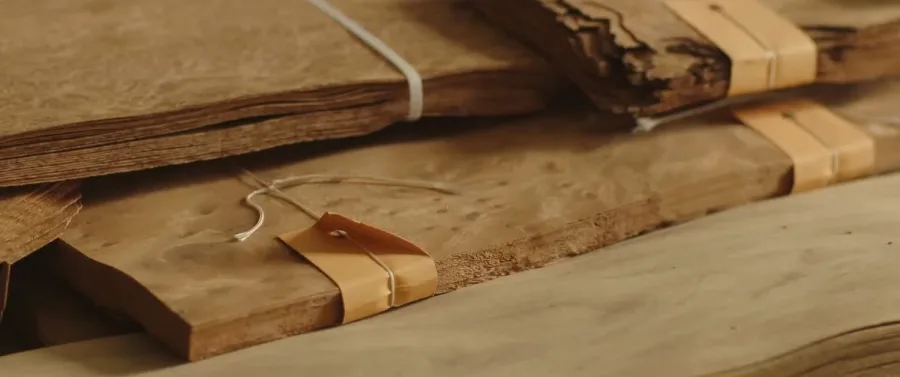
Individual veneer leaves are selected from stock for their grain character and matched visually before cutting. For pictorial work, leaves are chosen for specific natural markings that contribute to the composition.
Cutting & Assembly
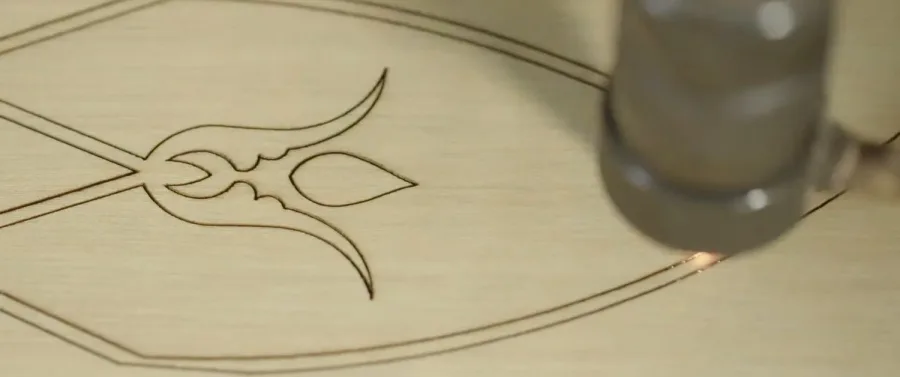
Each piece is cut — traditionally by hand with a fretsaw, or by laser for precision geometric work — and fitted together on a backing panel without gaps. Where tonal gradients are required, hot sand shading is applied to veneer edges before assembly.
Pressing & Finishing
The assembled marquetry is pressed onto the substrate panel, sanded flush and finished with lacquer or oil to protect the surface and enhance the grain.
A short history of marquetry
Marquetry takes its name from the French marqueter — to variegate. The technique grew out of Renaissance intarsia and arrived in northern Europe in the 16th century, where it was developed to decorate the interiors and furniture of grand houses and royal palaces. Its high point came in the 17th century with André-Charles Boulle, ébéniste to Louis XIV, whose cabinets in tortoiseshell and brass — still known as Boulle work — remain the reference point for what the craft can achieve. The arabesque patterns, sand-shaded petals and pictorial panels of that period still define the vocabulary a marqueteur works with today.
Materials of the marqueteur
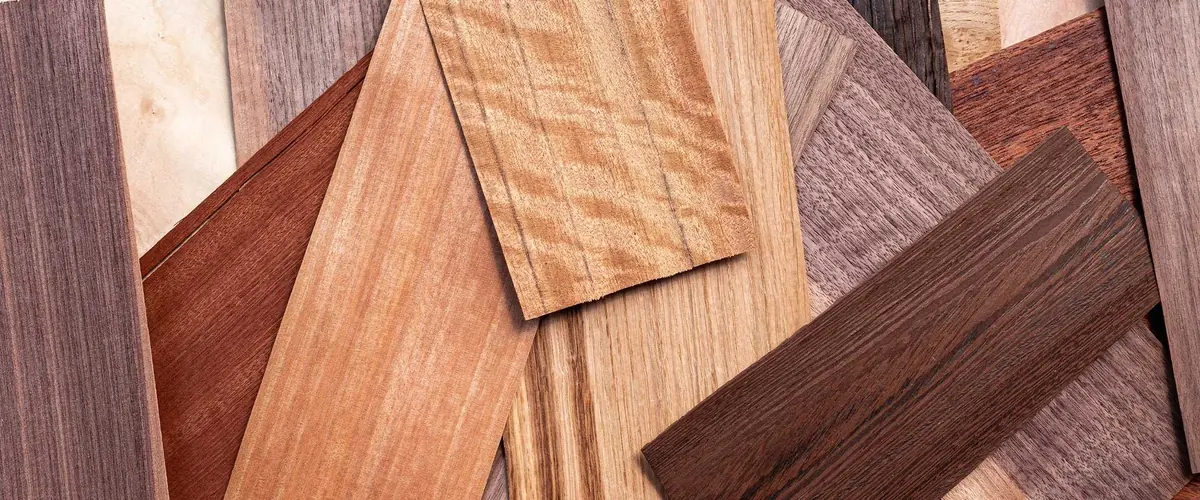
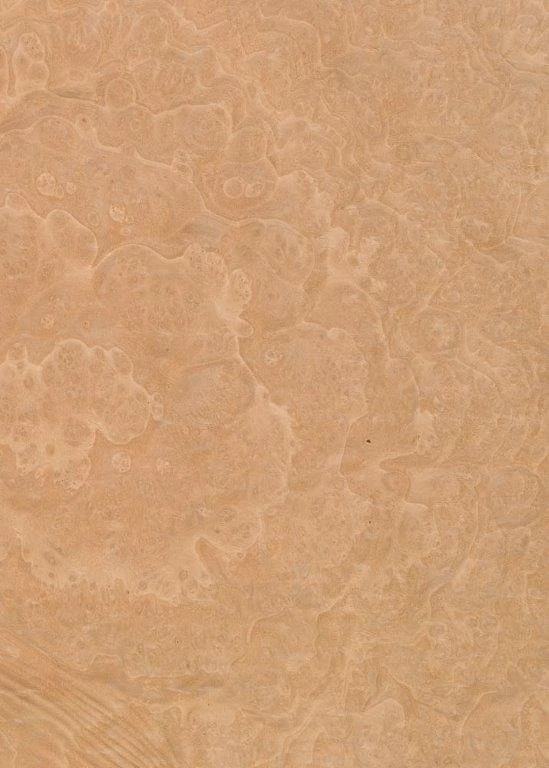
Wood veneer is the heart of the craft: common species like oak, maple and sycamore alongside exotic and precious woods — ebony, rosewood, satinwood and figured burrs prized for their rarity and grain. Dyed veneers extend the palette into consistent blues, greens and greys, and the same design can be re-veneered in a different colourway for each scheme.
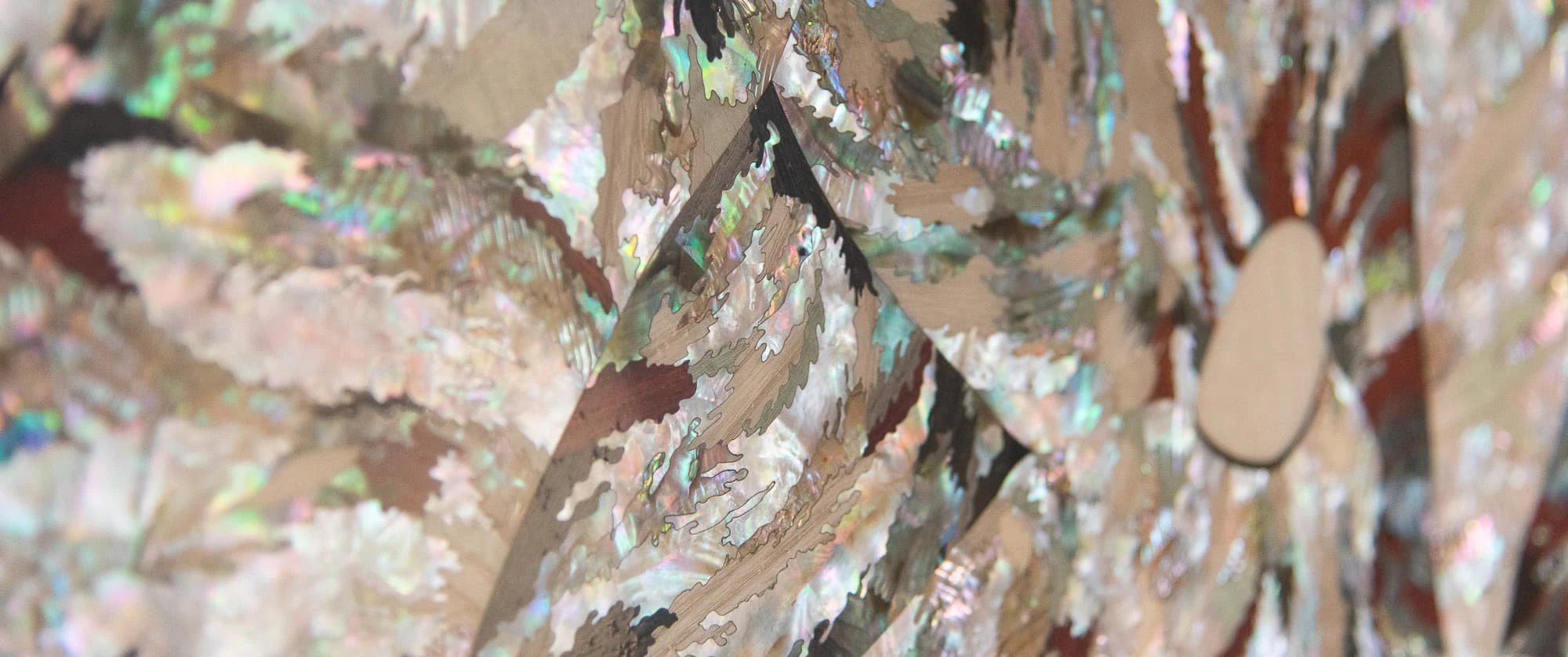
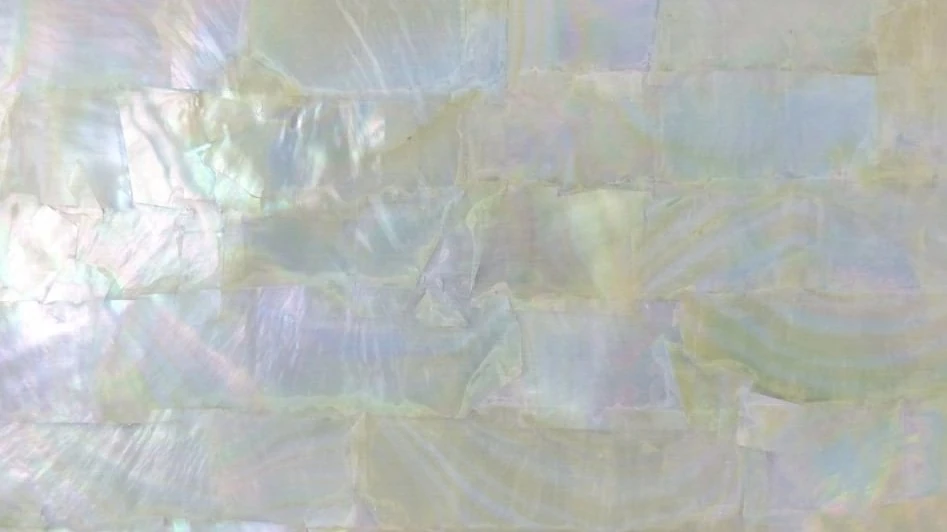
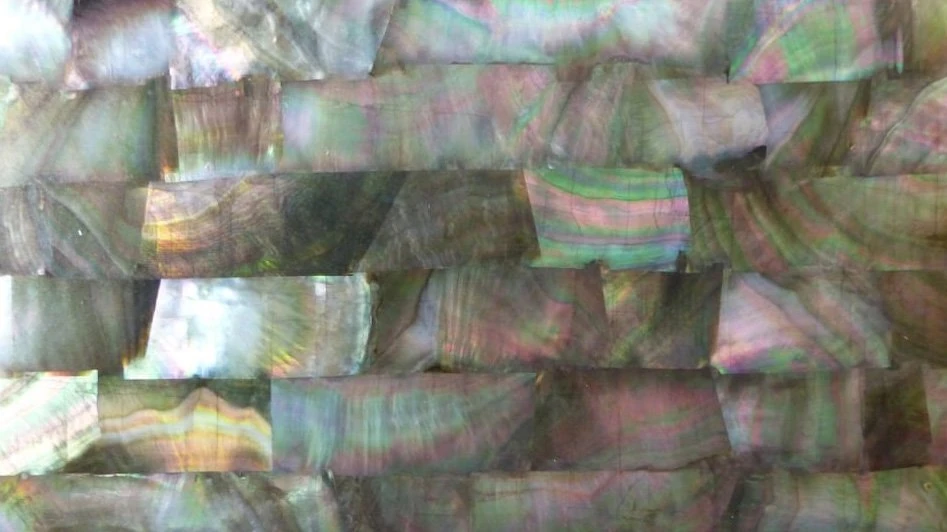
Beyond timber sit the materials that catch light: mother of pearl, abalone and shell for iridescence, metal inlay for line and contrast. Where historical work used ivory, bone and tortoiseshell, we use ethical faux alternatives and acrylic sheet, which cut cleanly, hold colour and avoid any harm. Panels for demanding settings can be backed on aluminium sheets for stability. Veneers are increasingly drawn from responsibly managed and recycled sources — the craft’s future depends on the forests it celebrates.
From drawing to finished panel
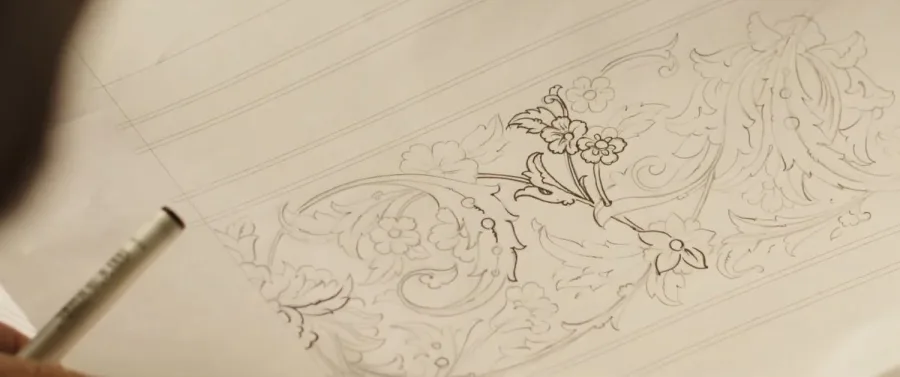
Every commission is developed from original hand-drawn designs, translated into a vector file for the elements that suit laser cutting and cut by knife where hand judgement matters more. Veneer edges pass through hot sand shading — scorched in heated sand to build three-dimensional depth — before each piece is placed by hand. Pieces are dry-fitted before any glue is mixed — alignment checked, adjustments made — then bonded and pressed under vacuum so pressure is even across every joint. Lacquering seals the surface and brings up the contrast between species. Veneers are sourced against FSC certification, and laser-guided cutting keeps offcut waste to a minimum. Advanced techniques such as backing-off with tape produce the subtle relief effects found in the finest pictorial work. How veneer leaves are cut and matched is explained in veneer and book-matching.
Where bespoke marquetry is commissioned
- Furniture – cabinet fronts, table tops, headboards and drinks cabinets where a marquetry surface turns a functional piece into the room’s focal point.
- Joinery and panelling – marquetry panels integrated into wall panelling, library joinery and lift interiors, designed at full size so patterns resolve correctly across the architecture.
- Hospitality and retail – bespoke marquetry surfaces for hotel lobbies, restaurant interiors and boutique fit-outs, where the technique works as a brand differentiator as much as decoration.
- Luxury transport – superyachts, private jets and luxury cars, where inlay bandings and geometric marquetry are produced to aviation and marine substrates and tolerances.
- Architectural surfaces – marquetry flooring medallions and borders, ceiling inlays and large-scale wall panels, where the technique works at the scale of the room itself.
- Private commissions – one-off panels and artworks developed with the client from first sketch to installation.
For the cultural and historical background to the craft, read our journal article on the art of marquetry, or explore straw marquetry — a related technique with its own distinct character. Materials referenced here are held in our materials library.
The modern repertoire
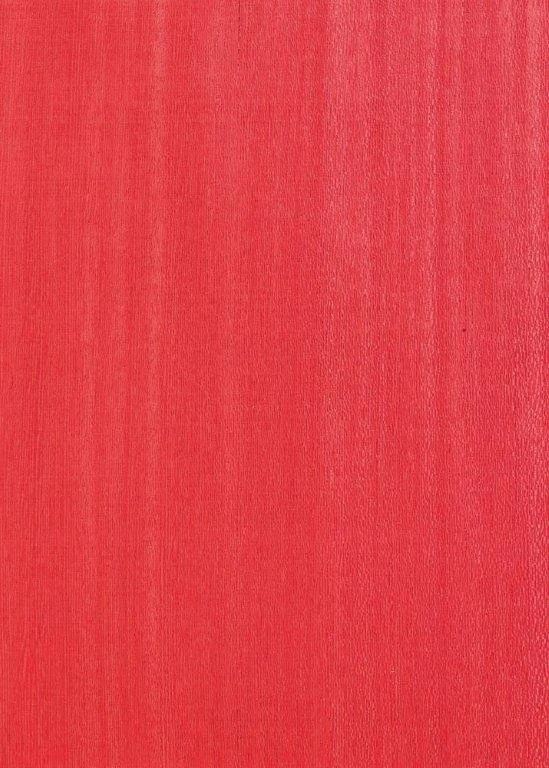
Contemporary marquetry pairs the oldest craft with the newest cutting. A design is developed digitally and laser-cut, allowing intricacy and repeatability that hand tools alone cannot reach — then assembled, pressed and finished by hand. The palette has widened too: alongside natural and figured wood veneers, we work with dyed veneers in vivid greens, blues and reds, mother of pearl and abalone shell for iridescence, and acrylic veneers for the durability that retail and hospitality demand.
Modern work ranges from abstract and Art Deco compositions to naturalistic and geometric motifs, applied to table tops, cabinet fronts, decorative wall panels and the interiors of superyachts, private jets and luxury cars.
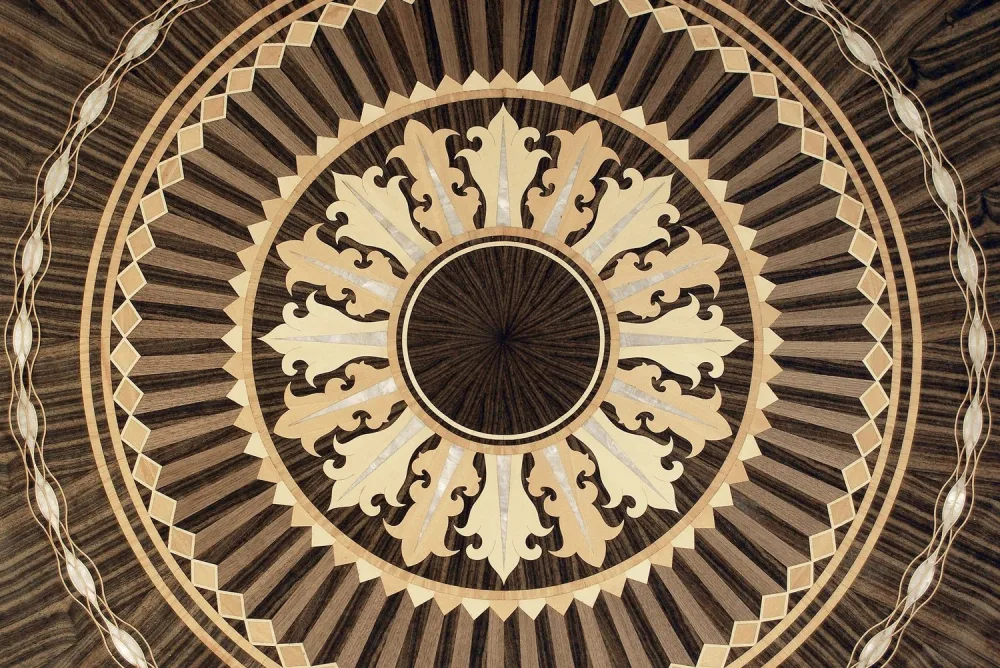
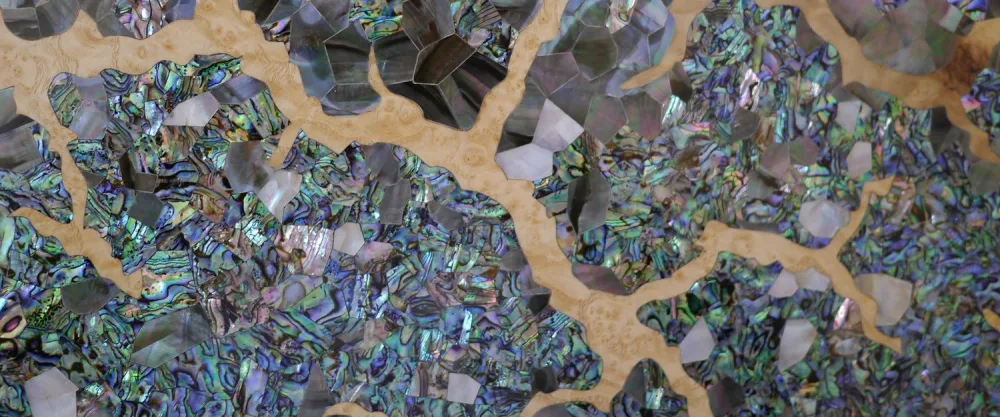
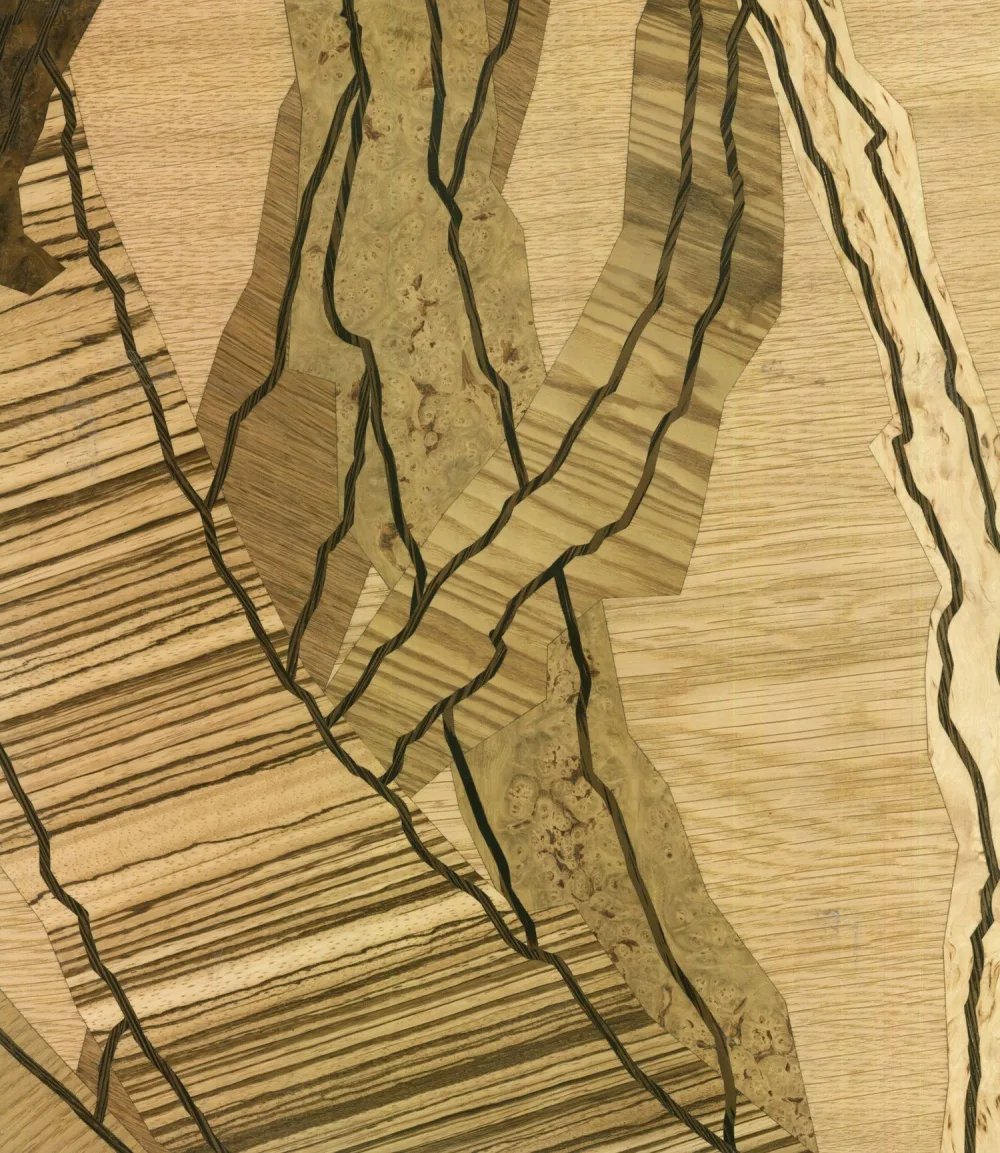
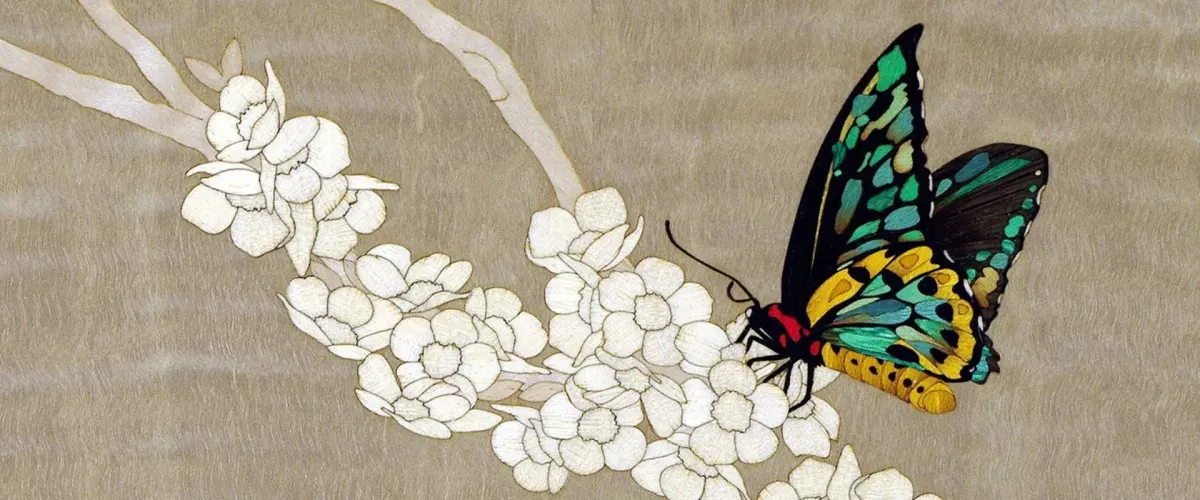
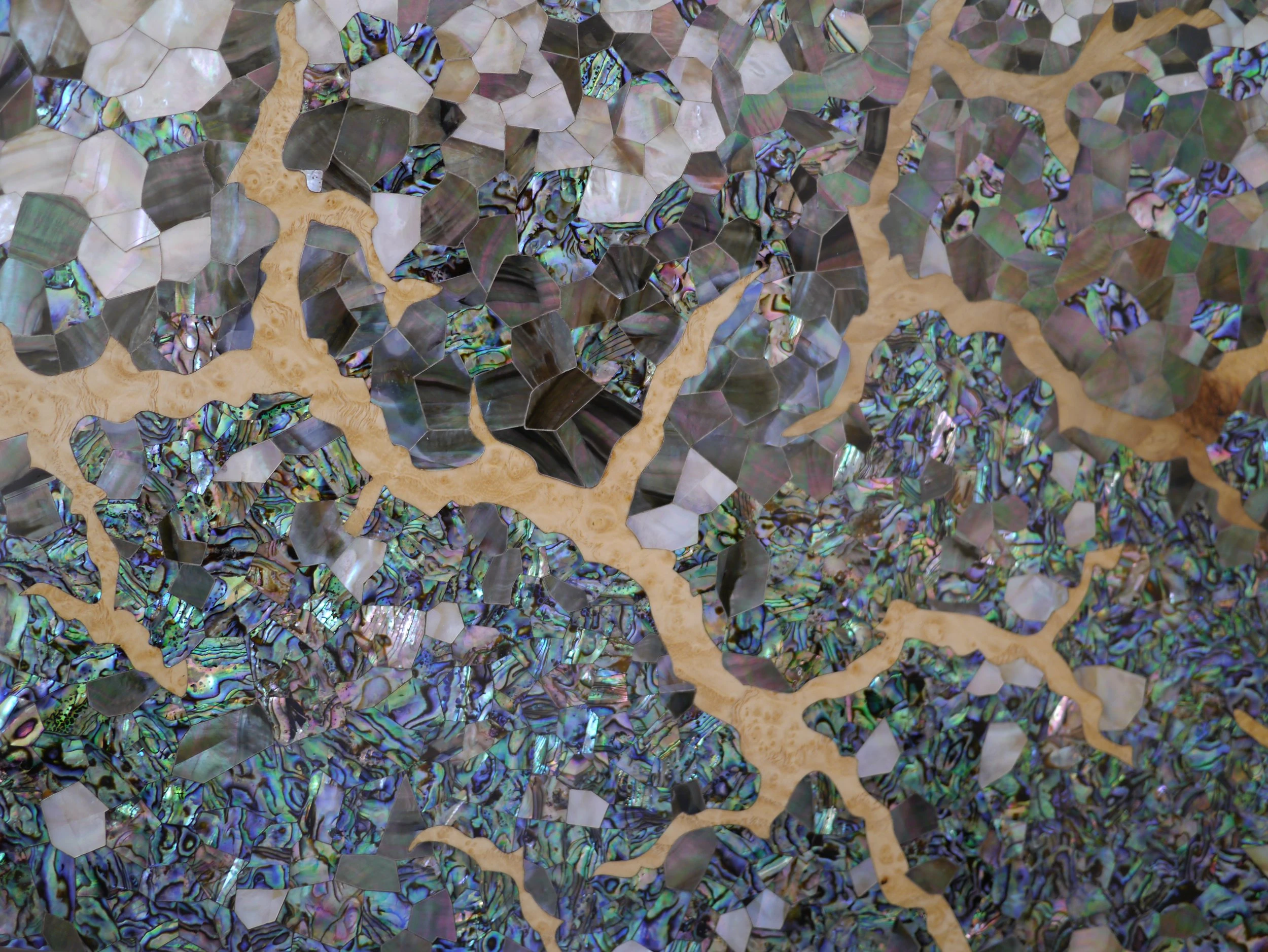
Pictorial panels in mother of pearl
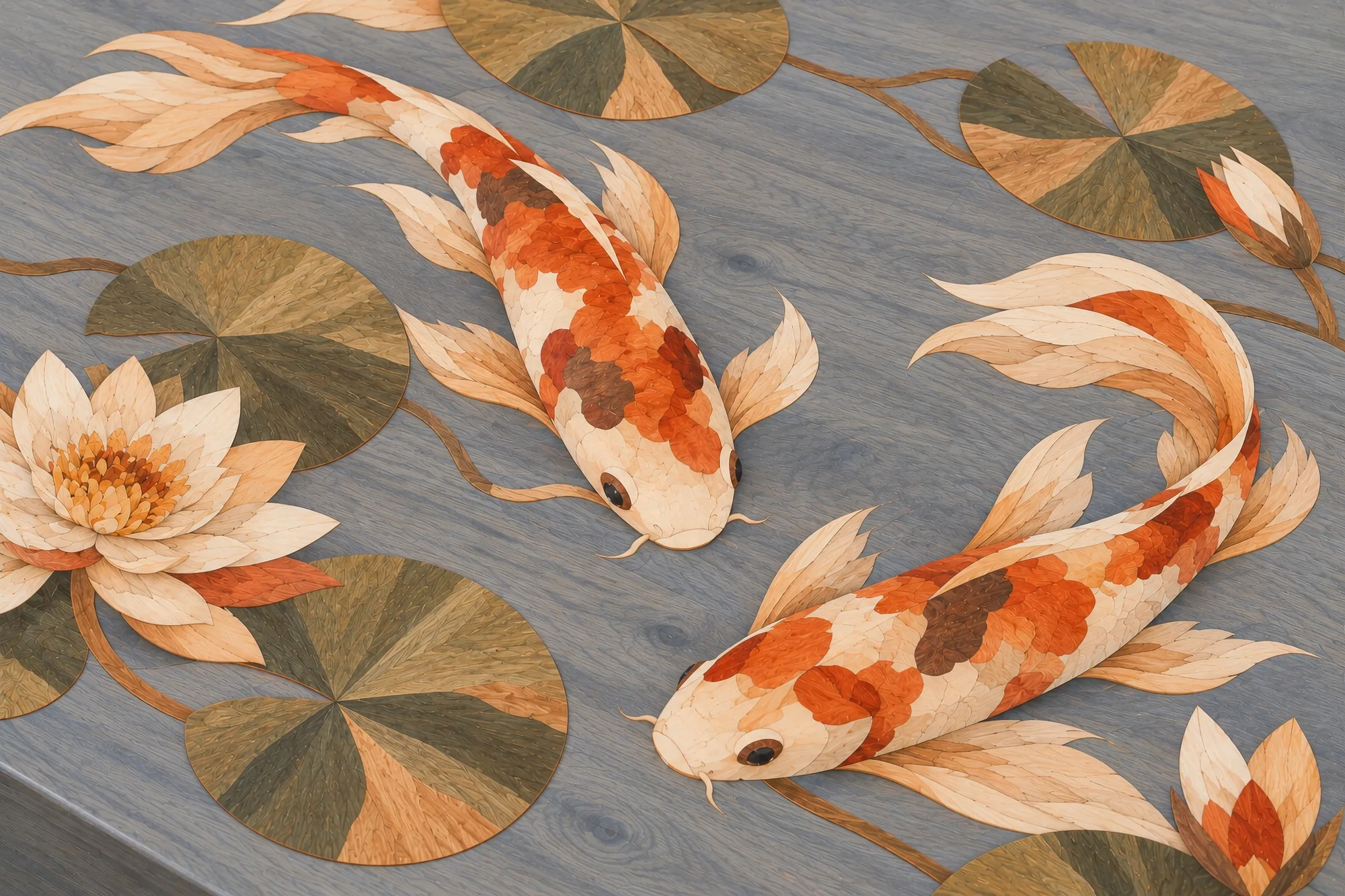
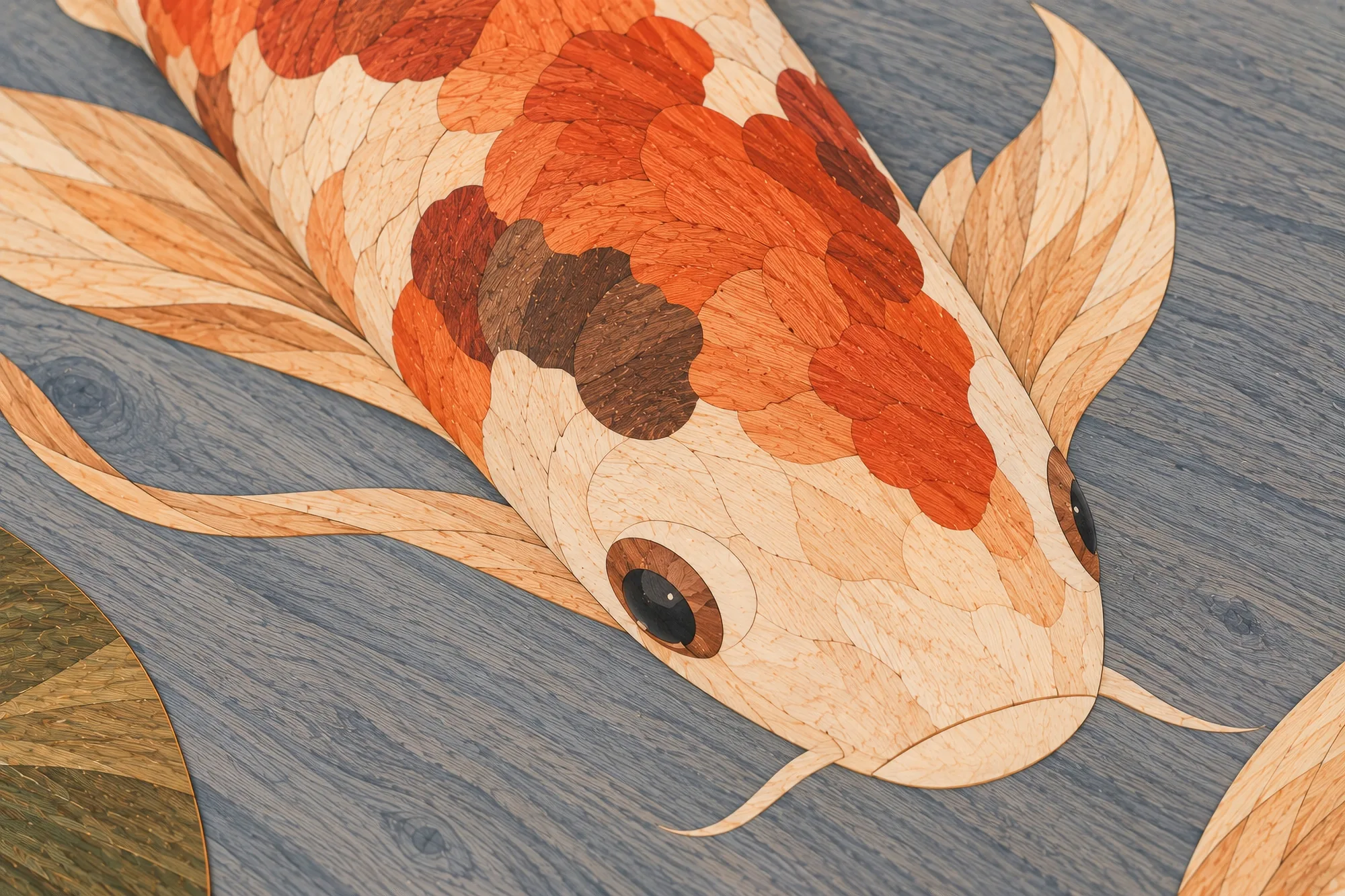
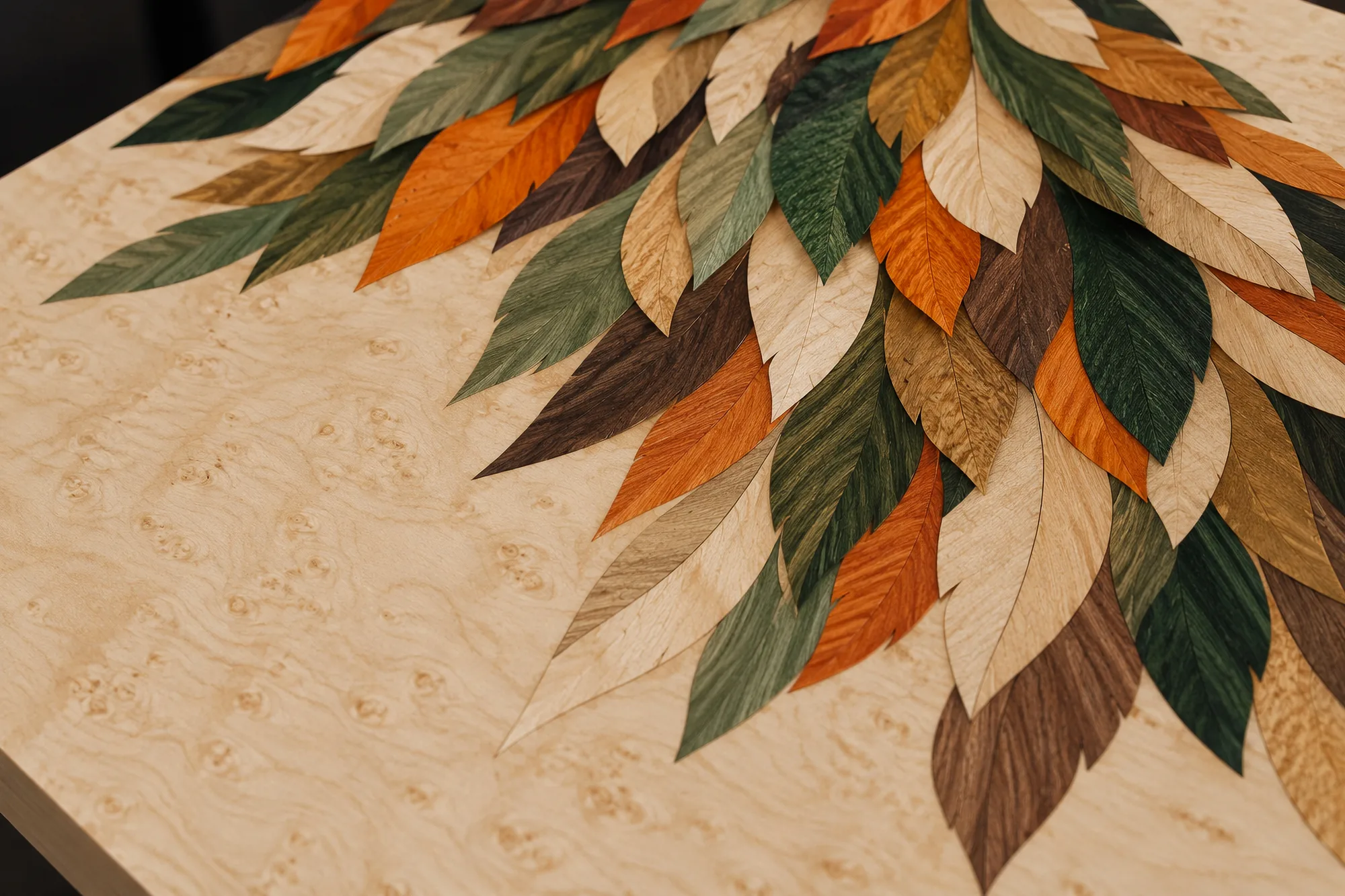
A selection of finished marquetry panels combining figured wood veneer with mother of pearl and shell — each drawn, cut and laid by hand.
 01 / 08
 02 / 08
 03 / 08
 04 / 08
 05 / 08
 06 / 08
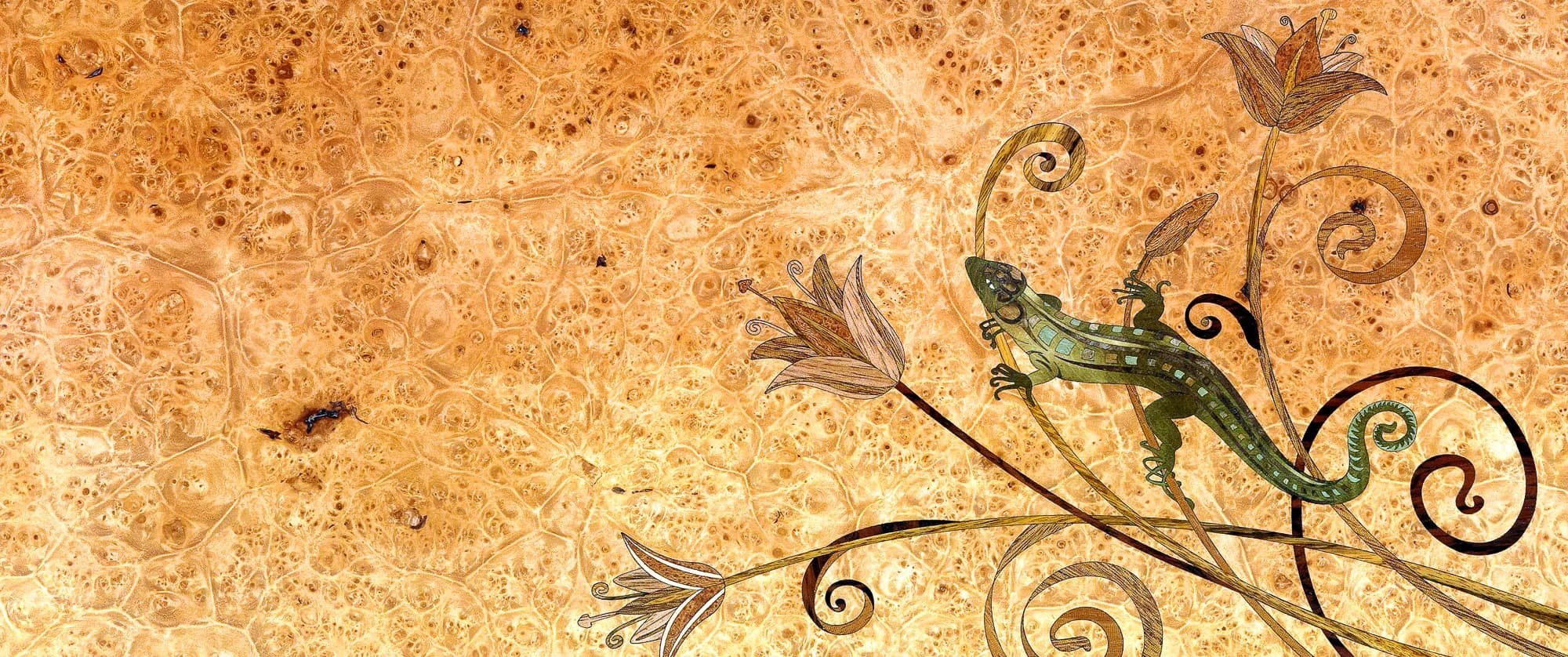 07 / 08
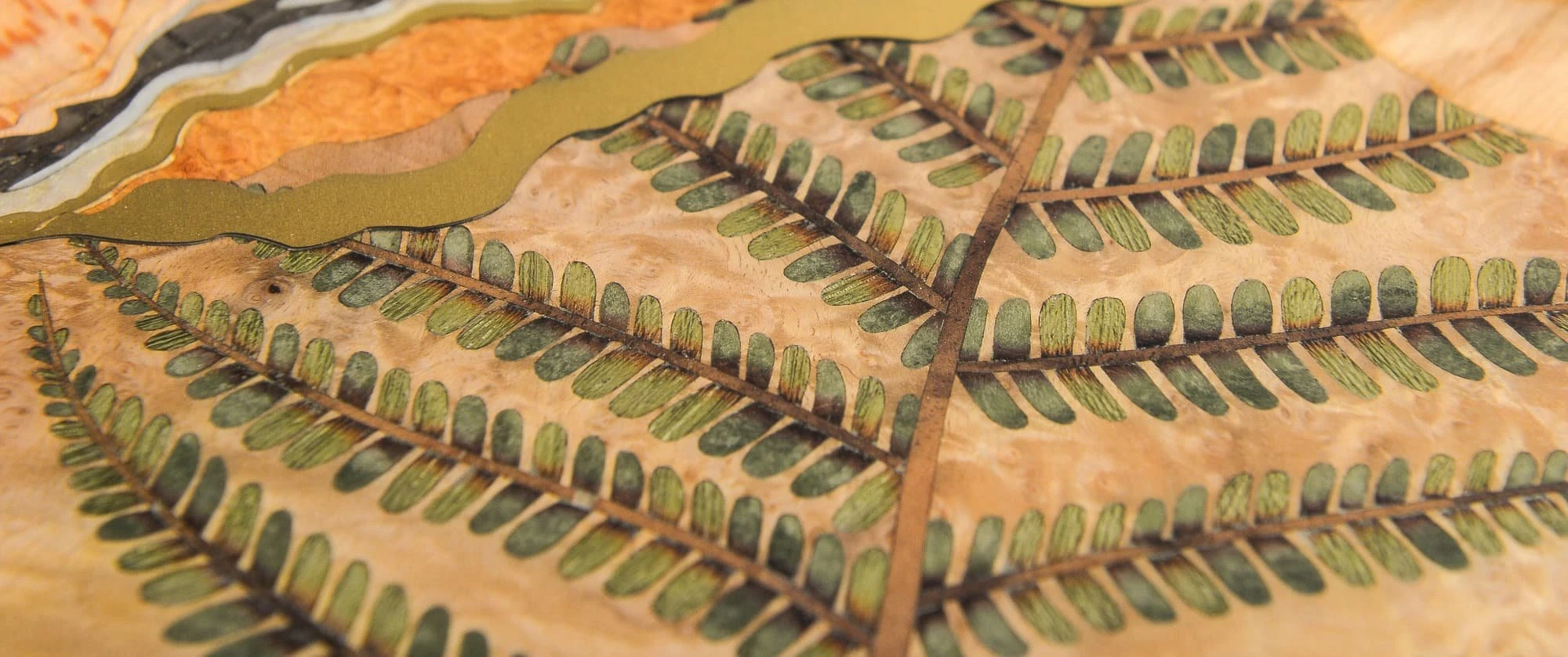 08 / 08
Get in touch if you’d like to elevate your project with a touch of marquetry.
Samples are made for each project, so tell us about yours.
Geometry as devotion
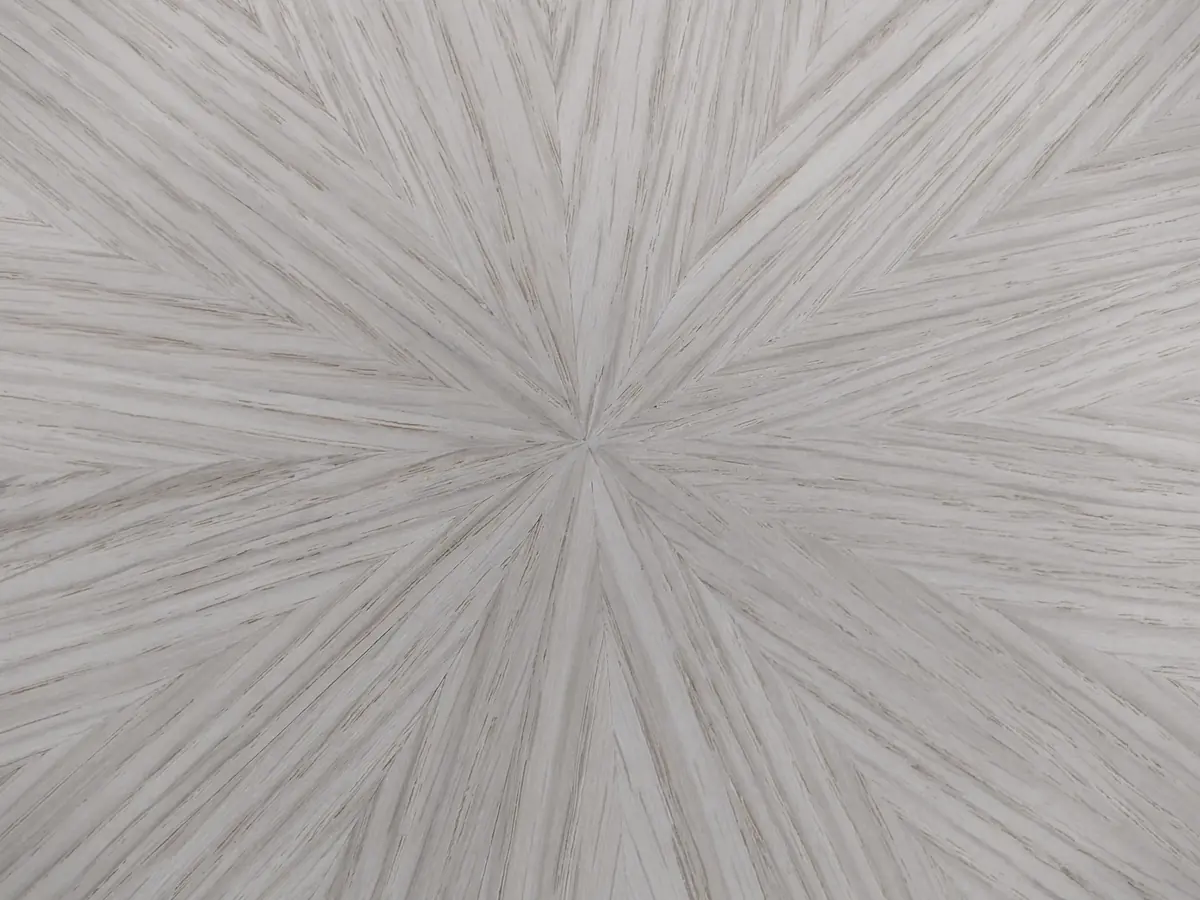
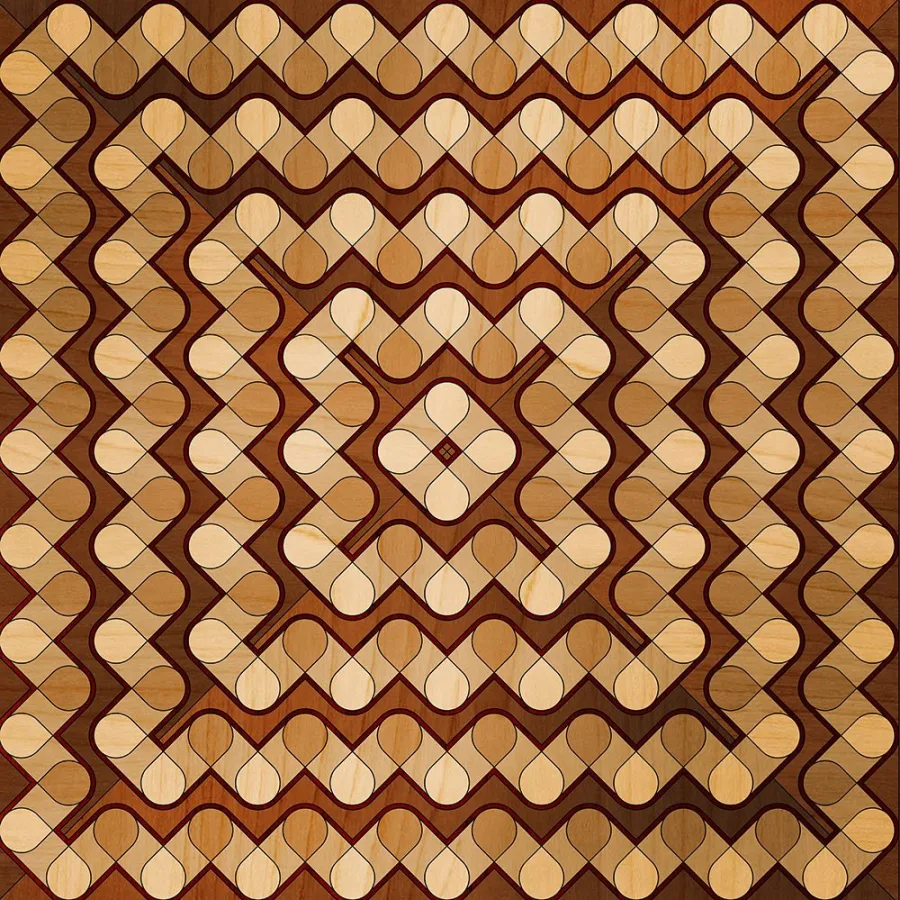
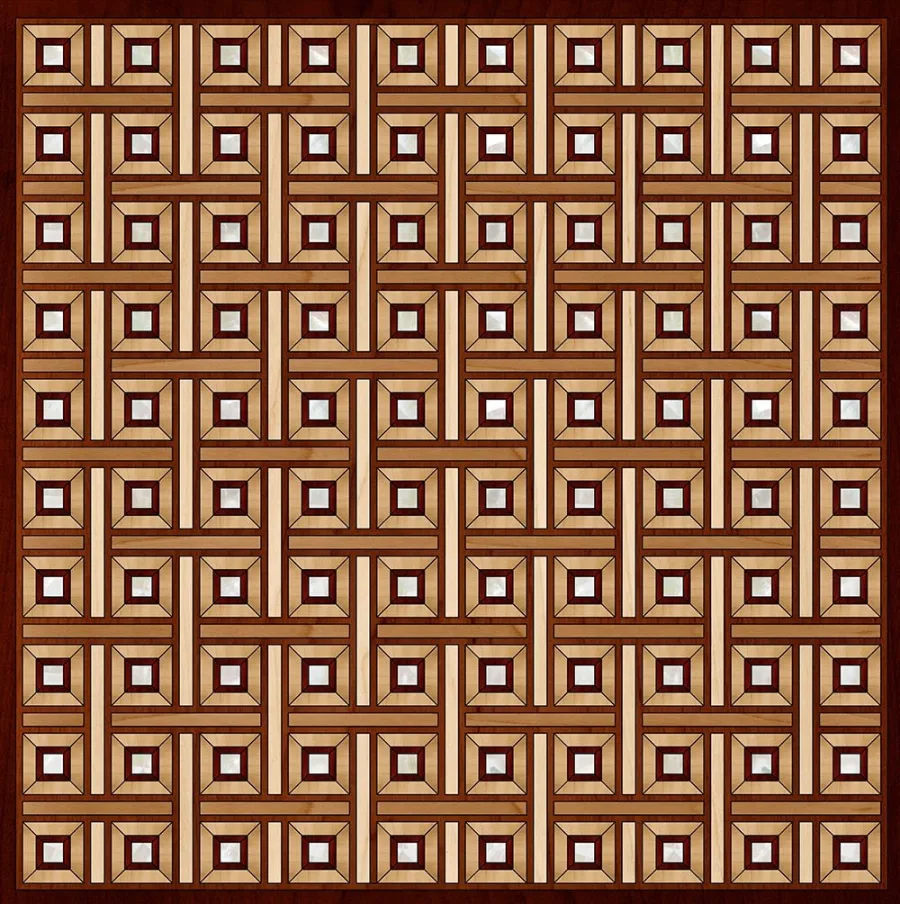
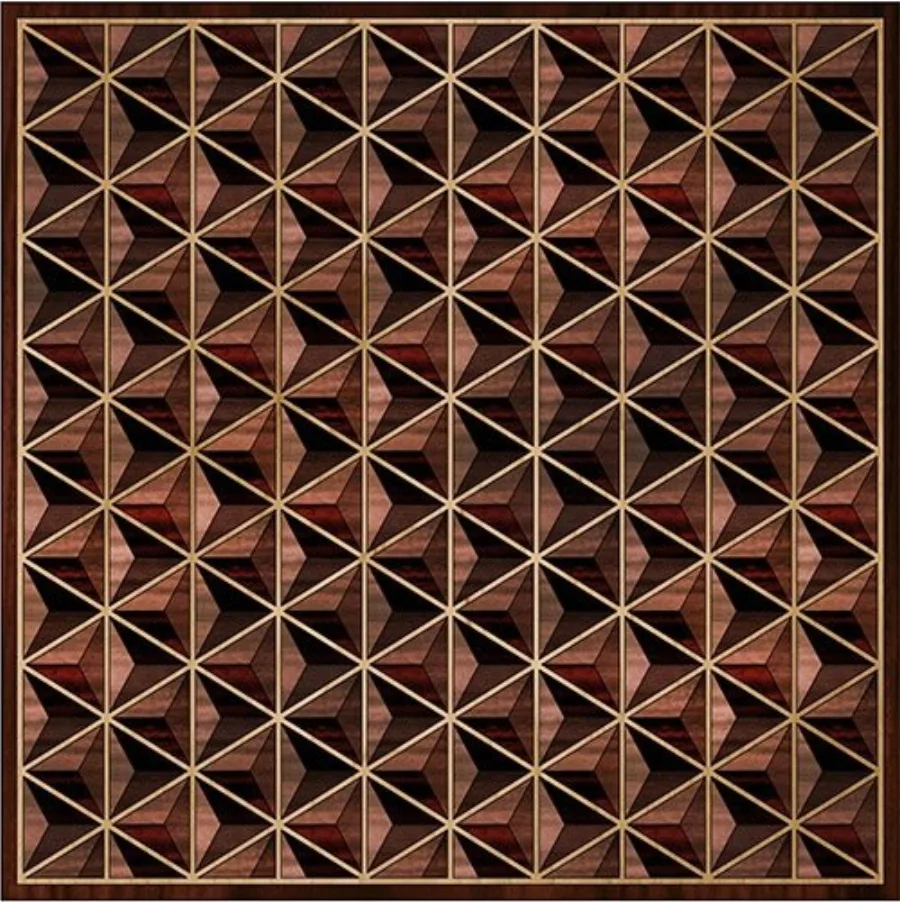
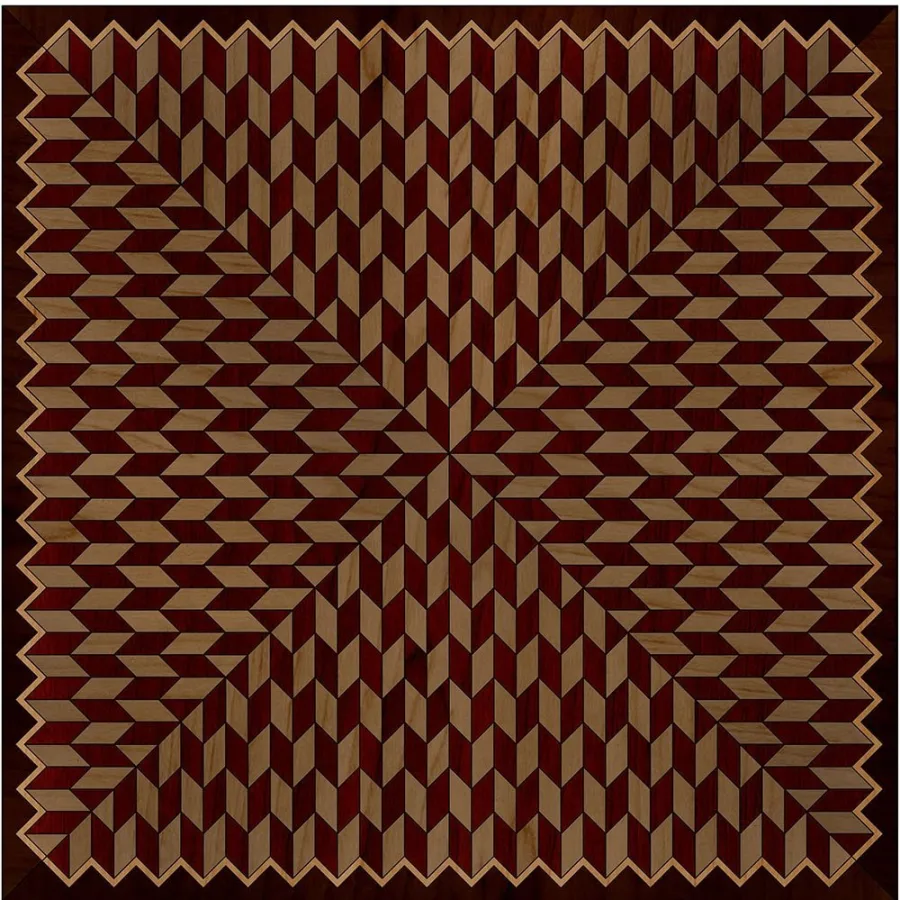
The other great tradition of marquetry is geometric. From the interlace of the Alhambra to the mosaics of Damascus, Islamic art turned mathematics into ornament — aniconic by design, its endlessly repeating stars and polygons composed to suggest unity and order rather than to depict. Worked out by the mathematicians and astronomers of the medieval Islamic world, these patterns translate naturally into marquetry, where each tessellated piece of veneer is cut and fitted to carry the geometry across a panel.
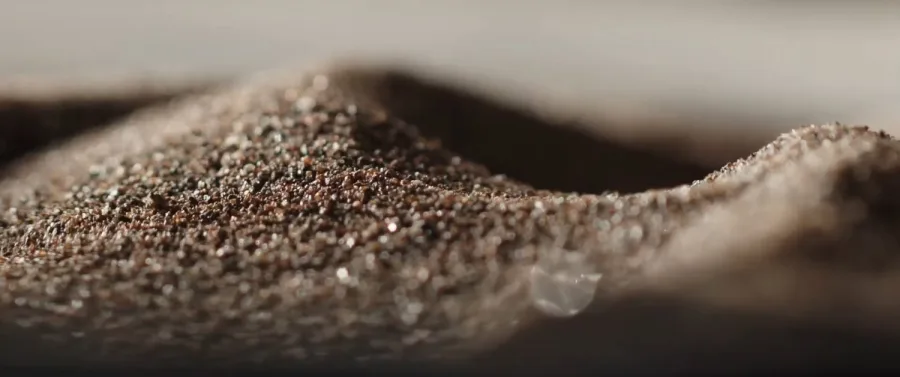
We produce these patterns in the traditional idiom — star medallions, interlocking polygons, radiating rosettes — for table tops, decorative panels, boxes and doors. The same geometric discipline underlies khatam, the Persian micro-mosaic inlay we also practise. Edges are given depth the old way, by hot sand shading: a veneer piece dipped briefly into heated sand scorches to a graduated brown, lending the flat pattern its three-dimensional relief.
A selection of geometric designs from our archive — each cut, fitted and laid by hand.
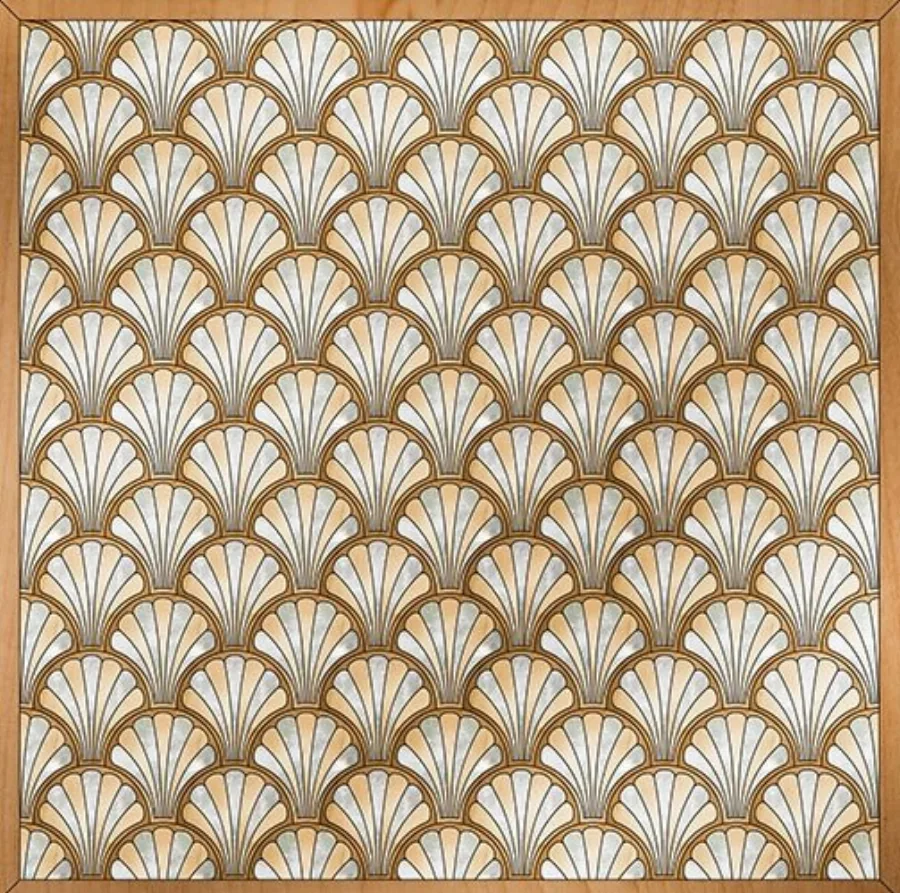
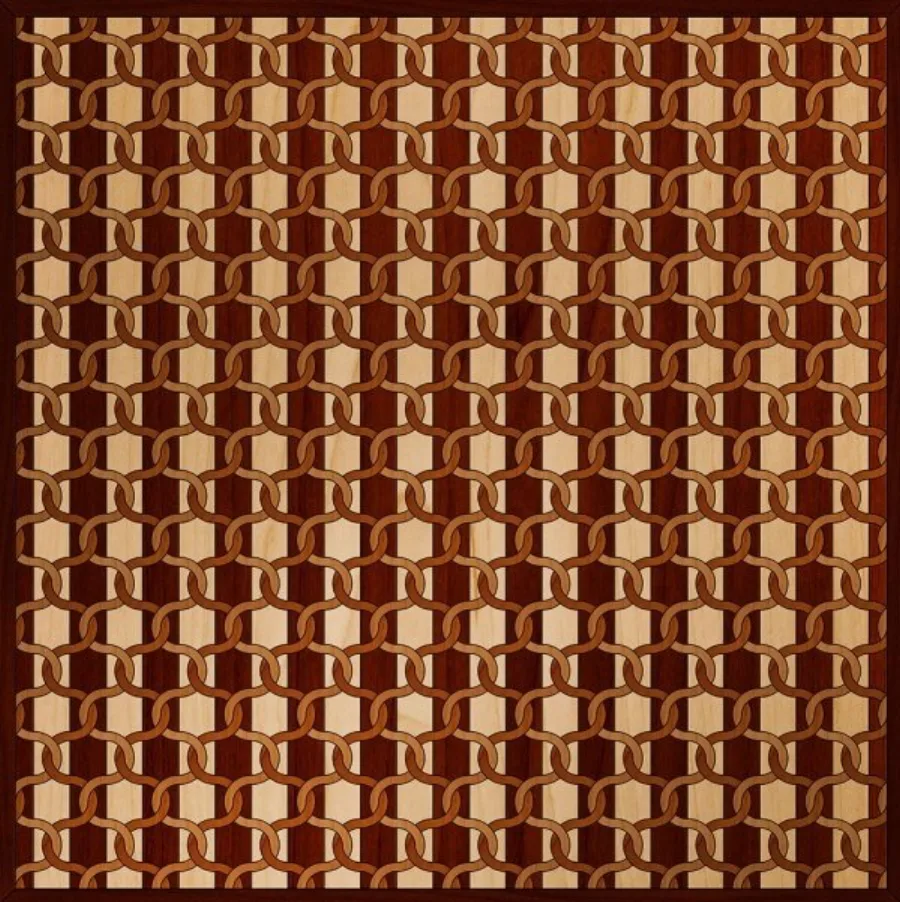
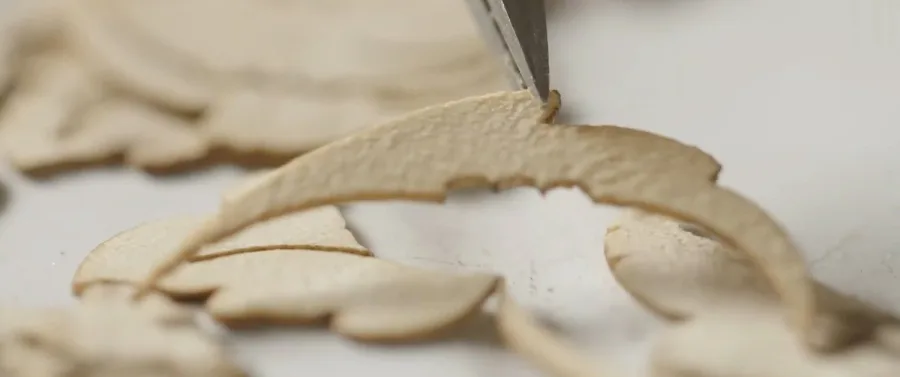
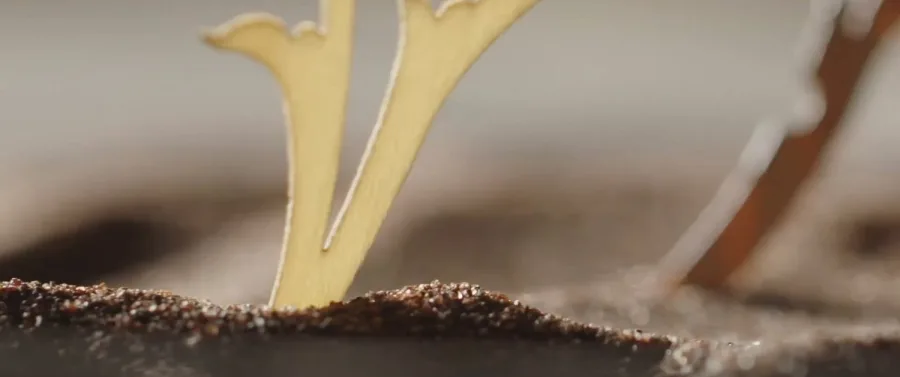
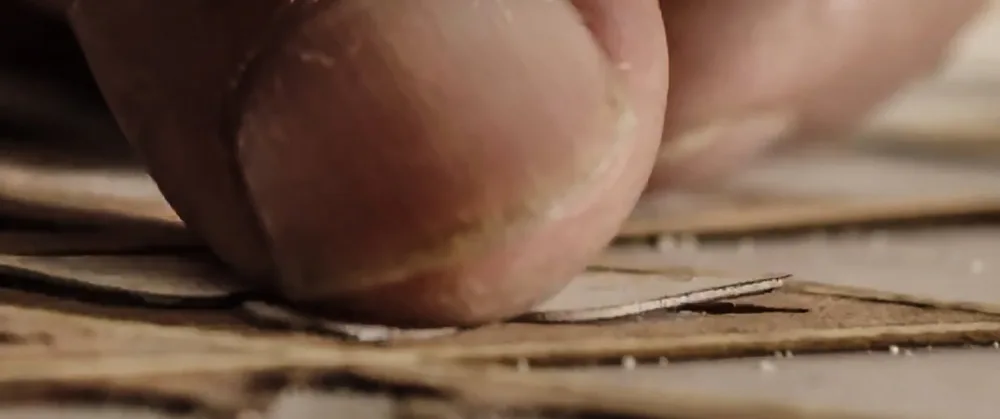
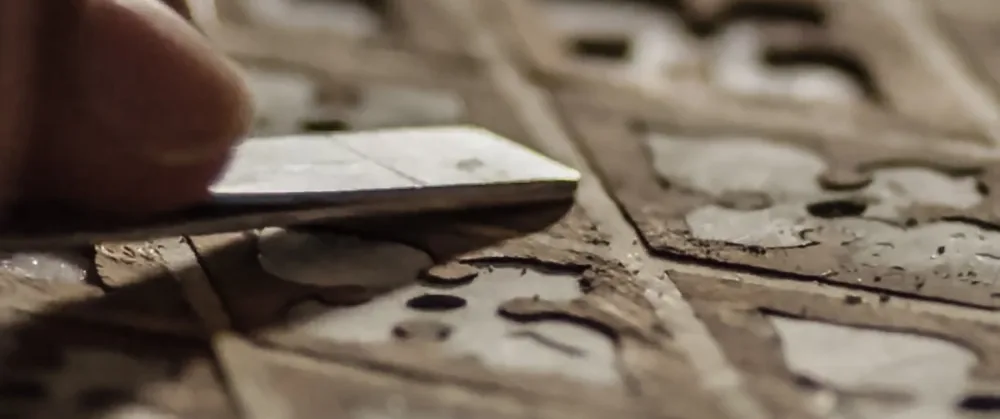
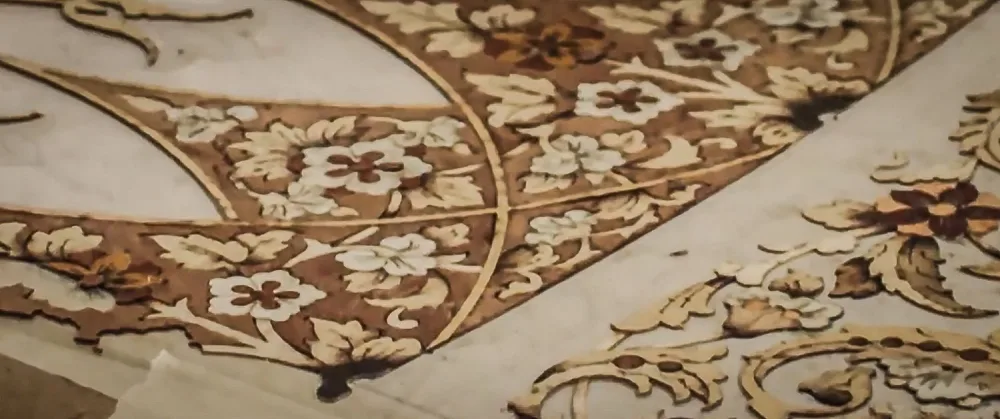
Hot sand shading
Edges are given depth the old way. A veneer piece is dipped briefly into heated sand — just long enough to scorch its edge to a graduated brown — lending the flat pattern its three-dimensional relief. The sequence below shows the process and the shaded leaf itself.
The palette
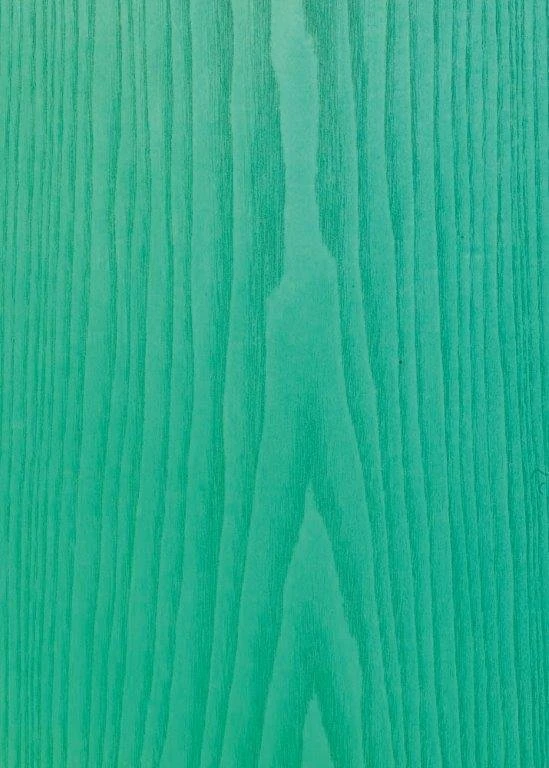
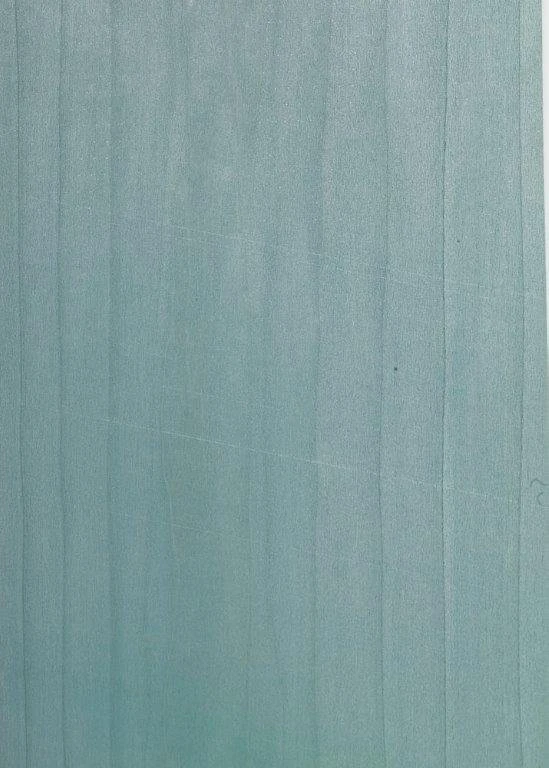
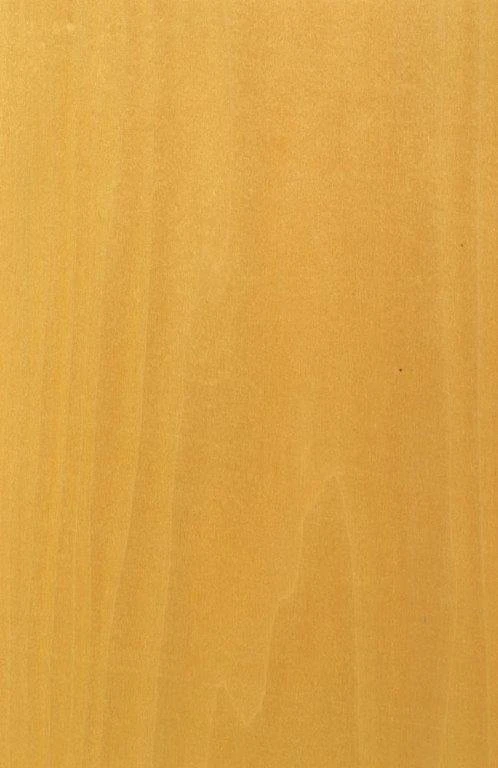
Marquetry draws on dyed and figured TABU veneers and mother of pearl, abalone and shell — the materials that give each panel its colour and light. A reference selection follows; each links to the material.

Selected work
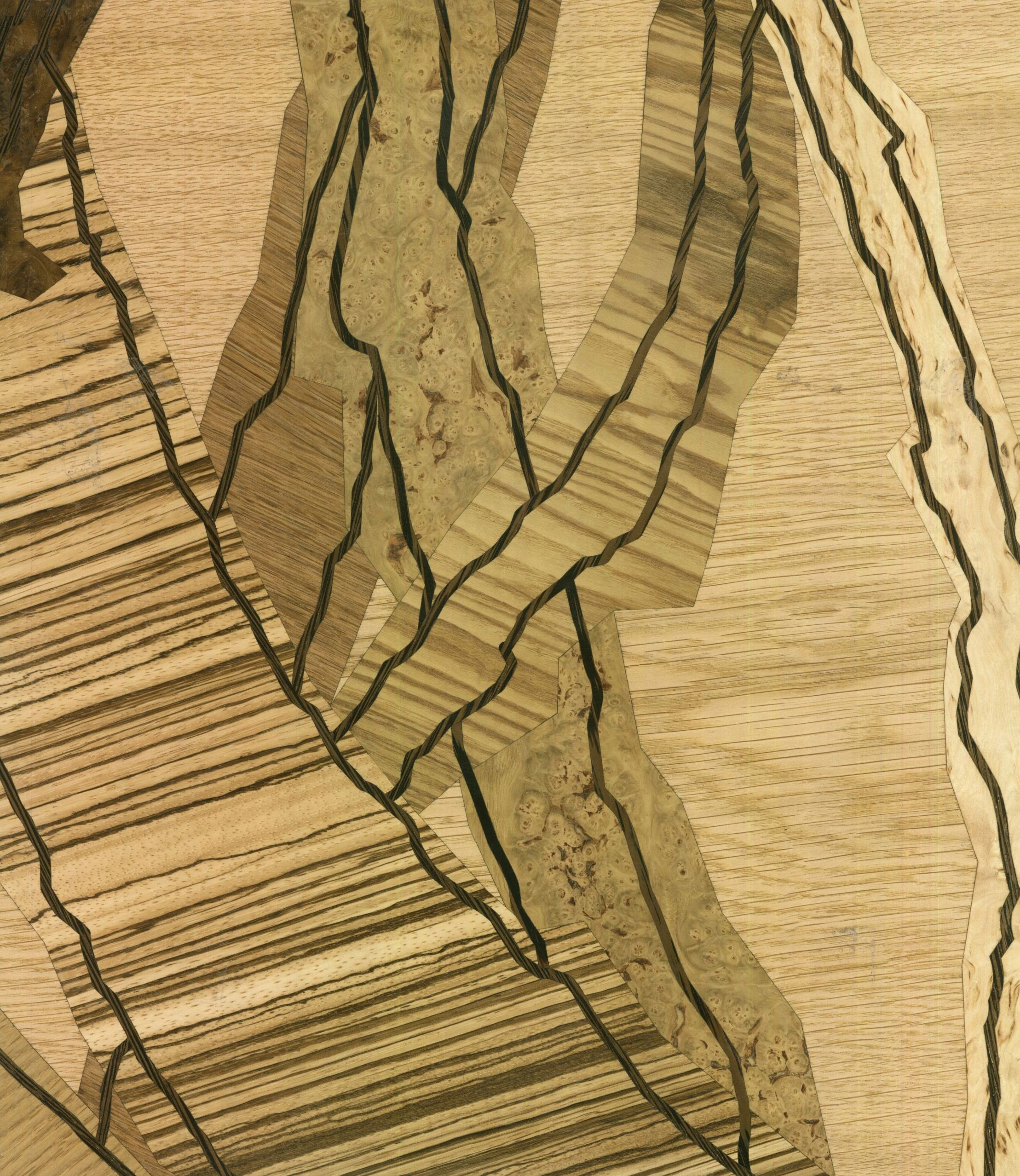
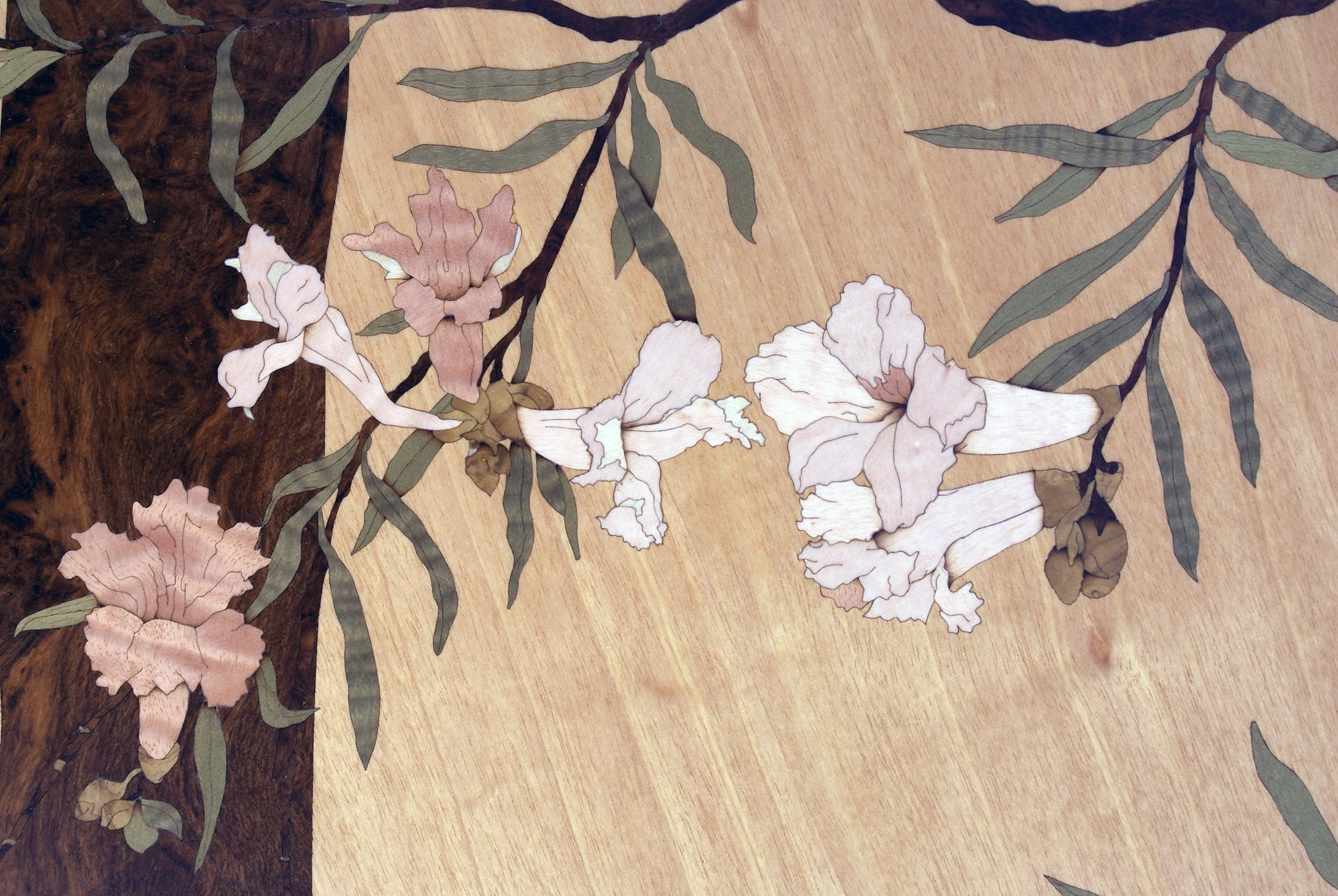
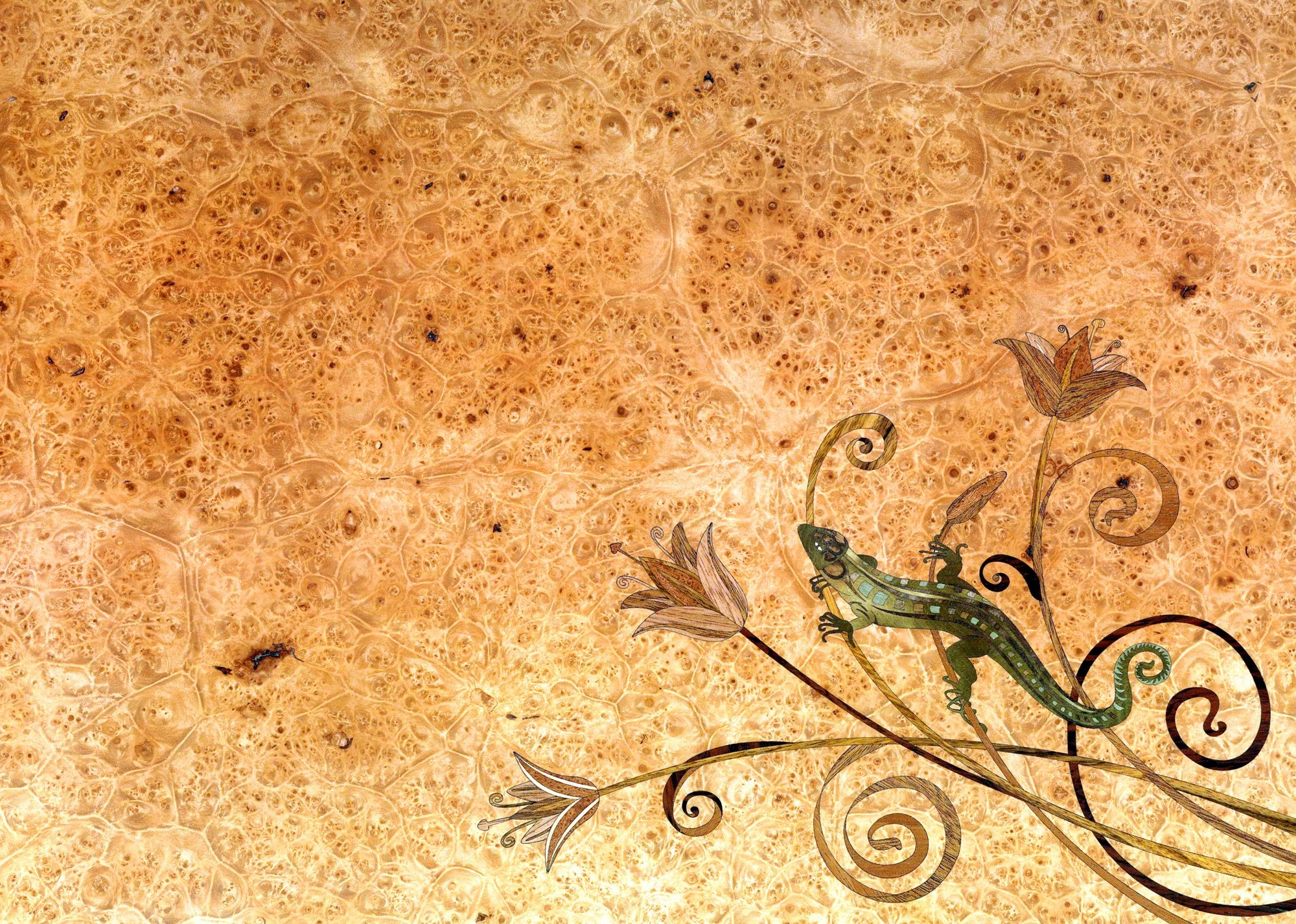
Pieces and sample panels from the studio and archive — marquetry developed for furniture, tables and decorative panels. For marquetry in a finished interior, see the Rowes Wharf apartment in Boston, where hand-drawn panels in Pommele Sapele and Satinwood were inlaid with mother of pearl.
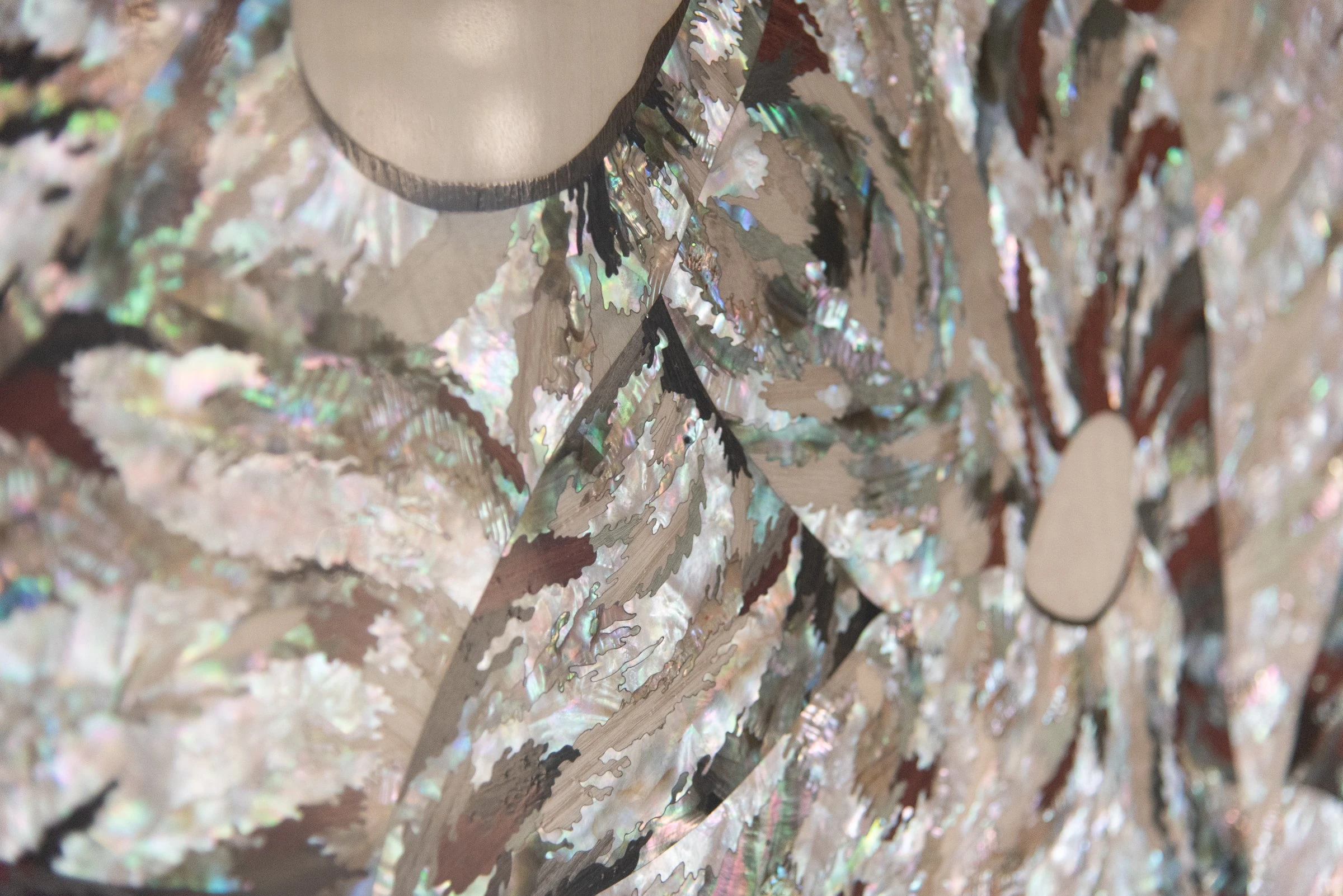 01 / 08In the studio
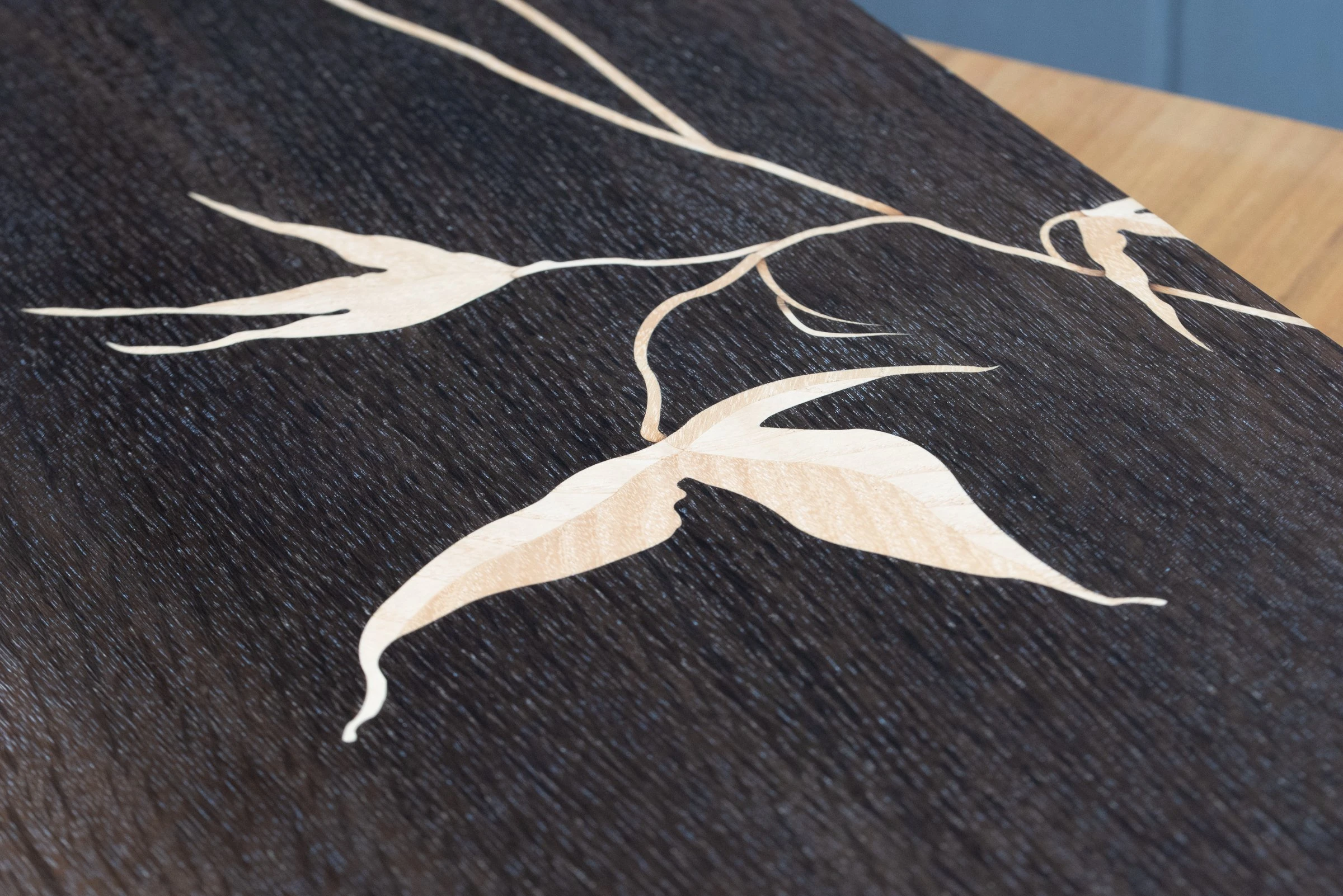 02 / 08Work in progress
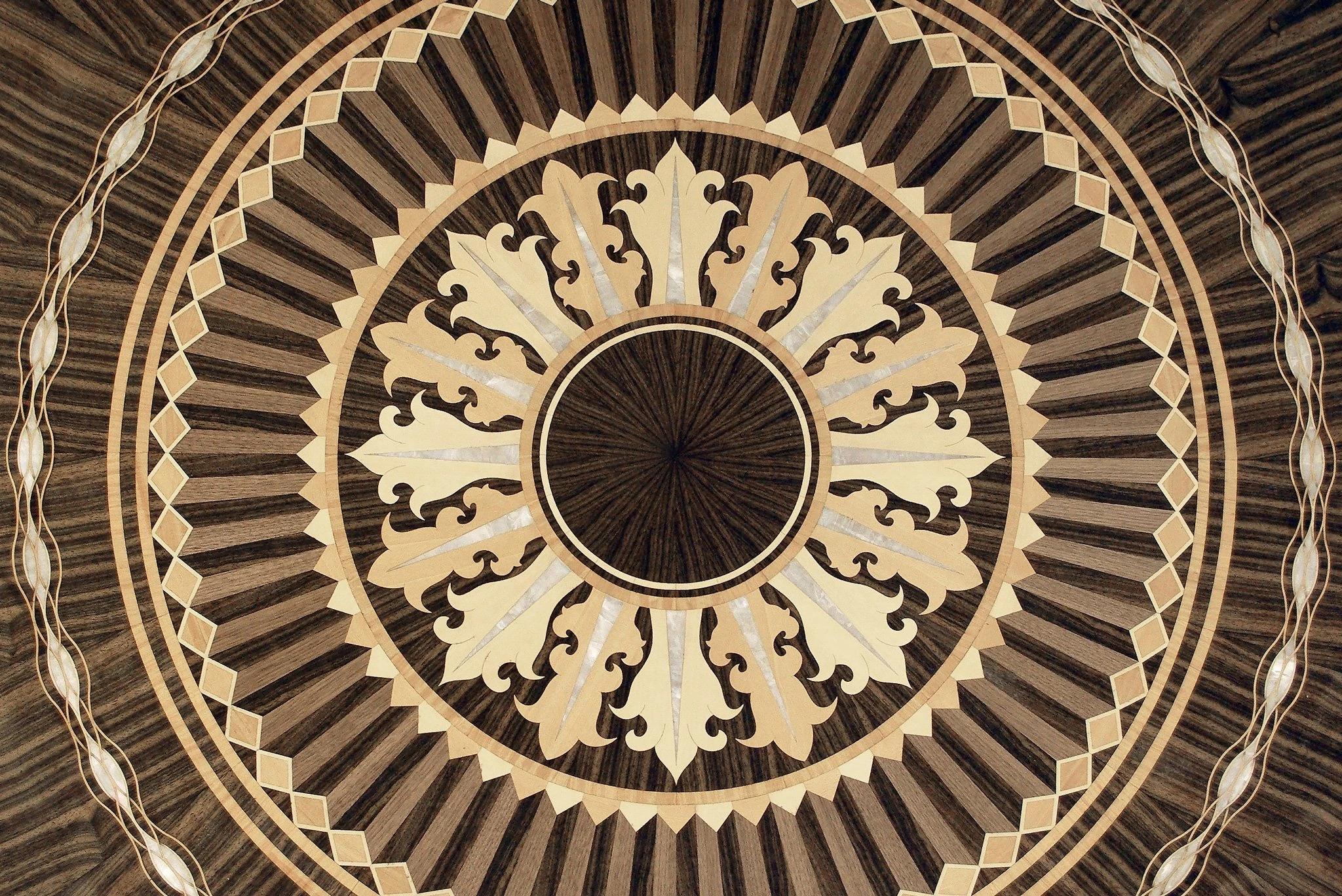 03 / 08Table top
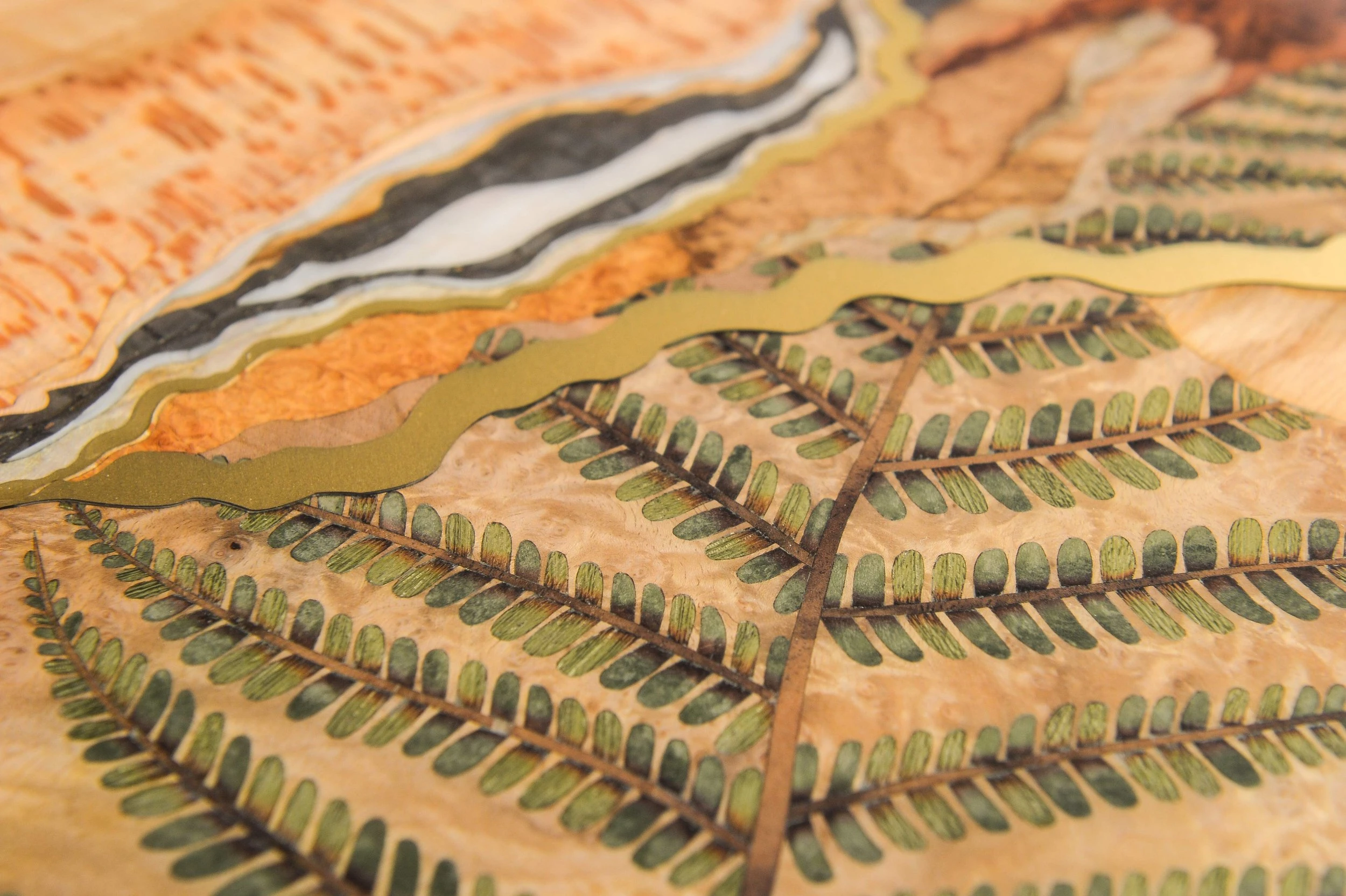 04 / 08Studio
 05 / 08Sample panel
 06 / 08Archive
 07 / 08Detail
 08 / 08Detail