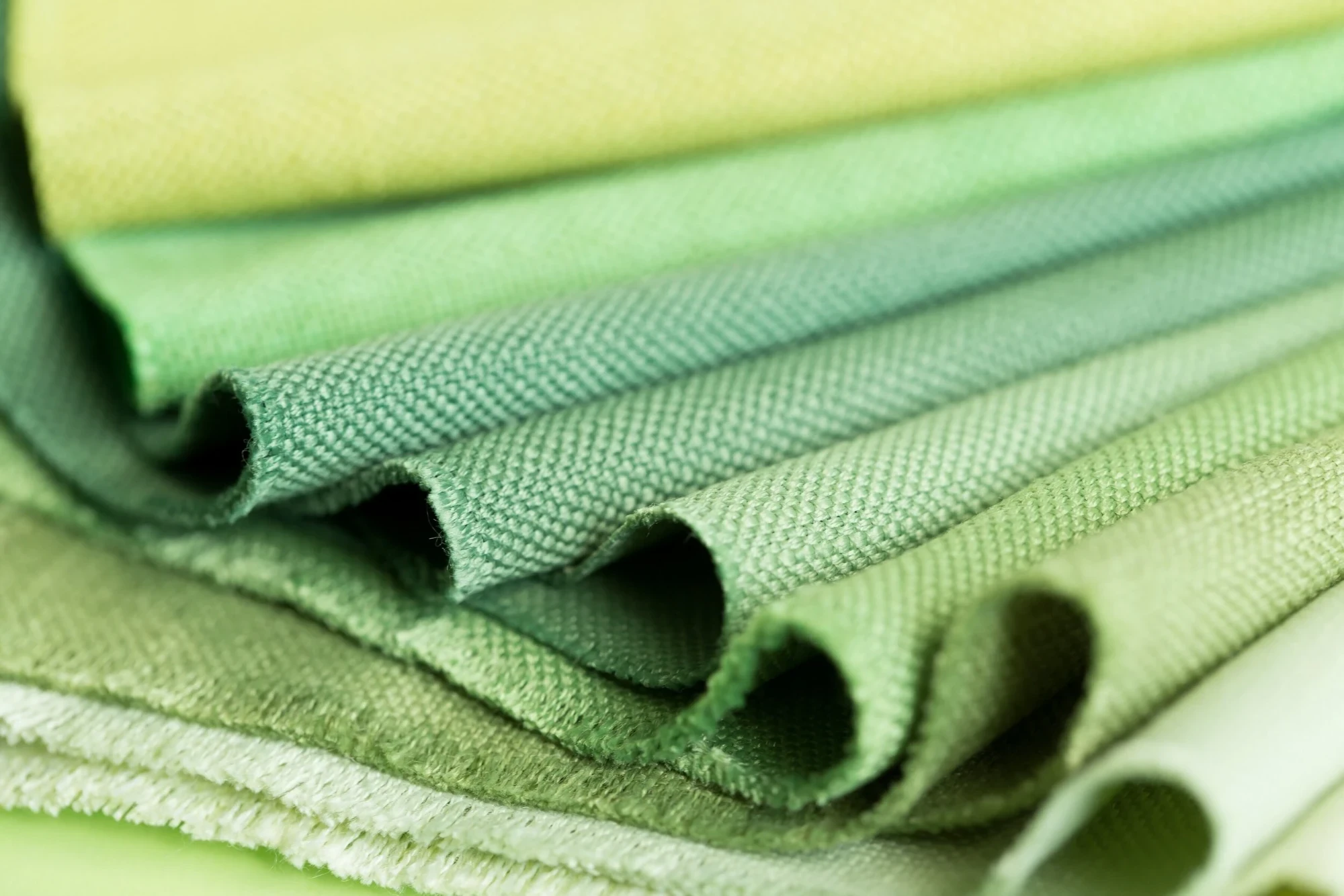
Fabrics
We work with all fabric suppliers and can include pricing in our quotes
We will add to our quotation the amount of fabric required for each upholstery piece based on standard width fabric of 137cm and repeat up to 4cm. Narrower or wider fabrics require revised quantities. Pattern repeats larger than 4cm may require a larger sample for placement calculation. We quote material required per item as COM (Customers Own Material).
We hold trade accounts across the leading fabric houses of Britain, France and Italy — from heritage mills weaving in centuries-old traditions to contemporary studios known for bold colour and pattern. Whatever house your scheme is built on, we can source the cloth, include it in the quotation and manage the order through to the workshop.
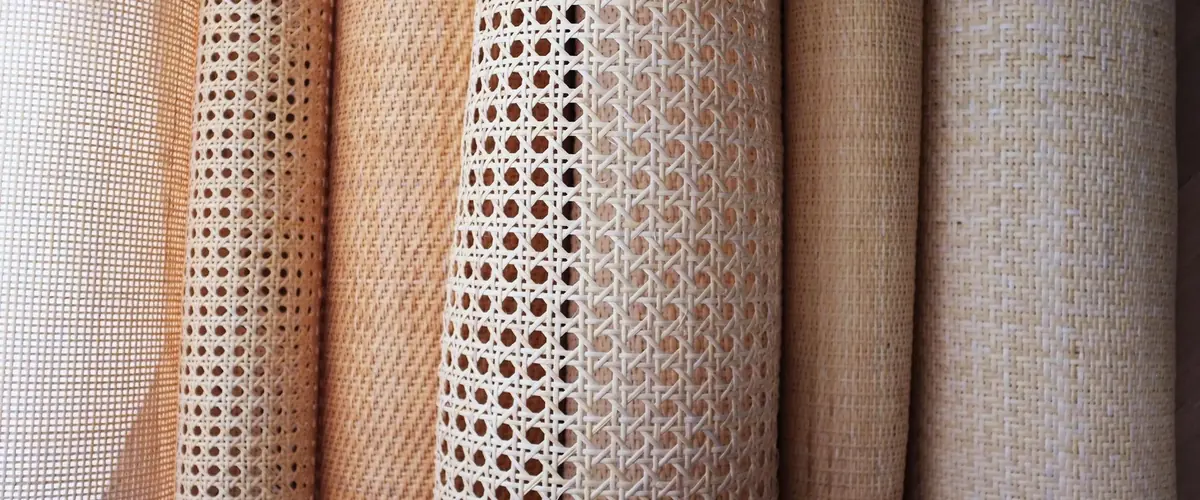
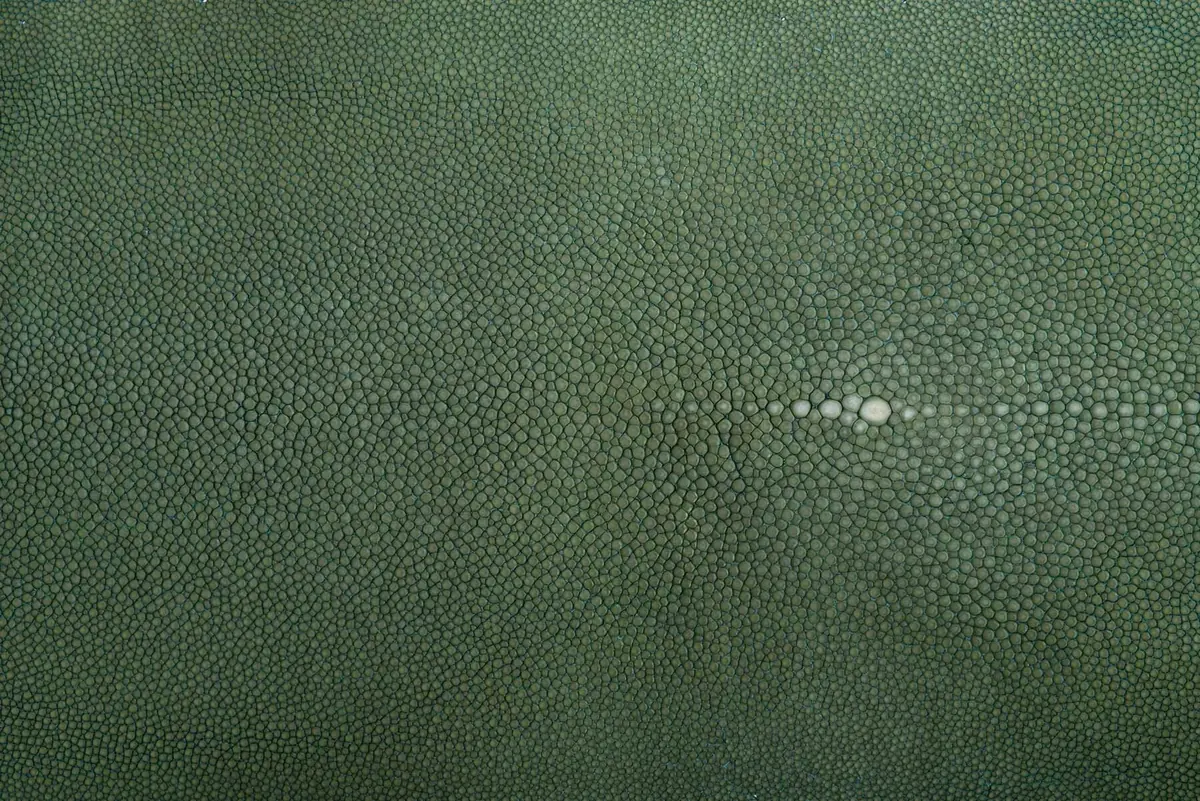
The range spans printed and woven cottons and linens, silks and velvets, sheers, performance weaves and wallcoverings — alongside leather for upholstery and panels.
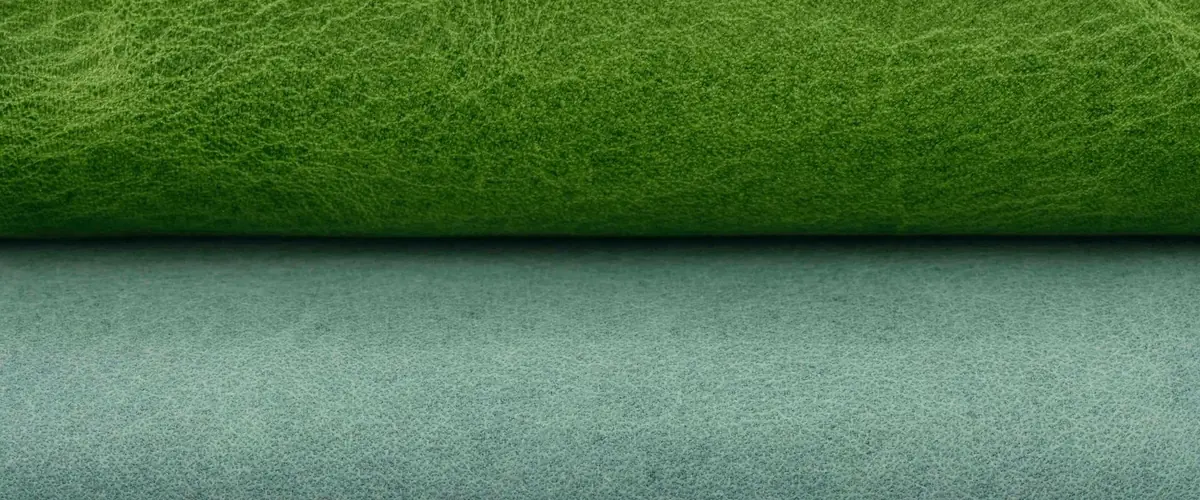
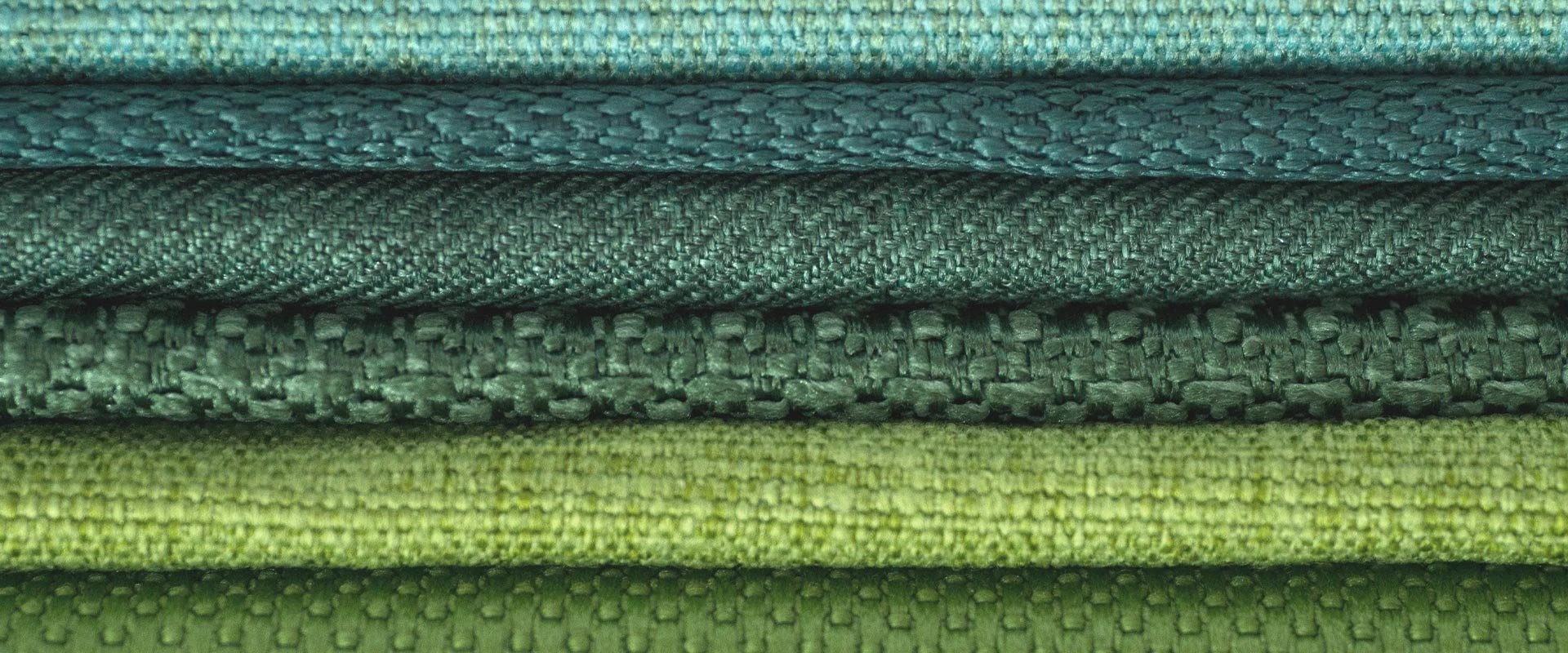 01 / 02Upholstery Fabric Shades of Green
 02 / 02
Where fabrics are used.
From banquette seating to headboards and padded joinery, fabric specification is central to how a piece reads in a room.
- Banquette seating
- Dining chairs and bar stools
- Sofas and armchairs
- Headboards and wall panels
- Padded cabinet and wardrobe fronts
- Footstools and ottomans
Further reference
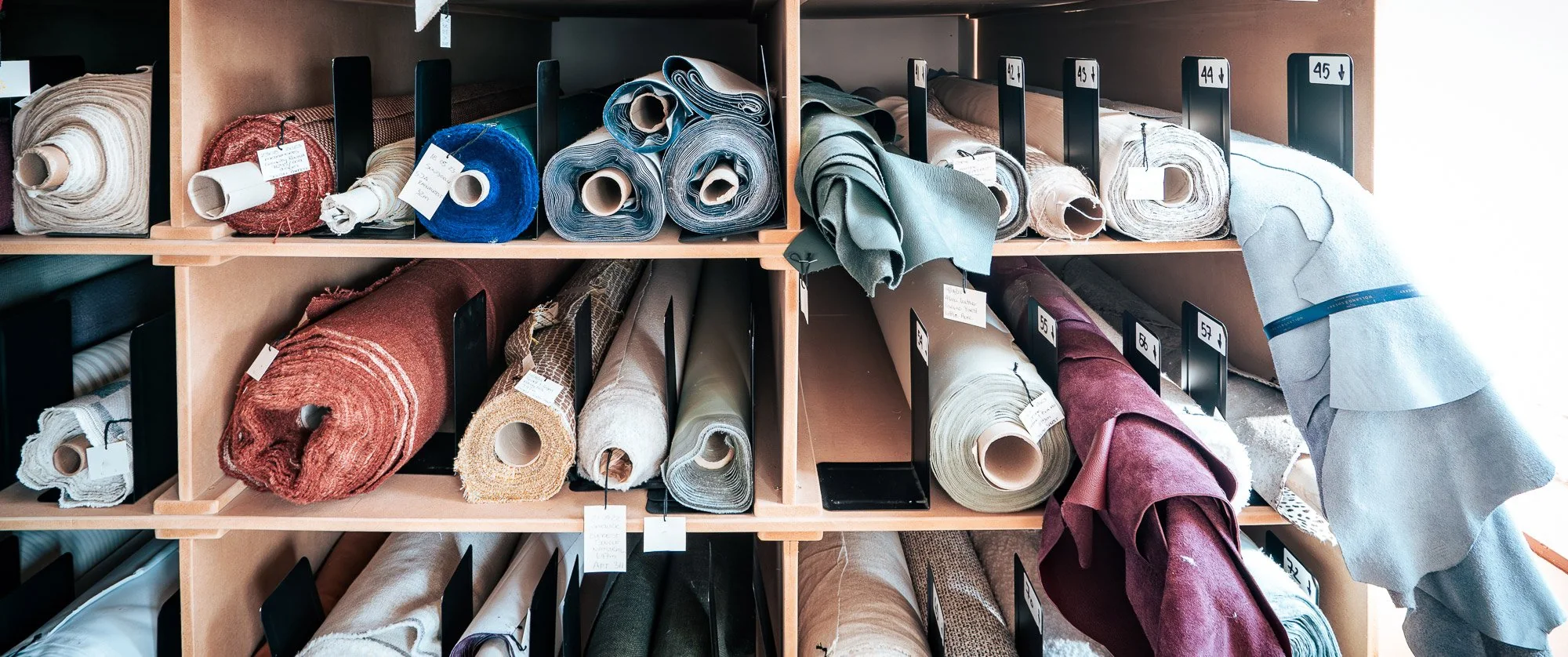
The fabric families
Interior cloth divides into a handful of families, each with its own character and its own place in a scheme:
- Wools and wool blends. Resilient, naturally flame-retardant and quick to recover from creasing. Plain wools, tweeds and felted weaves suit hard-working seating and tailored upholstery.
- Linens. Strong, breathable and matte, with a relaxed handle that softens with age. Pure linen creases readily, so it is often blended with cotton or polyester for upholstery and reserved in its pure form for loose covers and drapery.
- Velvets. Cut-pile cloths that hold light and colour. Cotton velvets give depth and a dry handle; mohair and silk velvets are denser and more lustrous; performance velvets carry the look with far greater abrasion and stain resistance.
- Mohair. Woven from Angora goat fibre, dense and hard-wearing with a soft sheen. A traditional choice for high-use seating where a pile is wanted but durability cannot be compromised.
- Bouclé. Looped-yarn weaves with a knobbly, textured surface, visually warm and forgiving, though looser loops can snag, so weave construction matters for the intended use.
- Leather alternatives. Coated and woven faux leathers, and newer plant-based materials, that read as hide but clean easily and meet contract requirements.
- Performance and contract fabrics. Solution-dyed acrylics, treated synthetics and high-grade blends engineered for stain resistance, bleach cleaning, UV stability and high abrasion. Increasingly specified in family homes, not only hospitality.
Upholstery in mind?
Tell us the pieces, the quantities and the look you want.
Upholstery, drapery and wall-upholstery
The end use sets the brief as much as the fibre does. The same cloth rarely serves every purpose:
- Upholstery. Faces daily contact, abrasion and weight. Wants a stable, densely woven or piled cloth with the abrasion rating the setting demands, and almost always a fire specification.
- Drapery. Hangs and drapes rather than wears, so weight, drape and light behaviour matter more than abrasion. Curtain fabrics need not meet seating-level rub tests, but commercial settings still carry their own flammability rules.
- Wall-upholstery. Cloth stretched or battened onto walls and padded panels, adding acoustic softening and warmth. Stable, dimensionally consistent fabrics suit this best; in contract interiors the fabric must meet wall-lining flame-spread standards, which differ from seating standards.
Choosing an upholstery fabric
The houses above set the aesthetic range; the specification decides whether the piece still looks right in five years. Three questions sort most briefs:
- How hard will it work? – match the abrasion rating to the setting (see the rub test below). A silk velvet belongs on the occasional chair, not the restaurant banquette.
- What must it survive? – the fire route and any need for stain or UV resistance. Performance weaves are now good enough that many designers specify them in private houses with children, dogs or sunlight.
- Natural, synthetic or blended? – linen and wool age gracefully, cotton velvets bring pile and saturation, synthetics and blends bring resilience. Most upholstery sits in a blend, taking character from the natural fibre and stamina from the rest.
COM, in practice
Every quotation states the metreage each piece requires as COM, Customer’s Own Material, calculated on a standard 137cm-width cloth with a pattern repeat up to 4cm. Narrower or wider cloths revise the quantity, and larger repeats need more, because pattern placement is part of the craft: repeats are centred on backs and seats, matched across cushions, and run consistently around a piece. Velvets and directional weaves are cut with the pile running one way, which also affects metreage. All of it is resolved in the quotation, not discovered in the workshop.
Fire and rub-test compliance
Two test families govern most specification decisions. Abrasion is measured by the Martindale rub test (BS EN ISO 12947), which counts the cycles a cloth withstands before showing wear: a useful shorthand for how hard a fabric can work. Flammability is the other gate. In the UK, domestic upholstery must meet the Furniture and Furnishings (Fire Safety) Regulations, while contract and hospitality seating is usually specified to Crib 5 under BS 5852. Drapery and wall-linings in commercial settings answer to different standards again, typically BS 5867 for curtains and surface flame-spread ratings for wall coverings.
A fabric that fails the flame test on its own can often be brought up to standard with an FR (flame-retardant) interliner or a back-coating, which lets a decorative cloth be used where it could not be specified untreated. Where it matters, we confirm the rub rating and fire route for each cloth before it goes to the workshop, so the finished piece meets the regulations for its setting.
Care and longevity
Most upholstery fabrics carry a cleaning code that signals the right approach: from water-based cleaning, through solvent-only, to vacuum or professional cleaning. Natural fibres reward gentle handling and benefit from regular vacuuming and prompt attention to spills; performance cloths tolerate water and, in many cases, diluted bleach. Velvets and other pile fabrics should be brushed in the direction of the pile and kept out of prolonged direct sun, which fades and weakens most fibres over time. We pass on the maker’s care guidance with every piece.
Beyond the bolt
Fabric rarely travels alone: it meets leather on contrast welts and outside backs, show-wood polished to the scheme, and stitching details that sign the work, covered on our upholstered furniture page. We hold accounts across the trade, so a single quotation can price the piece with the cloth of your choice from any house.
What Martindale rating do I need?
Light domestic use is comfortable above 15,000 rubs, everyday family seating wants 25,000 or more, and contract or hospitality seating should start around 40,000. The figure is a guide rather than a guarantee, so for heavy use we weigh it alongside weave and fibre.
Can any fabric be made fire-compliant?
Many decorative cloths that fail the flame test untreated can be brought up to standard with an FR interliner or back-coating without changing how the fabric looks or handles. A few do not respond well to treatment, which we flag at specification so an alternative can be chosen early.
What is COM?
COM stands for Customer’s Own Material: cloth you supply or select from any house, which we upholster onto the piece. Our quotation states the metreage each item needs, so you can order the right quantity from your chosen supplier.
Colour & character
Altfield is a leading interior decoration resource for beautiful textiles, wallcoverings and leather, distributing a number of high-end lines from around the world. Its lines embody the richness of design and material, and offer the perfect balance between beauty and performance.
Pierre Frey, a family-owned company founded in 1935, designs and manufactures fabrics for luxury interiors in the purest French tradition. Inventive, eclectic and daring, its collections draw inspiration from the past as well as from around the world.
Dedar is a family-run fabric house that expresses an individual style with its cutting-edge contemporary collections. It is known for its extensive colour palettes and patterns, offering design solutions for upholstery.
Founded in 1928 by Parisian Adolphe Halard, design studio Nobilis produces beautiful and diverse fabric collections that blend the traditional with the contemporary. Epitomising the elegance of the French spirit, its collections are designed to be coordinated with one another.
Family run since 1902, The Romo Group offers a diversity of style across six distinct fabric, wallcovering and home accessories brands: Romo, Black Edition, Kirkby Design, Mark Alexander, Villa Nova and Zinc Textile, each presenting their own signature look and colour palette.
Read more
Have a scheme that calls for
considered upholstery?
Need samples? Get in touch and tell us about your project.