Straw
Marquetry
Bespoke straw marquetry — a decorative art practised in Europe since the 17th century, revived as a luxury veneer for furniture, panels and headboards. Rye straw is hand-split, dyed if required and laid in geometric, parquetry or pictorial straw marquetry designs, prized for its natural silica lustre and golden warmth.
Straw marquetry is the decorative technique of laying split, flattened and dyed rye straw onto a surface to form pattern, picture or panel. Each piece of straw is opened out, pressed flat, and laid by hand. The natural silica in the rye gives the finished surface its directional sheen, which catches light differently as the viewer moves past it. The technique has been practised in Europe since the 17th century, was revived for the French Art Deco interiors of the 1920s and 1930s, and is now used on cabinet fronts, console tops, headboards, screens and feature wall panels in luxury furniture and joinery. It is among the rarest decorative surfaces still made by hand in Europe, and the only one whose distinctive lustre comes from the material itself rather than from a finish applied on top.
Rye straw marquetry is among the rarest decorative arts still practised in Europe. The technique has been practised in Europe since the 17th century and works at its finest with rye straw grown in the Saône-et-Loire region, prized for its length, straightness and natural silica content. Stems reach 2.5 metres; the workable section, once split and flattened, yields approximately 60 centimetres of usable material. That ratio partly explains the scarcity of the craft.
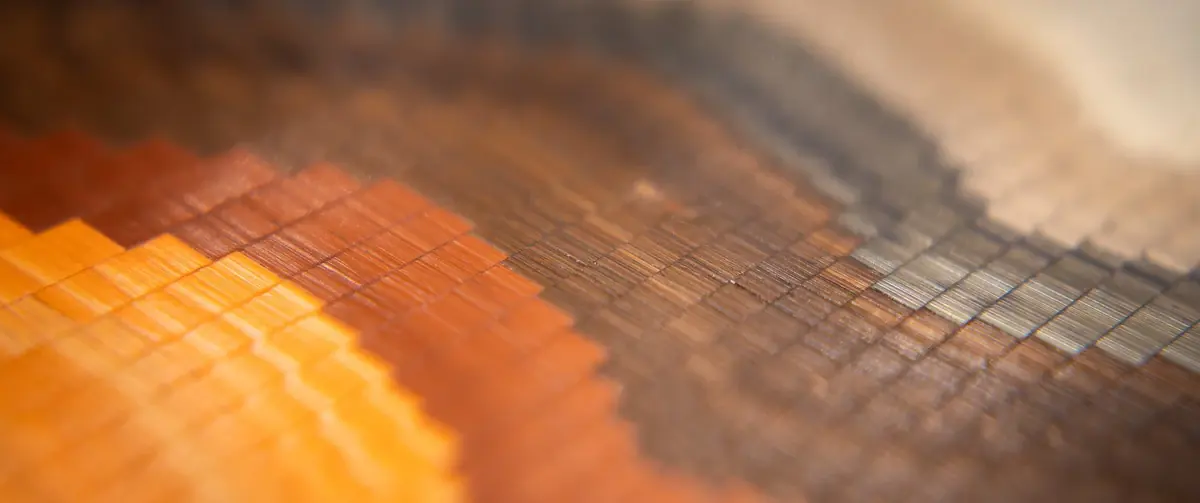
The silica within the straw gives the finished surface its defining quality: a warm, directional lustre that shifts between pale gold and deep amber as the viewing angle changes. No lacquered or varnished wood produces the same effect. The natural colour holds well in normal interior use, though like any natural material it can lighten with prolonged exposure to direct sunlight; pieces can also be dyed before laying, introducing a broader palette while preserving the characteristic sheen. Houses such as Guerlain and Cartier have used straw marquetry in their boutiques: it is a material that signals a particular kind of refinement.
Make Bespoke Studio works with specialist straw marquetry artisans to produce panels for luxury furniture and joinery commissions. The technique is well-suited to cabinet fronts, console tops, headboard panels and feature wall inserts — applications where the surface will be seen at close range and in varied light. The straw itself — how it is harvested, dyed and how colour varies between harvests — is covered in our materials guide to dyed straw, alongside our full library of stock colours.
Get in touch if you’d like to elevate your project with a touch of straw marquetry.
Samples are made for each project, so tell us about yours.
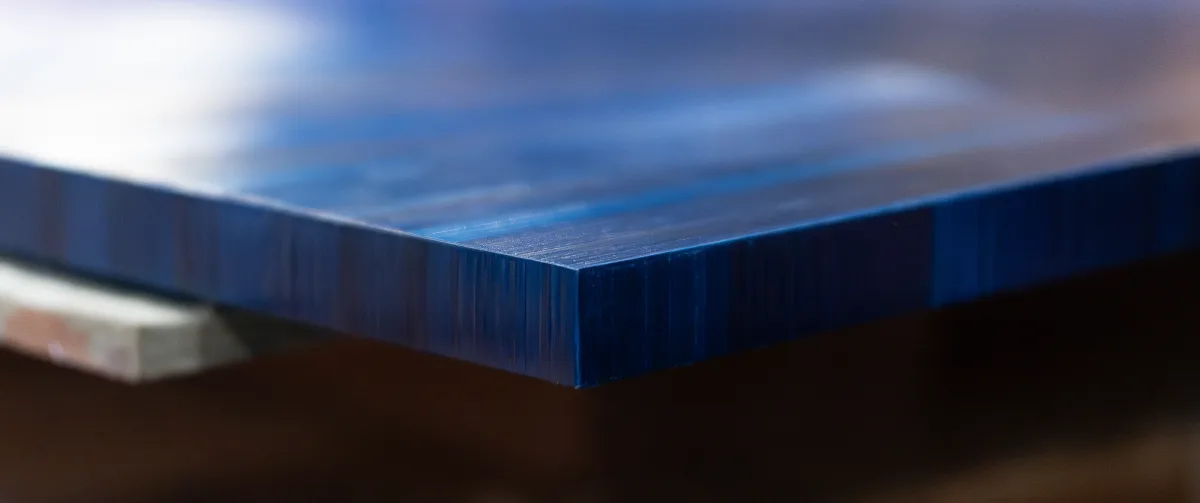
Straw Preparation
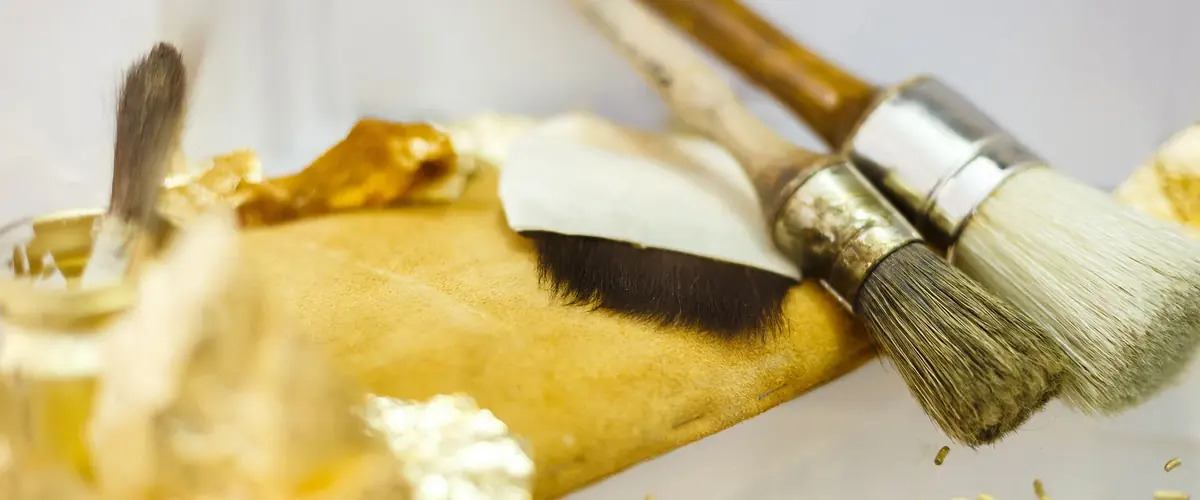
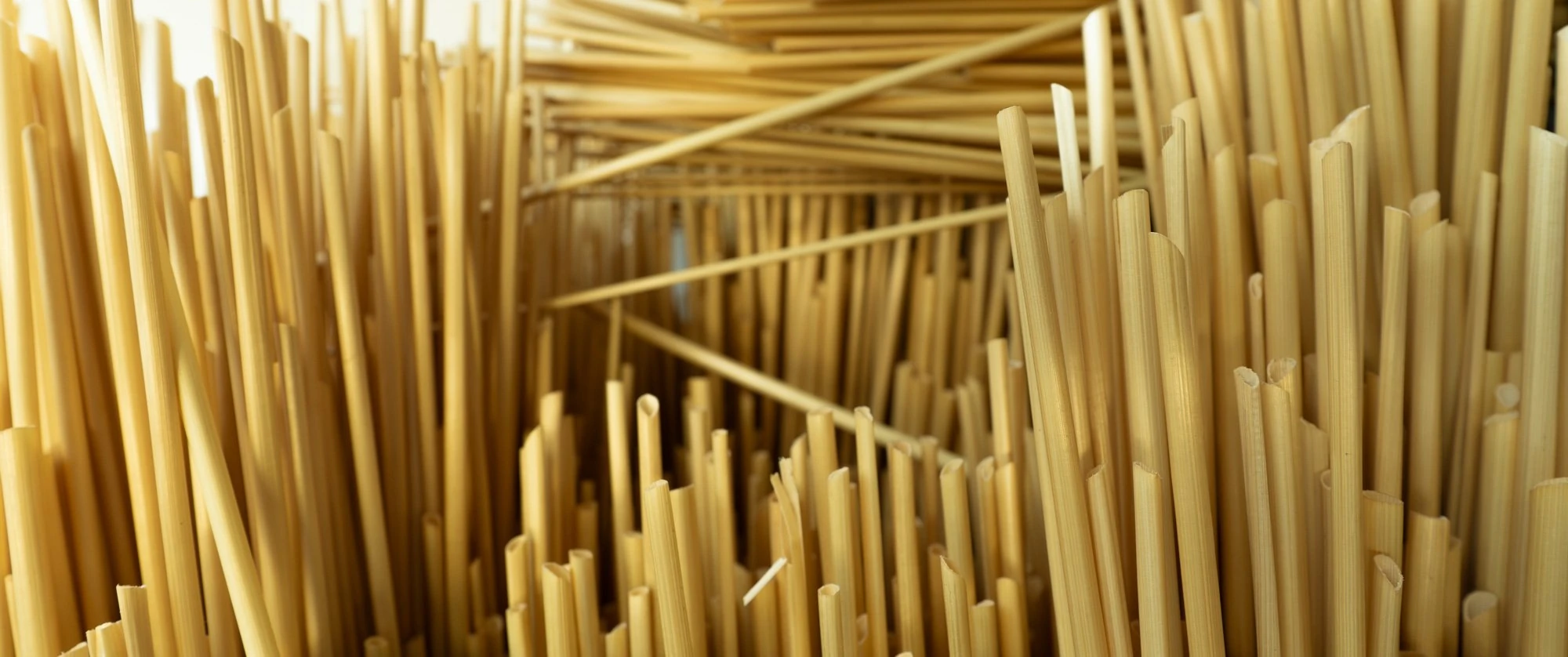
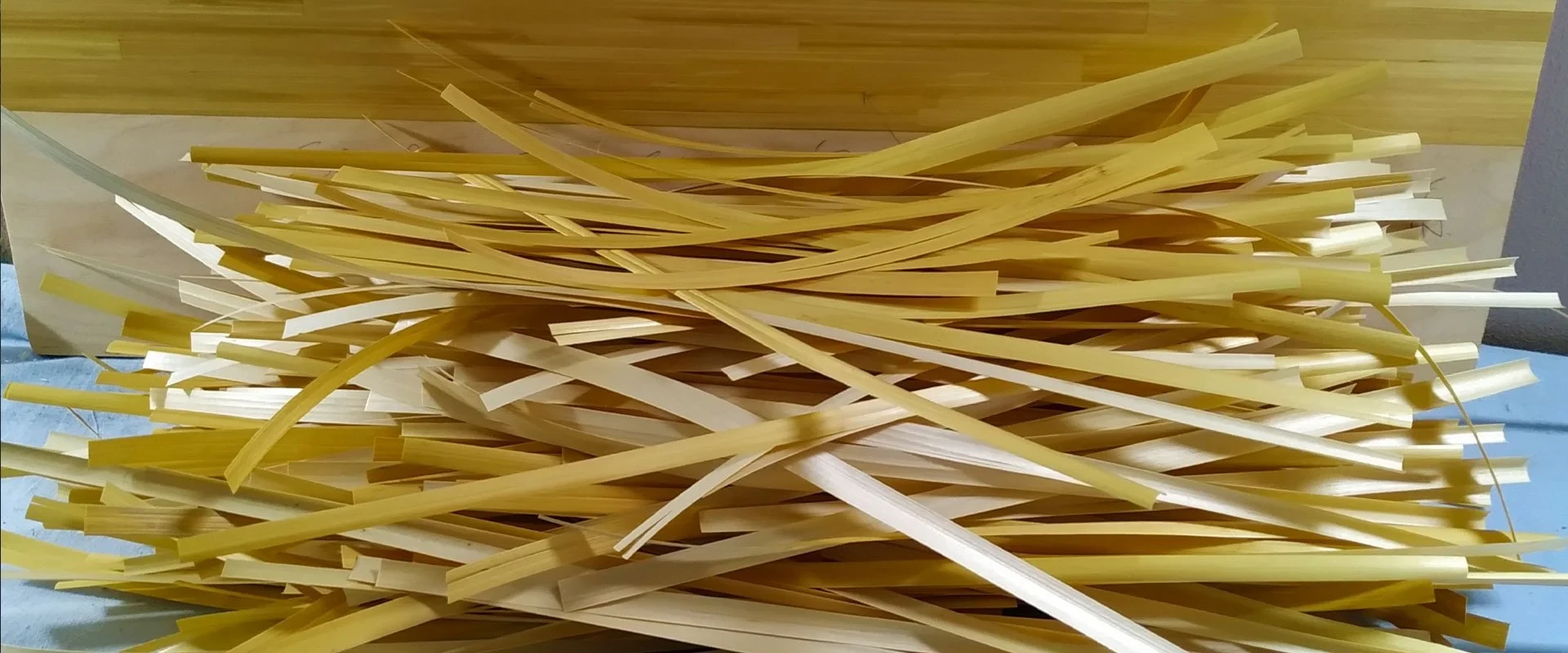
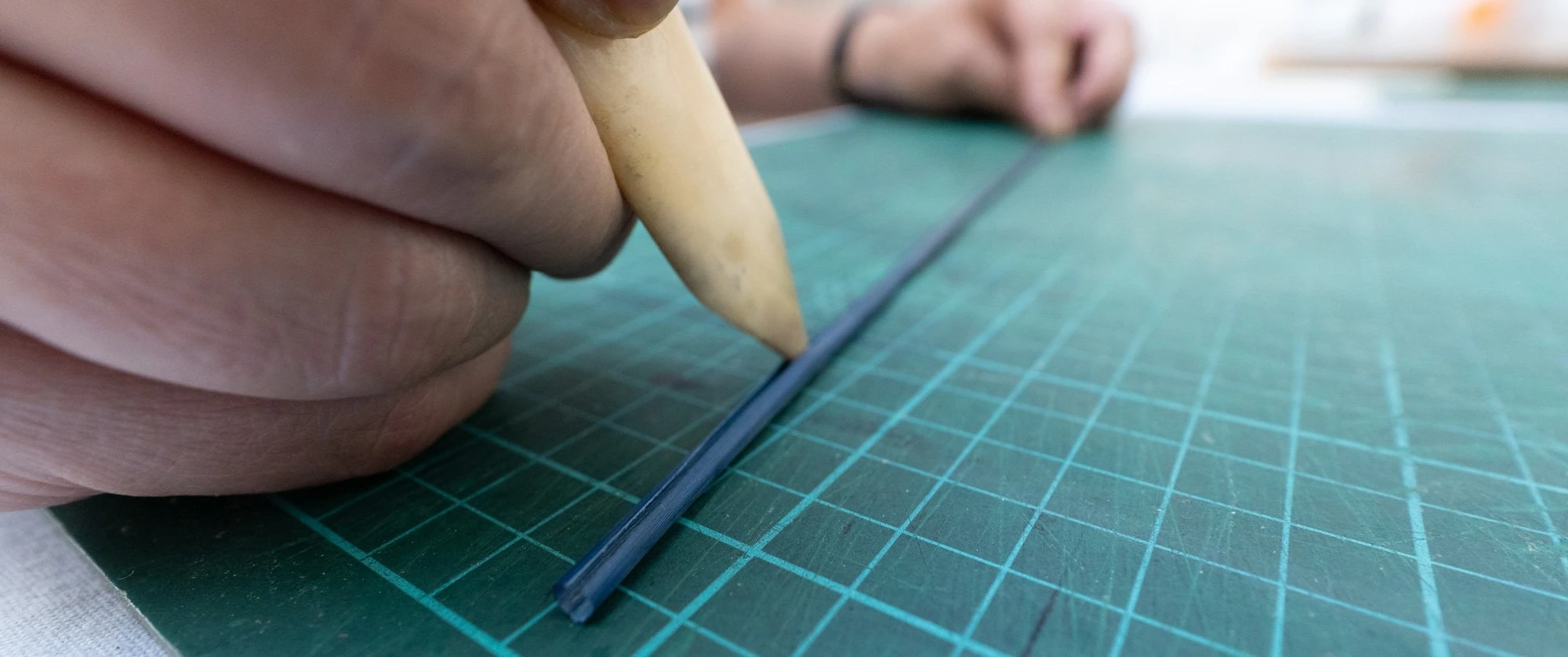
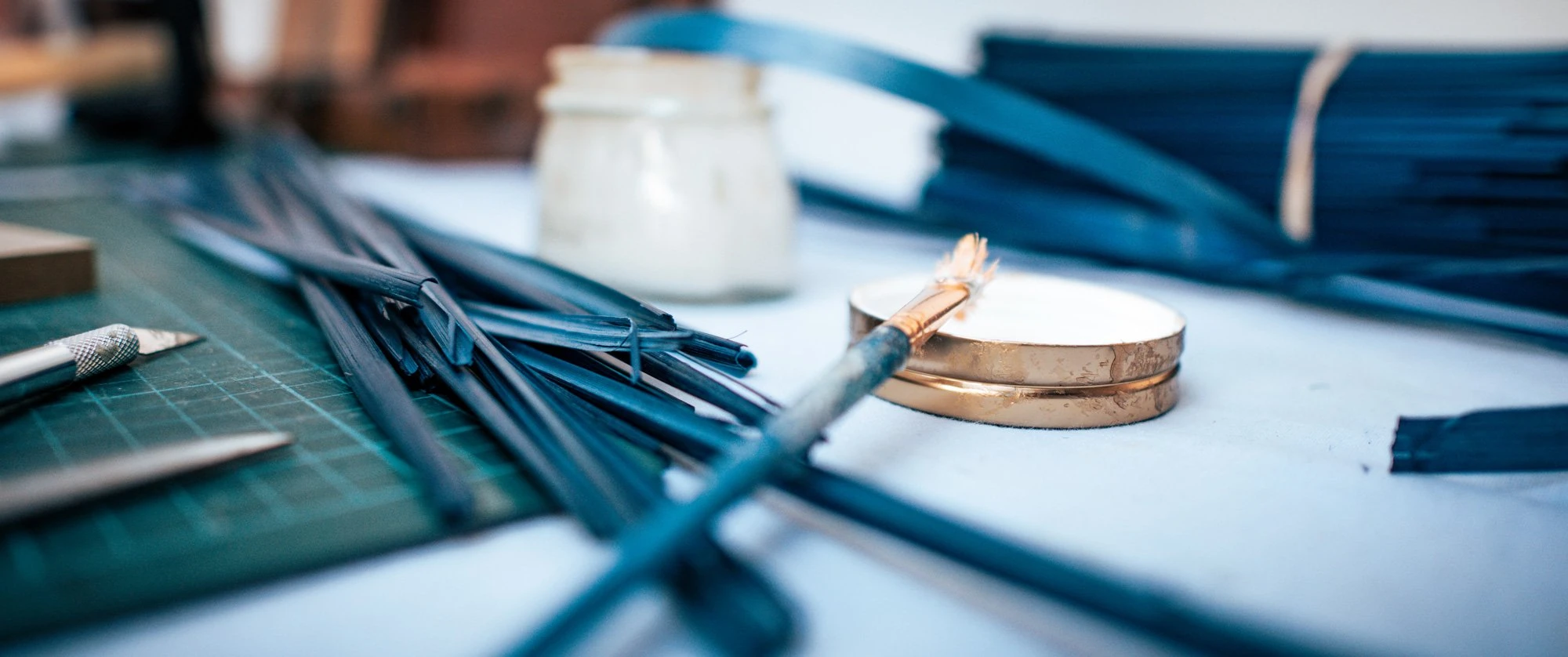
Rye straw, sourced for length and straightness, is sorted by quality and split lengthwise with a fine blade. Each strand is flattened and pressed to produce the thin, workable pieces used in laying. Stems reaching 2.5 metres yield around 60 centimetres of usable material per stalk.
Dyeing (if required)
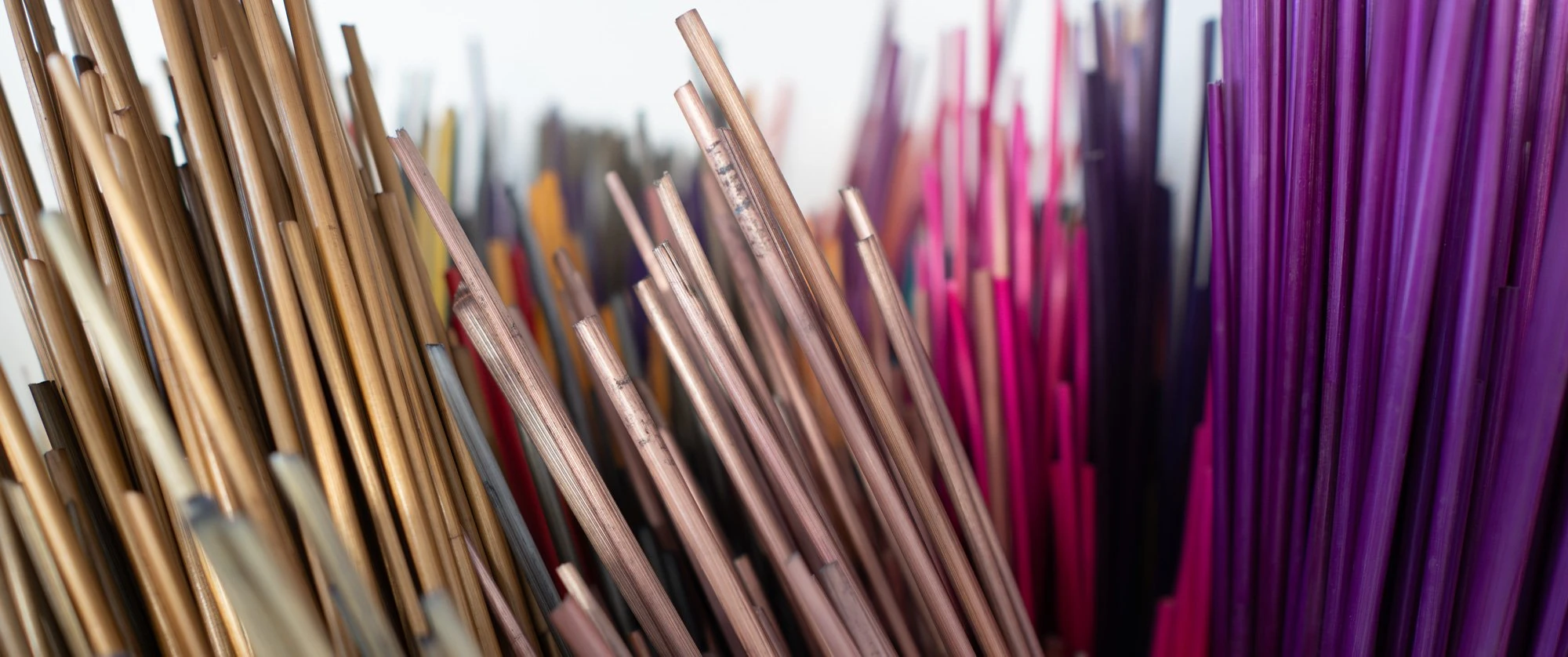
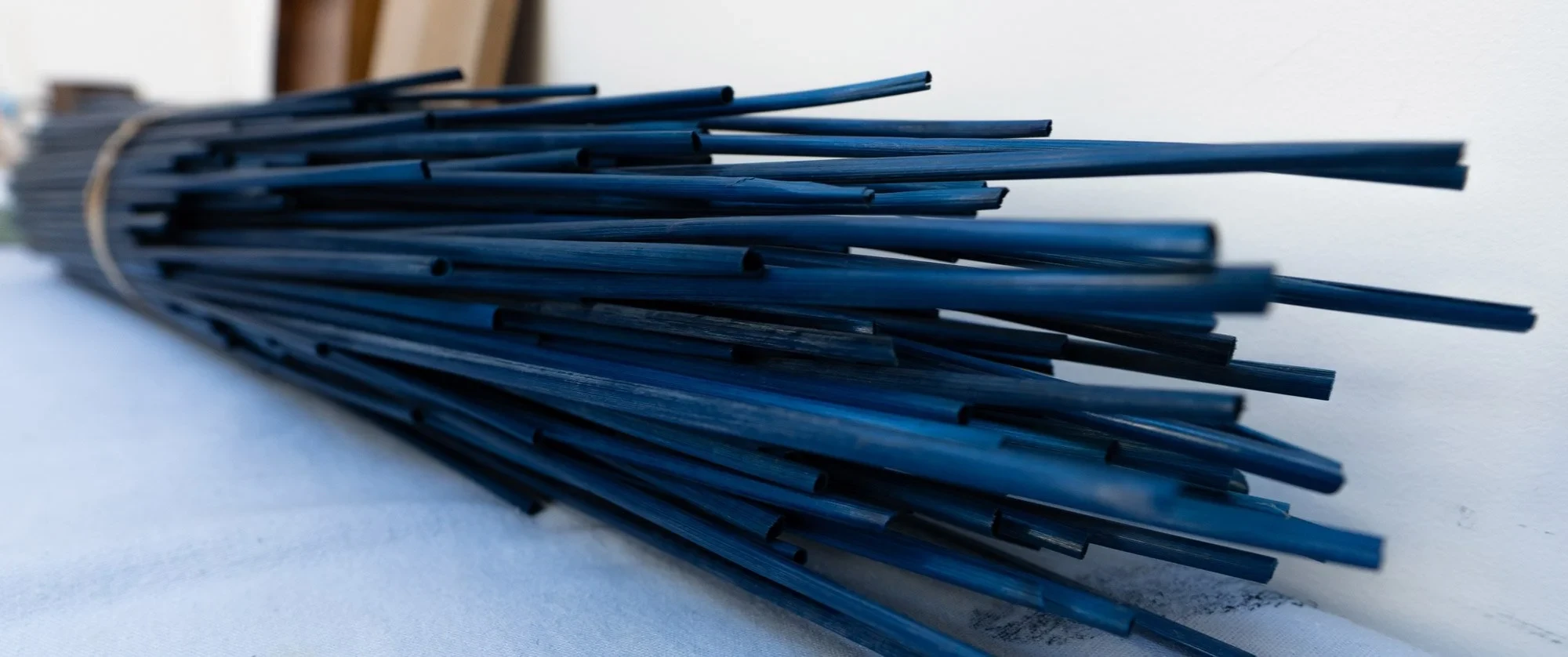
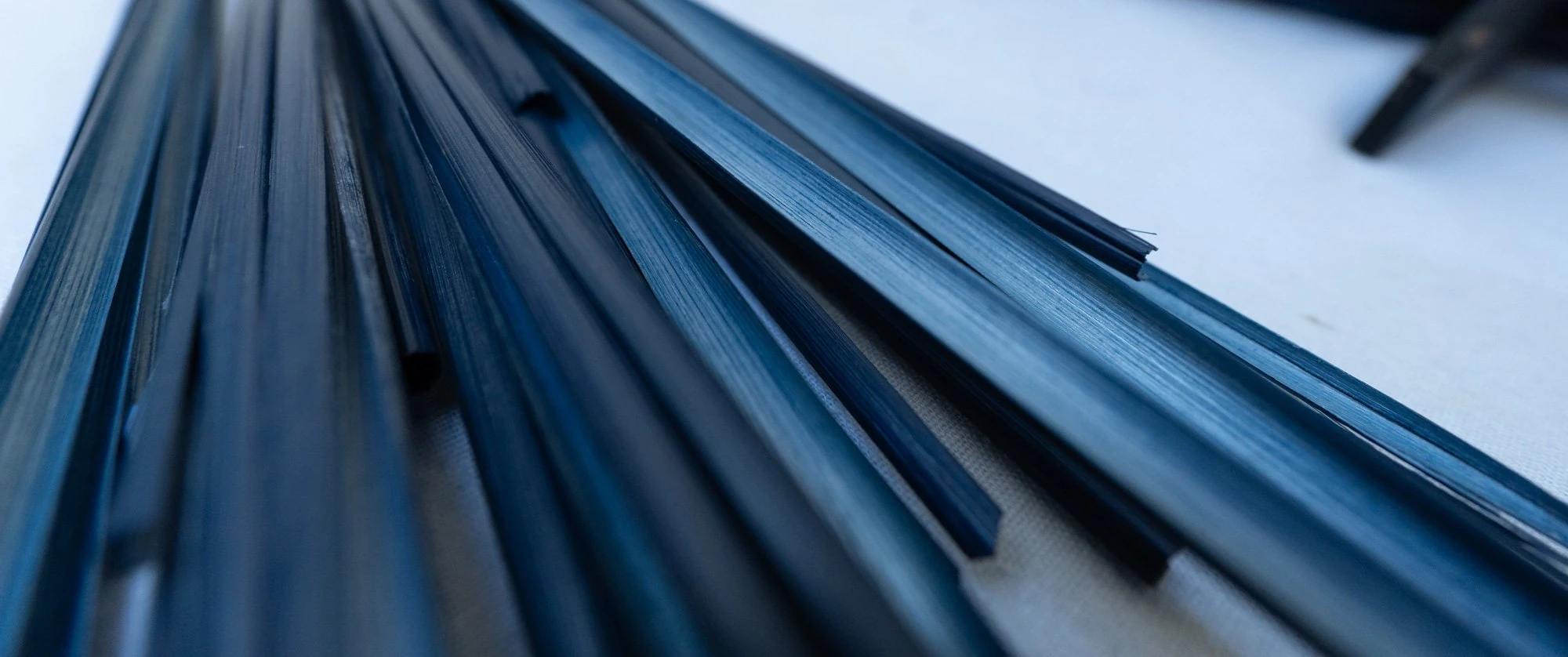
Individual straw pieces can be dyed using natural or mineral dyes to introduce colour while preserving the natural silica structure and lustre that makes straw marquetry distinctive. Our straw is bought in already dyed from our French supplier.
Pattern & Laying
Each piece is cut to shape and laid onto the panel surface in the planned geometric arrangement, typically herringbone, chevron, star or diamond patterns, piece by piece without gap.
Finishing
Once laid, the panel is lightly sanded and sealed with a matte lacquer or clear resin, chosen to protect without dulling the straw's natural light-catching quality. The surface improves in character with age.
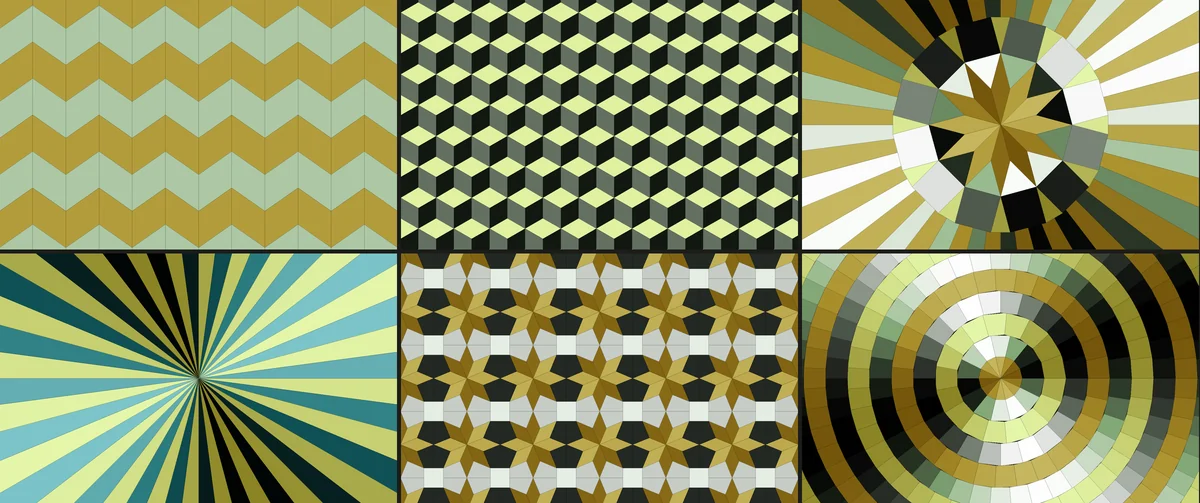
Thirty patterns, in your colours.
Choose how many colours, pick them from our dyed straw chart and see them laid in thirty straw marquetry patterns.
Explore the patternsA craft with a lineage
Straw was being worked into marquetry across Europe by the early seventeenth century, by nuns, monks and home craftspeople as well as cabinetmakers, mostly on small objects such as boxes and coffers. It reached England in that century and was carried forward, unexpectedly, by Napoleonic prisoners of war — their intricate straw-work boxes from camps such as Norman Cross survive in museum collections today. The craft was reborn in 1920s and 1930s Paris, where the decorators André Groult and, above all, Jean-Michel Frank set dyed straw across furniture and walls in the great Art Deco interiors: the moment straw returned to high-end furniture. After the war Jean Royère carried it on in colour and freer forms. In our own time the tradition is carried by makers such as Lison de Caunes, Groult’s granddaughter, and by studios like ours. The full history of straw marquetry is covered in our journal.
Why straw, and why now
Straw marquetry’s revival is not nostalgia — it answers three current briefs at once. Texture: the silica skin of rye straw catches light directionally, so a panel reads differently through the day, lively in a way flat veneer cannot be. Sustainability: straw is an agricultural by-product — renewable, biodegradable, dyed without toxicity — luxury with the lightest material footprint in our repertoire. And singularity: every strand is split, flattened and laid by hand, so no two panels can be alike even when the pattern repeats.

Where designers use it
- Walls and panels – large-scale geometric compositions as feature walls and lift interiors, where the directional sheen turns a surface into the room’s quiet event.
- Furniture – cabinet fronts, console tops, drinks cabinets and side tables; the Art Deco lineage of Jean-Michel Frank made straw a furniture surface, and contemporary work continues it.
- Decorative details – mirror frames, lamp bases, trays and boxes, where a small surface carries the full effect at accessible scale.
Straw marquetry panels: designs and patterns
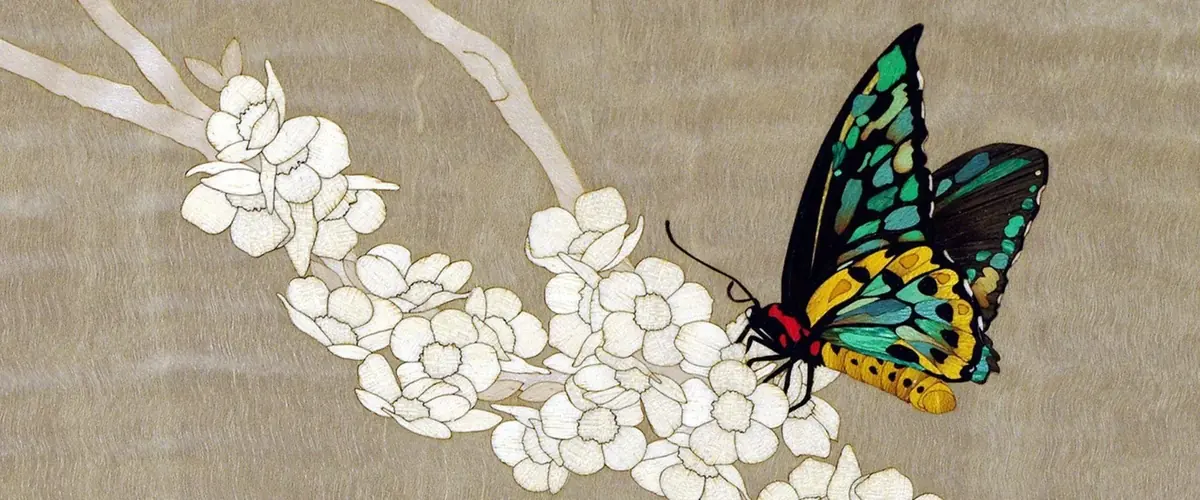
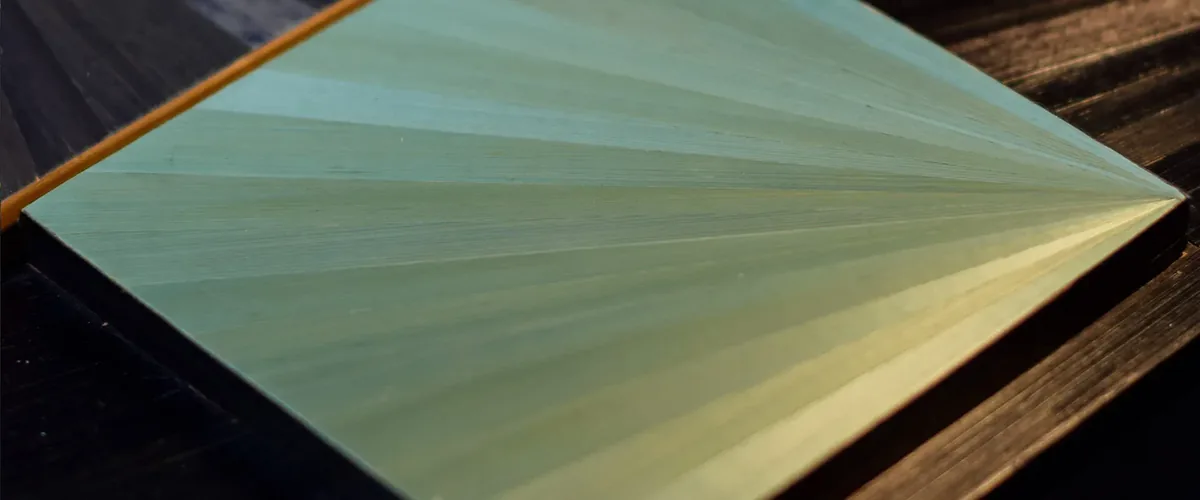
Straw marquetry designs run a wide span. At one end, strict geometry: sunbursts, chevrons, herringbone parquet grids, diamond and lozenge fields, classical fan patterns and the iconic Art Deco rays. At the other, pictorial work — landscapes, botanical motifs, abstract compositions in dyed straw. Most of our commissions fall somewhere between: a geometric ground with a single feature element, or a quiet field of one pattern across a complete furniture run.
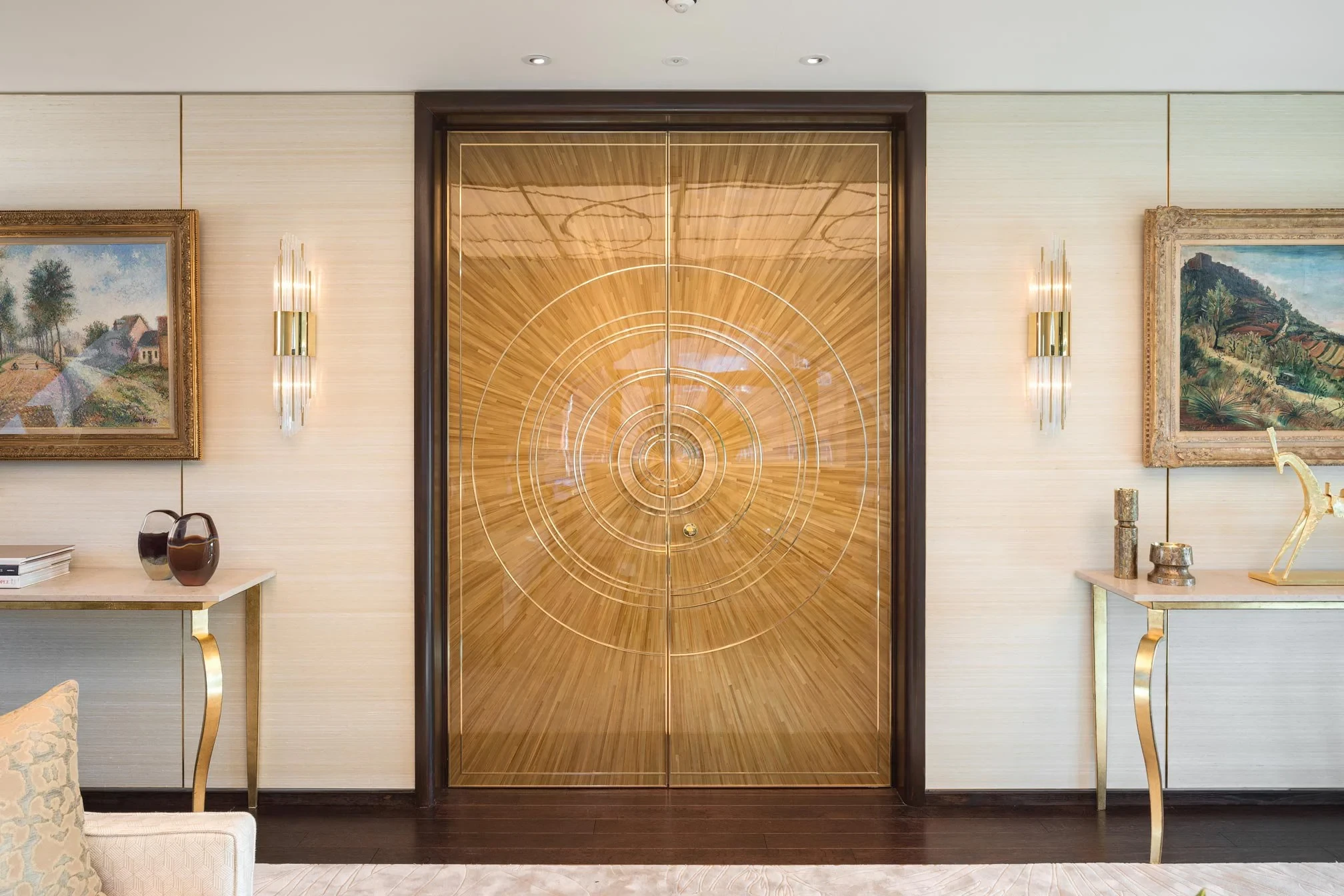
The material shapes the patterns. Straw marquetry is built from narrow, straight strips whose lustre runs along their length, so it is a linear medium. Curved cuts are possible, but angular patterns work best: straight lines and clean angles let the direction of the straw do the work. A designer who treats the direction of the straw as the design will get the most from it.
To see how a pattern behaves in different colours, use the straw marquetry pattern and colour tool: choose how many colours, pick them from our dyed straw chart and see them laid in thirty patterns.
At Taman Duta Villa in Kuala Lumpur the same logic is applied to a set of door panels: a single blue-violet starburst whose rays carry across the faces of the doors, with the sides and backs finished as well, so the marquetry reads as a resolved object from any angle. See the project.
Scale and pattern density are decided by where the piece sits. Tight herringbone on a writing-desk top reads as a uniform sheen at table-eye distance; the same pattern on a feature wall reads as direction and depth across the room. Pictorial work requires close-range viewing and benefits from raking light. We sample patterns as physical straw marquetry veneer panels before commissioning, so the directional sheen and dye colour can be assessed in the actual scheme.

Bespoke straw marquetry commissions
Make Bespoke Studio is a London bespoke straw marquetry maker, working to commission for interior designers, architects and luxury hospitality groups. We are not a retail supplier of straw marquetry sheets or kits — the craft is too slow and too physical for stockholding. Each piece is laid by hand for a specific brief, by specialist artisans we work with directly. If the requirement is a single feature panel for a private residence or a coordinated set of headboards, cabinet doors and wall inserts for a hotel suite range, we produce to drawing and finish to brief.
Lead times for the straw work run six to fourteen weeks depending on scale and complexity, with formal sampling at four to six weeks ahead. When the straw forms part of a furniture or joinery piece, plan the whole piece to the sixteen to twenty-eight weeks that our lead-times guide gives for decorative craftsmanship. Hospitality commissions include lacquer protection appropriate to the application; vertical surfaces and light-duty horizontal surfaces are both within scope. The craft’s history and technique are covered in our journal article, and commissions run through the same sampling and development process as all our work.

Straw marquetry — the questions designers ask
What is straw marquetry?
Straw marquetry is the decorative craft of laying split, flattened rye straw, strip by strip, onto a surface to form a pattern or panel, in the way wood veneer is used in wood marquetry. The silica in the straw gives the finished surface a directional lustre that changes with the light.
How is straw marquetry made?
The straw is soaked, split lengthwise and flattened under a warm iron, then dyed if colour is required. The strips are laid by hand onto a substrate in the planned pattern, pressed, trimmed and sealed with a thin protective lacquer, chosen to keep the natural sheen.
Is straw marquetry a veneer?
In effect, yes. It is a thin decorative surface laid onto a substrate, like wood veneer, but built from split rye straw laid strip by strip rather than sliced from a log. We make it to commission as laid panels; we do not stock straw marquetry sheets or kits.
What patterns can straw marquetry make?
Patterns built from straight lines and angles work best: parallel runs, chevrons, herringbone, diamonds, stars, fans and sunbursts. Curved cuts are possible, but angular patterns are where straw marquetry is at its strongest. Our pattern and colour tool shows thirty examples in colours you choose.
What can straw marquetry be applied to?
We generally lay straw marquetry onto moisture-resistant MDF (MRMDF) panels, chosen for their stability, and can use other surfaces where the project needs them. The finished panels are then made up into furniture, joinery or wall linings.
What is straw marquetry made from?
Rye straw, hand-split and flattened. The technique uses the silica-rich outer skin of rye stems — usually grown in the Saône-et-Loire region of France — which gives the laid surface its directional lustre. Stems reach about 2.5 metres, but only around 60 centimetres of usable straw is yielded per stalk after splitting and selection.
How is straw marquetry different from wood marquetry?
Wood marquetry uses thin wood veneers cut and fitted into decorative patterns; straw marquetry uses split rye-straw stems laid edge to edge. The structural method is similar but the surface is utterly different — straw catches light directionally where wood reflects it evenly. The two are often used together in a single piece, with straw marquetry providing the surface event and wood marquetry the field.
Can straw marquetry be used in hospitality interiors?
Yes, with appropriate lacquer protection. Vertical surfaces (wall panels, cabinet doors, headboards) and light-duty horizontal surfaces (console tops, decorative inserts) are well-suited; we don’t recommend it for high-wear horizontal surfaces such as bar tops or restaurant tables. Most of our hospitality straw marquetry work is in guestroom feature walls, suite headboards and millwork inserts in public lounges.
Does Make Bespoke Studio sell straw marquetry supplies, sheets or kits?
No. Straw marquetry is too slow and material-specific to produce as stock. We are a London bespoke straw marquetry maker, working only to commission for trade clients. For DIY kits and small craft materials, specialist craft suppliers are better placed.
What colours are available?
Natural golds through deep amber, plus a full range of dyed straws, from greens, reds and blues to blacks, whites and subtle shades for tone-on-tone work. The colour chart on our straw materials page shows the dyed straws we work with. If a scheme is specified in RAL, tell us about the project and we can make samples starting from the RAL colour and select the closest dyed straw from the chart. We buy the straw in already dyed from our French supplier, and because colour can vary between harvests, physical samples are agreed at the development stage.
How is the finished surface protected?
A matte lacquer is applied once the panel is laid — usually water-based and UV-stable, chosen for the use the piece will see. The lacquer protects against handling and seals against humidity without dulling the directional sheen the straw is prized for.
Is straw marquetry durable, and how is it cleaned?
Sealed with lacquer and used as intended, straw marquetry is stable and long-lived — the Art Deco panels of the 1930s survive intact today. It is cleaned simply, with a dry or barely-damp soft cloth wiped along the direction of the straw; abrasives, solvents and standing water are avoided. On vertical and light-duty surfaces it withstands normal handling well, which is why we favour it for feature walls, cabinet fronts and headboards over high-wear worktops.
Where straw
marquetry works.
Straw marquetry works best where it can be seen at close range and in varied light. The silica surface reads differently from different angles — pale gold at some, deep amber at others — making it suited to pieces encountered from multiple directions, or in spaces with natural light that changes through the day.
- Writing desk and table tops
- Cabinet and armoire door fronts
- Headboard panels
- Dressing table surfaces
- Box and case surfaces
- Feature wall panel inserts
- Console table tops