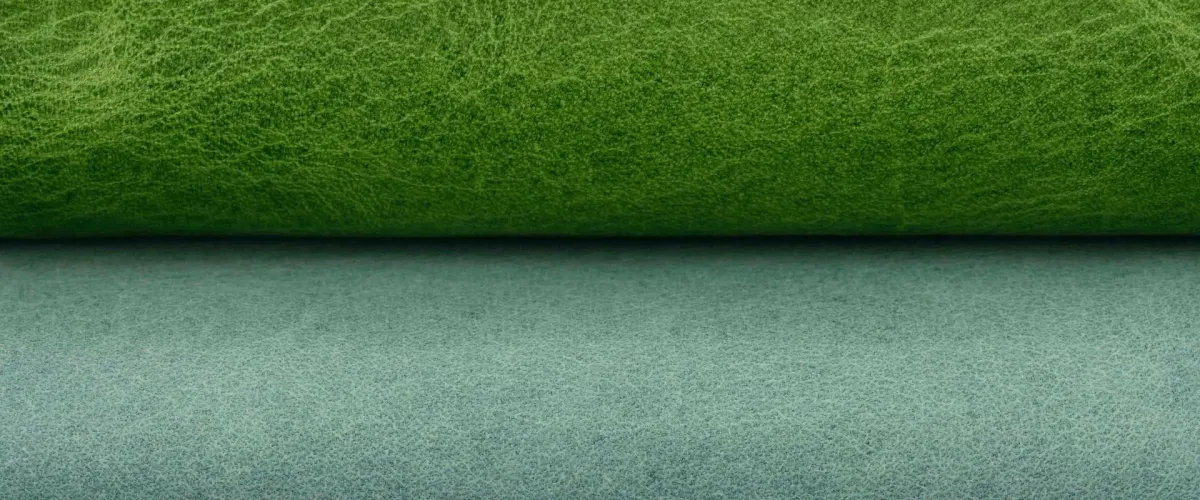
Leather
We work with all leather suppliers and can include pricing in our quotes
Leather is specified in furniture and joinery wherever durability, character and a surface that improves with age are required. It is a natural material, so every hide carries the marks of the animal it came from: grain variation, growth lines, healed scars and a tonal range that no printed surface reproduces. That individuality is the reason it is chosen for considered interiors, and the reason two pieces upholstered in the same colour will never read as identical.
Full-grain leather retains the outer surface of the hide and develops a patina with use. Corrected-grain leathers are buffed and recoated for greater uniformity and resist staining more effectively. Nubuck and suede are available where a softer, matte surface is preferred. At Make Bespoke Studio, leather is used for upholstered seating (sofas, dining chairs, headboards and ottomans) as well as desk inserts, wrapped panels, door linings and bar fronts. We work with hides through our supplier network across the full colour range and can colour-match to a designer's specification.
Leather is quoted by the square foot. A standard hide runs 50 to 55 sqft; we calculate the quantity required per item, accounting for pattern placement and cutting waste, before confirming the order. Customer's own leather (COL) is accepted. For hospitality and contract applications, leather can be specified with the appropriate flammability treatment or backed with a flame-retardant interliner to meet contract upholstery requirements.
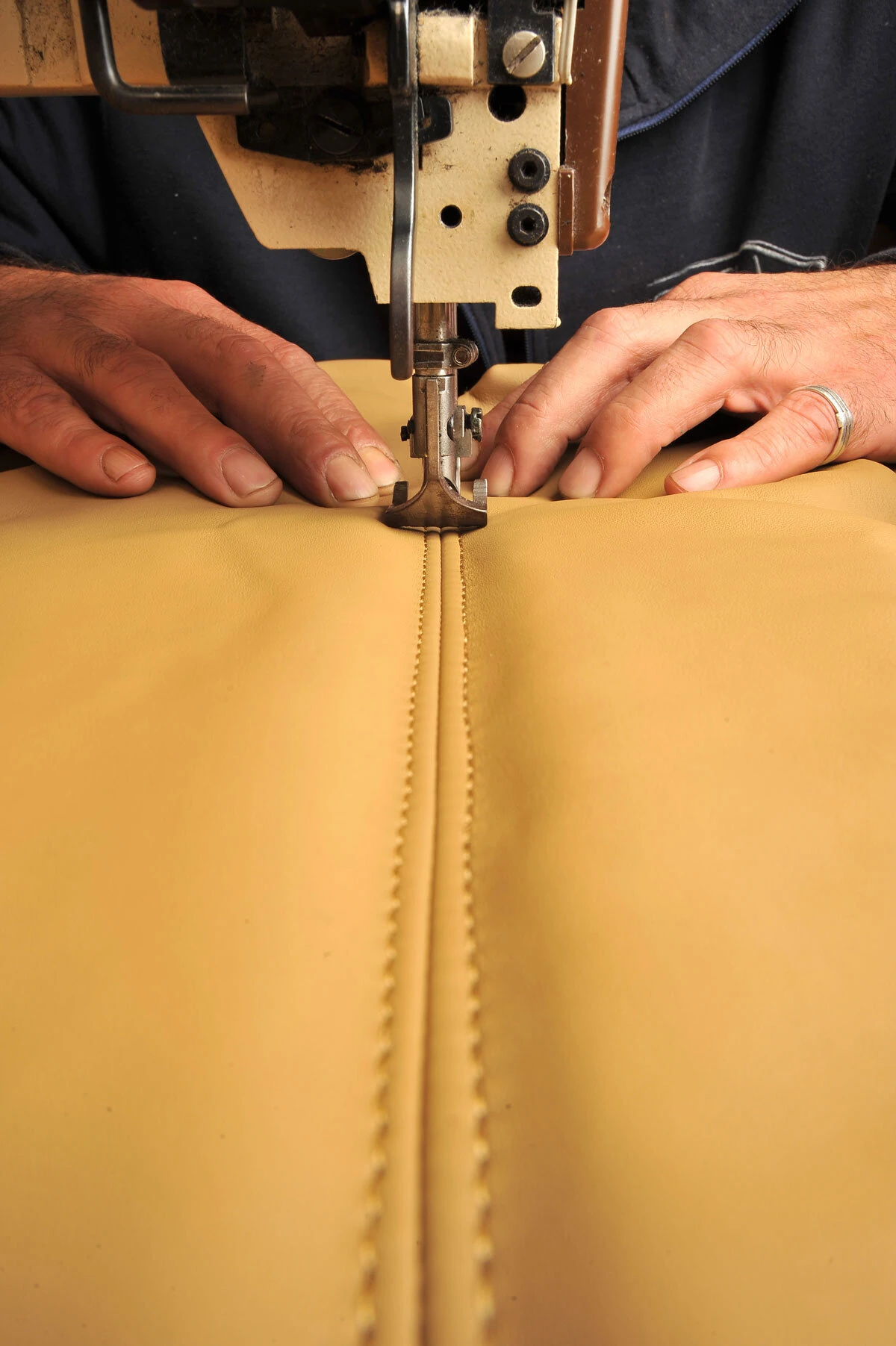 01 / 02Leather Sewing
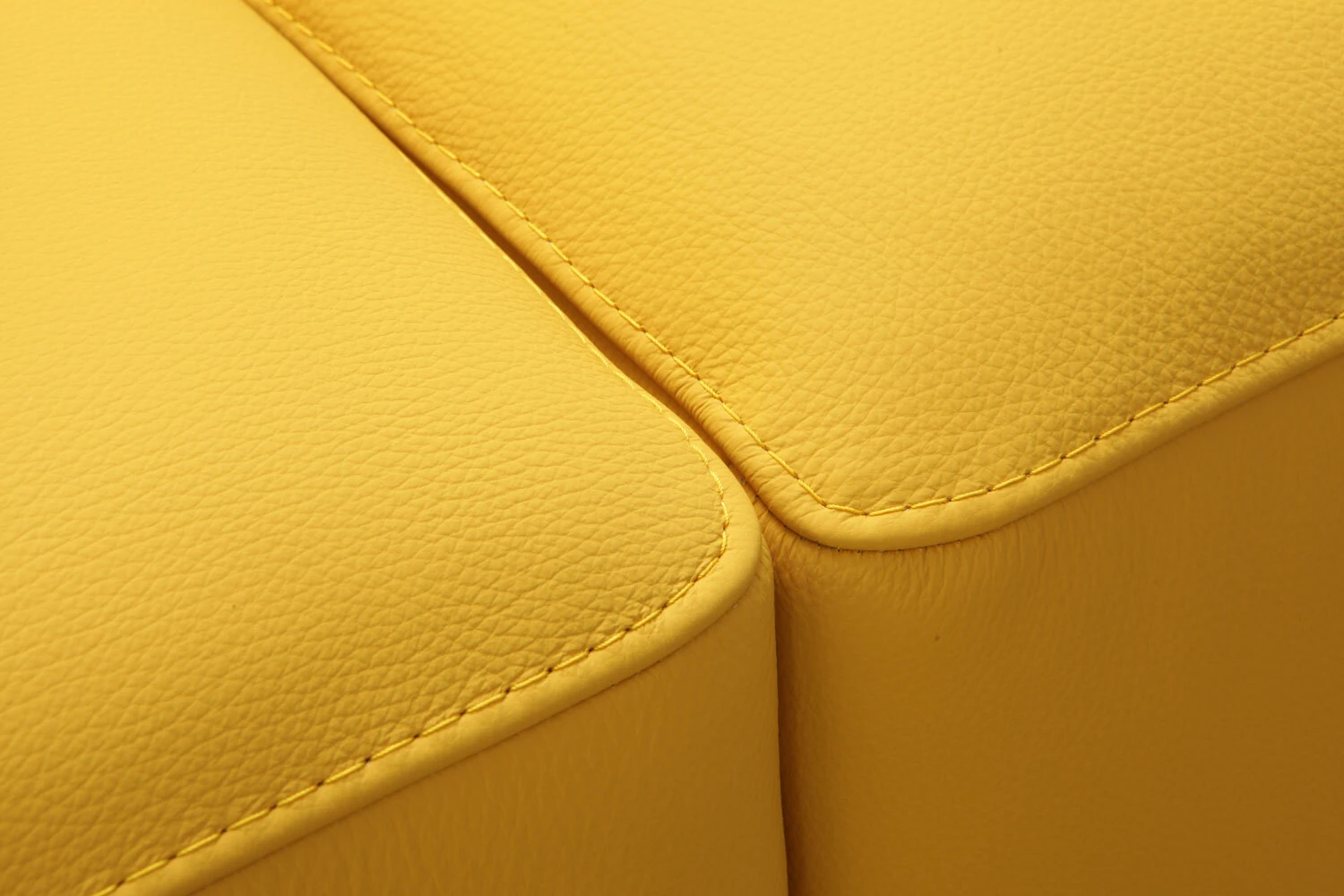 02 / 02Cushion Stitching Detail
Stitching Details
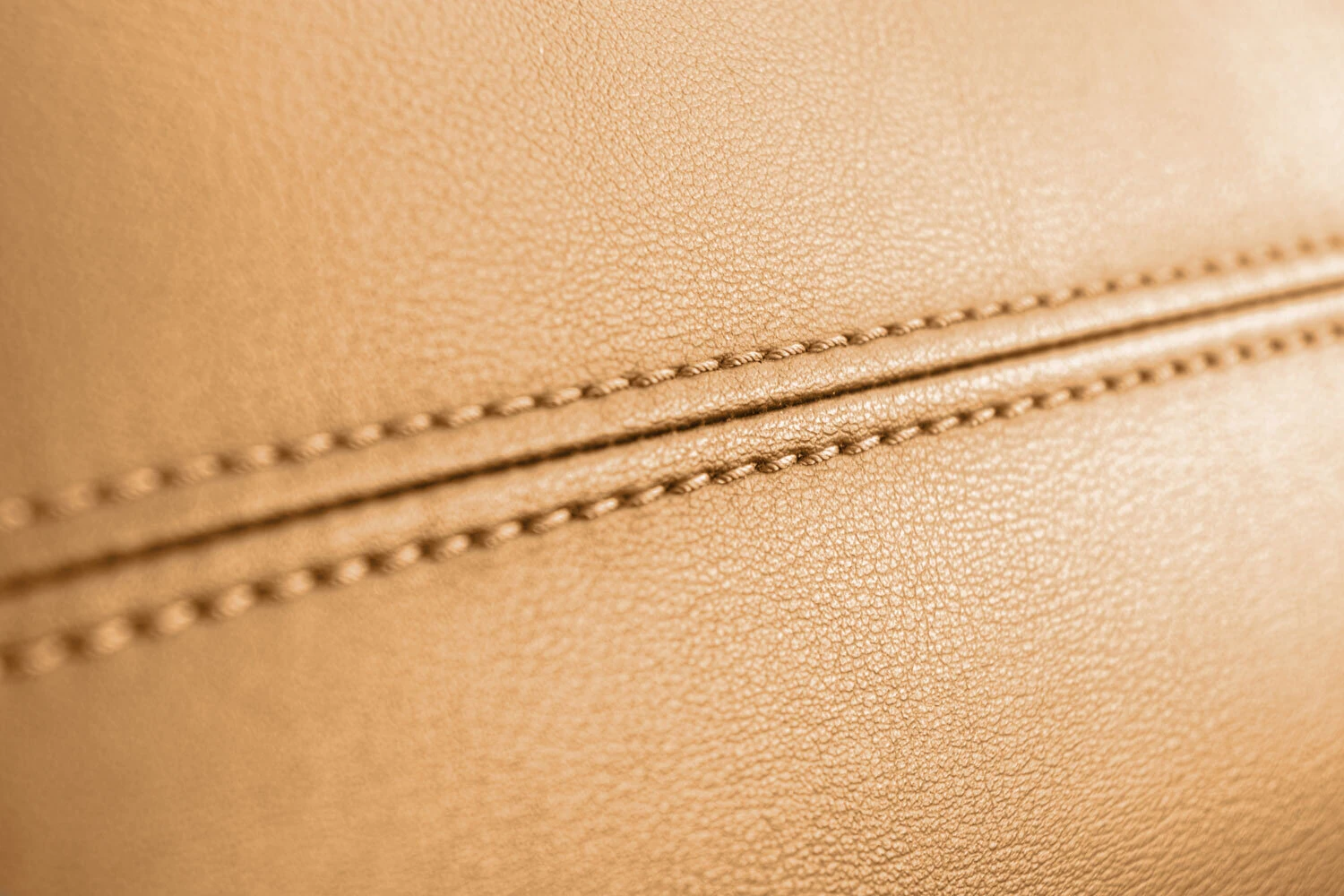 01 / 14Stitching Detail
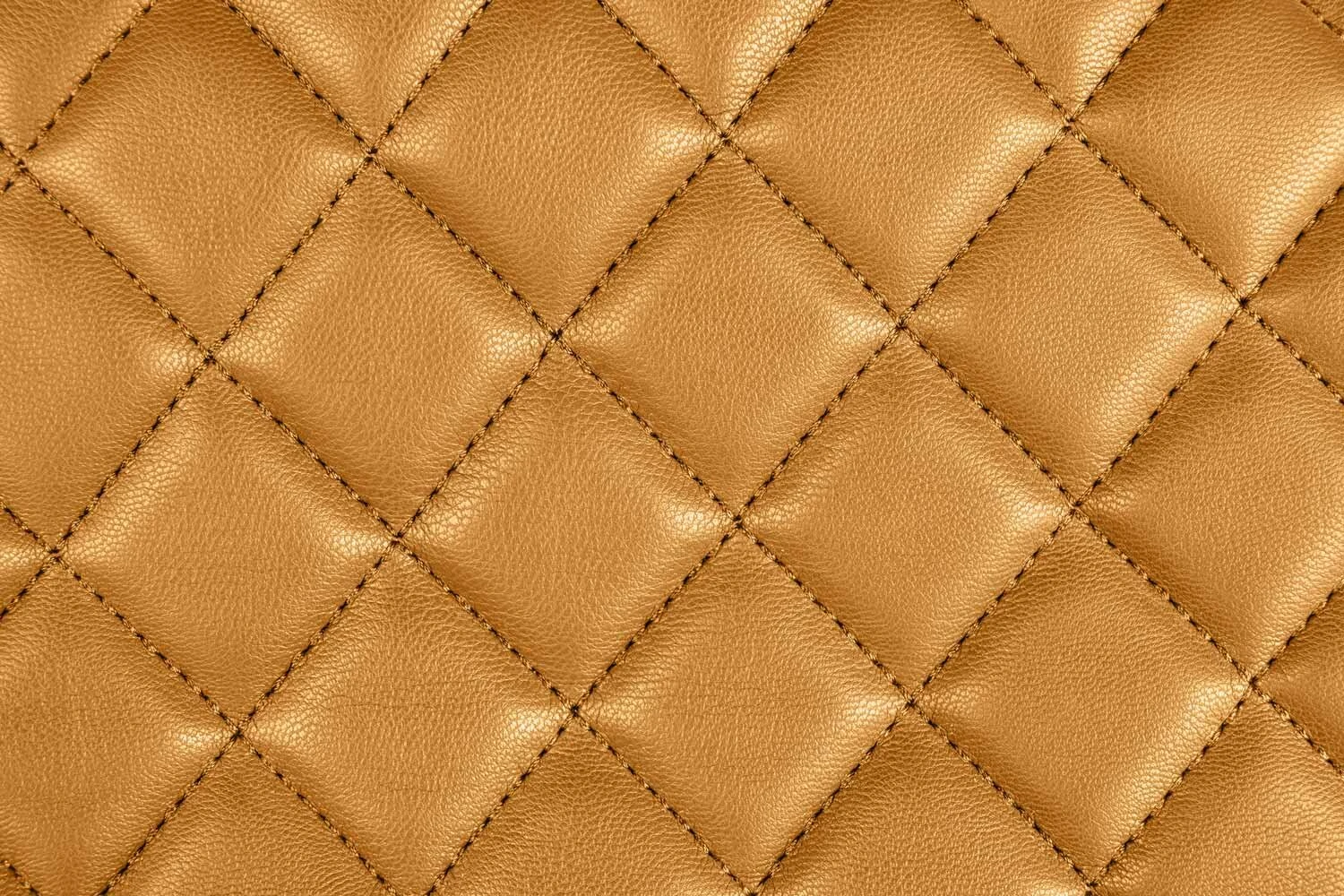 02 / 14Diamond Stitching Detail
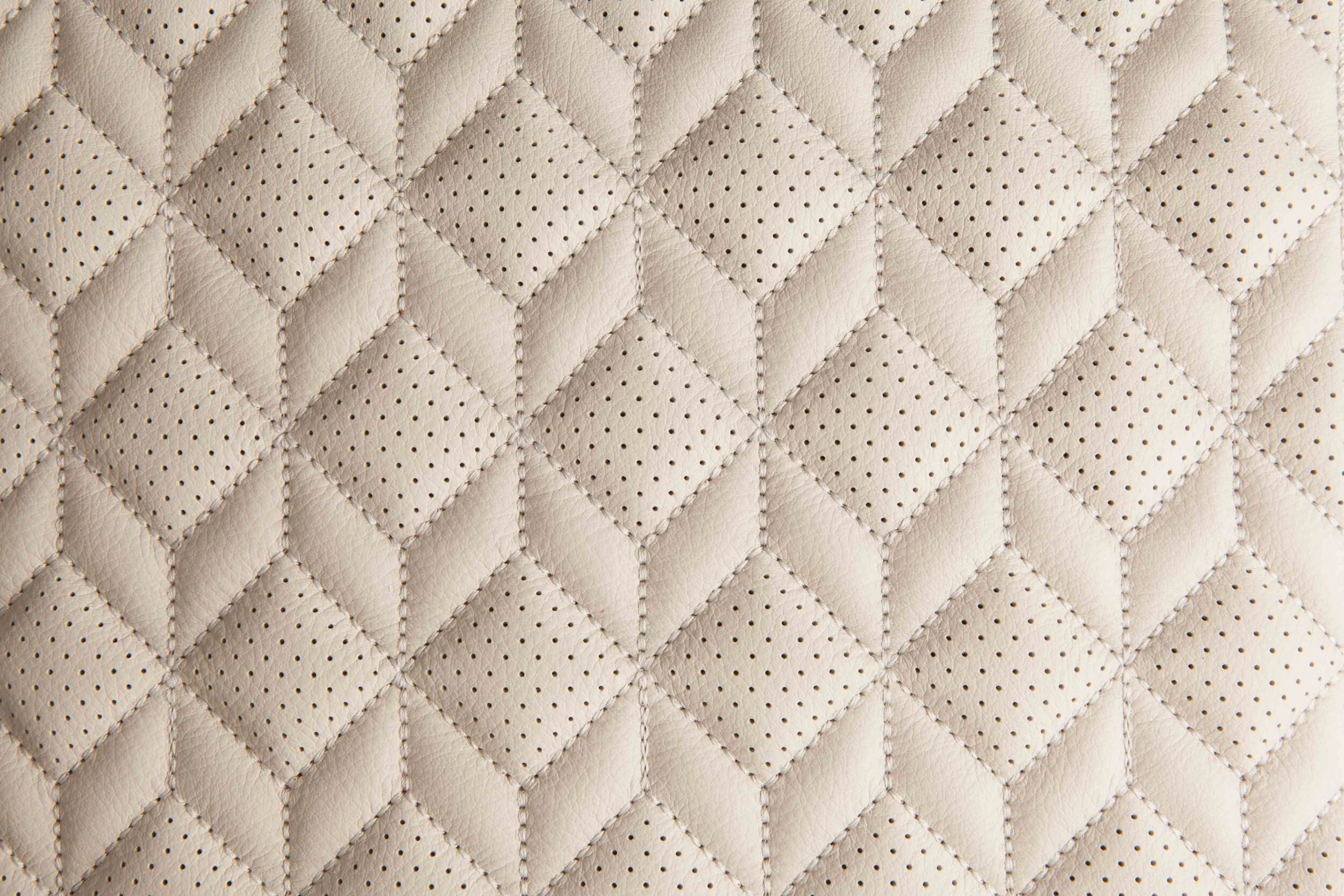 03 / 14Quilted Carrousel
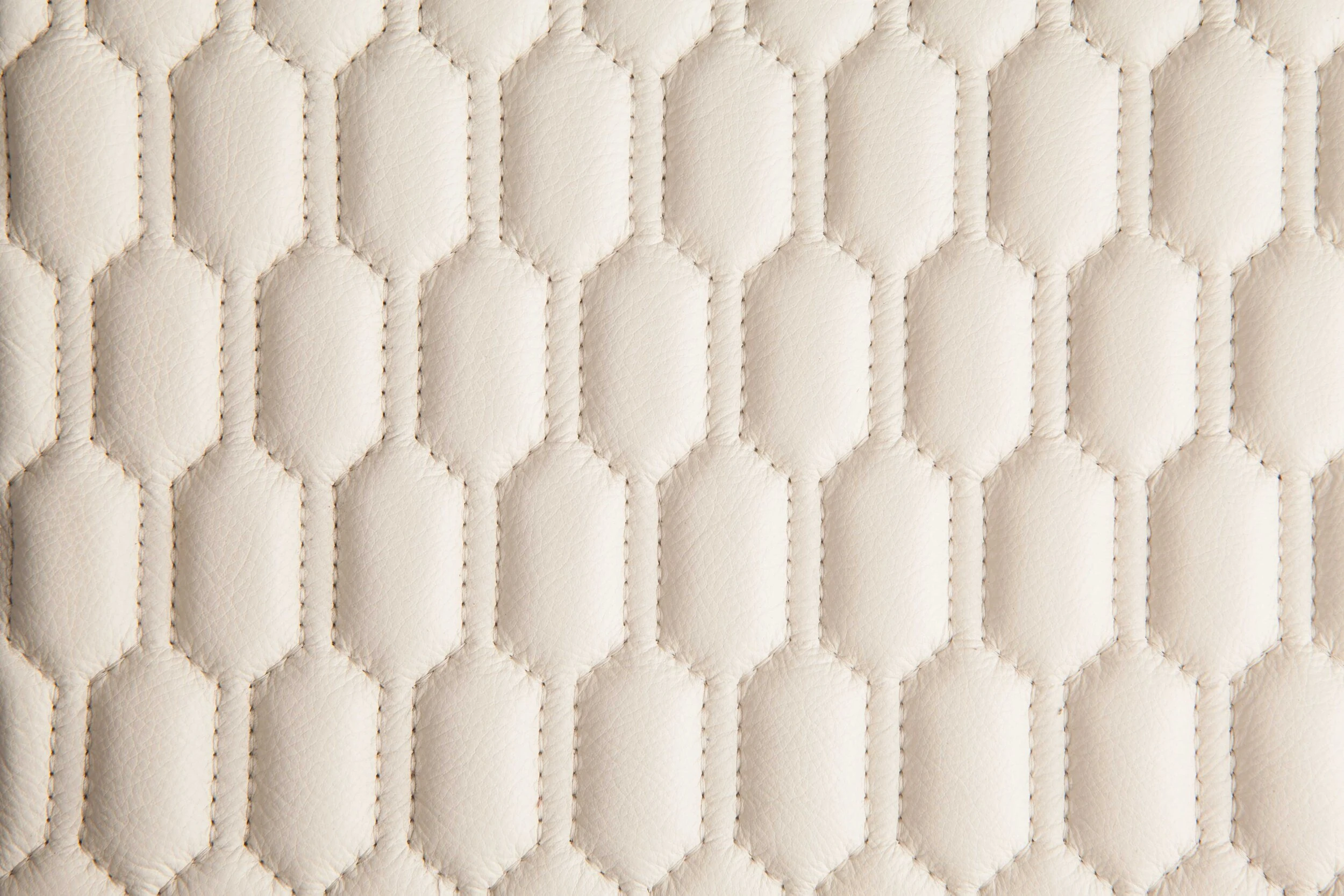 04 / 14Quilted Harmony
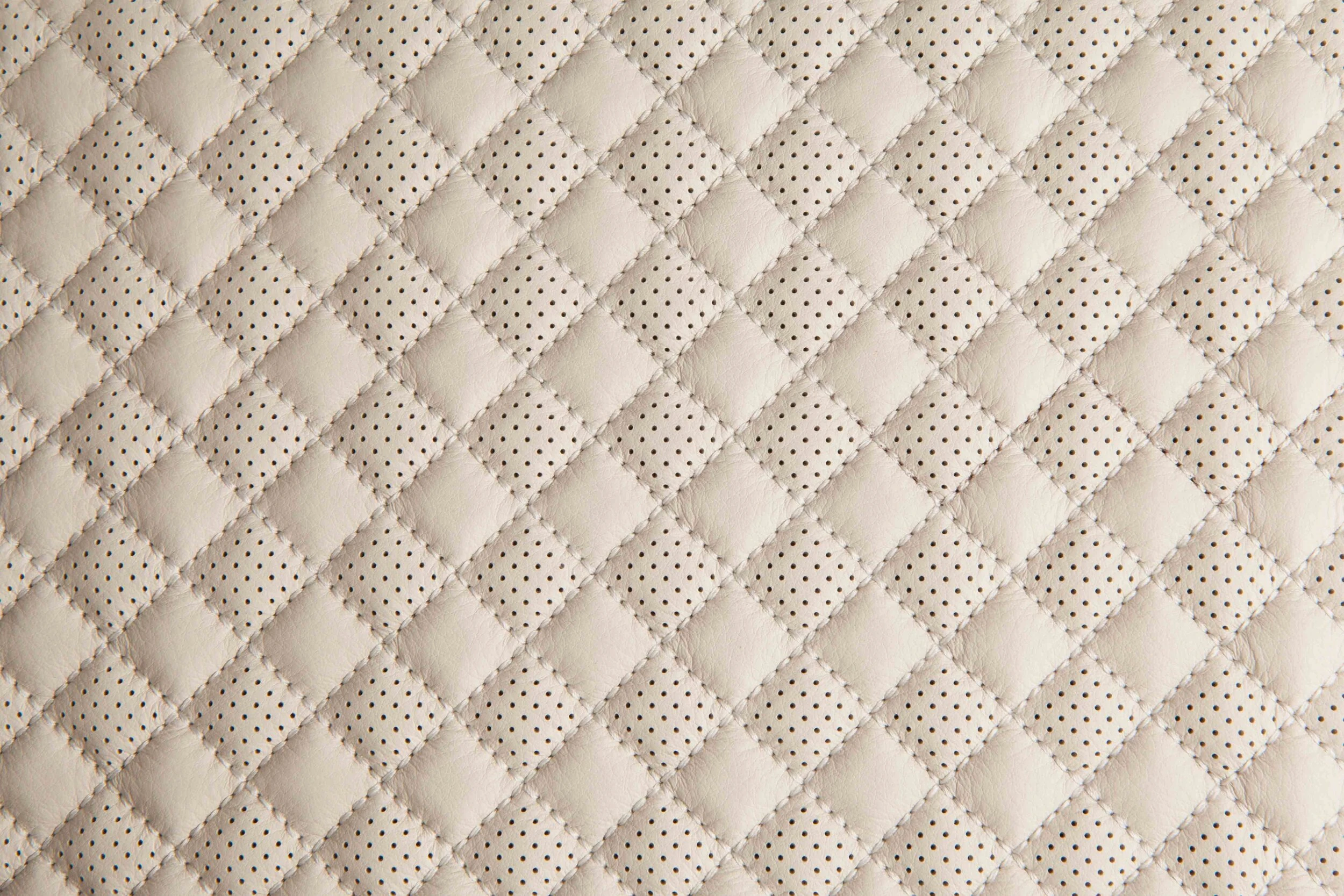 05 / 14Quilted Hourglass
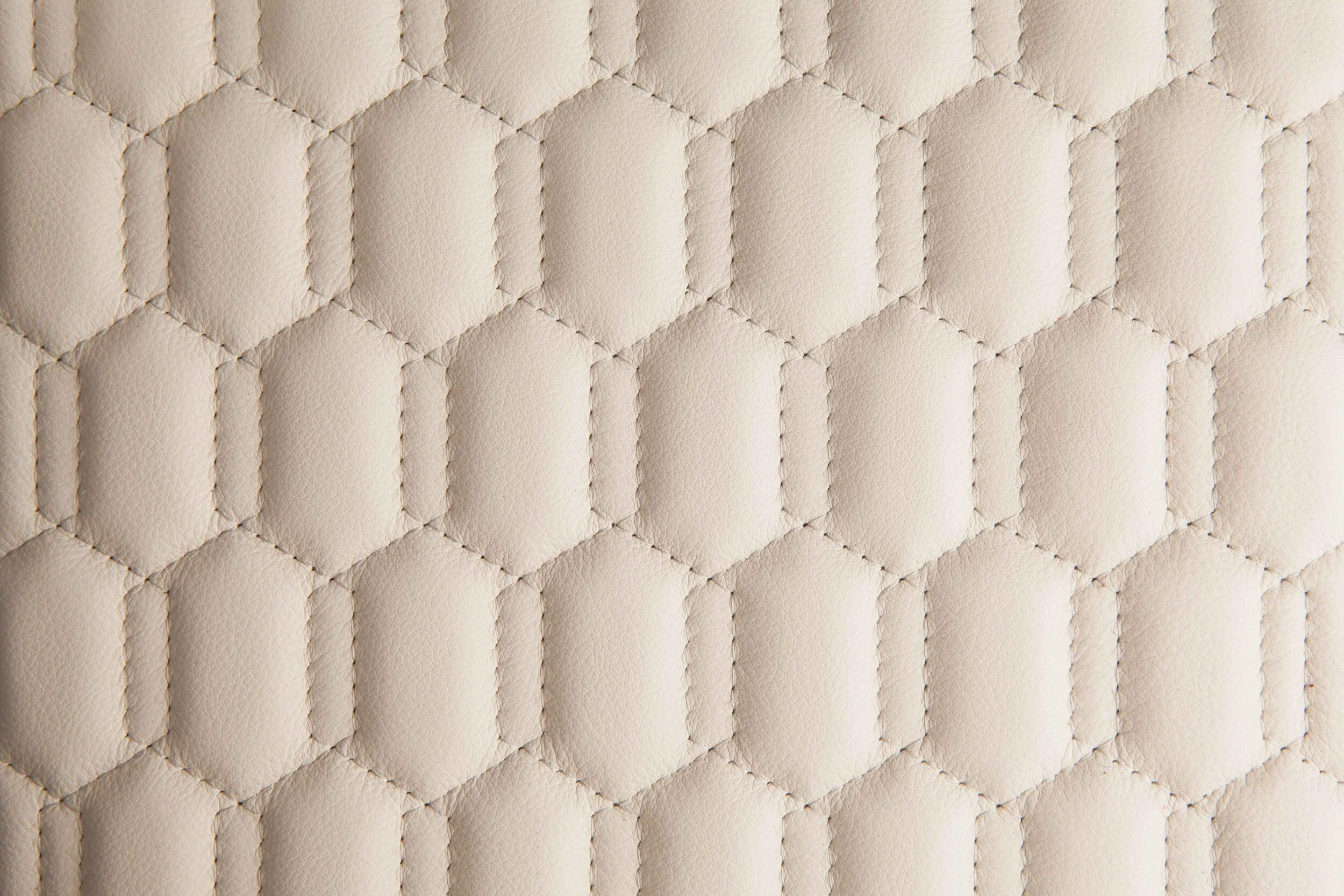 06 / 14Quilted Hypercube
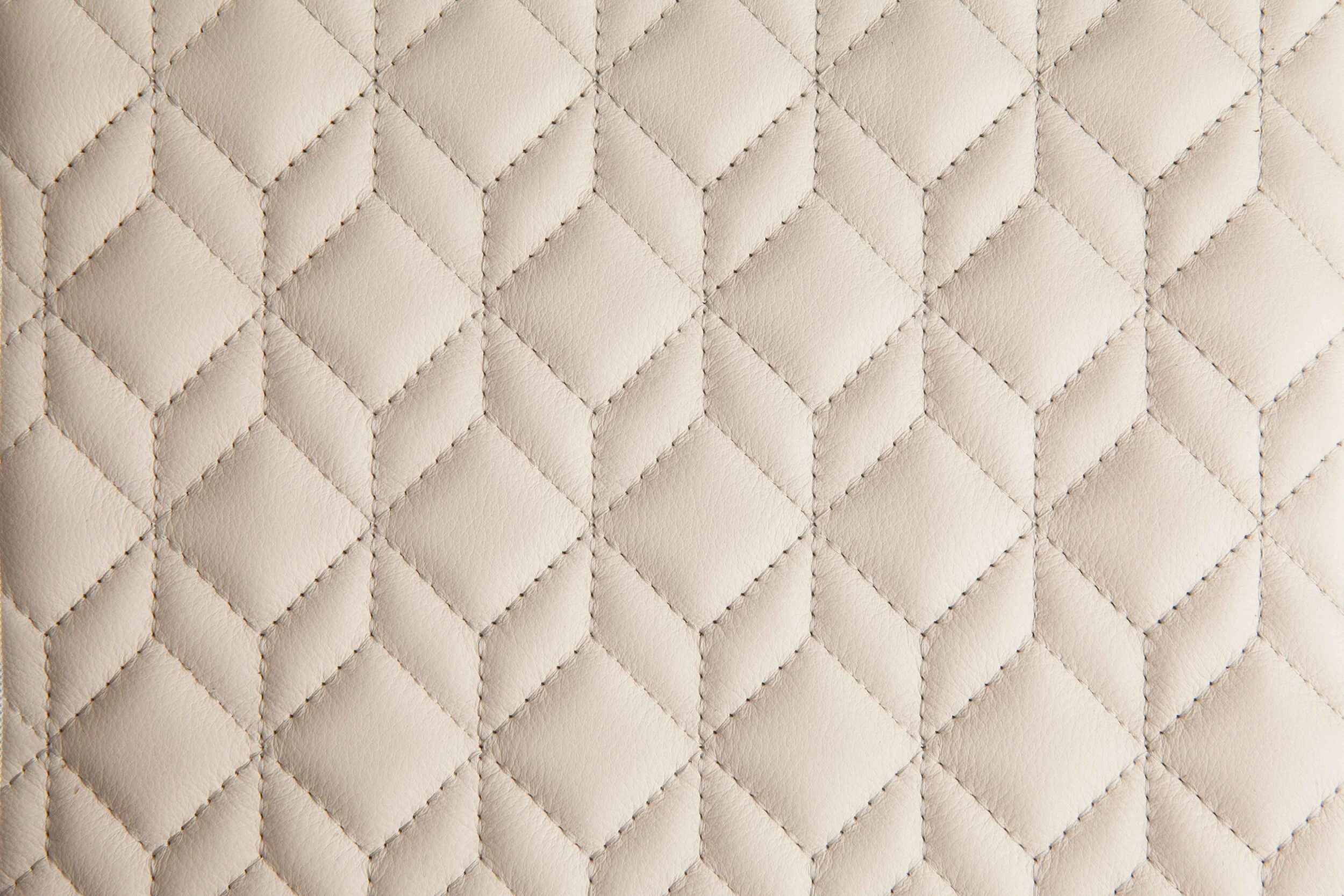 07 / 14Quilted Mariposa
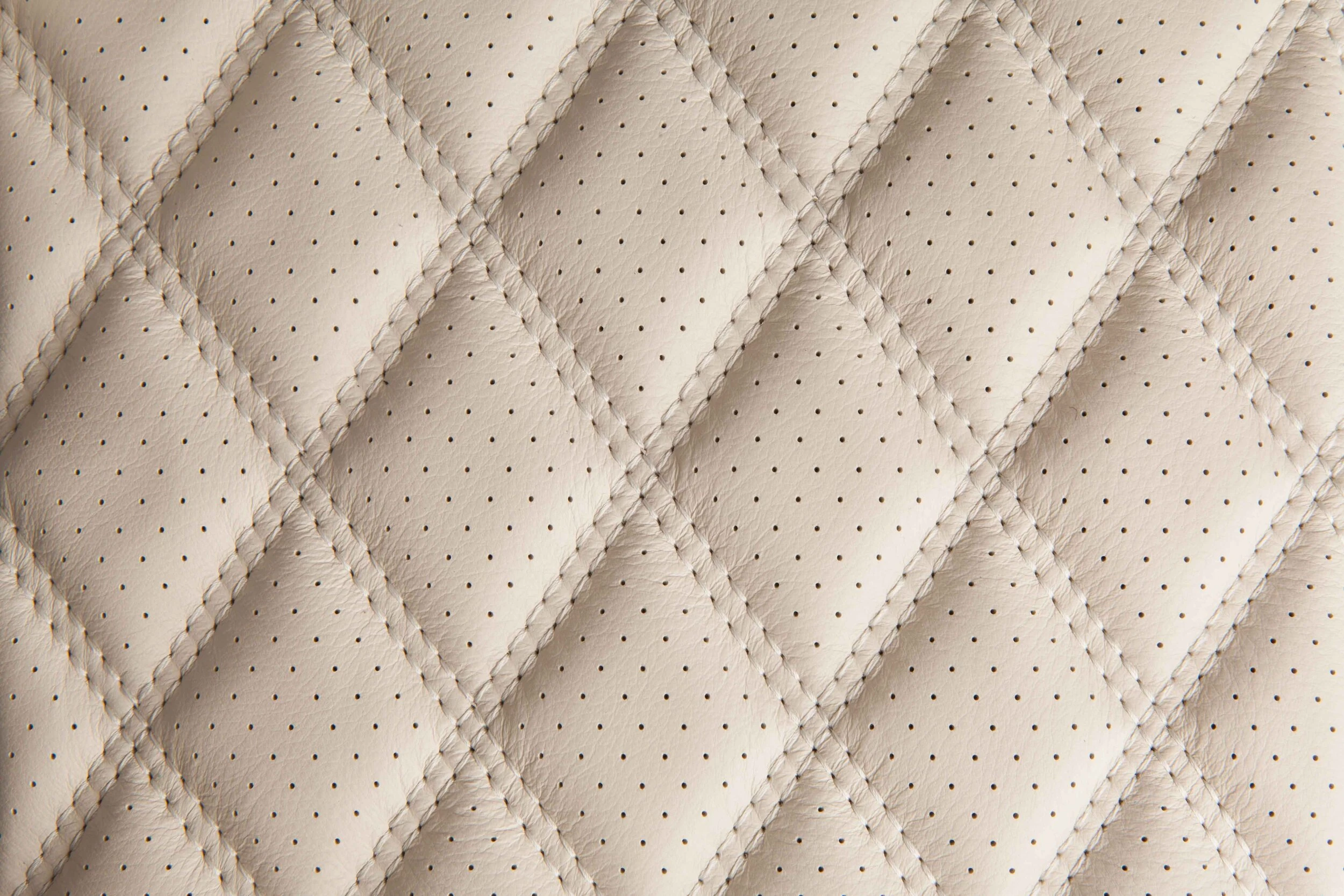 08 / 14Quilted Mercury
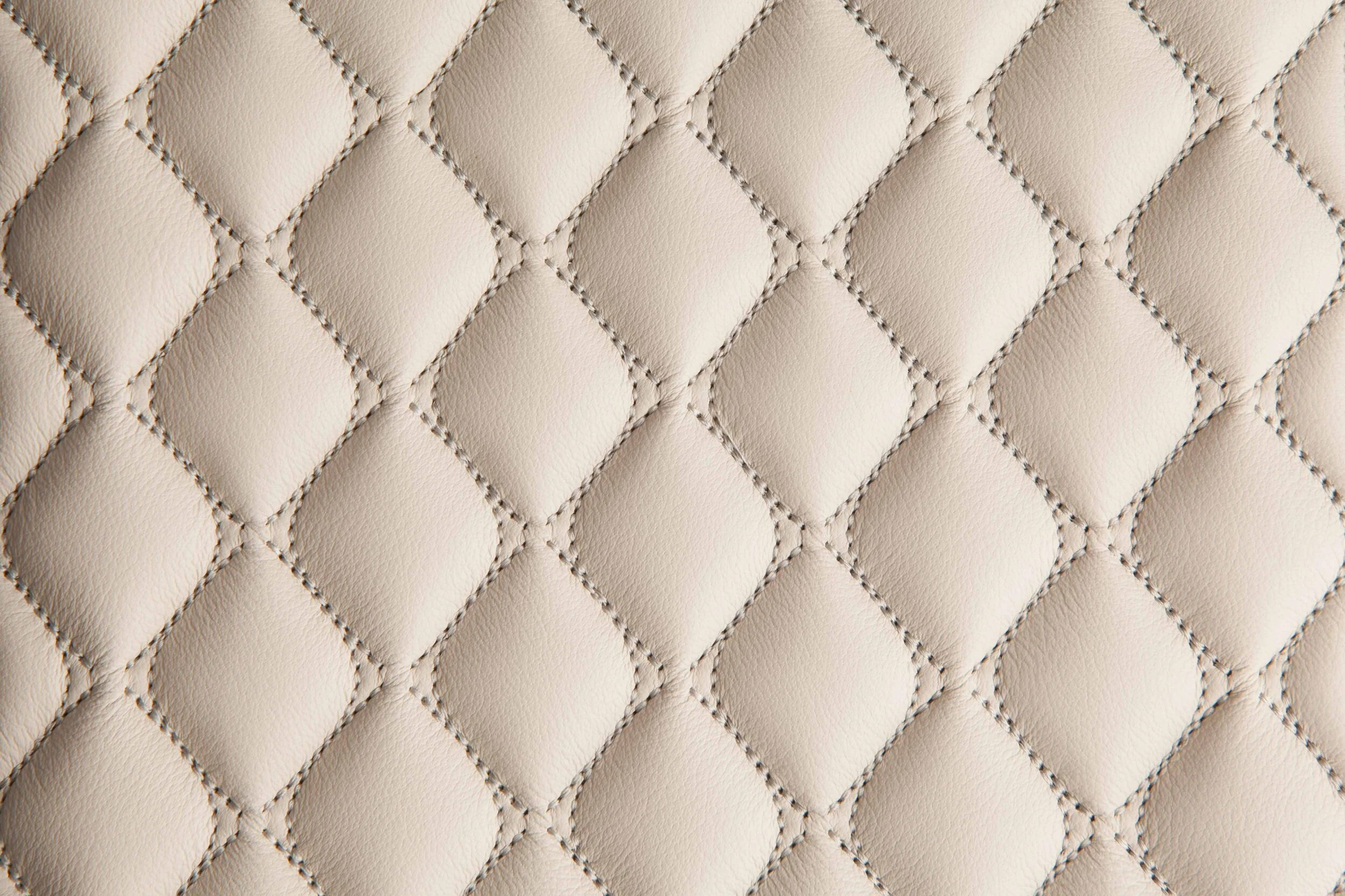 09 / 14Quilted Modern Trellis
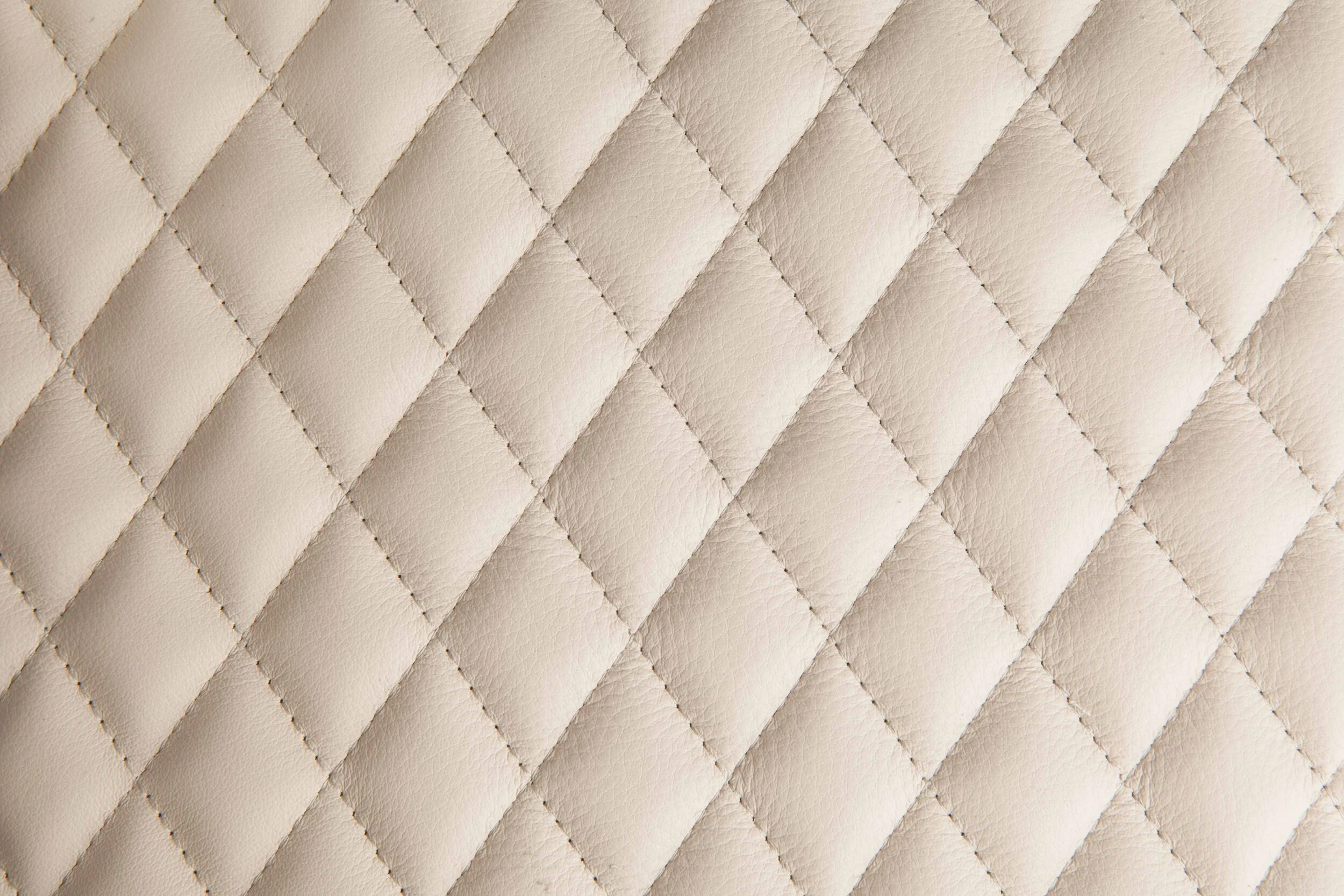 10 / 14Quilted Regent
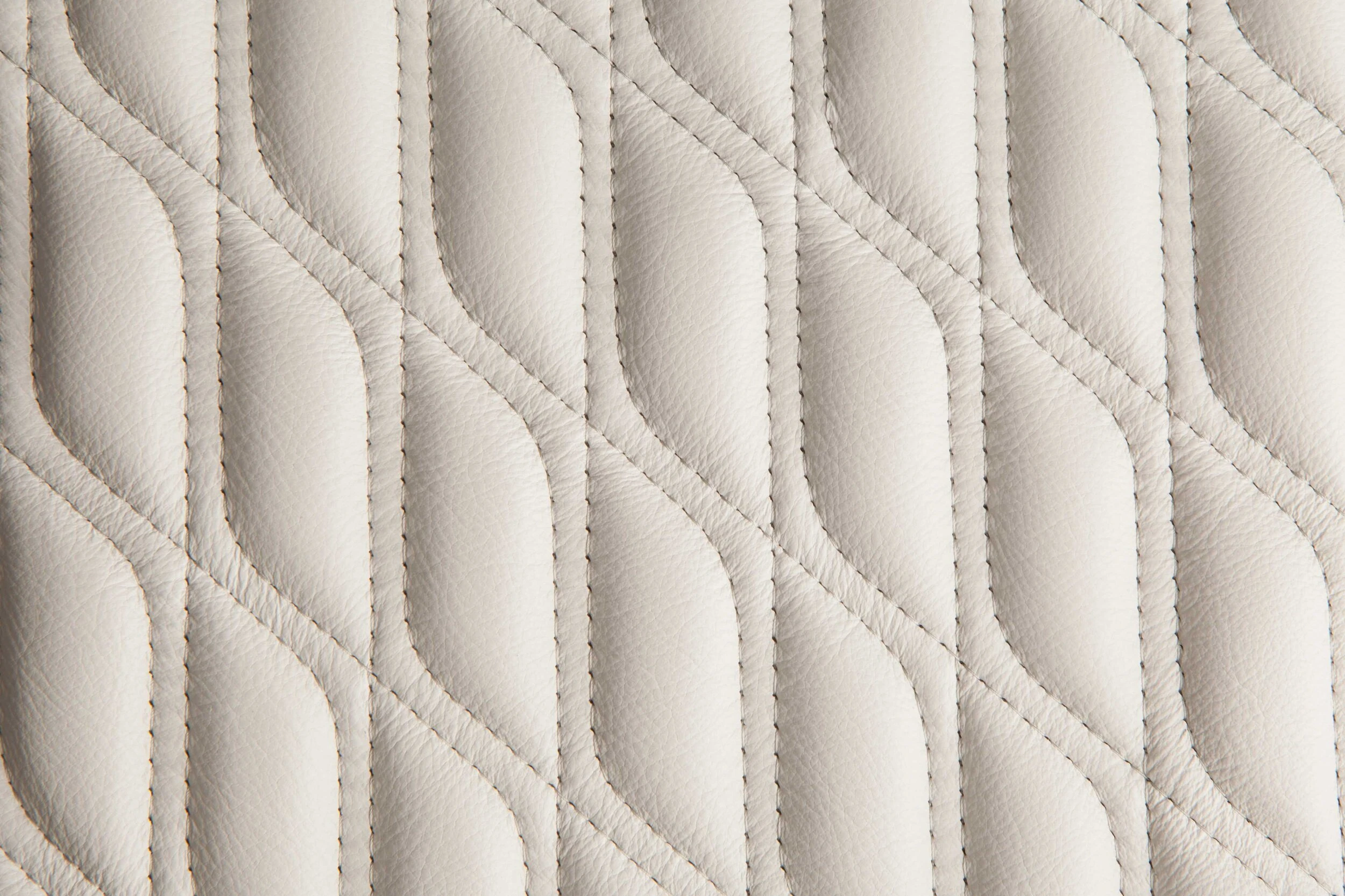 11 / 14Quilted Serpentine
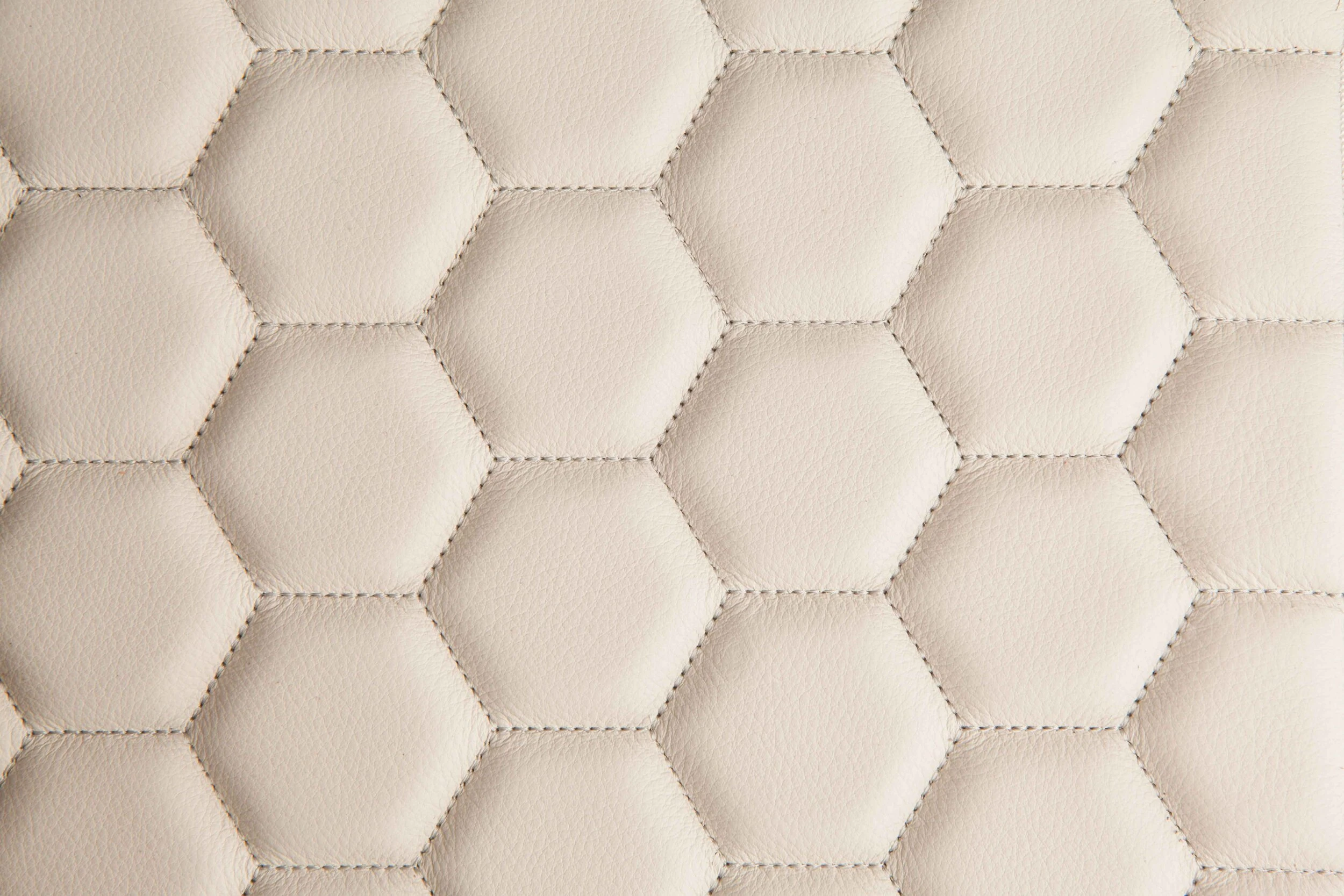 12 / 14Quilted Starburst
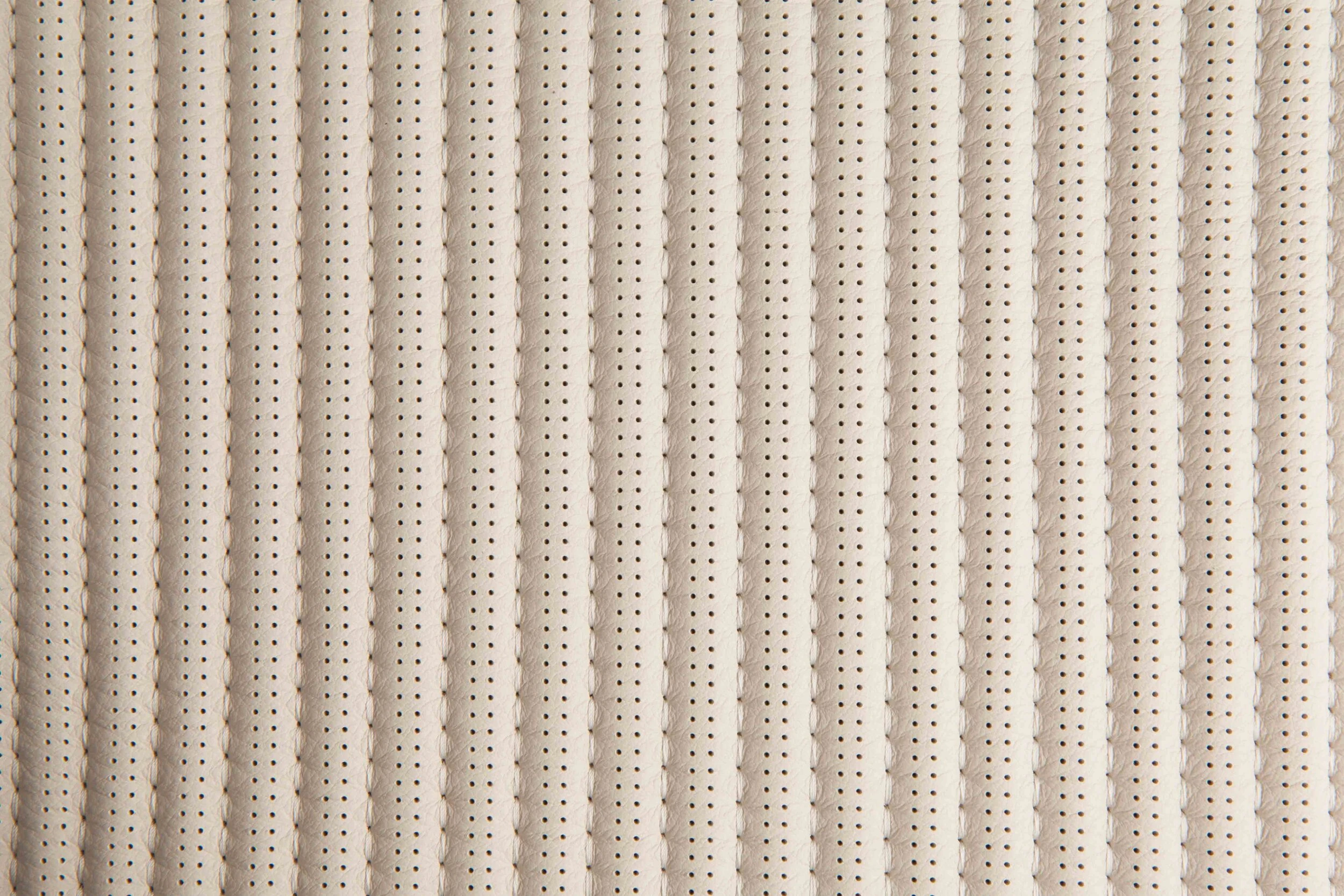 13 / 14Quilted Stasis
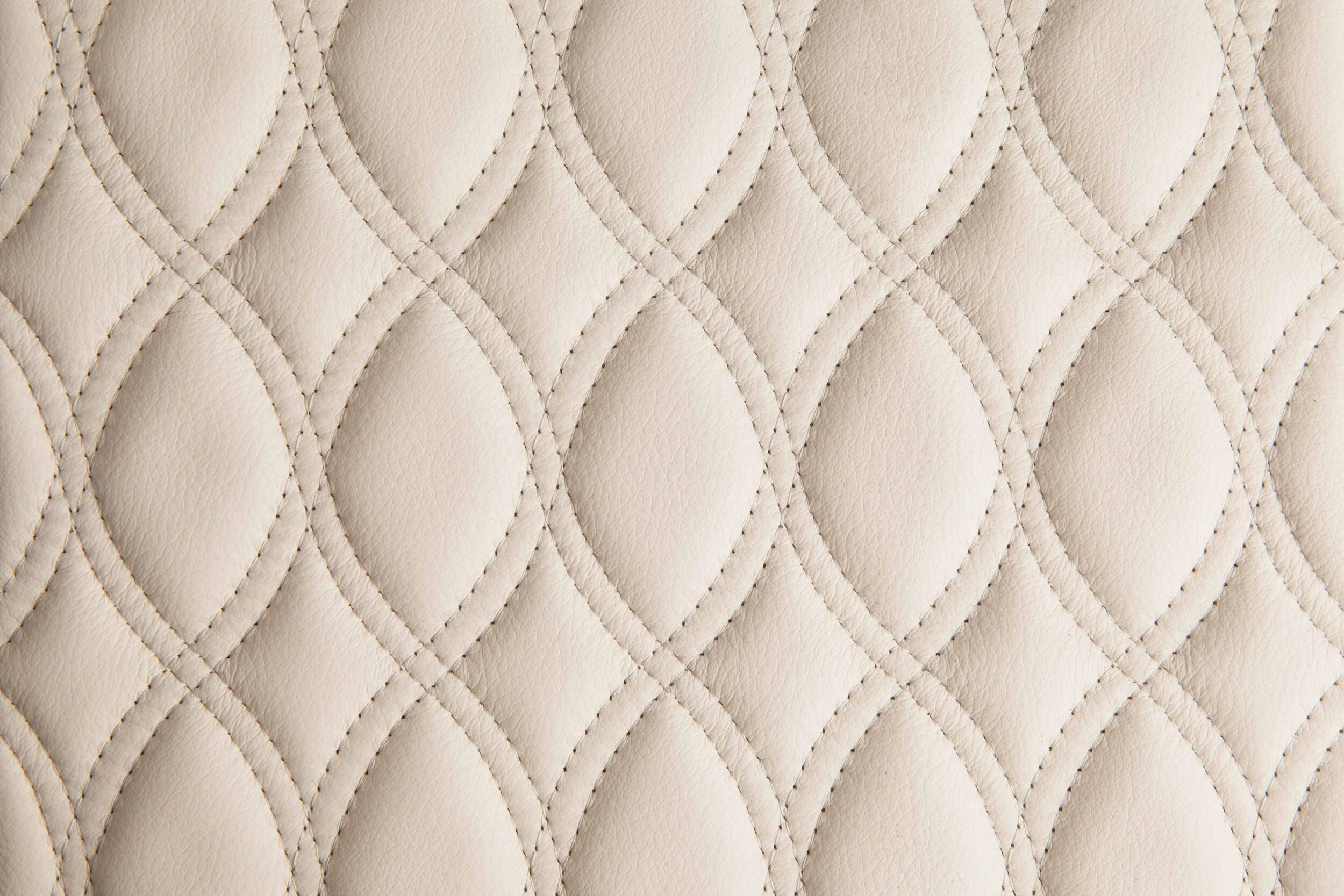 14 / 14Quilted Hera
Which pieces would the leather go on, and how many?
Tell us about the project.
Further reference
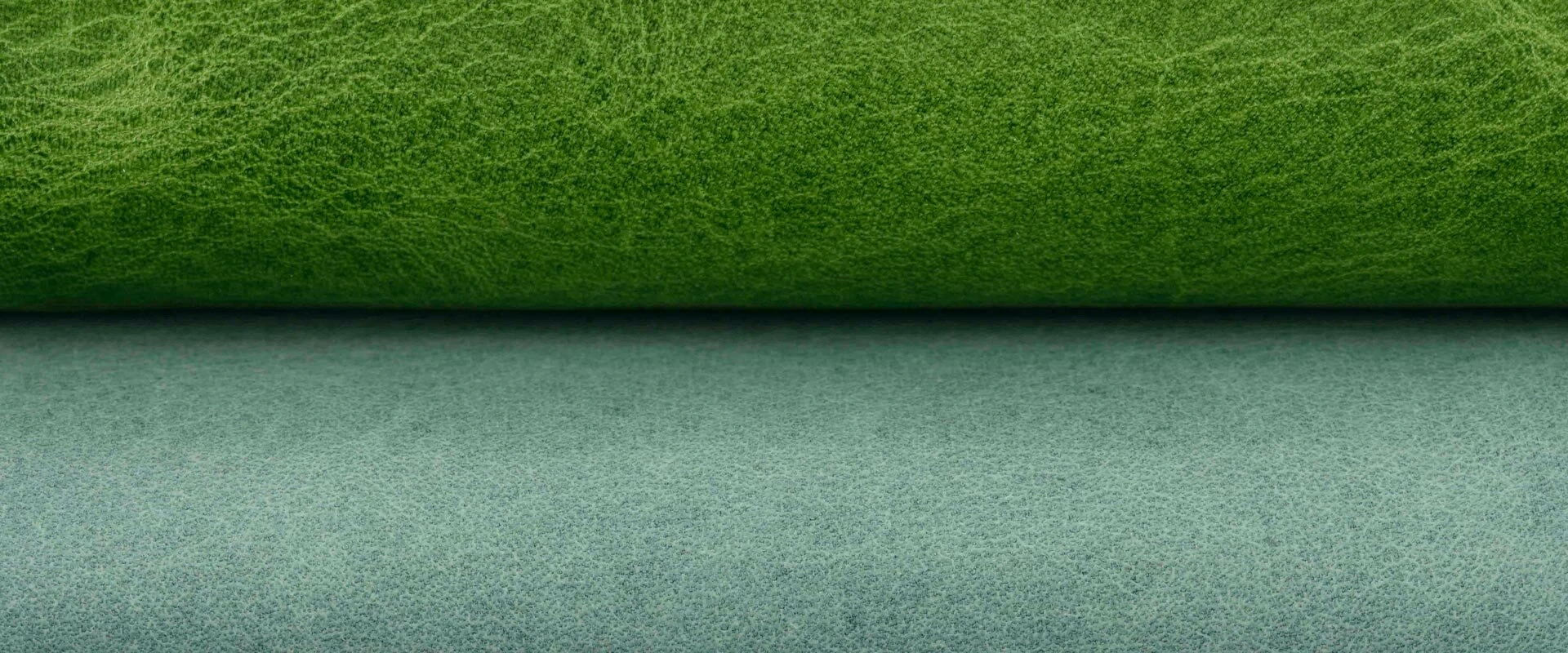 01 / 02Mont Blanc leather collection
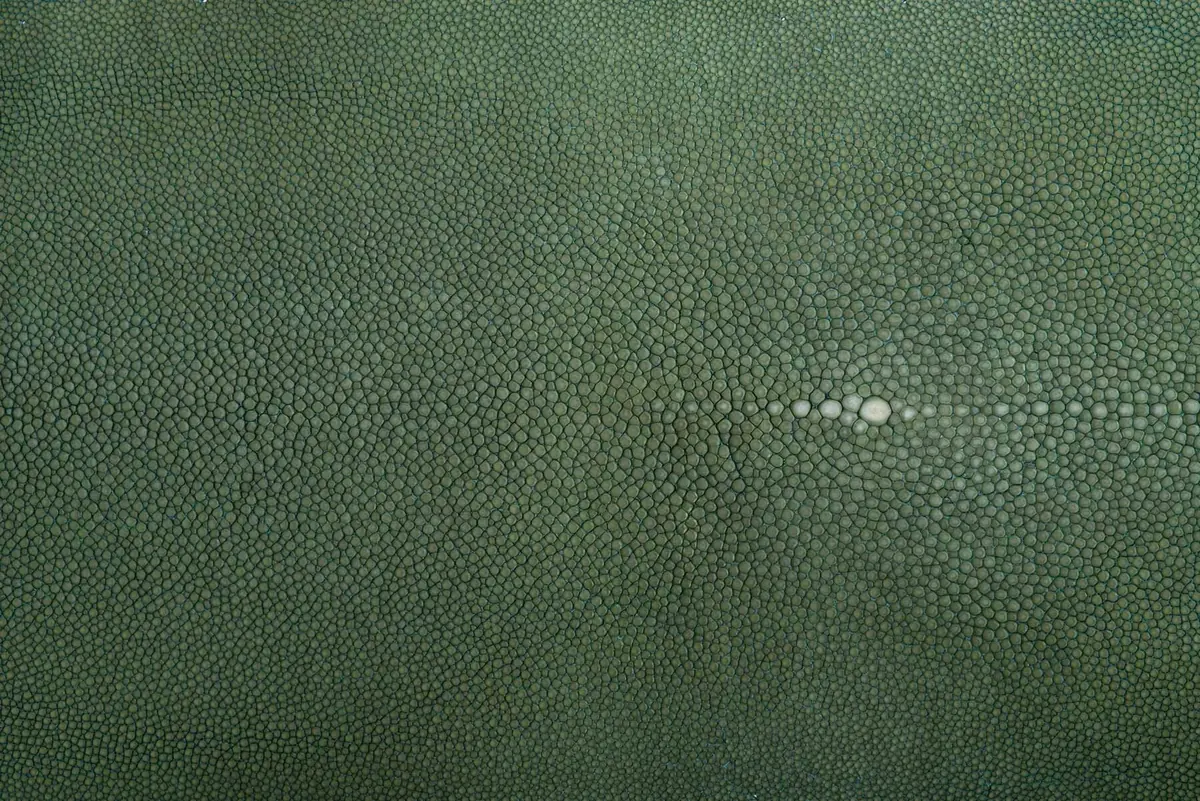
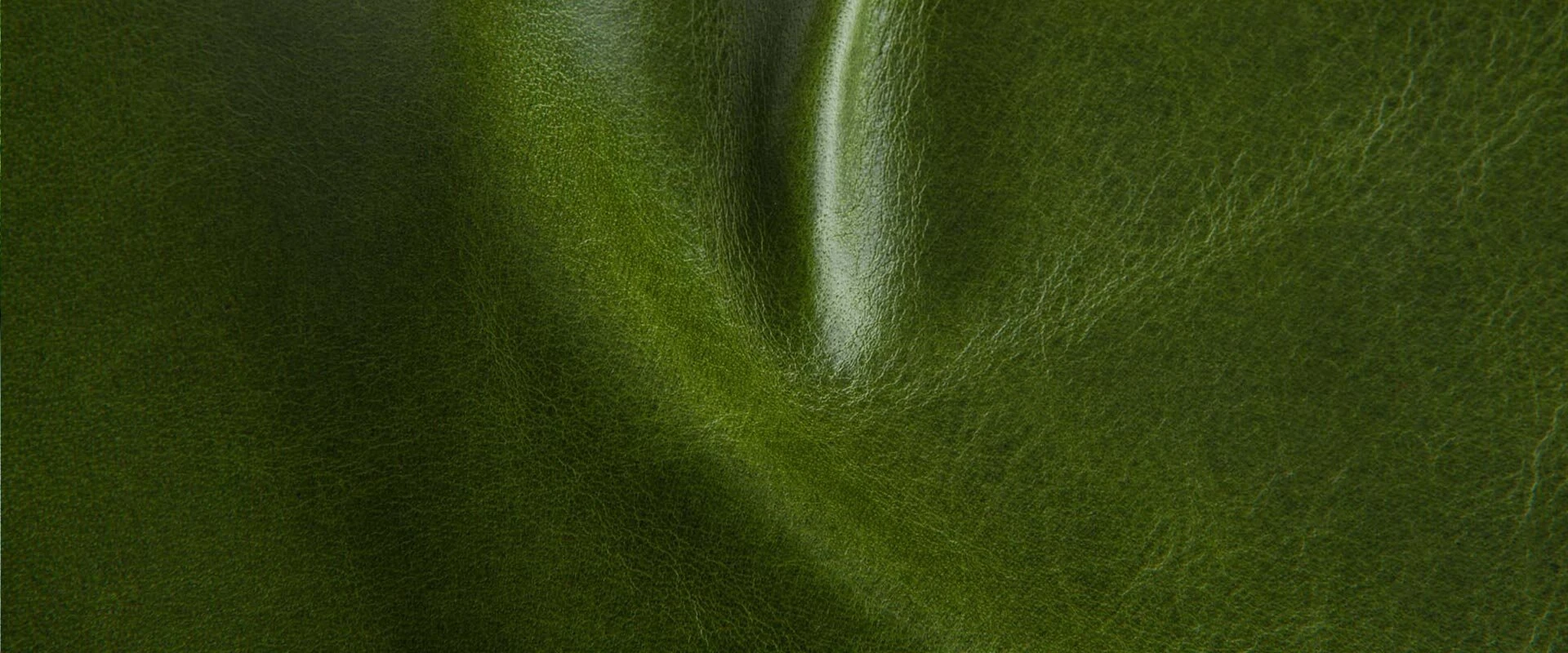 02 / 02Mont Blanc leather, Evergreen
Where leather is used.
A material of durability and improving character, used wherever a surface of genuine quality and longevity is required.
- Banquette seating
- Dining and bar chairs
- Headboards and bed surrounds
- Desk surfaces and writing tops
- Cabinet and wardrobe fronts
- Wall panel inserts
The hide, the tannage and the finish each leave their mark. Read together, they tell you how a leather will wear, age and feel over the years it is in use.
Hides, types and grades
Most upholstery leather is bovine, prized for its size, consistency and strength. The grading sits in layers. Full-grain uses the complete top surface and is the most durable and characterful. Top-grain is lightly sanded to reduce surface marks, then refinished. Split leather comes from the lower layers of the hide and is weaker, often coated or embossed to imitate a grain. Where finer scale or a particular hand is wanted, calf, goat and sheep are also used, though their smaller hides suit smaller cut parts.
A single hide is not uniform. The bend (the back and rump) is the firmest, most consistent area and is reserved for seats and other parts under load. The belly and shoulder are looser and more stretchable, better suited to less critical panels. We plan cutting so that the strongest sections fall where wear and tension are highest.
From raw hide to working surface.
Tanning stabilises the hide and sets its character; the finish then determines colour, protection and how the surface will age in use.
Chrome tanning produces a soft, supple leather with good colour consistency and water resistance, and accounts for most upholstery leather. Vegetable tanning, using tannins from bark and other plant matter, gives a firmer leather with warmer natural tones that darken and patinate strongly; it suits desk tops, strapping and detailing where that ageing is wanted. The two are sometimes combined.
The finish is applied over the tannage and defines the leather's behaviour:
- Aniline: dyed through with no surface pigment, so the natural grain and markings remain fully visible. The softest hand and the most expressive patina, but the least resistant to staining and light, so it is best in lower-traffic settings.
- Semi-aniline: a light protective topcoat over an aniline dye. It keeps much of the natural look while adding stain and fade resistance, a practical balance for most residential seating.
- Pigmented: an opaque, coloured surface coat giving the most uniform appearance and the highest resistance to wear, light and staining. The standard choice for contract, hospitality and heavy-use furniture.
Embossing changes the surface, not the substance. A pebbled grain can hide minor marking and add a tactile rhythm without sacrificing the leather beneath.
Embossing, texture and colour
Embossing presses a pattern into the surface under heat and pressure. A natural pebble grain adds depth and helps disguise small inconsistencies; finer patterns such as fine grain or a saffiano-style cross-hatch read as more formal. Plain, unembossed leathers show the most honest surface and are usually reserved for the cleaner-marking hides. Hand-antiquing and two-tone effects can be applied to give worn, aged tones across the surface or concentrated at edges and seams.
Colour is matched to a designer's reference, with the understanding that a natural surface accepts colour with slight variation across and between hides. We recommend approving a production sample, not a swatch alone, before a run is cut, so the grain, sheen and tone are confirmed on the actual leather.
Durability, patina and upkeep.
Used well, leather outlasts most upholstery textiles and improves rather than degrades, provided the finish is matched to the demands of the setting.
Leather is hard-wearing and resistant to abrasion, and a quality hide will serve for decades in residential use. Aniline and semi-aniline surfaces soften and deepen over time, the patina that many specifiers choose leather for; pigmented finishes hold their original appearance for longer and are easier to keep clean. Leather is sensitive to prolonged direct sunlight, which fades and dries it, and to heat sources, so placement away from radiators and unshaded glazing matters.
Care is straightforward. Dust regularly and wipe with a slightly damp cloth; address spills promptly by blotting rather than rubbing. Aniline leathers should be conditioned periodically to keep them supple and may be treated with a recommended protector. Solvent cleaners and household detergents should be avoided. We provide finish-specific care guidance with each commission.
We treat leather as a material to be planned, not simply applied: hide selection, cutting layout and seam placement are decided before a single panel is cut.
How we work with leather
For upholstery, our makers cut and stitch to pattern, placing seams and natural markings deliberately and reserving the firmest parts of the hide for seats and arms. For wrapped panels, desk tops and drawer linings, leather is skived at the edges and bonded to a stable substrate so it sits flat and turns cleanly at corners. Tooled borders, blind embossing and contrast stitching are available where a detail calls for them.
How much leather does a piece need?
It depends on the design, the cut parts and the grain direction. We calculate the requirement per item against a standard 50 to 55 sqft hide, allowing for pattern matching and cutting waste, and confirm the figure before order.
Which finish suits a high-traffic project?
A pigmented or protected semi-aniline leather is the usual choice for contract and hospitality work, as it resists staining, fading and wear. Where the natural look of aniline is wanted in a busy setting, we discuss the trade-offs in appearance and maintenance first.
Can you match an existing leather?
We can work to a colour and finish reference and provide a production sample for approval. A natural surface will carry slight variation between hides, which we account for in selection and layout.
Read more
Have a scheme that calls for
leather of genuine quality?
Need samples? Get in touch and tell us about your project.