Foresso
Timber terrazzo — worktops, tabletops and panels made from waste wood and coloured resin. A sustainable solid surface for bespoke furniture and joinery.
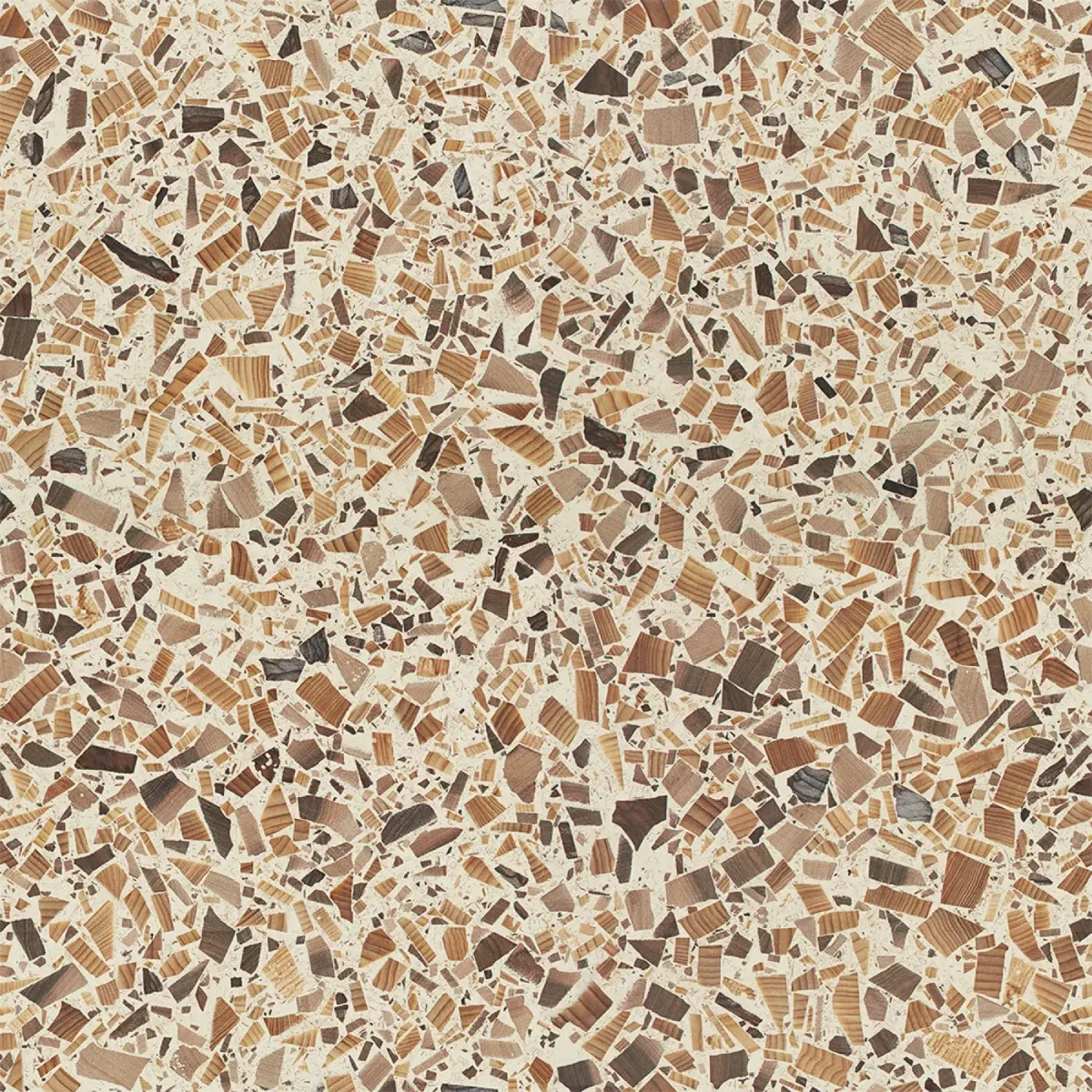
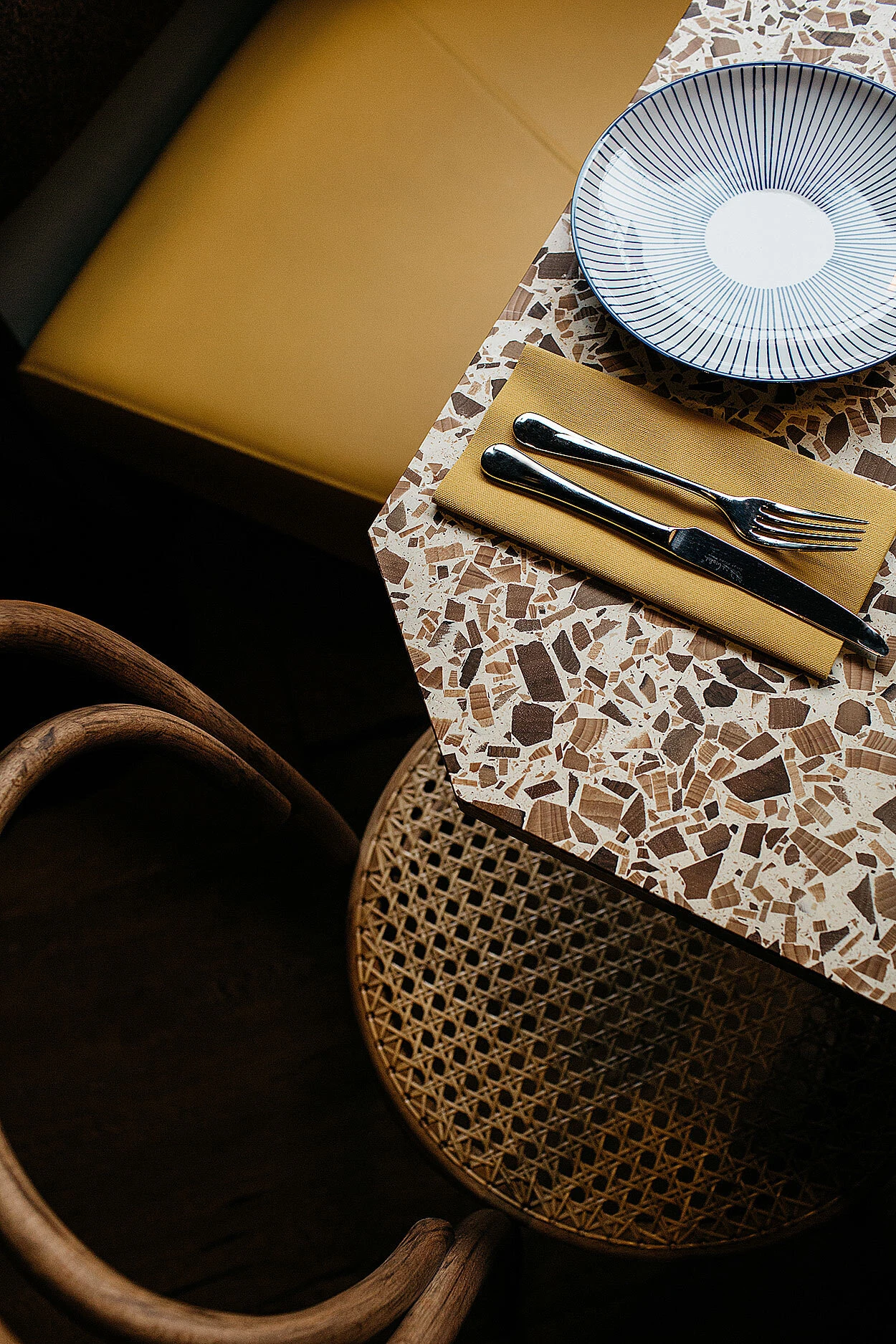
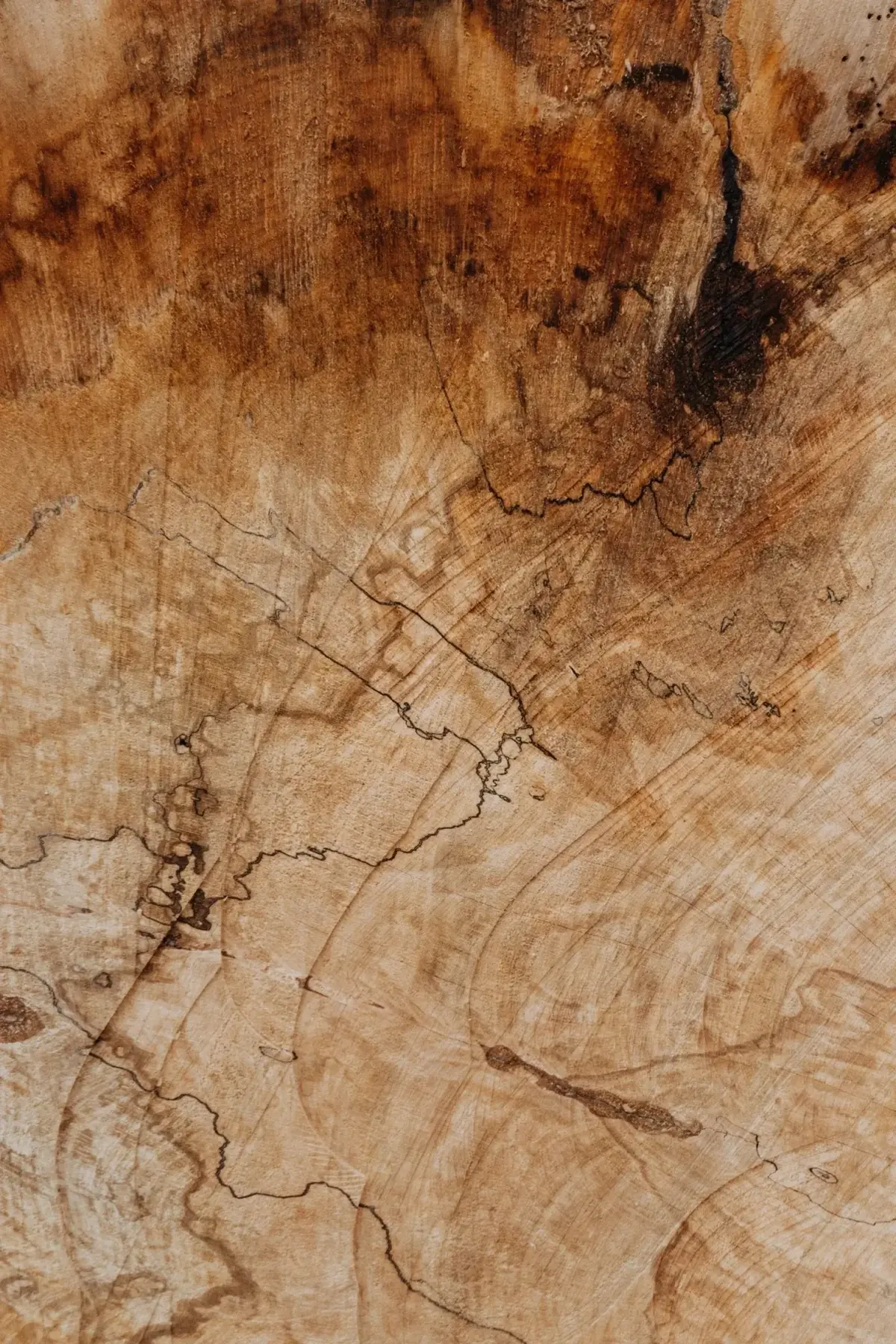
Foresso is a composite panel material made from timber offcuts and waste wood set in coloured resin. The result is a solid, workable surface with a distinctive visual character: cross-sections of timber suspended in a coloured matrix, revealing grain, knots and natural variation in every panel. No two sheets are identical.
The material is fully workable with standard woodworking tooling (routed, cut, drilled and finished) and can be used anywhere a solid surface would be specified: tabletops, worktops, furniture panels, cladding and reception surfaces. It is harder and more moisture-resistant than solid wood, and qualifies as a sustainable material under most environmental certification schemes.
Foresso is available in four standard compositions, each combining a different timber species mix with a coloured resin. Custom compositions (alternative species, tinted resins, aggregate additions) can be produced for larger project quantities. Samples can be provided on request; when you get in touch, tell us about your project. All Foresso specified through Make Bespoke Studio is fabricated and finished in our joinery workshop.
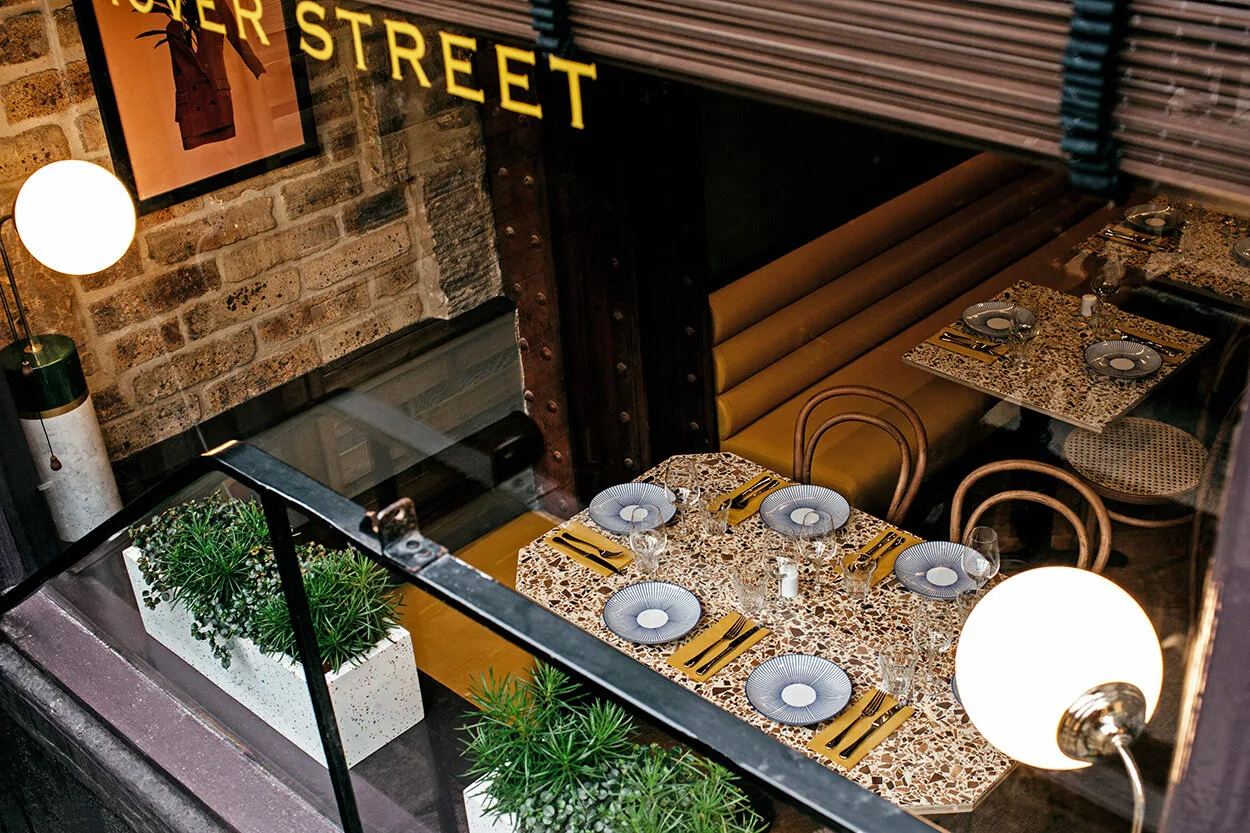
It reads as a timber terrazzo: flakes and end-grain chips of wood are scattered through a matrix the way marble fragments are scattered through a poured floor. The chips catch the light differently from the binder around them, so the surface shifts between matt and soft sheen as you move past it. Specified well, it gives an interior a recognisable, tactile surface without the cost or the weight of stone.
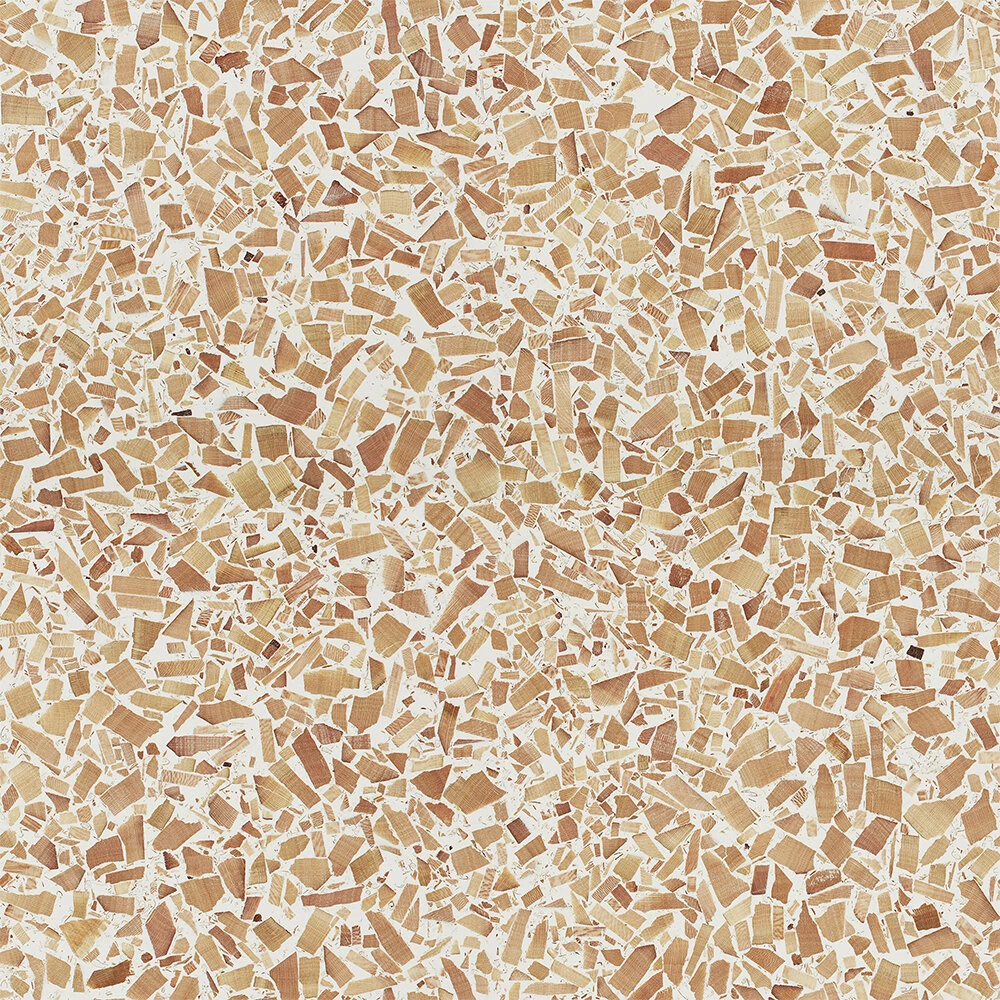 01 / 04Repeat Bianco Mono
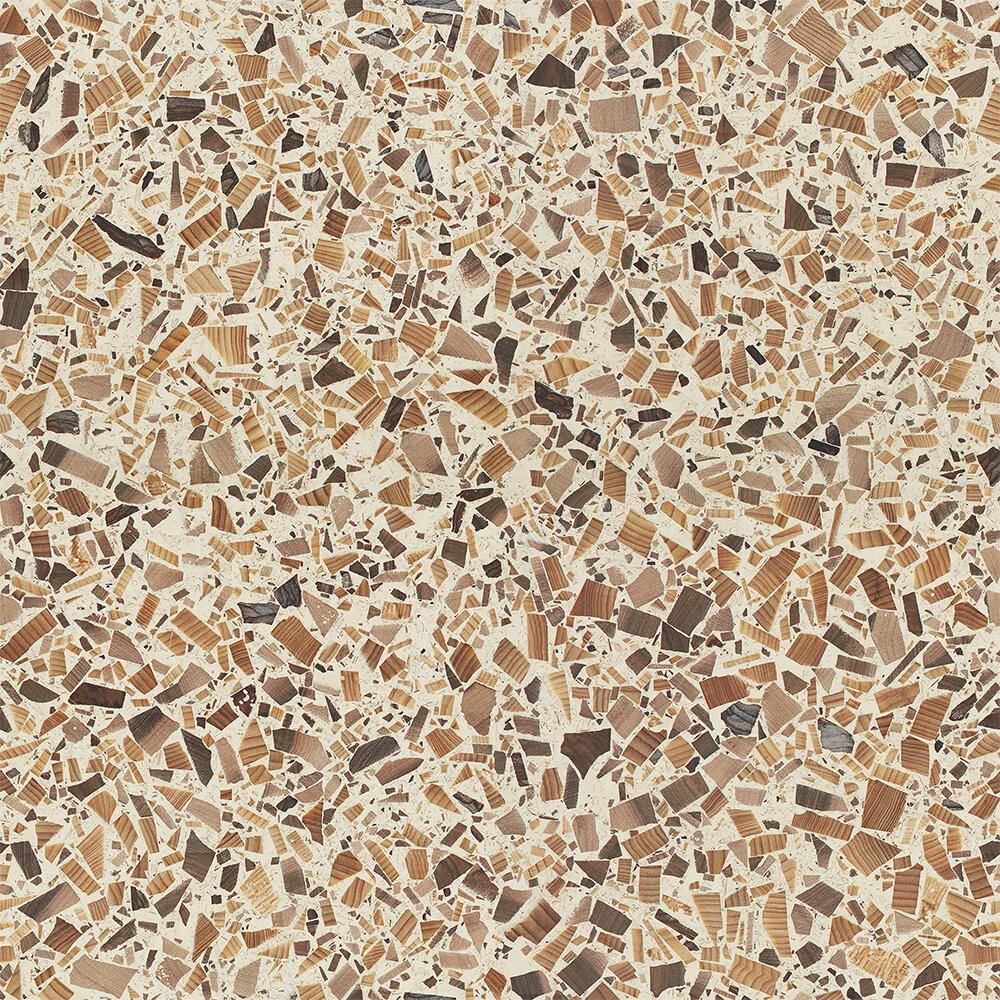 02 / 04Repeat Ivory Duo
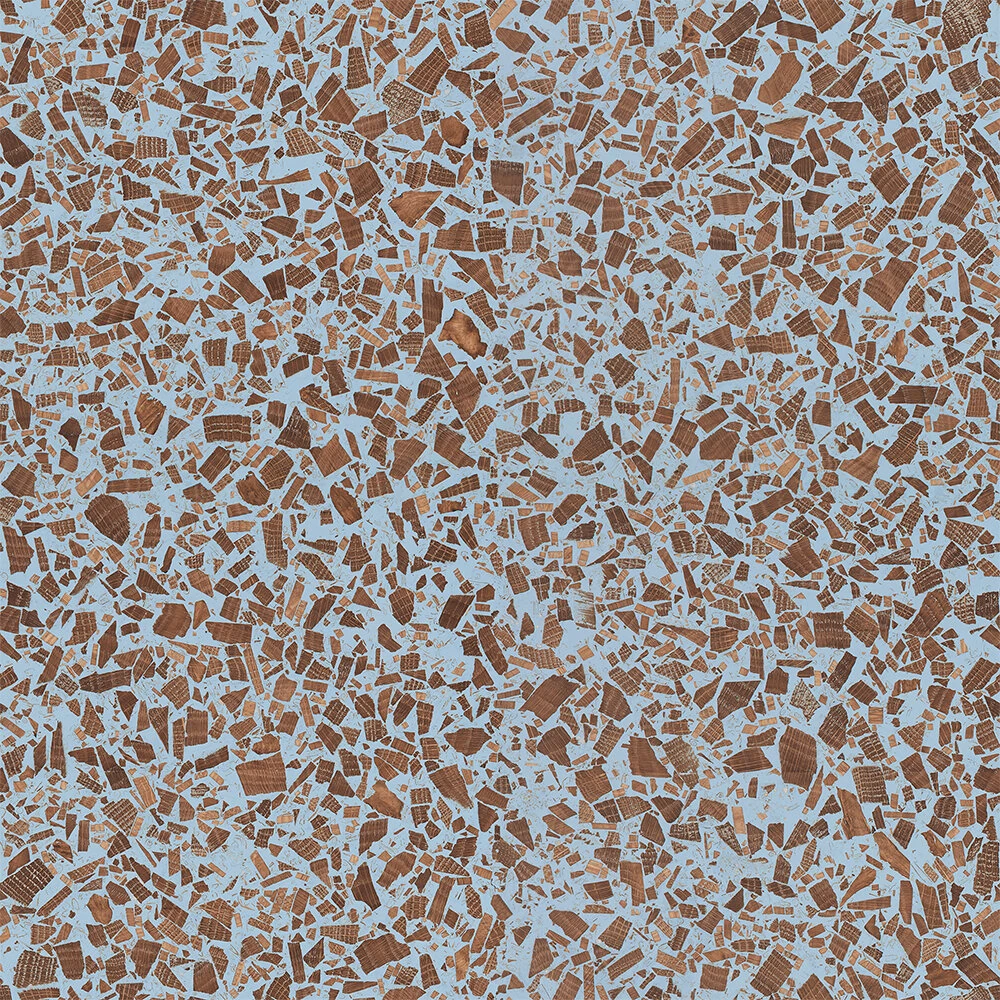 03 / 04Repeat Azure Mono
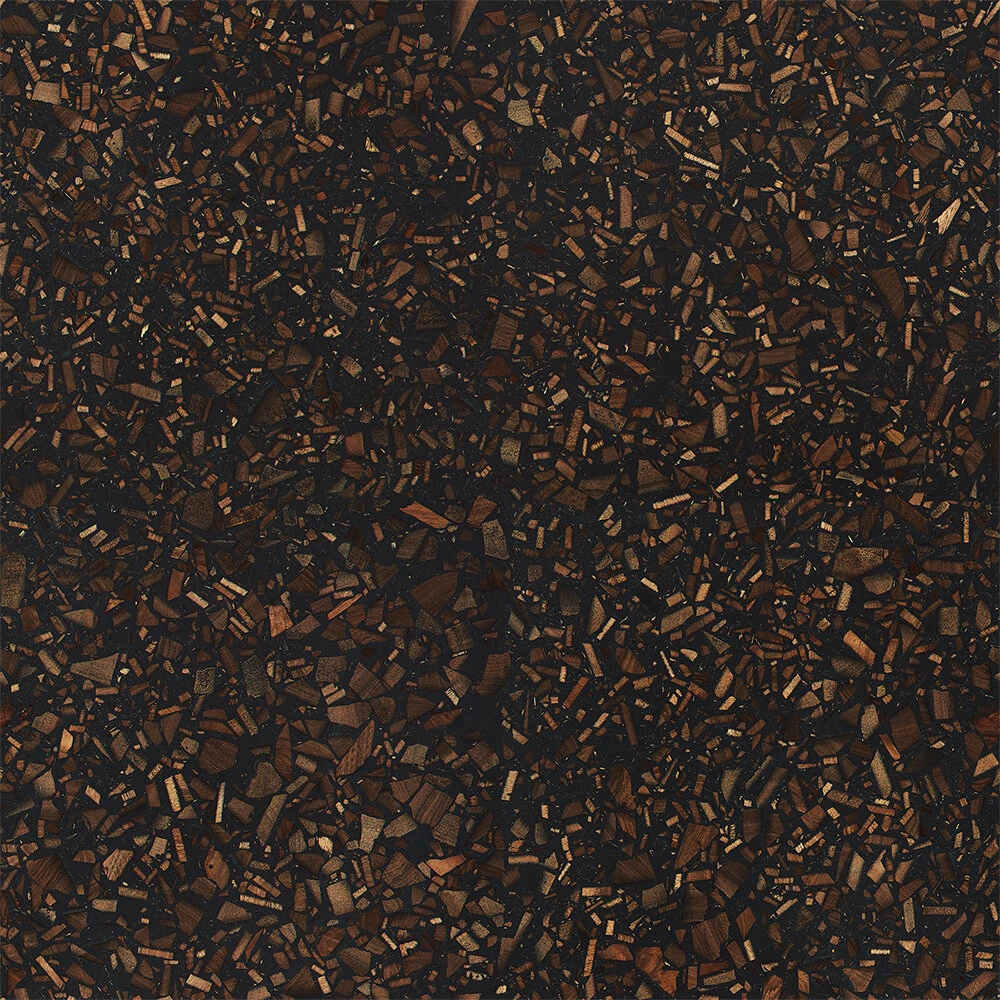 04 / 04Repeat Charcoal Mono
Timber terrazzo for a floor, a wall or furniture?
Tell us about the quantities and where it is going.
Dyed & tinted
- Kitchen work surfaces
- Bar tops
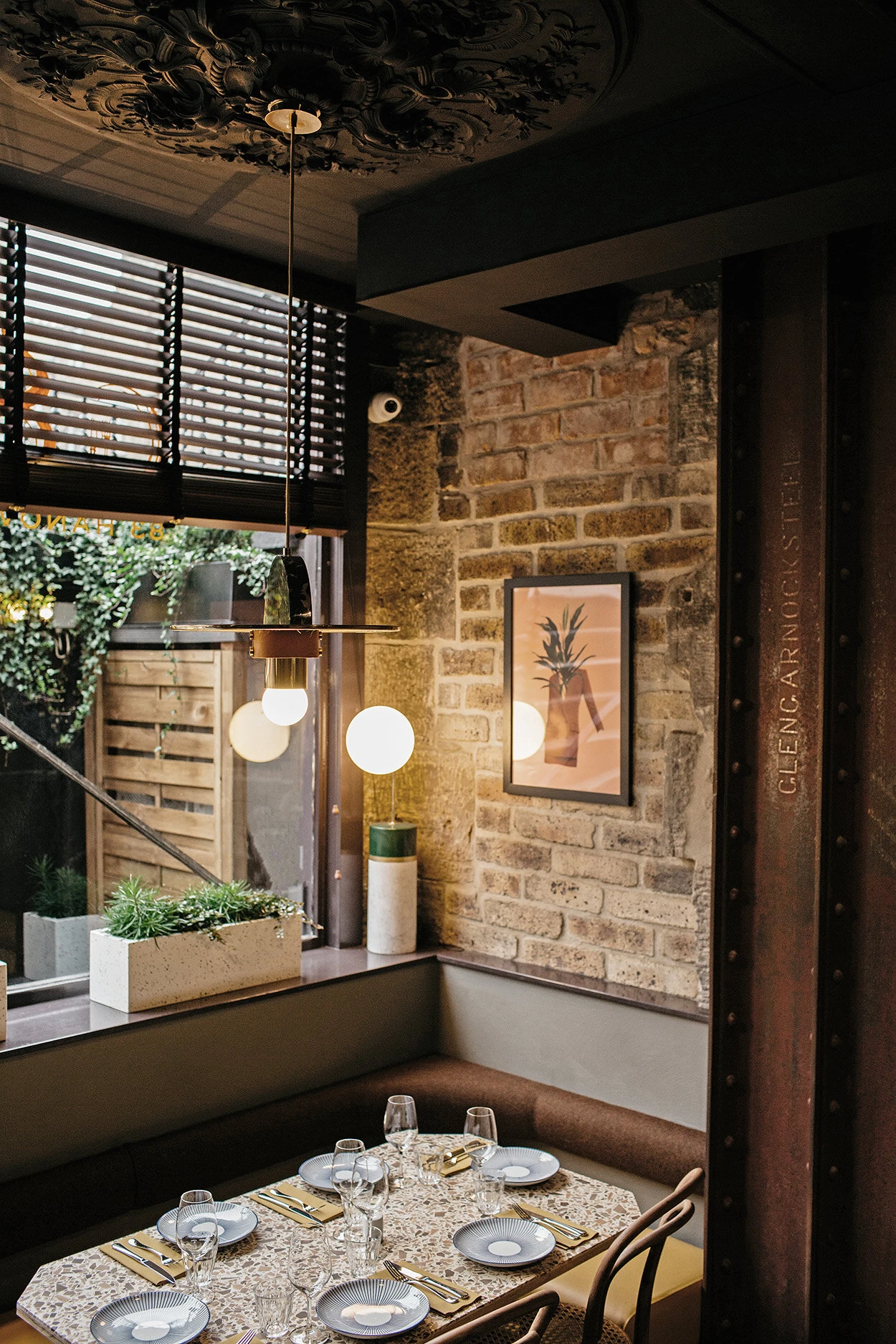
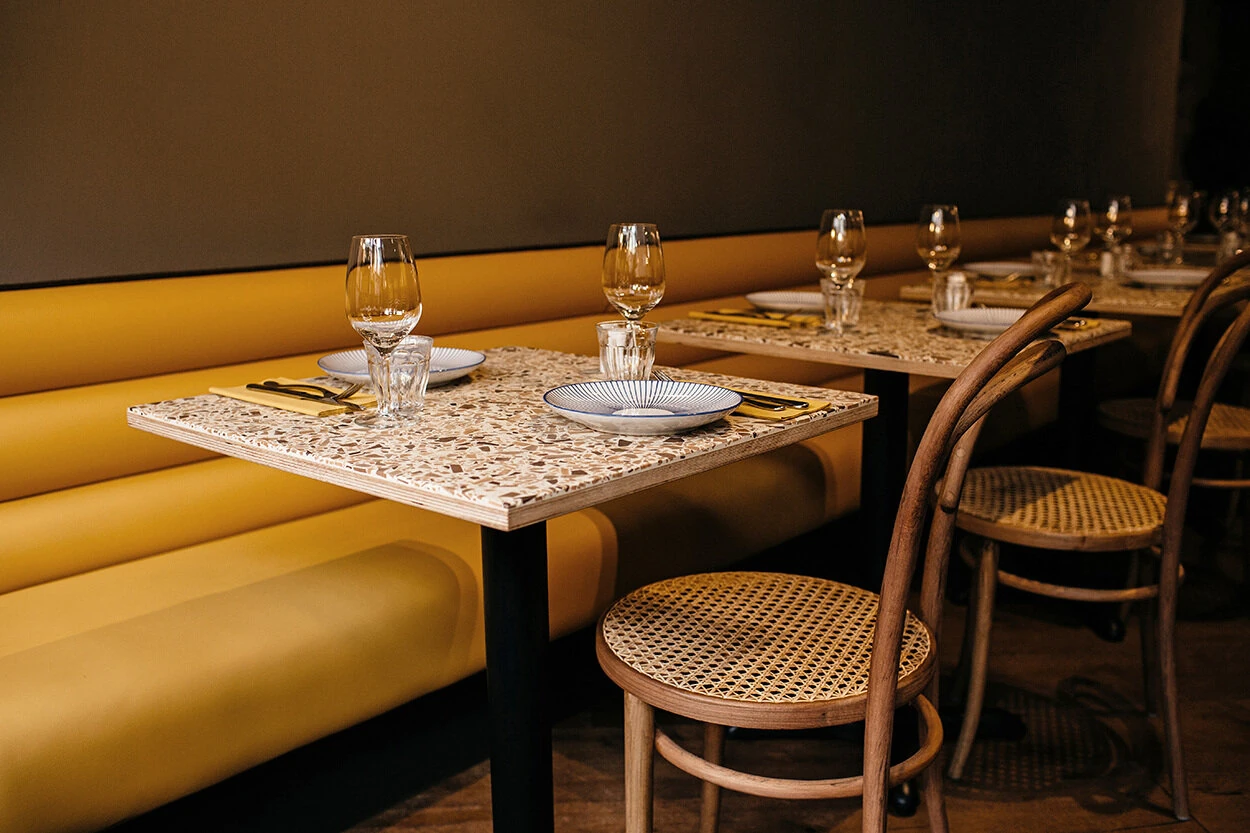
- Table and desk surfaces
- Feature flooring panels
- Reception and lobby features
- Sustainable specification alternatives
Further reference
 01 / 04
 02 / 04
 03 / 04
 04 / 04
Foresso Colour Range
Timber offcuts set in coloured resin, available in four standard compositions.
Terrazzo, rethought in timber
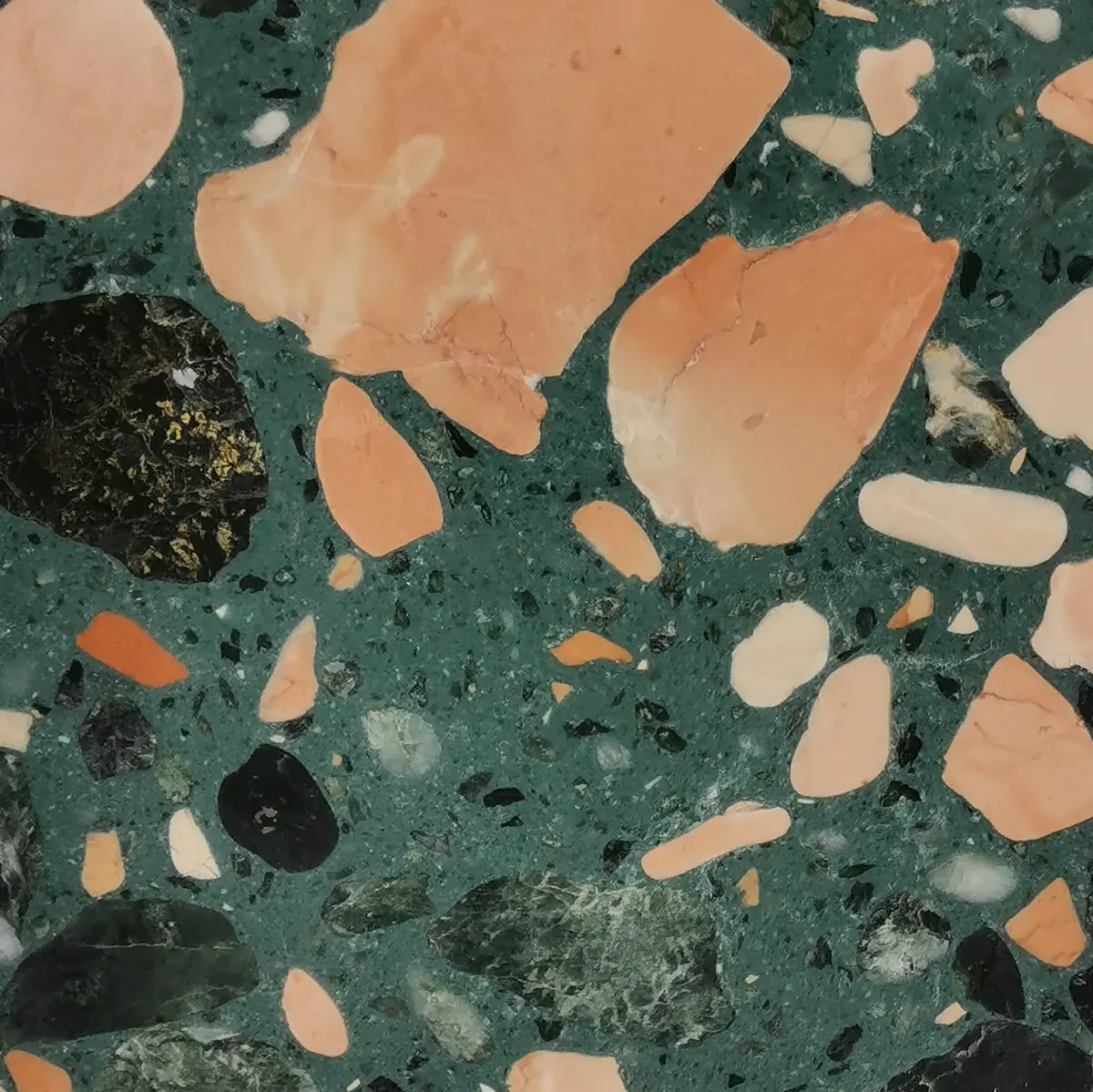
Foresso applies the oldest logic of terrazzo, Venice’s 15th-century habit of binding leftover marble into new floors, to the waste stream of British woodworking. End-grain chips cut from timber rejected by the furniture trade for its splits, knots and odd sizes are cast by hand with wood dust, mineral powders and pigment into a binder, on a certified birch plywood substrate. The grain, the knots and the character that disqualified the timber from joinery become exactly what the surface celebrates.
The sustainability case, with numbers
This is one of the most rigorously low-impact surfaces we stock: the binder is a zero-VOC, bio-based resin; the mineral content is half waste-sourced; pigments are almost entirely biological; and the whole panel is made in Britain from British waste timber, finished in a food-safe natural hardwax oil. Unlike surfaces that gesture at sustainability, Foresso’s composition is documented line by line, which is useful where a project’s environmental reporting reaches into the FF&E.
A handmade panel, by design
Each sheet is hand-cast, and no two repeat: chip size, tone and density drift within and between panels, and the surface carries the small pores of the casting process. We treat this as the material’s signature rather than a tolerance problem, and work around it, sampling actual offcuts and sequencing panels deliberately across a run.
Finishes and colour
The standard surface is a food-safe natural hardwax oil, which sits into the panel rather than on top of it and keeps the timber chips matt and tactile. For commercial work a contract-grade lacquer is available, including anti-slip grades for flooring, with tested fire and slip ratings where a specification calls for them. Colour comes from the binder, not a printed pattern: the four standard compositions range from a pale, near-white ground (Bianco and Ivory) through a soft blue-grey (Azure) to a deep charcoal that throws the wood chips into high contrast. Because the chips are real timber, every composition warms slightly as the wood ages.
Formats and dimensions
Foresso is supplied as flat sheet on a certified birch plywood substrate, in a small number of standard thicknesses. Sheets are cut to size, edged and finished in our workshop, so the format you receive is governed by your design rather than a fixed product range. Thicker built-up edges, mitred returns and matched panel runs are all possible. As a sheet material it is most economical when a scheme can be set out to a standard sheet, and we plan cutting lists to keep offcuts low, which suits the material’s low-waste intent.
Applications
Foresso behaves like a dense timber board, so it folds naturally into joinery and furniture. Common uses:
- Surfaces: kitchen worktops, bar and counter tops, vanity tops, desks and tables, where the food-safe oiled finish suits daily contact.
- Joinery and cabinetry: door and drawer fronts, shelving, reception desks and built-in units, often paired with a quieter timber or painted carcass so the Foresso reads as the feature face.
- Furniture faces: tabletops, console and sideboard tops, and inset panels where a single sheet carries the whole character of a piece.
- Vertical and floor: wall panelling, splashbacks and feature flooring, using the lacquered or anti-slip grades for the latter.
Practical considerations
Foresso is harder and more moisture-resistant than solid wood, and machines cleanly, but it is a timber-based composite rather than a stone, so it should be specified as a worked surface: protect it from sustained heat (use boards and trivets), wipe spills rather than leaving standing water, and re-oil oiled surfaces occasionally as you would a wood worktop. It is heavier than plain plywood of the same size and wants the same support as a solid timber top. As a hand-cast material it carries small surface pores and natural variation in chip size and tone, within and between sheets. We treat this as the material’s signature and work around it, but it is worth noting where a client expects the uniformity of a printed laminate.
How we work with it
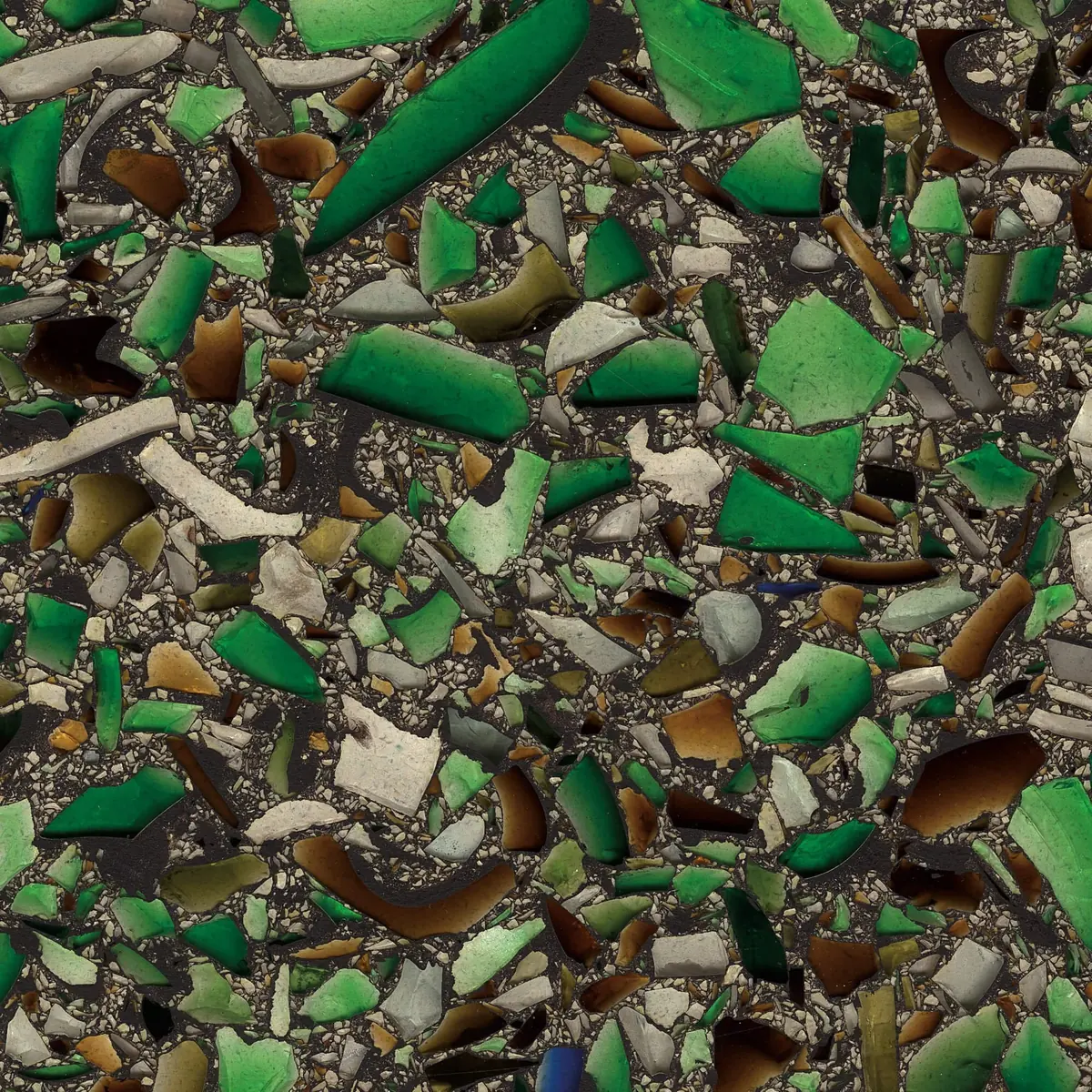
We specify, fabricate and fit Foresso through our workshop network. That means sampling from actual offcuts rather than a swatch card, sequencing sheets deliberately across a run so panels read together, and detailing edges, junctions and fixings to suit the piece. Custom compositions can be produced for larger quantities, so a scheme can carry its own species mix or resin tone. It sits in the recycled family of our material library beside terrazzo and Vetrazzo: stone, glass and timber versions of the same idea.
Can Foresso be used as a kitchen worktop?
Yes. The standard hardwax oil finish is food-safe and stain-resistant. As with a timber worktop, use boards and trivets, wipe spills promptly, and re-oil occasionally. For heavy commercial use a contract lacquer can be specified instead.
How sustainable is it?
The chips are timber rejected by the furniture trade for splits, knots and odd sizes, cast with wood dust, mineral powders and pigment into a bio-based, zero-VOC binder, on a certified plywood substrate. The composition is documented line by line, which is useful where a project’s environmental reporting reaches into the furniture and fittings.
Will two panels match?
Not exactly. Chip size, tone and density drift within and between hand-cast sheets, so we sample and sequence panels deliberately rather than promising the uniformity of a printed surface.
At two scales
View fullsize View fullsize View fullsize View fullsize To learn more about this innovative material and request samples please contact Foresso below
Have a scheme you'd like to build?
Need samples? Get in touch and tell us about your project.