Designing a bespoke dining table starts with the people, not the timber: it is sized to seat its real maximum comfortably, proportioned to the room, and built on a stable base to last decades of daily use.
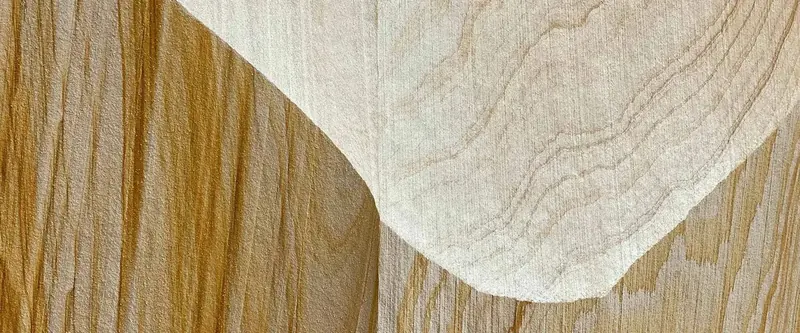
Almost everything that matters in a home happens around the table. The slow Sunday lunch that nobody wants to leave, the homework spread across one end, the long dinner where the candles burn down and the conversation keeps going. A single book-matched top, the grain mirrored across the centreline like an open page, sets the tone for all of it — and the proportions, the few centimetres you never consciously notice, quietly decide whether an evening there feels easy or cramped. That is why the dining table is the most demanding piece of furniture to get right, and the most rewarding when it is. It has to seat the right number comfortably, suit the proportion of the room, survive decades of daily use and the spilled wine that comes with a life well lived, and hold its own as the centrepiece of the space. Off-the-shelf tables force the room to fit the table; a bespoke dining table does the opposite. Here is how we approach it.
Sizing it to the room and the seats
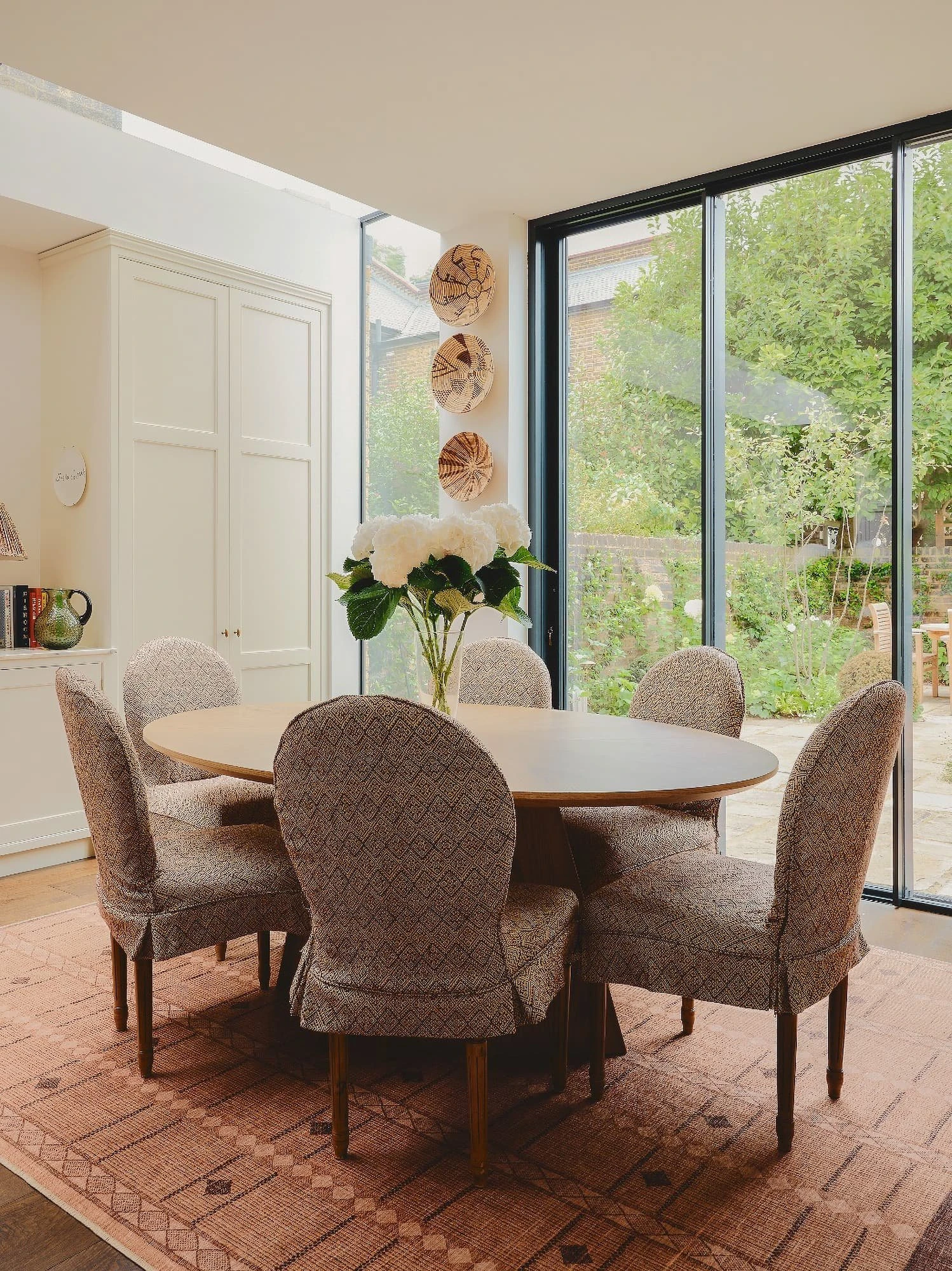
Comfort is a matter of millimetres. Each diner needs roughly 60cm of width to sit without elbows touching and feel unhurried, and around 70cm of clearance behind a chair to push back and stand without apologising. The table also has to leave circulation space around it — a beautiful table crammed into a room is a daily irritation, felt every time someone edges past with a full plate. So we start from the human questions before the dimensions: how many people it must seat, how often it seats the maximum, and the real measured shape of the room, then size the top so it works as well for a quiet supper for two as it does for the table at full stretch.
Proportion and base
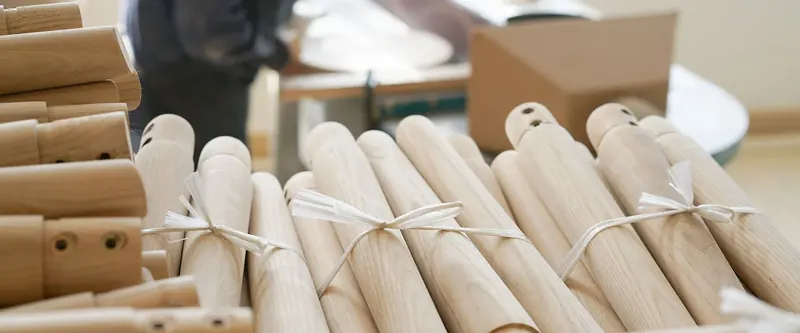
A table is read as a silhouette, and the base decides it. A central pedestal or splayed legs free up seating and let chairs tuck anywhere; four corner legs are more traditional but constrain where people sit, and there is nothing worse than the diner who ends up straddling a leg. The base is also an engineering problem — it must be dead stable, carry the top without sag across a long span, and never catch a knee or a foot. We resolve it as carefully as the surface above it, often marrying a timber top to a metal or sculptural base, which is where our metalwork and woodwork meet in a single piece.
The top: timber, stone or metal
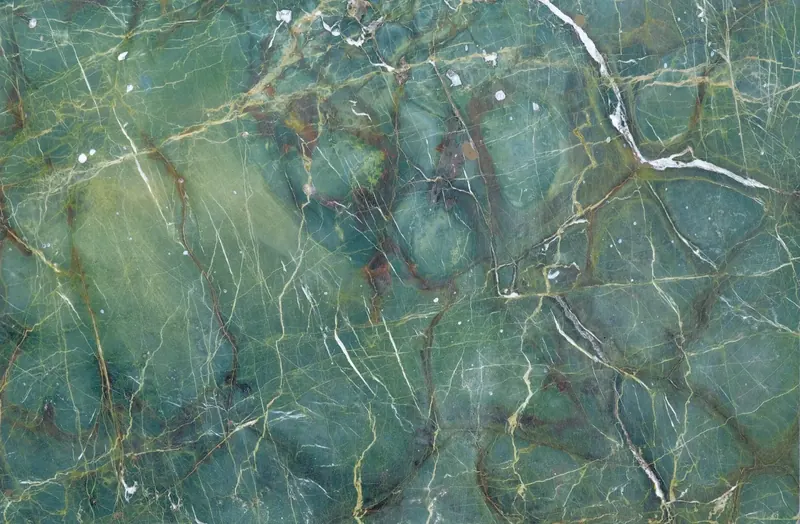
The top is the surface you live with, the one your hands return to every day. Solid timber gives warmth, repairability and the quiet drama of book-matched grain (see our note on wood species); it is the most forgiving choice over a lifetime, because it can always be sanded back and re-finished, the marks of one decade erased to make room for the next. Stone and marble bring a cool, architectural presence but ask for sealing and care in return. Metal, glass and specialist surfaces each have their place. The finish matters as much as the material — and there is a particular satisfaction in running a hand over a top we have just oiled and feeling it answer back, smooth and alive, the moment the surface stops being timber and starts being a table.
Extending mechanisms
If a table must flex between intimate and full, the extending mechanism is the hidden engineering that makes or breaks it. Leaves that store within the table, butterfly mechanisms and draw-leaf systems all let a table grow without a separate hoard of loose leaves to lose in a cupboard somewhere. We produce the mechanism so it runs smoothly under one hand, aligns flush, and keeps the grain or pattern continuous across the join — the difference between an extending table that feels considered and one that announces itself as a compromise every time you open it.
The finish, and the chairs
Two details decide whether a beautiful table is also one you can actually live with. The first is the top finish: a dining surface meets hot plates, water, wine and the daily wipe-down, so it needs to resist all of them while still feeling right under the hand — a hard-wearing oil or lacquer that can, ideally, be repaired in place rather than fully stripped if it is ever marked. The second is the chairs. A table is only ever as good as the seats around it, and they have to match it in scale, in character, and in height — around 28–30cm between the seat and the underside of the apron, so a tall guest is not wedging their thighs against the rail all evening. Where those chairs are upholstered, the covering, padding and comfort are resolved alongside the table. We produce table and chairs as one set, so the whole arrangement reads as a single considered piece rather than a handsome top that happens to have chairs near it.
A table for the long term
A dining table, more than almost any piece, becomes part of a family's life — and a bespoke one is made to stay in it. Built to the room, engineered to be stable, surfaced to be repaired and re-finished rather than replaced, it is the kind of commission that quietly pays its way every day for decades, gathering the scuffs and stories that eventually become the reason no one would ever part with it. If you are planning a table, we would be glad to help design it around your room, and around the way you actually live in it.