Stitched by hand,
made to last
Hand-stitched leather, specialist fabrics and precision pattern-cutting — every seat, sofa and headboard made for residential and hospitality interiors.
How a seat is built
An upholstered piece is an assembly, not a single object. Between the frame at the bottom and the cover at the top sit four layers of work, each affecting how the seat looks at rest, how it feels under weight, and how long it holds its shape. The workshop builds every commission from the frame up; this is what the four layers do, and how each is specified.
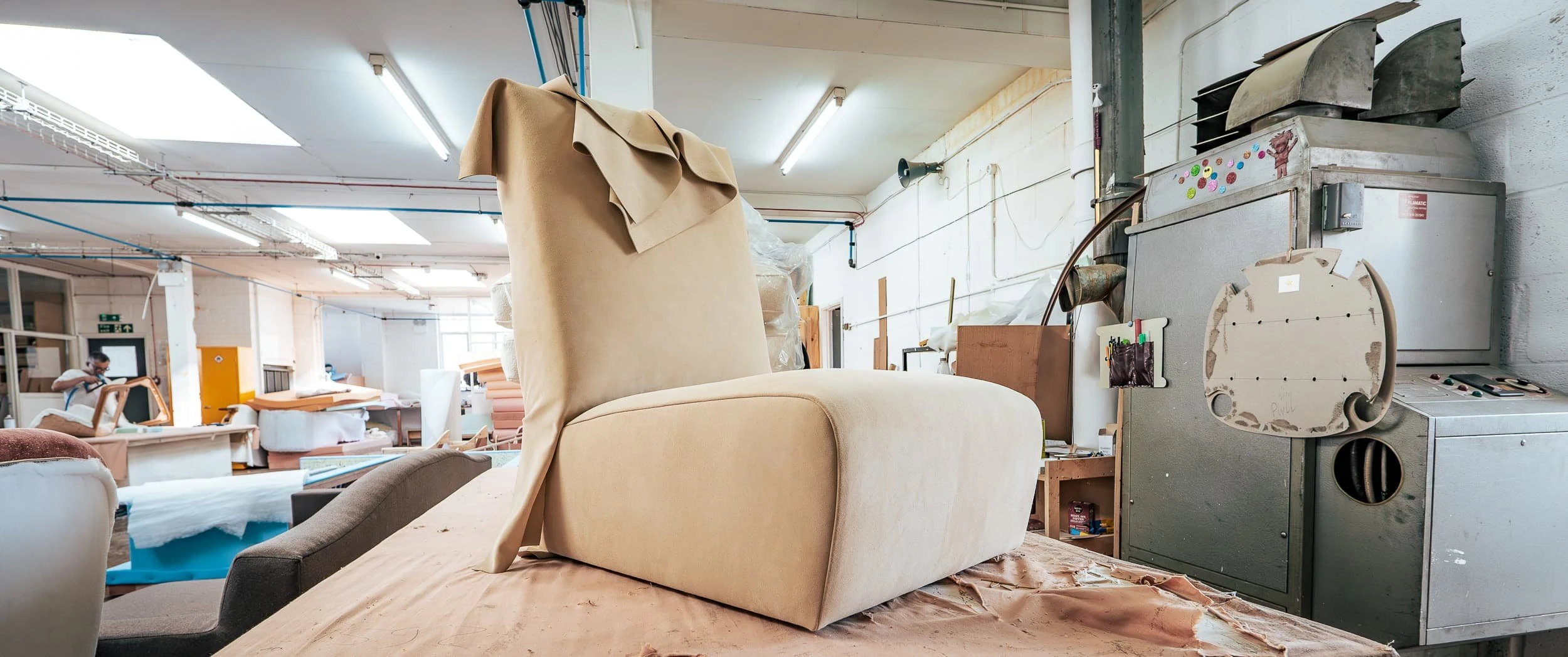
1. The frame — kiln-dried hardwood, jointed and glued
Frames are made from kiln-dried European beech as standard, with oak or birch ply specified where the design or the load asks for it. Kiln-drying takes the moisture down to around 10–12% before the timber is cut, so the frame stays dimensionally stable over the life of the piece and the joints do not loosen as the seasons change. Joints are mortised, dowelled or screw-and-glued depending on the load path, and corner blocks are added where a leg meets a rail. The frame is the part of the piece that lasts longest: covers are replaced, springs are re-tied, foam is re-cut, but a hardwood frame built this way outlives several full re-upholsteries. Where the design calls for metalwork — tubular steel frames, blackened or polished bases, contract bar stools — the metalwork is made in our metalwork shop and brought into the upholstery bench fully prepared.
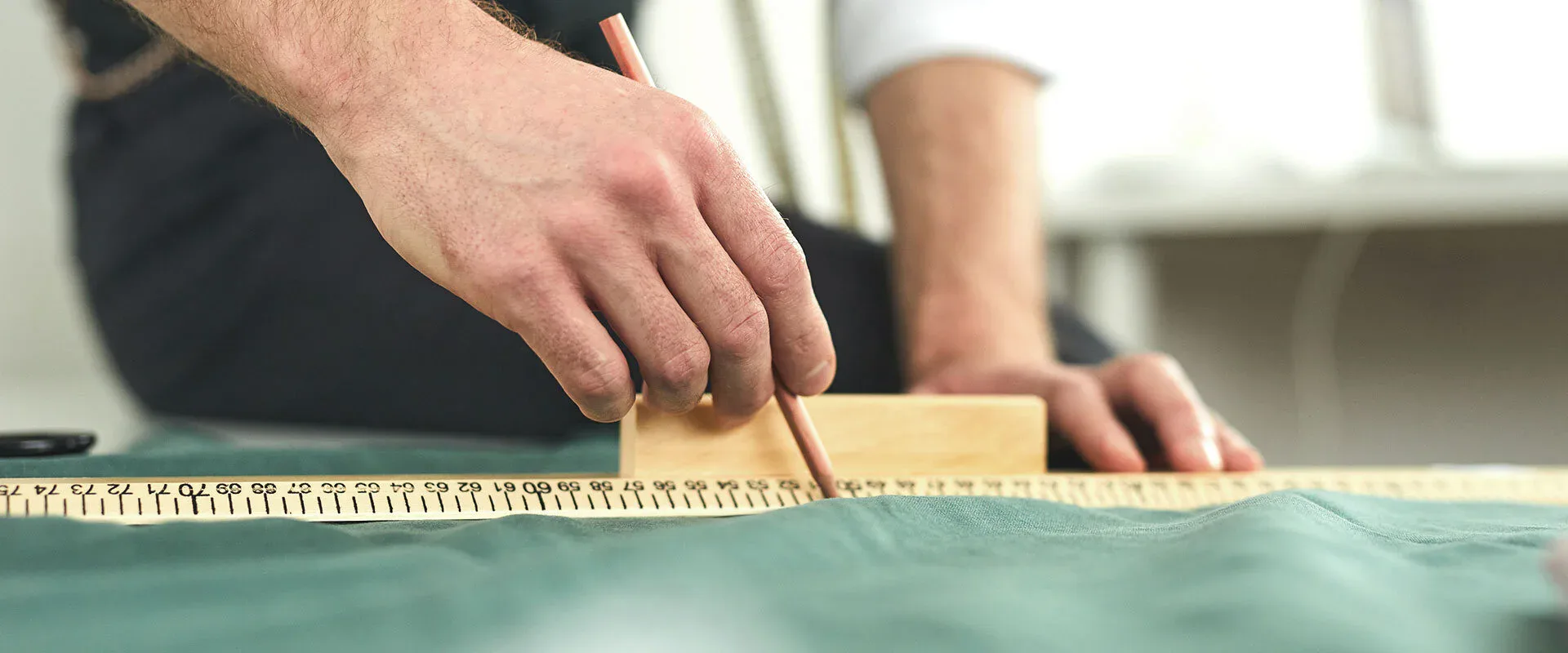
2. Suspension — webbing, springs and the eight-way tie
The seat base carries the weight. Webbing is interlaced in two directions across the frame, tensioned and tacked or stapled in turn, and finished with a non-slip surface that grips the coil bases. Sprung seats use heavy steel coiled springs — eight in a standard sofa seat, more on a larger piece — tied eight-way with twisted Italian hemp twine: each spring is anchored to the four adjacent springs and to the four corners of the frame, so the spring set deflects evenly under load rather than tilting forward into the front rail. Eight-way hand-tied is the traditional specification because it stays tied for decades and is the basis for the long, slow recovery that reads as a properly engineered seat. Where the design calls for a low seat profile, or where the budget asks for it, sinuous (S-shaped) springs are clipped under the rails and give a flatter, slightly springier seat at a lower build height. Both are correct for their application; the choice is set at design.
Seating to make?
Tell us the pieces, the quantities and the covers you have in mind.
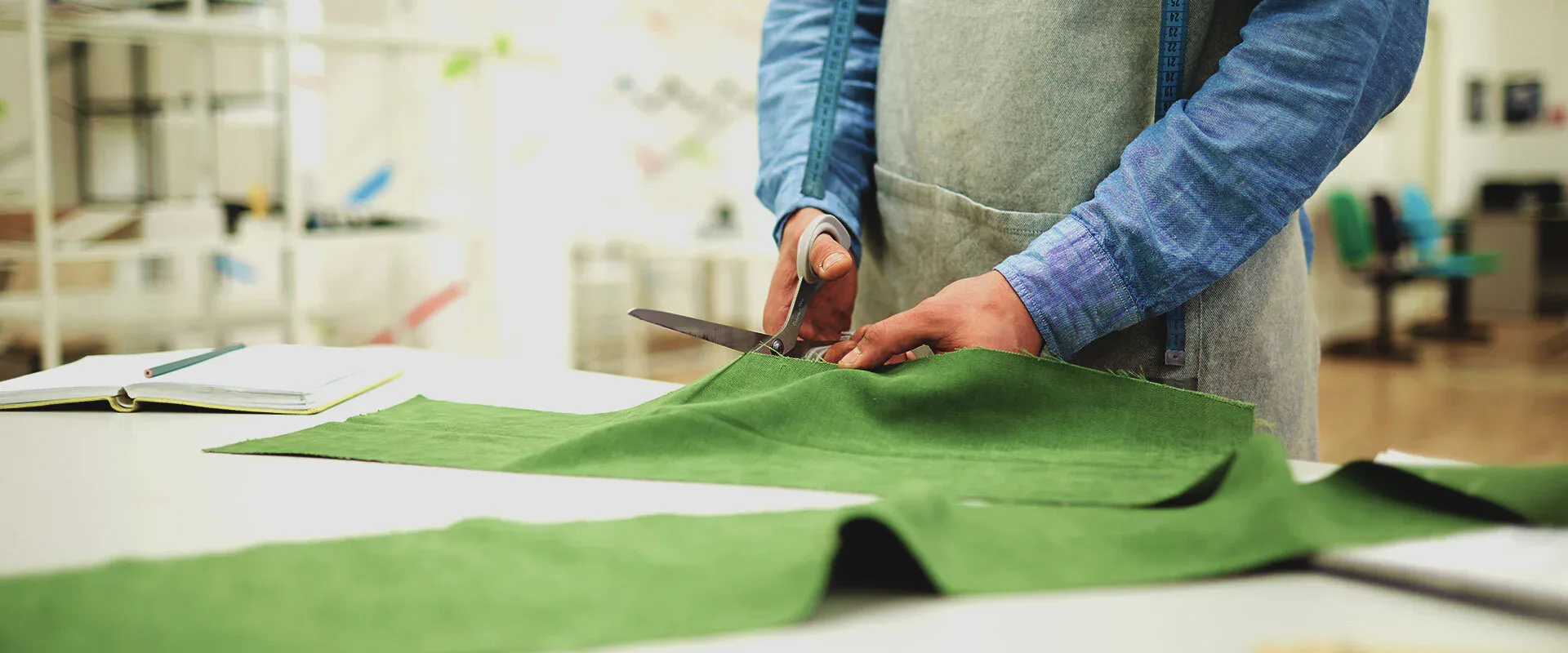
3. Stuffing and build-up — horsehair, foam, fibre and wrap
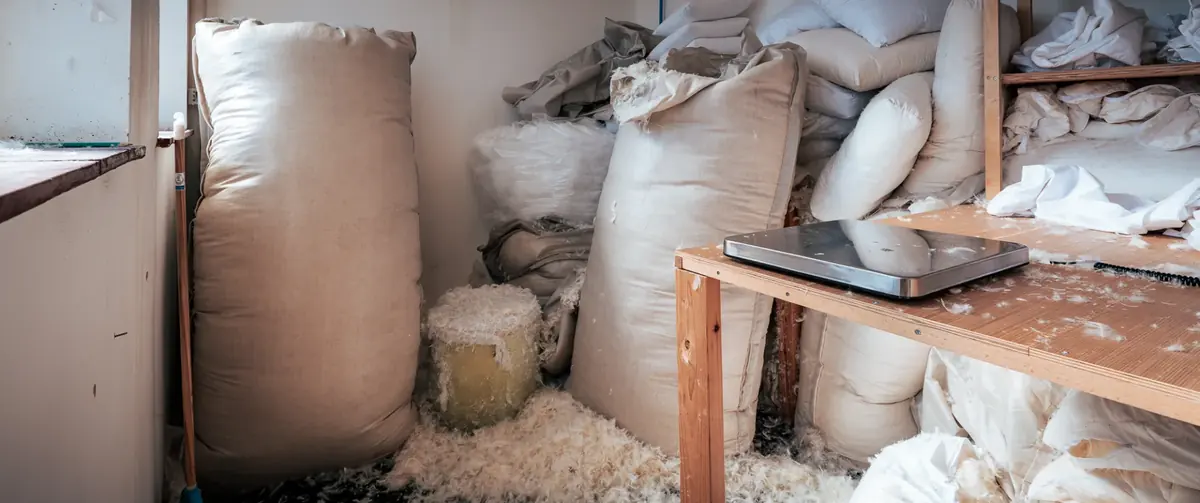
Padding is built in graded layers from the spring base up to the cover. The traditional build — still specified on period reproductions and the heaviest hotel seats — uses horsehair stitched into rolled edges over hessian, with cotton felt and a soft fibre wrap on top. The contemporary build uses CMHR high-resilience foam, layered to vary the feel from a denser core to a softer top, with a fibre or wool wrap closest to the cover to soften the line where the fabric meets the foam edge. Cushion fills sit on top of all of this. Down, feather-and-down blends, foam wrapped in feather, foam wrapped in synthetic fibre, and solid foam each give a different sit, and each asks a different amount of maintenance in return; the choices and what they mean in service are covered in our guide to upholstery fills. The build is decided at specification and reflected in the technical drawing, not adjusted at the bench.
4. Cover and detail — cut, sewn and finished by hand
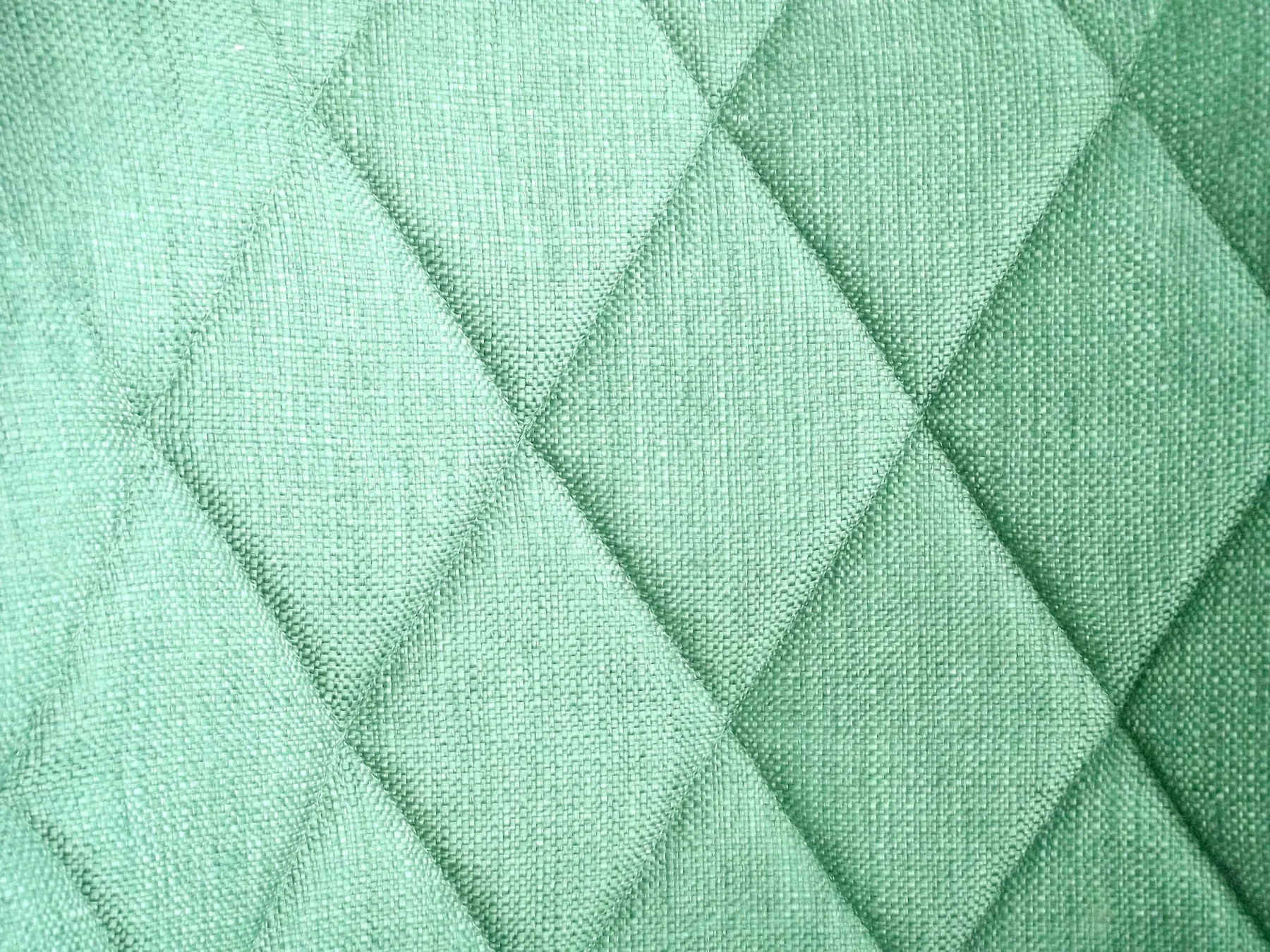
Pattern cutting is executed against the fabric repeat, with pattern placement centred on backs and seats and matched across cushions. Where a fabric runs in one direction — cut velvets, directional weaves — pile and weave run consistently across the piece. Hand-stitching handles channelling, fluting, buttoning to an approved diagram, and contrast piping cut on the bias so it bends through curves without puckering. Industrial machines handle the long straight runs and the double-thickness hide work. Studding, decorative top-stitching and show-wood finishes are worked piece by piece, each set to the drawing approved at the proposal stage.
Upholstery techniques at the bench
The four-stage build sets out how a seat is engineered. Within that build, a smaller vocabulary of techniques signs the work: the visible signatures that tell a designer this piece was made by hand rather than pulled off a production line. Most pieces use a combination of them; which combination depends on the era of the design and the line of the upholstery.
Channelling and fluting
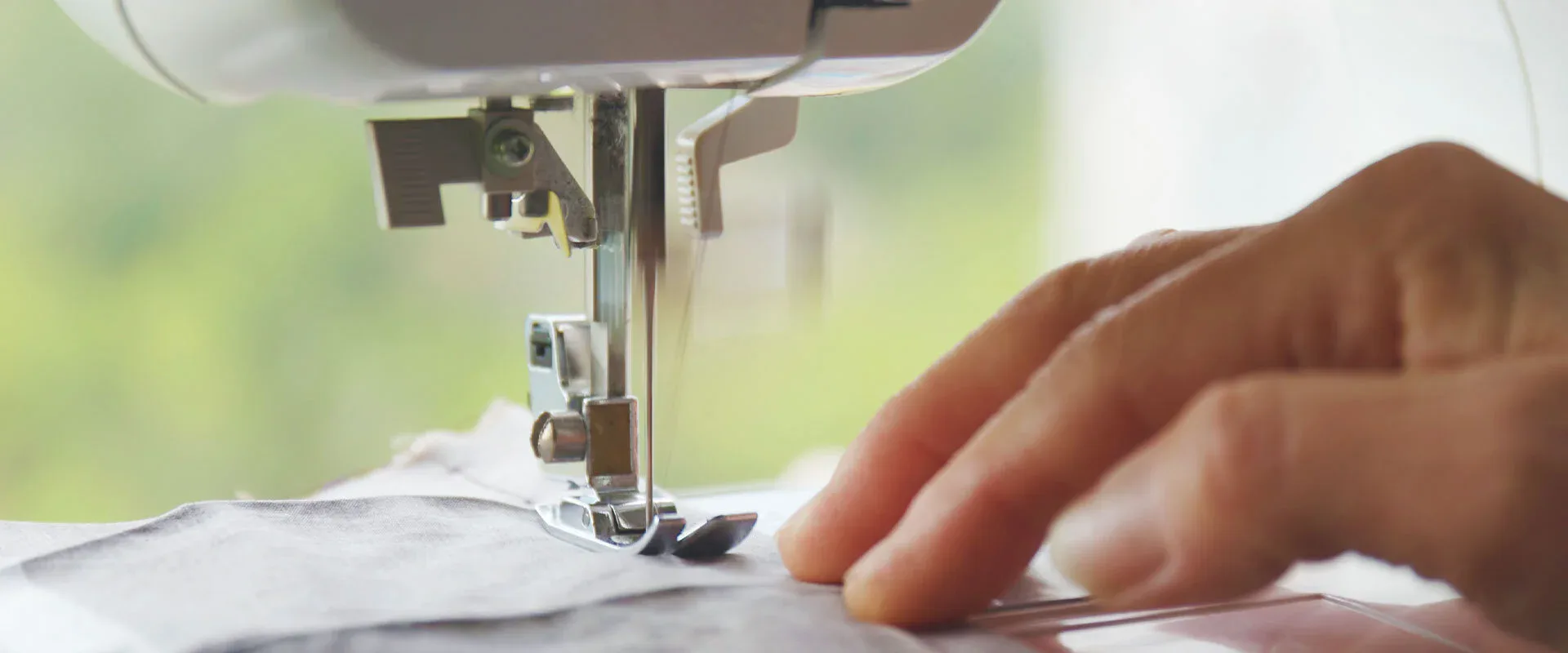
Vertical, parallel lines of padding running up the back of a chair or sofa. Channelling is wider and softer, with each channel padded from inside the back; fluting is narrower and crisper, often used on dining-chair backs and on Art Deco pieces where a tighter, more architectural look is wanted. Both are stitched by hand in continuous runs to keep the lines straight from top to bottom, and both add a tactile richness to a back that would otherwise read as a flat plane.
Deep buttoning and Chesterfield tufting
Deep buttoning — the diamond grid of fabric-covered buttons set into a tufted back and seat — is the signature of the Chesterfield and the classic English club chair. The buttons are anchored through the padding to twine drawn from the back of the frame, and each one is hand-set against an approved diagram so the diamond pattern lands exactly where it should. The pattern can be square, lozenge or biscuit; the depth of the button-tuft is set by how thick the seat back is. Float-buttoning — visible buttons that do not pull the surface deeply — is a lighter version used on contemporary pieces where the tactile note is wanted without the depth.
Piping, welting and contrast detail
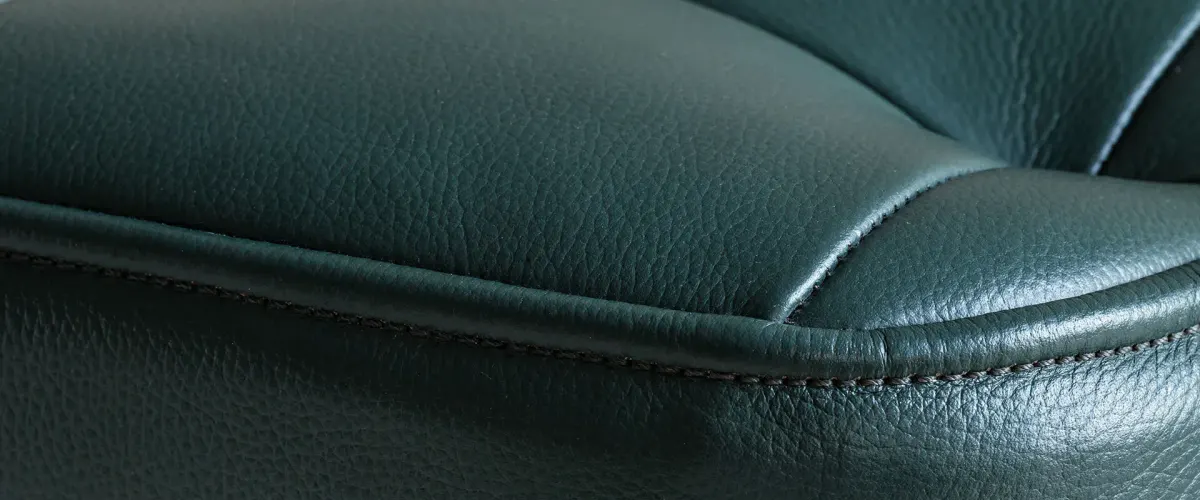
The line where two upholstery panels meet is a design decision. Single piping — one rope-cord of fabric cut on the bias, running along the seam — tightens the edge and gives the piece a tailored line. Double piping — two cords running parallel — is used on contract seating and on traditional pieces where the edge wants more emphasis. Piping is most often cut in the same fabric as the seat; in contrast piping, a second fabric or leather signs the edge, often picking up a colour from the wider scheme. All piping is cut on the bias so it bends through curves and tight corners without puckering.
Decorative studding and nail-head detail
Polished brass, blackened steel or antique-finish studs set into the show-wood edge of a chair or the rolled arm of a sofa. Studding is laid out at design stage to a regular spacing that flows around curves; on traditional pieces the line of studs can be continuous along the front of an arm and double-stranded down the front rail. The studs are tacked through the cover into the frame, so they sit flush rather than proud, and the finish is matched to other metalwork in the room.
Hand-stitched edges and rolled arms
Traditional upholstery used hand-stitching to build firm, formed edges out of horsehair before any sewing machine was on the bench. The technique is still specified on period reproductions and on the heaviest hotel seats, where the rolled edge of an arm or the front of a seat is built up by hand from layered horsehair, stitched into a firm roll, and only then dressed in cotton felt and cover. Hand-stitched edges hold their shape for decades and sign a piece as fully traditional when read close-up.
The pieces we upholster
Every piece of upholstered furniture leaves the workshop through the same build process, but the brief changes by what the piece has to do. The pieces below all sit within the standard capability of the workshop.
- Sofas and sectionals — from compact two-seaters to room-length corner sofas, curved sofas, fixed-back sofas and modular sectional builds, made on solid hardwood frames to any dimension. Sofa beds are engineered around proper mechanisms rather than compromised cushioning. Detail on our upholstered furniture page.
- Armchairs and occasional chairs — club chairs, tub chairs, slipper chairs, wing chairs, swivel chairs, barrel chairs, reading chairs — each developed from a designer's sketch or an existing reference piece. The line is set by the frame, signed by the cover and the piping.
- Dining chairs and desk chairs — sets built for daily service, with show-wood or upholstered backs, hand-cut covers placed on the seat and back panels to a matched pattern. Standard contract specification for hotel restaurants and members' clubs.
- Banquette seating — fixed seating for kitchens, bay windows, restaurants and members' clubs. Banquettes carry the highest daily load of any upholstered piece and are specified accordingly. Covered in detail on our banquette seating page.
- Bed frames and headboards — upholstered headboards, padded bed surrounds and bench-ends coordinated with bedroom joinery. Channelled, buttoned and plain finishes are all standard; oversized bespoke headboards are made on jointed frames so they ship and install cleanly.
- Ottomans, benches and bar stools — from a single ottoman in a study to a hundred restaurant bar stools, built to specification on hardwood or metalwork frames depending on the brief.
- Re-upholstery and restoration — existing pieces stripped, reframed where necessary, re-sprung and re-covered to the original or a new specification. The investment in a properly-built frame outlives several covers, and re-upholstery is often the right answer when a piece can be returned to a long second life.
Fabric, leather, COM and fire compliance
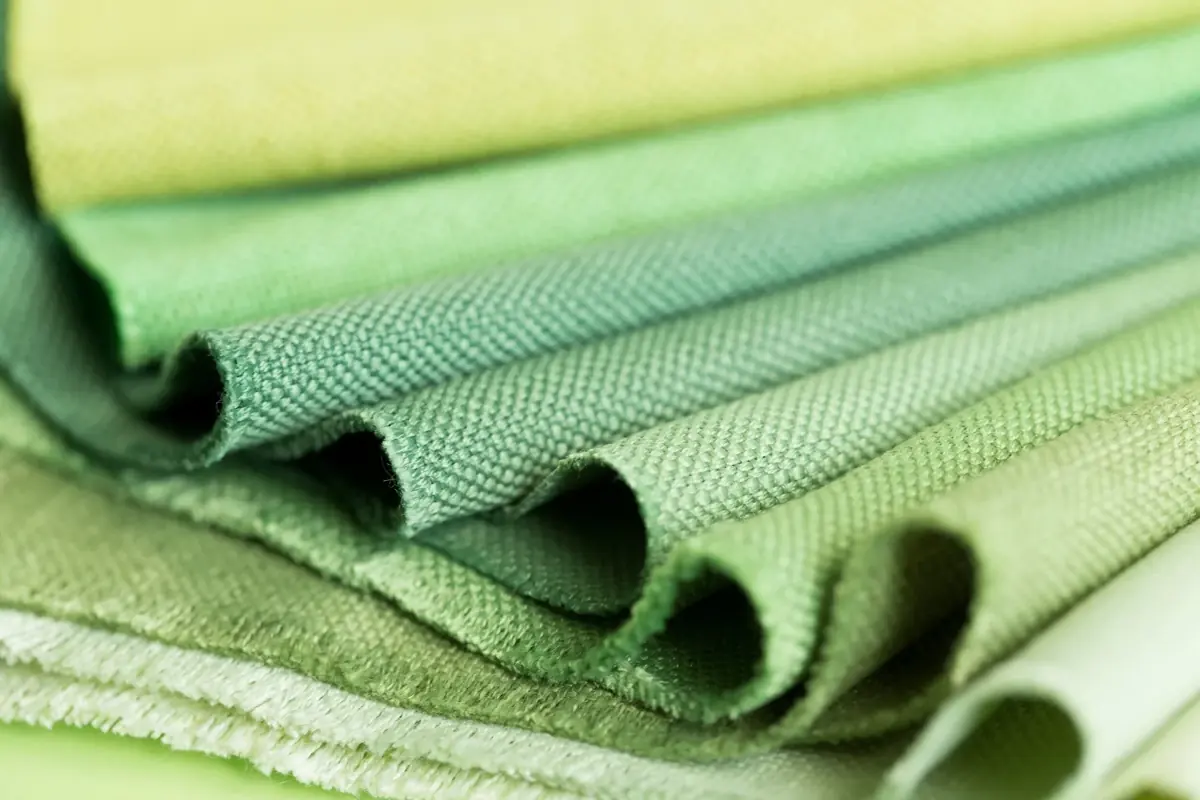
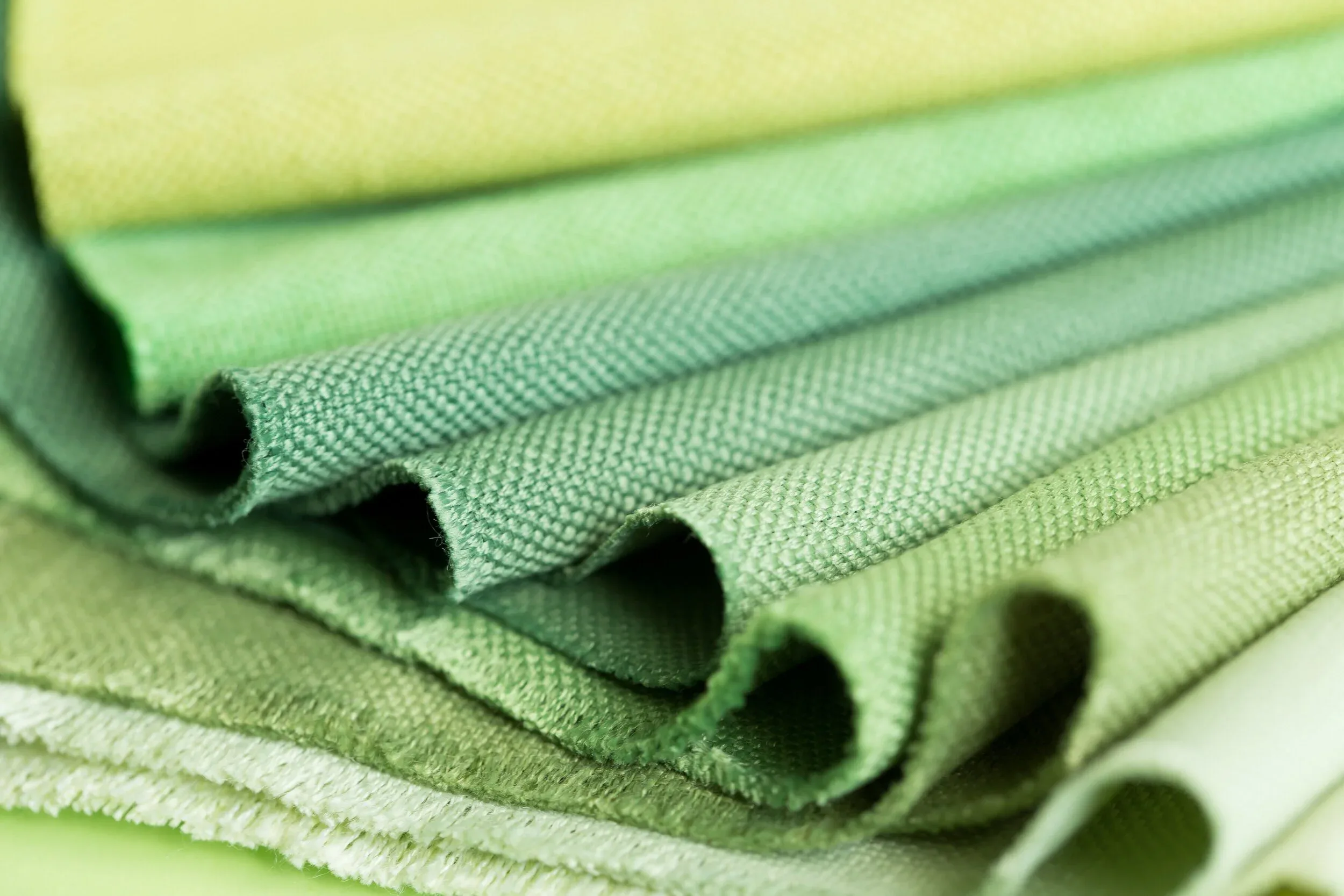
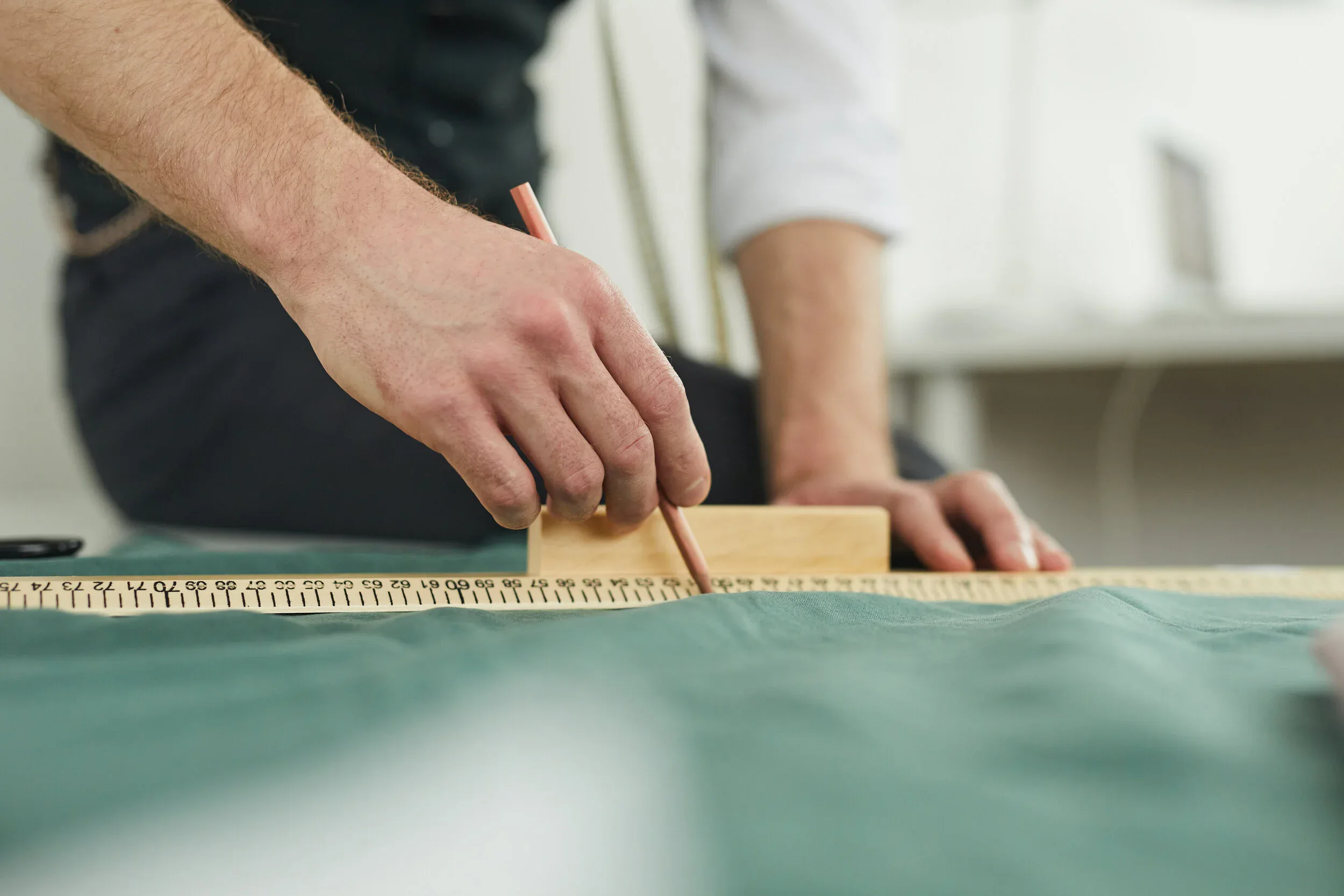
The workshop upholsters in the full range of performance and luxury textiles from the leading European fabric houses, and full-hide leather in any colour. Fabric is quoted on a 137 cm width with pattern repeats up to 4 cm; narrower cloths or larger repeats revise the metreage and are resolved at the quotation stage. Leather is calculated from standard hides per frame, with curved leather work cut around the natural geometry of the hide. COM and COL — Customer's Own Material and Customer's Own Leather — are welcomed and arrive 2–3 weeks before the production start. Residential pieces carry an FR interliner as standard. Contract and hospitality seating meets Crib 5 (BS 5852), with fabrics either passing the flame test untreated or back-coated to compliance. Fire compliance documentation is supplied with every commercial order.
Fabric families, Martindale ratings and the choice between natural, synthetic and blended cloths are set out on our fabrics page, with deeper notes on each family — wools, linens, velvets, mohair, bouclé, leather alternatives and performance fabrics — for the cloths most often specified into the workshop.
.webp)
Capacity, lead times and the contract programme
The workshop runs at single-piece scale and at contract scale. A one-off armchair commissioned by a private client is built on the same benches as a hundred dining chairs for a hotel opening; lead times, packing and delivery are scaled to the project rather than to the order size. Residential lead times typically run 8–14 weeks from approved drawings, depending on frame complexity, fabric availability and seasonal load on the bench. Contract lead times are programmed against the opening date, with prototypes built and signed off early so production can run at full pace from approval. Hospitality programmes are covered in more detail on our hospitality supply page.
Where the workshop fits — residential and contract
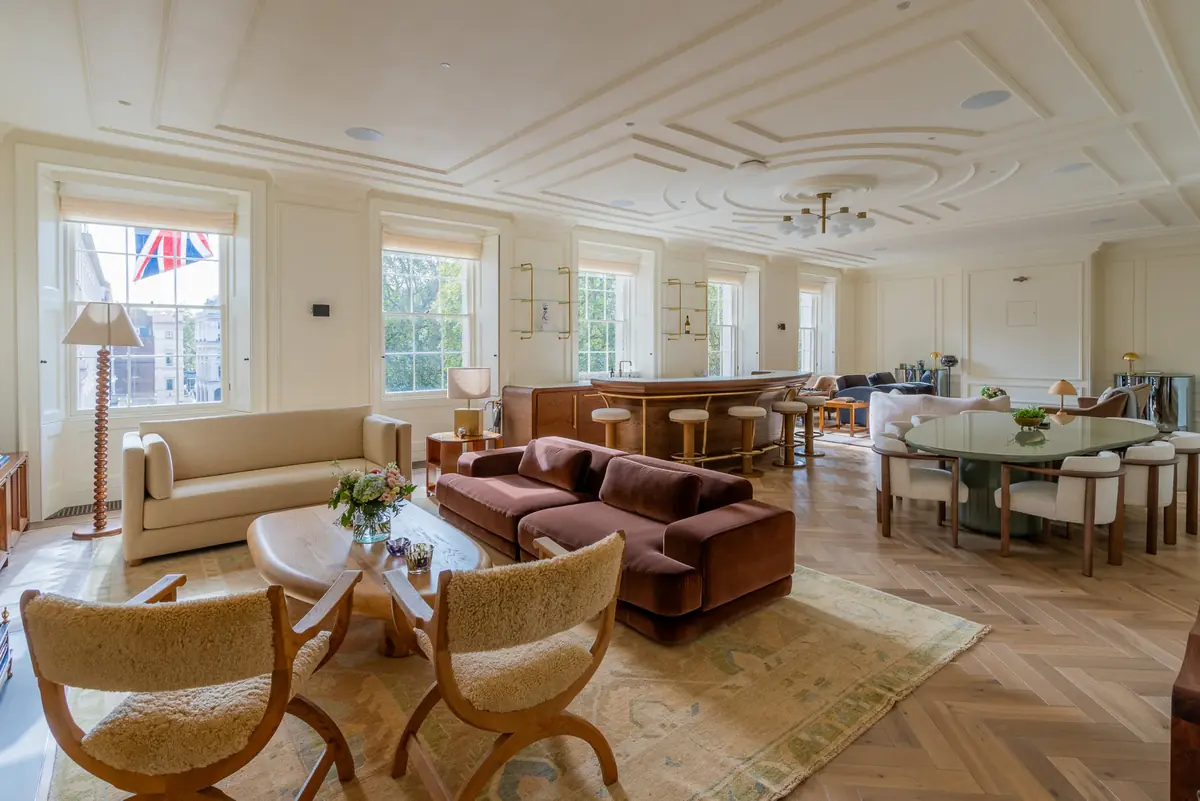
The same bench builds a single reading chair for a private house and a hundred dining chairs for a hotel restaurant. The difference is specification, not standard: lead times, fire route, foam grade, fabric rub rating, packing and delivery are all set against the project. For hospitality work, seating is prototyped, tested in service and rolled out against the opening programme. The cover is one decision in a longer chain: for the layered cushion fills behind the cover, see upholstery fills; for the engineered foam grades inside the cushion, see foam in upholstered furniture.
Fabric & Leather
- Fabric width: Minimum 137 cm (54"), narrower fabrics require additional yardage allowance
- Pattern repeat: Up to 4 cm included in yardage; larger repeats incur a cutting surcharge
- Leather hides: Standard hides yield 50–55 sq ft, we calculate exact requirements per frame
- COM / COL: Client's Own Material and Client's Own Leather accepted, contact us for exact yardage
- Submission lead time: Materials should arrive 2–3 weeks before scheduled production start
Fire Safety
- Residential: FR inter-liner used as standard beneath all decorative fabrics
- Contract / commercial: Crib 5 performance (BS 5852:2006), fabric must pass independently or FR barrier is applied
- Foam: CMHR (Combustion Modified High Resilience) foam meets current UK and EU flammability regulations
- Fibre fill: Dacron wrap available as a standard upgrade for a softer, more relaxed silhouette
- Certification: Full fire compliance documentation supplied with every commercial order