
Mesh
Made-to-measure metal mesh sheets for interior projects
We work with a wide range of woven and welded architectural wire mesh patterns, from open weaves that read as a veil to dense geometries that read almost as a solid. The material sits between surface and screen, holding presence while letting light, air and sound pass through. That is why it is specified where a designer wants definition without weight.
Mesh is woven or welded from architectural-grade metals: stainless steel for crispness and corrosion resistance, brass, bronze and copper for warmth and a living patina, and aluminium where weight matters. Each pattern can be tailored to a project's scale, aperture, density and finish, and supplied rigid in a frame or flexible as a draped panel. From a single cabinet door to a feature wall, the brief sets the specification.
Physical samples of weaves and finishes are couriered on request through our sampling service, so the pattern, aperture and metal can be approved in hand before specification.
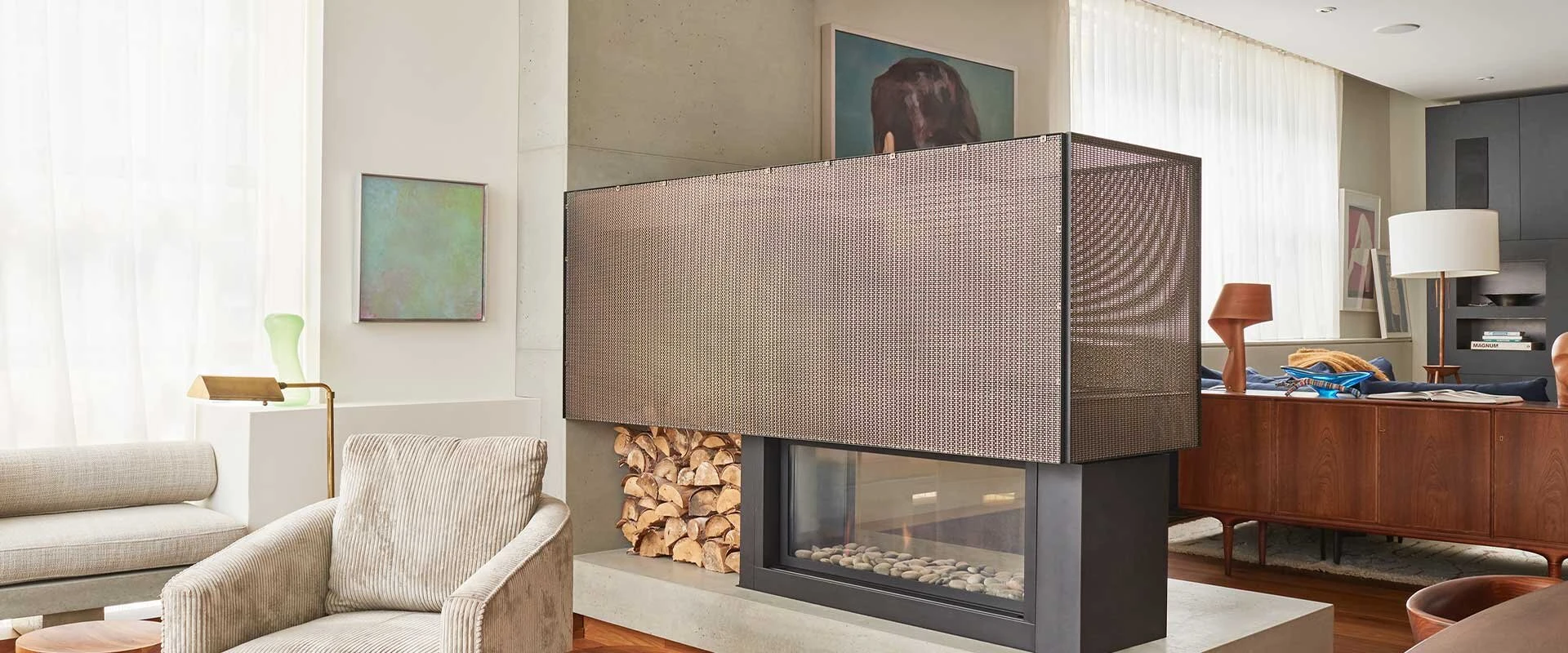 01 / 02Mesh Room
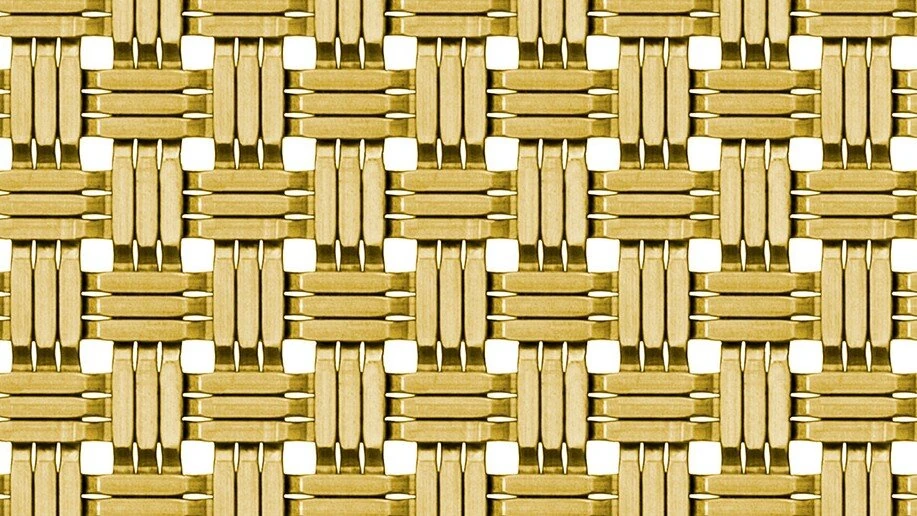 02 / 02Colorized Br
Where mesh is used.
Mesh occupies a unique position between solid and transparent, making it the right choice wherever a designer needs a surface with presence but without opacity. Its acoustic properties and ventilation characteristics also make it practically valuable in hospitality and residential settings.
- Cabinet and wardrobe door inserts
- Grille fronts for speakers, hi-fi and air-conditioning
- Radiator covers and ventilation panels
- Room dividers and freestanding screens
- Balustrade and stair infill
- Ceiling panels and feature rafts
- Bar and reception joinery inserts
- Decorative wall cladding and architectural panels
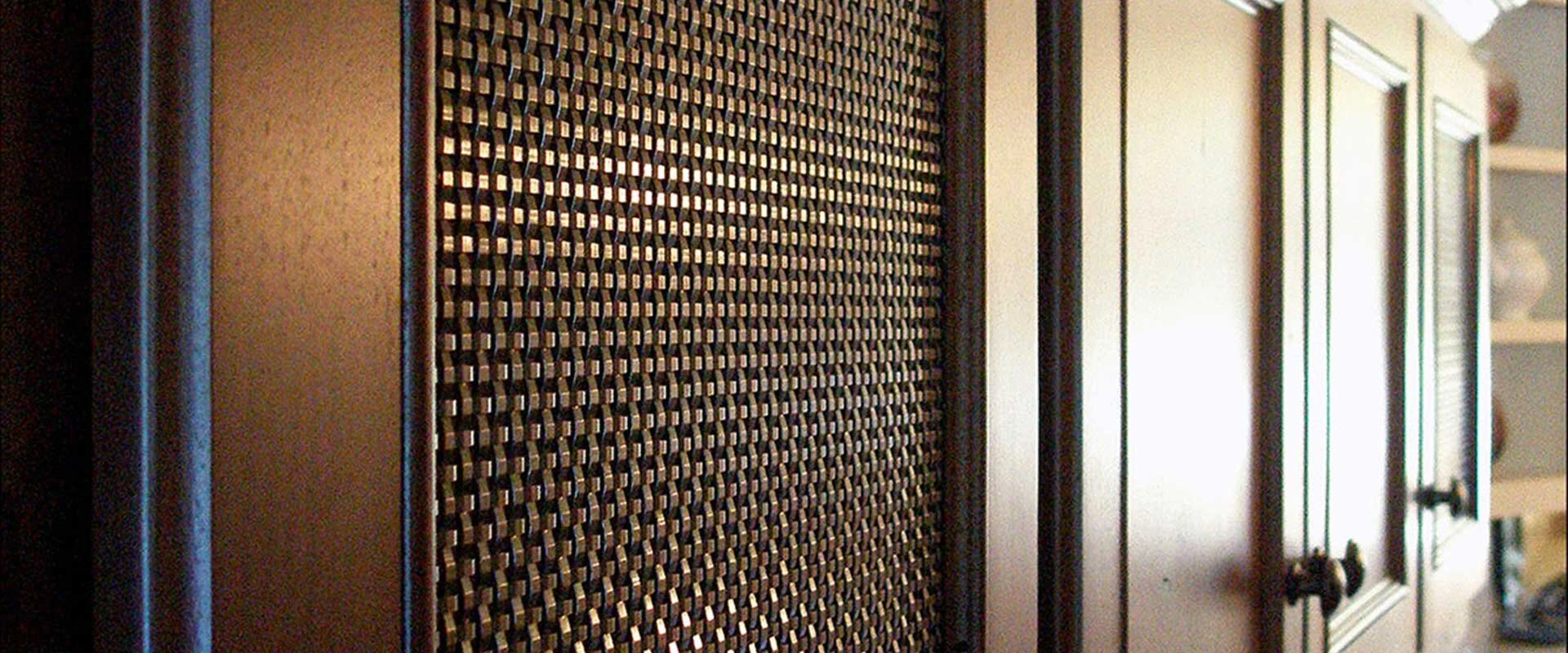 01 / 04Mesh Room
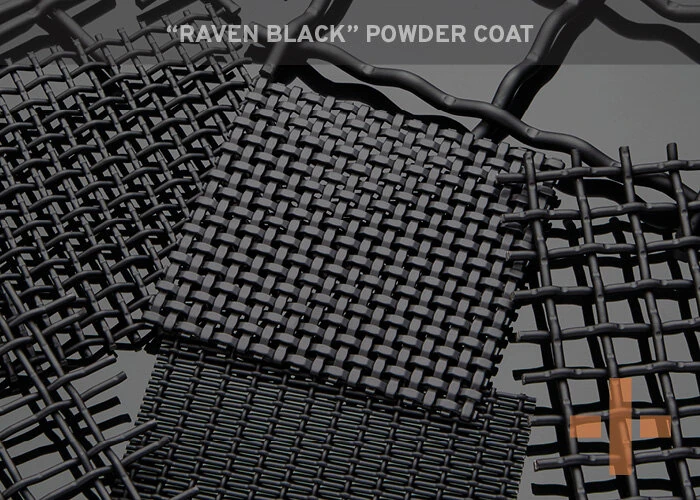 02 / 04Ravenblack Secdefault
 03 / 04
 04 / 04Bronze Default
Mesh for a screen, a door or a ceiling?
Tell us about the project.
Woven and welded mesh
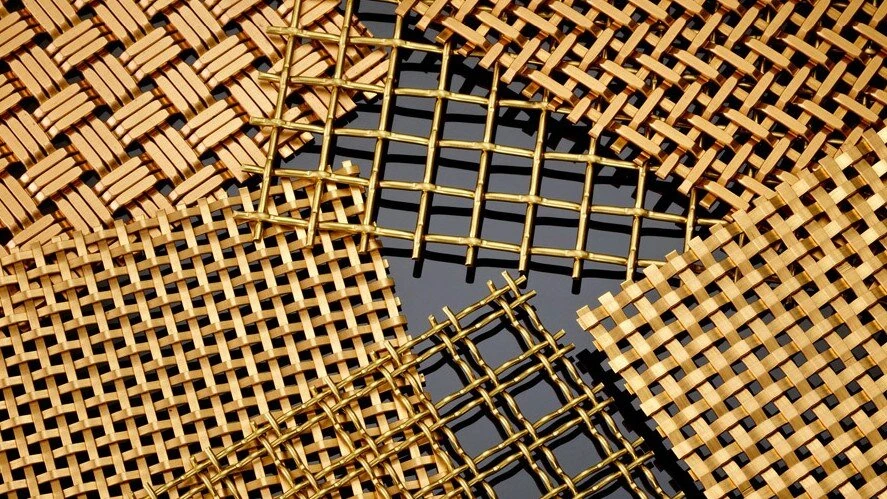
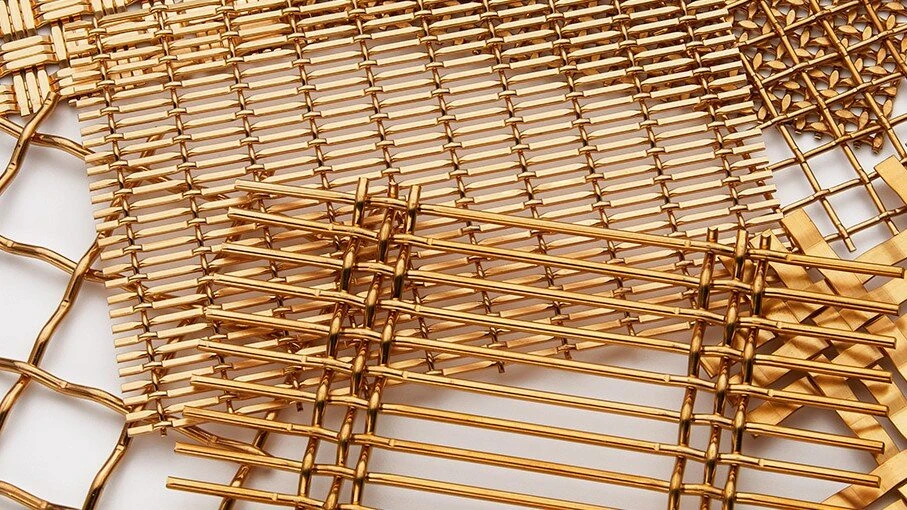
Architectural wire mesh comes in two constructions. Woven mesh interlaces crimped wires over and under one another, the same logic as a textile, which gives the surface its three-dimensional texture and a soft, drapeable hand. Welded mesh fuses the wires at every intersection into a flatter, stiffer grid with a more graphic, regular face. Woven wire fabric, where flat or round wires are loosely interlinked with crimped rods, sits alongside these as a cable-like option that reads more like a heavy curtain than a panel.
Weaves and apertures
The aperture, the open space between the wires, is the main design control. A tight aperture reads as a shimmering near-solid that conceals what sits behind it; a wide aperture stays transparent and lets the contents, lighting or a backing colour show through. Aperture is set by wire gauge and spacing, so a heavier wire on a wide pitch gives a bold, structural pattern, while a fine wire on a close pitch gives a quiet, fabric-like veil.
Weave geometry adds a second layer of choice. Plain and twill weaves give an even grid; Dutch weaves run finer in one direction for a directional, almost striped read; decorative spiral and ring weaves give a looser, more sculptural pattern. Selecting aperture and weave together lets the same metal range from utilitarian grille to ornamental screen.
The metals
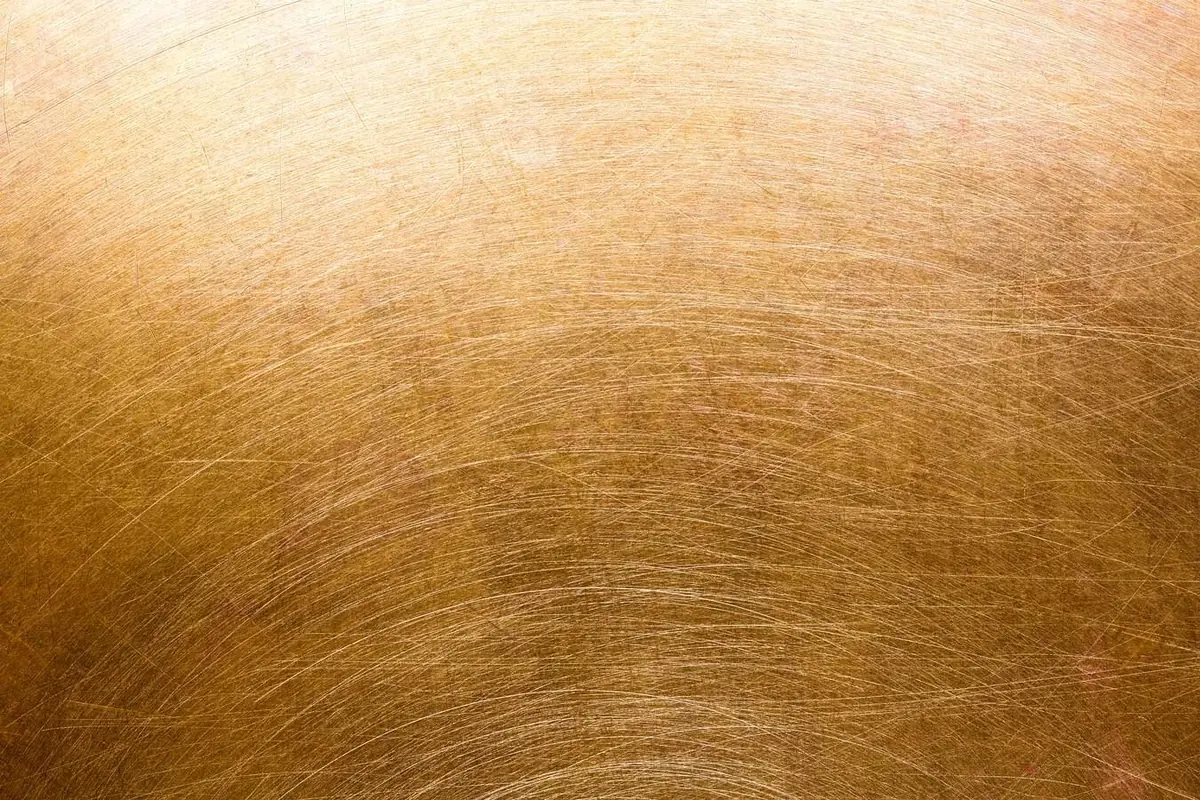
Stainless steel is the architectural staple: corrosion-resistant, crisp and the right choice where the finish needs to stay stable. Around it sit the warm metals. Bronze carries a caramel brightness, brass a pale gold, copper a salmon-pink. All three are living finishes that tarnish toward browns and greys, and eventually verdigris on copper, unless they are sealed. Some meshes interlace two metals, a bronze or brass weft through a stainless warp, for a two-tone shimmer. Blackened and galvanised steels and lightweight aluminium complete the palette, the last useful where weight is a constraint.
Rigid or flexible
Mesh can be specified two ways. Rigid panels are tensioned or fixed into a frame and behave as a flat, self-supporting surface, which suits cabinet inserts, screens and balustrade infill. Flexible panels are hung or draped from a top fixing and keep the movement and weight of a textile, which suits ceiling rafts, full-height room dividers and feature walls. The same pattern can read very differently depending on which route is chosen, so the decision is usually made early against the application.
Finishes
- Bright or darkened. Copper-based meshes can be cleaned back to brightness and sealed under clear lacquer, or chemically aged to an even, darkened bronze and then sealed. These are the two classic ways to hold a living finish at a chosen moment.
- Antique plating. A plated layer of brass, copper or nickel, oxidised dark and then hand-relieved so the bright metal shows on the weave's high points. It reads the texture and suits period and decorative schemes.
- Powder coating. Any RAL colour over steel mesh for interior work, with galvanised wire beneath where moisture is in play.
- Mill and brushed. The raw, untreated face of stainless or aluminium, left bright or lightly brushed for a quiet, contemporary read.
Backing and framing
How mesh is held shapes how it reads. For cabinet and door inserts the panel is usually captured in a rebate behind the timber or metal frame, with or without a backing. A cloth or paper backing softens the view through and suits grille fronts for speakers and audio, where it conceals the driver while letting sound pass; left unbacked, the same insert ventilates equipment and keeps a fully open look. At room scale, frames range from a slim perimeter channel to a full structural surround, with tensioning hardware to keep a rigid panel flat. We detail the framing, fixing and any backing as part of the wider joinery.
Properties and considerations
- Weight. Most interior meshes are light, but dense weaves in brass or bronze add real mass, which affects hinge selection and frame design on doors.
- Acoustics and ventilation. The open structure passes air and sound, which is why mesh works for grille fronts, radiator covers and equipment cabinets.
- Cleaning. Sealed and stainless meshes wipe down easily; bare copper and brass finishes will continue to move unless lacquered, so the finish is chosen with maintenance in mind.
- Use. Mesh is specified here for interior work. Where moisture or wear is a factor, stainless or galvanised and coated wire is used in place of bare warm metals.
Mesh in furniture and interiors
In our work, mesh appears most often at furniture scale: woven inserts in cabinet and wardrobe doors and bar joinery, where it lightens a run of cabinetry, ventilates equipment and glints under integrated lighting. At room scale it becomes balustrade infill, space dividers, ceiling features and wall cladding. It pairs naturally with the metal finishes used across a scheme's hardware. Each piece is made by our workshop network to the project specification, and samples of weaves and finishes are available through our sampling service.
Can mesh be used on cabinet doors that hold equipment?
Yes. An open weave ventilates hi-fi and other equipment, and a backing can be added where the contents should be screened from view. Aperture and metal are chosen to balance airflow, sightlines and the look of the run.
Will brass and copper mesh change colour over time?
If left bare, yes. Warm metals are living finishes that darken and patinate. Where a fixed appearance is wanted, the mesh is cleaned or aged to the chosen point and then sealed, or stainless steel is specified instead.
Can a pattern be matched to existing hardware?
Often. Mesh can be finished to sit alongside the metal finishes used elsewhere in a scheme, and samples let the weave, aperture and finish be approved together before anything is made.
Cut & laid
Sample kits and catalogues are offered to help inspire and give you the opportunity to see these wire mesh products first hand. Every samples kit is customizable to meet your interests and needs. For more information or to request your samples, please contact Amron Architectural below:
Seen in
Have a project that needs
a surface with depth and openness?
Need samples? Get in touch and tell us about your project.