-1200w.webp)
Marquetry is the art of forming decorative patterns by assembling small pieces of thin material, wood veneer, shell, bone, metal or stone, and applying them to a furniture surface, each piece cut to fit its neighbour perfectly.
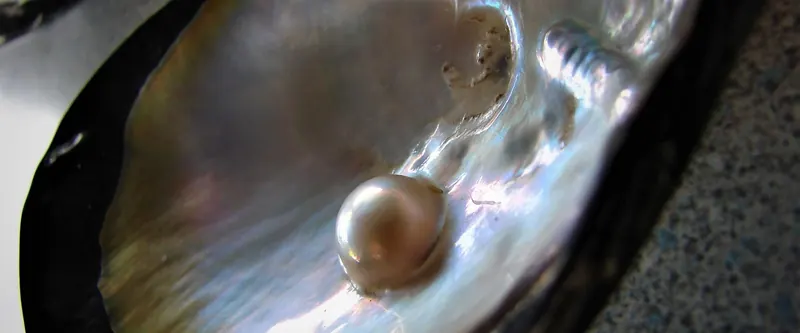
Lean over a marqueteur’s bench and the first thing you notice is how small everything is. A petal of satinwood the size of a fingernail, a sliver of shell catching the light, a knife so fine it seems to part the veneer rather than cut it. The air smells faintly of scorched wood and warm glue. Nothing here is rushed, because nothing here can be. Marquetry is the art of forming decorative patterns by assembling small pieces of thin material — wood veneer, shell, bone, metal or stone — and applying them to a furniture surface. The result can range from a simple geometric border to an intricate pictorial scene covering an entire cabinet front. What distinguishes it from other decorative techniques is the precision of the cutting: each piece must fit its neighbour perfectly, with no visible gap and no overlap. When the material is mother of pearl, the surface shimmers with natural iridescence.
It is one of the oldest craft traditions in European furniture-making, and one of the most demanding. Today it remains a hallmark of the highest quality in bespoke furniture, used by makers who want to create pieces that reward close attention — surfaces where the more carefully you look, the more you see.
What is marquetry?
Marquetry is the craft of building a picture or pattern from thin pieces of veneer, then laying the finished sheet onto a surface such as a table top, a cabinet front or a wall panel. The English word comes from the French marqueterie, from marqueter, to variegate or inlay. The pieces are usually wood, chosen for colour and grain, but shell, mother of pearl, metal and straw are all used as well.
What defines marquetry is the order of work. The design is cut and assembled first, as a single thin sheet, and only then glued to its ground, so nothing is cut into the surface itself. That is the difference between marquetry and inlay, and it lets one design run across a whole table top or wall panel.
Marquetry, inlay and parquetry
Inlay, also called intarsia, is the older craft. A recess is cut into a solid body of one material and shaped pieces of another are set into it, so the pattern is let into the surface. Marquetry works the other way round, building the pattern as veneer first. The two are often confused, and English makers of the eighteenth century were still called “inlayers” when they were producing marquetry.
Parquetry is a close relative, built from regular geometric pieces, squares, lozenges, chevrons and herringbones, instead of pictures. The two are frequently combined on one piece, with a pictorial panel framed by a geometric border.
A brief history
Furniture inlaid with precious woods, metals, glass and stone is known from the ancient world, from Sumeria and Egypt, and Roman examples survive from Pompeii and Herculaneum. The revival of veneered marquetry took its inspiration from sixteenth-century Florence and Naples, and the techniques of wood marquetry were developed in Antwerp and other Flemish centres of luxury cabinet-making in the early sixteenth century.
The craft reached France after the middle of the seventeenth century, when the royal manufactory at the Gobelins was charged with furnishing Versailles and the other residences of Louis XIV. Its early masters were the Fleming Pierre Gole and his son-in-law André-Charles Boulle, who gave his name to marquetry of tortoiseshell and brass inlay with pewter in arabesque designs, still known as Boulle work. Floral marquetry became fashionable in Parisian furniture in the 1750s, and the pieces Jean Henri Riesener delivered to the crown in the 1770s and 1780s are the most famous royal marquetry of all. Dutch “inlayers” brought the craft to London at the Restoration in 1660, and in Germany David Roentgen of Neuwied produced some of the finest marquetry of the eighteenth century.
The 18th century saw marquetry reach its widest domestic application, with English and French furniture-makers producing commodes, secretaires and writing tables covered in elaborate floral and pictorial veneers. Industrialisation pushed the hand craft into decline through the 19th century; the Victorian revival of historical styles kept it alive, and the 20th century's craft revival, particularly the Art Deco period, saw it reinterpreted in a more geometric, modernist idiom.
How marquetry is made
Cutting
Traditional marquetry is cut by hand using a specialist saw or a sharp-edged knife. The craftsman works from a design drawn to scale, cutting each element, leaf, petal, geometric tile, individually from a sheet of veneer. The grain direction of each piece is carefully considered: in a floral design, the grain in a leaf might run from stem to tip; in a geometric pattern, adjacent pieces are often oriented to catch the light differently, creating tonal variation without any difference in species.
Saw cutting is the other classic method. Several veneers are fixed together and cut through at once with a fine fret saw, so the same shape comes out in different species and the pieces can be swapped between them. The simplest version uses two sheets, cut together to give two panels of identical design in contrasting colours, called in French partie and contre-partie, part and counterpart. Boulle work depends on exactly this: brass and tortoiseshell cut together, so that one panel has brass on a tortoiseshell ground and the other the reverse.
Contemporary workshops pair the knife with the laser. A hand-drawn design is translated into a vector file and laser-cut, which makes very fine, repeated elements practical at scale — geometric borders, inlay bandings, lettering. Most of our work combines both: laser precision where the design demands repetition, hand-cutting where the marqueteur’s judgement of grain matters more than geometric perfection.
Laser cutting has its own character. The beam leaves a small gap between pieces, set by its offset, and the heat can darken the cut edge, so each species and thickness needs its own setting. The result suits crisp geometry better than soft, shaded pictorial work.
Sand shading
Before assembly, individual pieces are often passed through hot sand shading — a technique unchanged since the 17th century. The edge of a veneer piece is dipped into heated sand for a few seconds, scorching it to a graduated brown. That dark edge is what gives a petal its curl or a fold of drapery its shadow: three-dimensional depth produced with nothing but heat and timing. A second too long and the piece is ruined; the wood tells you the instant you’ve overstayed, curling and darkening past the point you wanted. We still judge it the old way, by eye and by smell, holding the tweezers steady and counting under our breath — there is no dial for it, and after a while you stop wanting one.
Depth can also be drawn rather than burned. Fine lines are engraved into the assembled picture and filled with a mixture of India ink and shellac.
Assembly
Pieces are assembled face-down on a sheet of paper, fitting together like a jigsaw — and there is a particular quiet satisfaction when a piece drops into its place with no gap and no overlap, the join almost vanishing. Once the entire composition is complete, it is glued to a substrate, traditionally solid wood, today more commonly MDF or ply for dimensional stability. The assembled veneer sheet is then pressed under even pressure until the adhesive cures.
A balancing veneer is normally laid on the reverse face as well, so that the two faces pull against each other and the panel stays flat as it takes up and gives off moisture.
Finishing
After pressing, the surface is scraped and sanded flat, removing any slight height differences between adjacent pieces, and then finished with lacquer or oil. The quality of the finish determines how the marquetry reads: a full-gloss lacquer emphasises the tonal contrasts between species; an oil or wax finish gives a flatter, more antique appearance.
Types of marquetry
The principal forms of marquetry are distinguished by what is inlaid and how the pattern is composed. Make Bespoke produces bespoke marquetry for furniture and interiors.
Wood-on-wood marquetry uses contrasting timber veneers. Species selection is the primary design tool: the warm amber of satinwood against the dark chocolate of ebony; the silver-grey of sycamore against the warm red of padauk; the complex figure of bird's eye maple against plain-cut walnut. The possibilities are effectively infinite, and the colour range of naturally occurring timbers is wider than most people realise.
Parquetry is a sub-type of marquetry that uses geometric patterns, squares, lozenges, chevrons, herringbones, rather than pictorial designs. It is commonly used for floor and tabletop surfaces, and the regular geometry makes it well-suited to large-scale applications where a pictorial design would be too complex to execute.
Mixed-material marquetry incorporates shell, verre églomisé, mother of pearl, metal wire or stone alongside wood veneer. The shell and metal elements add lustre and light-catching qualities that wood alone cannot achieve. Boulle work, brass and tortoiseshell (now substituted with synthetic alternatives), is the best-known historical example.
Dyed and engineered veneers extend the natural palette. Dyed veneers give consistent blues, greens and greys that no timber provides naturally, and allow the same design to be re-coloured for different schemes. Shell materials — mother of pearl and abalone — bring iridescence; where historical work used ivory, bone or tortoiseshell, today’s equivalents are ethical substitutes and acrylic sheet, which cut cleanly and hold their colour.
Marquetry in contemporary interiors
Marquetry is not a historicist technique. When applied with a contemporary sensibility, abstract geometry, reduced palette, large-scale pattern, it reads as entirely modern. A dining table top in a graphic chevron of two contrasting veneers; a cabinet front in a large-scale diamond parquetry; a headboard in a radiating sunburst pattern: these are applications that are clearly of their time, made using a technique that is centuries old.
The technique also scales beyond furniture into architecture: flooring medallions and borders, ceiling inlays that draw the eye upward in grand rooms, and wall panels large enough to anchor a lobby. At that scale marquetry behaves like a mural in wood — designed at full size, cut in sections and assembled on site.
At Make Bespoke Studio we produce marquetry across furniture and joinery commissions. We develop patterns in collaboration with the client and their interior designer, work them up through hand-drawn and digital drawings, and produce them in our partner workshops. We also work with straw marquetry, a related technique with a very different visual quality, covered in a separate article.
It is slow work, and we would not have it any other way. There is something steadying about a craft that cannot be hurried, that rewards a patient hand and an honest eye, and that leaves behind a surface a client will run their fingers across for decades without ever finding the joins. If you are considering marquetry for a commission and would like to discuss design options or see samples, contact us and we will arrange for our craftsmen to bring reference material to your studio.
Frequently asked questions
What is marquetry?
Marquetry is the craft of building decorative patterns or pictures from thin pieces of veneer, usually wood but also shell, mother of pearl, metal or straw, assembled into a single sheet and glued to a surface such as a table top, cabinet front or wall panel.
What is the difference between marquetry and inlay?
In inlay, a recess is cut into a solid surface and another material is set into it. In marquetry, the pattern is cut and assembled from veneer first, as one thin sheet, which is then laid onto the surface. Marquetry is the veneer technique; inlay is worked into the solid.
What is the difference between marquetry and parquetry?
Marquetry builds pictures and flowing patterns from shaped pieces of veneer, while parquetry arranges regular geometric pieces, such as squares, lozenges, chevrons and herringbones, into repeating patterns. The two are closely related and are often combined on one piece of furniture.
What is Boulle work?
Boulle work is marquetry of tortoiseshell and brass, sometimes with pewter, in arabesque or foliate designs, named after the French cabinet-maker André-Charles Boulle (1642–1732). It is cut in pairs, so that one panel is the negative of the other. Today synthetic alternatives replace the tortoiseshell.
What woods are used in marquetry?
Almost any veneer can be used, chosen for its colour and grain: pale boxwood and sycamore, honey-coloured satinwood, walnut, padauk and ebony, among many others. Dyed veneers add blues, greens and greys that no timber provides naturally, and shell, mother of pearl and metal add lustre.
Is marquetry still made by hand?
Yes, though not only by hand. Contemporary marquetry combines hand cutting with laser cutting: the laser handles fine, repeated elements such as borders and lettering, while hand cutting and sand shading are used where the grain and shading of each piece matter. Make Bespoke Studio produces marquetry for furniture and joinery.