Forêt Collection
End-grain oak in geometric patterns
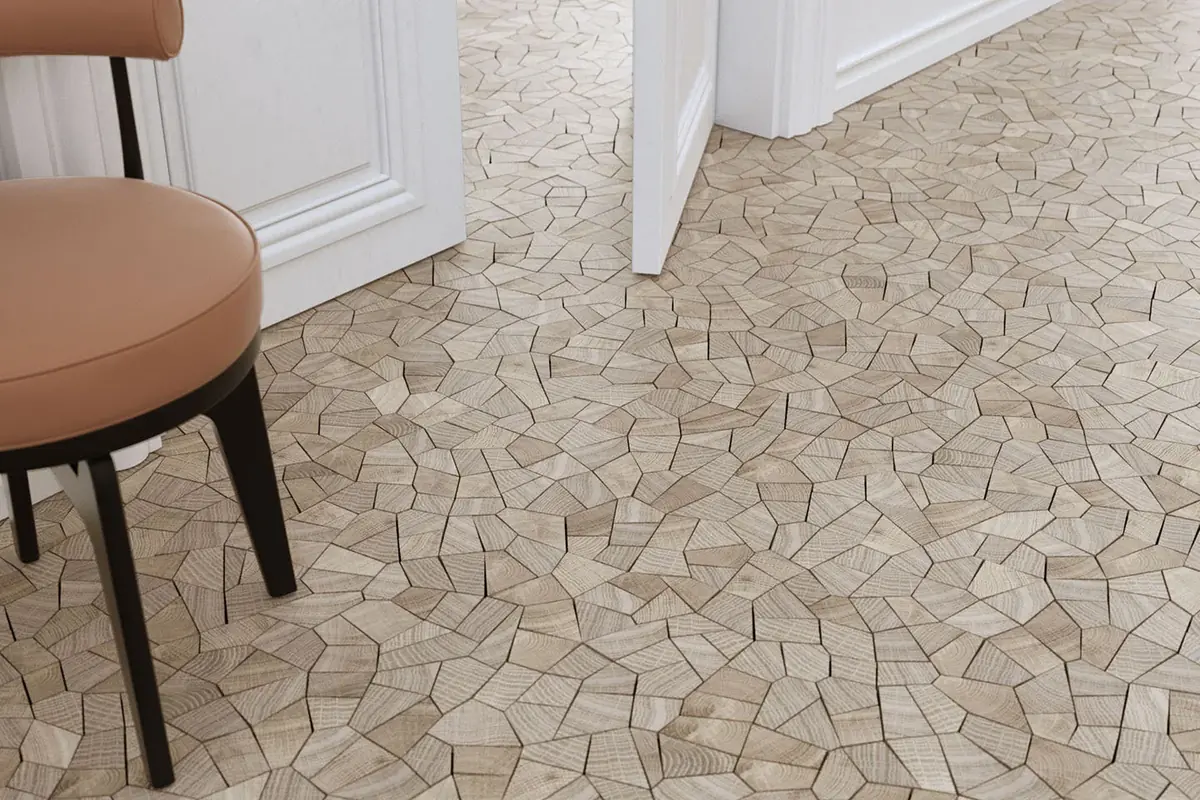
Forêt is an end-grain oak flooring and wall surface, made by our workshop network and offered as one of the studio's flooring ranges. It draws on the wooden cobblestones laid across parts of Paris in the nineteenth century, where oak blocks were set on end to quiet the streets and carry heavy traffic. The collection takes that idea indoors as a handmade marquetry of oak.
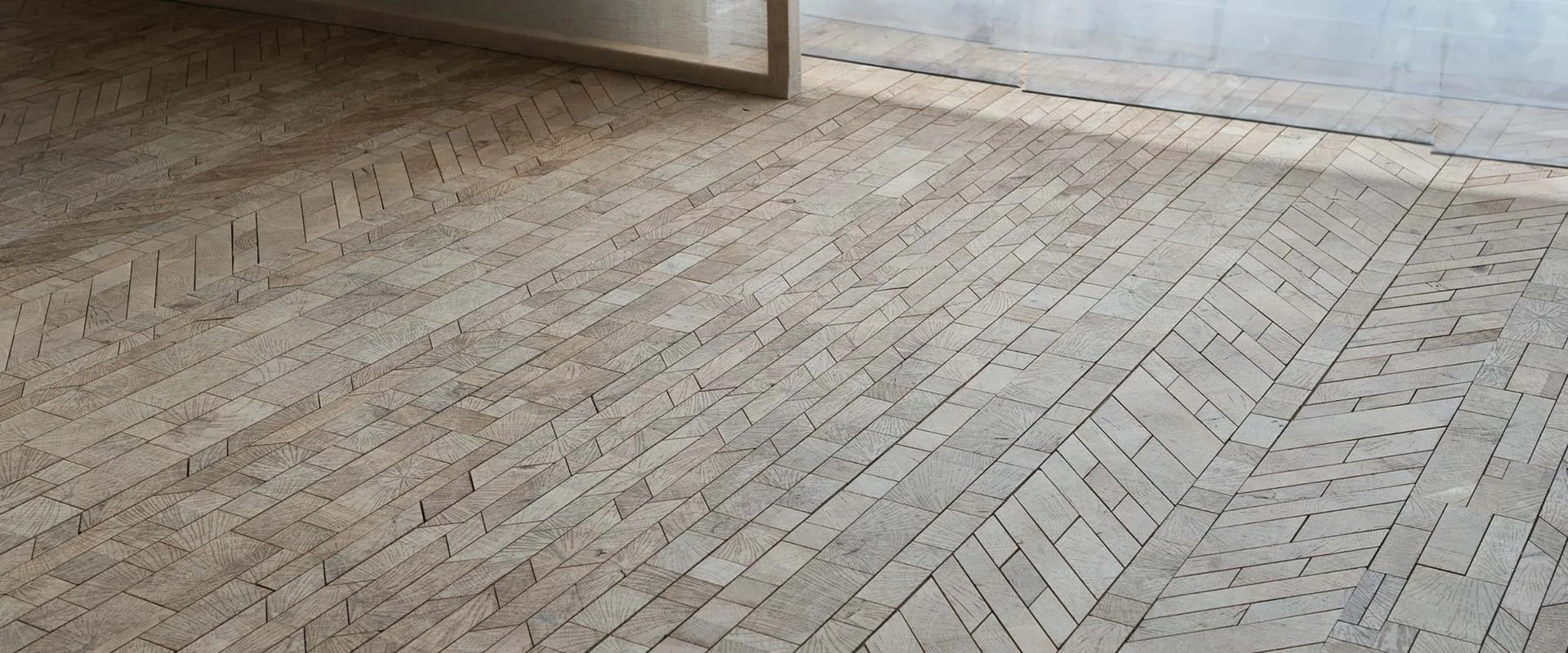
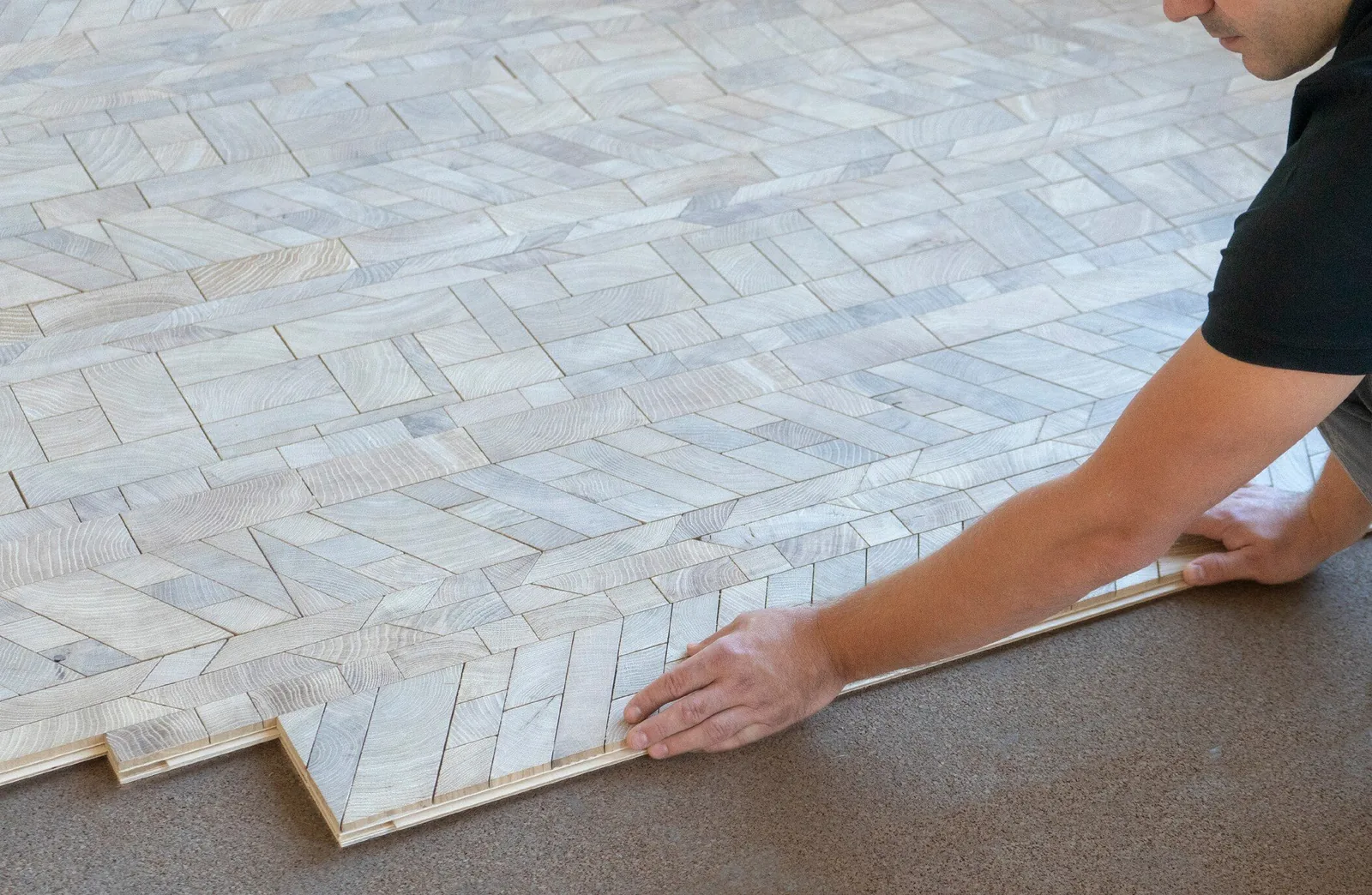
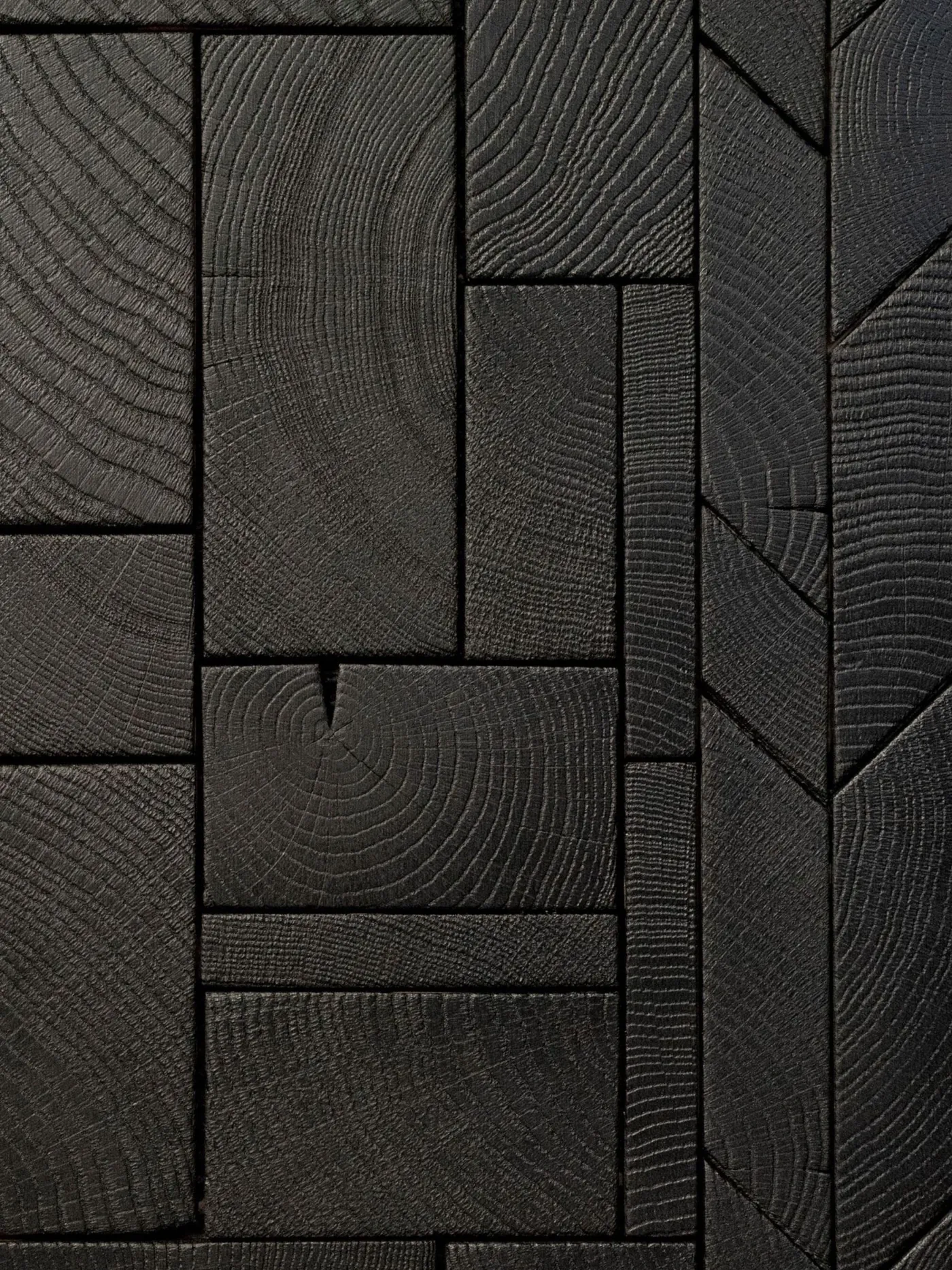
Each block is cut to show the end grain, the cross-section of the timber, so the growth rings and rays read across the surface. Pre-assembled pieces are mounted on planks, which lets a composition be set out board by board and laid as a continuous, considered floor or feature wall.
See the Forêt patterns laid in a room in the floor visualiser, or try one of the six on its own.
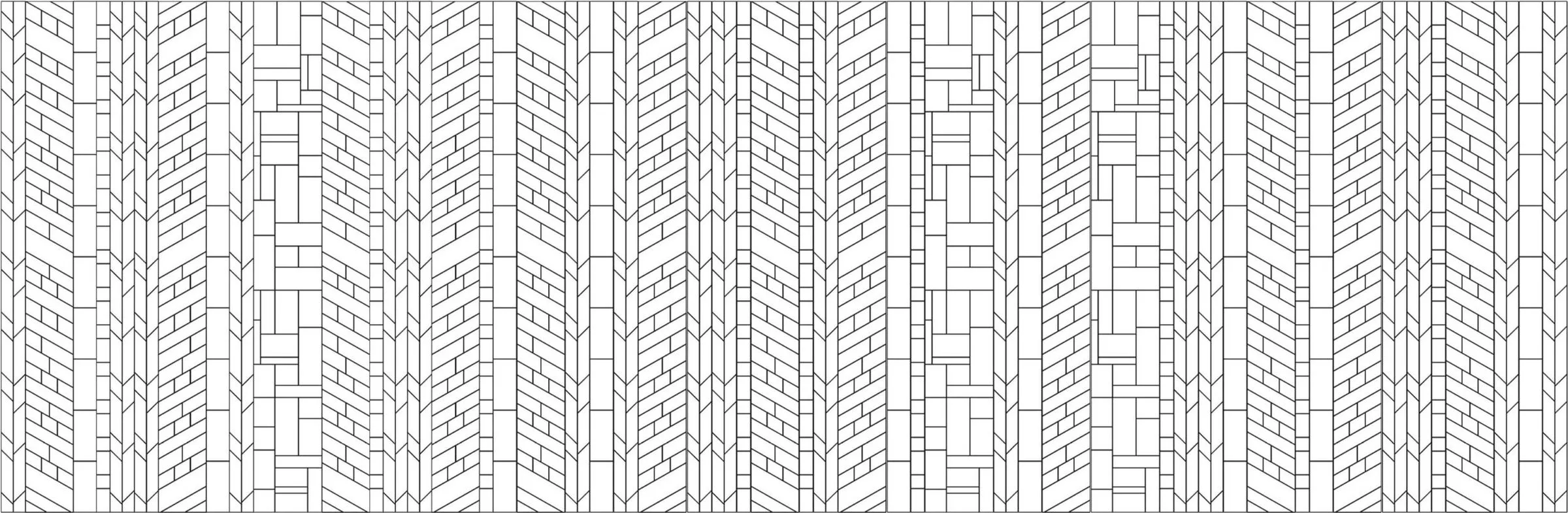
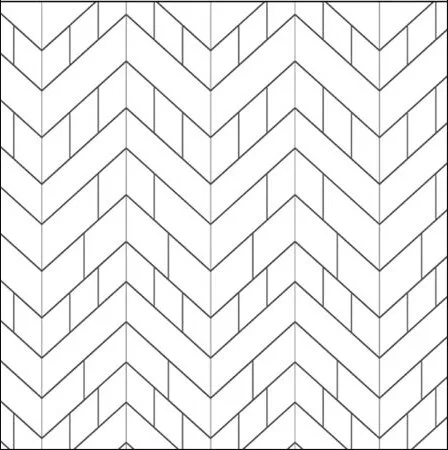
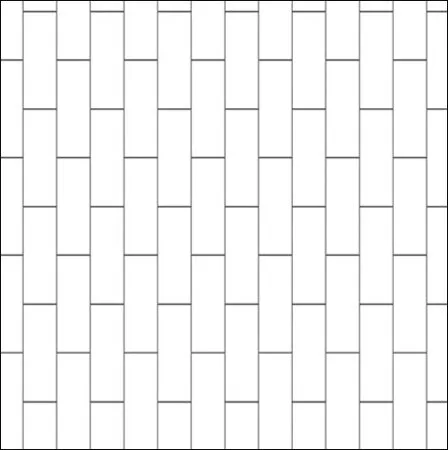
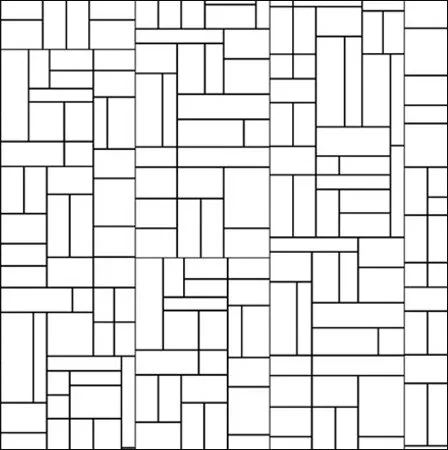
Collection details
| Material | End-grain solid oak, mounted on planks |
| Patterns | Six patterns, selectable board by board: Grid, Roof, Brick, Cityscape, Arrow and a mixed laying |
| Finishes | Natural / Smoked / Black. No stain is used |
| Construction | 12 mm birch plywood base with an 8 mm oak top layer |
| Fire rating | Cfl-s1, as stated by the maker |
| Joints | Under 1 mm, with optional filling in brown or black |
| Certification | FSC and PEFC, as declared by the maker |
| Variants | Forêt Rosace / Forêt Linéaire / Forêt Barrel |
| Applications | Floors and feature walls. Usage class 34, for very heavy commercial traffic |
| Dimensions | Custom compositions available |
| Underfloor heating | Suitable, subject to substrate and acclimatisation |
| Made by | Our workshop network, for Make Bespoke Studio |
An idea carried in from the street
In the nineteenth century, parts of Paris were paved with wooden cobblestones: oak set on end, block beside block, to soften the noise of carriages and to take constant wear. Forêt is built on that same principle. End-grain oak is brought indoors and treated as a marquetry, assembled by hand into surfaces that can run across a floor or climb a wall.
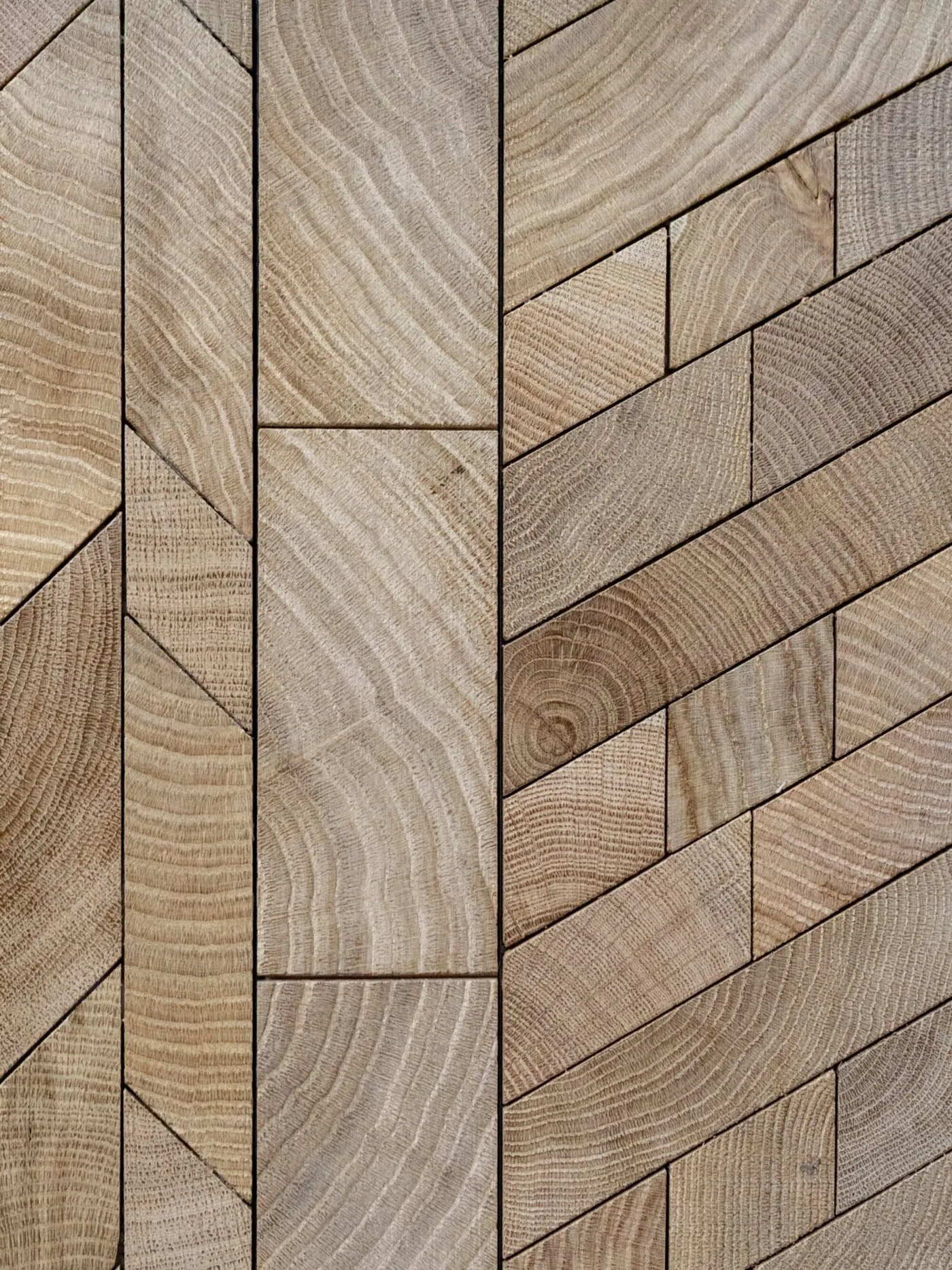
The end grain is the cut that meets the foot. Looking down at a block, you read the tree in section: concentric growth rings, the fine lines of the rays, the small variations that mark how each piece grew. The pattern of the laying is regular and considered. The material inside it never repeats.
How it is made
Forêt begins as pre-assembled end-grain oak pieces, each made up of small blocks cut from solid oak. These pieces are mounted on planks, which gives a stable carrier for laying and lets a whole surface be composed in advance rather than set block by block on site. Because the unit is the assembled piece, large areas can be planned as a single drawing and built up cleanly, with the joints falling where they are intended to fall.
The work is handled by our workshop network and offered as one of the studio's flooring ranges. Compositions are bespoke: the pattern, the proportion of the blocks and the run of the surface are set out for the room rather than drawn from a fixed catalogue layout.
Finishes and pattern
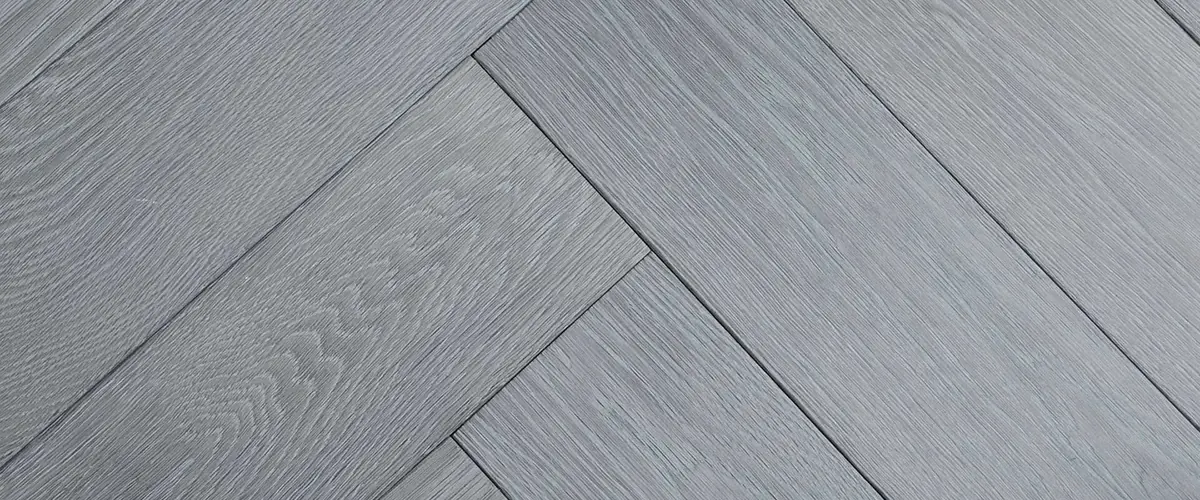
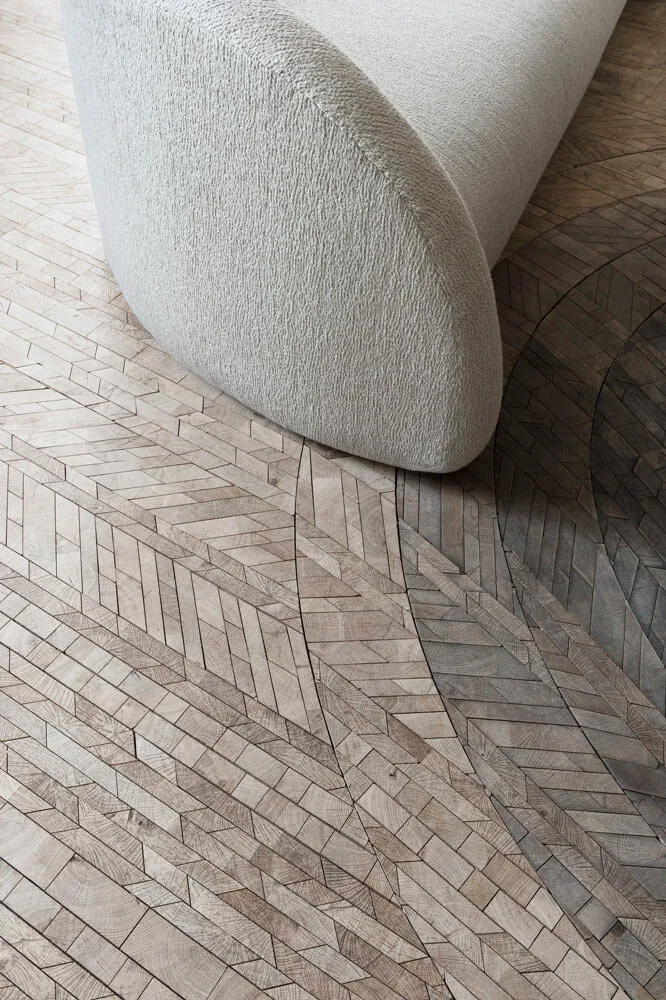
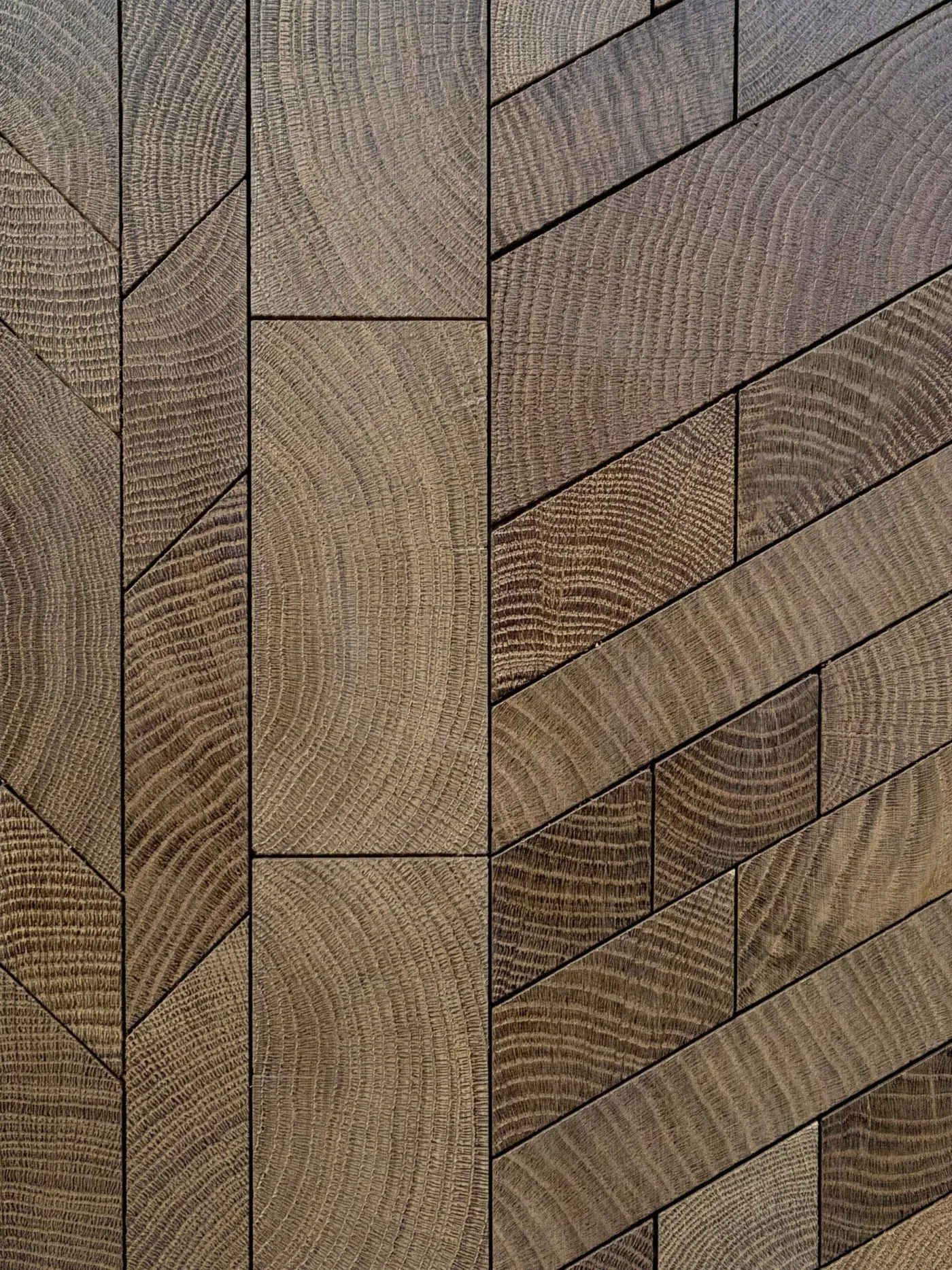
Three finishes are available across the range. Natural is oak with a textured surface that catches the light. Smoked is oak smoked through its full depth, so the colour runs through the block and shows natural brown tones, not a surface stain. Black is based on the Japanese shou sugi ban technique of charring, which gives a black with real surface texture. No stain is used in any of the three, and each is sealed with a two-component invisible varnish, which gives a high resistance, the maker says. Each finish meets the end grain differently, so the rings and rays catch the light in their own way. For how oil, lacquer, brushing and smoking compare, see our guide to wood floor finishes.
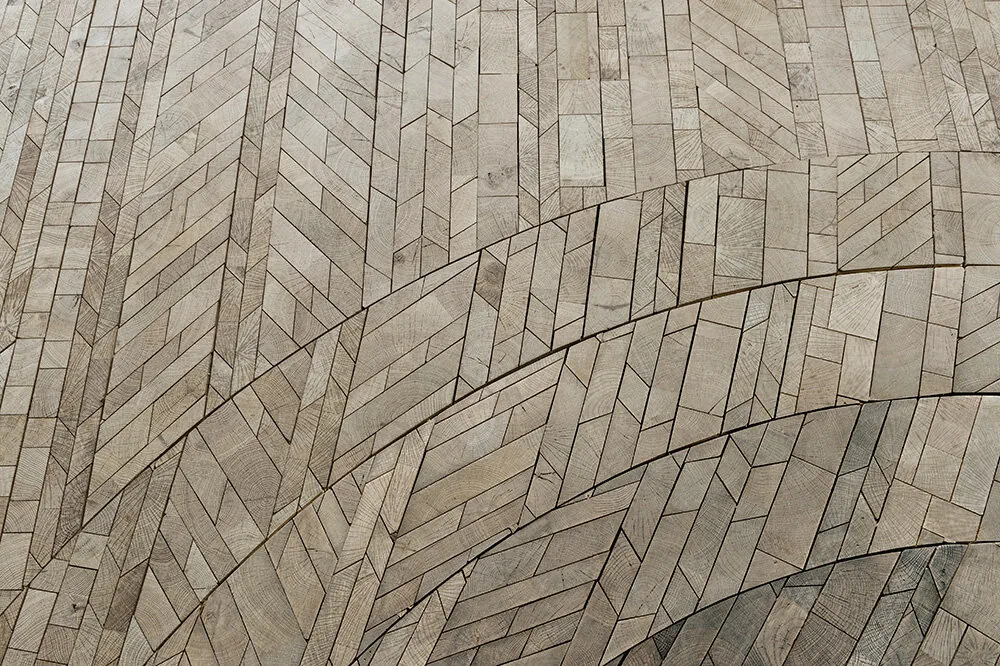
The pattern is a system rather than a single look. Six patterns can be selected board by board: Grid, Roof, Brick, Cityscape, Arrow and a mixed laying that draws the others together. Because the selection is made per board, a floor can hold one geometry throughout or shift between them across a plan, which is useful for marking thresholds, zones or a feature wall against a quieter field.
Variants
The range extends beyond the standard floor:
- Forêt Rosace is a pre-assembled circle, four metres in diameter, delivered in puzzle pieces so that a large radial composition can be carried in and set as a single figure.
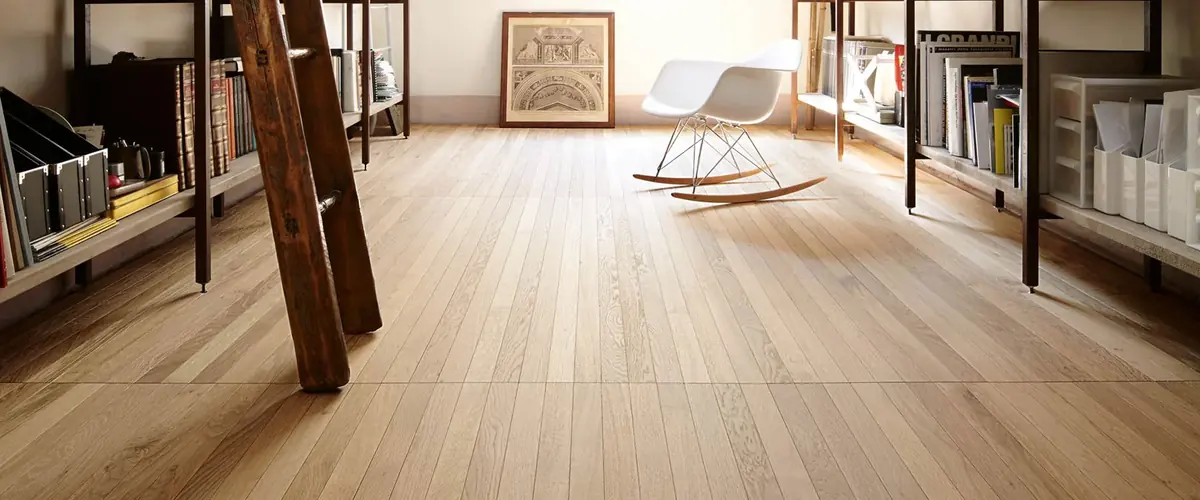
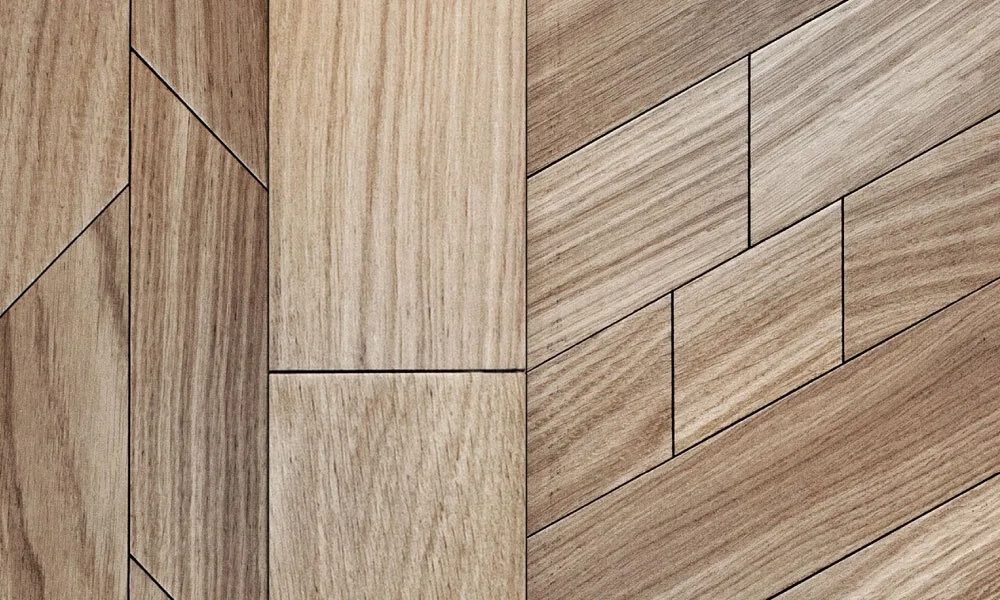
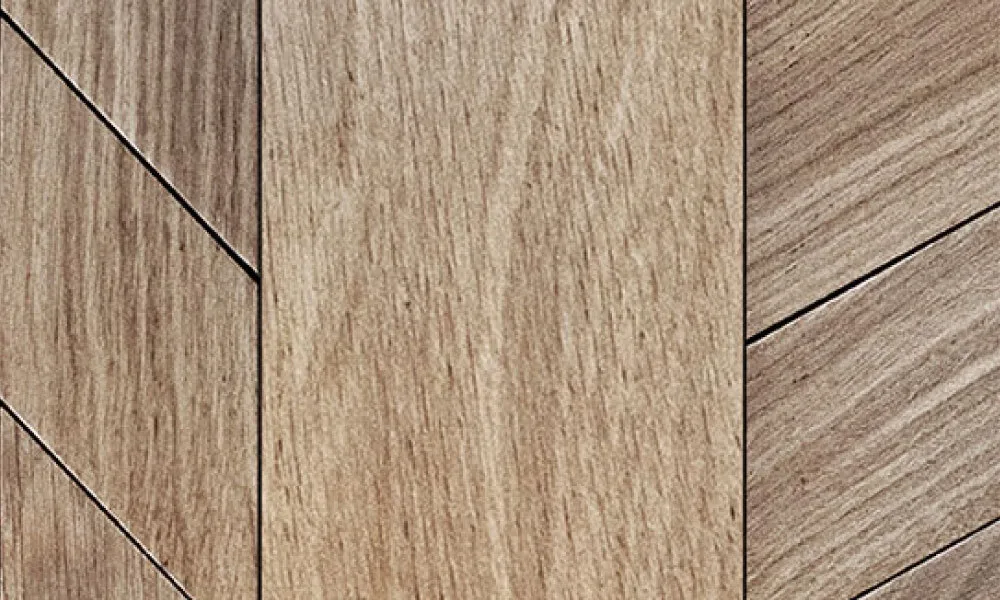
- Forêt Linéaire uses flat-grain oak rather than end grain, available in standard and grand formats for a calmer, more conventional plank reading. It is the more economical way into the Forêt pattern range.
- Forêt Barrel is an end-grain oak treatment made for curved walls, so the surface can wrap a column or a curved partition without breaking the pattern.
Character and durability
End grain is the hardest face of the timber. Setting the blocks on end puts that face uppermost, which is why end-grain floors have long been used in workshops and industrial buildings: they take heavy, repeated traffic and wear slowly. Rather than looking tired with age, the surface gains a patina, a depth that comes from use and light over time.
Solid oak responds to changes in heat and humidity, so acclimatisation on site and a sound, dry, level substrate both matter. Forêt is suitable for use with underfloor heating, provided the system is set up and commissioned correctly and the temperature is brought up gradually. As with any solid timber over heating, the substrate detail and moisture control are worth confirming early in the specification. Our guide to wood flooring over underfloor heating sets out the figures and the order of work. For what a good installation specification covers, see our guide to wood flooring installation.
Applications
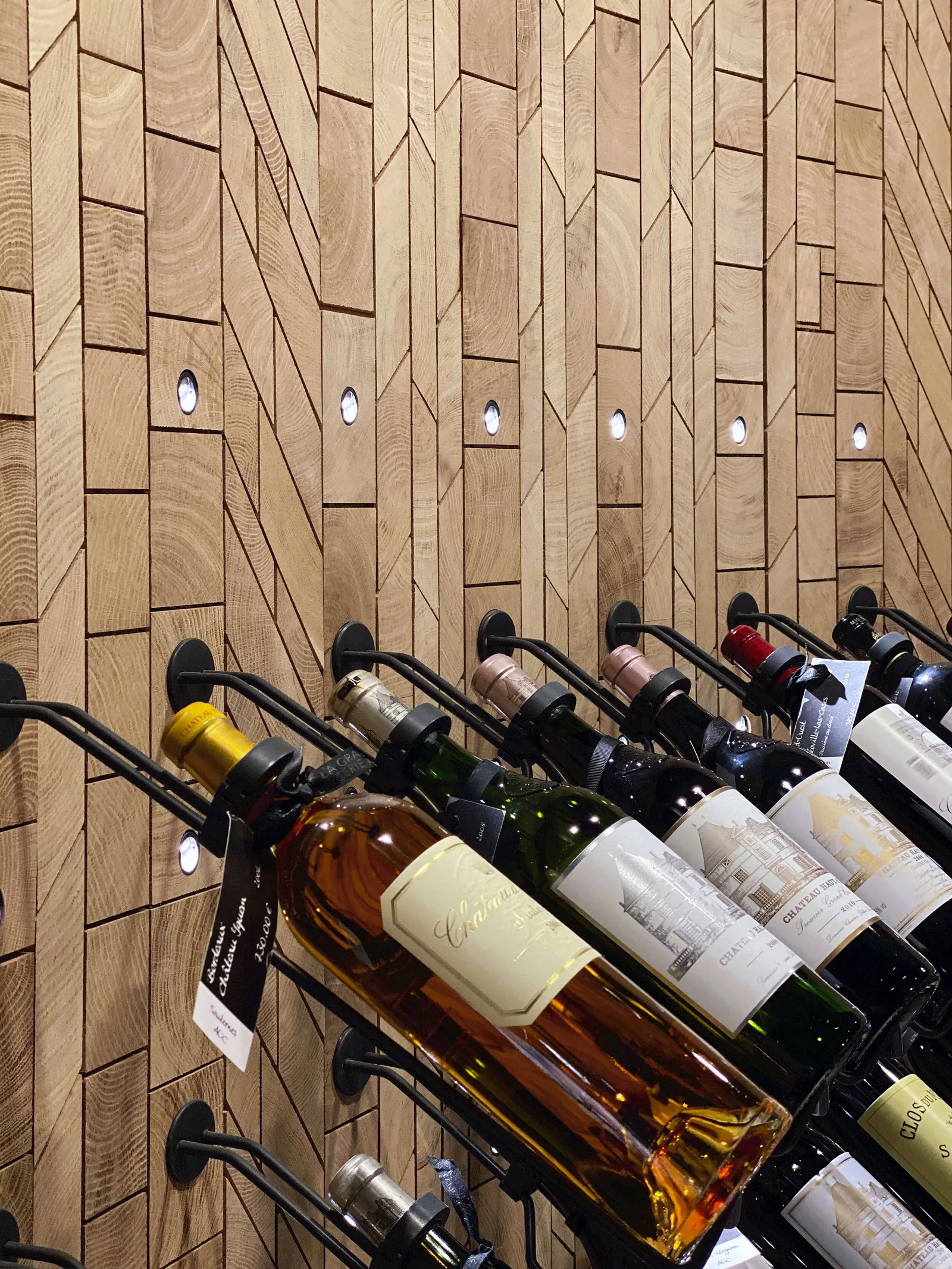
Forêt is specified as a floor and as a feature wall. On the floor it suits entrance halls, kitchens, bars and reception areas, the places where flooring is worked hardest. On the wall it reads as a relief surface, the end grain catching light across the room. The mounted-plank construction and the board-by-board pattern make it straightforward to compose a wall and floor that relate to one another without becoming uniform.
How we work with Forêt
We begin with the room: its dimensions, its light, the finish and pattern that suit it, and how the surface meets adjoining floors, thresholds and walls. From there our workshop network prepares the composition and the pre-assembled pieces for delivery. We can advise on substrate and underfloor-heating detailing, on the choice between end-grain Forêt and the flat-grain Forêt Linéaire, and on the variants where a curve or a circular figure is wanted.
Common questions
Can Forêt be used over underfloor heating?
Yes. As a solid-oak surface it works with underfloor heating when the substrate, moisture levels and commissioning are correct and the heat is raised gradually. We are glad to review the build-up with you before specification.
Is it for floors or walls?
Both. The same end-grain surface is used on floors and as a feature wall, and Forêt Barrel extends the wall use to curved surfaces.
How is it maintained?
As a general rule a varnished end-grain surface is swept or vacuumed to keep grit off and wiped with a barely damp mop; follow the maker’s instructions for cleaners, and use felt pads under furniture. Care guidance is handed over with the floor.