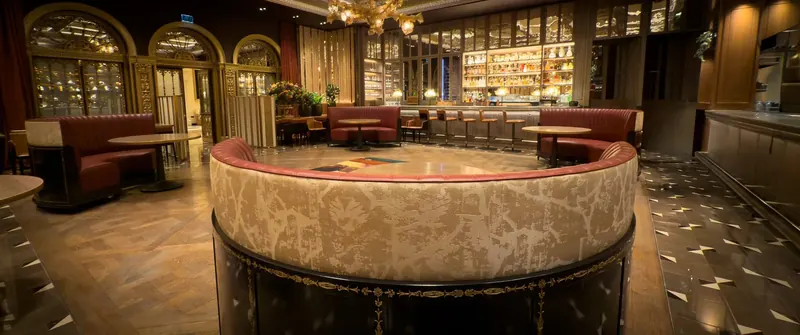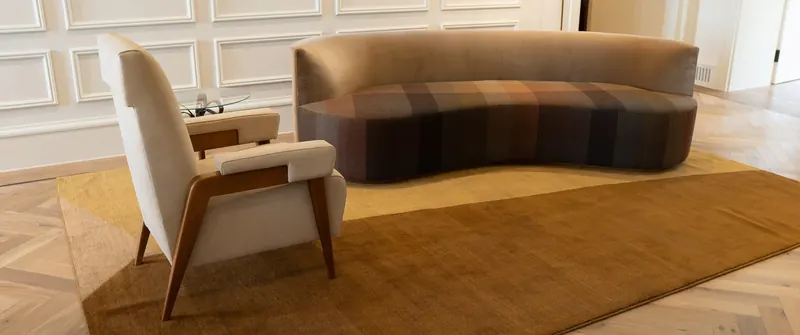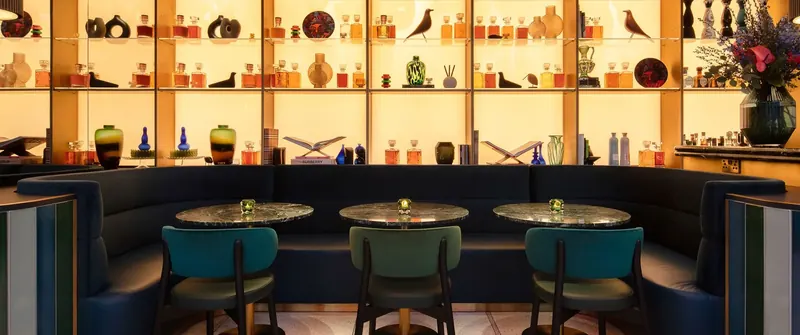
A banquette is a long upholstered bench, fixed to a wall or built as a run, that seats diners along its length: the backbone of restaurant, bar and hotel layouts because it fits more covers comfortably than chairs. As a bespoke banquette seating manufacturer, we make fixed and modular banquette runs for restaurants, bars and hotels.
Watch where people gravitate when they walk into a busy restaurant. Given the choice, they take the seat along the wall — backs to the room, the whole space laid out in front of them, a low cushioned run that holds them as the evening softens around it. A banquette is that long, upholstered bench — usually fixed to a wall or built as a run — that seats diners or drinkers along its length. It is the backbone of almost every restaurant, bar and hotel lounge layout, because it does something loose chairs cannot: it puts more covers into a space comfortably, defines the room, and gives an interior its sense of welcome. Done well, banquette seating is one of the hardest-working and most characterful elements of a hospitality interior.
Why banquettes matter in hospitality
Operators love banquettes for a reason that shows up on the floor plan and in the till: covers per square metre. A run of banquette seating along a wall, paired with tables and chairs, seats far more people comfortably than freestanding furniture, and it flexes with the night — a four-top slides into a six when a friend arrives, with no scrape of chair legs on the floor. A banquette zones a room without a single partition, draws an edge of intimacy around a table, swallows the awkward structure an architect would rather hide, and quietly becomes the thing guests remember about the place. For the person sitting in it, none of that is the point. It is simply the nicest place to sit. That marriage of commercial sense and comfort is why you find banquettes everywhere from a corner bistro to the grandest hotel dining room.
The anatomy of a good banquette
A banquette looks like the simplest thing in the room and is anything but. Underneath the upholstery is a timber frame engineered for the loads of constant use — people perching on the edge, sliding along, leaning back hard at the end of a long lunch — often with access panels tucked in for services or storage. The comfort lives in the seat build-up: the right foam densities, sometimes sprung, layered so the seat gives a little and then holds, rather than going slack and shapeless after a season. The back angle and seat depth are set for dining, not lounging — upright enough to bring you to the table, a difference you feel in your spine within ten minutes even if you could never name it. We have learned to mock up a seat and simply sit in it through a working afternoon before a single yard of fabric is cut, because the few degrees that separate “comfortable” from “subtly wrong” never reveal themselves on a drawing. Then the upholstery is tailored — piped, fluted, buttoned or left plain — to the design. Get any of these wrong and the banquette nags at people or wears through fast; get them right and it disappears into the room and performs for years.
Built for contract use
Hospitality banquettes are contract-grade by necessity, because they live a far harder life than anything at home. The foams and fabrics must meet the relevant fire regulations for public spaces — Crib 5 and the rest — non-negotiable and specified from the outset. The frames and finishes have to shrug off the nightly wipe-down and years of heavy use, and the build has to let tired, spill-marked upholstery be recovered rather than ripped out and replaced, the carcass living on while a fresh skin goes over it. This is a wholly different standard from a domestic sofa, and it is drawn in from the very first line.
Designing a bespoke banquette
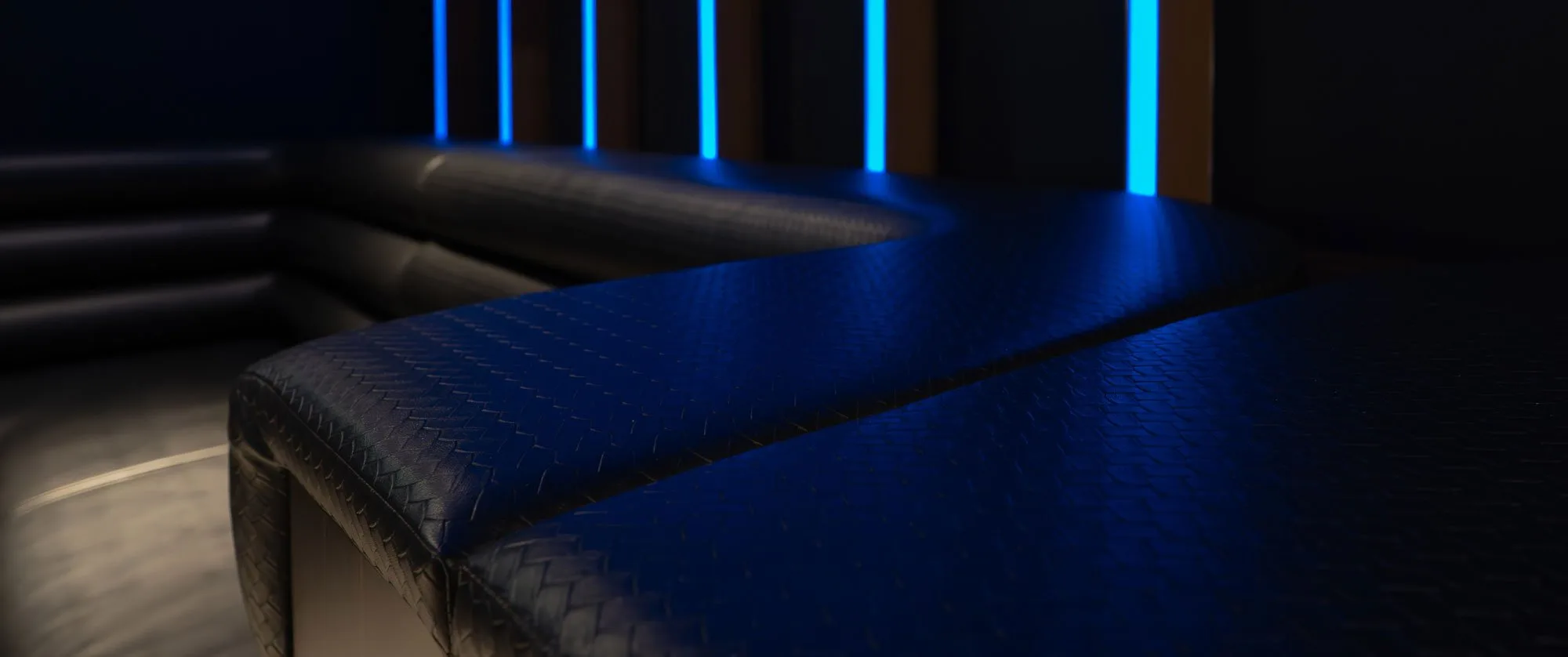
Because a banquette is fixed and made to its room, it is almost always bespoke — there is no off-the-shelf version of your particular wall. We work from the layout and the design intent: the run lengths, the way it turns a corner or returns at a doorway, the heights, the conversation between seat and table and the architecture behind it. From there we detail the frame, the comfort and the upholstery to suit how the place actually runs. A curved run that follows the sweep of a bay, lighting or planting threaded into the back, storage hidden beneath the seat, a change of level to lift a window table — all of it is on the table. The aim is seating that reads exactly as the designer drew it and still feels good on its ten-thousandth cover.
Planning your seating
Banquette seating sits where design, comfort engineering and upholstery craft meet — which is precisely where we like to work. If you are fitting out a restaurant, bar or hotel and want banquettes that earn their place along the wall, we would be glad to produce them for you. See our bespoke restaurant and bar furniture and hotel furniture pages.