Restaurant and bar furniture, the trade's FF&E, must survive thousands of covers, spills and nightly wipe-downs while still looking, two years in, as good as it did on opening night: which is why so much is made bespoke.
It is half past eight on a Friday and the room is full. A waiter swings a tray of hot plates past a banquette that is on its eleventh sitting of the day; somewhere a chair is dragged back, a glass goes down hard, a sleeve trails through a ring of wine on the table edge. None of it leaves a mark. That is the quiet ambition of a well-made dining room — to absorb a hundred small assaults a night and show none of them. A restaurant is the most punishing room a piece of furniture can be asked to live in: a banquette sat on for thousands of covers a year, slid along, leaned into, wiped down after every service; a table that takes hot plates, spilled wine and the steady scrape of cutlery; a bar top awash with water and citrus from the moment it opens. Restaurant furniture — the trade calls it FF&E, for fixtures, furniture and equipment — has to survive all of that while looking, on a Friday night two years in, exactly as good as it did on opening night.
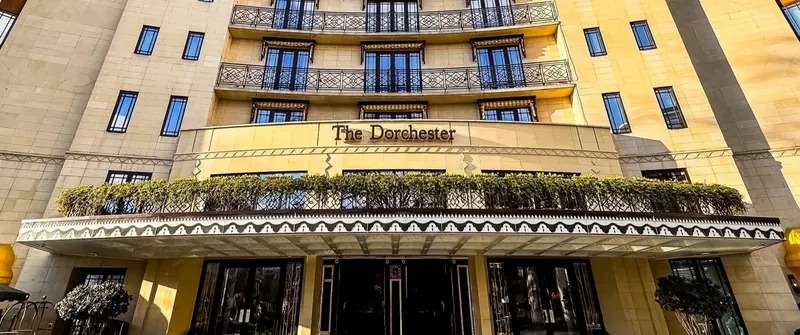
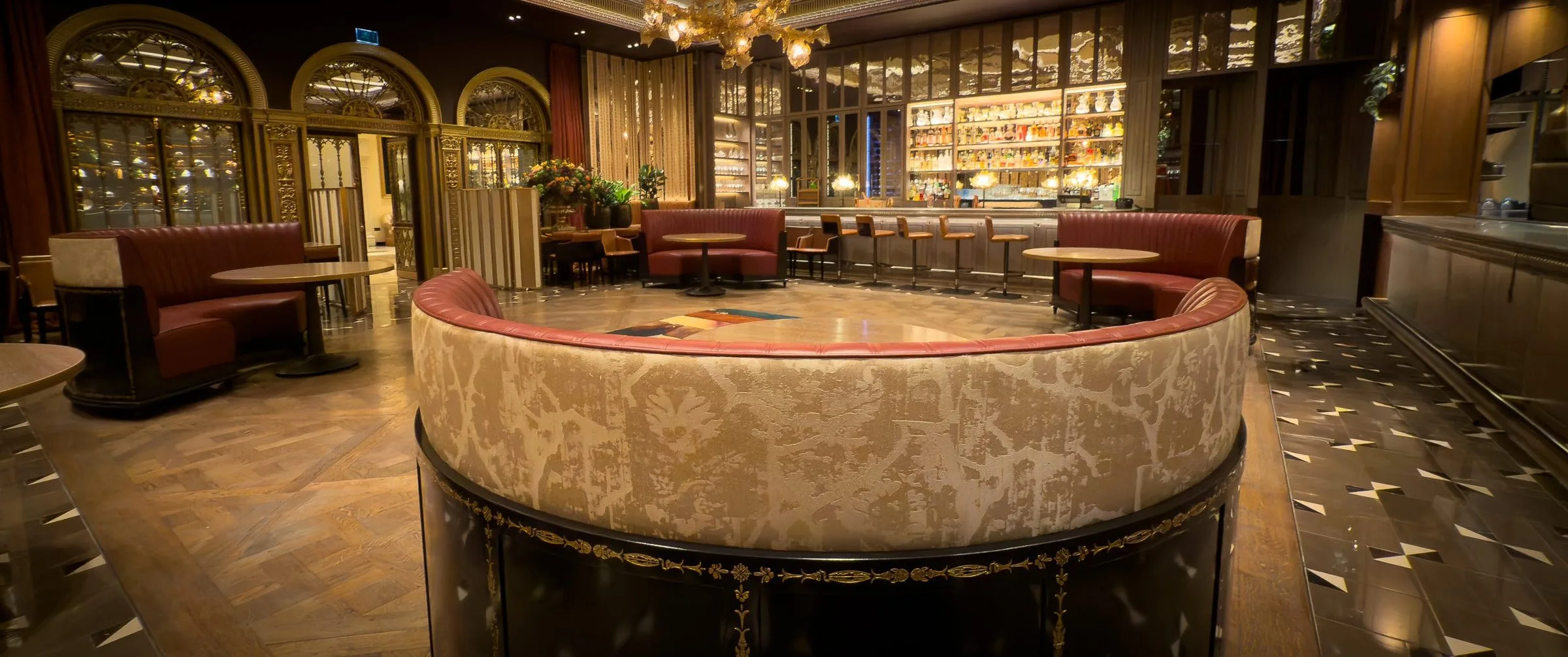
That is why so much of it is made bespoke. When we worked on the banquettes at The Grill at The Dorchester and the tables at Julie's in Holland Park, the brief was never simply to supply furniture; it was to make pieces that could take years of hard service and still read as the considered, characterful objects the designer had drawn. This is how we approach that kind of work.
What FF&E really has to do
The defining constraint of restaurant furniture is intensity of use. Where a domestic dining chair might be used a few hundred times a year, a restaurant chair is used many thousands — pulled out, pushed in, tipped back on two legs by someone reaching for the wine list. Every component is specified for that: joints are engineered to take repeated racking loads, upholstery is built to be re-covered without rebuilding the frame, and finishes are chosen for how they survive cleaning chemicals and constant contact rather than how they photograph on day one. The second constraint is hygiene — surfaces have to be sealed, wipeable and free of the crevices where service grime collects, the sticky seam under a seat lip that a cloth never quite reaches. The third is fit: restaurants pay rent by the square metre, so seating is drawn to win covers without making guests feel packed in, which is a matter of millimetres.
Banquette seating: the heart of the room
If one element defines a restaurant's character, it is the banquette. It is where the long lunch happens, where the proposal is made, where a table of six settles in for the evening — and a good one is a deceptively complex object: a rigid, demountable frame; a sprung or foam-built seat tuned for comfort across a long meal; a back angle that supports without swallowing; and an upholstered skin detailed with the piping, fluting or buttoning the designer wants. We build banquettes in sections so they can be carried into a finished room and bolted together invisibly, and so a single damaged panel can be lifted out and re-covered years later without dismantling the whole run. The geometry is where comfort lives, and we are quietly obsessive about it — we will sit in a seat mock-up ourselves and time how long it takes before we want to shift our weight, because seat height, depth and back rake have to hold a guest for three hours, not three minutes.
Tables and bar tops
Restaurant tables look simple and are not. Nothing announces a tired room faster than a table that rocks under the weight of an elbow, so ours have to be dead stable on uneven historic floors, heavy enough not to walk across the room over a busy service, and edged so the one part that takes every knock — the lip a guest grips to pull themselves in — cannot chip. We detail tops in sealed timber, stone, or brass-trimmed surfaces depending on the room, with edge profiles chosen for durability as much as line. Bar tops are their own discipline — constantly wet, so built from materials that shrug off standing water and detailed with falls and drainage that carry the spill away where the guest never sees it.
The bar as a piece of millwork
The bar is often the most sculptural object in a restaurant and the hardest-working. To the guest leaning on it with a drink, it is a single handsome line of timber, brass or stone. Behind that front is a dense piece of millwork: bottle display, refrigeration, glass storage, drainage, power and the speed-rail choreography that lets a bartender reach everything without looking, pouring three drinks while talking to a fourth guest. We make the bar as an integrated assembly so the front-of-house material and the back-of-house function are designed as one thing, not a pretty face bolted onto a steel carcass.
Materials that survive service
Material selection is where a restaurant interior is won or lost over time. Performance upholstery fabrics and leathers take the abuse of constant use and cleaning. Timbers are sealed with hard-wearing, repairable finishes. Stone and solid surfaces carry the wettest, hottest duty. Brass and bronze are used where a living patina is wanted — the soft glow a brass bar rail takes on from ten thousand hands resting on it, the darkening at a table edge where guests have leaned in night after night. They age into the room rather than wearing out of it, which is exactly why we reach for them on rails and edges. The skill is matching each material to the punishment it will actually take, so nothing is the first thing to look tired.
Installing into a live venue
Restaurant furniture is almost always the last trade in, fitted to an opening date that cannot move — the press are booked, the first covers are taking reservations, and there is no version of the conversation where the furniture is late. We build and finish everything in the workshop, prove the fit, then break it into the largest sections that pass through the door and reassemble on site with the joints designed to vanish. For refurbishments of trading venues, the work is phased around service so the kitchen keeps earning while the room is rebuilt around it, often overnight, the dust sheets down before the first lunch booking arrives.
The floor plan is furniture too
On a restaurant project the furniture and the plan are the same conversation. Banquette runs define how guests circulate and where the room feels intimate or open; a few centimetres of seat depth or table spacing decides how many covers the room wins and whether those covers are comfortable. We work with the designer and operator to resolve that geometry on the drawing board — modular banquette sections that flex with the plan, table sizes that suit the menu and the turnover, and the small dimensional decisions that, multiplied across a full room, are the difference between a space that earns and one that merely looks good. Acoustics belong to this conversation too: upholstered banquette backs, fabric and considered material choices soften the hard din of a full room so that the couple at the next table is a murmur rather than an intrusion, and guests can actually hear each other. That, in the end, is its own kind of hospitality.
A room that ages well
The mark of good FF&E is that it earns its keep invisibly. Years into service — after countless Friday nights, after the tray and the dragged chair and the wine ring — the banquettes are still comfortable, the brass has gained exactly the patina the designer hoped for, the tables are steady and the bar still works at speed. No guest ever notices, and that is the point: they simply feel looked after, without ever knowing why. That longevity is not luck; it is designed in from the first drawing. If you are fitting out a restaurant or bar and want furniture made to take the punishment of real service, we would be glad to talk it through.