The difference between off-the-shelf and bespoke furniture is fit and construction: ready-made comes in fixed sizes on a warranty-life frame, while bespoke is built to a room's exact dimensions on a jointed hardwood frame made to last.
A friend furnishing a first flat once asked us, half-apologetically, whether she ought to be ordering everything bespoke. We told her to go to the shop. A two-year tenancy, a sofa that need only suit four walls of standard proportion, a budget better spent elsewhere — ready-made was plainly the right answer, and saying so cost us nothing. Most furniture decisions sit somewhere on that line between buying something off the shelf and commissioning something made. Both are honest choices. What changes everything is the moment a room quietly refuses the shop: the alcove that no catalogue depth will fill, the wall that wants a sideboard half a size that doesn't exist, the piece you keep sketching because no one sells it. That is when bespoke stops being an indulgence and becomes the only thing that actually fits — and the difference, by then, is not a marginal upgrade. It is a different category of object.
Fit
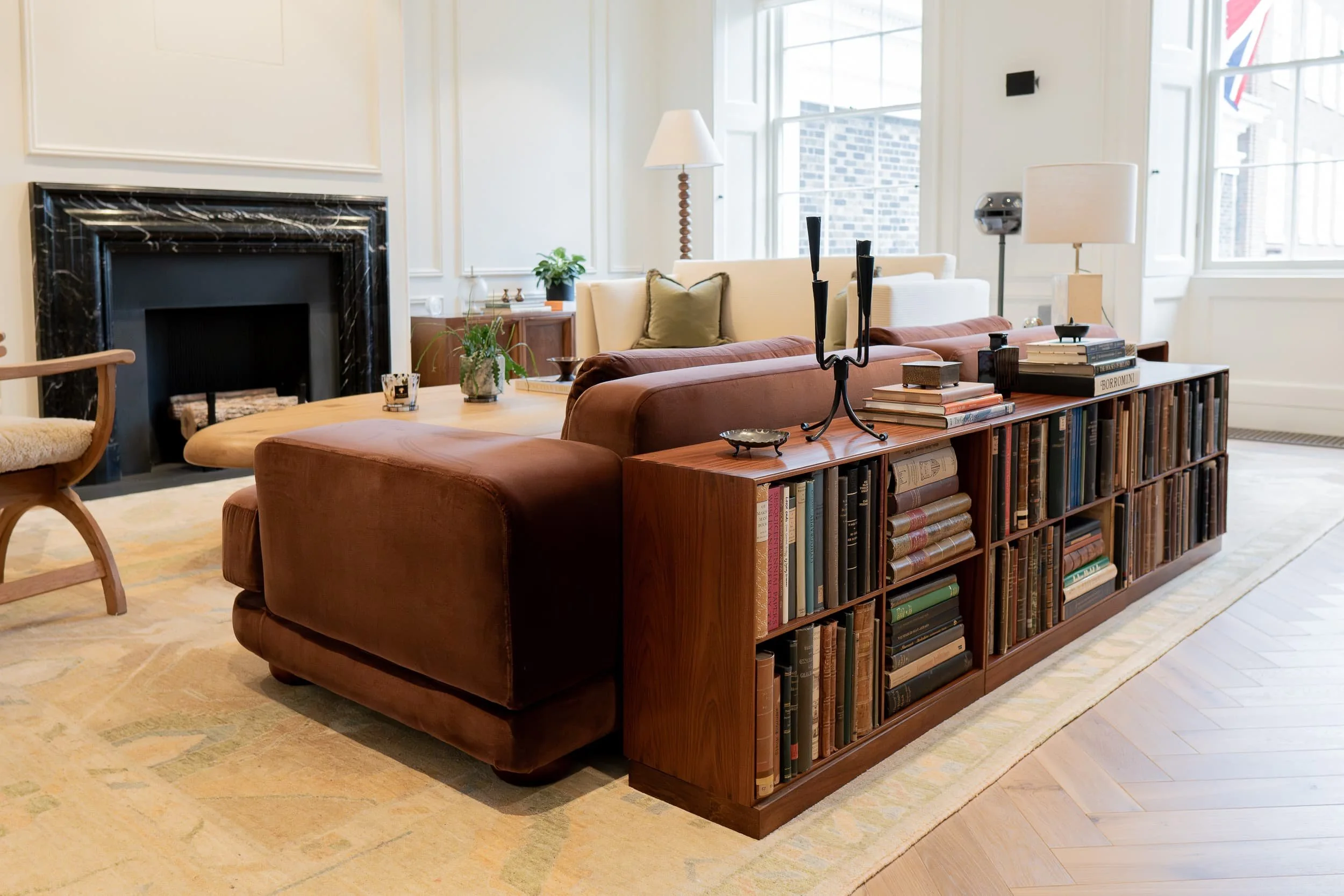
The most immediate difference is fit, and it is the one clients feel before they can name it. Off-the-shelf furniture comes in fixed dimensions, and a room rarely returns the favour. A sofa runs 20cm long for the wall and crowds the doorway. A sideboard sits too deep for the hallway and you turn sideways past it for years. A wardrobe stops short of the ceiling and leaves a shadow-gathering shelf above it that no one can reach. Bespoke furniture is built to the exact dimensions of the space, awkward ones included — the sloping ceiling, the bay window, the chimney breast a piece must wrap around, the run that has to turn a corner and meet itself cleanly on the far side. For anything fitted, this isn't a luxury laid over the design. It is the design.
Construction
What separates a made piece from a retail one is mostly the part you'll never see: the frame and the build-up beneath the cover. A bespoke sofa is built on a kiln-dried hardwood frame, jointed and glued so it can't loosen and grumble in a few winters, sprung with hand-tied or sinuous springs matched to the seat depth, and made from the outset to be stripped back and re-covered several times across its life. A retail sofa is, more often than not, built on a stapled softwood or board frame designed to see out its warranty and little beyond. The same logic carries through casegoods — dovetailed drawers, hardware hand-fitted rather than screwed on and hoped for — and through joinery scribed to the wall and built from timber chosen because it will stay still. We tend to say the romance of a piece lives on its surface, but the truth is that everything you'll value about it in twenty years was decided in the carcass, long before anyone saw a finish.
Materials
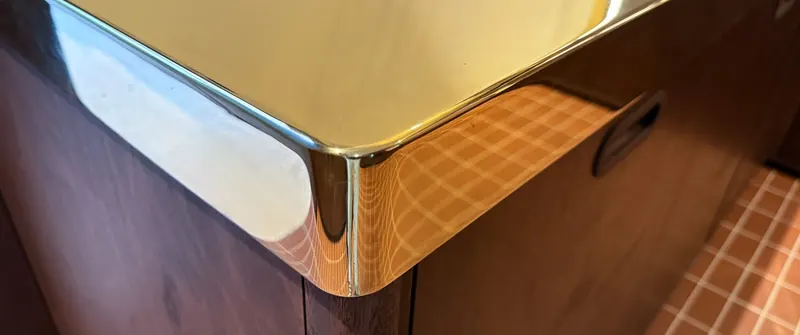
Off-the-shelf furniture is made from the materials that suit volume and a price point — sensible, consistent, and chosen for the factory rather than for your room. Bespoke furniture is made from whatever the brief genuinely asks for: full-hide leather, book-matched veneer drawn from a single log, solid hardwood, stone, brass, mohair velvet — each one specified and held in the hand as a sample, in the light it will live in, before a single component is cut. The palette is open rather than fixed. That is why bespoke is the route when a particular finish matters, when a particular timber matters, or when a new piece has to sit beside something already in the room and not quarrel with it.
Longevity and value
The economics are rarely as blunt as “bespoke costs more.” A made piece does cost more to make — but it is built to stand for decades and to be repaired, re-covered and refinished rather than carried to the skip. A retail piece costs less and lasts less, and is often replaced two or three times across the span a bespoke one quietly endures. Over a long enough horizon, and for furniture that will be used hard or kept for a lifetime, the made piece is frequently the more economical decision rather than the more extravagant one. Where the budget is the real constraint, value engineering lets us hold the construction quality steady and adjust the materials instead — the bones stay honest, the surface flexes to the figure.
When off-the-shelf is the right call
Bespoke is not always the answer, and we would rather say so than sell past it. For a short-term interior, a rental, a child's room that will be reinvented in two years, or a piece where the exact dimensions and materials genuinely don't matter, off-the-shelf is the sensible, economical choice and there is no shame in reaching for it. Bespoke earns its place elsewhere — where the fit is awkward, where the materials carry the design, where the piece will be lived with for a long time, or where the thing you want simply does not exist to buy.
The decision
The practical test comes down to four quiet questions. Does the space have awkward or fixed dimensions? Do the materials or the finish matter to the result? Will the piece be kept and used for the long term? And does the design you actually want exist to buy at all? The more of those that answer “yes,” the stronger the case for commissioning rather than buying. Where it is the right call, the path from first conversation to installation is set out in our note on how to commission bespoke furniture, and the finer distinction worth understanding first is laid out in bespoke vs made-to-measure.