Leather alternatives
Reads as hide, cleans like cloth
Leather alternatives are upholstery cloths engineered to read as full-hide leather while solving for one or more of leather's trade-offs — cost, vegan specification, contract cleaning, or supply consistency. The category has changed significantly over the last decade: where faux leathers were once a budget compromise, the current generation includes plant-based materials, contract-grade vinyls and woven faux leathers that survive years of daily service in restaurant, hotel and healthcare interiors.
The leather-alternative family on the library covers four broad types. Each reads as hide, each cleans more easily than full-grain leather, and each has a different upholstery brief.
Considering a leather alternative?
Tell us where it will be used and how hard it will work.
Faux, woven, plant-based and vinyl
Leather alternatives reach upholstery in four principal forms.
Coated faux leathers (PU)
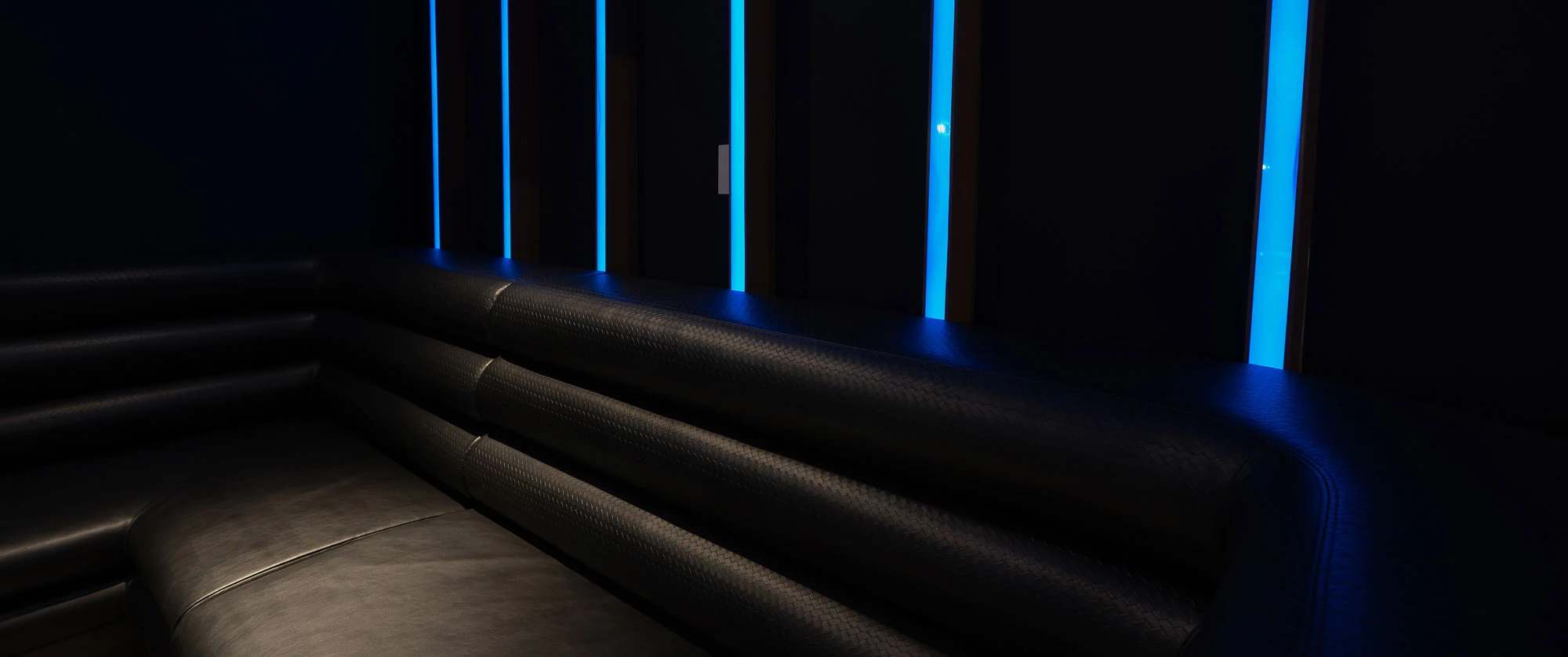
Polyurethane coated onto a woven or non-woven backing. Modern PU faux leathers are convincing close-up: they take a grain emboss, hold colour, and have a hand that reads as soft leather. Abrasion ratings up to 100,000 Martindale rubs on the contract grades. Specified widely in hospitality and healthcare interiors, and in residential briefs where a leather look is wanted without the cost of full hide or the supply variability of natural leather.
Woven faux leathers
Polyurethane fibres woven into a textile rather than coated onto a backing. The cloth breathes, flexes and tears like a textile rather than a coated surface, and shows wear patterns that read closer to leather over time. More expensive than coated PU but specified on premium hospitality pieces and high-use residential where a more authentic leather look is wanted.
Plant-based materials
A newer category covering apple-, pineapple-, cactus- and mushroom-based upholstery cloths. The materials use plant fibres or by-products bound with a polyurethane or bio-resin top layer, then finished to a leather emboss. Performance varies by manufacturer; abrasion ratings on the leading products now match high-grade PU. Specified where the brief is explicitly vegan or where the project sustainability targets ask for a non-petrochemical material.
Contract vinyl
Heavy-duty vinyl with a textile backing, used widely in healthcare, transit and hospitality contract work. Vinyl is the most cleanable surface in the category: it tolerates bleach, hospital-grade disinfectants and abrasive cleaning without showing wear. Reads less convincingly as leather than PU or woven faux, but its durability and cleaning tolerance make it the right specification for healthcare, public seating and high-volume hospitality.
Where leather alternatives fit
Leather alternatives meet UK fire compliance routes more easily than full-hide leather. Most contract-grade coated PU and vinyl pass Crib 5 untreated, and woven and plant-based materials reach the standard with a standard FR interliner. Residential fire compliance is reached without back-coating in most cases. Certification documents are checked at sample stage.
The case for specifying leather alternatives over full-hide leather is straightforward in three briefs. Vegan or non-animal: plant-based and PU materials are the obvious specification. Contract cleaning: vinyl tolerates regimes that ruin full-grain leather, and contract PU does most of what leather does for a fraction of the maintenance overhead. Budget and consistency: faux leathers are priced significantly below full-hide, supplied in consistent rolls rather than variable hides, and quoted on a width basis rather than per square foot. For pieces that simply need to read as leather under daily use, the alternatives are now strong enough that hide is over-specification.
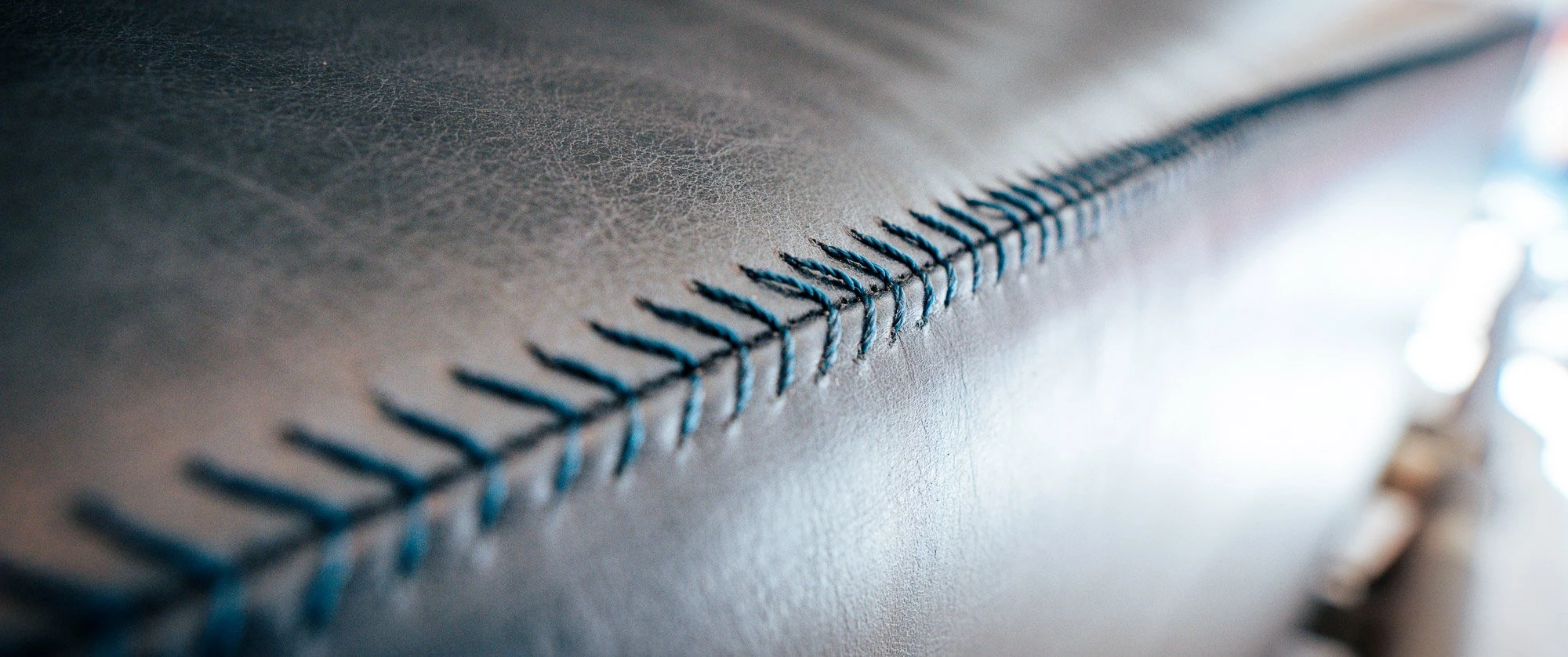
Where hide remains the right call is where the patina is part of the design — a chesterfield that ages into character, a club chair that develops a polish from use, a saddle-stitched bench that reads as the real thing close-up. Hide and its specification are covered on our leather page.
Where this sits
Fabric is one decision in a piece of upholstered furniture. The build behind the cover — frame, springs, stuffing and wrap — is covered on our upholstery workshop page; the cushion fills behind the seat surface are set out in our guide to upholstery fills; the other fabric families and the COM, fire and Martindale specifications that govern them sit on the fabrics overview.