Velvets
Light, colour and depth
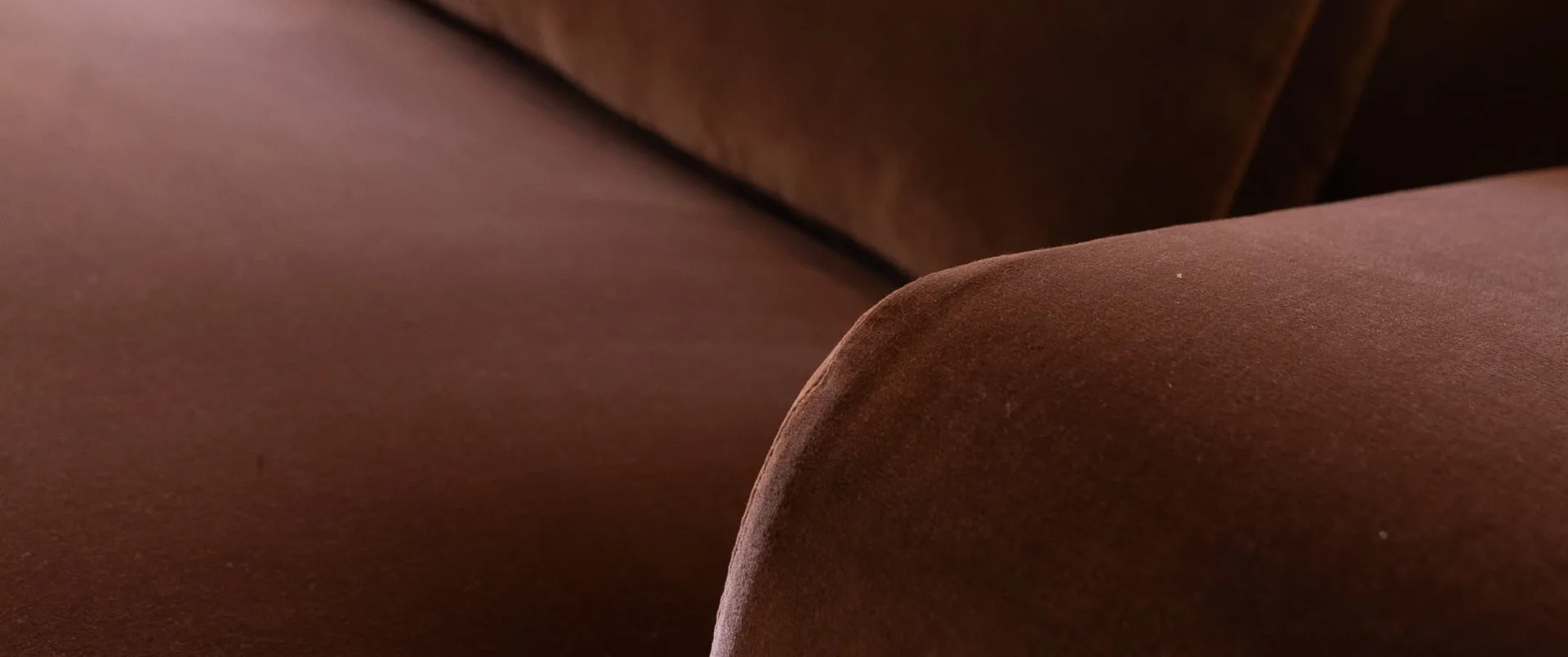
Velvet is the cloth of saturated colour. The cut pile catches light differently across its surface, deepening the tone on the shaded side and lifting it on the lit side, so a single colour reads as a graded field rather than a flat block. The same property is why velvet rewards careful pattern placement: pile direction is decided at the cutting bench, and a seat with the pile running the wrong way looks completely different from one with the pile running the way the designer intended.
The velvet family on the library divides into four broad types — cotton velvet, mohair velvet, silk velvet and performance velvet — each with its own depth of pile, sheen and abrasion rating. The right velvet for a piece depends on how often it will be sat on, how saturated the colour needs to be, and whether the velvet is on a seat that will see daily contact or an occasional chair in a formal room.
Velvet for seating or a headboard?
Tell us about the pieces and the colour you have in mind.
Cotton, mohair, silk and performance
Velvet reaches upholstery in four principal types.
Cotton velvet
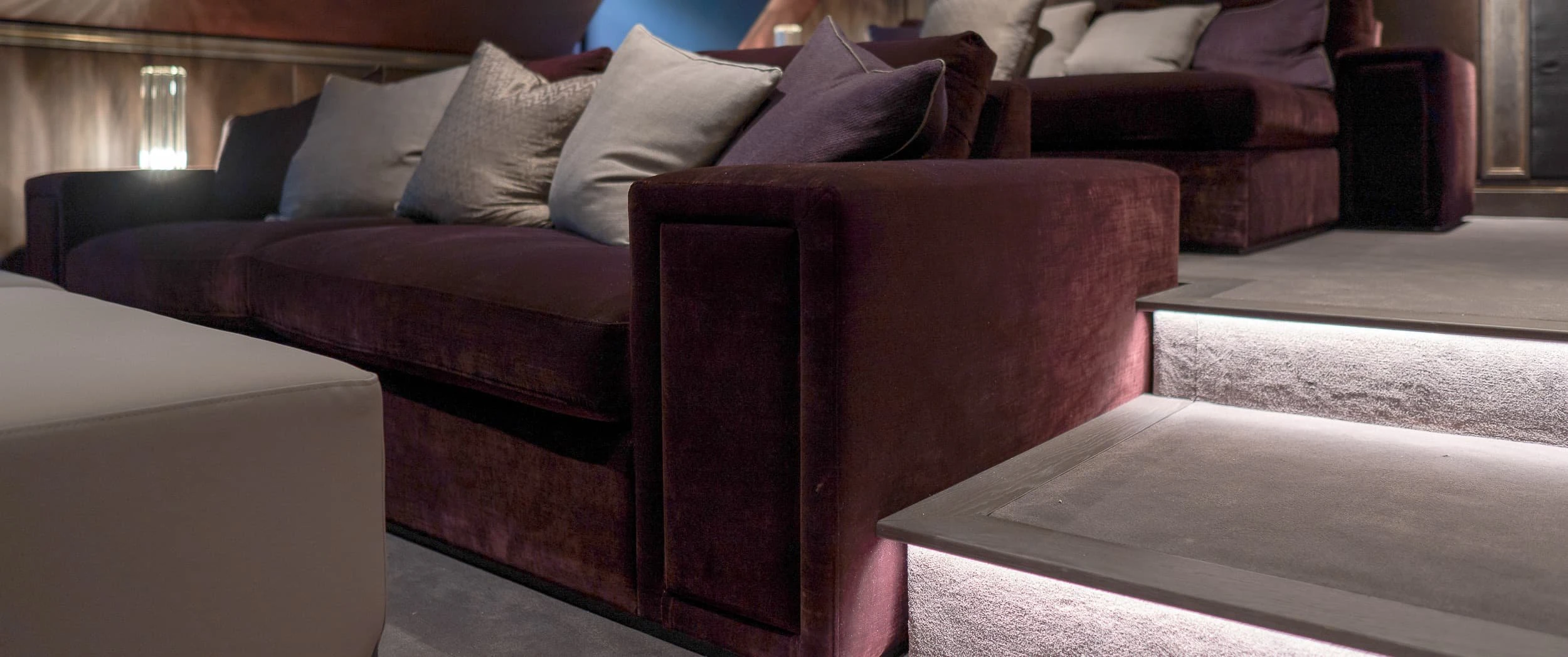
The standard. A cut-pile cloth woven from cotton, with a dry handle and a soft, slightly matte sheen. Cotton velvet takes colour deeply — the cloth is most often dyed after weaving, which fixes the dye into the pile rather than the base — and reads as a luxurious surface without the high reflectance of silk. Cotton velvets carry Martindale ratings between 30,000 and 60,000 rubs depending on the construction. Specified widely on residential sofas, armchairs and headboards.
Mohair velvet
Woven with Angora goat fibre in the pile, often blended with cotton or wool. Mohair velvet has a denser pile than cotton velvet, a more pronounced sheen and a noticeably better abrasion rating — commonly above 50,000 Martindale rubs. The cloth has been used on high-traffic upholstery for over a century, and is the standard specification for hospitality seating that needs to read as velvet but wear like a performance cloth.
Silk velvet
The most lustrous velvet, with a brilliant sheen and a deep, almost liquid handle. Silk velvet is more delicate than cotton or mohair velvet, with a lower abrasion rating and a tendency to crush, and is reserved for occasional pieces, formal cushions and rooms where the cloth will be admired rather than used hard. Most silk velvets on the market are silk-viscose blends; pure silk velvet is rare and priced accordingly.
Performance velvet
Cotton or polyester velvet with stain-resistant treatments built into the pile, with abrasion ratings above 50,000 rubs and a tolerance for water-based and, in many cases, bleach-based cleaning. Performance velvets carry the look of cotton velvet at first touch but survive children, dogs and red wine. Increasingly specified in family rooms and in hospitality work where the velvet aesthetic is wanted with contract-grade durability.
Pile direction, cutting and care
Velvet is a directional cloth: the pile lies one way, and the velvet reads differently when looked at from the pile-up direction (darker, deeper) than from the pile-down direction (lighter, more reflective). Pattern placement on velvet is decided at the technical drawing stage, with pile direction marked on every panel so the seat, back and arms read consistently. Pile cut against the run shows immediately. Metreage on velvet is calculated with the pile direction in mind, which can add 10–20% to the cloth quantity compared with a non-directional weave.
Velvet should be brushed in the direction of the pile rather than against it — a soft-bristle clothes brush is the right tool — and kept out of prolonged direct sun, which fades the pile and degrades the dye over time. Spills are blotted, not rubbed, with the absorbent cloth lifted away rather than dragged across the pile. Performance velvets tolerate spot-cleaning with water and, in many cases, diluted bleach; cotton, mohair and silk velvets are best left to professional cleaning at intervals of a few years.
Most upholstery velvets meet UK fire compliance with an FR interliner; performance velvets often pass the flame test untreated. Specification for residential and contract is resolved at sample stage with the cloth's certification documents.
Where this sits
Fabric is one decision in a piece of upholstered furniture. The build behind the cover — frame, springs, stuffing and wrap — is covered on our upholstery workshop page; the cushion fills behind the seat surface are set out in our guide to upholstery fills; the other fabric families and the COM, fire and Martindale specifications that govern them sit on the fabrics overview.