Wools
Resilient, breathable, naturally retardant
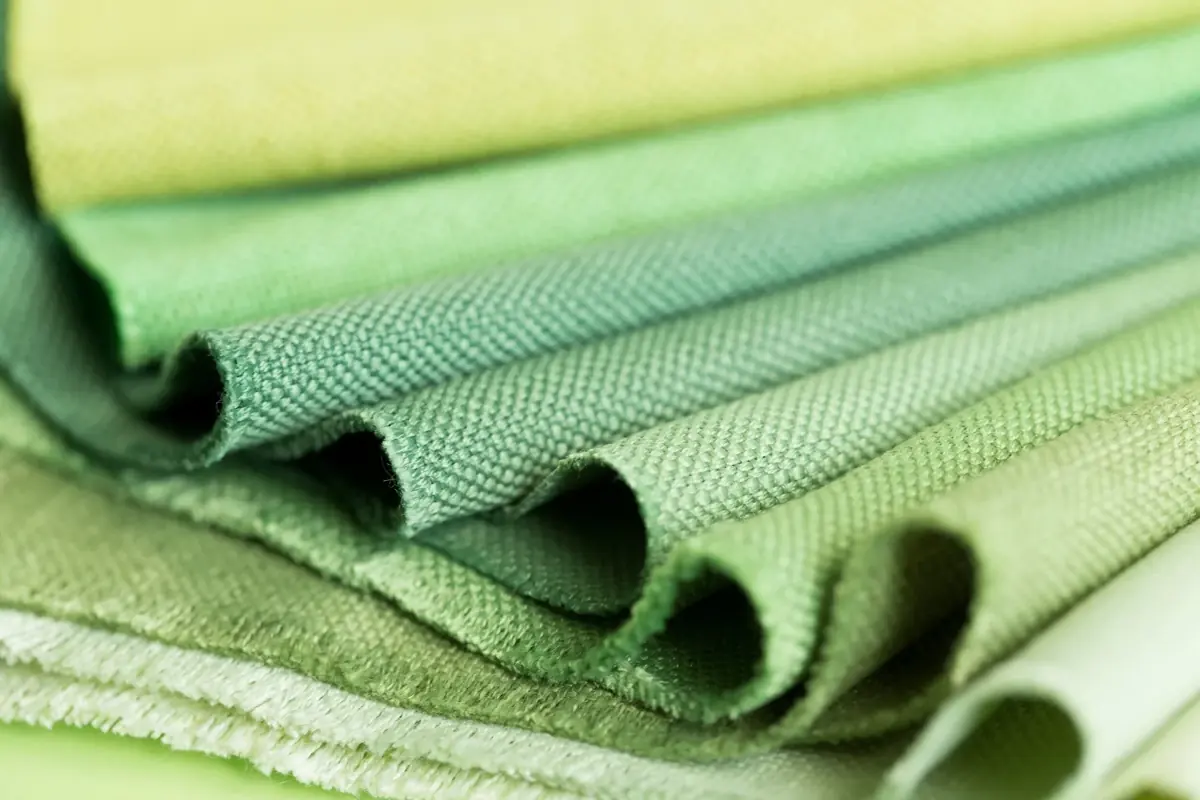
Wool is the upholstery world's quiet workhorse. It resists creasing, recovers from compression, regulates temperature and is naturally flame-retardant before any treatment is added — properties that make it the standard cloth for tailored seating, hospitality dining chairs and any piece that will be sat on day after day.
The wool family on the fabric library covers plain wools, tweeds, felted weaves and wool-cotton or wool-polyester blends. Each weave gives a different look and a different rate of wear, but all share wool's underlying behaviour: a fibre that lasts, looks better with use and asks little of the household in return.
Wool for upholstery or panels?
Tell us about the pieces and the scheme.
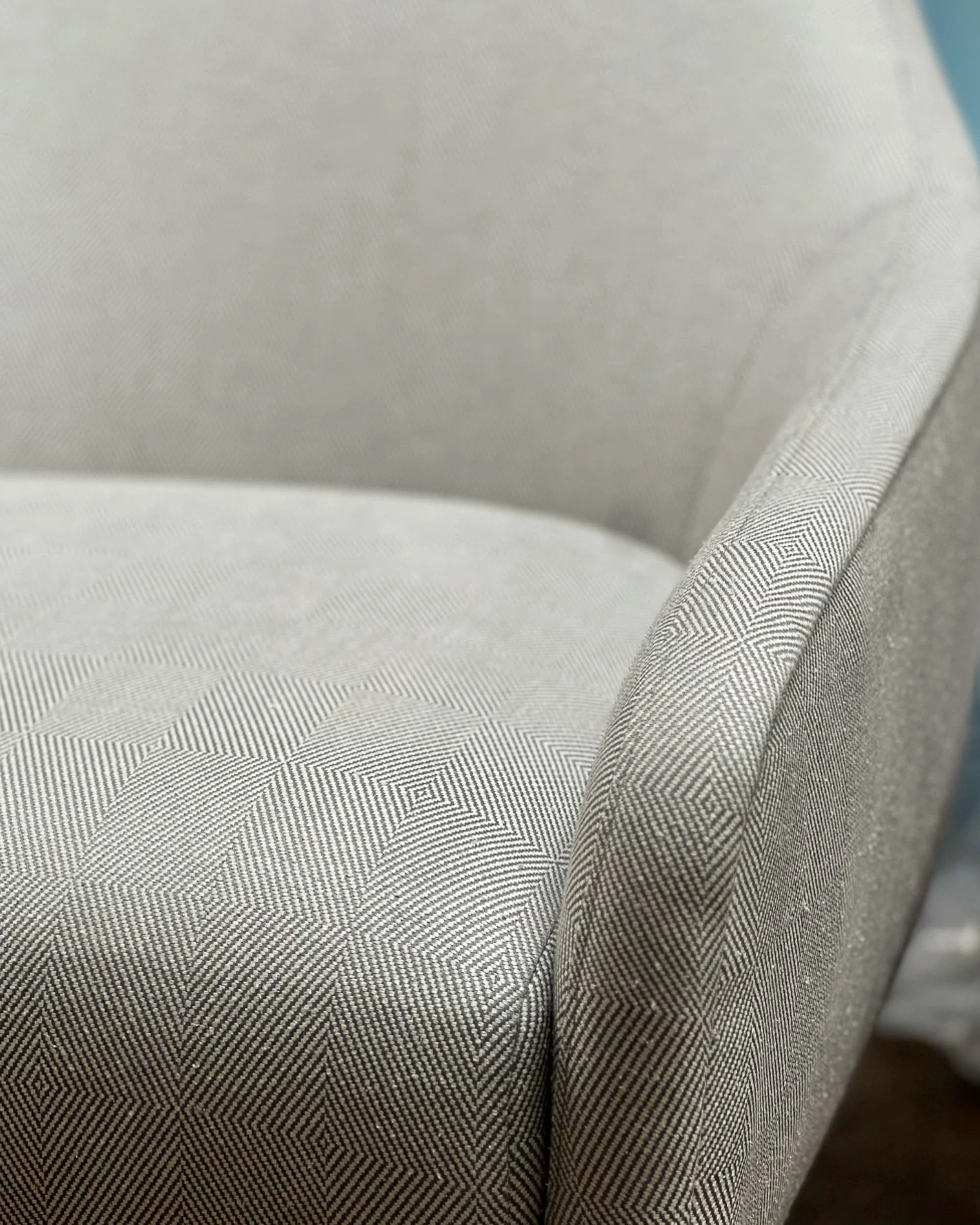
Plain, tweed, felt and blend
Wool reaches upholstery in four broad forms, each suited to a different look and use.
Plain wools
A flat-woven cloth in a single colour. Reads tailored, takes piping and contrast detailing cleanly, and shows the cut of the upholstery rather than the pattern of the cloth. Plain wool is the natural choice for tubular-framed armchairs, occasional chairs and any piece where the line of the upholstery is the design event. Modern plain wools blend a small percentage of synthetic fibre for abrasion without changing the hand of the cloth.
Tweeds
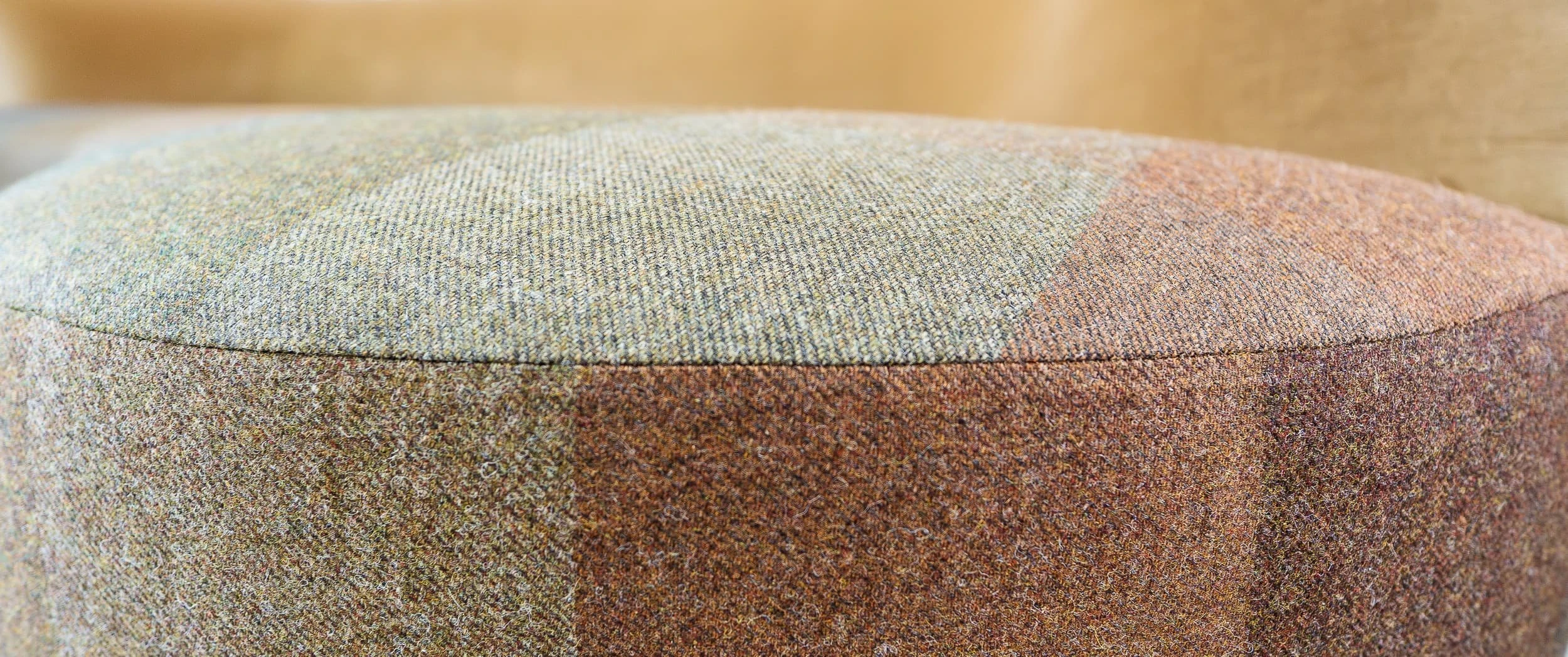
Woven from differently-coloured fibres so the cloth reads as a soft mixture of tones rather than a single colour. Tweeds carry a country-house association and conceal marks better than plain weaves, which makes them a good choice for primary seating in family rooms. Glen checks, herringbones and houndstooth all sit within the tweed family; the scale of the pattern is sized to the piece at specification.
Felted and boiled wool
Wool that has been wetted and agitated until the fibres lock together, producing a dense, slightly fuzzy cloth with no visible weave. Felted wool is warm, very dimensionally stable and reads as a soft solid block of colour. Specified on tightly-upholstered pieces and on contemporary forms where any weave texture would compete with the line of the seat.
Wool blends
Wool blended with cotton, polyester, polyamide or viscose. Blending stretches the abrasion rating of the cloth, reduces cost and lets fibres bring complementary properties — cotton softens the handle, polyester stiffens it, viscose adds a discreet sheen. Most contract wool upholstery is a wool-polyester blend; most residential is a wool-cotton or pure wool. Both wear differently from pure wool, and the difference is decided at sample stage.
What wool gives you, in service
Wool is one of the few natural fibres that is naturally flame-retardant: it does not propagate a flame readily and tends to char rather than melt. That means many wool cloths pass the UK Furniture and Furnishings (Fire Safety) Regulations untreated, and most reach Crib 5 with a standard FR interliner rather than a back-coating. The cloth's hand is preserved, and the upholstered piece meets the regulations for residential or contract use without compromise.
Abrasion ratings on wool sit between 25,000 and 80,000 Martindale rubs depending on the weave; tweeds and tightly-woven plains sit at the upper end of that range, felted wools slightly lower. Wool's recovery after compression is its quiet advantage: a wool seat that looks crumpled at the end of an evening usually looks tailored again the next morning. Spills are best blotted promptly — wool resists staining better than most natural fibres but does not tolerate aggressive cleaning. Vacuum lightly every few weeks; professional cleaning every few years.
Wool is best specified on tailored upholstery, dining chairs, occasional chairs, and any piece where the long-term appearance of the cloth matters more than the immediate softness of the surface. It is less suited to pieces that will see daily food and drink contact without a performance treatment, or to outdoor and pool-side seating where synthetic performance cloths are the right call.
Where this sits
Fabric is one decision in a piece of upholstered furniture. The build behind the cover — frame, springs, stuffing and wrap — is covered on our upholstery workshop page; the cushion fills behind the seat surface are set out in our guide to upholstery fills; the other fabric families and the COM, fire and Martindale specifications that govern them sit on the fabrics overview.