Bouclé
Knobbly, textured, visually warm
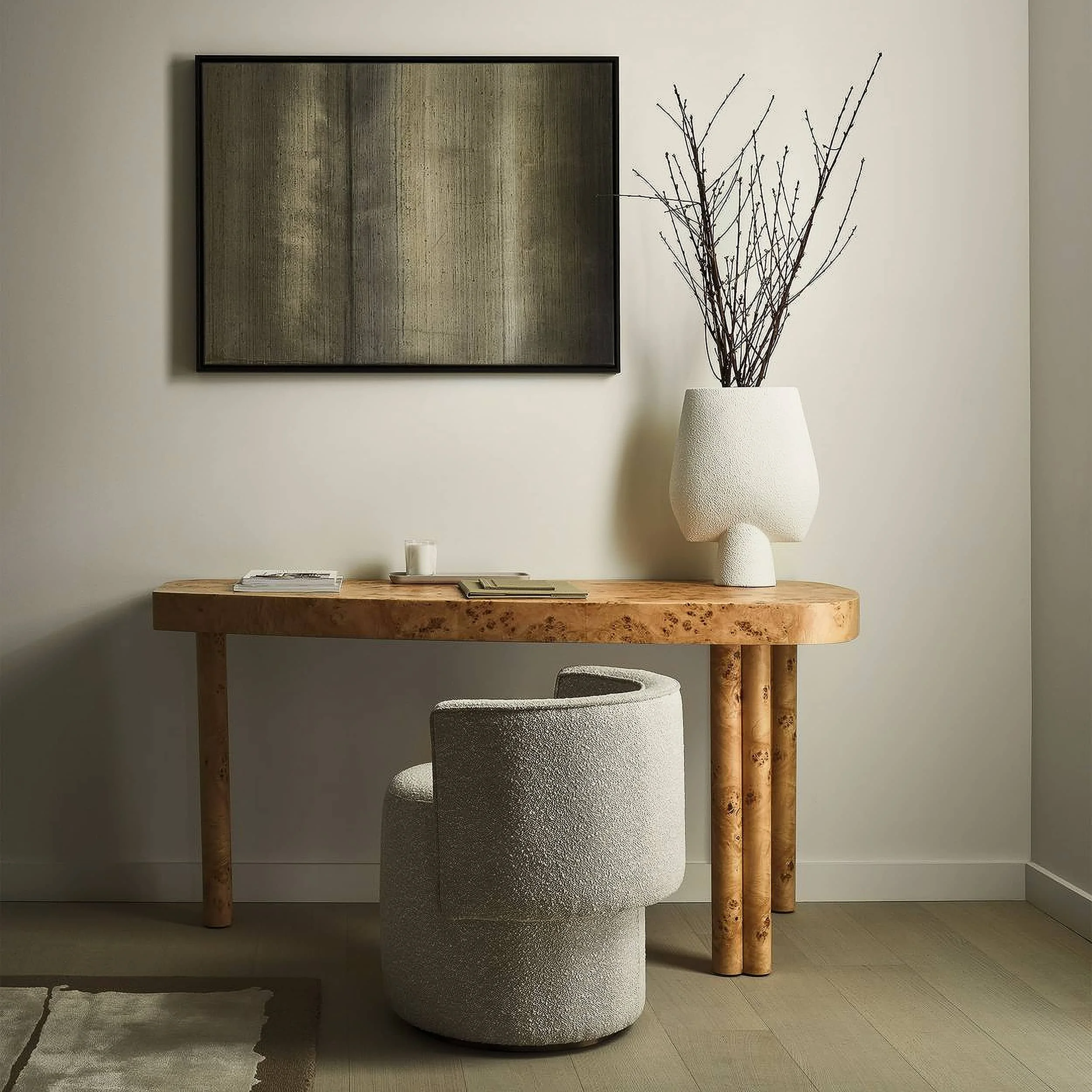
Bouclé is a weave structure, not a fibre. A bouclé yarn is spun so the surface forms tight loops; when woven, the cloth carries a knobbly, textured surface that catches light unevenly and reads as warm and tactile at any distance. The look has carried associations from mid-century furniture — the Pierre Paulin Mushroom, the Eero Saarinen Womb, every sheepskin-effect armchair on a designer Instagram feed — and is now found in residential and hospitality upholstery across every aesthetic.
The bouclé family on the library covers tight-loop bouclés, larger-loop bouclés and chenille-bouclé blends. The fibre is usually wool, cotton, viscose, polyester or a blend; the look that ties them together is the looped surface and the visual warmth it gives the seat.
Bouclé for seating?
Tell us the pieces and how much use they will get.
Loop scale and construction
Bouclé behaves differently in service depending on how tightly the loops are woven into the base cloth.
Tight-loop bouclé
Small, densely packed loops in a stable base weave. Reads as a textured solid rather than a heavily looped surface. Abrasion ratings up to 50,000 Martindale rubs, and good resistance to snagging because the loops do not catch on rings, watches or claws. The standard specification for primary upholstery in households with pets, children or daily use.
Larger-loop bouclé
Visible, distinct loops with a more pronounced texture. The cloth reads more graphically and catches more light, which is part of its charm on accent pieces. Looser loops are more vulnerable to snagging on jewellery and pet claws, so the cloth is best specified on occasional pieces, side chairs, headboards and accent cushions rather than primary daily-use sofas.
Chenille-bouclé and blended weaves
Bouclé yarns woven alongside chenille or other textured yarns to give the cloth a soft, almost furry surface. The look reads as sumptuous and tactile; the abrasion rating sits between tight and loose bouclé, depending on construction. Commonly specified on lounge seating in residential interiors and on hospitality lobby pieces where the surface is meant to be touched.
Specifying bouclé well
The single most important specification decision on bouclé is matching the loop scale to the use. A loose-looped wool bouclé on a primary sofa with a Labrador is a short-lived choice; the same cloth on an accent chair in a study is a piece that lasts decades. Loop scale is decided at sample stage, with the rub rating and the loop construction read together rather than the rub rating alone.
Bouclé takes UK fire compliance routes well. Wool-base bouclés are naturally flame-retardant and reach residential and Crib 5 standards with a standard FR interliner. Synthetic-fibre bouclés are usually specified for contract because they hold abrasion ratings above 50,000 rubs untreated and pass the flame test without back-coating. The compliance route is set at sample stage.
Bouclé is vacuumed with a soft-bristle attachment, not a beater bar, to avoid pulling loops. Spills are blotted, not rubbed; the looped surface holds liquids briefly before they reach the base, so prompt blotting is usually enough to lift them. Professional cleaning every few years on a heavy-use piece is sensible. Loops that have been pulled are clipped flush with the cloth, not pulled tighter, to prevent the run extending across the seat.
Where this sits
Fabric is one decision in a piece of upholstered furniture. The build behind the cover — frame, springs, stuffing and wrap — is covered on our upholstery workshop page; the cushion fills behind the seat surface are set out in our guide to upholstery fills; the other fabric families and the COM, fire and Martindale specifications that govern them sit on the fabrics overview.