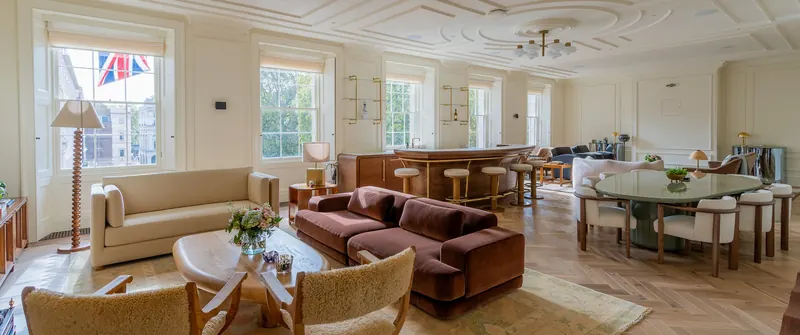
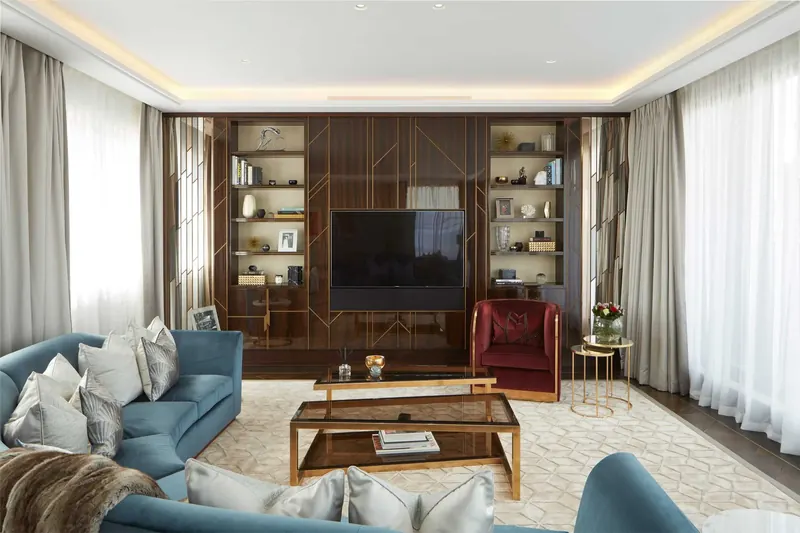
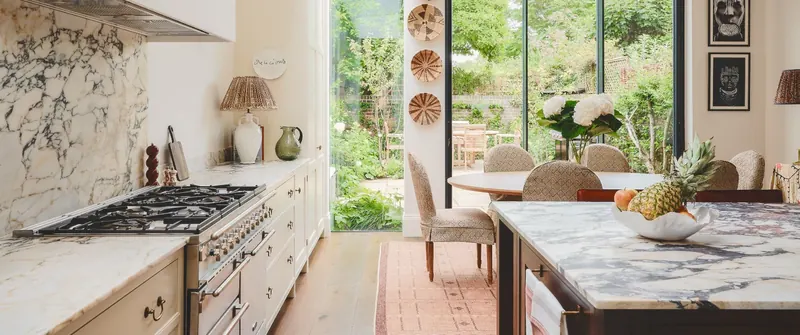
-1200w.webp)
Bespoke furniture is designed and made to order for one person and one place: built to exact dimensions, materials and detailing, not chosen from a standard range.
There is a moment, near the end of a commission, when a piece is carried into the room it was drawn for and set against the wall. The alcove that measured 183cm closes around a cabinet that measures 183cm. The grain runs on past the architrave as though the timber had grown there. Nobody says much. That quiet is the whole point of bespoke: a piece made so precisely for one place that it looks as if the room was waiting for it. Take it next door and it would never quite belong.
That is what "made for you" actually means, and it has a long history. The word bespoke originates in the world of Savile Row tailoring, where a suit of cloth was said to be "bespoken for" a client, meaning every measurement, cut and detail was decided for that individual. In furniture, the term carries the same meaning: a bespoke piece is designed and manufactured specifically for you, for your space, to your exact requirements.
It is distinct from off-the-shelf furniture, which is mass-produced to fixed dimensions and finishes, and from semi-custom or made-to-order furniture, which typically allows limited variation within a pre-existing range. Truly bespoke furniture begins with a blank page.
Bespoke vs semi-custom: what's the difference?
The furniture market uses the word "bespoke" liberally, but there is a meaningful distinction between the three main categories:
- Off-the-shelf furniture is manufactured in fixed sizes and finishes. You select from what is available. Delivery times are short but personalisation is absent.
- Semi-custom or made-to-order furniture allows you to specify a limited range of options, a choice of fabric, perhaps, or a fixed selection of finishes, but the core design and dimensions are set by the manufacturer.
- Truly bespoke furniture starts from your brief. Dimensions, materials, proportions, details and finish are all decided collaboratively. The piece exists nowhere until it is designed and made for you.
| Category | Design control | Lead time | Best for |
|---|---|---|---|
| Off-the-shelf | None. Fixed size, fixed finish. | Days to a few weeks | Rooms with standard dimensions where the catalogue piece fits. |
| Made-to-measure | Limited. Choose from set options (fabric, finish, sometimes size). | Several weeks to a few months | Schemes where a near-fit standard design can be adapted. |
| Bespoke | Full. Dimensions, materials, proportions, detailing and finish set to brief. | Typically months; longer for specialist craftsmanship | Pieces with no catalogue equivalent, or where the room demands an exact fit. |
At Make Bespoke Studio, everything we produce is in the third category. There is no catalogue. A dining table, a wardrobe, a hotel banquette or a fitted library begins as a conversation across a workbench and ends as an object that could not have come from anywhere else, and was never meant to.
The line between the second and third categories is the one that matters most when you are specifying. A made-to-order range may be described as bespoke when, in practice, you are choosing from a fixed menu of options. If you want to understand exactly where that line falls, our guide to bespoke vs made-to-measure sets out the distinction in detail, including where each approach is the sensible choice. There are projects where made-to-measure is entirely appropriate and more economical; bespoke earns its place where the brief cannot be met within an existing range.
What is bespoke furniture not?
It is worth being clear about what the term does not cover, because the word is used loosely across the trade. Bespoke furniture is not a standard product offered in a wider choice of colours. It is not a catalogue piece resized within a fixed set of dimensions. It is not assembly of pre-made components, and it is not a flat-pack item finished to order. Each of these has its place, but none begins from your brief.
Equally, bespoke does not mean experimental or unproven, and this is the misunderstanding worth correcting. A well-run workshop draws on established construction methods, tested materials and decades of accumulated knowledge held in the hands as much as on the drawing. The design may be new to your project, but the way the carcass is jointed and the way the finish is built up is not improvised; it is the same craft that has held furniture together for a century. The aim is a piece that is singular in appearance and entirely unremarkable in its soundness.
Why commission bespoke furniture?
The primary reason is fit. A standard sofa is 220–240cm wide; your room might call for something 190cm or 260cm. A fitted wardrobe needs to work within an alcove that is 183cm wide and 218cm to the ceiling, no standard product will do that without awkward fillers and a shadow line of compromise down each side. Bespoke removes that compromise. The piece meets the plaster cleanly because it was measured against the plaster.
The second reason is material and finish. If your interior is specified around a particular leather, a specific timber veneer, or a lacquer colour matched to an existing element, only a bespoke manufacturer can work to that palette. We source materials from the same mills and suppliers used by the leading fabric houses and interior designers, so the standard of finish matches the standard of the wider scheme, rather than sitting a half-tone off it.
The third reason is detail. A bespoke maker can execute details that no manufacturer would offer as standard: a particular profile run along a door edge, a custom hardware specification, a fine line of metal inlaid into a table top, a joinery detail that picks up the rhythm of the cornice above it. These decisions, small one by one, are what the eye actually settles on, and together they decide the character of the finished piece.
The fourth reason is uniqueness. Mass-produced furniture is, by definition, in other people's homes. Interior design trades on individuality, and a scheme assembled from catalogue pieces can be competent, but it cannot be singular. A commissioned piece is designed for one client, one room and one brief, and exists nowhere else. For designers, that is the difference between decorating a space and authoring one.
The last reason is time. A piece built around solid construction, serviceable finishes and repairable upholstery is not a purchase but an asset: it can be re-covered, re-polished and adjusted as the interior around it evolves, rather than replaced. Against the cycle of buying and discarding manufactured furniture, a well-made bespoke piece is also the quietly sustainable choice: made once, made close to home to the brief, and made to stay.
How are bespoke pieces commissioned?
A commission moves through a defined sequence, from first conversation to installed piece. The stages below describe how we work; the same logic applies to most serious bespoke makers. If you would like a fuller, step-by-step account written for clients preparing their first commission, see our guide on how to commission bespoke furniture.
1. Brief & consultation
Every commission begins with a brief. This is typically a conversation, either in person at your studio, on a site visit, or over a call, where we discuss the piece, the space it is going into, the functional requirements, the aesthetic references and the budget. We listen more than we talk at this stage, and we ask about the unglamorous things too, how the doors swing, where the light falls in the afternoon, what the piece has to live alongside, because the quality of what we make depends entirely on how well we understand what you need.
2. Design development
From the brief we develop technical drawings and, where required, material samples. This phase typically takes one to three weeks depending on complexity. We present drawings for approval before any production begins, adjustments are made at drawing stage, where a change is a pencil line, rather than during manufacture, where it is a cut already made.
3. Material selection
Timber species, veneers, lacquers, leathers, fabrics, hardware, all selected from our supplier network. We can source specific materials if you have a reference, or lay out options for you to choose from. Samples are supplied so that selections can be signed off before production, because a leaf of veneer or a lacquer chip behaves differently in your own room than it does under a workshop light.
4. Manufacture
The workshops we manufacture through are equipped with CNC routing, veneering presses, dedicated lacquer spray booths and full upholstery facilities. Because we work with the same partners continuously rather than tendering each job, we can hold quality to a single standard and manage your production schedule precisely. It also means a piece never leaves our sight between the first cut and the final coat.
5. Delivery & installation
We deliver and install to site, managing the logistics and co-ordinating with your main contractor or project manager. Our delivery teams are trained to handle high-value furniture without a mark, and to install with care for the finished space. For larger or sectional pieces we plan access in advance, confirming door widths, lift dimensions and stair turns before delivery, so that the only surprise on the day is how well it sits.
Throughout these stages the brief remains the reference point. A change is a pencil line at drawing stage, a more costly matter once material is cut, and costlier still once a piece is finished. A disciplined process front-loads the decisions, so that by the time the workshop begins, everyone is building the same piece in their head. That clarity is what allows a commission to arrive on site as expected, fit as drawn, and need no adjustment beyond installation.
Materials and finishes
Material is where a bespoke piece declares its quality, and where most of the early decisions are made. The choice is rarely about a single surface; a finished piece usually combines several, a timber carcass, a veneered or solid show face, a worked metal detail, an upholstered seat or a stone top, each chosen to sit correctly against the others and against the wider scheme. Get one wrong and the eye catches it long before it knows why.
Solid timber is specified for components that are handled, loaded or seen in the round, such as table legs, drawer fronts and edges, the parts a hand reaches for without thinking. Veneers allow large, stable surfaces with a continuity of grain that solid boards cannot offer, and they make figured and rare species viable across a whole piece. Our wood veneer glossary explains the cuts and matches available, from quarter-cut to book-matched and slip-matched layouts, and how each reads in a room.
Beyond timber, the palette extends to lacquer, leather, fabric, stone and metal. Lacquer gives a flawless, even surface in any colour, from a deep gloss to a soft hand-rubbed satin. Metal, used for frames, inlays, handles and trims, carries its own vocabulary of finishes; our guide to metal finishes covers brushed, polished, patinated and plated options and how they wear over time. How those components are formed, welded and hand-worked is covered in our bespoke metalwork guide. For the most distinctive surfaces, such as shagreen, parchment, eggshell and gesso, our notes on exotic surface finishes set out what is involved in working them and where they are best used. A fuller overview of the three most-specified surfaces sits in our materials guide, and the full range we hold is set out on the materials pages.
The discipline in material selection is restraint. A piece that uses three considered materials well will almost always read better than one that uses six and asks them all to compete. We supply physical samples for every surface before production, because a veneer or a lacquer chip held up in your own light, against your own walls, at the hour you actually use the room, is the only reliable way to sign off a finish.
Decorative craftsmanship
Where a brief calls for it, a bespoke piece can carry decorative work that lifts it from well-made to distinctive. These are not flourishes for their own sake; each detail should earn its place and answer to the architecture and the scheme around it. Watch a gilder lay a leaf of gold onto a freshly sized edge and there is a moment that does not look like craft at all, the dull metal catches and the whole edge seems to draw light from the room. That is the kind of work this section is about, and our decorative craftsmanship guide surveys these techniques in full.
- Inlay and marquetry, in contrasting timbers, metal or mother-of-pearl, set into a surface to draw a line, a border or a figured panel.
- Fluting, reeding and carved profiles, worked into legs, edges and door faces to catch light and give a surface rhythm.
- Hand-applied finishes such as gilding, eggshell and patination, each laid and worked by hand so that no two surfaces are identical.
- Specified hardware, from cast handles to concealed mechanisms, chosen or made to suit the piece rather than drawn from a standard range.
- Integrated lighting, set within shelving, cabinetry or display joinery. Where lighting is part of the brief, our notes on bespoke lighting cover how it is detailed and controlled.
Decorative craftsmanship is also where the line between furniture and joinery dissolves. The same techniques that finish a cabinet finish a panelled wall or a library. If your project extends to fitted elements, our piece on bespoke joinery looks at how these larger installations are designed and built.
The right level of decoration is a judgement, not a default. A restrained piece in a richly detailed room will hold its own better than one shouting back, and a quiet scheme can carry a single decorative gesture to real effect. We tend to advise specifying decoration where it does work, marking a transition, framing a focal point, answering an existing detail across the room, rather than spreading it evenly across a commission until none of it counts for much.
How bespoke pieces are made
Manufacture follows the approved drawings in a defined order. Timber and sheet stock are selected and cut, often on a CNC router for accuracy on repeated components, then dimensioned and prepared by hand where the work calls for it. Veneers are laid and pressed; carcasses are jointed and assembled; show surfaces are sanded through progressively finer grades, the grit dropping and the surface quietening under the palm, before any finish is applied.
Finishing is a discipline of its own, and the one that most rewards patience. Lacquer and paint are sprayed in dedicated booths, with each coat cut back before the next, so that the final surface is even and free of the smallest mote of dust. Polished and oiled timber finishes are built up in thin layers and burnished by hand until the colour seems to come from inside the wood. Upholstery is cut, sprung, filled and covered by hand, with patterns walked across seams and panels so the line never breaks; our guide to upholstered furniture sets out how seats and sofas are built to be re-covered and kept. Hardware and any integrated services are fitted, and the complete piece is inspected and, where it is large or sectional, dry-assembled before it leaves the workshop.
Holding all of these trades, joinery, veneering, spray finishing, polishing and upholstery, under one roof is what allows a maker to control quality and timing. It means a problem found at finishing can be walked back to the bench that produced it and settled the same afternoon, rather than passed between separate suppliers and three sets of excuses.
What drives cost
Cost varies significantly by piece type, size, material and complexity. A simple upholstered headboard might start at a few hundred pounds; a large fitted library or kitchen, or a complex hotel banquette installation, will be many thousands. We provide transparent, itemised quotations so you understand exactly what you are paying for. The main variables are these:
- Material. A rare veneer, a hand-worked finish or a worked metal detail costs more than a standard timber and a sprayed lacquer.
- Size and quantity. Larger pieces use more material and labour; a run of matching pieces benefits from economies that a single item does not.
- Complexity. Curved work, mechanisms, integrated lighting and fine decorative detail all add hours at the bench.
- Finish standard. The level of hand-finishing, the number of lacquer coats, the closeness of grain and pattern matching, scales directly with cost.
- Design and prototyping. Where a piece is wholly new, the drawing and sampling stage carries its own cost before any production begins.
The honest comparison is not against mass-market furniture, which serves a different purpose entirely, but against other bespoke makers. For a full breakdown with worked examples, see our guide to the cost of bespoke furniture.
How long does bespoke furniture take to make?
Lead time depends on the design stage as much as the build. A straightforward piece worked from a clear brief may be designed, made and installed within six to eight weeks. A complex commission, or a piece requiring rare materials or a prototype, can run to twelve to sixteen weeks or longer. Larger fitted installations are usually programmed around the wider works on site.
The single greatest influence on the timeline is the speed of decisions and sign-offs at the front of the project. Approving drawings and signing off material samples promptly keeps a commission on schedule; a week's hesitation over a veneer at the start quietly becomes a week on the back end, when the room is waiting. We confirm a lead time in writing with each quotation, and we report production milestones as the work progresses so that a project can be co-ordinated against the other trades on site.
How to choose a maker
A bespoke commission is a relationship as much as a transaction, and you will be living with the result long after the invoice is settled. The maker you choose should be able to show you the things that matter, not just describe them. A few questions tend to separate a capable workshop from a broker:
- Who chooses the workshop? Ask who decides which workshop makes your piece, and on what basis. At Make Bespoke, we propose the workshop best suited to the materials, scale and complexity of each piece, and we remain your single point of contact and accountability from drawing to installation.
- Can they show finished work? Ask to see completed pieces and, where possible, installed projects. Our projects include work for The Dorchester, The Ned, Claridge's and The Lanesborough, alongside residential commissions such as Well Cottage and private penthouses.
- Do they draw before they make? Technical drawings approved before production protect both parties and remove ambiguity from the brief.
- Are quotations itemised? A clear, line-by-line quotation shows where cost sits and makes informed decisions possible.
- How do they communicate? Proactive updates on lead times and milestones matter, particularly where the piece must co-ordinate with a wider programme.
Caring for bespoke pieces
A well-made piece is built to be looked after rather than replaced, and most care is simple. Dust timber and lacquer with a soft, dry or barely damp cloth, and avoid silicone and solvent-based sprays, which flatter a surface for a week and dull it for a year. Keep pieces out of direct, prolonged sunlight, which fades timber and fabric alike, and away from radiators and other dry heat, which can pull at solid components until a panel quietly cups.
Leather and fabric benefit from regular light cleaning and the occasional professional attention. Metal finishes are best left to develop as intended; brushed and patinated surfaces in particular are specified precisely because they age into themselves. The real advantage of a bespoke piece is that it can be kept rather than discarded: upholstery re-covered, timber re-polished, hardware adjusted or replaced, so the piece goes on serving as the interior around it changes and the people in it change too.
Working with interior designers and architects
The majority of our commissions come via interior designers and architects, and we have built our service around this relationship. We understand design programmes and FF&E schedules, we provide drawings in formats that integrate with specification documents, and we communicate proactively about lead times and production milestones. If you are a designer specifying furniture for a client, you can contact us directly to discuss trade terms and how we typically work with design practices.
If you are a private client working without a designer, we are equally glad to work directly with you. We develop the design with you, take the project from a first conversation to an installed piece, prepare the technical drawings for your approval, and guide you through the decisions along the way. You can see the range of pieces we make on our bespoke furniture pages. However a commission reaches us, the aim is the same as the one we began with: a piece made so well for one room that, years from now, it is hard to imagine the room without it.
Frequently asked questions
Is bespoke furniture worth the cost?
For the right brief, yes. Where a standard product cannot meet the dimensions, materials or detail a space requires, bespoke removes the compromise and produces a piece that fits exactly and can be maintained for decades rather than replaced.
The value shows over time. An upholstered piece built on a hardwood frame can be re-covered on its original frame, a lacquered or veneered cabinet can be refinished, and fitted joinery can be extended or refitted when a room's use changes, because the maker keeps the drawings and control samples. As a guide, our cost guide puts a bespoke dining table at £3,000–£30,000+ and fitted wardrobes at around £2,000–£10,000+, depending on size, materials and finish. Where an existing range would serve, made-to-measure is often the more economical choice, and a good maker will say so. The value lies in the fit between the brief and the method.
How long does a bespoke commission take?
Most bespoke furniture takes 10 to 14 weeks from approved drawings to delivery, with two to four weeks of design development before that; fitted joinery typically takes 12 to 16 weeks, including survey and installation.
The programme has three stages. Development covers drawings, specification and samples; production covers making and finishing in the workshop, typically six to twelve weeks depending on scope; installation is usually one to five days on site. Complex commissions, rare materials or a prototype stage extend the programme, and stone or specialist materials add four to six weeks. The single biggest factor in keeping a project on schedule is prompt approval of drawings and material samples: programmes slip on decisions far more often than in the workshop. Deciding early on long-lead items such as stone, specialist fabrics or Murano glass, and approving samples in batches, lets production start on agreed components while the rest are resolved. See our lead times.
Can you match an existing piece or finish?
In most cases, yes. We can work to a reference, whether a timber, a lacquer colour, a leather or a hardware specification, and supply samples for sign-off before production.
Matching is done against a physical sample, not a photograph or a colour name. Lacquers can be matched to RAL, NCS or British Standard references or mixed bespoke, veneers are selected by species, cut and figure, and stains are developed on the actual timber, because the same stain reads differently on oak and on walnut. Samples are reviewed in conditions close to the room's own light, since colours that match under one light can drift under another. Developed finishes such as a custom lacquer or a matched stain take one to two weeks of workshop time to sample. Once approved, the sample is filed as the benchmark every piece is inspected against. Where an exact match is not achievable, we will say so at the drawing stage rather than at delivery.