With metal finishes the surface treatment matters more than the alloy: the same metal reads as a bright mirror when polished, shifts as you move when brushed, or holds the light dark and slow when patinated.
Lay three samples of the same metal in a row under the workshop light and watch what it does to them. The polished one throws the room straight back at you, a small bright mirror. The brushed one quietens, its fine grain catching the light in one direction and letting it slip past in the other, so the surface seems to shift as you move your head. The patinated one barely reflects at all; it holds the light, dark and slow, the way old metal does. Same alloy, three different temperaments. This is the quiet truth behind every metal finish decision: the material matters far less than what you do to its surface.
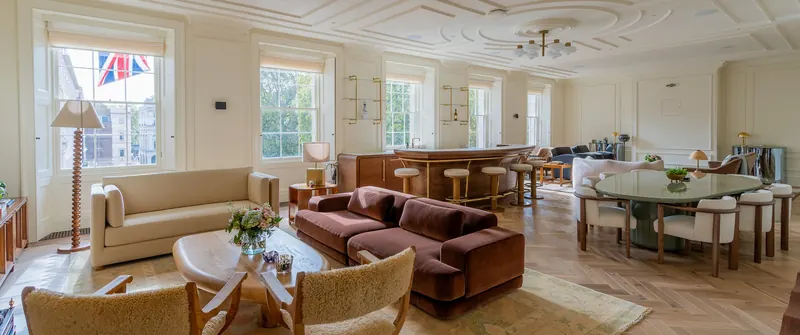
And those decisions are among the most consequential in a luxury interior. Hardware, frames, inlays, bases, legs, handles, cladding strips — metal appears at every scale and in every context, and the choice of finish determines whether the result reads as coherent and resolved or as a collection of mismatched decisions.
The field is wide. Brass, bronze, gunmetal, polished nickel, satin nickel, blackened steel, copper, gold, rose gold, titanium PVD — and within each metal, multiple surface treatments: polished, brushed, hammered, acid-etched, oil-rubbed, lacquered. Each combination has a different visual weight, a different warmth or coolness, a different relationship with light, and a different maintenance requirement. What follows is a practical framework for navigating those choices.
The main finish families
Lacquered vs unlacquered: the patina question
This is one of the most important decisions for any brass or bronze specification, and it comes down to a single question: do you want the metal to stay as it is, or to live? Lacquered brass is sealed with a clear protective coat that preserves the original colour and prevents oxidation. The appearance stays consistent over time, and cleaning is simple — a wipe is all it asks. Unlacquered brass is left bare: it oxidises and develops a patina as it is touched and exposed to air, gradually deepening and acquiring the warmth and character of aged metal. The places hands fall most often stay bright; everything else darkens around them, so the piece slowly records its own use. Over years it acquires a genuine antique quality that no factory finish can replicate.
The choice depends on the design intent and the client's relationship with material change. Unlacquered brass in a kitchen or bathroom will patina quickly and unevenly — some people find this deeply appealing; others find it difficult to accept. In a formal room with limited handling, the patination is slower and more even, and the result is typically beautiful. When a client tells us they want unlacquered brass, we make a point of showing them a piece a few years into its life rather than a fresh sample, because the swatch in your hand is never the thing you are actually choosing; you are choosing the surface it will become. Both approaches are valid. The important thing is to specify explicitly and to be sure the client understands what they are signing up for.
Surface textures
Polished surfaces are mirror-bright and highly reflective. They show every fingerprint and mark, ask to be polished often, and carry a formal, luxurious quality that suits a statement piece — something meant to be looked at rather than constantly handled.
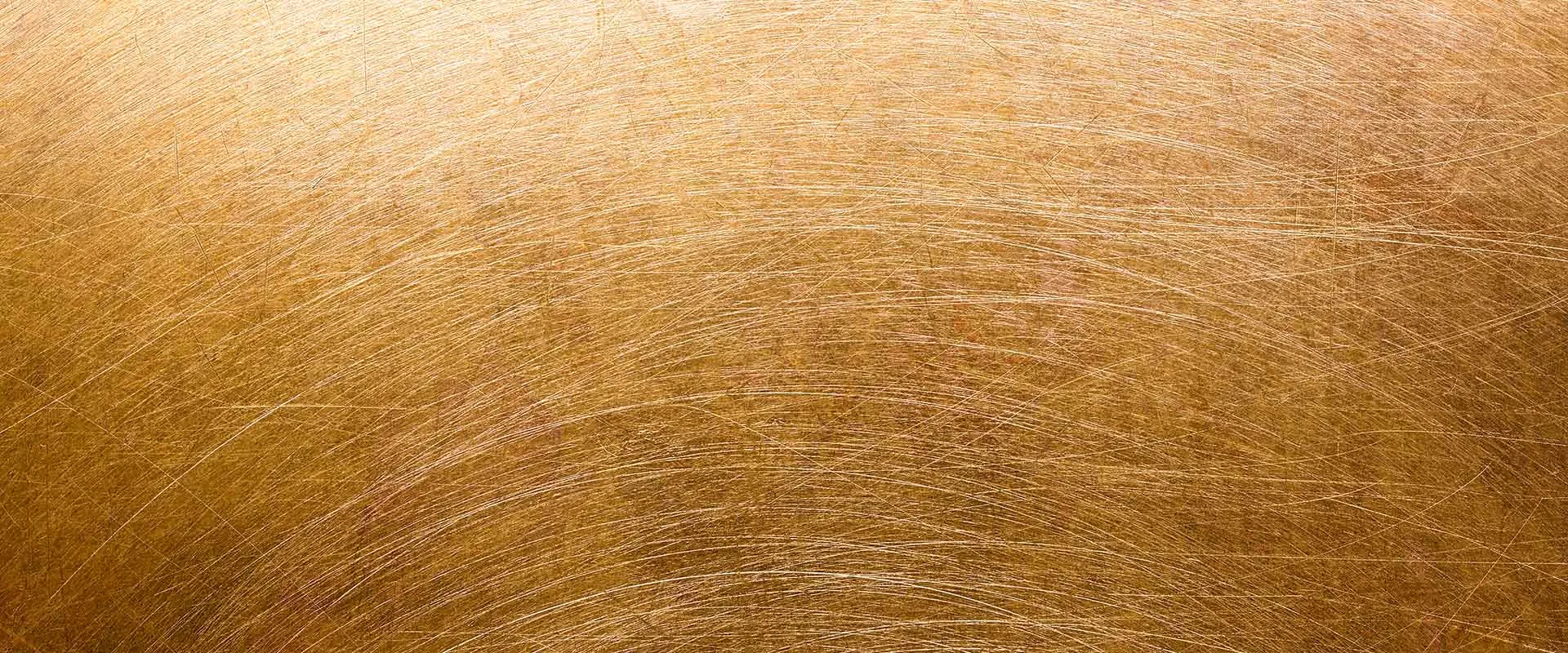
Satin / brushed surfaces have a fine directional grain that catches the light softly and forgives fingerprints. Run a thumb across one and you can feel the grain, the faintest tooth under the skin. This is the most practical and most widely specified surface treatment for everyday hardware, the finish that looks considered on the first day and still looks considered on the thousandth.
Hammered surfaces are worked by hand or machine into a dimpled, irregular texture. They have an artisanal, organic character and scatter light in every direction at once, so instead of a clean reflection you get a soft, broken shimmer that moves as you do — much gentler than polished or brushed.
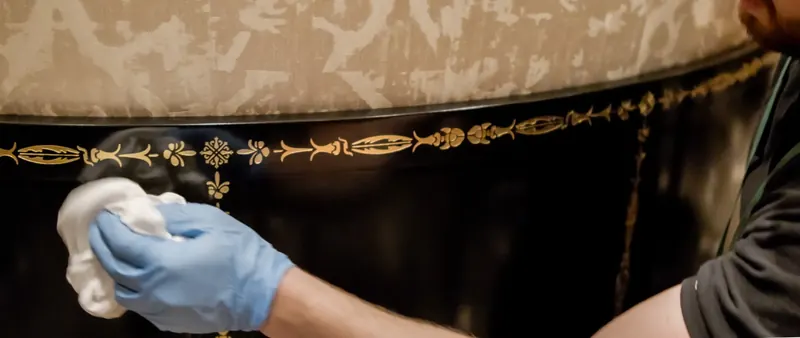
Antique / oil-rubbed treatments darken the metal chemically and then buff the high points back to reveal the base colour, leaving the recesses dark. The result mimics aged, handled metal and has a warmth and depth that new finishes simply lack — the look of something that has been in the room a long time, even on the day it arrives.
Mixing metals
The conventional guidance is to limit an interior to two or three metal finishes, used consistently across all applications. In practice, the rule is about visual coherence rather than strict limitation. Metals of similar warmth — brass, bronze, gold — coexist happily, almost as if they belong to the same family. Mixing warm and cool, brass with polished nickel for instance, creates a deliberate contrast that wants managing intentionally rather than allowing to happen by accident.
A useful approach is to designate a primary metal for the majority of hardware and visible metalwork, a secondary metal for accent elements such as lighting or feature furniture, and to resist a third unless it earns its place with a specific functional purpose. Consistency in the primary metal, even when other materials vary around it, gives an interior its quiet sense of considered unity — the feeling that one hand thought the whole thing through.
Metal in bespoke furniture
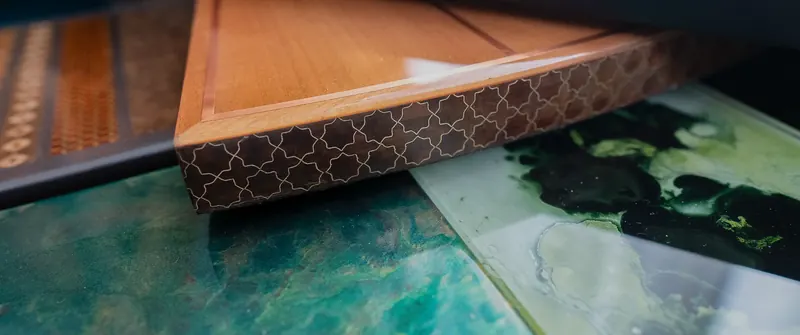
At Make Bespoke Studio we produce custom metalwork as part of bespoke furniture and joinery commissions: inlaid metal lines drawn into furniture surfaces, frame elements, custom hardware, metal-clad cabinet fronts and decorative panels. Our metalwork facility produces components in brass, steel, bronze and aluminium, finished to specification. We also work in PVD (Physical Vapour Deposition), a process that bonds a thin, extremely hard metal coating onto a stainless steel substrate, allowing any PVD-available colour to be applied with exceptional durability. There is a particular satisfaction in taking a finish off the swatch card and watching it settle onto a real component on the bench — the moment a sample stops being a reference and becomes the actual surface someone will touch for the next thirty years.
If you are specifying metalwork for a current commission, contact us. We can prepare sample finishes for sign-off alongside the other material selections for the project — so you can hold them, turn them to the light, and choose the one that feels right in the hand as well as on the drawing.