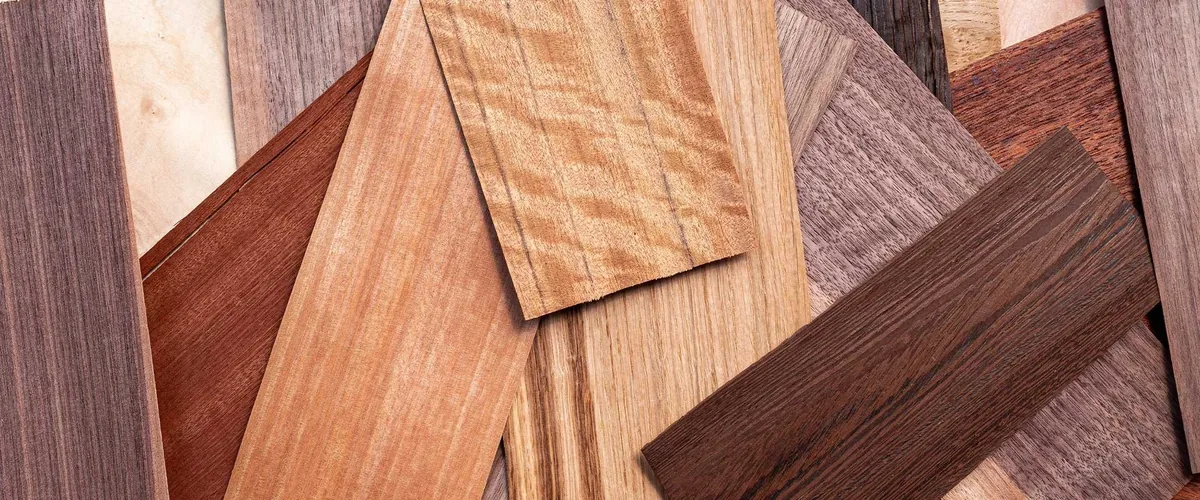
Exotic wood veneers — the rare and the figured
Burls, crotches, highly figured grains and rare species, sourced from certified sustainable suppliers worldwide.
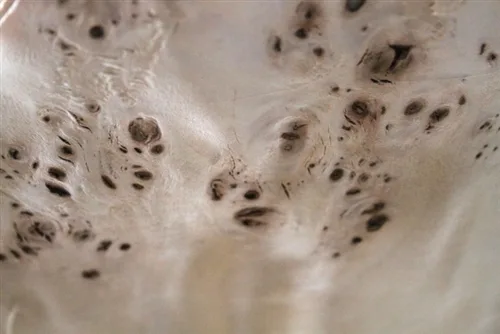
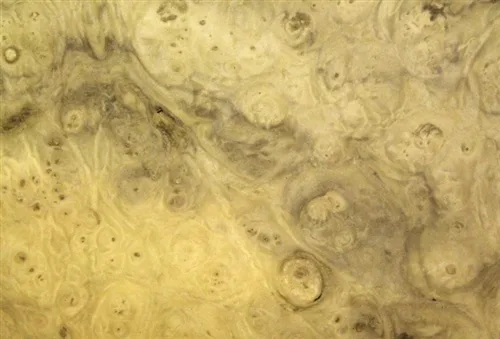
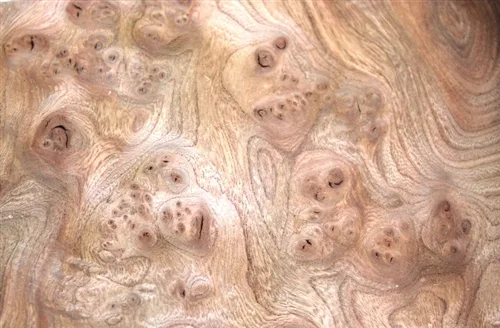
Beyond the standard veneer range, Make Bespoke Studio sources exotic and highly figured species through specialist suppliers. These include burls, the knotted, swirling grain formations that grow around injuries in tree trunks, and crotch figures, where a trunk divides and the grain becomes feathered and dramatic.
Species available include: mappa burl, thuya burl, madrone burl, rosewood, wenge, ebony, zebrawood, macassar ebony, crotch walnut, figured ash and quartered sapele. All are sourced from CITES-compliant and FSC-certified suppliers wherever possible.
These veneers are typically used for statement pieces, a single dining table, a pair of cabinet doors, a feature headboard, where the material itself carries the design.
A glimpse of the species we hold
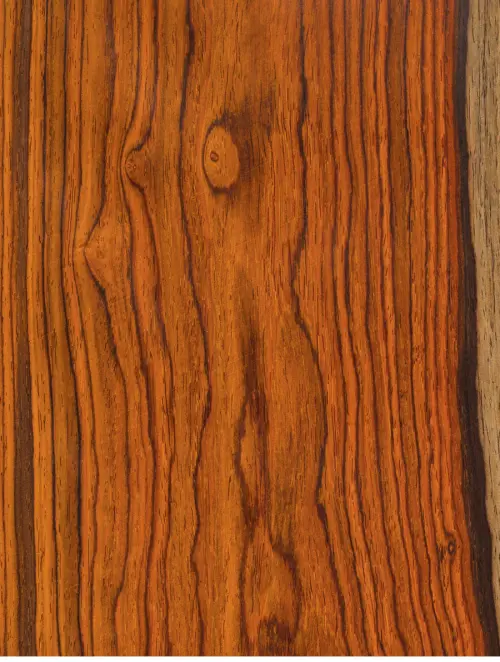
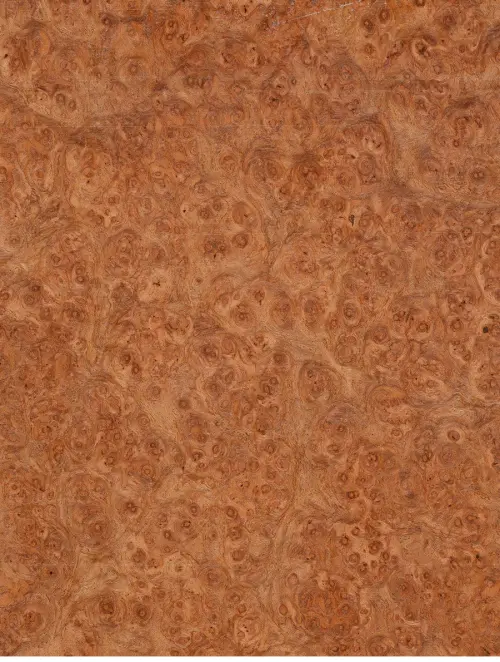
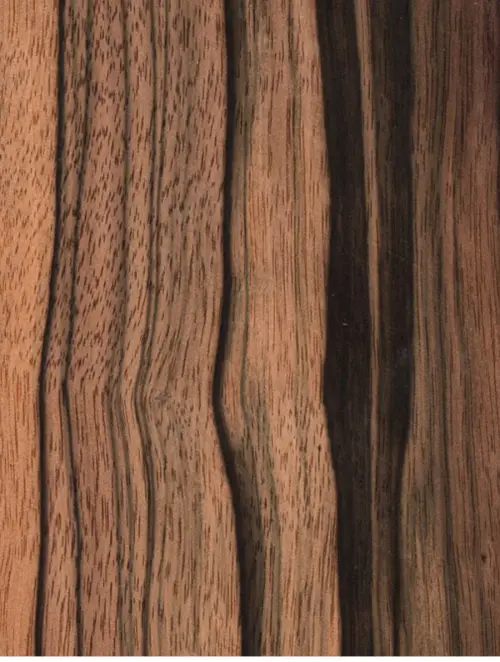
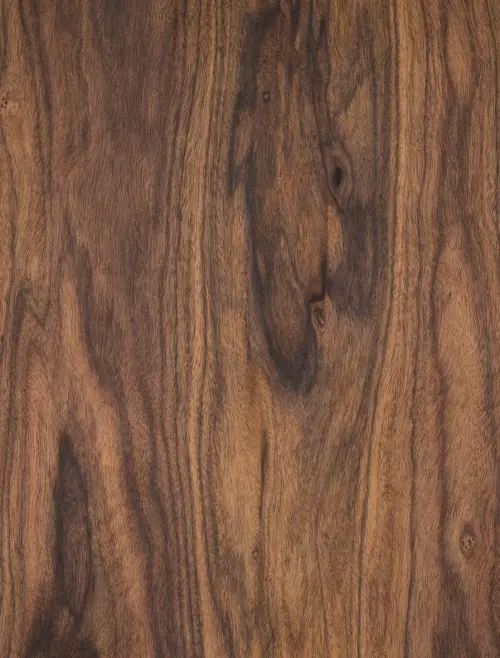
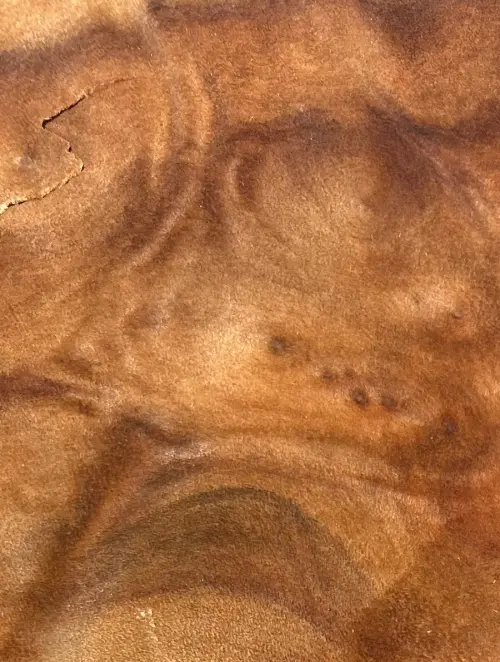
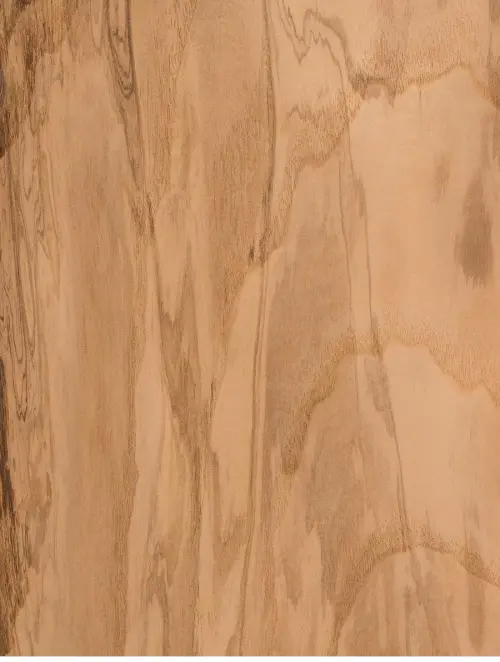
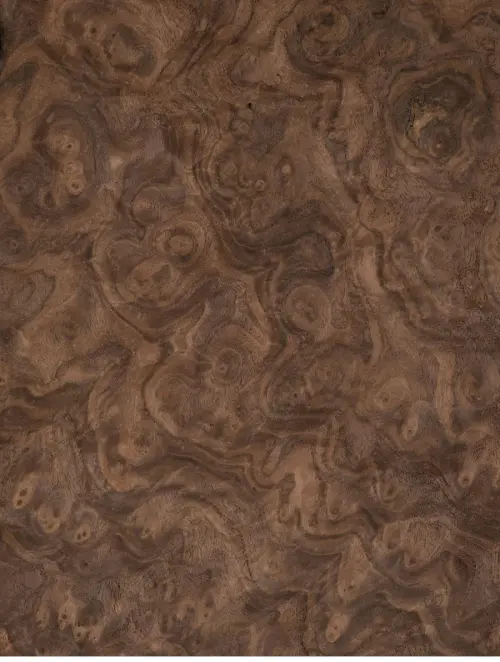
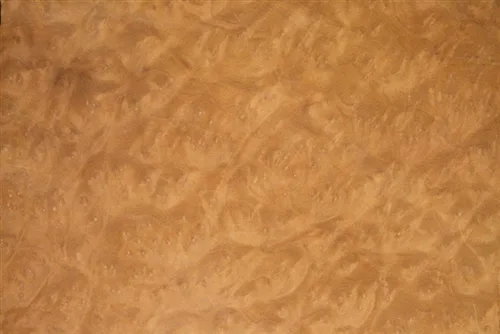
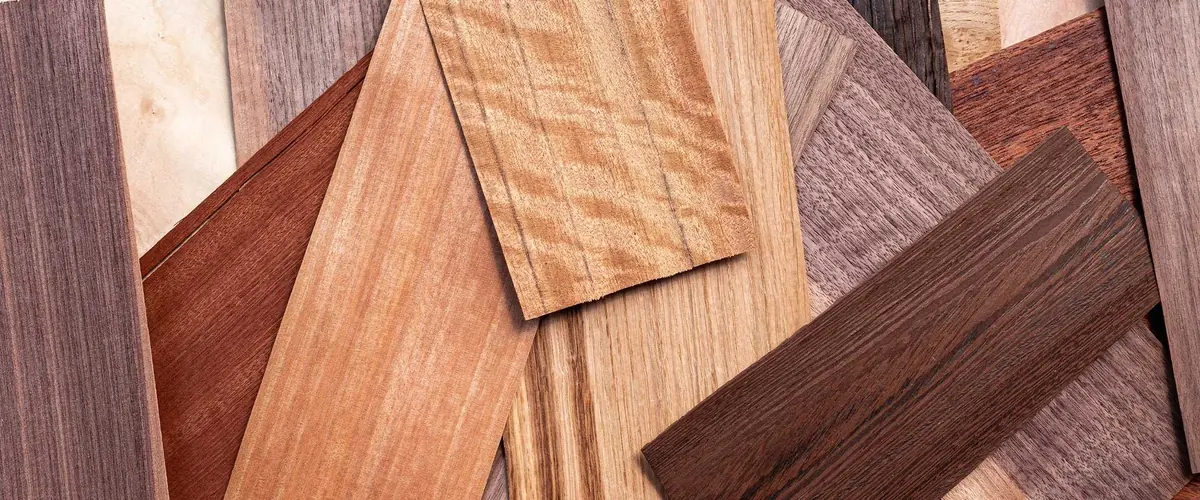
A glimpse of the exotic and figured species we hold — from the spider-web figure of ziricote to the iridescent eyes of an amboyna burr. Each is drawn from one of our veneer libraries; select a swatch to see the full range it belongs to.
Where exotic veneers are used
Exotic and figured veneers are reserved for pieces where the material is the statement. The grain does the work, the joinery simply gives it form.
- Statement casegoods and occasional furniture
- Dining and console tables
- Feature cabinet doors
- Hotel headboards
- Bespoke wardrobes
The species we work with
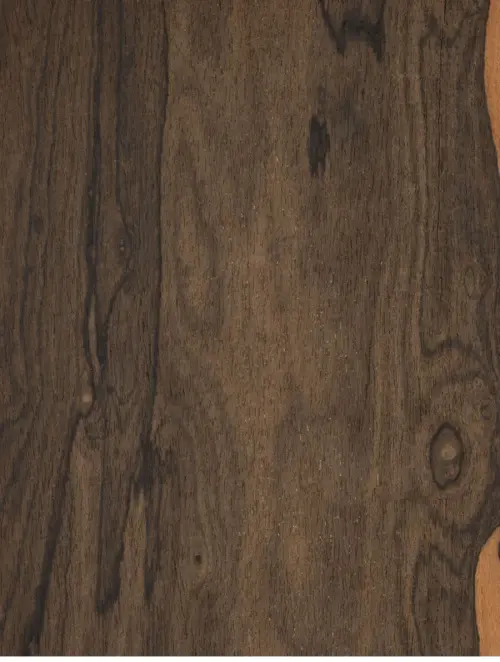
- Ziricote – deep, smoky browns crossed by dramatic black spider-web figure; the reference point for exotic veneer drama.
- Cocobolo – yellows, oranges, reds and deep browns often within a single leaf; intense colour with intricate grain.
- Snakewood – reptilian spotting on a reddish ground; among the rarest veneers cut, reserved for accents and inlay.
- Amboyna burl – the most prized of burls, intense red with swirling clusters of eyes; the classic surface of fine casegoods.
- Purpleheart – a genuine violet that deepens with light exposure; bold, contemporary, unmistakable.
- Padauk – vivid orange-red maturing to a rich red-brown; colour with durability.
- Canarywood – pale yellow through deep red within one leaf; energy and variation for dynamic schemes.
- Leopardwood – flecked, spotted figure on a red-brown ground; bold texture for statement panels.
- Lignum vitae – greenish-brown to near black, naturally oily and lustrous; rarely cut, specified for its exclusivity.
Understanding figure
Figure is the term for the visual pattern across a veneer leaf, distinct from the species itself. The same tree can yield several figures depending on where in the log it is cut and how the grain has grown. The figures most often specified in exotic work are:
- Burr (burl): a dense cluster of dormant buds and swirling grain that forms around a wound or growth on the trunk. The result is a tight, eye-filled pattern, as in amboyna, walnut, elm and madrone burrs. Burr leaves are small, brittle and often need backing.
- Crotch: cut from the fork where a trunk divides into two limbs, producing a feathered, flame-like figure. Crotch walnut and mahogany are the classic examples, prized for symmetry around a central spine.
- Quartered: the log is cut on the radial plane, giving straight, parallel grain and, in species such as sapele and oak, a regular ribbon or fleck. Quartered leaves are stable and well suited to large repeating surfaces.
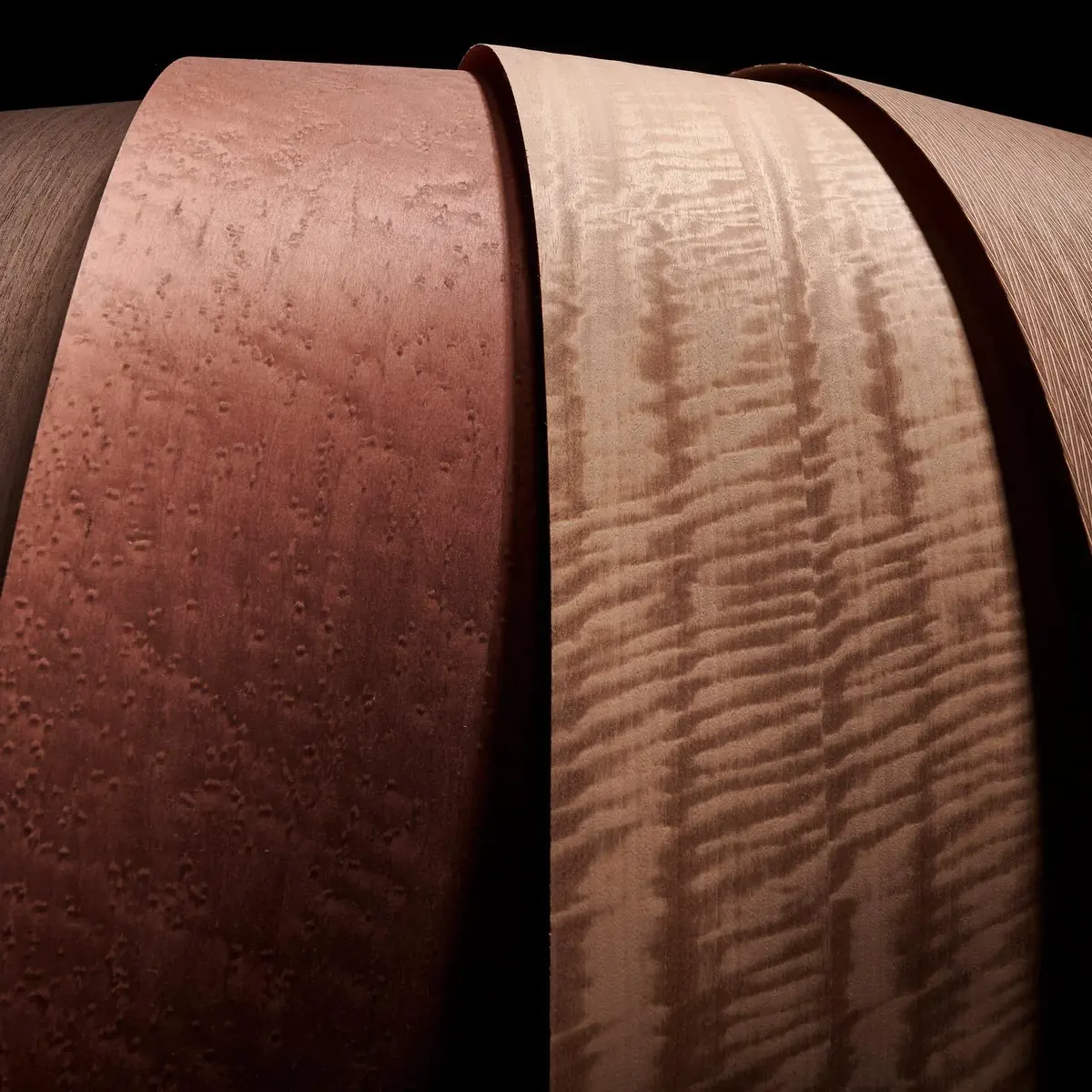
- Fiddleback: a rippled, three-dimensional figure that runs across the grain, named for its long use on violin backs. It appears in maple, sycamore and eucalyptus and shifts in tone as you move past it.
- Bird's-eye: small conical swirls, most familiar in maple, that read as a field of tiny eyes. The figure is shallow, so it tolerates only light sanding.
Species themselves carry character independent of figure. Walnut offers warm chocolate browns; eucalyptus (often sold as figured gum) gives pink to red-brown tones with strong fiddleback; sycamore is pale and even, taking dyes cleanly; ebony and macassar ebony give near-black grounds with fine striping; amboyna remains the reference burr for fine casegoods.
Looking for an exceptional grain?
Tell us the look you are after and the pieces it is for.
How leaves are matched
A veneer leaf is rarely wide enough to cover a surface alone, so consecutive leaves from a flitch are joined. How they are arranged sets the character of the finished panel:
- Book match: alternate leaves are turned over like the pages of a book, creating a mirrored, symmetrical figure across the joint. It is the most common match for burr and crotch work.
- Slip match: leaves are laid side by side in the same orientation, repeating the figure without mirroring. This suits straight, quartered grain where symmetry would look mechanical.
- Diamond and reverse-diamond match: leaves are cut and angled so the grain runs to or from a central point, forming a diamond. It is used for table tops and door centres where a strong focal pattern is wanted.
Book matching can introduce a subtle light-and-dark barber-pole effect, because adjacent leaves reflect light from opposite directions. We account for this at the sampling stage. The full vocabulary of cuts and matches is set out in our veneer glossary, and the craft of arranging leaves into balanced surfaces is covered on our veneer matching page.
CITES and responsible sourcing
Several exotic species are listed under CITES, the Convention on International Trade in Endangered Species, which controls or restricts their international movement. Rosewoods (Dalbergia) and some ebonies are among those affected, and trade in genuine listed material requires the correct permits and documented chain of custody. We work only with suppliers who can provide that paperwork, and we favour FSC-certified stock where it is available.
Because a veneer leaf is a fraction of a millimetre thick, a single log yields a large area of finished surface, so figured material goes a long way. Where a species is under pressure, or where documentation cannot be assured, we propose dyed or reconstituted alternatives from our wood veneer library that carry a similar look with a lighter footprint.
Finishing exotic veneer
Finish choice changes how figure reads. A matt or satin lacquer keeps the surface calm and lets the grain speak; a higher sheen deepens colour and lifts the three-dimensional quality of fiddleback and burr. Open-grained species such as wenge can be left with the texture visible or filled for a level, glass-smooth surface. Many exotics darken or shift with light over time, purpleheart deepens, padauk mellows from orange toward red-brown, so we discuss expected change at specification rather than after.
Oiled finishes give a natural, low-sheen result that can be maintained in place, while lacquers offer a harder, more uniform film for surfaces that see frequent contact. We sample the actual leaves, not a library photograph, before any finish is signed off.
Reserving flitches for consistency
Rarity demands discipline. Exotic flitches are reserved at the start of a project so colour and figure hold across every component, and we record leaf order so a run can be matched again later if a piece is extended. Sourcing runs against responsible certification, and sampling is done from the physical flitch through our workshop network. The grain carries the design; the joinery simply gives it form.
Are exotic veneers durable enough for everyday use?
Yes, with the right finish and substrate. A veneered panel is as durable as its lacquer and its core, so a well-finished figured top performs much like any other veneered surface. For surfaces in heavy daily use we advise a harder lacquer and, where relevant, a matched repair leaf held in reserve.
Can an existing exotic veneer be matched?
Often, though exotic figure is variable by nature and an exact match across a different log cannot be guaranteed. Bringing a sample or photograph of the existing piece early gives the best chance of a close result.
Do you supply CITES-listed species?
Where a species is CITES-listed we supply it only with the correct permits and chain-of-custody documentation. If that paperwork is not available for a given species, we will say so and propose a comparable alternative.
Padauk
Padauk is celebrated for its vivid orange-red colour, which matures and deepens over time to a rich purplish-brown. Its bold colour, combined with a strong grain pattern, makes Padauk an eye-catching choice for projects looking to make a statement.
Snakewood
Snakewood is highly prized for its unique appearance, featuring a dark, snakeskin-like pattern against a reddish-brown background. This rare and exotic wood is perfect for adding an element of intrigue and sophistication to bespoke pieces.
Lignum Vitae
Known as one of the densest woods available, Lignum Vitae boasts a striking green to dark green colour that ages beautifully. It’s not commonly used as a veneer due to its rarity and density but when found, it’s truly unique for special accents.
Purpleheart
As its name suggests, Purpleheart is a stunning wood with a natural deep purple hue. It’s not only prized for its striking color but also for its durability and hardness, making it ideal for both decorative and functional uses in luxury interiors.
Amboyna Burl
Amboyna Burl is among the most sought-after burl woods, known for its deep, rich red and amber tones and complex swirling grain patterns. This wood veneer adds a touch of opulence and depth, perfect for high-end furnishings and detailed inlay work.
Koa
Koa wood, native to Hawaii, offers a range of colours from golden to deep reddish-brown, with a grain that can vary from straight to wavy or curly, creating beautiful visual depth and interest. Its rarity and beauty make it highly valued for exclusive designs.
Leopardwood
Leopardwood is distinctive for its flaky or speckled pattern, resembling the coat of a leopard. Its medium to dark reddish-brown wood with a unique grain texture makes it an intriguing choice for statement pieces.
Quilted Maple
Quilted Maple is highly decorative with a stunning, wavy "quilted" appearance that seems to shift and move as the light changes. It’s typically a creamy white to light golden colour, offering a more subtle, yet equally mesmerizing alternative to darker woods.
Spalted Maple
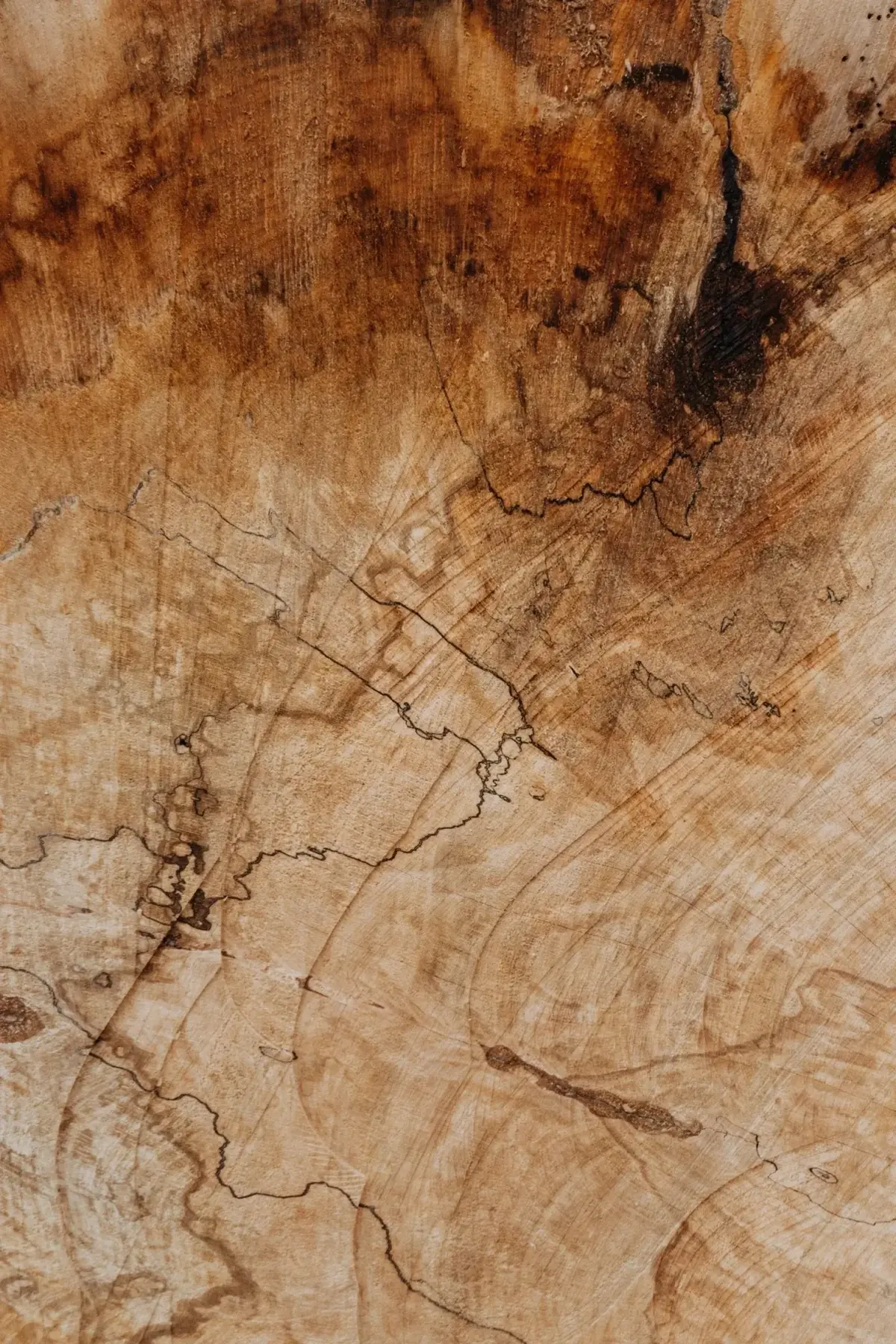
Spalted Maple is characterized by its unique patterns formed by fungal growth in the wood, creating black lines and streaks amidst the light maple background. Each piece is a one-of-a-kind work of art, perfect for creating focal points in interior designs.
These exotic wood veneers offer a palette of unparalleled beauty and uniqueness for bespoke interior design projects. At Make Bespoke Studio, we delight in the opportunity to work with such extraordinary materials, bringing our clients' most ambitious visions to life with an unwavering commitment to quality, craftsmanship, and sustainability. Whether you're looking to infuse a space with the warmth of Cocobolo or the striking intrigue of Snakewood, our team is here to guide you through the selection process, ensuring your design not only meets but transcends expectations.
Further reference
Ebony Veneer
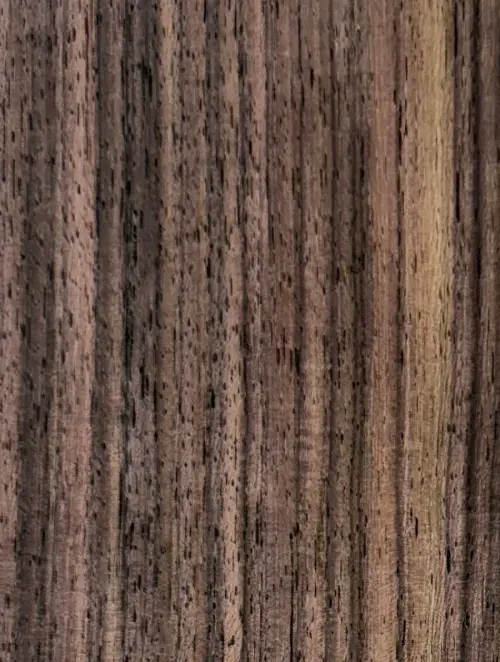
Ebony stands out for its dense, dark heartwood that can range from black to dark brown, often featuring fine, lighter streaks. It's the epitome of luxury and opulence, perfect for statement pieces or accent details that demand attention.
Zebrawood Veneer
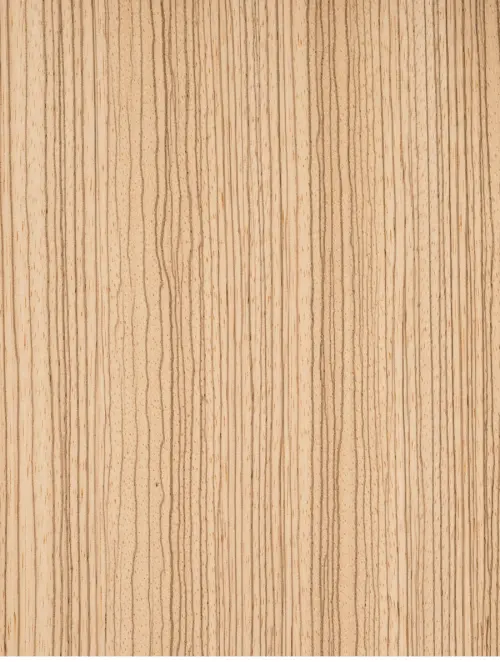
With its striking striped appearance, reminiscent of a zebra’s pattern, Zebrawood veneer offers a bold and graphic look. Its light golden-yellow base with dark brown to black stripes adds a dynamic and exotic touch to any interior.
Rosewood Veneer
Rosewood is cherished for its rich, deep hues ranging from dark brown to violet with intricately swirling grain patterns. Its exceptional durability and natural lustre make it a coveted choice for high-end, sophisticated environments.
Wenge Veneer
Wenge is known for its very dark brown, almost black colour, punctuated by fine, lighter tan lines. This dramatic and intense wood veneer brings an element of depth and strength to interiors, ideal for creating focal points.
Anigre Veneer
Anigre has a light yellow to pale pink colour and offers a subtle, yet distinctive figure. Its clean and simple aesthetic is highly versatile, making it suitable for a range of design styles looking for a touch of exotic charm without overwhelming.
Ziricote
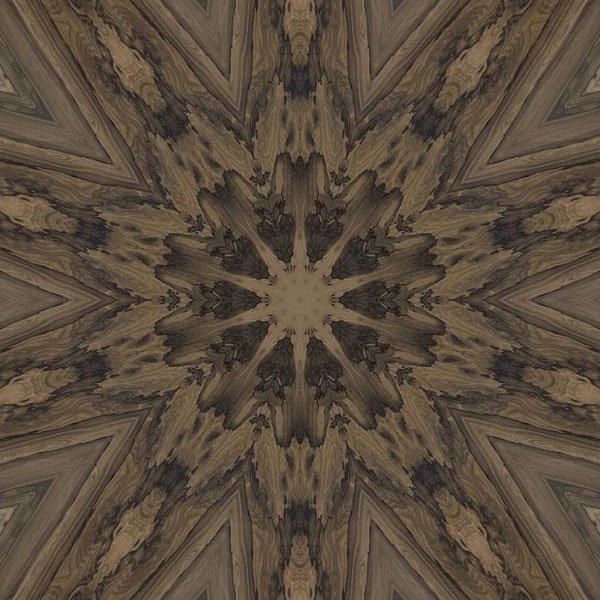
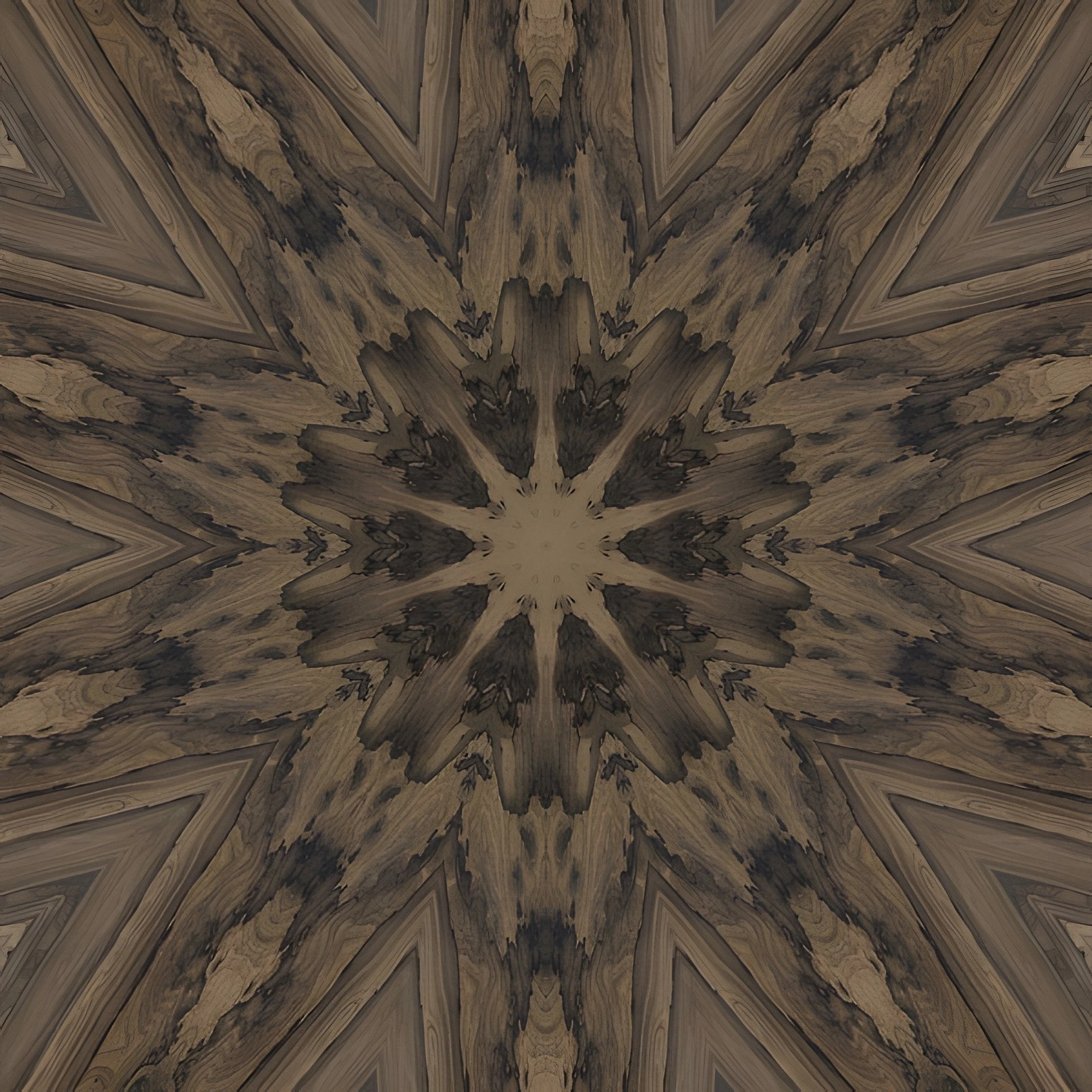
Ziricote with its dramatic, dark patterns resembling landscapes and abstract art, the world of wood veneers offers a treasure trove of options. Each of these woods, much like Ziricote, is not just a material but a masterpiece of nature's artistry, perfect for creating bespoke, luxurious spaces that speak volumes of sophistication and depth.
Lignum Vitae
Known as one of the densest woods available, Lignum Vitae boasts a striking green to dark green colour that ages beautifully. It’s not commonly used as a veneer due to its rarity and density but when found, it’s truly unique for special accents.
Purpleheart
As its name suggests, Purpleheart is a stunning wood with a natural deep purple hue. It’s not only prized for its striking color but also for its durability and hardness, making it ideal for both decorative and functional uses in luxury interiors.
Spalted Maple
Spalted Maple is characterized by its unique patterns formed by fungal growth in the wood, creating black lines and streaks amidst the light maple background. Each piece is a one-of-a-kind work of art, perfect for creating focal points in interior designs.
These exotic wood veneers offer a palette of unparalleled beauty and uniqueness for bespoke interior design projects. At Make Bespoke Studio, we delight in the opportunity to work with such extraordinary materials, bringing our clients' most ambitious visions to life with an unwavering commitment to quality, craftsmanship, and sustainability. Whether you're looking to infuse a space with the warmth of Cocobolo or the striking intrigue of Snakewood, our team is here to guide you through the selection process, ensuring your design not only meets but transcends expectations.
Sixteen extraordinary grains
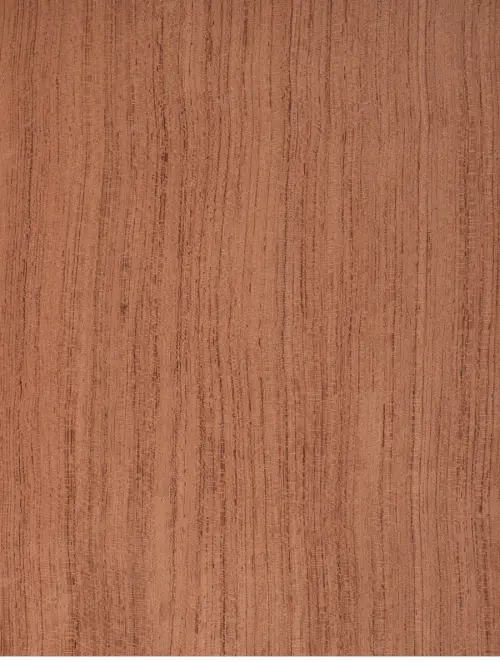
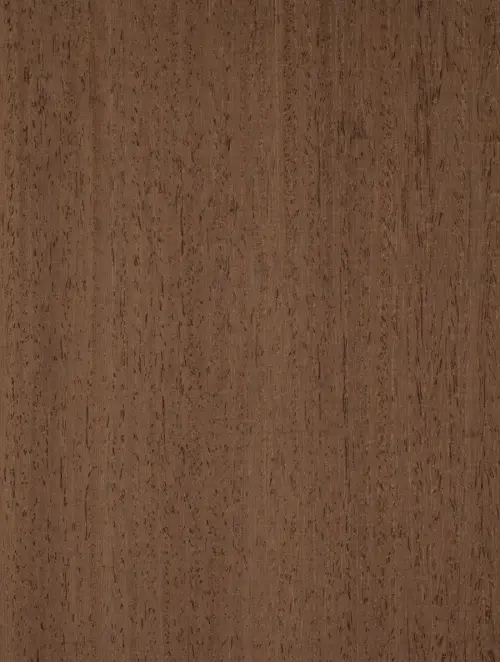
A glimpse of the exotic and figured species we hold — from the spider-web figure of ziricote to the iridescent eyes of an amboyna burr. Each is drawn from one of our veneer libraries; select a swatch to see the full range it belongs to.
Have a piece that calls for
an exceptional grain?
Need samples? Get in touch and tell us about your project.