Choosing the timber is the first and most consequential decision in a bespoke piece: oak for a stable, characterful workhorse, walnut for richness, ash and cherry for pale schemes, each selected by colour, grain, hardness and how it ages.
Cut into a fresh board of oak and it answers with a faint, sour tannin smell; do the same to walnut and the air turns warm and almost cocoa-sweet. Stand at the timber rack at the start of a commission and a whole piece is already legible before a single joint is cut — the cool grey-gold of European oak beside the deep, smoky brown of walnut, ash so pale it looks bleached, cherry already warming towards rose. The choice of timber is the first and most consequential decision in a piece of bespoke furniture. It sets the colour, the grain, the weight, the way light moves across a surface, and how the piece will look not just now but in twenty years, because real wood keeps changing long after it leaves the workshop. Choosing the species well is part aesthetic and part engineering — and it is a conversation we have at the start of almost every commission. Most pieces use the timber either solid or as veneer over a stable core.
Oak — the workhorse
European oak is the default for good reason: hard, stable, widely available in sustainable stocks, and possessed of a strong, open grain that takes staining, fuming, liming and oiling beautifully. Run a hand across a planed oak top and you feel the open pores, the faint ribbon of the medullary rays catching the light where the board was quarter-sawn. It ranges from pale and contemporary to deep and traditional depending on finish, and it is the safe, characterful choice for tables, cabinetry and structural furniture. Left to live with a family, it ages gracefully to a warm honey — the kind of colour you cannot buy in, only wait for.
Walnut — the luxury
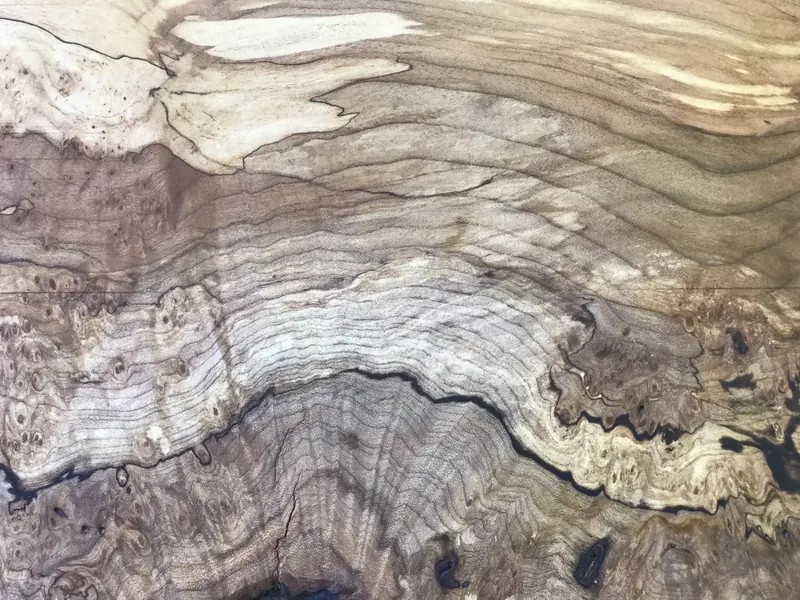
Walnut is the timber we reach for when richness is wanted. Its chocolate-brown heartwood, often with dramatic figure and streaks of darker grain running through it like weather, reads as quiet luxury and sits beautifully with brass and darker schemes. It is a touch softer than oak and commands a higher price, so we specify it where its colour and figure truly earn their place — fine cabinetry, a statement top, a feature piece meant to be looked at. There is a moment, when the first coat of oil goes onto raw walnut, when the whole board seems to deepen and come alive under the cloth; it never quite loses its power to surprise us.
Ash, cherry and the pale woods
Ash is light, tough and flexible, with a bold straight grain — excellent for bent and contemporary work and for pale, airy interiors. Cherry is prized for the way it darkens and warms with age and light, developing a glow over the years that makes an old cherry piece unmistakable. Maple and sycamore give an almost grainless, creamy surface for clean modern work. Each pale species offers a different character of light wood, and the right one depends entirely on the scheme it will live in — the wall behind it, the floor beneath it, the light that falls across it through the day.
Hardness, movement and use
Beyond looks, species are chosen for how they behave. Harder woods — oak, ash, maple — shrug off the dents and wear of table tops and seats; softer woods suit surfaces that are handled less. And all timber moves with the seasons, breathing in and out with the humidity of a room, so a good maker builds for that movement rather than against it: fixing a solid top so it can expand and contract without splitting, balancing veneers on both faces of a panel so it stays flat. Timber keeps no secrets — get the construction wrong and it will tell you, a season or two later, with a crack or a cupped board. Choosing a species is therefore also choosing how a piece is built around it. See how we work with solid wood in bespoke pieces.
Sustainability and sourcing
Choosing timber responsibly is now part of choosing it well. We favour species from certified, well-managed sources — FSC and PEFC chains of custody — and European hardwoods where they suit the brief, which carry a lower transport footprint and come from forests managed for the long term. Veneer is itself a sustainability argument: one log of a rare or slow-grown timber yields many square metres of surface, so the most precious species can be used beautifully without felling them at the rate solid timber would demand. Where a client has their heart set on a particular exotic species, we are honest about its provenance and suggest a certified or veneer-based route that gets the same look without the cost to a forest somewhere we will never see.
Character over a lifetime
The real argument for choosing timber carefully is time. A well-chosen, well-finished piece — solid or veneered — does not merely survive the decades; it improves through them, the colour deepening and the surface gaining the soft patina that only years of use and light can give it. That is the quiet pleasure of real wood, and the reason it remains at the heart of bespoke furniture. Tell us the look you are after and we will help you choose the species that gets there — and stays beautiful long after the rest of the room has been redecorated around it.