Refurbishing a hotel, restaurant or members' club is its own discipline: the furniture must fit an existing building, match or update what is already there, and be installed around a live business to a fixed programme.
Two floors up, a new headboard is being lifted into place while, two floors down, guests are ordering breakfast and have no idea any of it is happening. That is the strange grammar of a hotel refurbishment: the building never closes, the lifts keep running, the bar keeps pouring, and the work weaves itself through the gaps. Refurbishment — a hotel, restaurant or members' club that is often still trading — is its own discipline, with constraints that change how everything is planned. The furniture has to fit an existing building, match or deliberately update what is already there, and be installed around a live business and a fixed programme. It is some of the most demanding work in hospitality, and some of the most rewarding.
Working around a trading business
The defining challenge of a hospitality refurbishment is that the doors usually stay open. Work is often phased — floor by floor, wing by wing, or in tightly programmed closures over a quiet fortnight — so the property keeps trading and earning while it is renewed. That puts a premium on furniture and joinery that arrives exactly when its phase is ready, comes up the service lift in pieces that fit, installs in the hours when the corridor is empty, and does not announce itself to the guests in the parts still open: no offcuts in the lobby, no smell of fresh lacquer drifting under a bedroom door. Delivery sequencing and installation logistics matter as much as the making.
Fitting and matching the existing
Unlike a new build, a refurbishment starts with what is already there — existing dimensions, services, floor levels and finishes that are rarely as drawn. We have learned to trust the tape measure over the drawing every time; an old building settles, and a reception desk that was square in 1985 has its own ideas now. So we survey the real walls, not the original plans, before a single board is cut. Sometimes the brief is to match existing joinery and furniture so new work is invisible against the old — the panelling beside it, the same shadow line, a stain mixed to sit beside thirty years of patina. Sometimes it is to refresh a tired interior with a new design while keeping the bones. Often it is both at once, across different parts of the same property.
Refreshing the FF&E
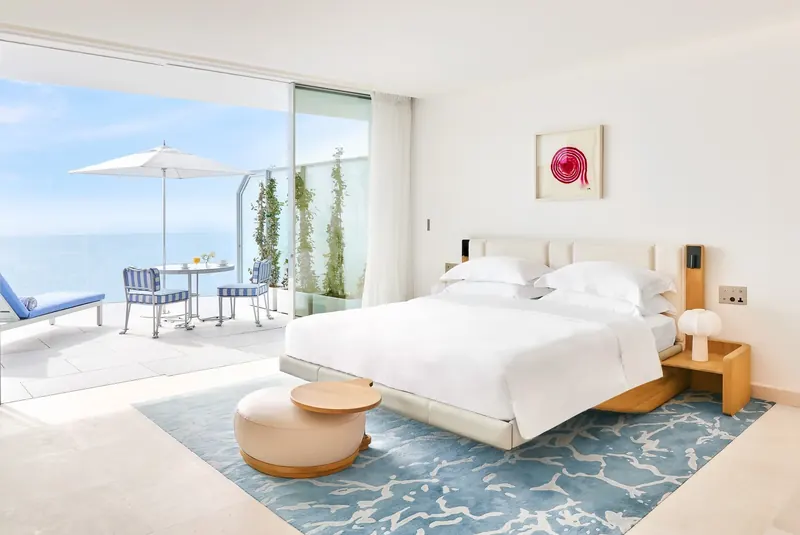
Much of a refurbishment is renewing the FF&E — recovering or replacing tired banquettes that have carried a decade of dinners, updating guestroom sets and headboards, replacing reception and bar joinery, refinishing or remaking case goods. Because the new furniture must meet current contract and fire standards even where the old did not, a refurbishment is also a quiet chance to bring an interior up to compliance as well as up to date — the room looks reborn, and behind the upholstery it is safer than it has ever been.
Programme is everything
Across all of it, the programme rules. A hotel reopening a refurbished floor, or a restaurant lifting its shutters after a closure, works to dates that cannot move — the bookings are already taken, the tables already promised. There is no comfort in a beautiful banquette that arrives the morning after the relaunch. Reliable lead times, honest scheduling and the flexibility to work in phases are what make a furniture and joinery partner worth having on a refurbishment, alongside the quality of the work itself.
Planning a refurbishment
We deliver furniture and joinery for hotel, restaurant and commercial refurbishments — phased around trading, surveyed to the real building, and programmed to the reopening date. If you are planning to refresh or renovate a hospitality interior, we would be glad to sit down early and help plan the furniture and joinery side, while the dates are still kind.