A good designer-maker collaboration divides cleanly: the designer owns the vision and the maker owns the realisation, and the maker is brought in early so a sketch becomes a buildable shop drawing without losing the original intent.
It usually arrives as a flat thing — a line on tracing paper, a render lifted from a moodboard, sometimes a photograph of something glimpsed in a hotel lobby with a note in the margin: like this, but ours. A designer hands it across the bench and what they are really handing over is a held idea, the shape of a room in their head. Our job is to give it weight and grain and a way of standing up, and to hand it back better than anyone dared hope. The relationship between designer and maker is one of the quiet engines of a good interior. When it works, it disappears entirely — the finished piece simply looks as though it could never have been otherwise. When it doesn't, everyone in the room can read the seams. This is how we approach that collaboration.
We have built long working relationships with designers across many kinds of project — from restaurants and private residences to show apartments — and the shape of a good one is remarkably consistent. It comes down to who does what, and when.
Who does what
The division is simple in principle. The designer owns the vision: the look, the proportion, the materials, the way a piece sits in the room and answers to the client. We own the realisation: how the piece is engineered so it can actually be made, how it will carry itself through years of use, how it is finished, and how on earth it gets through the door of the building. The best results come when each side keeps faith with the other's ground — when the designer briefs the intent and trusts us with the construction, and we solve the construction without quietly redesigning the intent. We have learned to ask, before reaching for a pencil, what the piece is for in the designer's eye — because a cabinet that reads as architecture wants a different hand to one meant to feel like a found antique, and the answer changes everything downstream.
Bring the maker in early
The single thing that most determines whether a project runs smoothly is when the maker is brought in. Early — at concept, while everything is still drawings and nothing has hardened — we can tell you plainly what is and isn't buildable, point to where a few millimetres of proportion make a piece far stronger or far cheaper, and head off the problems that are eye-watering to fix once timber has been cut. Brought in late, handed a finished design simply to execute, we lose the chance to improve it and inherit whatever was never quite thought through. A short conversation at sketch stage routinely saves weeks and real money later — the principle behind value engineering done properly.
From sketch to shop drawing
The heart of the collaboration is an act of translation: from the designer's sketch or rendering into a full set of shop drawings — the dimensioned, detailed, buildable drawings that say exactly how the piece is made, down to the last fixing. This is where the held idea meets the awkward reality of a real building. We draw every joint, section and fixing, resolve how the piece negotiates the floor that isn't level and the wall that isn't plumb, and send it back to the designer to read against their vision. It is an iterative conversation — a drawing returns with a pencil note querying a reveal, we answer, it goes round again — and it is where most of the value is quietly added. Our note on specifying bespoke joinery goes deeper into briefing a workshop well.
Samples, prototypes and sign-off
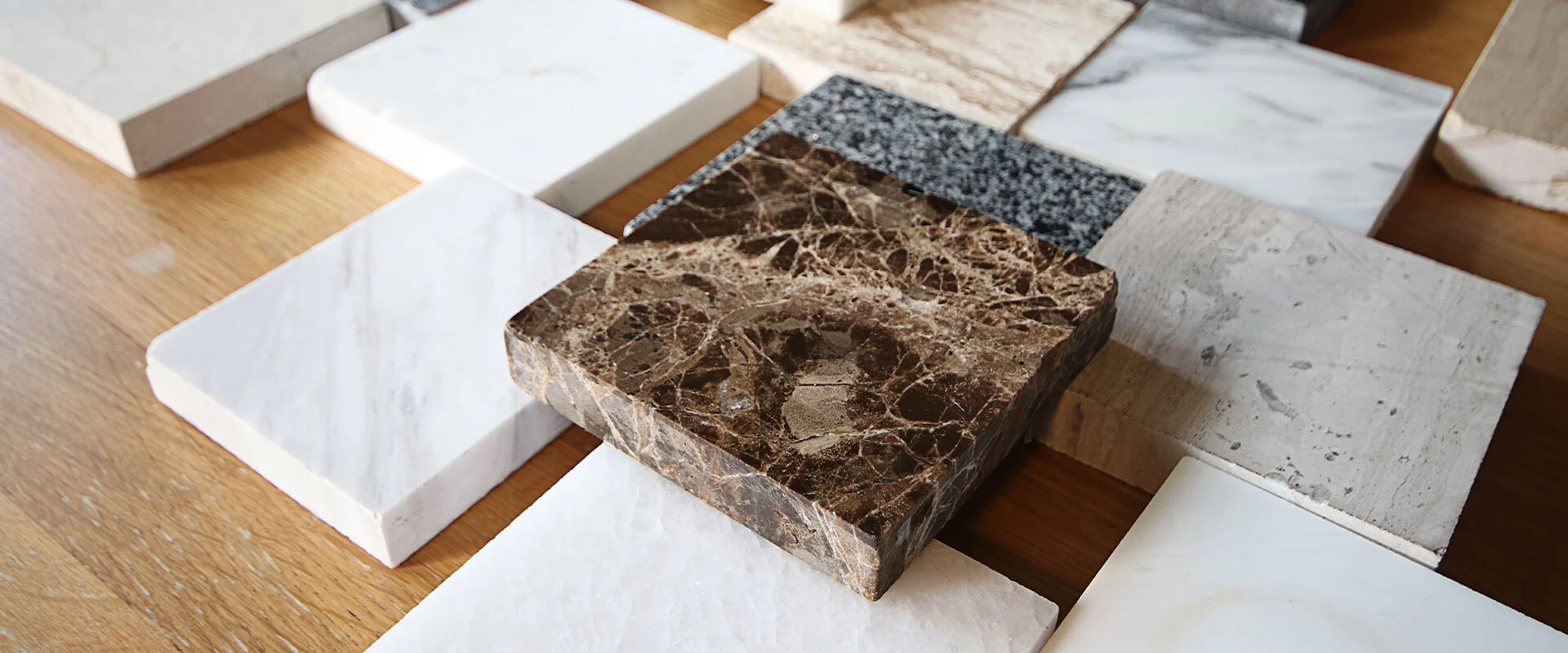
Drawings can only carry an idea so far; at some point materials have to be seen and held. We make finish samples, veneer lay-ups and, for important or repeated pieces, full prototypes, so that designer and client can sign off on the real thing before we commit the whole job. A prototype chair to sit in, a polished sample turned in the light until the figure of the timber catches, a mock-up of a single banquette section to lean back against — these take the risk out of a project and almost always improve it. More than once a sample held up against the actual wall, in the actual afternoon light, has sent us back to the finishing bench for a warmer tone — and the piece was the better for it. Sign-off here is what lets the workshop build with real confidence.
Programme, site and the other trades
A piece never exists in isolation; it lands onto a live site alongside builders, electricians, decorators and the rest of the designer's scheme. We coordinate our drawings and our delivery with that programme — making sure power and services are waiting where the furniture needs them, that the route in actually exists, and that we install at the right moment in the sequence rather than against a freshly decorated wall. A maker who is easy to coordinate with is worth as much to a designer as one who makes beautifully — and the two are not, in our experience, in tension.
What makes it work
Across years of these relationships, the collaborations that produce the best work share the same handful of traits: the designer brings us a problem to solve rather than an order to fill; the maker is brought in early and trusted with the engineering; both sides say the difficult thing plainly and quickly when something has to change; and everyone keeps their eye fixed on the same horizon — the finished piece in the finished room. Get that right and the furniture looks, as it should, as though it was always meant to be there.
The long relationship
The best designer-maker relationships are never one project deep. Over a run of jobs a workshop learns how a particular designer thinks — their favoured proportions, the tolerances they will and won't accept, the finishes they keep returning to, the things they care about fiercely and the things they are happy to leave to us. That accumulated understanding makes each project quicker and better than the last: the brief can be shorter because the shorthand is established, problems are anticipated before they surface, and the maker becomes, in effect, an extension of the studio. We have built exactly these relationships across restaurants, private residences and show apartments, and the work visibly deepens with the familiarity. For a designer, a maker who already knows how you work is worth a great deal; for us, it is simply the most satisfying way to work.
A standing invitation
If you are a designer with a piece you cannot quite find — or cannot find made well enough — that is exactly the conversation we most enjoy having. Bring us a sketch on the back of an envelope and we will tell you honestly, and early, how to make it real.