Hotel lighting design works by layering three sources: ambient light for overall level, task light for specific jobs, and accent light for focal points, each on its own control so a room can suit any hour.
It is late, and you push through the door of a hotel you have never visited before. Before you have read a single sign, before you have taken in the furniture or the art or the height of the ceiling, you already feel something. The room is warm. A glow pools at the reception desk and softens toward the corners. Somewhere above you a fixture catches the eye and holds it for a moment. You have not noticed the light, exactly — you have noticed how it makes you feel. That is the quiet trick of it. Of all the disciplines that shape a hotel interior, lighting is the one a guest reads first and the one designers underestimate most.
Why lighting carries the guest experience
A hotel asks one lighting scheme to do jobs that quietly contradict one another. The lobby must feel composed at noon and intimate at midnight. A guestroom must carry someone through reading, working, getting ready and sleep — sometimes inside a single hour. A restaurant has to flatter the faces around a table while letting the staff see the plates they are carrying. No one source can do all of that. That is why everything good in hotel lighting begins with layering.
The three layers
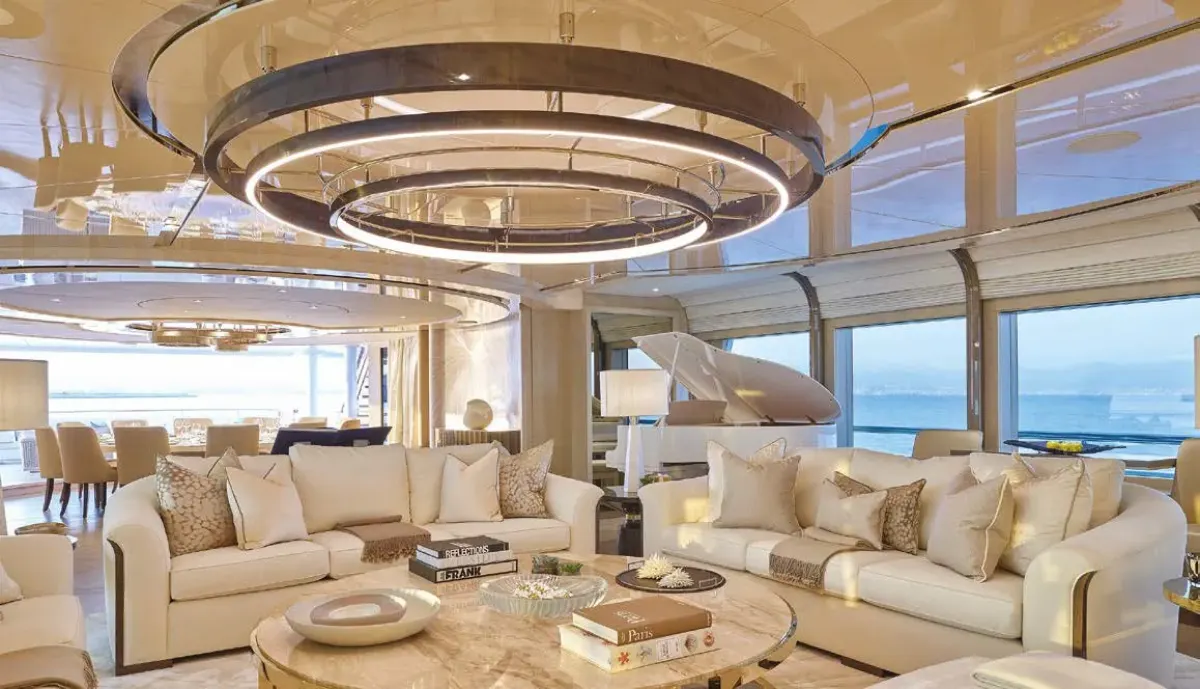
Ambient light sets the overall level — concealed coves, walls washed gently, large decorative fixtures running low and easy. Task light answers to a job: the reading light by the bed, the lamp on the desk, the surround at the vanity. Accent light is where a room finds its voice — a wash across stone, a glance off joinery, a single vase of flowers lifted out of the dark. Give a room all three layers, each on its own control, and it can become whatever the hour asks of it. Give it ambient light alone and it stays a lobby at noon, no matter the clock.
Guestrooms: the hardest room in the building
A guestroom is not judged at the design review. It is judged at six in the morning by someone fumbling for a switch, and again at eleven at night by someone who simply wants the dark. The details that survive that test are always the same:
Bedside controls that turn everything off without a diagram. Reading lights placed for reading in bed, not for symmetry on a plan. A master switch within reach of a tired arm. Warm colour temperature — 2700K or below where people sleep — with the cleaner, brighter light kept to the bathroom mirror, where it is actually wanted. And blackout that genuinely blacks out, because no fixture, however lovely, can make up for a thin bright seam glowing at the edge of the curtain at four in the morning.
Public spaces: composition and focal points
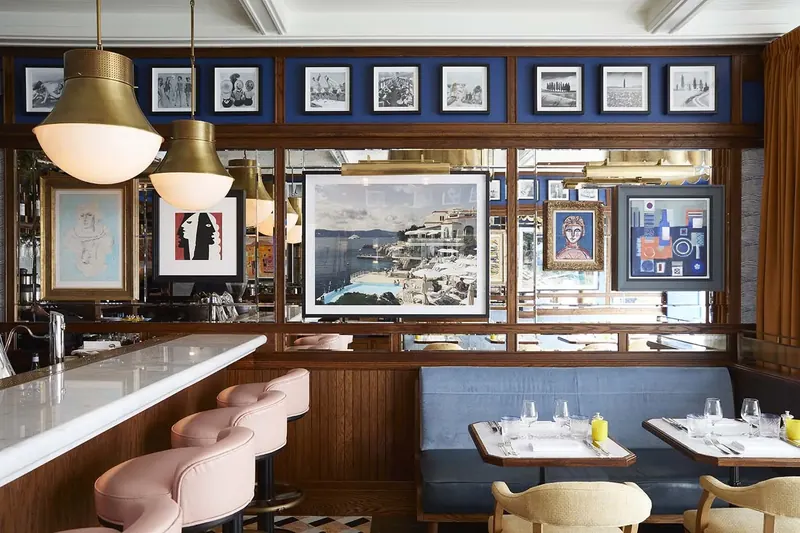
Lobbies, lounges and bars are where lighting stops being a service and becomes architecture. A statement fixture above the reception desk or hung down a stairwell gives a guest something to look up at — an anchor, a moment, the thing they photograph without quite knowing why. Symmetry is the designer's quiet instrument here: paired wall lights holding a mirror between them, a run of pendants drawing a long bar into one line, a single focal piece centred on the view a guest meets as they walk in.
These are the pieces most often made from scratch. A lobby fixture has to hold its own at architectural scale, sit comfortably against the metalwork and joinery around it, and still be something a maintenance team can clean and re-lamp without scaffolding the whole atrium. This is the work of bespoke lighting, where the fixture itself becomes part of the story the building tells.
Colour temperature and circadian comfort
Hotels live or die on sleep, and light is the loudest thing the body hears about the time of day. The rule we keep coming back to is a simple one: warm and low in the evening, everywhere a guest lingers — 2200K to 2700K — with cooler, brighter light held back for mornings and the places where work gets done. Tunable systems that shift temperature through the day are increasingly written into luxury schemes, but even a fixed one honours the principle. You never light a bar at midnight the way you light a breakfast room.
Control, dimming and the death of the panel
Every layer only earns its place if it can be reached simply. Scene-based controls — arrival, evening, night — quietly outperform a wall of dimmers that neither guests nor staff fully understand. In guestrooms, fewer and clearer buttons win every time. In the public rooms, scheduled scenes keep the place looking right through the whole day, without depending on whoever happens to be on shift.
Serviceability: the unglamorous decision that matters most
A fixture that cannot be cleaned, re-lamped or repaired in place becomes a problem the week the hotel opens its doors. Specifying replaceable LED modules and standard drivers rather than sealed units is, plainly, the difference between a fixture that lasts ten years and one that lasts three.
Working with manufacturers early
If a hotel project is moving toward bespoke fixtures, bring us in at concept stage. It costs nothing, and it saves months. See how a hospitality lighting commission runs, from drawing to installation.