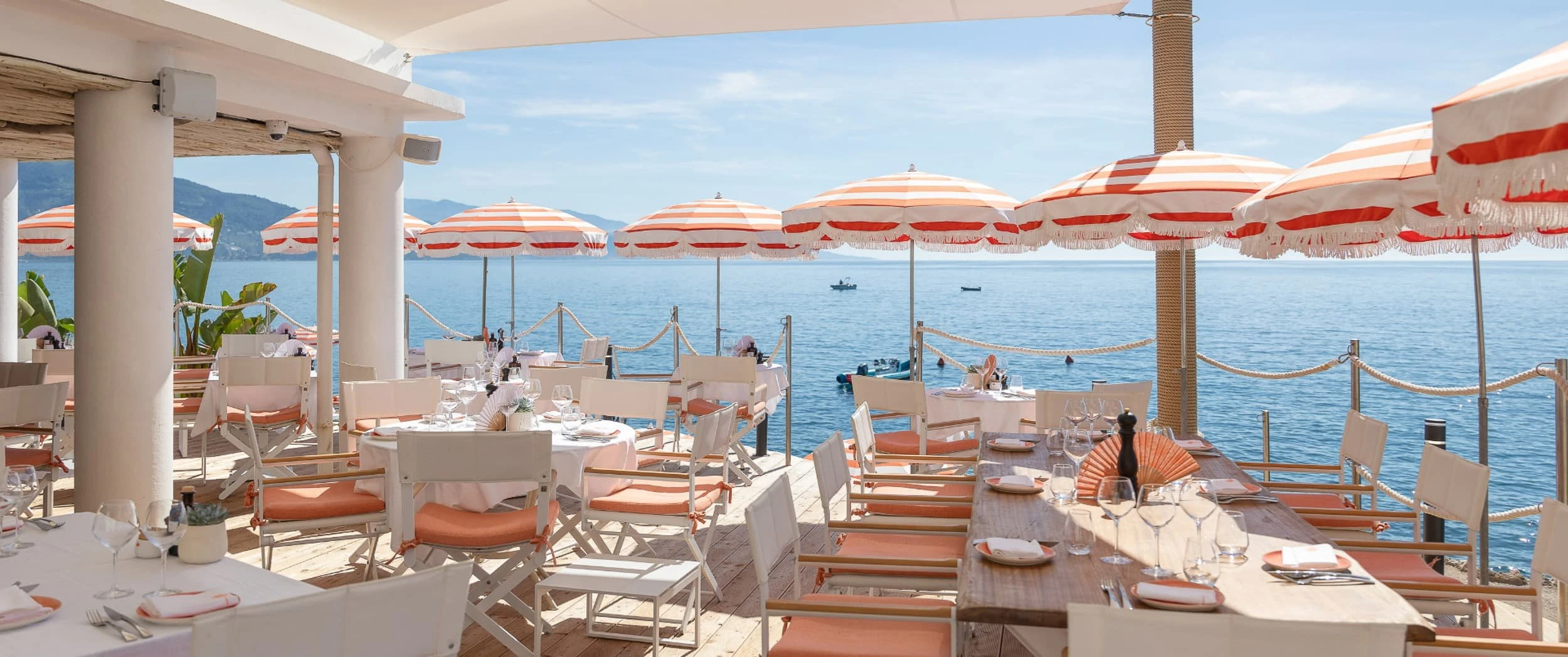
Outdoor Seating
Outdoor sofas, chairs and modular seating
Outdoor seating is engineered against weather rather than against use. Rain, sun, salt air, chlorine spray and the daily cycle of cold mornings and warm afternoons all act on outdoor furniture in ways that indoor seating never sees. A seat built for a drawing room and moved onto a terrace will not last a season; outdoor seating is specified differently from the frame upwards.
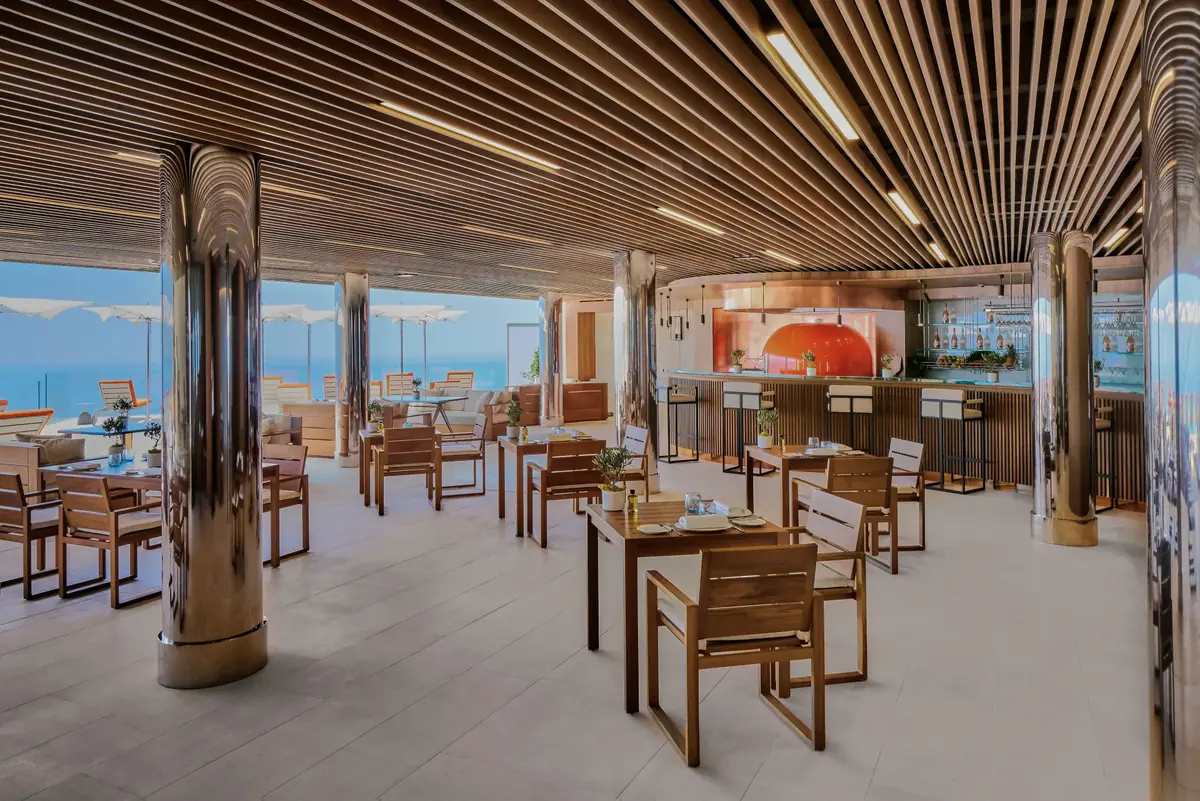
The workshop builds outdoor sofas, lounge chairs, modular sectionals and outdoor benches for residential terraces, hotel pool decks, restaurant gardens and superyacht aft decks. The construction is built around weather: teak, iroko or powder-coated metalwork frames; reticulated open-cell foam that drains water through its structure; performance fabrics rated for UV, abrasion and chlorine. Every piece is built to live outside.
.webp)
The outdoor seating we build
Outdoor seating briefs fall within a handful of established forms.
Outdoor sofas and lounge chairs
Single sofas and matched chair sets sized to a terrace or garden room. Frames are teak, iroko or powder-coated aluminium, with the joints engineered to survive seasonal movement. Cushions sit on a sprung or webbed base inside the frame; covers are removable and zipped, with the fabric specified for UV and abrasion. The form follows residential sofa design with the engineering adapted for outside.
Modular outdoor sofa systems
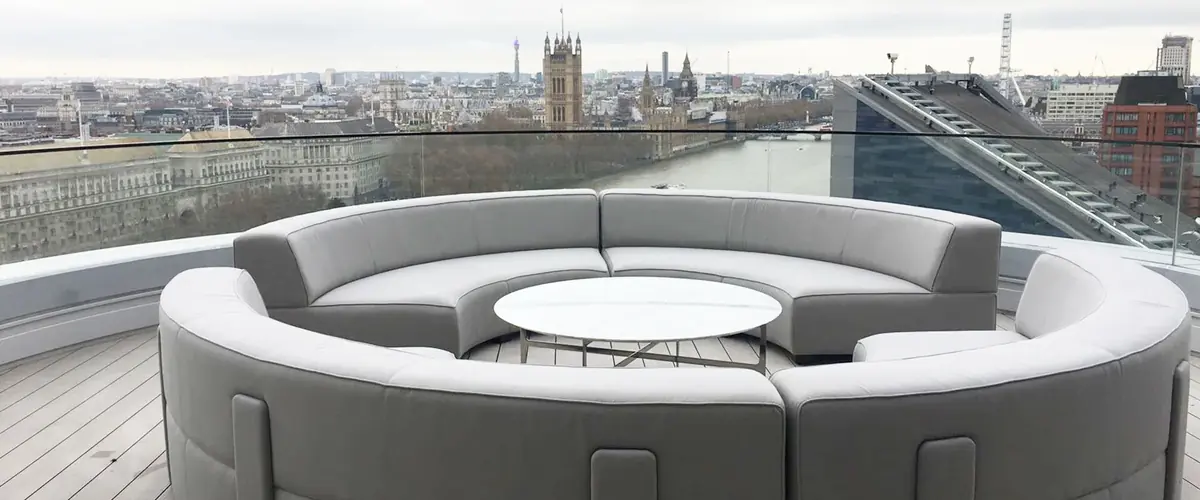
Modular sectional seating built from individual modules that join and reconfigure for different terrace layouts. Modules can be ordered with arms, without arms, as corner pieces, or as armless pieces that face two ways. Specified into hotel pool decks, large residential terraces and rooftop bars where the seating arrangement may change with the season or the use.
Daybeds and lounge sets
Generous outdoor seating sized for lying down as much as sitting up — deep seats, low backs, separate pull-out footstools. Covered in detail on our daybeds and loungers page.
Bar and high-back outdoor seating
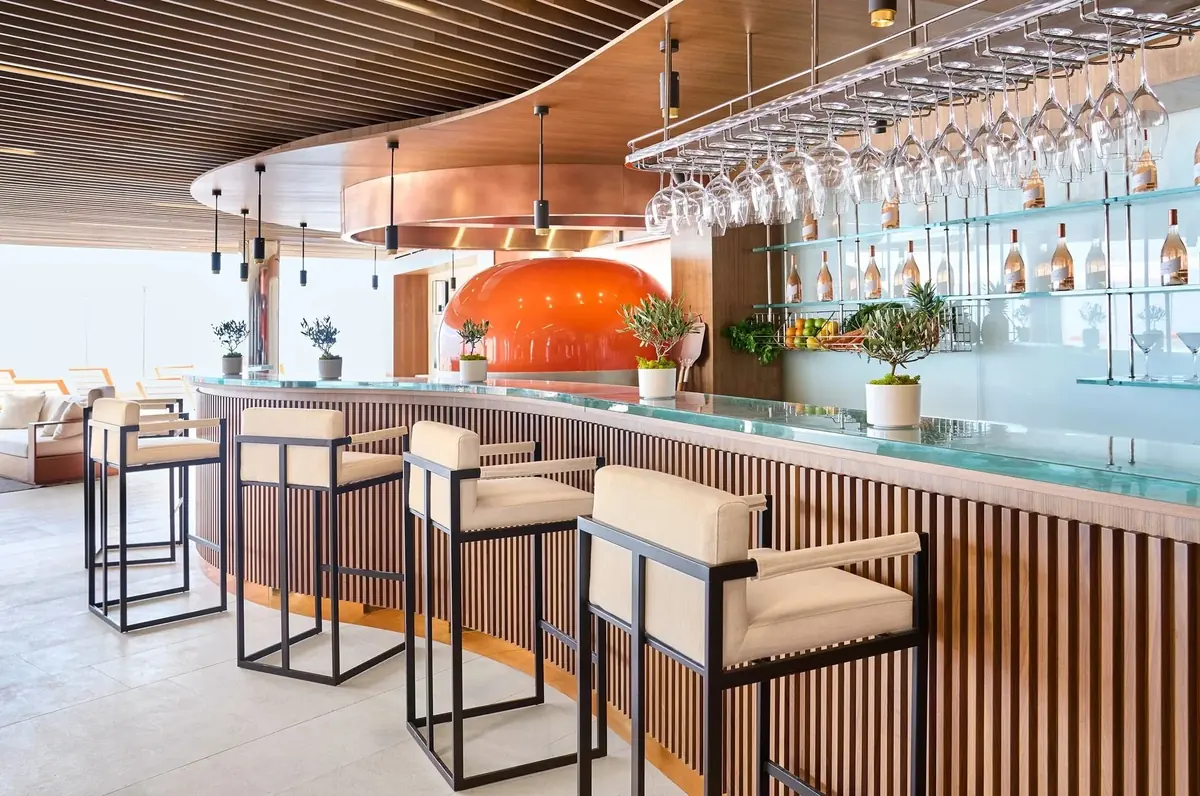
Taller outdoor chairs sized for bar counters and high-bench dining. The same engineering as the lower seating, scaled for the surface height. Specified into outdoor kitchen counters, terrace bar setups and rooftop hospitality.
Benches and built-in outdoor seating
Continuous outdoor benches running along a wall, a planter or a balcony rail. Benches can be built freestanding or as fitted joinery, with cushions specified separately for use. Fitted outdoor benches are covered under outdoor & terrace joinery.
Specifying outdoor seating
Frames are specified against location and exposure. Teak is the traditional outdoor timber — high natural oil content, dimensionally stable in weather, ages to a silver grey if left untreated or maintained as warm honey with periodic oiling. Iroko is a cost-effective alternative with similar properties. Powder-coated aluminium is specified where weight matters — rooftop terraces, yacht decks, pieces that need to be moved seasonally.
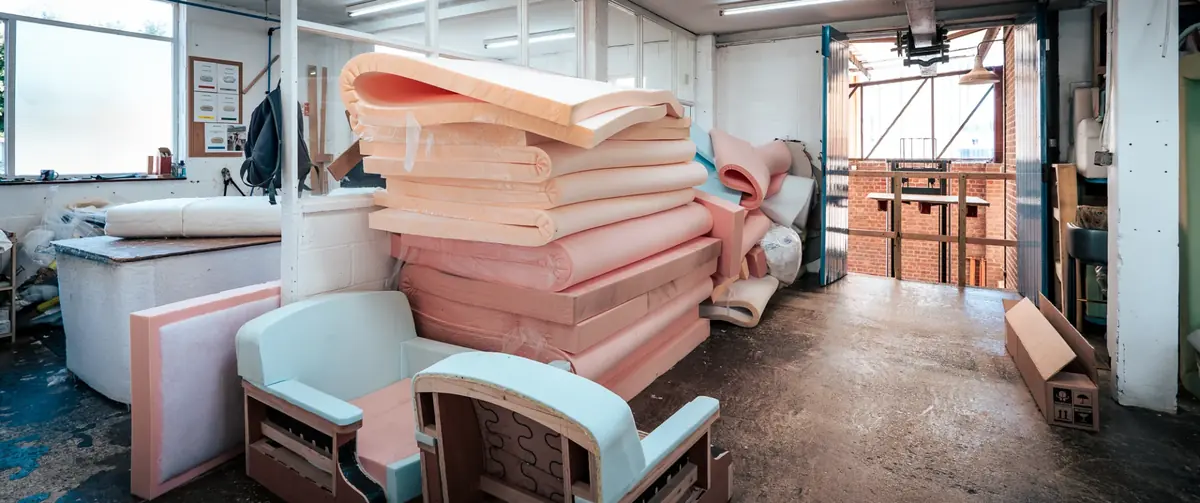
Cushion fills use reticulated open-cell foam — the cell walls dissolved away during manufacture so water drains through the cushion rather than soaking into it. Reticulated foam recovers shape after compression and resists mould and mildew. Detailed in the foam in upholstery guide.
Fabrics are solution-dyed acrylic, Sunbrella, or similar performance cloths engineered for UV stability, water shed, abrasion and chlorine cleaning. Standard performance fabrics are rated for 1,500–3,000 hours of direct sun before fading; marine-grade fabrics extend that further. Covers are removable and zipped for cleaning. Lead times run 10–16 weeks from approved drawings depending on frame complexity.
Where this sits
This page covers one piece-type in the outdoor catalogue. The broader range — outdoor seating, dining and low tables, daybeds and loungers, pool decks, hospitality terraces and superyacht decks — sits under outdoor furniture. Fixed outdoor joinery (planters, built-in benches, outdoor kitchens) is covered under outdoor & terrace joinery. The cushion engineering — reticulated drains-rather-than-soaks foam, performance fabric specification — sits under foam in upholstery and performance fabrics.