Daybeds & Loungers
Daybeds and loungers, by the pool and the sea
A daybed or a sun lounger is the most relaxed outdoor furniture there is — a piece sized for lying down rather than sitting up, used by the pool, on the terrace, at the beach house. The form is older than most other outdoor furniture: classical Mediterranean villas had stone day-beds in their gardens, and the modern teak or aluminium lounger is a direct descendant.
The workshop builds daybeds and loungers for residential pool decks, hotel and resort installations, superyacht decks and high-end private gardens. The construction is the same outdoor engineering set out under outdoor seating, with the proportions scaled for full reclining use.
The daybeds and loungers we build
Most briefs fall within a handful of established forms.
Sun loungers
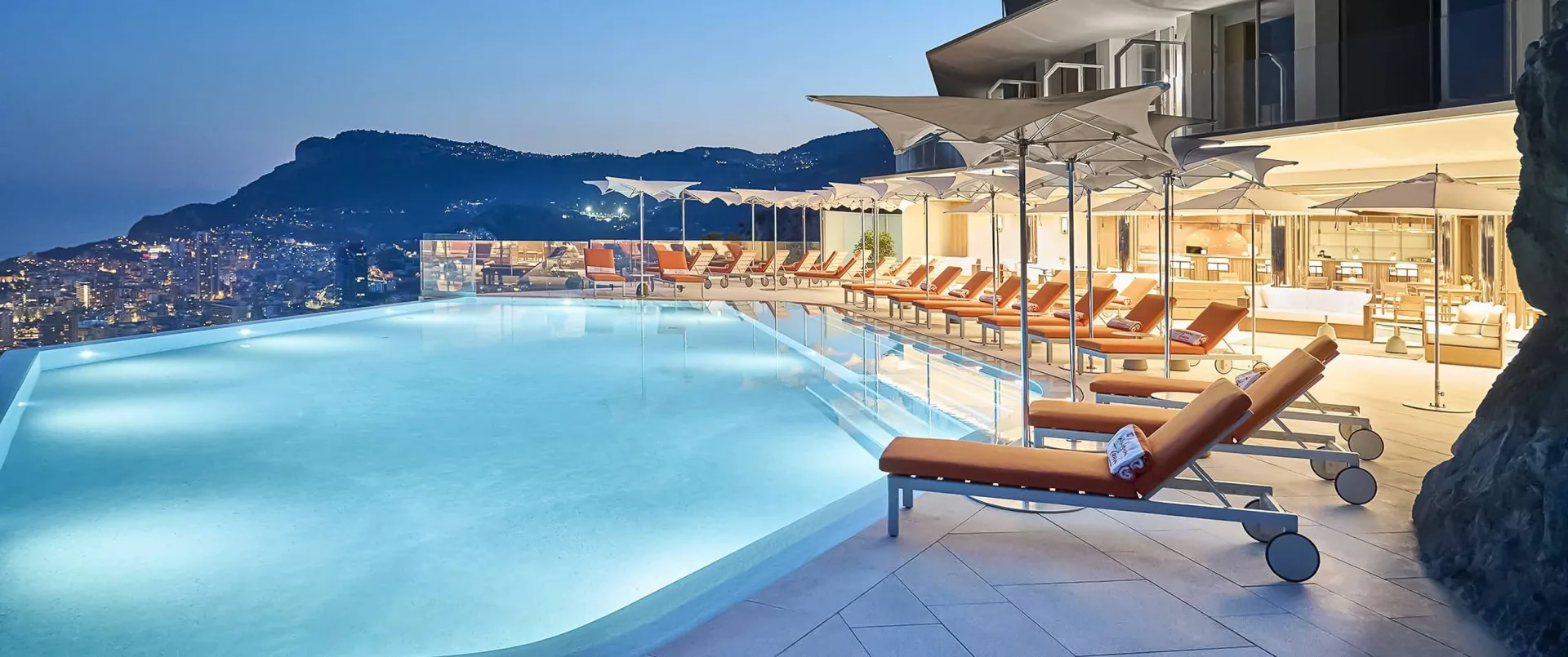
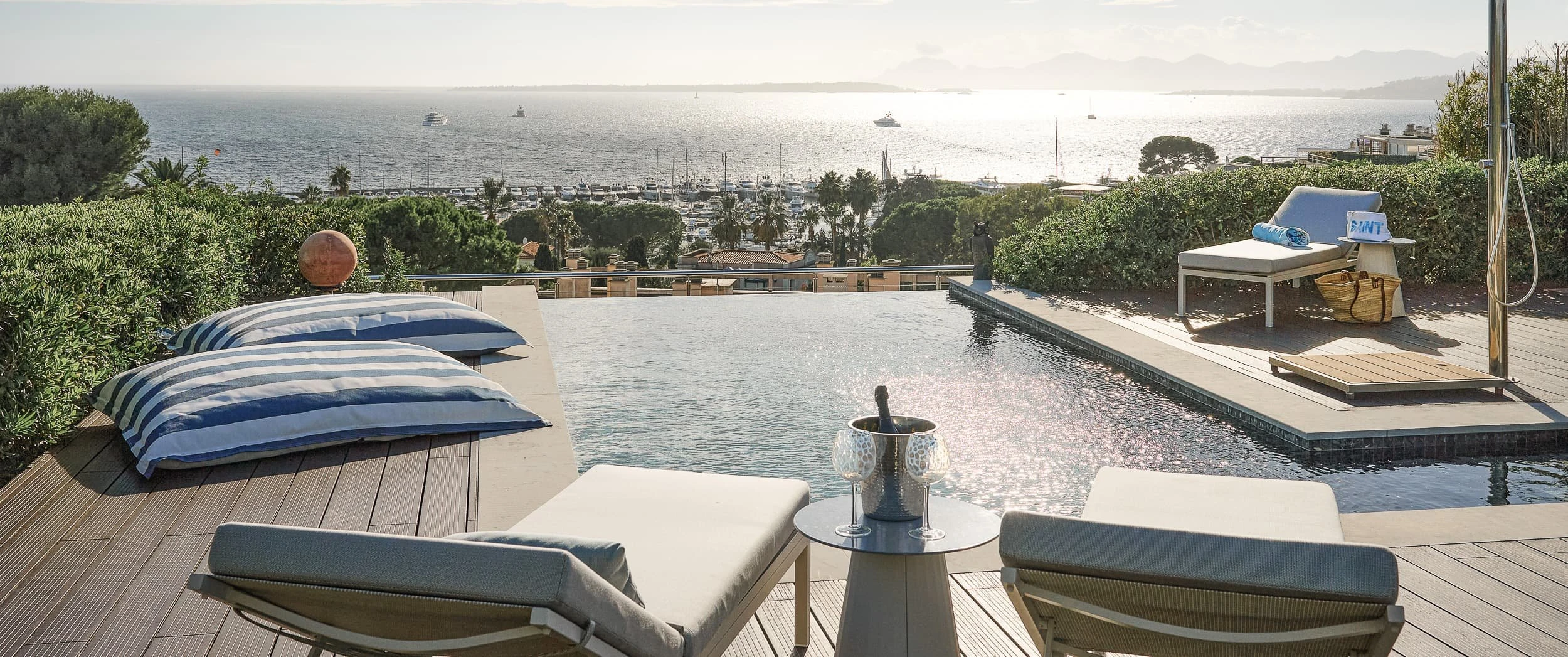
The classic single lounger — a reclining chair with adjustable back, side arms (or armless), wheels at the foot, sized to the user. Teak, iroko or powder-coated aluminium frames; performance fabric cushions in single colours or solution-dyed stripes. Specified in pairs or sets of four or six for pool-side hospitality and residential pools.
Double daybeds
Larger loungers sized for two people side by side, with or without a central armrest. Double daybeds give a generous lying surface and read as a piece of luxury beach-club furniture; specified into resort pool decks, large residential pools and beach-house terraces.
Canopied daybeds and four-poster loungers
Daybeds with integrated shade — a fixed canopy or a four-poster frame with sides that hang as muslin curtains. Canopied daybeds give a private, shaded retreat by the pool or on the beach. Often specified for hotel beach clubs and high-end residential pools where uninterrupted privacy and shade are wanted.
Built-in poolside daybeds
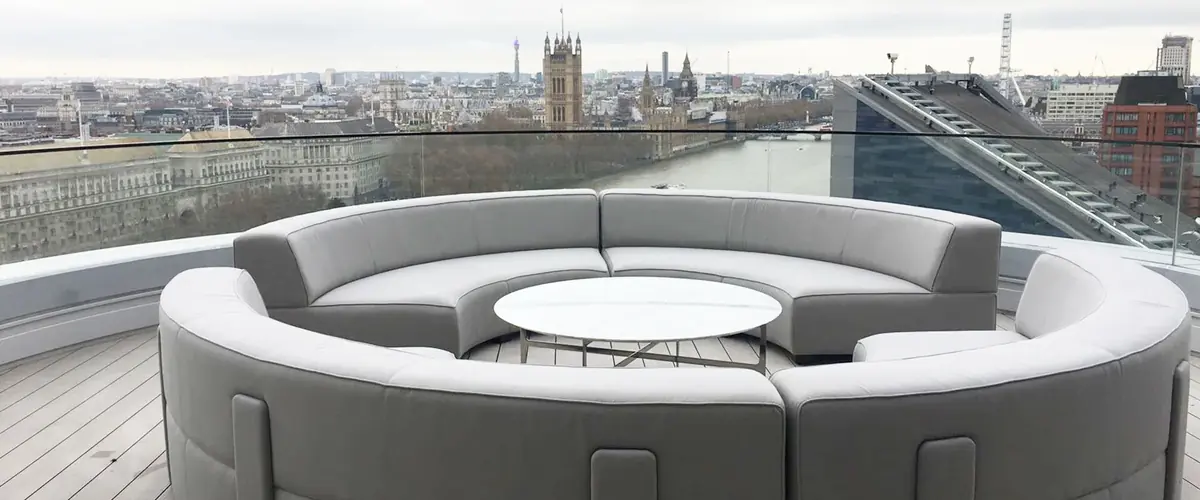
Larger custom daybeds engineered for a specific pool deck, integrated into the architecture of the deck rather than placed on it. Built-in daybeds use the engineering of outdoor & terrace joinery, with cushions made in the upholstery workshop and laid in on installation.
Chaises and reclining benches
A traditional French form — a reclining chair-cum-bench with no specific user position. Chaises are specified into more formal residential terraces and into garden and library terrace overlooks, where the form reads as a piece of garden furniture rather than as pool furniture.
Specifying a daybed or lounger
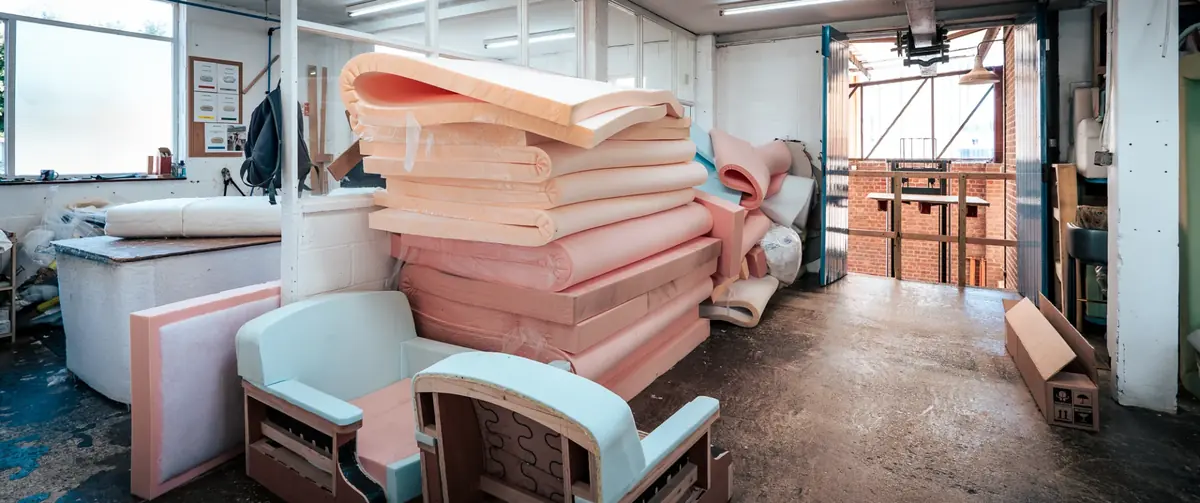
Cushion fills use reticulated open-cell foam — the same drains-rather-than-soaks construction used across the outdoor catalogue, covered in detail on the foam in upholstery guide. Cushions are deeper on loungers than on dining seating because the user lies flat: 7–12 cm thick depending on the form.
Fabrics are solution-dyed acrylic or similar performance cloths rated for UV, abrasion and pool chemistry. Bright colours, simple stripes, and natural off-whites are the most-specified palette for residential and hospitality work. Covers are removable and zipped for cleaning; some clients specify a second set of covers for seasonal change.
Frames carry castors at one end for poolside repositioning. Standard sun loungers fold flat for winter storage; built-in daybeds remain in place year-round and are covered with bespoke fitted covers when not in use. Lead times run 10–14 weeks from approved drawings.
Where this sits
This page covers one piece-type in the outdoor catalogue. The broader range — outdoor seating, dining and low tables, daybeds and loungers, pool decks, hospitality terraces and superyacht decks — sits under outdoor furniture. Fixed outdoor joinery (planters, built-in benches, outdoor kitchens) is covered under outdoor & terrace joinery. The cushion engineering — reticulated drains-rather-than-soaks foam, performance fabric specification — sits under foam in upholstery and performance fabrics.