Foam in Upholstery
The foam inside the seat
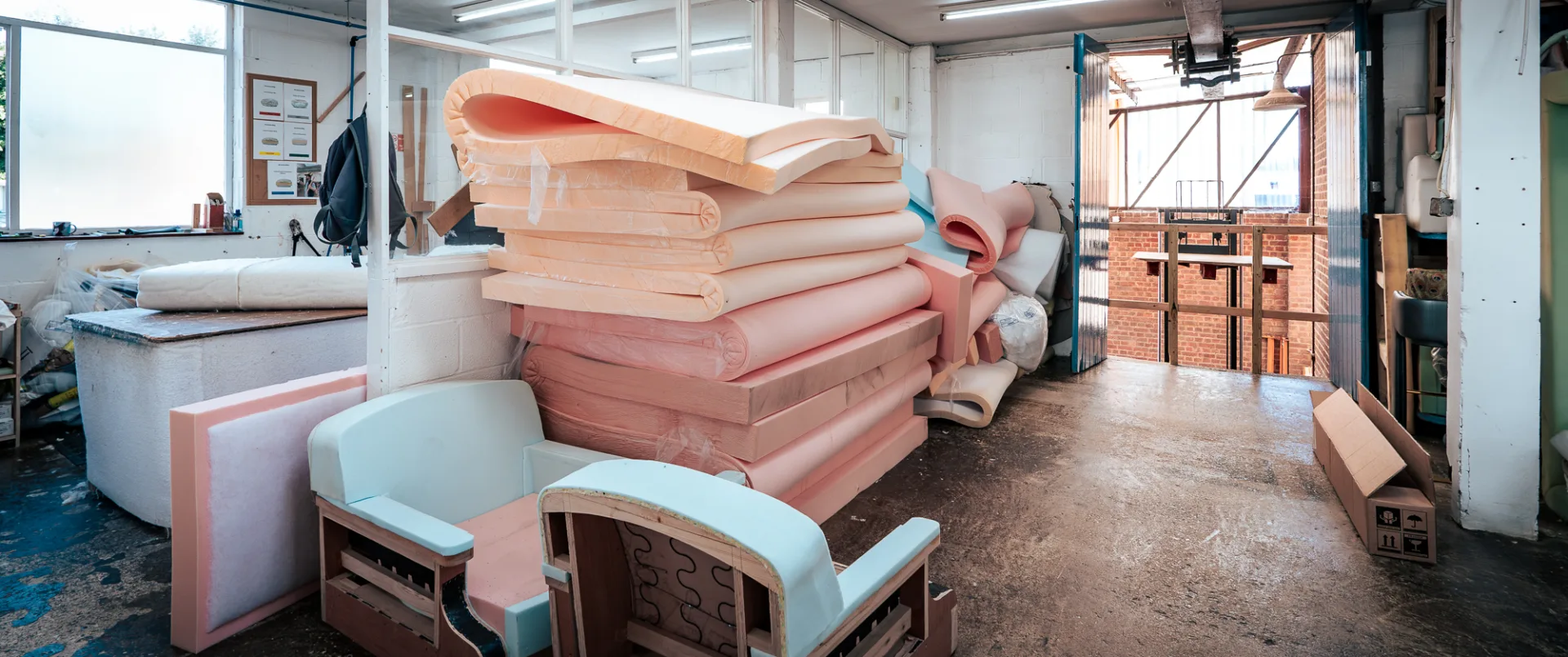
Foam is the most-used cushion fill in modern upholstery, and the least understood. Two pieces of foam can look identical and behave completely differently in service: one holds its shape for fifteen years of daily use, another flattens within two. The difference is not the colour or the cut. It is the density, the hardness, the cell structure, and the additives that make it meet fire regulations.
This guide covers the foam grades we specify, what density and ILD actually mean, how CMHR foam meets UK fire compliance for residential and contract seating, and the cases where latex, memory foam or reticulated foam are the right call. It is a companion to our wider guide to upholstery fills, which covers feather, down and the wrapped-foam combinations used alongside solid foam in most cushions.
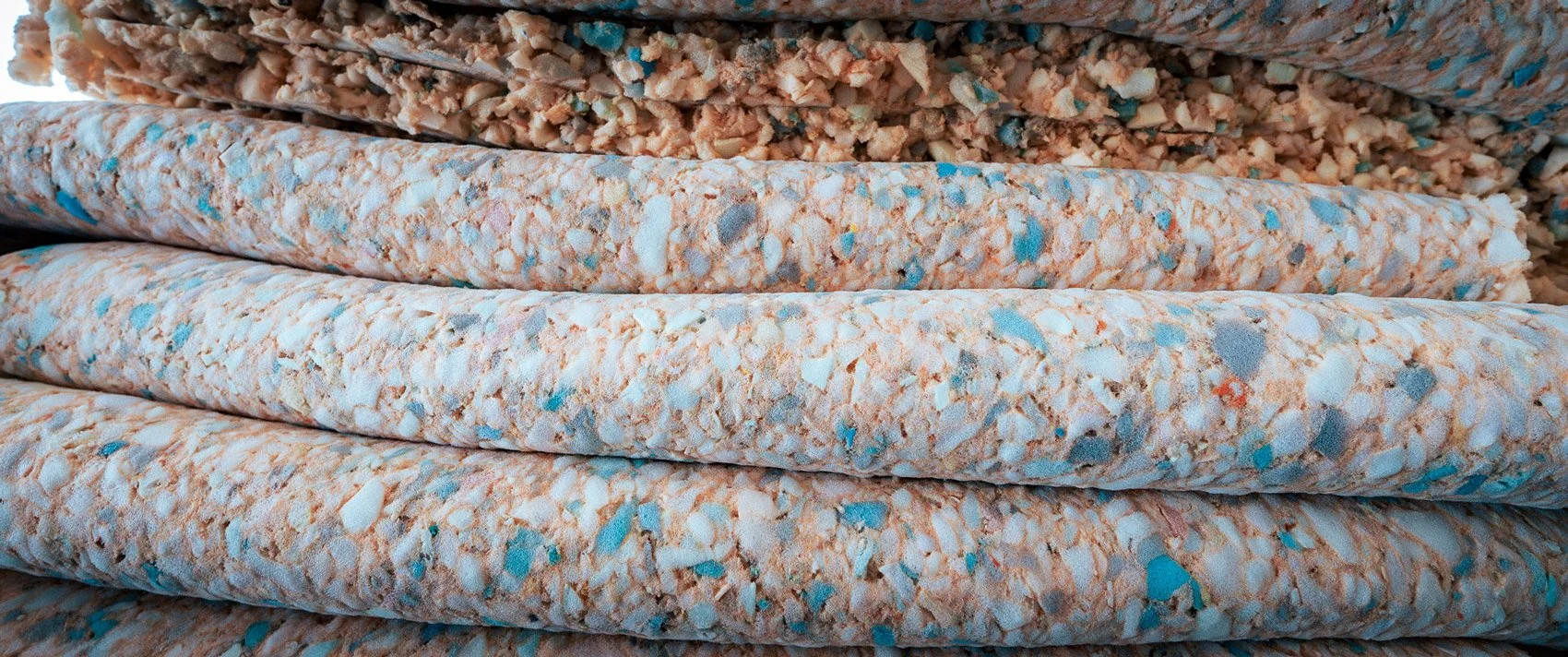
Density and hardness — the two numbers that matter
Foam is specified by two numbers. Density tells you how long it will last; hardness tells you how it will feel. Confusing them is the most common mistake in cushion specification, and it is the source of most premature cushion failures.
Density is the mass of foam material per cubic metre, measured in kg/m³. A higher-density foam has more polymer in the same volume of cushion. It costs more, weighs more and lasts longer. Density is the single best predictor of how well a cushion will recover after years of use. As a working guide: 28–33 kg/m³ is a budget foam that flattens within a few years; 35–50 kg/m³ is the residential standard for furniture intended to last a decade or more; 50–75 kg/m³ is the contract and hospitality range, built to take continuous load.
Hardness is measured as ILD (Indentation Load Deflection) or CLD (Compression Load Deflection), and it tells you how firm the foam feels under load — how many newtons of force are needed to compress the foam to 40% of its thickness. A soft seat is around 80–120 N; a medium seat is 130–180 N; a firm or contract-grade seat is 200 N or more. ILD is independent of density: you can have a high-density foam that is soft to sit on, or a low-density foam that is firm. For a long-lasting comfortable cushion you want both numbers in the right range together.
The foam grades we specify
Standard polyurethane (PU) foam
The lowest grade in common use, typically 25–33 kg/m³. Adequate for occasional seating, decorative cushions and lightly-used backs, but not for primary seating. Cells are larger and less uniform than HR foam, so the cushion compresses more easily and recovers more slowly. We do not specify standard PU below 30 kg/m³ for any seat that will see daily use.
High-Resilience (HR) foam
The standard for residential upholstery. HR foam has a smaller, more uniform cell structure than standard PU, which gives it noticeably better recovery after compression and a more even feel across the cushion. Typical residential specification is 35–45 kg/m³. HR foam holds its shape for 10–15 years of daily use when correctly specified for the seat depth and the user weight, and it can be re-cut into the original casing if the cushion needs to be refreshed later.
High-Density foam
50–75 kg/m³, used where the seat will see continuous load: restaurants, hotel lobbies, members' clubs, airport lounges. High-density foam reads firmer at first touch than residential HR, but it is the only grade that holds the line through years of constant service. Most contract cushions use a high-density base with a softer HR top layer to soften the first sit without sacrificing recovery.
CMHR — Combustion Modified High Resilience
CMHR foam is HR foam reformulated with flame-retardant additives, melamine fillers or both, so the foam passes the UK Furniture and Furnishings (Fire Safety) Regulations and BS 5852 Crib 5 for contract use. CMHR is the standard specification for any cushion or seat that needs to meet UK fire compliance — which is to say, almost everything we make, since residential seating in the UK is regulated under the same act. CMHR carries a slight cost premium over standard HR and is marginally firmer at the same density, but is otherwise indistinguishable in service.
Latex foam
Made from rubber tree sap rather than petrochemicals. Natural latex (often blended with synthetic latex) gives a denser, springier sit than HR foam at the same density, with excellent recovery and good breathability. We specify latex where a designer wants a particular character of seat — the slightly bouncy, well-supported feel of latex is recognisable — or where a client wants a lower-petrochemical specification. Latex is heavier than PU, slightly more expensive, and slower to manufacture, but lasts longer and is naturally resistant to dust mites.
Memory foam (visco-elastic)
Memory foam compresses slowly under load, distributes pressure evenly, and recovers slowly when weight is lifted. It is widely used in mattresses for these reasons. In upholstered seating it is specified less often: the slow recovery means the seat retains an impression after sitting that some users find off-putting, and memory foam softens as it warms, which can change the feel of the seat over the course of an evening. We specify visco-elastic top layers in some headboards and reading chairs where its pressure-relieving quality is genuinely wanted.
Reticulated foam for outdoor use
Reticulated foam is open-cell foam manufactured so the cell walls are dissolved away, leaving an interconnected skeleton of polymer strands. Water passes straight through it rather than sitting inside the cushion. Air passes through freely, which is what lets the cushion dry quickly after rain and resist mould and mildew. Outdoor cushions are built around reticulated foam, sometimes in a quick-dry construction with a marine-grade fibre wrap, finished in fabrics rated for UV stability and water resistance.
Layered cushion constructions
Few cushions are built from a single block of foam. Most use a layered construction that tunes the feel from top to bottom: a softer top layer for the first sit, a denser core for support, and sometimes a thin fibre wrap to smooth the line under the fabric. A typical residential build is a 25–35 mm soft HR top (around 100–120 N) over a 60–100 mm medium HR core (around 160–180 N). Contract builds invert the proportions: a denser core, a thinner top layer, and a covering wrap that takes the visible compression rather than the foam.
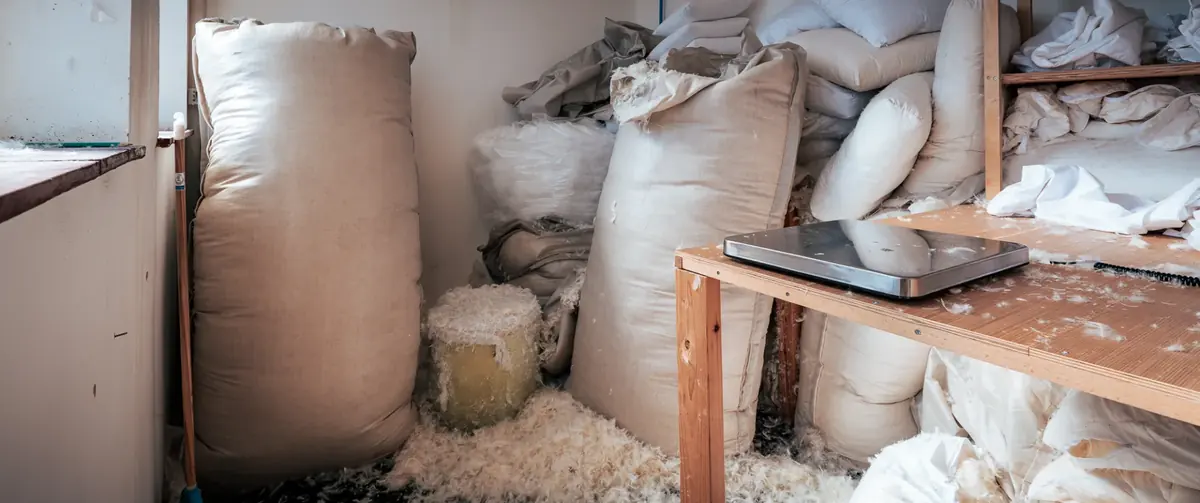
Layering serves two purposes: it lets the seat feel soft without compromising recovery, and it puts the wear in the surface layer that can be replaced at much lower cost than re-foaming the whole cushion. Wrap layers — wool, fibre or feather over the foam — do the same job from the fabric side, softening the seat's first touch and breathing under the cover.
Fire compliance, briefly
UK upholstered seating must meet the Furniture and Furnishings (Fire Safety) Regulations 1988 (as amended). For residential pieces this typically means CMHR foam and FR-treated interliners or covers; the foam alone does not pass the regulations, the upholstered piece as a whole does. For contract and hospitality seating — restaurants, hotels, members' clubs — cushions are usually specified to BS 5852 Crib 5, the higher of the standard ignition source tests, which CMHR foam with the right interliner reliably meets. Our quotations state the fire route for each piece so the specifying designer can sign off the cushion fill, the interliner and the cover as a single compliant assembly.
Beyond the foam
The foam sits inside a longer build-up: a sprung or webbed seat base under it, a wrap and the fabric cover over it. The full upholstery fills guide covers how foam interacts with feather, fibre and down wraps, and our upholstery workshop page covers the order the layers are built up. Fabric and leather choice and Martindale ratings are covered under fabrics.