The difference between verre églomisé and antique mirror is intent: antique mirror is reflective glass distressed to look old with no design, while verre églomisé is a decorated surface built by reverse gilding and hand-painting.
Stand two glass panels side by side on the bench and the difference is obvious in a heartbeat. One is a mirror that has clearly lived a little — its silvering clouded and spotted, the room behind you returning soft and half-remembered, the way an old looking-glass does in a country house. The other holds a deliberate image in gold leaf, a motif that reads from the front and never came near a century of damp. Yet on a moodboard, in an email, halfway through a site meeting, the two get muddled constantly — even by people who specify glass for a living. Verre églomisé and antique (or “foxed”) mirror are cousins — both worked on the reverse of the glass, both involving metal — but they are different things, made for different ends. Knowing which is which is the difference between getting the surface you pictured and getting a surprise.
What antique (foxed) mirror is
Antique mirror is, first and last, a mirror — a fully reflective silvered surface — that has been persuaded to look old before its time. That aged, spotted, faintly cloudy character (the “foxing”) is coaxed in by distressing the silvering: laying the silver down unevenly, lifting parts of it away, letting chemistry oxidise and freckle it, then backing the whole thing to hold the effect. What you get is reflective glass with a romantic, time-worn patina — but it carries no design. It is a mood, a backdrop, never a picture. We reach for it when a client wants the tenderness of an old mirror without the cost, the fragility, or the lottery of hunting down a genuine antique large enough for the wall.
What verre églomisé is
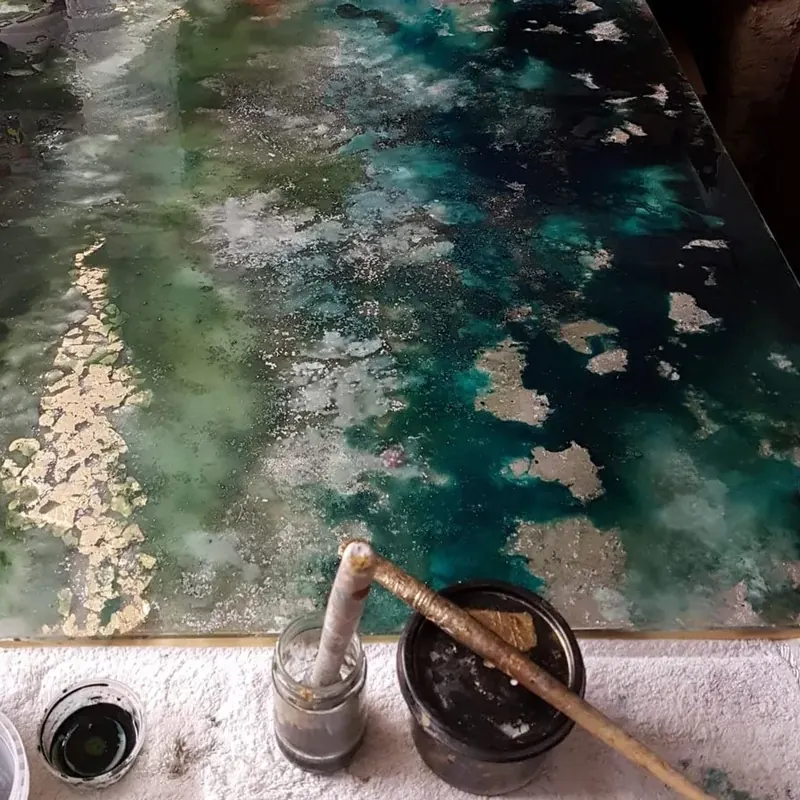
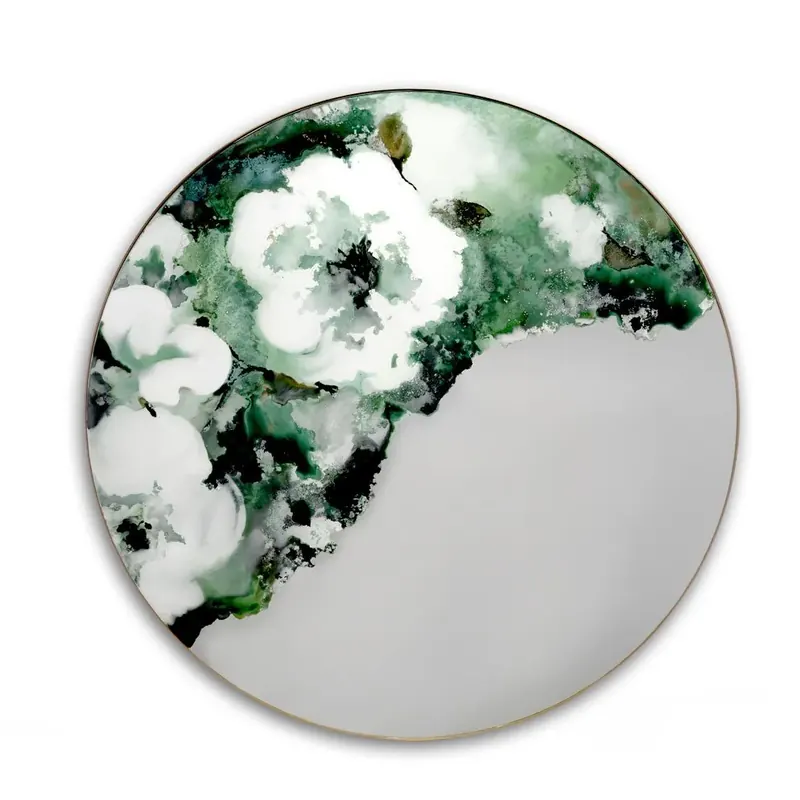
Verre églomisé is the opposite instinct: a decorated surface — a chosen image, a pattern, a field of colour — built on the back of the glass through reverse gilding and hand-painting. Where antique mirror is reflective glass made to look old, verre églomisé is glass turned into a piece of work. Gold or silver leaf is laid to a drawing, pigment is painted in reverse so it sits behind everything it will eventually show, and a composition is stacked up layer on patient layer until it reads cleanly from the front. It is made, not weathered — every panel a one-off, drawn before it is gilded.
Where they overlap
The confusion is forgivable, because the two crafts genuinely shake hands. Verre églomisé can be deliberately distressed so the gilding wears an antique air, marrying a clear design to an aged finish. Antique-mirror silvering, in turn, often becomes the ground inside a verre églomisé panel — a soft foxed field with a gilded motif floating in front of it. They share the same parentage, the family of reverse-glass crafts, and a studio worth its salt moves between them without thinking. That fluency is exactly why the two names end up standing in for each other, even though, under the surface, they describe different intentions.
Which to specify
Ask for antique / foxed mirror when you want a reflective surface carrying the soft, aged character of an old looking-glass — a wardrobe door, a panelled wall, a quiet backdrop — with no particular image to read. Ask for verre églomisé when you want a designed surface — a motif, a pattern, a passage of colour or gilding that is composed rather than simply weathered. And if you want both at once — a design resting on an aged-looking ground — say exactly that, because what you are describing is verre églomisé built over a distressed silvered base, and to our eye it is among the loveliest things glass will agree to do.
Ask for the effect, not the name
Because the words slide about so readily, the surest way to brief either is to set the names aside and describe the effect you are after — reflective or decorative, aged or composed, a backdrop or a picture — and let the maker carry that across into the right technique. More than once we have had a drawing arrive labelled one thing and built it as the other, simply because the photograph pinned to it told a truer story than the term beside it. Tell us what you want the glass to feel like, and we will talk you through which of these crafts, or which marriage of the two, belongs in your scheme.