Ottomans & Benches
Ottomans, and the upholstered bench
Ottomans and benches are the workshop's lighter pieces — the second seats, the coffee-table substitutes, the end-of-bed and hall pieces that finish a scheme rather than carry it. They take less of the brief than a sofa or an armchair, but the same engineering is behind the cover: a hardwood frame, a sprung or webbed base where the seat warrants it, a layered cushion build, and a pattern-cut cover.
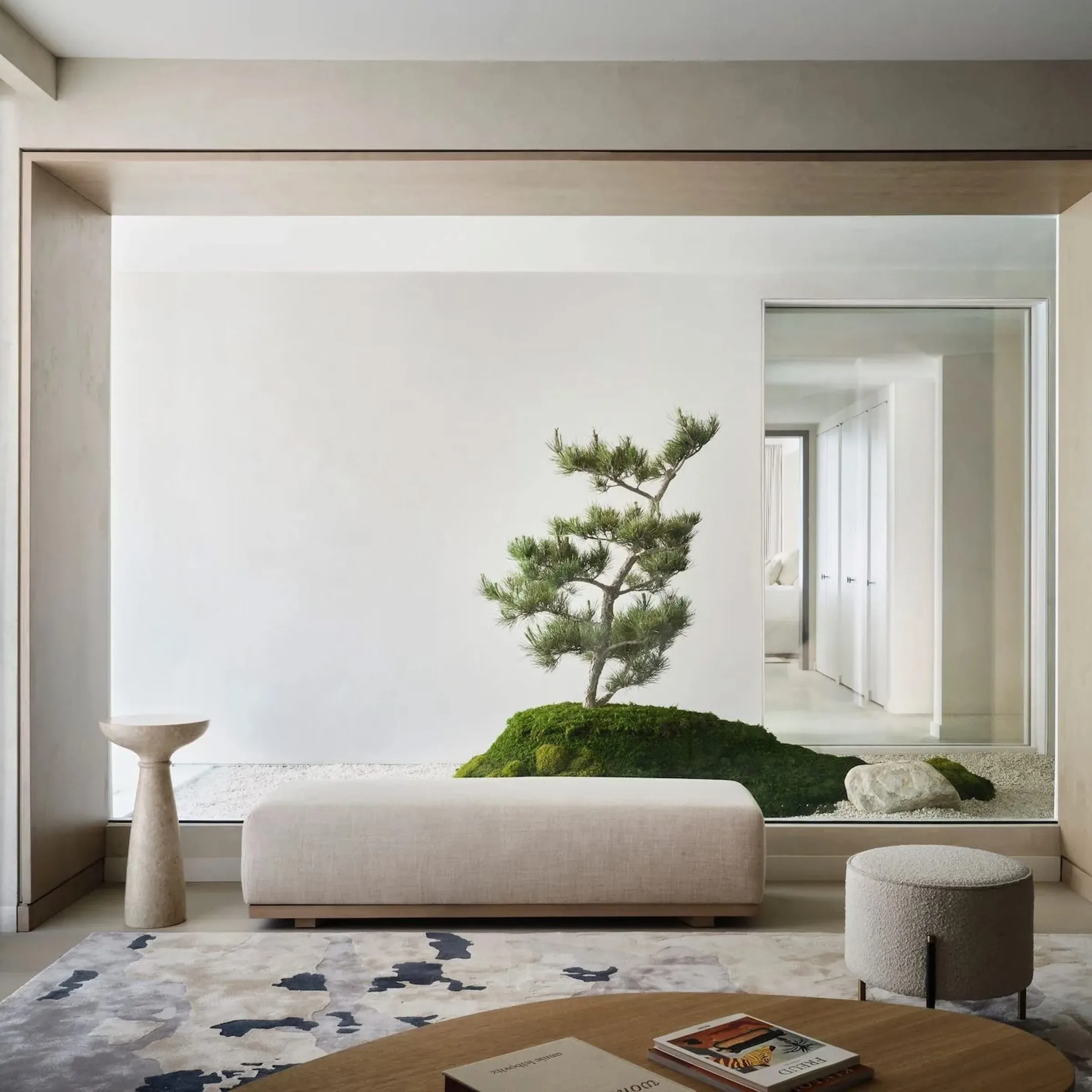
The workshop builds ottomans and benches at residential and contract scale, alongside the larger pieces in the catalogue. Some are designed as standalone furniture; some are designed against an existing piece — an ottoman sized to the front of a specific sofa, a bench sized to a bay window or the foot of a particular bed.
The pieces we build
Most ottoman and bench briefs land within a handful of established forms.
Coffee-table ottomans
A large padded ottoman sized to substitute for a coffee table in front of a sofa. Coffee-table ottomans soften the room (no hard table edge for children to fall on), double as an additional seat when guests arrive, and can take a serving tray on top for drinks. Typically built around 80–120 cm square, with a button-tufted, channelled or plain top depending on the brief. The fill is firm enough to take a tray without sinking, soft enough to read as a seat.
End-of-bed benches
An upholstered bench sized to the foot of a bed. End-of-bed benches usually match the headboard in cover or detailing, give a place to lay out clothes or sit on while dressing, and add a horizontal line to a bedroom dominated by the vertical bed and headboard. Built on a hardwood frame with a fixed or hinged top — the hinged version doubles as a blanket box.
Hall benches and bay-window seats
Long, narrow upholstered benches built for a specific location: a hall, a bay window, an entry vestibule, a dressing-room corner. Hall benches are usually 110–180 cm long, with a single or split cushion and a fixed or simple drop-on top; bay-window seats are sized to the window opening and built into the architectural niche.
Storage ottomans and blanket boxes
A padded ottoman or bench with a hinged top and a fully-upholstered or lined interior. Storage ottomans give a useful piece in a small space — bedroom, hall, dressing room — that reads as soft furniture rather than as a piece of casework. The interior is lined in cotton or linen, with a slow-close hinge mechanism on contract pieces.
Pouffes and footstools
Smaller, lighter padded pieces, sized as additional or occasional seats. A footstool sits in front of a reading chair; a pouffe acts as a movable extra seat in a drawing room. Both can be plain, deeply buttoned, channelled or fluted in line with the rest of the upholstery in the room.
Specifying an ottoman or bench
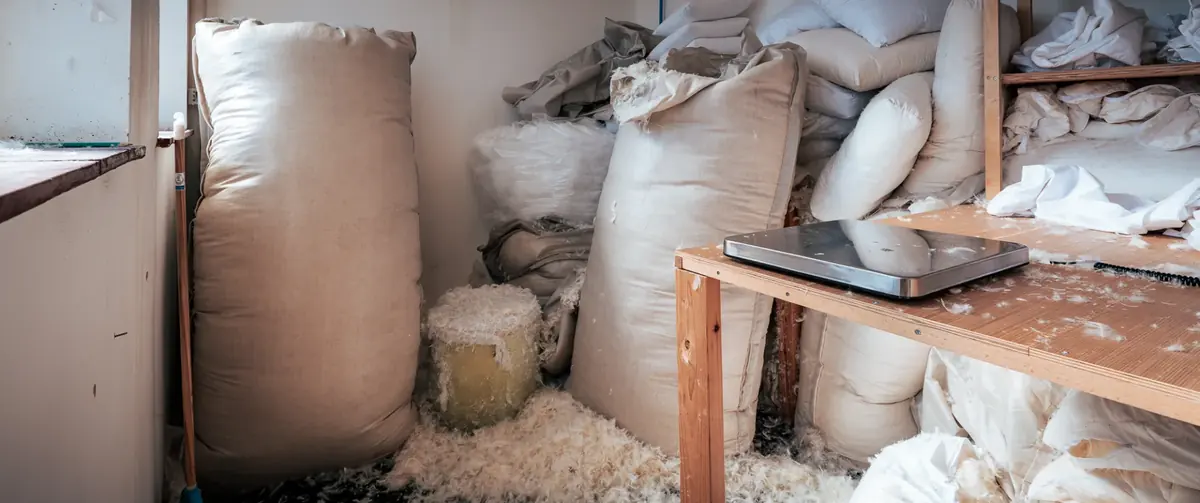
Fill choice on an ottoman is led by the brief. A coffee-table ottoman wants a firm fill that will not sink under a serving tray and recovers immediately when weight is lifted; high-density foam with a thin fibre wrap is the standard. A casual pouffe wants a softer fill — feather, or a fibre-wrapped foam — that reads as relaxed. The cushion fills are covered in detail on the upholstery fills page.
Frames are kiln-dried hardwood, usually with corner blocks, dowelled or screw-and-glued joints, and a webbed top deck. Storage ottomans use slow-close hinges from the same metalwork shop as the workshop's wider hardware. Legs are turned, carved or set on castors depending on the design.
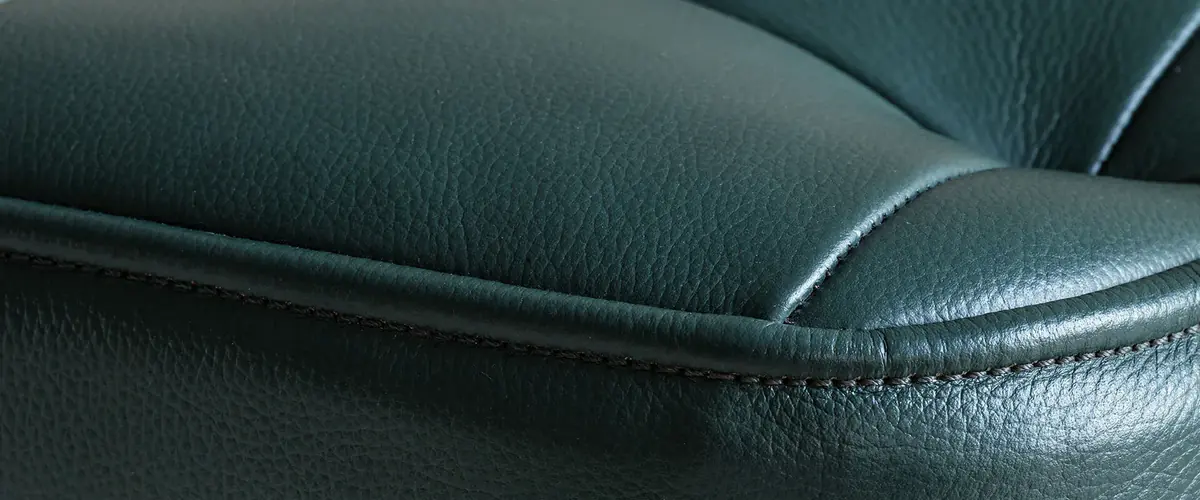
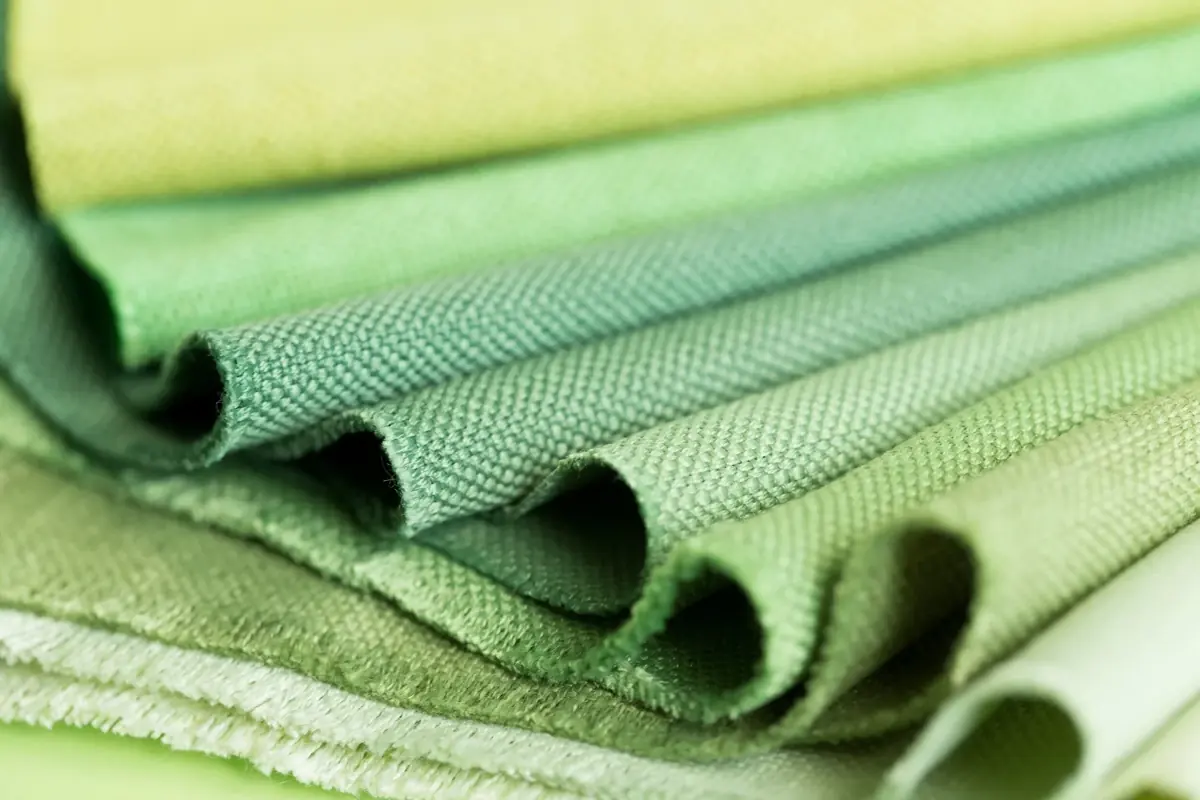
Fabric is COM-friendly. Coffee-table ottomans are often specified in a performance cloth or a wipeable leather, since the piece will see daily food and drink contact; storage ottomans and bedroom benches tolerate the full range of natural fibres. Fabric families are covered on the fabrics page. End-of-bed benches are coordinated with the room's headboard and bedroom joinery.
Where this sits
This page covers one of the piece-types built in the upholstery workshop. The broader range — sofas, armchairs, slipper and wingback chairs, dining and desk chairs, banquettes, ottomans, beds and headboards — sits under upholstered furniture. The engineering behind every piece is set out on the upholstery workshop page; the cushion fills are covered under upholstery fills, and the cover options are set out under fabrics.