Bar Stools
Bar stools, built for service
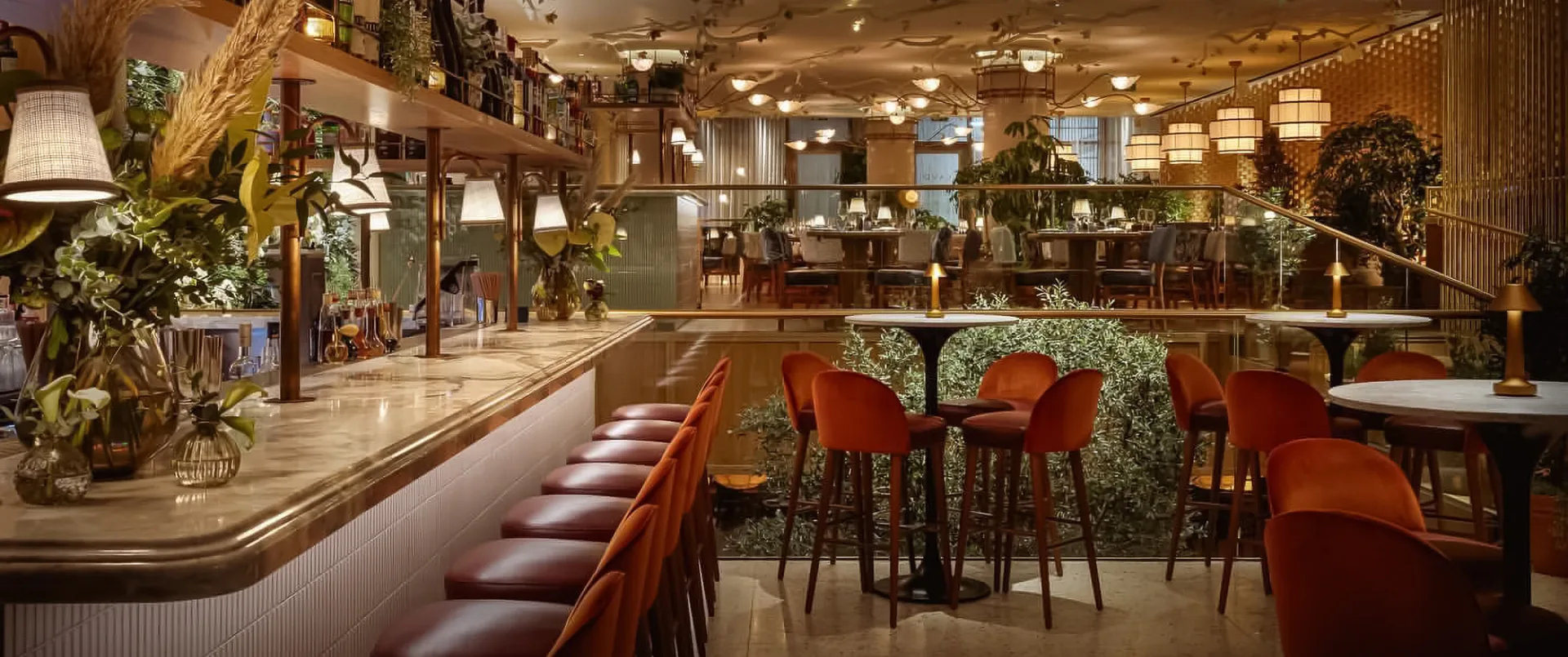
Bar stools and counter stools work harder than almost any other upholstered piece. A bar stool in a hospitality setting is sat on and stood up from dozens of times an evening, taking the full weight of the user onto a small footprint, with the upholstered seat seeing direct contact with clothing, spills and drinks every shift. The frame, the seat fill, the cover and the joint between the two have to be specified for that load — not against a generic stool brief.
The workshop builds bar stools at residential and contract scale: a single stool to match a kitchen island, a pair of stools either side of a home bar, or a run of forty for a restaurant or members' club bar counter. The build draws on the same engineering set out on the upholstery workshop page, with the frame and fill specified to the use.
.webp)
The bar stools we build
Bar stool briefs land within a handful of established forms.
Backless counter stools
The most compact form — a padded seat on a four-leg or splay-leg frame, with no back. Backless stools slide under the counter when not in use, leaving a clean architectural line at the kitchen island or bar. Specified widely for residential kitchen islands and for hospitality bars where the visual line matters as much as the comfort.
Stools with a low back or rail
A short backrest or a horizontal rail at the small of the back, giving the seated user a degree of support without breaking the line at the bar. Specified into longer-occupancy hospitality bars — cocktail bars, hotel lobby bars — where the user might sit for an hour or more rather than perch.
Tall-backed bar stools
A fully-upholstered back, sometimes wing-shaped, sometimes a simple curved panel. Tall-backed stools approach the comfort of a dining chair and are specified in restaurants where a counter bar doubles as a dining position, and in private kitchens where the household will sit and eat at the island.
Swivel bar stools
Set on a swivel base with a return-to-centre mechanism, polished steel, brass or upholstered timber. Swivel stools work well in hospitality settings where the user wants to face away from the bar to watch a room or a screen; the return-to-centre keeps the stool aligned when unweighted.
Counter vs bar height
Counter stools are sized for a 90–95 cm work surface (kitchen islands, home counters); bar stools are sized for a 105–115 cm bar surface (commercial bars, raised home bars). The two are not interchangeable — a counter stool at a bar is too short, a bar stool at a counter is too tall. Height is set at design against the surface.
Specifying a bar stool
Seat fill is the decision that most affects how a stool performs in service. Contract bar stools — restaurants, hotels — use a high-density foam (50–75 kg/m³) so the seat holds its shape through a year of evening service without compressing. Residential stools tolerate a softer HR foam, since the daily cycle count is lower. Foam grades are covered in detail on the foam in upholstery page.
Frames are kiln-dried hardwood or fabricated metalwork — tubular steel, blackened or polished brass, sometimes bronze — depending on the design. Metalwork frames come from the metalwork shop fully prepared and are upholstered onto the bench, with floor protection bumpers fitted to the foot rail and a non-slip footing on the legs.
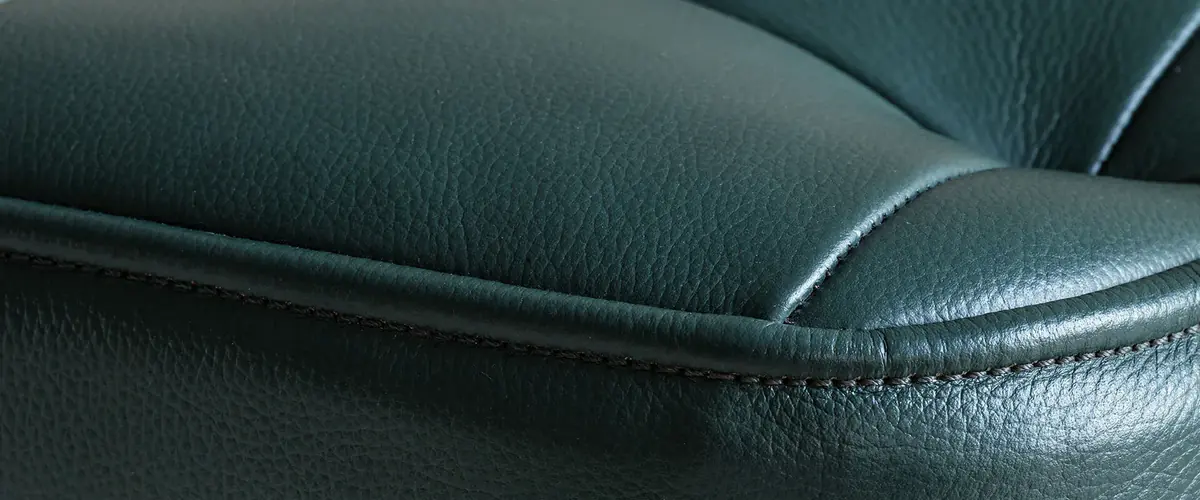
Fabric and leather are specified against the cleaning regime. Hospitality bar stools usually take a wipeable performance cloth or full-grain leather; the contact between seat and clothing all evening is the dominant wear. Fire compliance follows Crib 5 for contract use. Fabric families and Martindale ratings are covered on the fabrics page; leather is covered separately under leather.
Where this sits
This page covers one of the piece-types built in the upholstery workshop. The broader range — sofas, armchairs, slipper and wingback chairs, dining and desk chairs, banquettes, ottomans, beds and headboards — sits under upholstered furniture. The engineering behind every piece is set out on the upholstery workshop page; the cushion fills are covered under upholstery fills, and the cover options are set out under fabrics.