Upholstery Fills
What sits inside the seat
Most of what makes an upholstered seat feel right is invisible. The fabric is the surface a room sees, but how the seat sinks, holds and recovers under weight is decided by the fill: by what's inside the cushion casing, how deep the wrap is, and how the back, seat and arms are each specified for the job they have to do.
Upholstery fills fall into a handful of families — down, feather-and-down blends, foam wrapped in feather, foam wrapped in synthetic fibre, and solid foam. Each gives a different first touch, holds its shape differently over time, and asks a different amount of maintenance in return. There is no single "best" fill: the right choice depends on the look you want, the way the seat will be used, and how much plumping the household is prepared to do.
This guide covers what each fill is, how it behaves, and what we typically specify for residential, family-tough and contract or hospitality seating. For the engineering behind the seat — frame, webbing, springs and the order the layers are built up — see our upholstery workshop page; for a closer look at how foam grades work, see our note on foam in upholstered furniture.
The fill families
Five fill types cover almost every piece of upholstered seating. Each one is a balance of softness, support and maintenance.
100% down
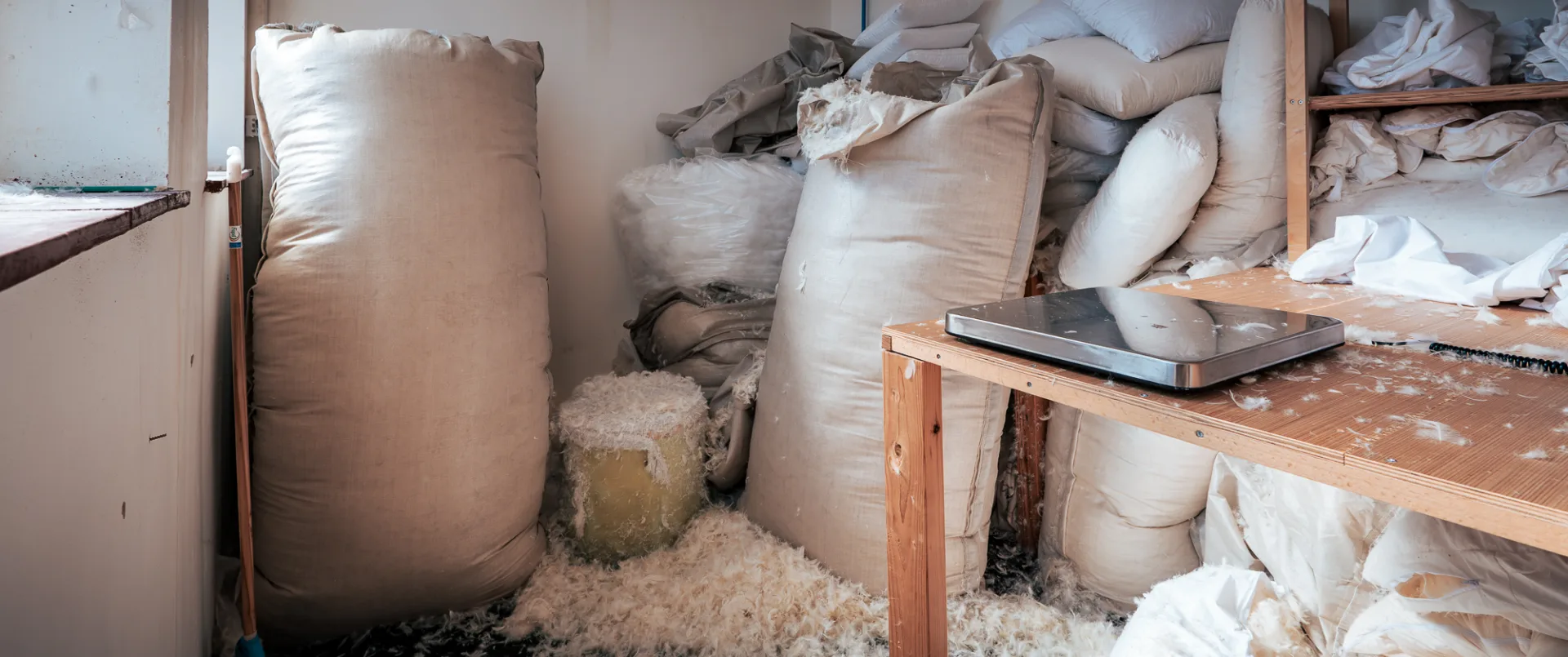
Down is the soft cluster from the chest of a goose or duck — light, quill-free and the most compressible fill available. A cushion filled with pure down sinks deeply when you sit, contours to the body, and returns slowly to shape. It carries a relaxed, lived-in profile from the first day and reads softly tailored rather than crisp. Down's cost is its maintenance: a primary sofa filled in 100% down needs to be lifted, turned and plumped daily to look its best. It also has the lowest support, so we rarely specify it for deep seats that double as a sleeping spot. Best for: occasional chairs, formal sofas and reading chairs where appearance is dressed each morning.
Feather and down blends — 80/20 and 60/40
Most "feather" cushions are a blend. The feathers, with their stiff quills, give the cushion structure and weight; the down softens the surface and stops the fill packing flat. An 80% feather / 20% down mix is the standard upholstery specification: supportive, with a soft top and good recovery for a piece that will be dressed regularly. 60% feather / 40% down increases the softness and the indulgence; the cushion sinks deeper, gives a more enveloping seat, and asks for slightly more frequent plumping. Both blends share the same character: a cushion that holds its tailored shape on a long timeline if it is looked after.
Foam core wrapped in feather
A high-resilience foam core inside a chambered feather wrap is one of the most specified fills for residential sofas. The foam holds the cushion's shape between dressings; the feather wrap gives the seat its soft first touch and the slightly crushed look that reads as comfort rather than as showroom firmness. Plumping and care are still wanted, but the cushion forgives a day or two of neglect: the foam returns the shape even if the wrap has settled. It also recovers fully after sitting, where a pure feather cushion will retain a brief impression. Best for: family sofas, primary seating, and any piece where the look should sit between tailored and lived-in.
Foam core wrapped in synthetic fibre
The same principle, with a feather-free wrap. The synthetic fibre — usually a hollowfibre or microfibre — reads similar to feather at first touch, is hypoallergenic and contains no animal product. It compresses slightly less than feather, so the cushion reads marginally crisper, and it does not migrate to the corners of the casing the way feather can. We specify the fibre wrap as the standard alternative wherever a household wants a vegan or feather-free cushion without losing the soft surface of a wrapped fill.
Solid foam
A cushion built from a single foam block, sometimes with a layered foam construction to vary the feel from top to bottom. Solid foam holds its shape under continuous load, recovers immediately when weight is lifted, and needs no plumping at all. The trade-off is the first touch: even with a softer top layer, a solid-foam cushion reads crisper than any wrapped fill. We specify it widely in contract and hospitality seating, banquettes, dining chairs and outdoor pieces. For high-traffic seating it is usually the only fill that holds the line over years of service.
A note on back cushions
Back cushions carry no weight, so they are softer than seats. The usual specification is feather, or a feather-and-fibre blend, in a chambered casing so the fill cannot slump to the bottom of the cushion over time. A foam-cored back cushion holds its shape more aggressively and is sometimes wanted on tighter, more architectural sofas, but for most seating the soft, slightly crushed back is part of how the piece reads. Back cushions are dressed daily as part of the same plumping routine as the seats; on tight-back sofas, where the back is fixed and upholstered into the frame, this is decided at design rather than at use.
How we specify by use
- Residential, dressed seating — reading chairs, formal sofas. 80/20 or 60/40 feather-and-down blends, or 100% down for the lightest pieces. Soft, tailored, plumped daily.
- Residential, family use — main living sofas, day-to-day seating. Foam core wrapped in feather, or in synthetic fibre. Soft first touch, holds shape between dressings, recovers fully after sitting.
- Contract and hospitality — restaurants, hotels, members' clubs. High-density foam (typically 50–75 kg/m³) with a softer top layer or a thin fibre wrap. Built for years of continuous service with no daily maintenance.
- Outdoor and pool-side seating. Reticulated, open-cell foam in a quick-dry construction, with marine-grade fibre wrap where a softer top is wanted. Drains through, resists mould and mildew, recovers shape after sun exposure.
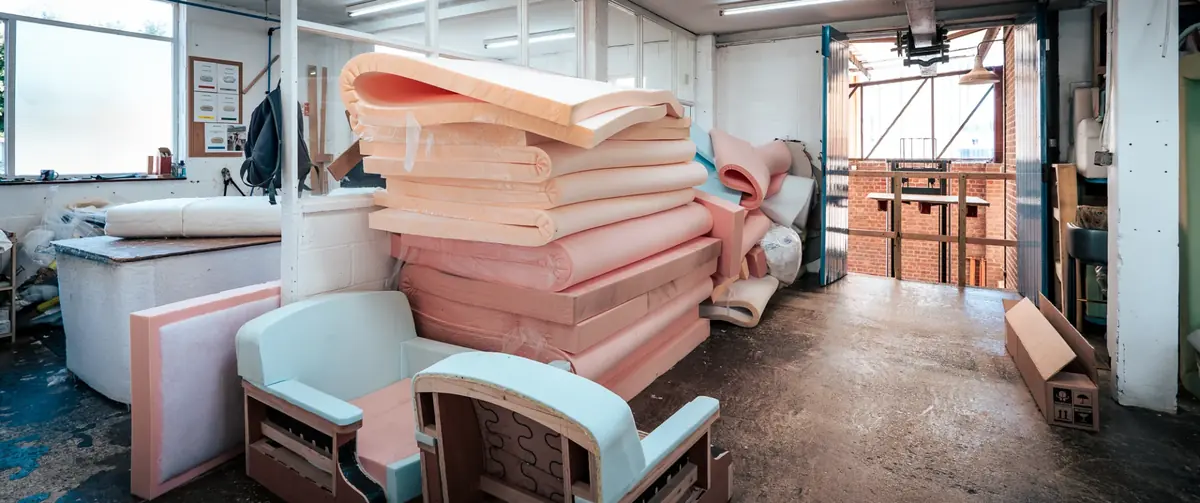
- Banquettes and dining chairs. High-density foam with a contoured top, no wrap, covered in a high-rub fabric or leather. Shallow seats need a firmer fill to avoid bottoming out; deeper banquettes can take a softer top layer.
Care and longevity
Cushion fills last a long time if they are looked after. Feather and down blends benefit from daily plumping, with the casing turned end-to-end every few weeks to even out wear. Foam-cored cushions need less attention but reward a weekly turn and a brisk lift of the wrap to redistribute the fill. Solid-foam cushions need almost nothing beyond turning a few times a year so the load on the foam is shared. Across all fills, prolonged direct sun fades fabrics and degrades foam over time; cushions worth re-loving usually outlast their first cover and can be re-filled or re-cased rather than replaced.
Beyond the cushion
The cushion is one layer of a longer build-up. Under the cushion, a sprung or webbed seat base carries the weight; below the fabric, a wool or fibre wrap over the foam softens the line where the cover meets the foam edge. The full build-up — frame, webbing, springs, stuffing, wrap and cover — is covered on our upholstery workshop page. Fabric and leather choice are covered under fabrics and the wider upholstered furniture range.