Quartzite is a natural metamorphic stone, formed when quartz-rich sandstone fuses under heat and pressure, offering veining that rivals marble on a hardness closer to granite, and it is not the same as manufactured quartz.
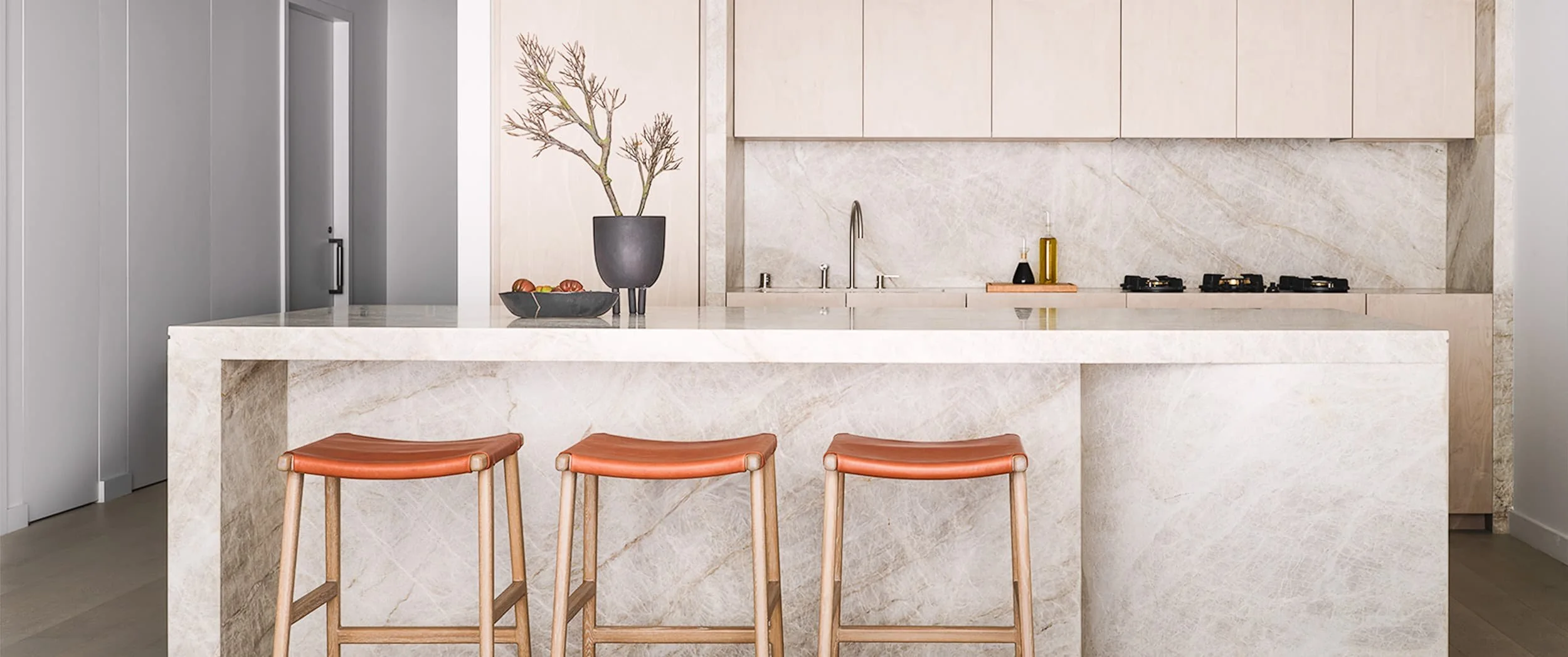
Picture the kitchen island that anchors a room: a single broad slab of quartzite, veining running across it like a current caught mid-flow, cool and faintly waxen under the palm even on a warm afternoon. Around it the day plays out — chopping boards set down, a kettle just off the boil, a glass of wine that someone forgets to wipe up until morning. The surface takes all of it and gives nothing back. It is the hardest-working jewel in the house, and that is precisely why people fall for it. Yet quartzite is also one of the most misunderstood stones in luxury interiors, not least because its name sits a single letter away from something entirely different. Here is what it actually is, how it compares to its rivals, and where we use it in furniture and surfaces.
What quartzite is
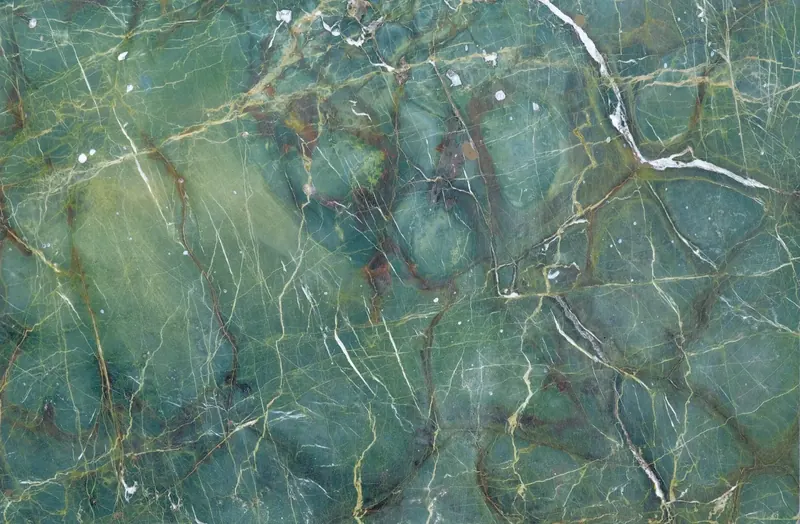
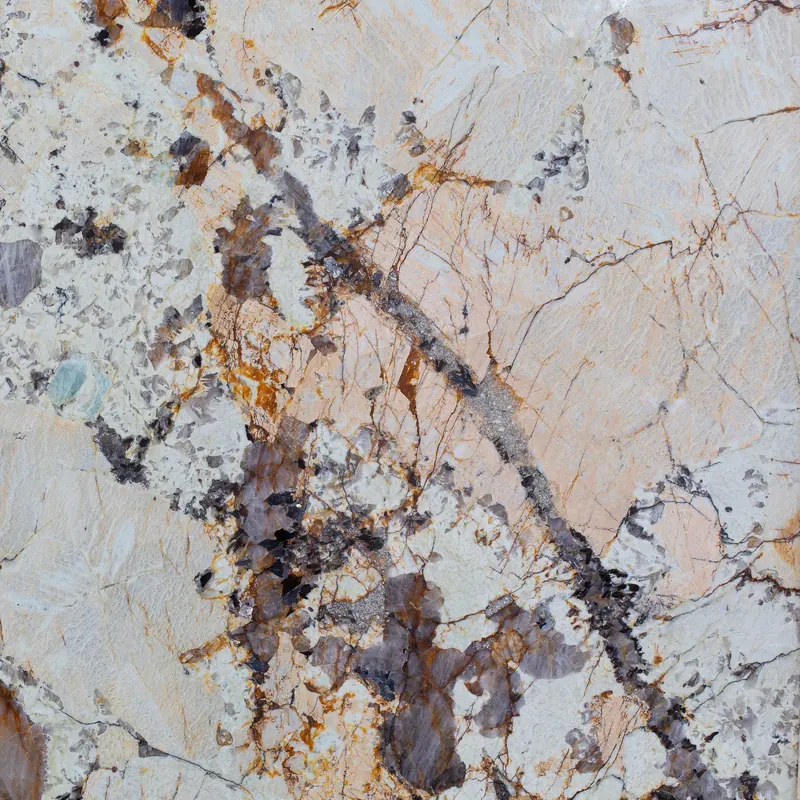
Quartzite is a natural stone — a metamorphic rock born when sandstone rich in quartz is taken down deep, baked under heat and crushed under pressure over an unhurried geological age until its grains fuse into something hard and crystalline. It is quarried in slabs, as marble and granite are, and like them no two slabs are ever twins; each carries its own veining, its own drift of movement. Crucially, it is not the same as “quartz” worktops, which are a manufactured composite — a distinction worth settling firmly before a single slab is ordered.
Quartzite vs quartz, granite and marble
The four are forever being muddled, so it helps to set them side by side. Engineered quartz is a man-made composite of ground quartz bound in resin — uniform, non-porous and undemanding, but missing the depth that only stone formed in the ground can hold. Granite is a hard natural stone, very durable, though its character runs busier and more speckled. Marble is the softer beauty, unmatched to look at but quick to etch under a squeeze of lemon and quick to mark under a dropped pan. Quartzite lands in the sweet spot so many projects are looking for: veining that can rival marble, carried on a hardness closer to granite — harder, in truth, than both. We see it chosen again and again by clients who have fallen for marble and then thought better of living with its fragility. For the geology in full, see what quartzite is.
Durability and care
The pleasure of quartzite is that it is genuinely hard. It shrugs off the scratching and etching that marble cannot, and it stands up to heat without complaint. Indestructible it is not: like all natural stone it is porous to some degree and rewards sealing, and the softer quartzites — for some stones sold under the name sit closer to marble than to the real thing — ask for more care than the hardest do. This is where we earn our keep before any tool is lifted. We will put a hand on the actual slab, sometimes test a discreet corner, and steer the choice towards how the surface will truly be lived with, because the word covers a wide family and the differences matter.
Where we use it
Quartzite earns its place wherever a surface has to be beautiful and tireless at once: kitchen worktops and islands, vanity tops, and as the dramatic plane atop a piece of furniture — a table, a console, the crown of a cabinet or bar. Because every slab is its own thing, we choose the precise one alongside the client, walking the yard together to find the piece whose movement sings. Often we book-match two slabs cut in sequence, opening them like the pages of a book so the veining mirrors itself across an island or runs unbroken up a splashback — the same composing instinct we bring to stone and marble throughout a home. Every slab is then cut, edged and finished in our stone workshop.
Finishes
The finish changes quartzite entirely — the same slab can read three different ways. A polished finish draws the depth and colour up out of the veining, the most reflective and the most formal of the three. A honed matt finish is quieter and more contemporary, kinder to fingerprints and water marks. A leathered finish lays a faint texture and a low sheen across the stone that disguises marks beautifully and, more than anything, is a pleasure to run a hand over. Which one is right comes down to the look you are after and the life the surface will lead — and choosing it well is half of specifying the stone at all. Get that right, and the worktop you settle on will outlast the kitchen around it.