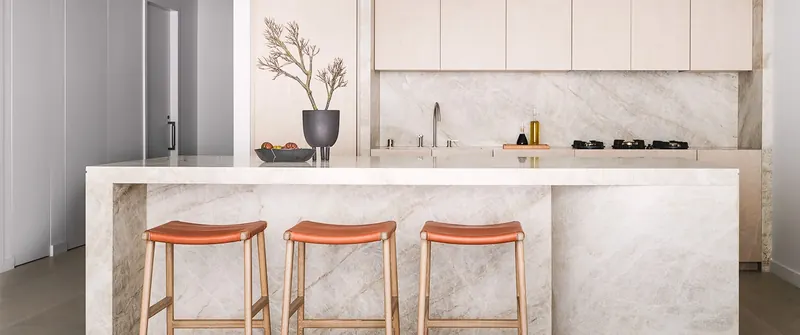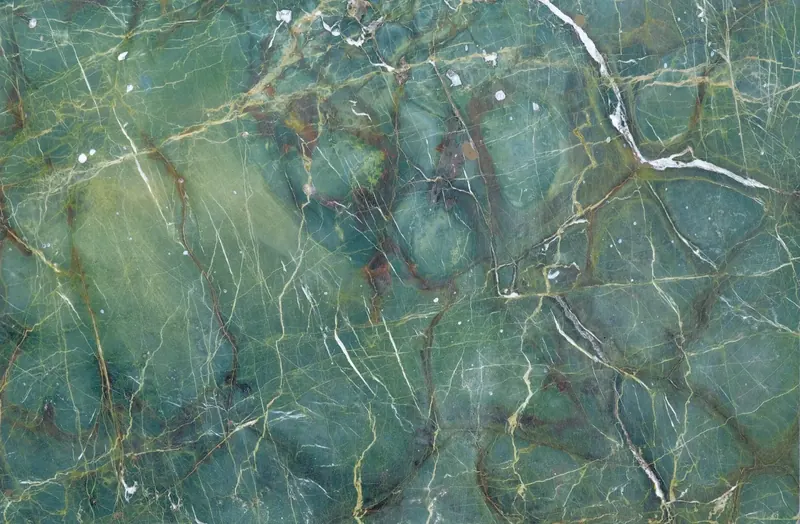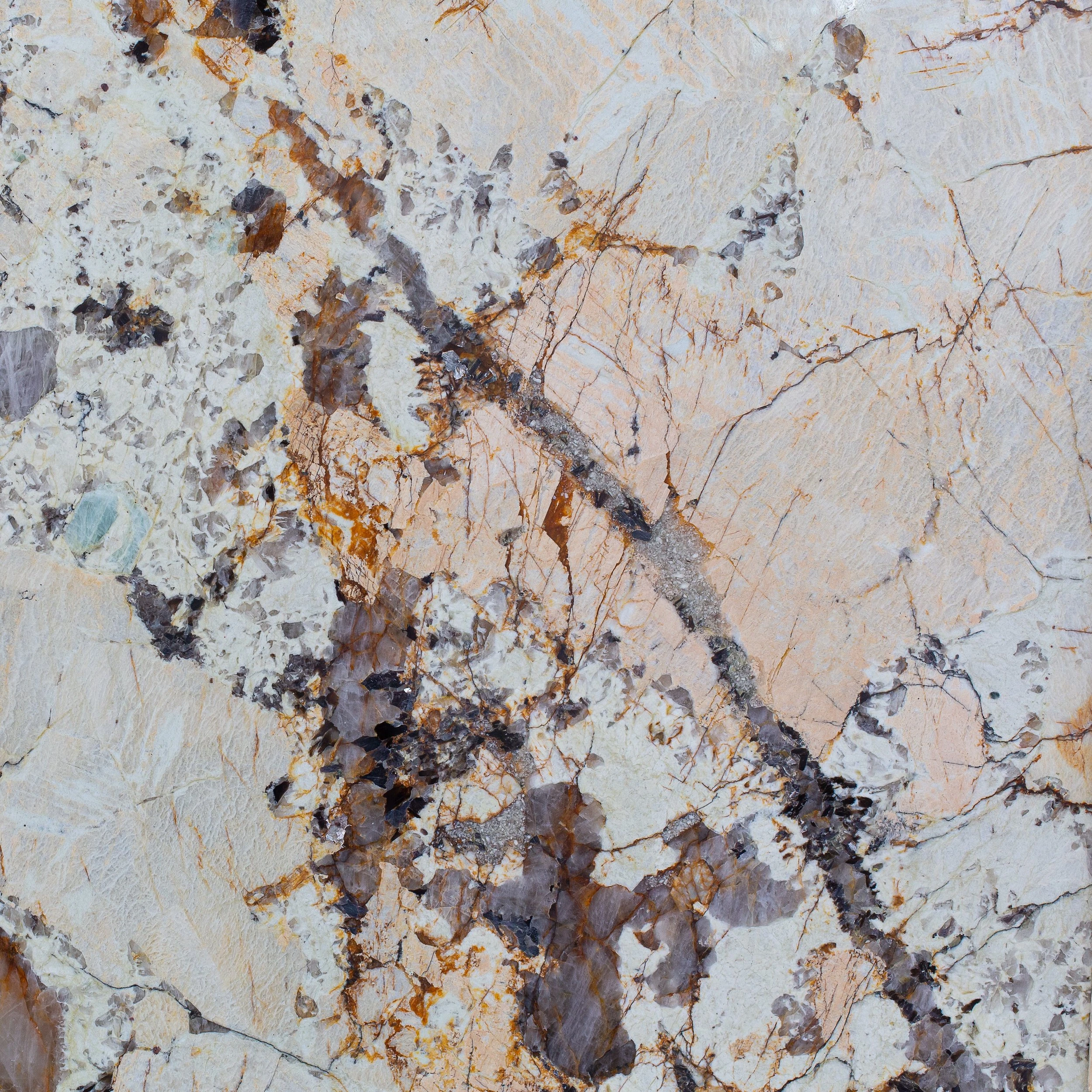
Quartzite is a natural metamorphic stone formed when quartz-rich sandstone is fused by intense heat and pressure into an exceptionally hard, dense rock: granite-grade toughness with the flowing, marble-like beauty of natural veining.
Tilt a quartzite slab toward the light and the veining seems to drift across it like weather over a landscape — pale rivers of grey and gold frozen mid-flow, a record of pressures no one alive ever witnessed. Then you set a blade to the edge and the stone tells you the rest of the story: it does not give. There is a particular resistance to cutting quartzite, a clean refusal, that travels up through your wrists long before your head has named it. Quartzite is a natural metamorphic stone, formed when sandstone rich in quartz is transformed deep underground by intense heat and pressure. That process fuses the grains into an exceptionally hard, dense rock — one of the toughest natural surfaces you can put in an interior. It is prized for worktops and feature surfaces because it combines the durability of granite with the flowing, marble-like beauty of natural veining.
Make Bespoke Studio produces quartzite surfaces for furniture tops, flooring and wall cladding. This guide explains the stone itself: how it forms, how it differs from quartz, granite and marble, and how to choose between them.
How quartzite forms
It begins, unremarkably, as sandstone — the soft, crumbling stuff of beaches and riverbeds. Then time and the earth go to work on it. Over millions of years, geological heat and pressure recrystallise the quartz grains and bind them together, erasing the gaps that make ordinary sandstone porous and thirsty. The result is a stone composed largely of interlocked quartz — very hard (around 7 on the Mohs scale, harder than glass and steel), and far less porous than the loose, dusty rock it came from. The same forces that hardened it also drew out the dramatic veins and colour movements that make each slab unlike any other. Run a hand across a finished surface and it is hard to believe it was ever sand.
Quartzite vs quartz
This is the confusion that catches everyone out, because the names are all but identical — and getting it wrong can mean specifying entirely the wrong material. Quartzite is 100% natural stone, quarried in slabs. Quartz (as a worktop material) is engineered — a man-made composite of crushed natural quartz bound with resin and pigment. Engineered quartz is consistent and non-porous; natural quartzite is harder, heat-resistant and genuinely one-of-a-kind, but being natural it carries more variation and needs sealing. If a supplier says “quartz,” they usually mean the engineered product; “quartzite” means the natural rock. When a client tells us they want quartz, we always gently ask which one they mean — the two sit worlds apart in feel, in behaviour and in price.
Quartzite vs granite and marble
Quartzite often sits between the two in the way people think about stone. Like marble, it can have soft, luminous veining and a quiet luxury to it. Unlike marble — which is calcium-based, softer and easily etched by everyday acids like lemon or wine — quartzite is far harder and much more resistant to scratching and etching. A splash of vinegar that would leave a dull ghost on marble simply beads and wipes away. Compared with granite, it is similarly durable but tends to read as more elegant and less speckled. In short: the look of marble, with granite-grade toughness underneath.
Why it works for worktops and surfaces
Quartzite's hardness makes it superb for kitchen worktops, islands, vanity tops and feature surfaces that must survive daily life: it resists scratches, tolerates heat and, once properly sealed, shrugs off stains. Because every slab is unique, it also lets a surface become a centrepiece — book-matched veining mirrored across an island so the pattern opens like a butterfly's wings, or a single dramatic vein run carried up a splashback. The practical considerations — choosing the slab, sealing, edge detailing and fabrication — are covered in our guide to quartzite worktops and surfaces.
Choosing the right stone
Quartzite is one of the best natural choices when you want marble's beauty without its fragility — but no two slabs are alike, and neither are any two projects. The right surface depends on how it will be used, what the budget allows and the look you are after. We help clients select and specify natural stone for bespoke worktops, surfaces and furniture — standing in front of the slabs, reading the veining, picturing where it will live — and we would be glad to talk through whether quartzite is the right answer for yours.