PVD, or Physical Vapour Deposition, bonds a vaporised metal such as titanium onto stainless steel in a vacuum chamber, giving a permanent, exceptionally hard coloured surface a few microns deep that will not peel, flake or tarnish.
A sheet of stainless goes into the chamber the cold silver-grey of every other piece of steel. Some hours later it comes out a deep, even brass — or bronze, or a black with real depth to it — and the colour is not lying on the surface where you could pick at an edge of it. It has become part of the metal. Run a thumb across it and there is nothing to feel; the colour and the steel are one thing now. That moment, when a familiar material comes back changed and the change is permanent, is the whole appeal of PVD — and the reason it has quietly become one of the most-requested metal finishes in luxury interiors. It is also widely misunderstood. This is what PVD on steel actually is, how it is done, the colours it comes in, what it costs and why, and where its limits lie. For the broader picture of how we finish metal, see our metalwork page and our note on metal finishes.
What PVD means
PVD stands for Physical Vapour Deposition. In a vacuum chamber, a solid metal — titanium or zirconium, typically — is vaporised and bonded, atom by atom, onto the surface of the steel, which is usually stainless. Reactive gases introduced during the process decide the colour: shift the chemistry a little and the same yellow warms towards bronze, or cools towards graphite. What you are left with is an extraordinarily thin coloured layer, a few microns deep, exceptionally hard, fused to the metal at a molecular level rather than sitting on top of it the way paint, lacquer or traditional plating do. There is no film to peel, no coat to flake. The colour is the surface.
The process, in short
Everything good about PVD depends on the discipline that comes before it. The steel is fabricated and finished to its final surface quality first — brushed, satin or mirror-polished — because the coating faithfully reproduces whatever lies beneath it. It cannot hide a scratch or a weld line; it magnifies them. A mirror-polished panel that looked flawless under workshop light will, after coating, show you every faint swirl you had talked yourself out of seeing. So the cleaned components go into the chamber already perfect, the coating is laid down under heat, and the parts emerge in their final colour. Because that colour comes from the coating chemistry and not from a pigment, it is consistent and repeatable batch to batch — the handle made next year will match the one made today.
The colour range
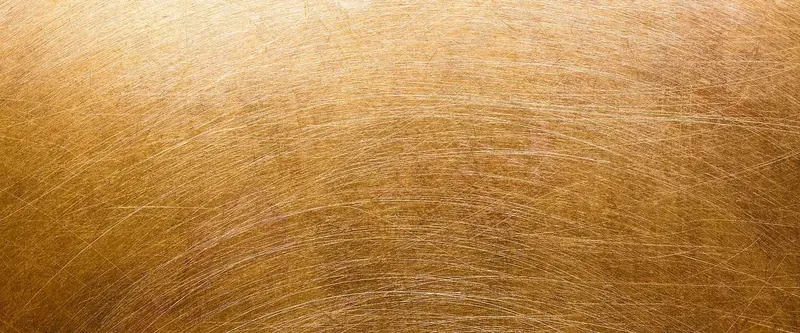
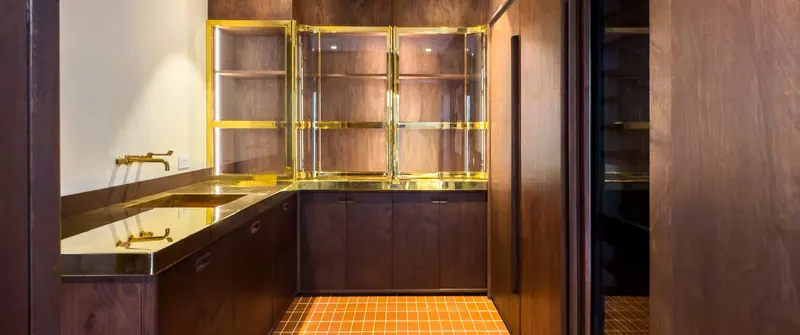
The palette is where PVD seduces people. The common colours run from gold and brass — warm yellows that span pale champagne to deep antique brass — through rose gold and copper tones, bronze in mid-to-dark warm browns, black from soft satin to deep gloss, gunmetal and graphite greys, and on to blue. But the colour is only half of it. The polish underneath — mirror, satin or brushed — changes the character entirely, so a single “brass” can read as bright and liquid and reflective, or as soft, low and almost matte. We have shown a client two samples in nominally the same brass and watched them genuinely surprised that it was the same coating; the light was simply doing two different things to the two surfaces. This is how a designer gets the exact warm metal a scheme is built around, without ever taking on the upkeep of real brass.
Durability — its great strength
This is where PVD earns its keep. The coating is harder than chrome, and stubbornly resistant to scratching, abrasion, corrosion and tarnish — and it is UV-stable, so it holds its colour indoors and out, in a sunlit hallway as readily as a basement bathroom. Real brass or bronze patinates and wants lacquering or polishing to keep it in hand; lacquered and electroplated finishes eventually wear thin at the points hands actually touch, a door pull going pale at the grip, a tap dulling where thumbs land. PVD does none of that. It simply stays. It is specified precisely for the places that punish a finish — handles, lift interiors, hospitality counters, bathrooms — where the thing has to still look immaculate after years of being used by people who will never think about it once.
The limitations — what to know
PVD is not magic, and being honest about its limits is part of specifying it well. It is an off-site, line-of-sight process carried out in a vacuum chamber, which means component size is capped by the chamber itself, and deeply recessed areas — the inside of a tight return, a shadowed undercut — can coat unevenly because the vapour reaches them at a glancing angle. It needs the right substrate: stainless steel is ideal, while mild steel has to be plated first. Because the layer is so thin it conceals nothing, every flaw beneath it shows, so the cost and care of the underlying fabrication and polishing matter enormously. And for all its toughness, a PVD surface that has been badly gouged cannot be touched up in place. There is no localised repair; the part has to be stripped back and re-coated. It is worth knowing that before you commit, not after.
What drives the cost
A few things move the price. The biggest, more often than not, is the substrate preparation — that flawless mirror or satin polish has to exist before the part ever sees the chamber, and the hours in it are frequently the largest line on the invoice. Then component size and quantity: it comes down to chamber space and batch economics, so a single one-off carries a disproportionate share of the cost where a full batch spreads it thin. The colour plays a part too — some are quicker and more forgiving to lay down than others — as does the tolerance for variation you are willing to accept. PVD is rarely the cheapest finish on the day you buy it. Measured across a decade of staying immaculate while the alternatives would have worn through or gone dull, it is very often the most economical thing in the room.
When to specify PVD
Specify PVD when you want a precise, permanent metallic colour on stainless steel that will take heavy use without tarnishing or wearing — coloured hardware, statement metal furniture, lift and door details, hospitality and bathroom fittings, anywhere the colour has to be exact and has to last. Specify a real, patinating metal instead when you want a living surface that ages and shifts under your eye, and you are content to maintain it. They are different pleasures, and neither is wrong. We help clients make exactly that call, and we fabricate and finish to the standard PVD quietly demands of everything underneath it. If you have a scheme that turns on coloured metal that lasts, we would be glad to talk it through. The steels it is applied to are covered in steel fabrication.