Bespoke furniture for a private members’ club on Madison Avenue
The brief that came to us — through Benjamin West, to an interior by the designer Rifat Ozbek — looked, at first, a plain one: a set of occasional tables, a low table and a pair of side tables, made in timber and finished in a white oil-based ground. We didn’t yet know where they were bound, or quite what other processes lay in store for them. Only later did it become clear that the white ground was a beginning rather than an end — that the pieces were to be hand-painted, and would travel on to a private members’ club on Madison Avenue, New York.
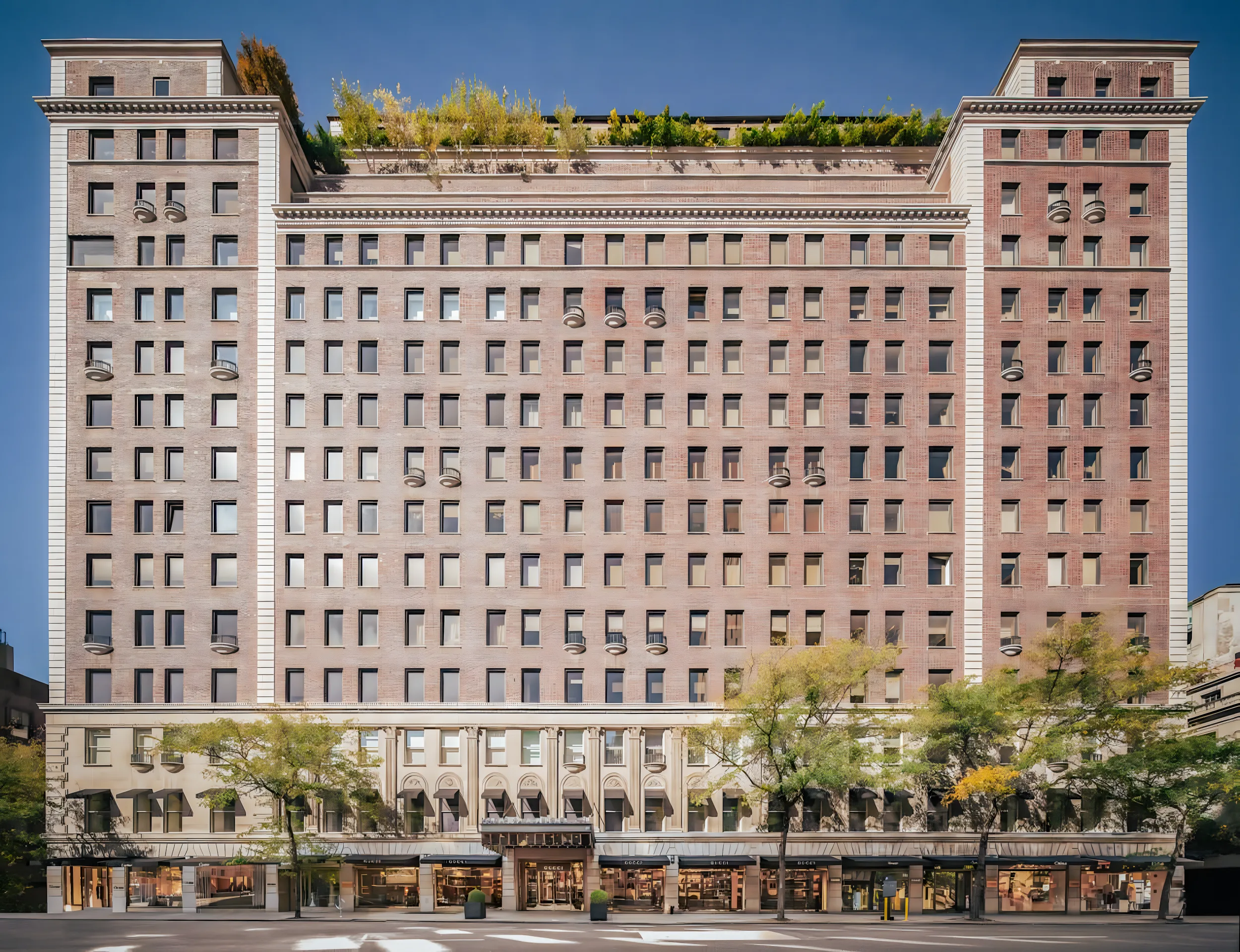
A private address on Madison Avenue
Madison Avenue, on Manhattan’s Upper East Side, is one of the most storied addresses in New York — a mile of flagship boutiques, galleries and discreet private clubs set among pre-war apartment buildings. A members’ club here is, by nature, quiet about itself: the interest is all on the inside.
It is exactly the kind of room this commission was made for — pieces with real character and craft, at home among beautiful things and built to last.
Commissioning furniture as a ground for painted work?
Tell us about the piece and the artist.
An interior by Rifat Ozbek
Rifat Ozbek trained as an architect in Liverpool before studying fashion at Central Saint Martins, and spent the 1980s and ’90s as one of London’s most celebrated designers — twice named British Designer of the Year — known for weaving motifs from Turkey, Africa and the Far East into sharp Western tailoring.
That same layered, well-travelled eye now shapes his interiors; he designed the rooms of Robin Birley’s London club, 5 Hertford Street. Furniture for one of his schemes has to hold its own among pattern and colour — and it has to last, because a members’ club is a demanding home for a piece of furniture.
Made in timber, primed for the painter’s hand
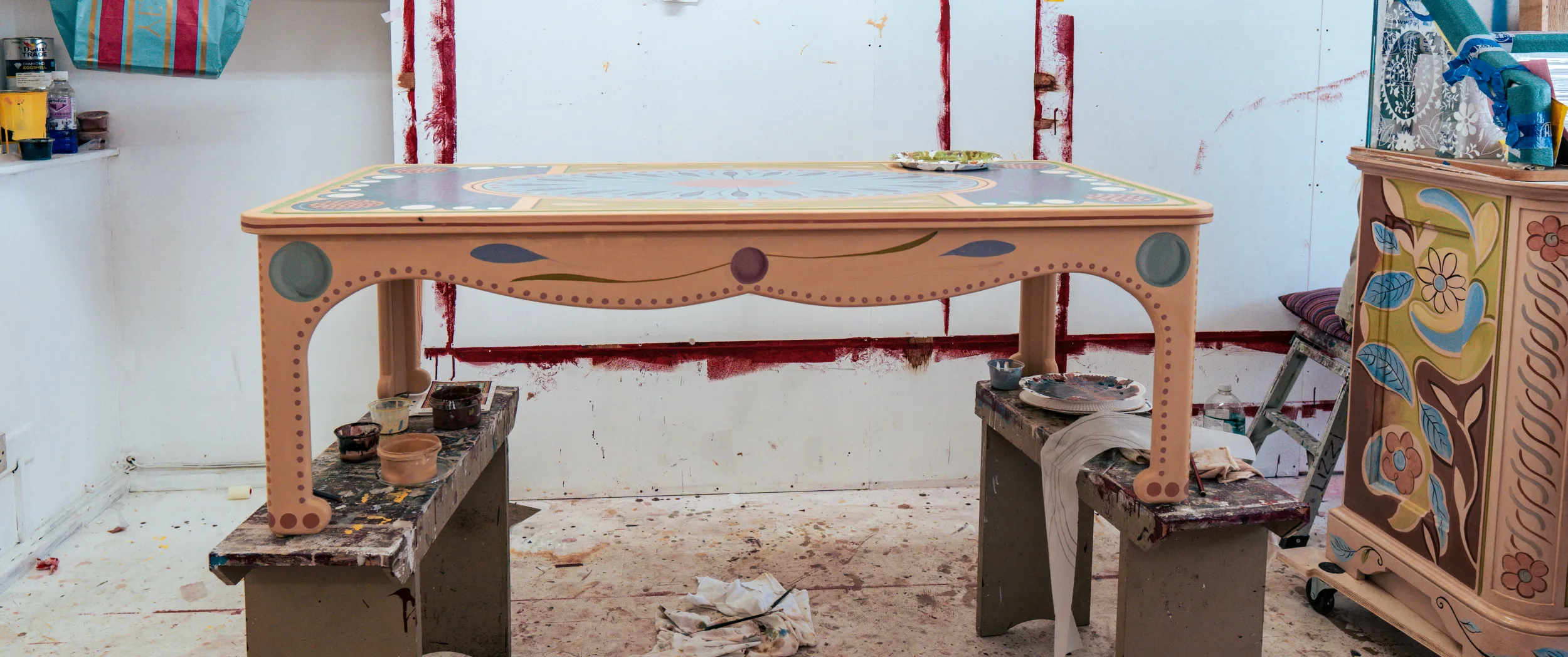
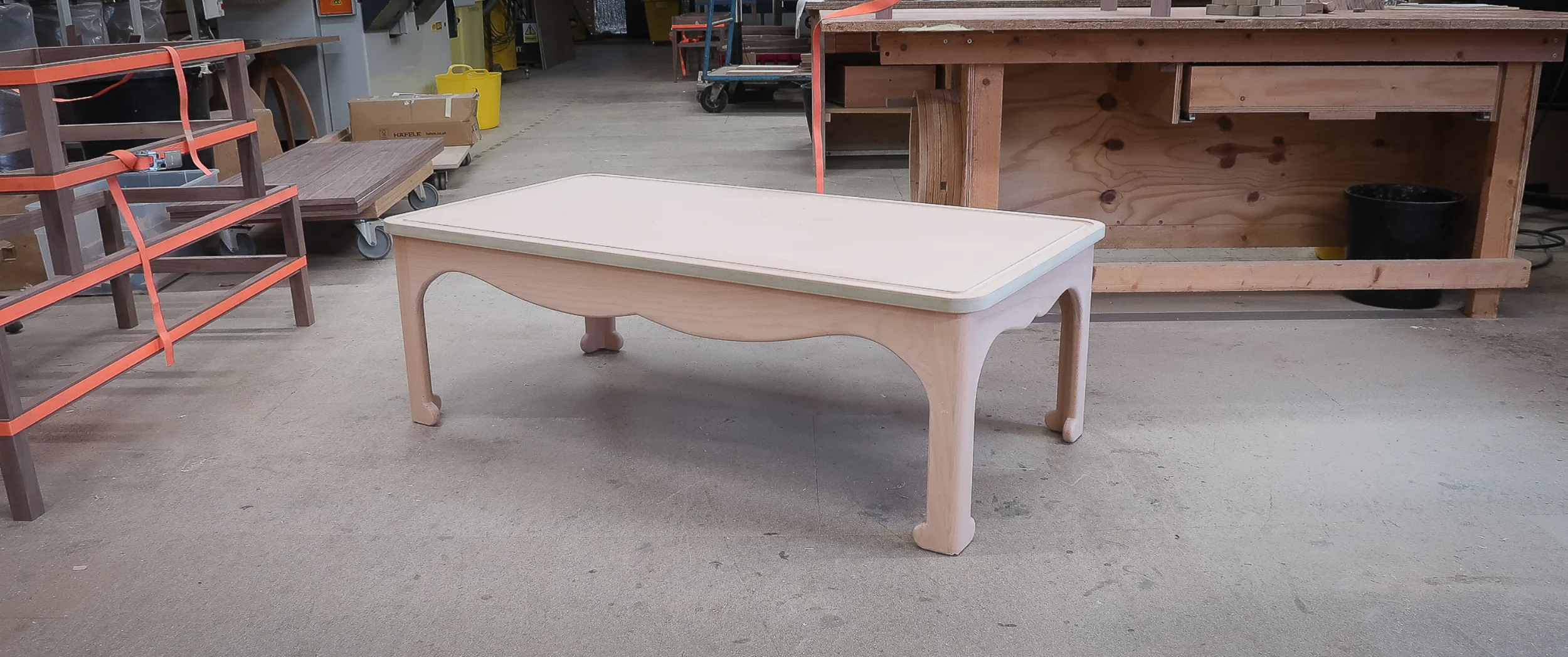
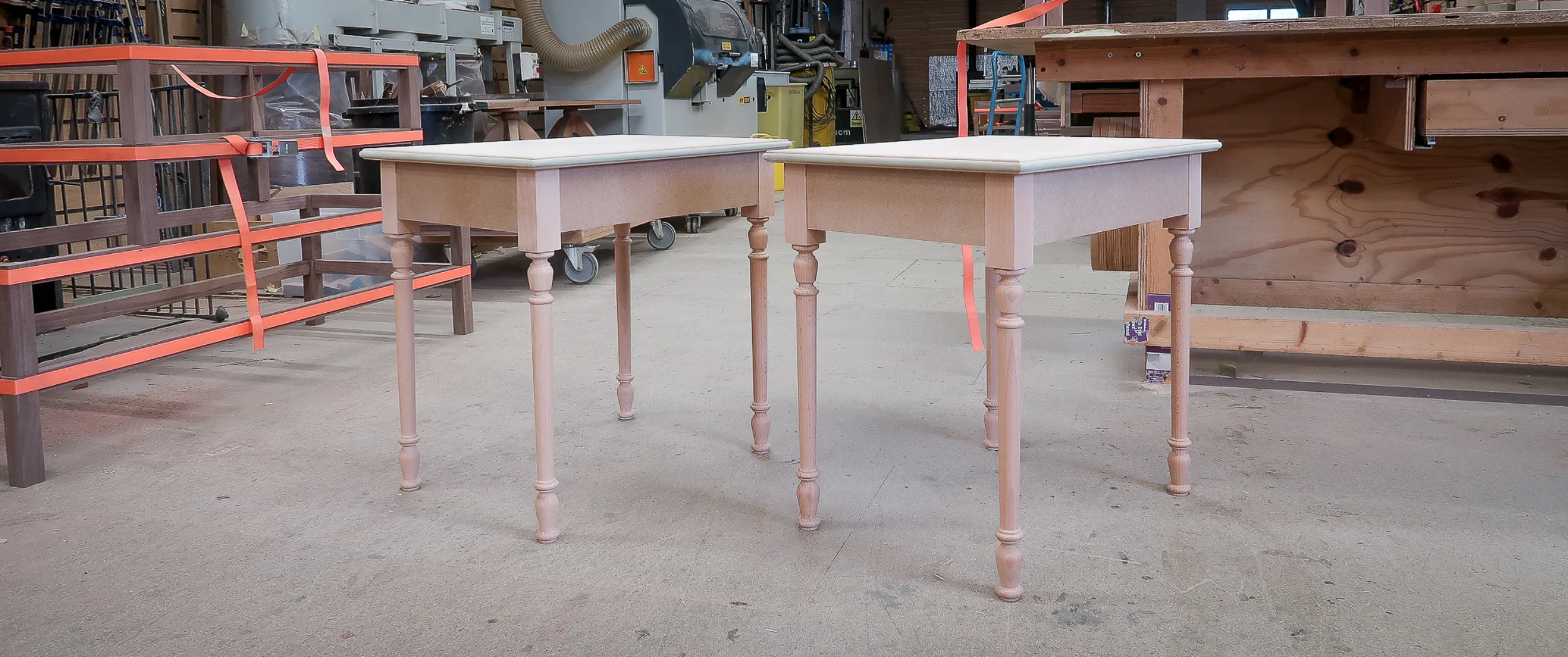
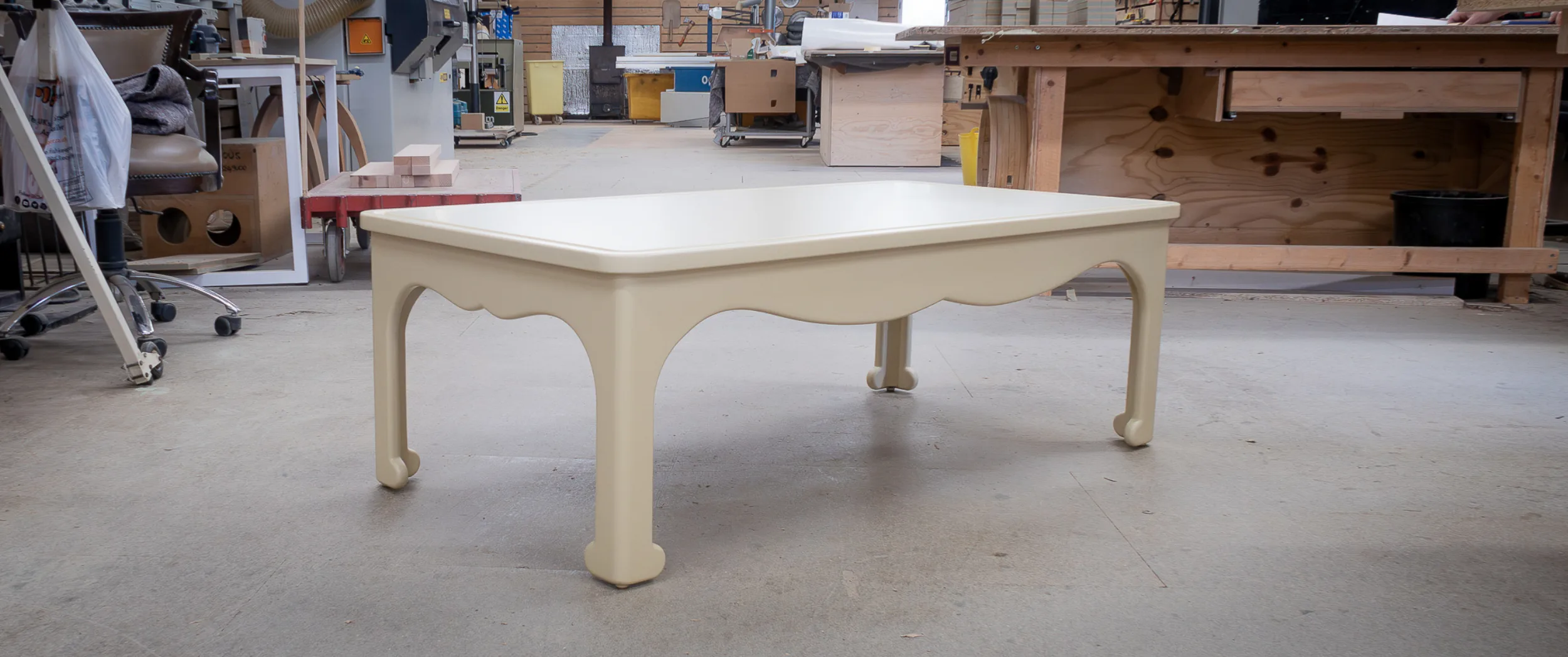
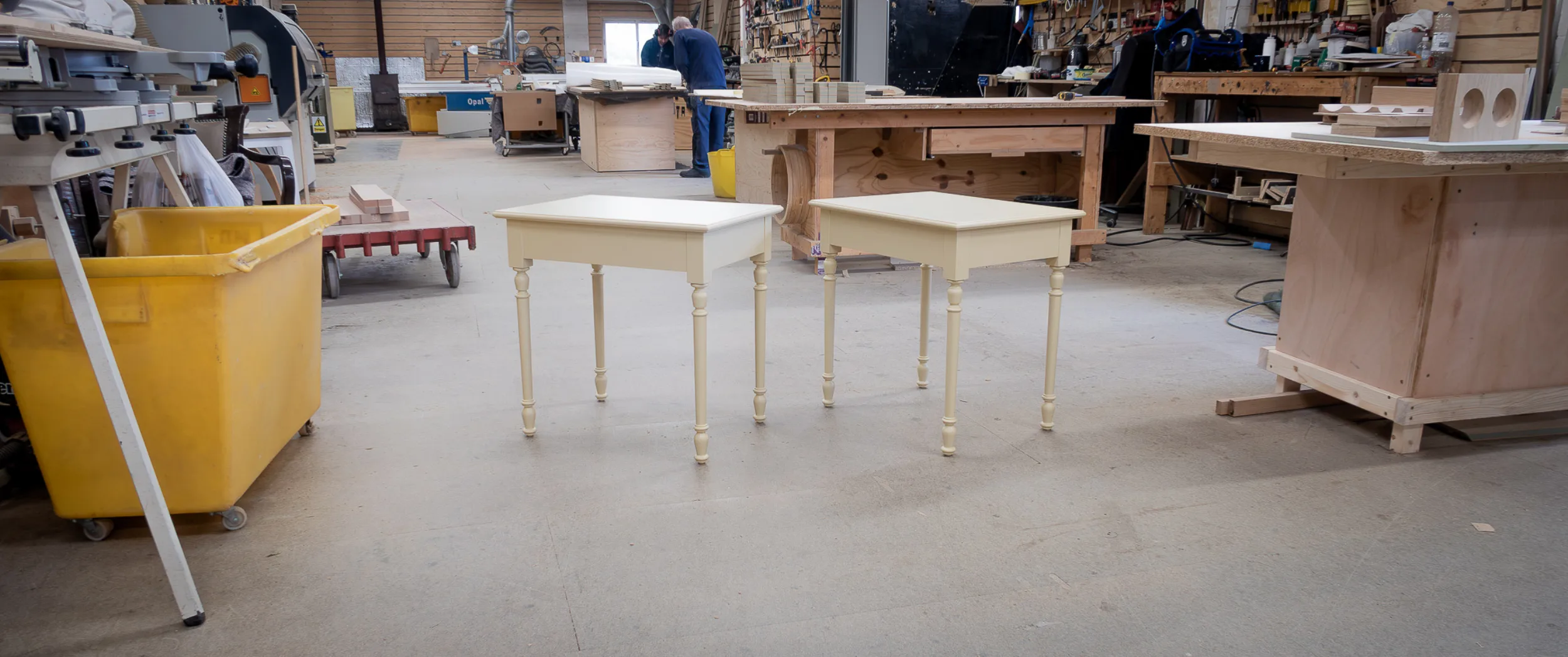
The pieces were made from scratch in solid timber at our West Sussex workshop — the shaped apron and bracket feet of the low table, the turned legs of the side tables. Once the joinery was complete, each was finished in an oil-based paint: not a final colour, but an even, receptive ground.
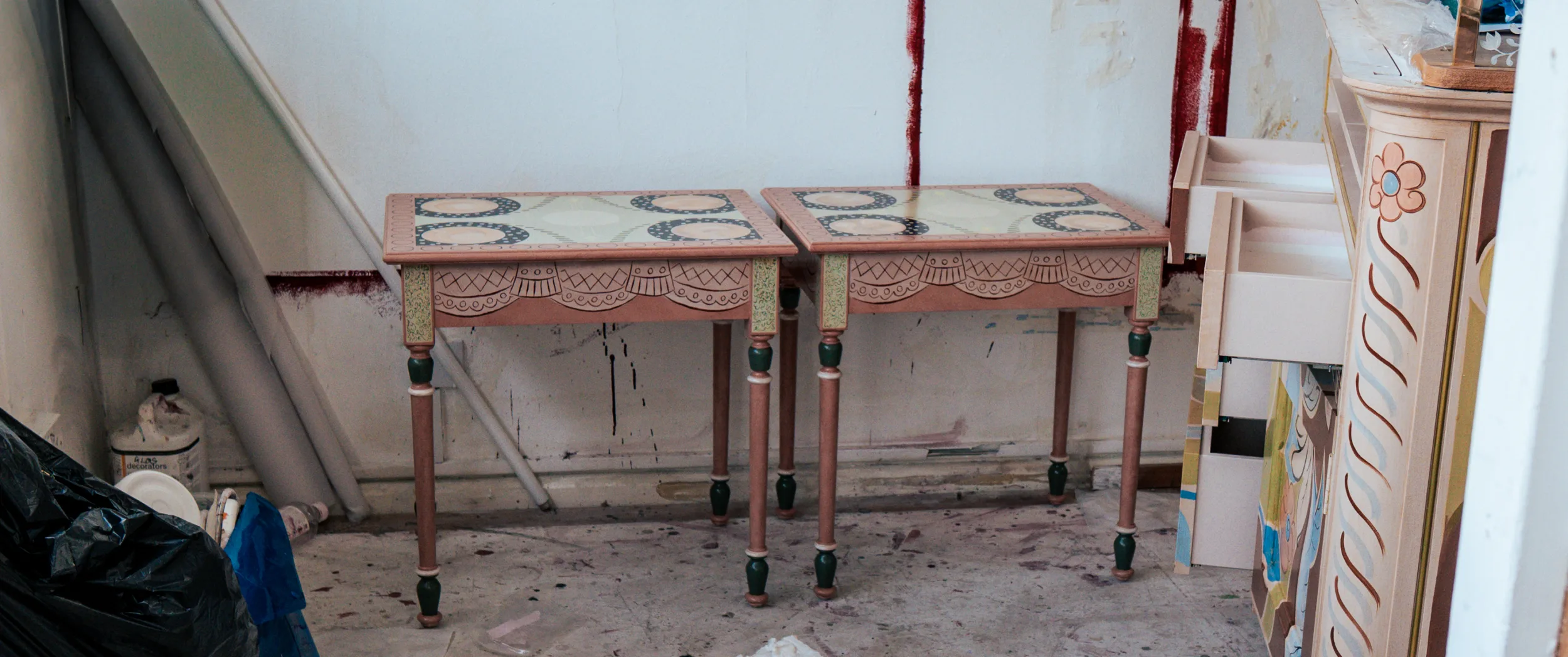
That ground was the whole point. These tables were made to be hand-painted — sent on to the decorative artist Lizzi Porter, who carries the scheme’s designed motifs across all the pieces in oil paint. Because she works in oil, the surface we presented had to be exactly right: sympathetic to the paint, stable, and certain not to react in any surprising way once the brush was on it.
So we sampled, and sampled again — running experiments and preparing a series of grounds until we had one that behaved. It was worth the trouble. Lizzi told us it was the best surface she had ever painted on: the brush simply glided, and the work was easier than it might otherwise have been.
In Lizzi Porter’s studio
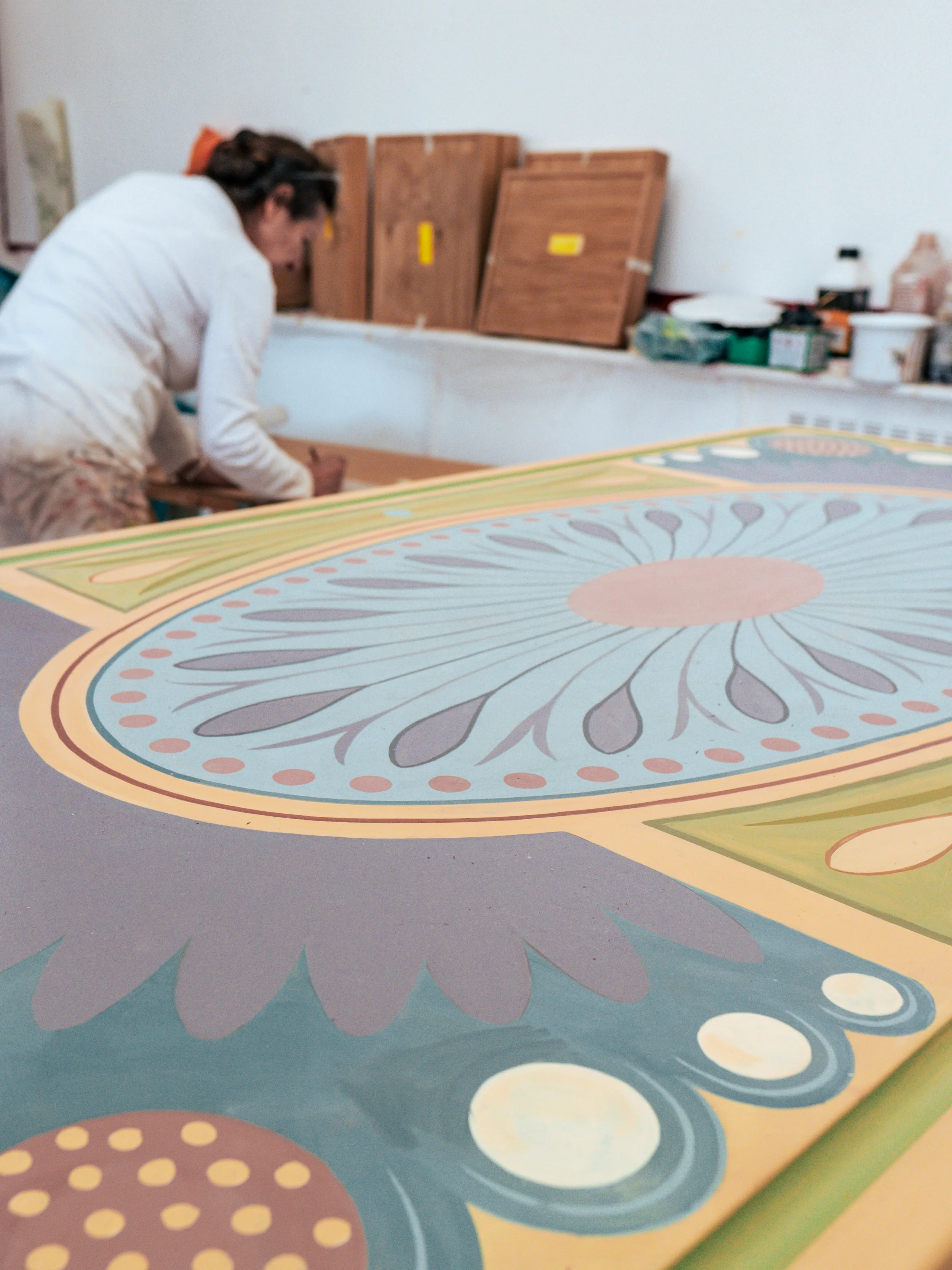
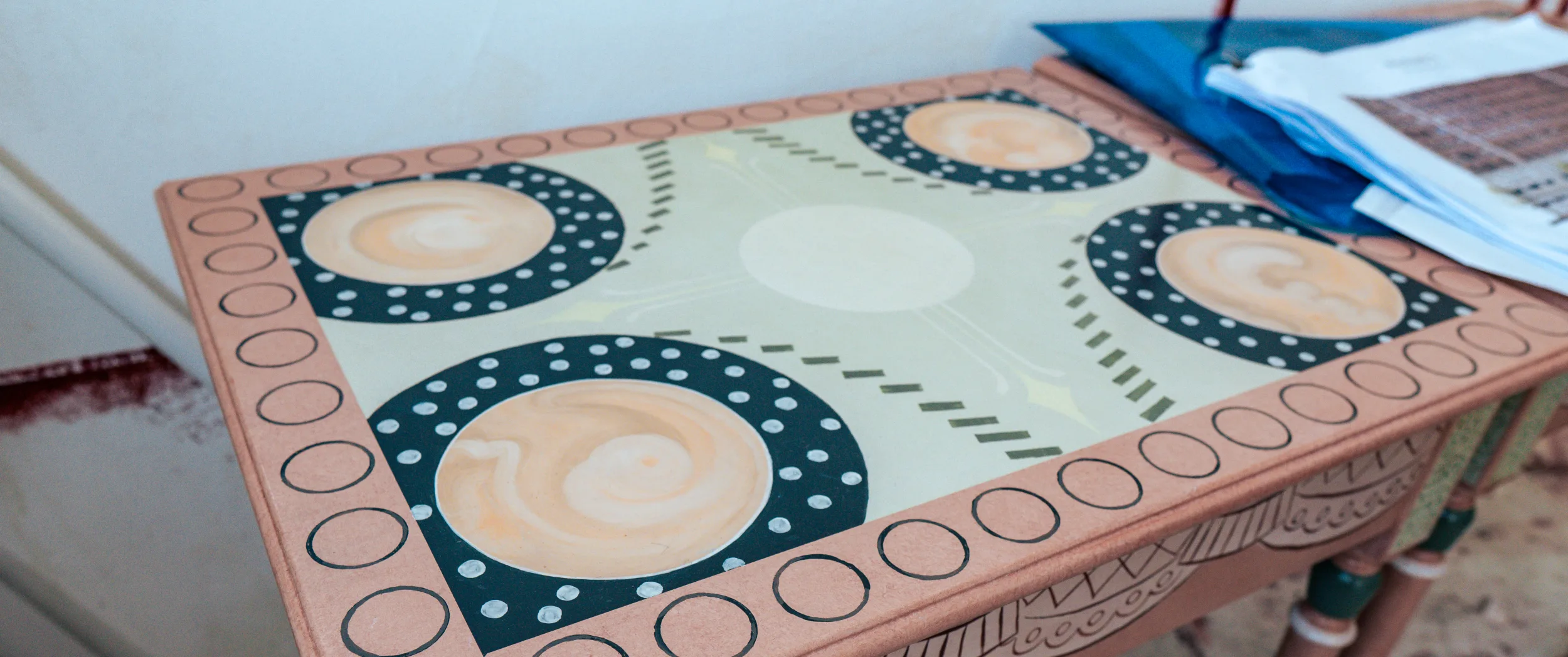
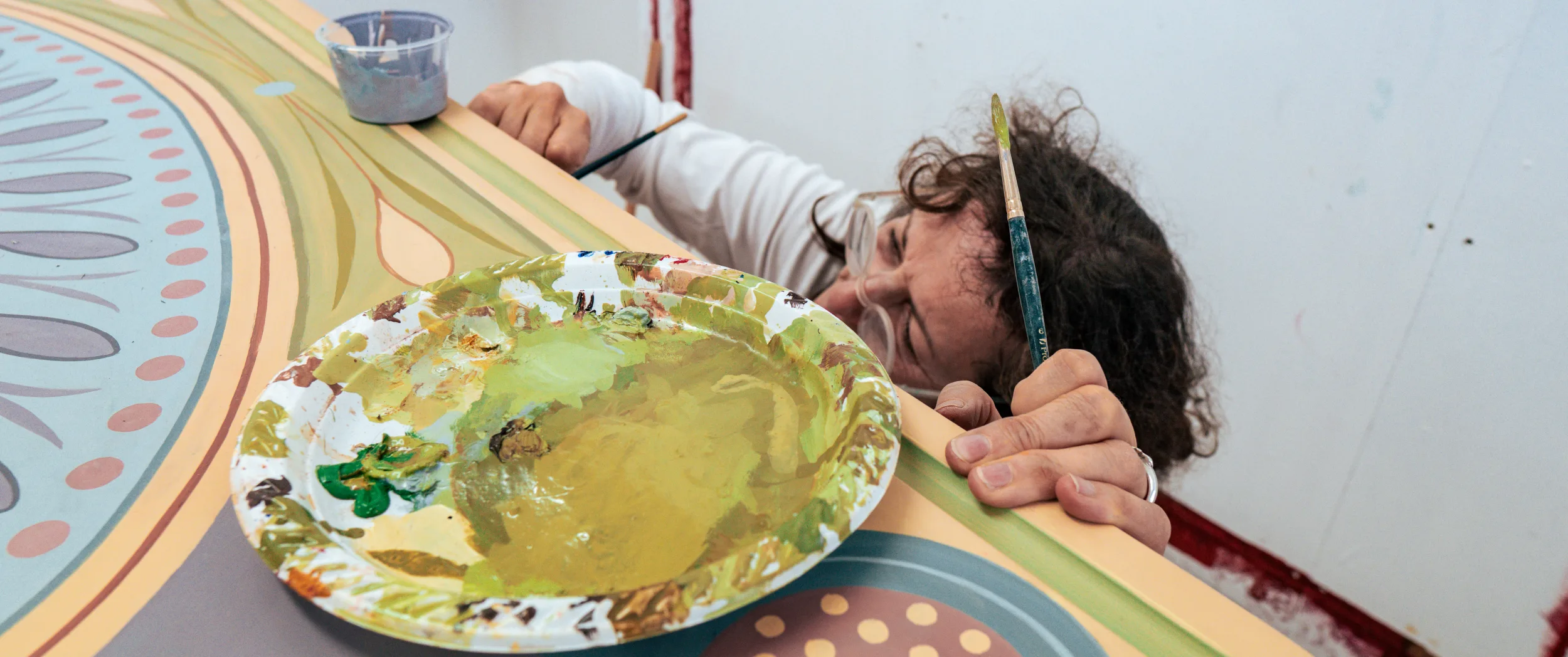
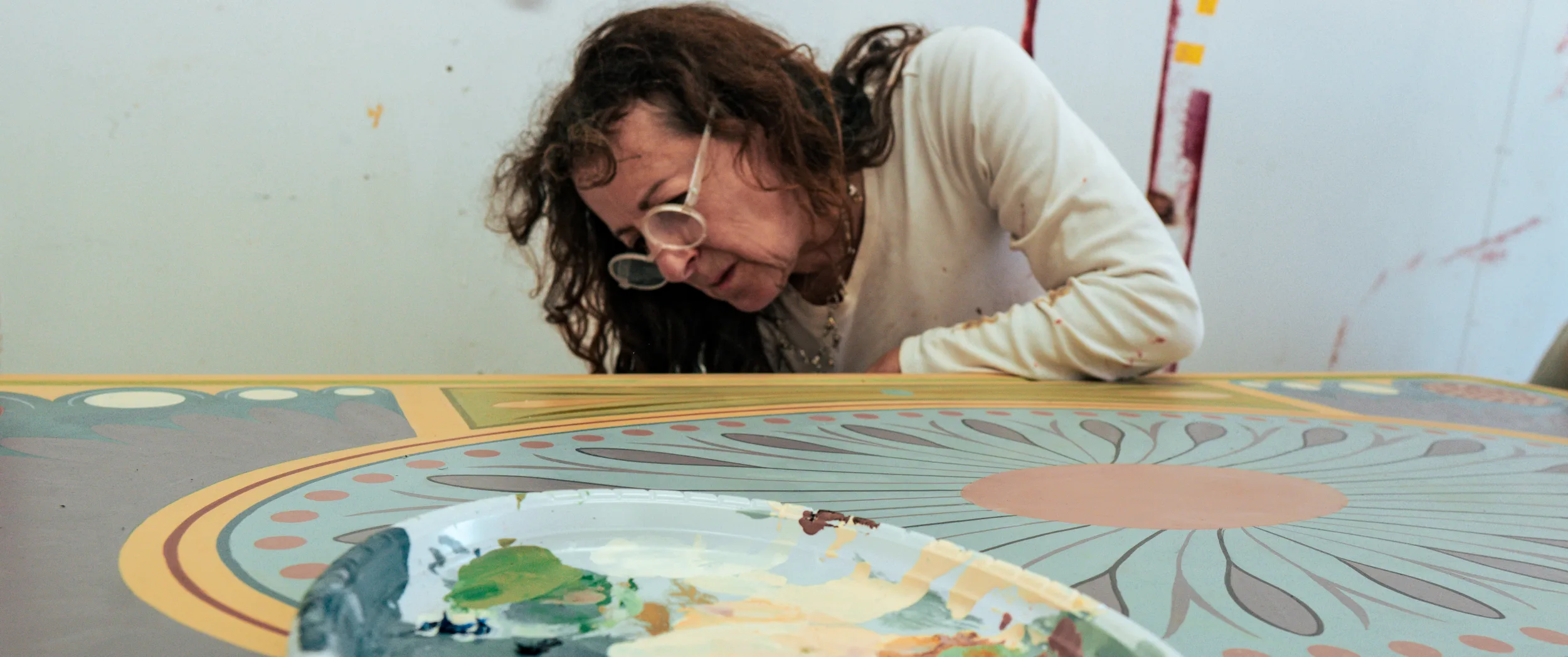
With the grounds approved, the pieces went to Lizzi Porter’s studio, where the scheme’s motifs were laid on entirely by hand in oil — built up colour by colour, from the pale ground through the blues and violets to the fine outlines last.


From timber to hand-painted top
Every piece follows the same path: made in solid timber, brought to an even oil-based ground, then hand-painted. Scroll the model to follow one of the tables through all three stages
The hand behind the motifs
The decorative artist on this commission is Lizzi Porter, who trained at the Ruskin School of Art in Oxford and then at the Royal College of Art. She has spent more than twenty years painting by hand — florals and foliage, trompe l’oeil, marbling and fine gilding — in private houses and grand rooms across Britain and much further afield, from Monte Carlo to the Gulf.
We first came across her work at LAVO London, where she had painted Italian floral motifs across the walls. It stayed with us
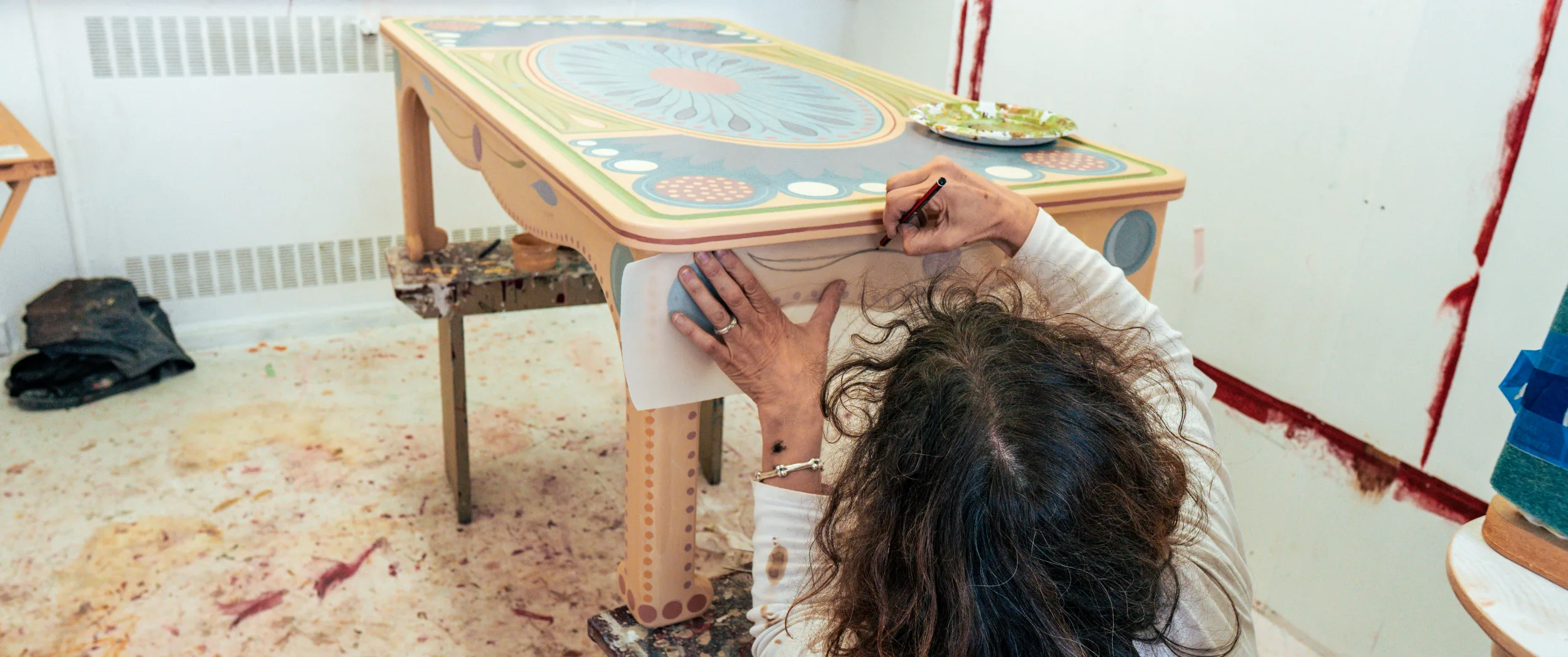
A knack, and a quiet urgency
There is a real joy in seeing Lizzi at work in her own environment. We watched her hunt across the bench for a particular turquoise she had mixed a day or so earlier — the exact hue one of the pieces called for. The studio is busy, and you find yourself wary of everything: knocking over a pot, brushing against a surface still wet.
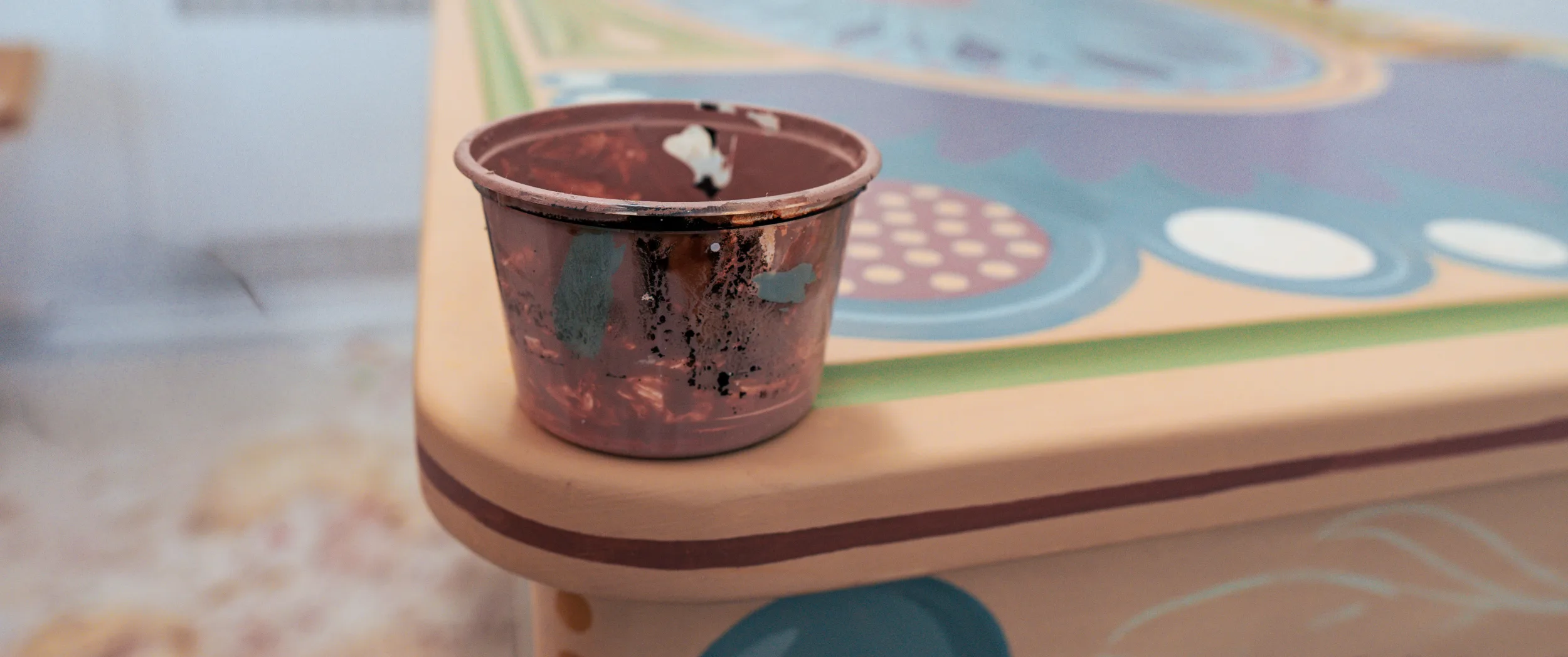
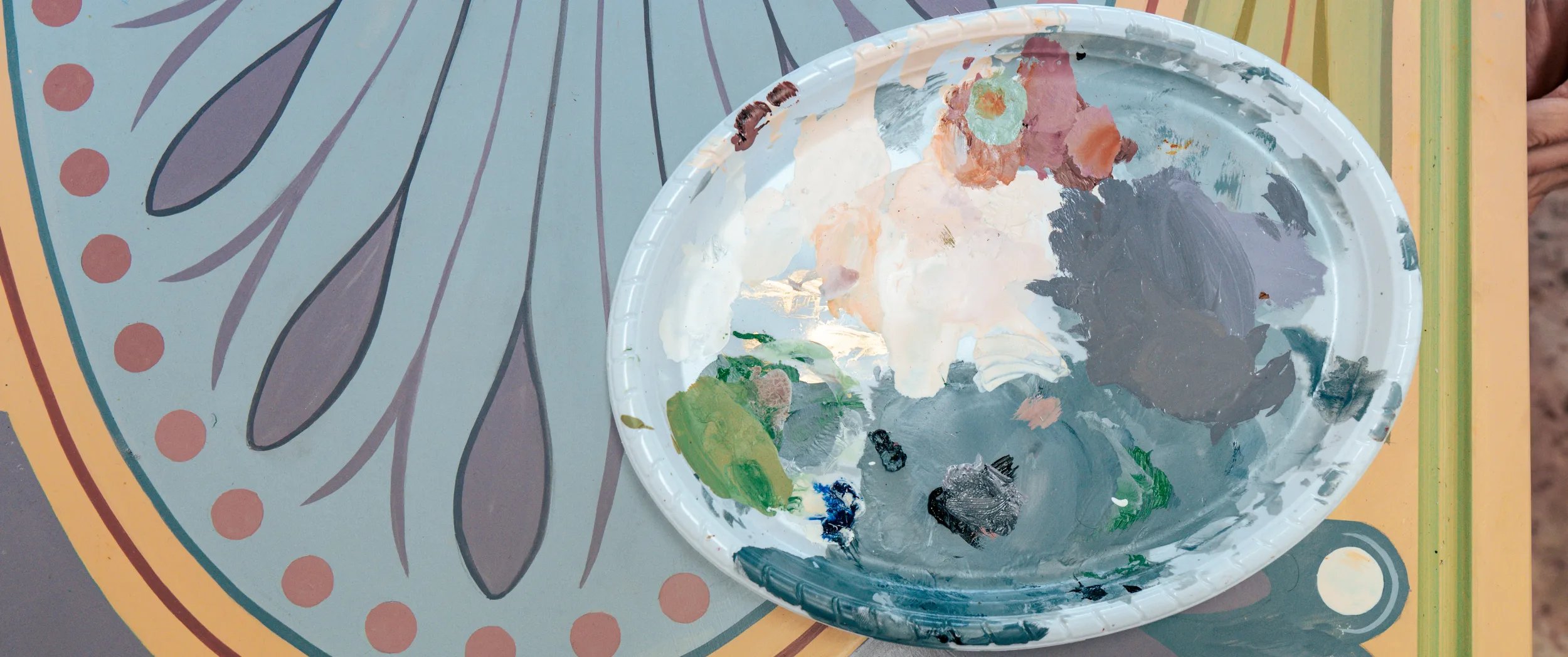
Every mark is made by hand. It is quietly amazing to watch someone with such a knack for their craft move quickly and carefully through a demanding set of furniture, each piece bound for New York in a few weeks’ time.
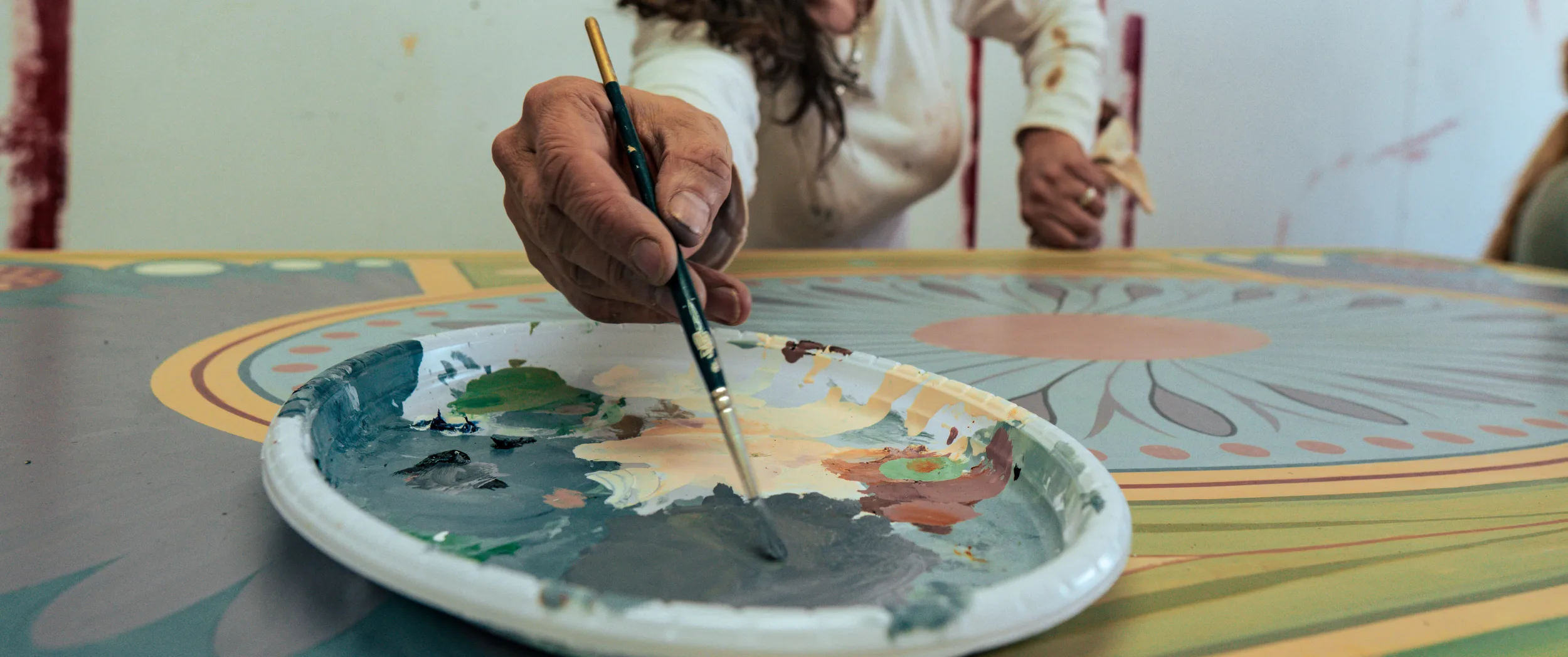
One design, carried across the set
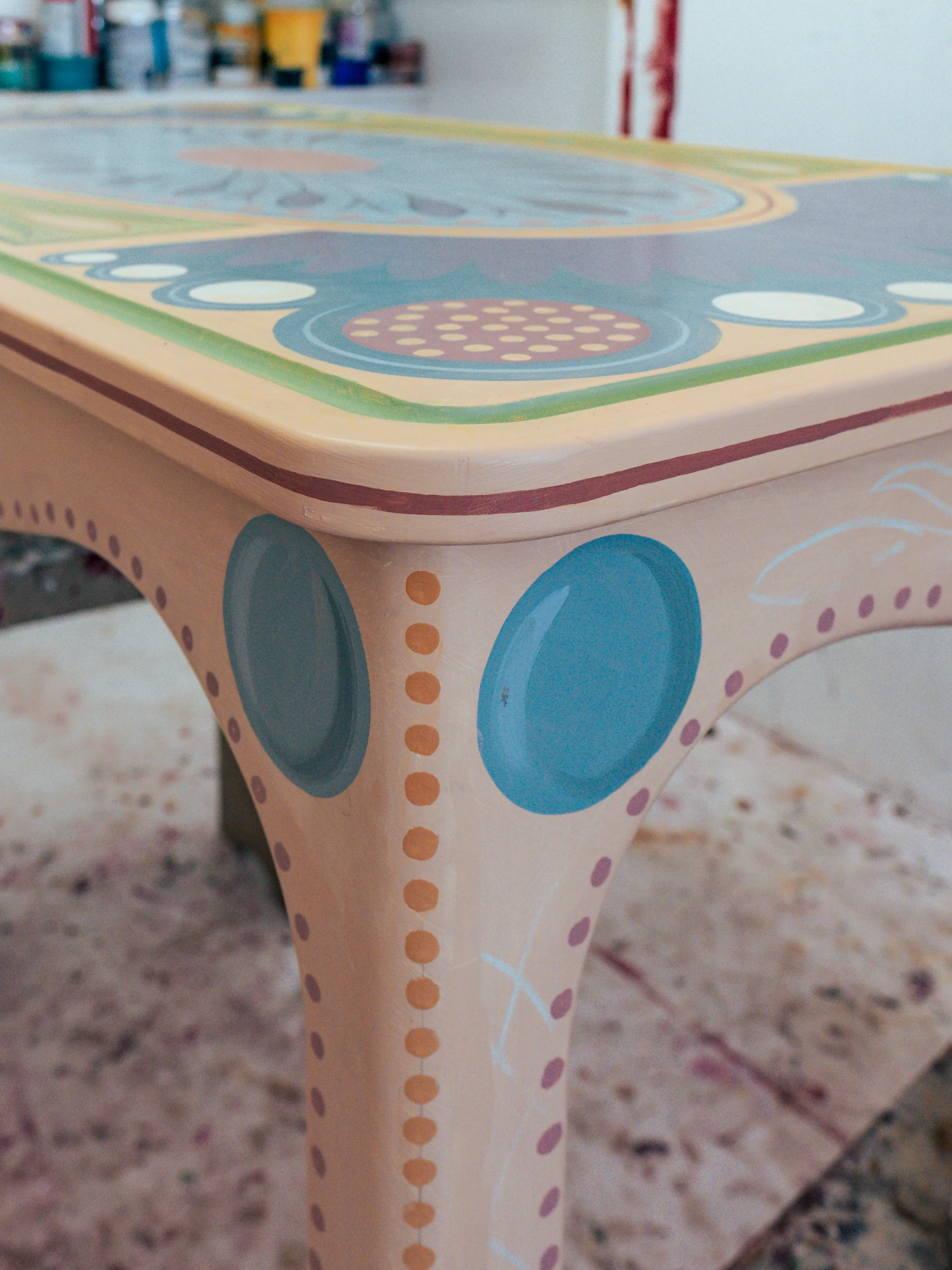
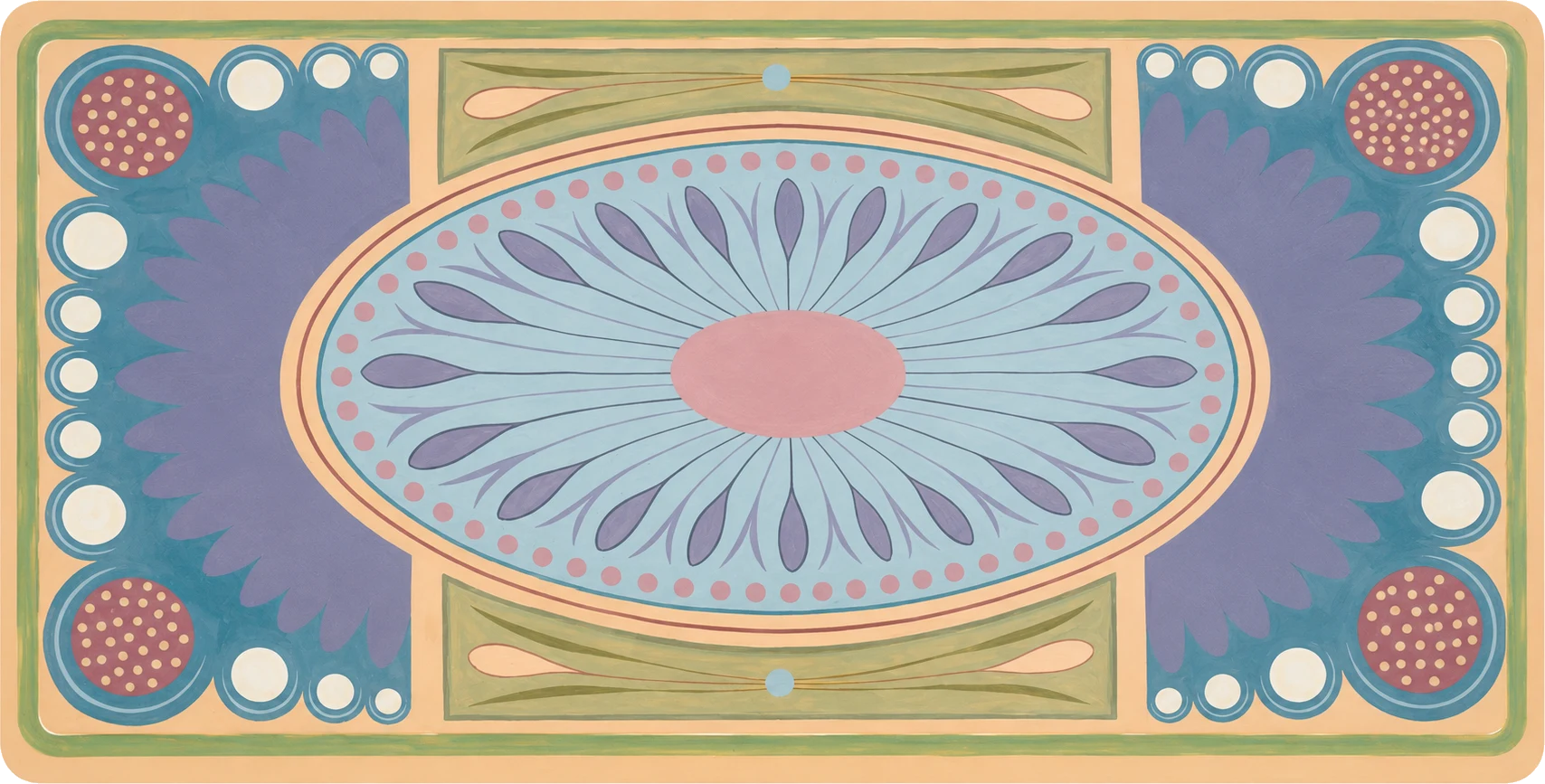
A single medallion runs through all three pieces — a symmetric burst of petals in blue, violet and coral on the pale ground, echoed in roundels down the legs and drawn round each edge with a fine border. Laid on freehand, no two passes are ever mechanically identical; carried by one hand across the whole set, they belong unmistakably together.