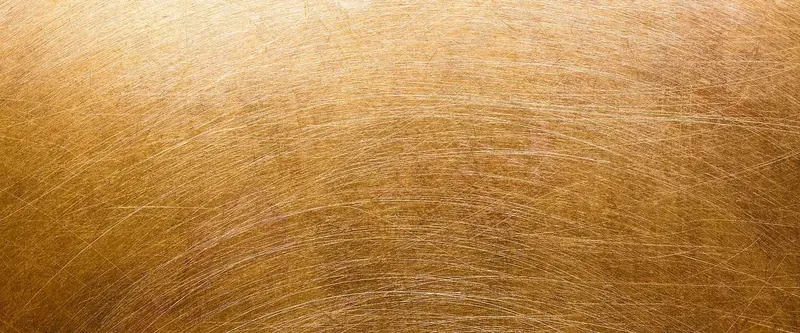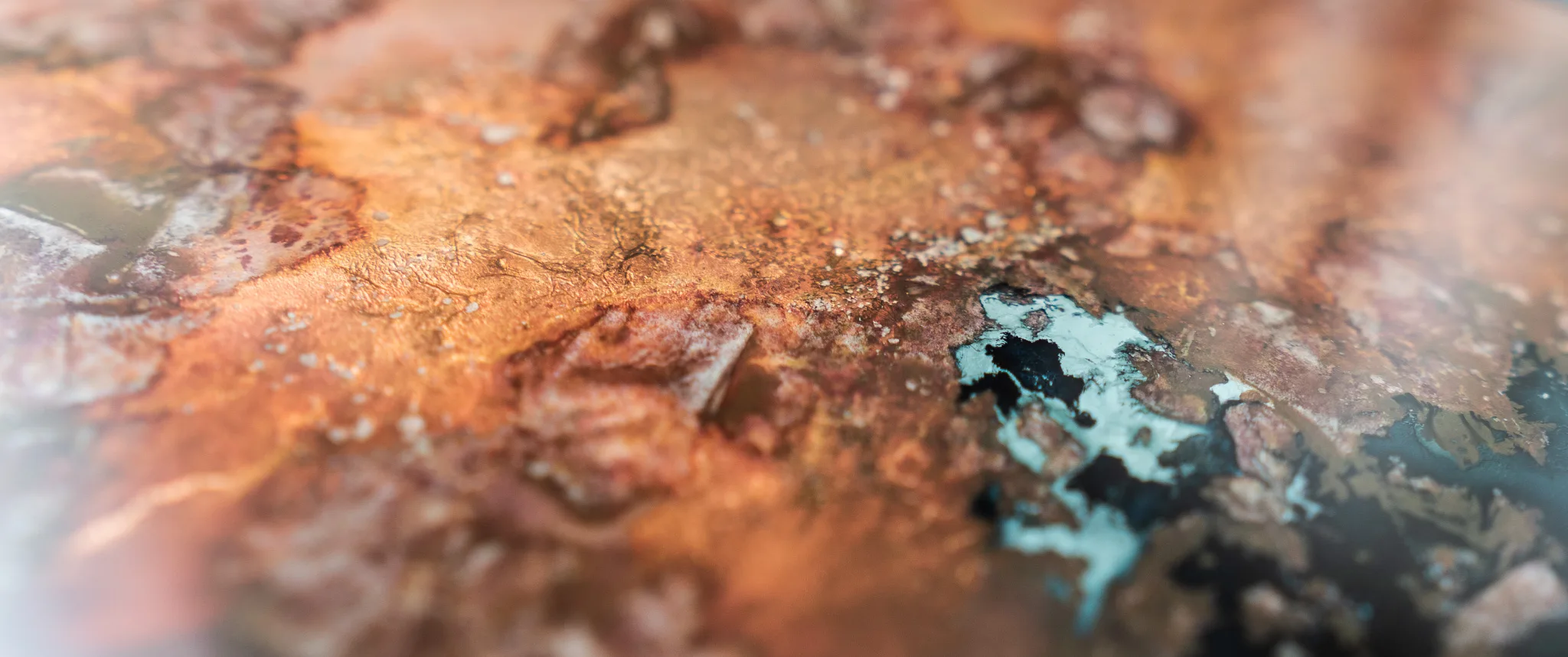
Patination is the change in a metal's surface colour over time, brass deepening to ochre, bronze darkening to near-black, copper greening to verdigris, either allowed to develop naturally or induced in the workshop in hours.
Brush a patinating solution across a sheet of brass and you can almost watch the colour move. The bright gold dulls, then warms, then turns — ochre gathering first in the low spots where the liquid pools, the surface going matte and faintly damp under the light. There is a smell to it, sharp and mineral, that hangs over the bench. This is patination: the change in a metal's surface colour over time, the deepening of brass to soft ochre, the darkening of bronze to near-black, the green verdigris that gathers on copper, the warm rust-brown of mild steel. It is sometimes mistaken for decay, but in luxury metalwork it is the opposite — a patina is the visible record of a material that is alive to its surroundings, and for many clients it is precisely the reason to choose metal at all.
What is actually happening
A patina is a thin layer of oxide, carbonate or sulphide that forms as the metal surface reacts with oxygen, moisture and the trace compounds in the air around it. On brass and bronze, the copper content reacts to form progressively darker browns and, over long periods, soft green highlights. On copper, the same process runs further and faster, producing the familiar verdigris. On mild steel, oxidation produces the warm browns of a controlled rust finish. The colour and the speed depend on the alloy, the humidity, the handling, and whether the surface is sealed — which is why two pieces of the same brass, hung in different rooms, will not age the same way.
Natural vs induced patina
A patina can be allowed to develop naturally over years, or induced in the workshop in hours using controlled chemistry — applying patinating solutions, heat or controlled humidity to bring the metal to a target colour before it leaves the shop. Induced patination lets a piece arrive already at the depth and tone the scheme calls for, rather than waiting for time to do it. The skill is in control and consistency: bringing every surface of a multi-part piece to the same patina, and stopping the process at the right point. I’ve learned to trust the eye over the clock here — the same solution behaves differently on a warm afternoon than a cold morning, and the metal will overshoot the colour you wanted if you look away, so we work in small passes and keep checking the surface back against the sample.
Sealing: holding the patina, or letting it move
The decision that defines a patinated piece is whether to seal it. A lacquer or wax seal locks the patina at a chosen moment and holds it there, protecting it from further change and from handling. Left unsealed, the metal continues to live — it darkens, softens, and quietly takes on the marks of the room it occupies, the warmth of hands that pass over it day after day. Both are valid; the choice is the client’s. A worktop or a handrail that will be touched constantly behaves differently sealed than unsealed, and that is decided at specification, not after.
A worked example
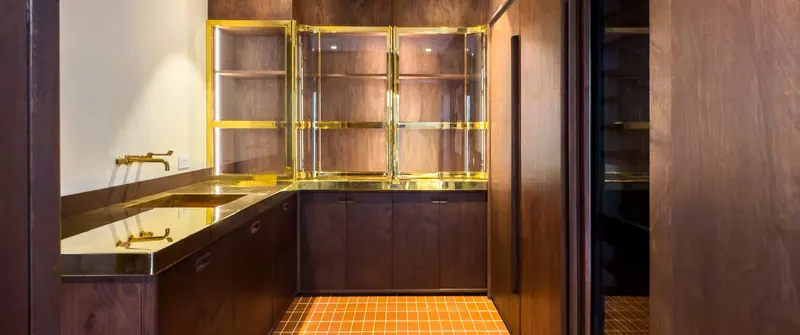
The brass commission at our Camberwell House project shows the choice in practice. The brass can be kept at a mirror polish with regular care, or allowed to patinate — taking on deeper tones of ochre and bronze with subtle verdigris highlights, a living finish that, left unpolished, only deepens the sense of craftsmanship. The piece was fabricated and finished to support either path, with the decision left to how the household chooses to live with it.
Specifying a patina
For designers, the useful decisions are the target colour, whether it is induced or allowed to develop, and whether it is sealed. From those, the studio produces sample panels brought to the intended patina for sign-off, so the finish is judged in the hand and in the room’s light rather than from a description — because no swatch on a screen ever tells you how a metal will catch the light it actually has to live in. How each metal finish behaves and ages is set out in our note on metal finishes, and the wider capability in our guide to bespoke metalwork.