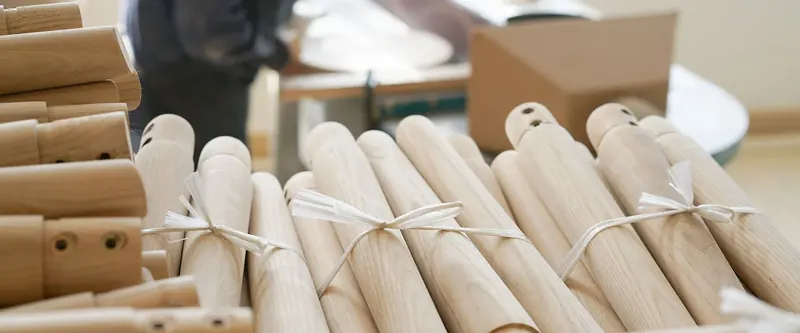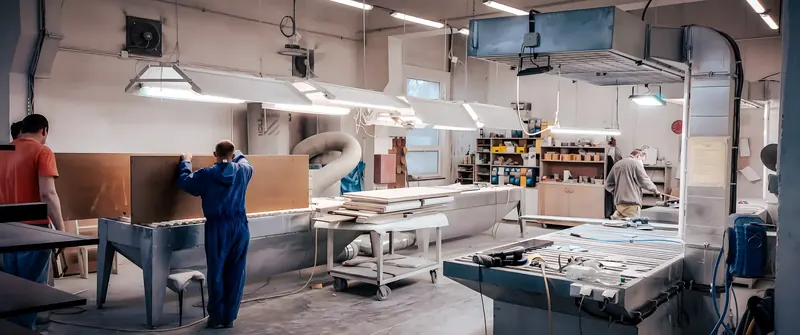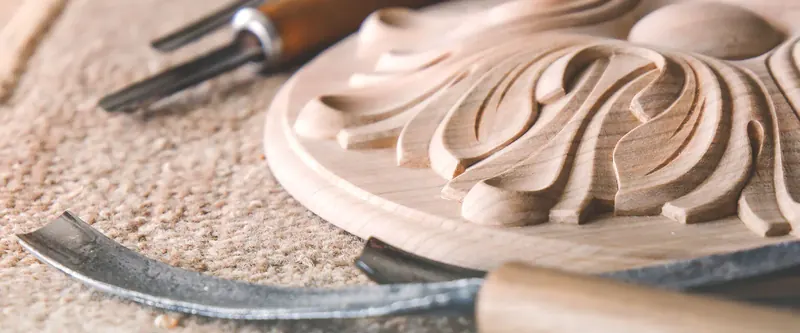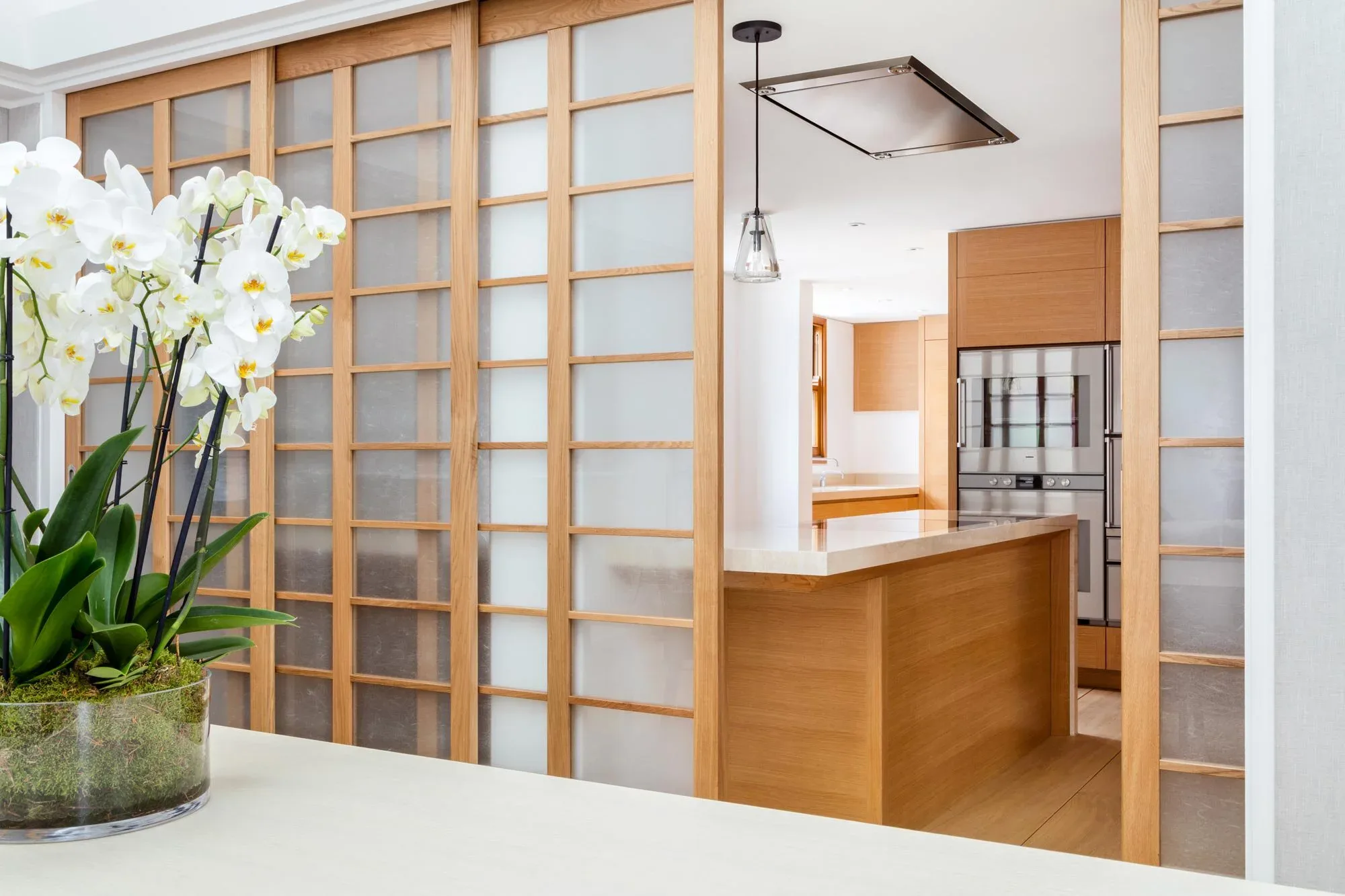
Japanese joinery is the centuries-old craft of joining wood with nothing but precisely cut, interlocking joints: no nails, screws or glue, the timber shaped so faithfully that it locks together and does all the work.
There is a kind of joint, made in Japan, that you can pull apart with your hands and slot back together — and it will hold up a roof. No nails. No screws. No glue. Just two pieces of timber cut so exactly that they lock into one another and refuse to let go. That is Japanese joinery: the centuries-old craft of joining wood with nothing but precisely cut, interlocking joints. Developed over generations by Japanese carpenters and cabinetmakers, it trusts the wood itself — shoulders, tongues, wedges and mortises shaped so faithfully that the timber does all the work. It is among the most demanding and most quietly astonishing traditions in all of joinery, and its ideas still shape how the best furniture is built today.
Where it comes from
It grew, as the best things do, out of necessity and temperament. Japan is rich in timber but was historically short of iron, and in a country that shakes, a rigid nailed frame is a liability — a joint that can flex and breathe outlives one that can only resist. Temple carpenters (miyadaiku) and furniture makers (sashimono-shi) refined hundreds of joints across the centuries, each handed down master to apprentice, by the hands far more than by the book. Some of the oldest wooden buildings on earth are held together this way, and they have stood — swaying, settling, breathing — for more than a thousand years.
The famous joints
What stops people in their tracks is the sheer ingenuity. Kanawa tsugi, the keyed scarf joint, splices two beams end to end into what looks for all the world like one unbroken length, locked with a single hardwood key. The wider families of tsugi (splicing) and shiguchi (connecting) joints solve every problem timber can pose — extending it, turning a corner, crossing one piece over another. The cleverest are designed so the genius is hidden: from the outside, a clean, calm line; inside, the wood interlocks in three dimensions like a puzzle that will never be opened again. Cutting them is all hand tools, held breath, and tolerances measured in fractions of a millimetre. And there is no faking it: the first time one slides home with no gap and no wobble, the two faces meeting as if they had been grown together, you understand why people give their lives to this — just as the first time one doesn't, you understand it even better. Wood is an honest critic; it tells you exactly how good you are.
The philosophy
Underneath the technique is a way of seeing. Japanese joinery treats wood as a living thing — something that moves with the seasons and the years — and designs joints that go along with that movement rather than fighting it. It prizes the integrity of the material: minimal metal, no filler hiding a multitude of sins, the whole structure legible to anyone who knows how to read it. And it honours the discipline of the maker, because a joint is only ever as good as the cut, and the cut is only as good as the years behind the hand that made it. That same respect for material and method runs through all fine furniture joinery and joints.
Japanese principles in bespoke furniture
You don't have to be building a temple to live by this. The principles — joints that locate and lock with precision, that move with the grain instead of against it, that lean on craft rather than fixings — are exactly the principles behind the strongest bespoke cabinetry and casework. In our bespoke joinery we draw on the same logic the Japanese masters perfected: choosing the right timber for the task, cutting joints that will stay tight for decades, and letting the construction tell the truth. A hand-cut dovetail and a piece of sashimono share the same DNA — two accents of one language.
Why it still matters
In an age of staples, brackets and flat-pack cams, Japanese joinery is a quiet reminder of what timber can do in the hands of someone who has truly learned it — and of why a piece built by a joiner outlives and outperforms one that is merely assembled. It is the clearest argument we know for craftsmanship: there is no fixing on earth as strong, as lovely, or as lasting as a perfectly cut joint. That belief sits right at the heart of how we work.