Value engineering is a structured way of improving a design's value by examining its function, materials and manufacture to deliver the same intent for better cost or durability: it protects what matters rather than cutting things out.
There is a particular silence that falls in a meeting when the first costing lands and it is over budget. The drawings are beautiful, everyone in the room believes in them, and now a number on a page is asking which parts of that belief can survive. It is an uncomfortable moment, and it is also the moment value engineering exists for — not to start crossing things out, but to protect what actually matters and find a cleverer route to the rest.
VE stands for value engineering: a structured way of improving the value of a design by examining its function, materials and method of manufacture — and finding ways to deliver the same intent for better cost, better durability, or both. The term comes from wartime manufacturing at General Electric, where material shortages forced engineers to find substitutes that often turned out to perform better than the originals. That origin matters, because it captures what VE is and what it is not.
Value engineering is not cost-cutting. Cost-cutting removes things and hopes nobody notices. Value engineering asks a sharper question: what is this element actually doing — and is there a better way to do it?
What VE looks like in an interiors project
On a furniture, joinery or fit-out package, value engineering usually happens in the quiet stretch between design freeze and fabrication, when drawings meet a manufacturer's costed reality. We sit with the package the way you would read a difficult letter twice — once for the intent, once for where it can flex. The exercise runs through a handful of categories:
Materials. Could a veneer achieve what is drawn in solid timber? Does the marble need to be book-matched slab, or does a porcelain achieve the look on a vertical surface nobody touches? Is the specified leather performing a job a performance fabric does better in a high-traffic setting?
Construction. Can a curved element be laminated rather than carved? Can a one-off profile be adapted a few millimetres to run on existing tooling? Does the joinery need to be solid-built on site, or does a modular construction install faster with fewer trades?
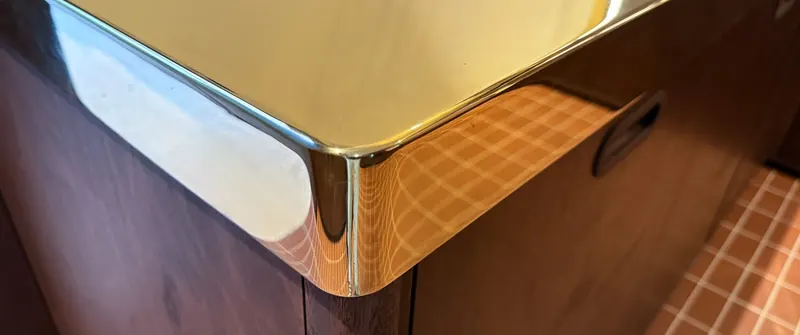
Finishes. A 90% gloss lacquer costs significantly more labour than a 30% satin — every coat, every flat-sand, every polish, all of it done by hand and by eye. Where the design intent is colour rather than mirror reflection, sheen is one of the most efficient places value hides.
Logistics. Element sizes that fit standard freight, pieces that pass through the building's actual lift, assemblies that arrive finished rather than requiring site trades — none of this is visible in a render, and all of it is money.
Why VE produces better projects, not just cheaper ones
The overlooked half of value engineering is that durability is value. A substitution that saves nothing on day one but doubles the service life of a bar top is good VE. So is a detail change that makes a panel replaceable rather than built-in, or a finish that can be repaired locally instead of re-sprayed wholesale. On hospitality projects — where furniture lives a hard life, leaned on and dragged and spilled on for years — the VE conversation is as much about the next ten years as the current budget.
Where it goes wrong
Value engineering earns its poor reputation when it happens too late, done by the wrong people. A quantity surveyor swapping specified materials from a spreadsheet, without the designer in the room, is not value engineering — it is design erosion. The result reads as a diluted version of the original intent, and usually costs more to put right than it ever saved.
Good VE has two non-negotiables: the design intent is stated and protected — the things that must not change are agreed first, before anyone reaches for an alternative — and the people proposing those alternatives understand both manufacturing and the design language. The question is never "what is cheaper?" but "what achieves this same effect more intelligently?"
How we approach VE as a manufacturer
Because we manufacture furniture, joinery and lighting through a network of specialist workshops, value engineering is part of how we quote rather than a separate exercise. When a designer's package arrives, we cost it as drawn — and where we can see a smarter route, we price that too, as an option, with a sample on the bench where the substitution needs to be seen to be trusted. A drawing can argue a case; a sample in the hand settles it. The designer decides. Sometimes the answer is "as drawn, the detail is the point," and we are glad to hear it. Sometimes the alternative quietly unlocks the budget for the one piece that actually matters.
If you are carrying a specification that has come back over budget, send it to us before anything gets deleted from it. There is almost always more value left in the drawings than the first costing found — and the right place to look for it is the workshop, not the spreadsheet.