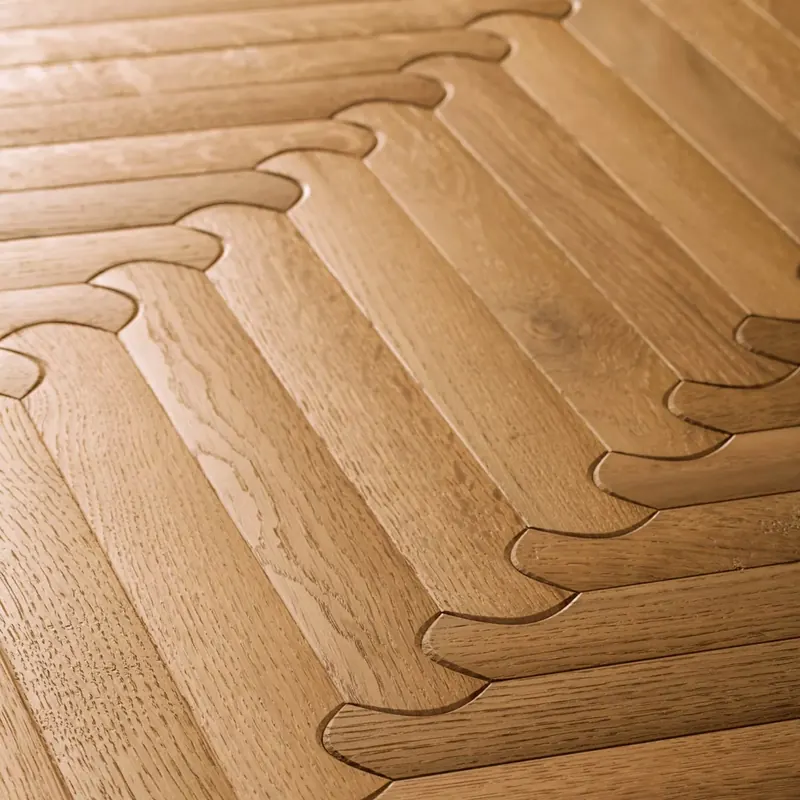
The difference between engineered and solid wood flooring is the construction beneath: solid boards are one piece of timber, while engineered boards bond a hardwood wear layer onto a cross-bonded core that stays flatter through humidity swings.
Cross a good wood floor barefoot and the room introduces itself through your soles — the faint give underfoot, the low, warm note when a heel lands, the way oak catches morning light differently from how it holds the evening. It is the surface a room is built up from, and almost everyone choosing one starts at the wrong end: the timber, the pattern, the colour. The decision that actually governs how the floor lives is the one nobody asks about — the construction beneath the surface: engineered or solid. The two can look identical once laid, the same oak in the same herringbone with the same oiled finish, and yet they behave like different materials. Choose wrongly and the floor tells on you in a year or two, in ways no finish can paper over. So this is the honest distinction, and where each one belongs.
What each one is
Solid wood flooring is exactly what it sounds like: every board a single piece of timber, the same species top to bottom. It is the old way, the floor of grand houses and well-worn farmhouses alike, and in the right room it will outlive the people who laid it.
Engineered wood flooring is built up in layers — a top layer of genuine hardwood, the wear layer, the part you see and walk on and run a hand across, bonded onto a core of plywood or cross-bonded timber beneath. People assume engineered means a lesser thing, a laminate or a print. It is not. An engineered oak floor is real oak underfoot, the same board face you would get from a solid plank; what differs is the clever, quiet structure hidden below, engineered to keep that surface flat and calm through conditions a solid board would fight.
Stability and movement
Here is the heart of it. Wood is a living material that never quite stops breathing — it takes up moisture in a damp winter and gives it back in a dry, heated one, swelling and shrinking with the seasons. A solid board moves a great deal: left in conditions it dislikes it will cup at the edges, open gaps between boards, or lift and warp. An engineered board's cross-bonded core works against itself by design, each layer pulling the next in a different grain direction so the whole sits flat and steady across a far wider range of damp and dry, warm and cold. In a glazed open-plan room where the humidity swings with the weather and the heating, that quiet steadiness is worth a great deal.
Underfloor heating
Nowhere does the difference matter more than over underfloor heating, now all but standard in the luxury new-builds and deep renovations we work on. A floor warmed from below is asked to expand and contract every time the system cycles, day after day — precisely the rhythm that drives solid wood to move. Engineered flooring is made for exactly this, holding its shape through the heat cycles, and so it is the recommended, often the only sensible, choice over UFH. We have been asked more than once to lay solid boards over underfloor heating because a client loves the idea of solid timber, and the honest answer is that it can be done but only within tight, anxious limits — the kind of specification that keeps you watching the floor through its first winter. For most rooms, engineered is simply the default, and no one walking the finished floor could tell. The conditions that make it work, from the 27°C surface limit to bonding and moisture testing, are set out in our guide to wood flooring over underfloor heating.
Refinishing
Solid wood's real prize is that it can be sanded back and brought up fresh again and again across its life, because there is good timber all the way down — a floor that carries a hundred years of footsteps and is reborn under the sander every generation or two. Engineered flooring can be refinished too, but only as often as the wear layer permits, which is why wear-layer thickness is the one specification to look hard at. A generous 4–6mm wear layer takes several sandings and lasts decades; a thin one is spent after a single pass. For the work we do, engineered boards are specified with a deep wear layer on purpose, so the floor keeps almost all of solid timber's longevity without its temperament.
Which to choose
- Engineered — over underfloor heating; in open-plan or variable-humidity rooms; in basements or laid over concrete; anywhere stability is the priority. With a deep wear layer it gives up very little in length of life.
- Solid — in settled, traditional interiors without underfloor heating, where a floor will be lived on for generations and sanded fresh many times over, and where the unbroken timber is itself part of the point of the brief.
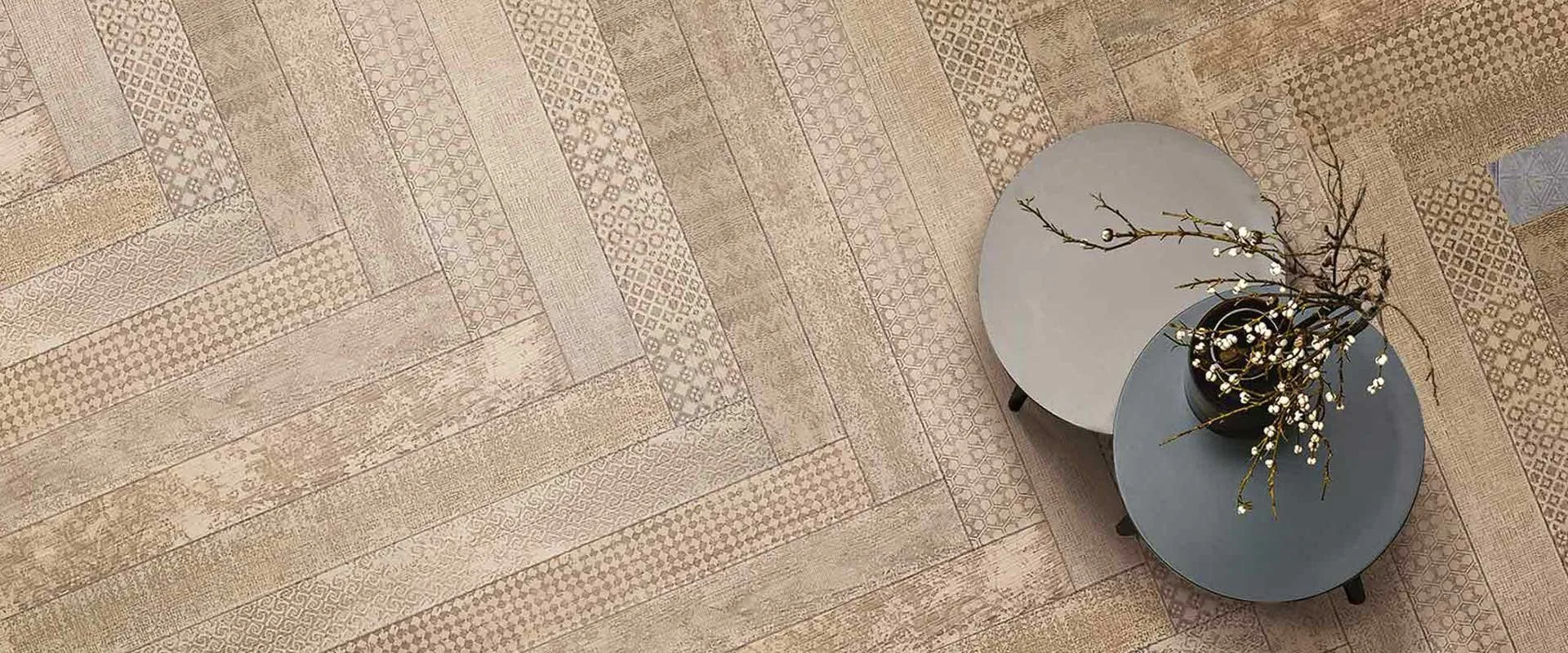
Neither choice limits the look. Both come as plank or as parquet — herringbone, chevron, Versailles panels — in any timber and any finish you like; the pattern, the species and the surface are entirely independent of what holds the board together below. A herringbone engineered oak floor and a herringbone solid oak floor can sit side by side and look like twins. The full range is set out on our wood flooring page, and the related world of decorative veneer in our wood veneer glossary. To see any of these patterns laid in a room, try the floor visualiser.