A bespoke media wall unit is a fitted joinery piece, usually floor-to-ceiling or wall-to-wall, built around the television to integrate storage, display, often a fireplace and all the supporting equipment, with the technology concealed where it can be.
Switch the television off, and most rooms lose their composure. The screen sits there — a black rectangle, faintly mirroring the lamps, with a thin grey snake of cables wandering down the wall to a stack of boxes that nobody chose to look at. A bespoke media wall unit is the joinery answer to that problem. It is a piece of fitted cabinetry built around the screen and everything that serves it, so the technology is integrated, concealed where it can be, and framed by something considered. When it is right, you walk into the room and notice the panelling, the warm wash of light, the grain of the timber — and only later realise that is where the television lives.
What a media wall unit is
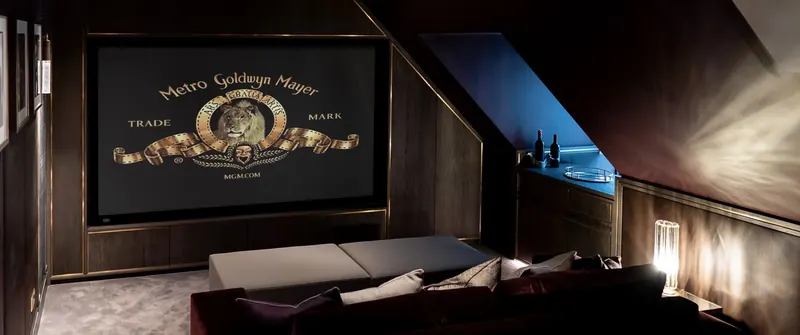
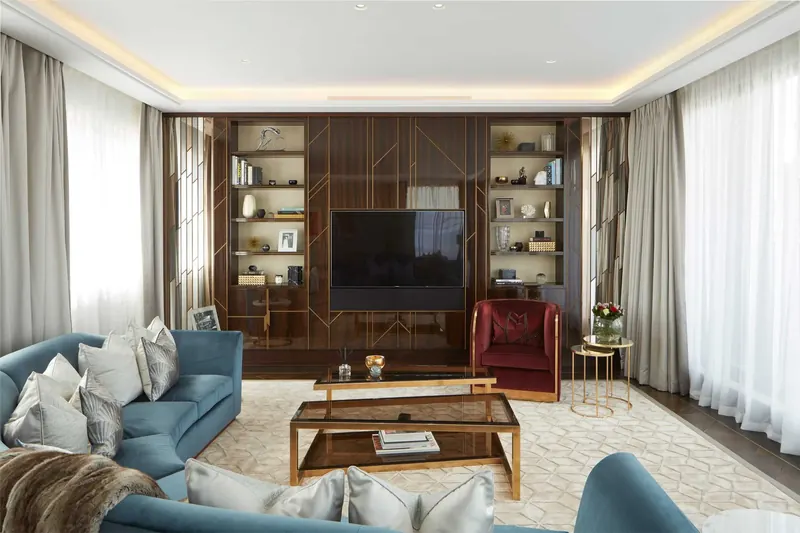
A media wall is a fitted joinery unit, usually floor-to-ceiling or wall-to-wall, that houses the television and integrates storage, display, often a fireplace, and all the supporting equipment. At its simplest it frames the screen and hides the boxes. At its most sophisticated it is the architectural centrepiece of the room: the screen set flush into panelling so its edges vanish, soft light grazing the surfaces either side, a fire throwing warmth below it, and not a single cable to be found. It sits at the meeting point of fitted joinery and home-cinema design — furniture that happens to be technical, rather than technology dressed up as furniture.
Concealing the technology
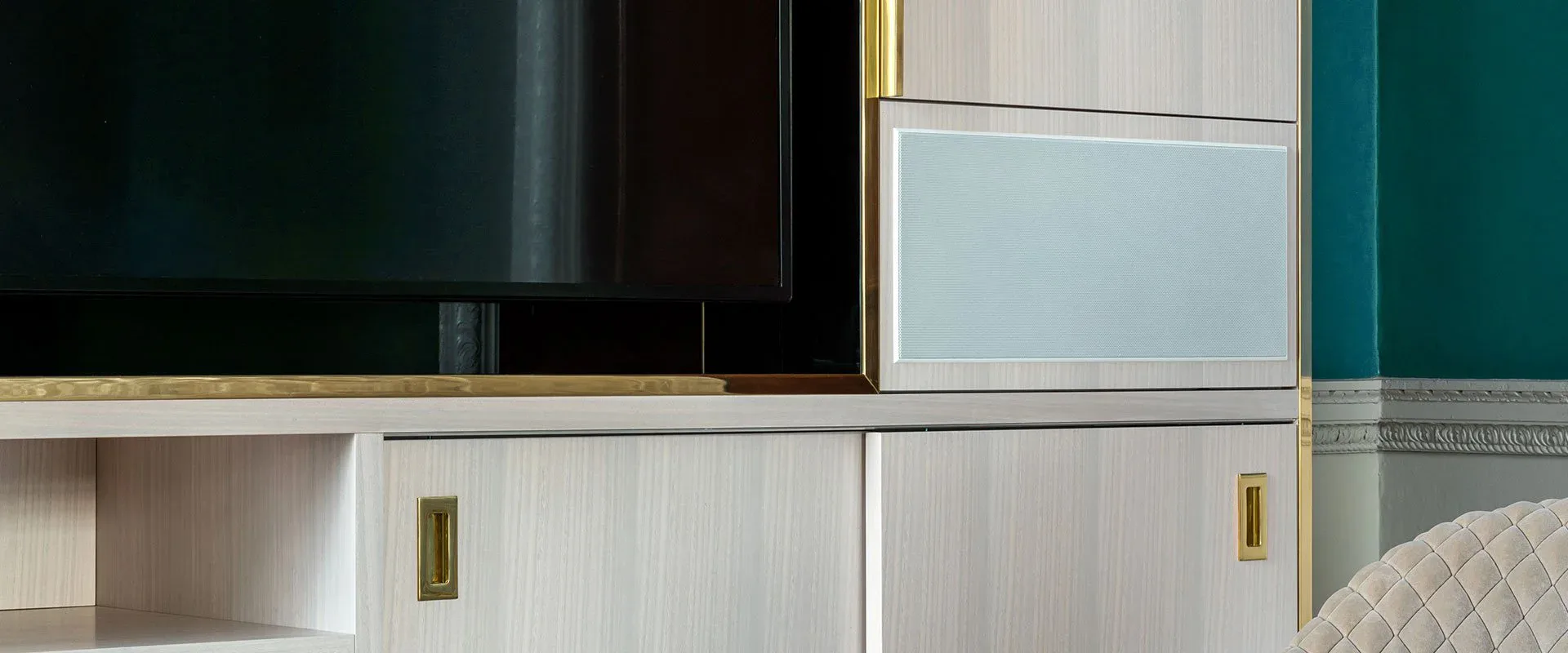
The defining job of a good media wall is making the kit disappear, and that is mostly a question of where things go and how they breathe. The screen can be set flush into a recess or framed by panelling so it reads as part of the design. Speakers can sit behind a panel of acoustically transparent fabric, heard but not seen. And the real clutter — amplifiers, sources, the inevitable nest of boxes and trailing leads — lives in a ventilated, access-panelled cupboard within the unit, out of sight but never out of reach. We draw the ventilation paths and the cable routes into the very first drawing, before a single piece of timber is cut, because amplifiers and receivers throw off real heat and a sealed cupboard slowly cooks them. A discreet vent at the base, a warm-air exit near the top, a little engineered movement of air through the cavity — that is the difference between a wall that lasts and one that starts dropping signal on a summer evening. Done properly, the whole thing reads as joinery, and the technology is felt rather than seen.
Fitted or freestanding
Most media walls are fitted — built into the room, scribed tight to walls and ceiling that are never quite square, and detailed to look as though they were always there. But a substantial freestanding media unit or a low credenza can be the right answer where building in is not wanted or not allowed, particularly in a rented home or a listed interior where the fabric must be left untouched. The choice shapes everything that follows: fitted gives you the seamless, architectural result, scribed into the room as if it grew there; freestanding gives you flexibility and a piece you can lift out and take with you when you move.
Materials, finishes and lighting
Because a media wall is one of the largest surfaces in the room, its material quietly sets the tone of everything around it — veneered timber laid up to flow across the doors, hand-rubbed lacquer, a slab of stone, fine metal detailing, or some considered combination of the four. Around a screen we lean towards lower-sheen finishes; a matt or satin surface is far kinder beside a bright panel, soaking up the reflections and glare that a high-gloss face would only throw back at you. Then there is the light. Integrated, dimmable lighting — a cove glow washing up the wall behind the unit, a soft pool in a display niche — lifts the harsh contrast of a bright screen in a dark room, and, just as importantly, gives the wall a quiet evening life of its own once the television is off and the niches hold nothing more demanding than a book and a bronze.
Designed around your room and your kit
Media walls are almost always bespoke for a simple reason: no two rooms, screen sizes or equipment lists are ever the same, and a unit that is even a few millimetres off announces it — a reveal that runs out of true, a screen sitting proud of its frame. Built to your wall, your screen and your particular tangle of technology in our woodwork workshop, and engineered to keep all of it cool, reachable and invisible, a bespoke media wall takes the most awkward object in the room and makes it the thing the room is arranged around. If you are planning one, we would be glad to draw it with you.