Private Mews
London
Private Mews
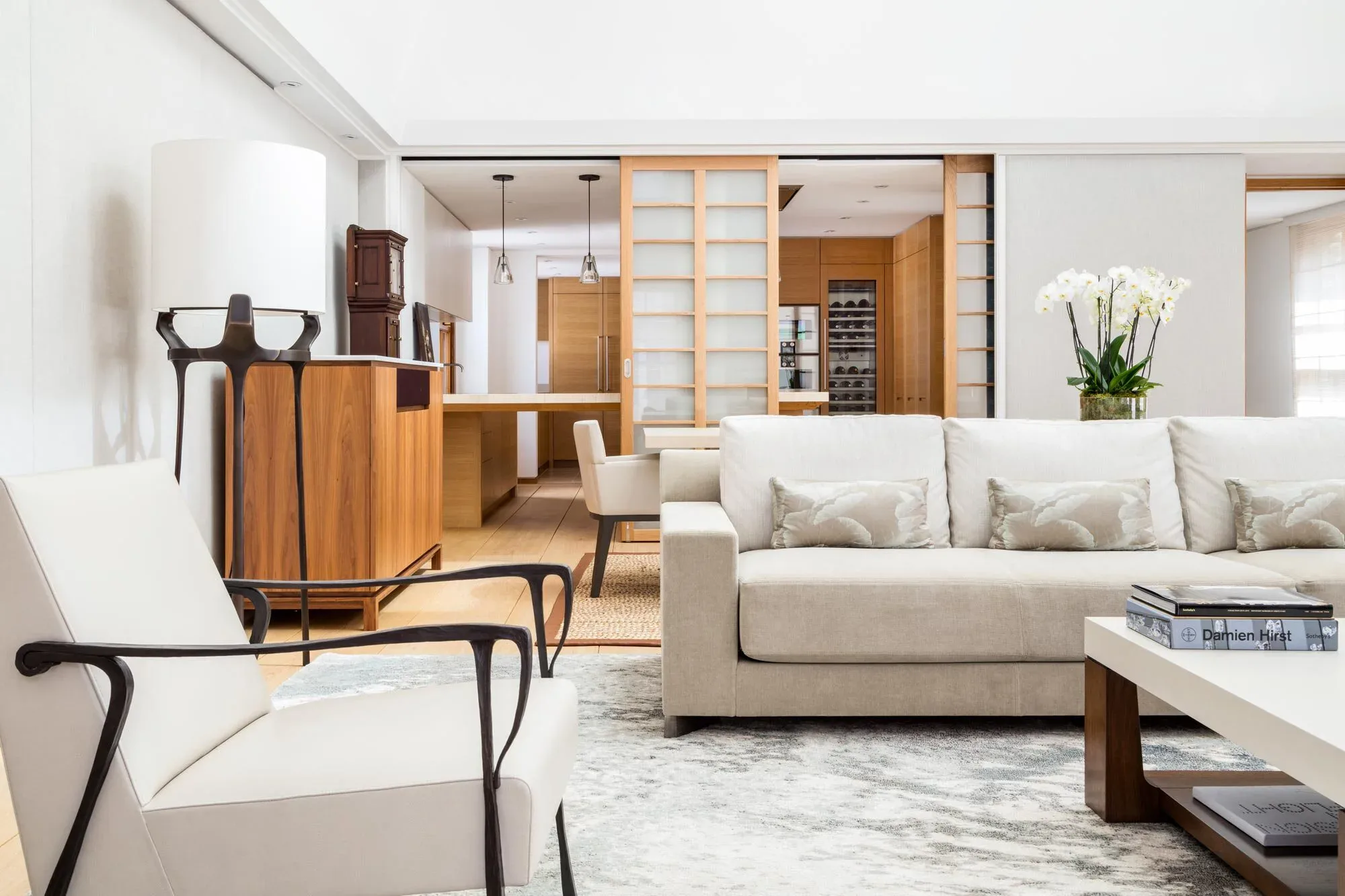
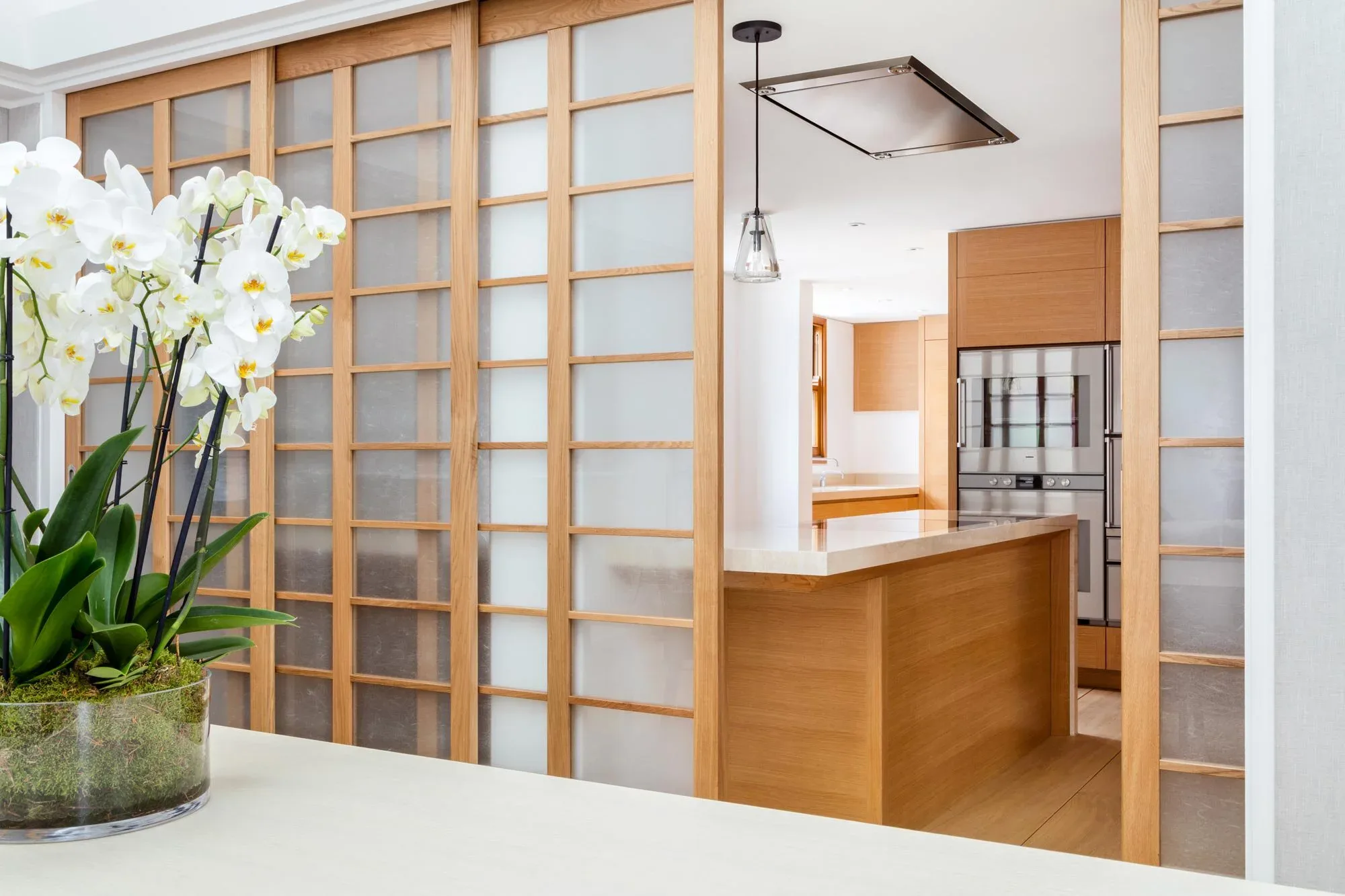
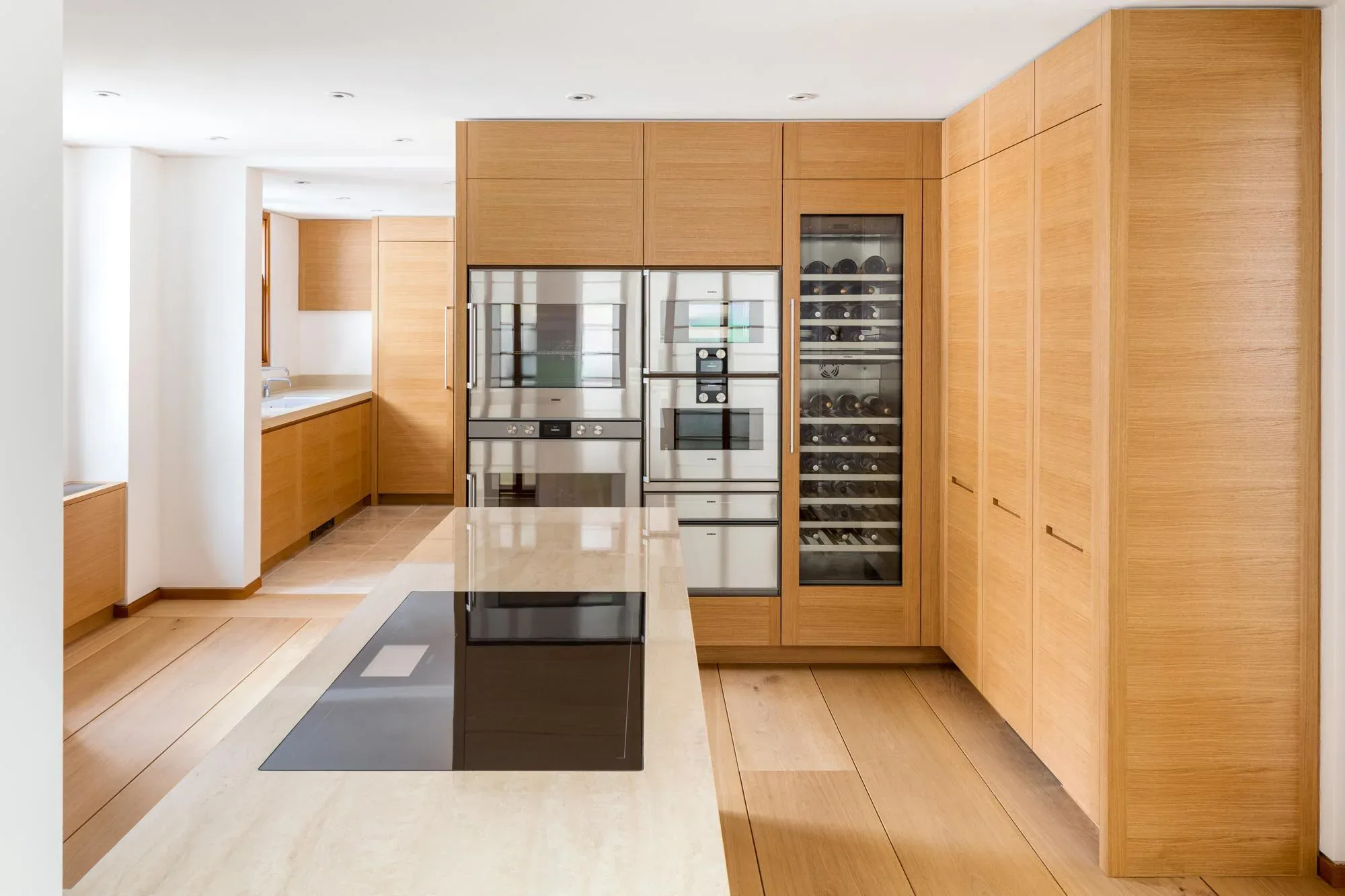
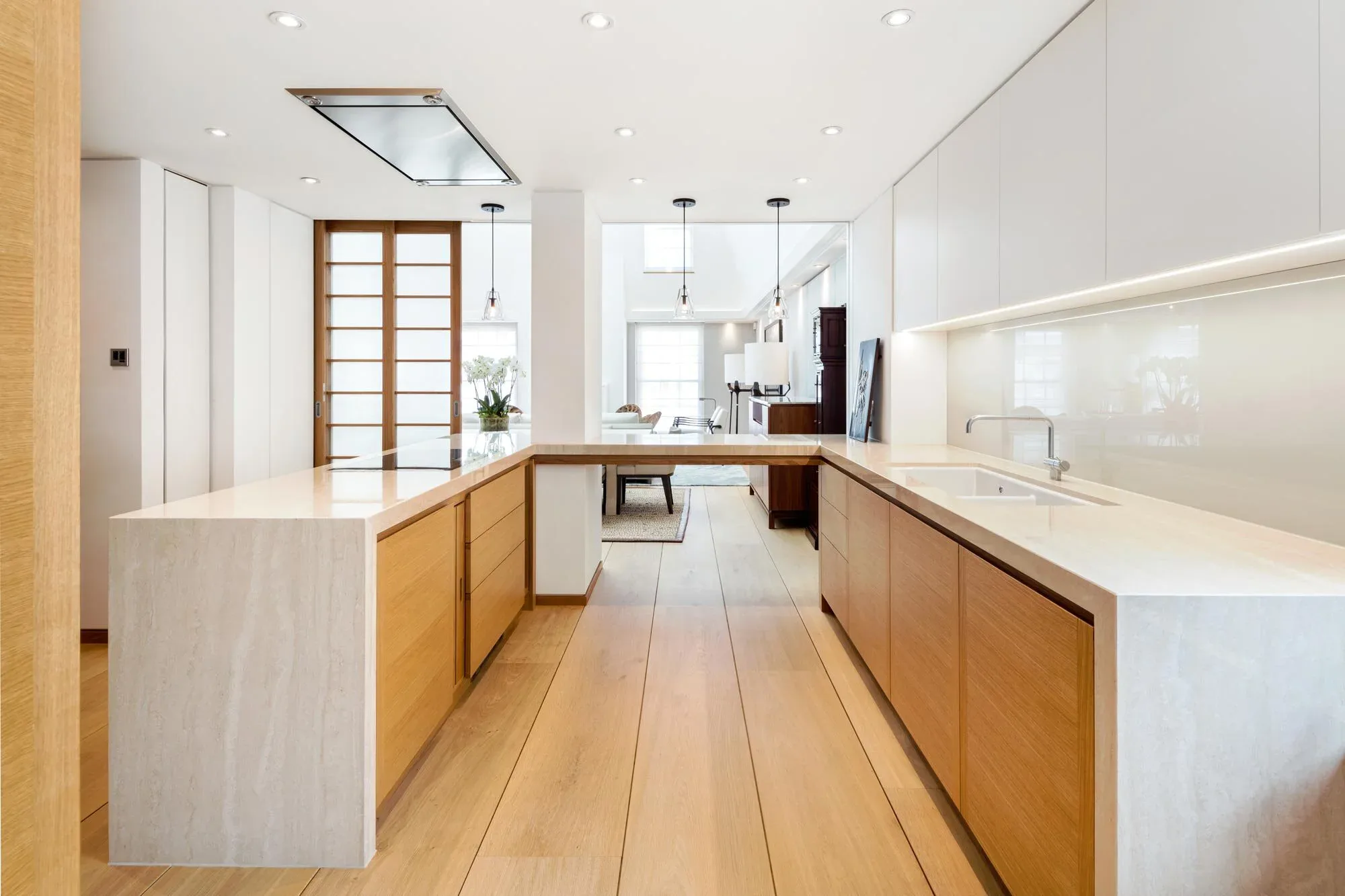
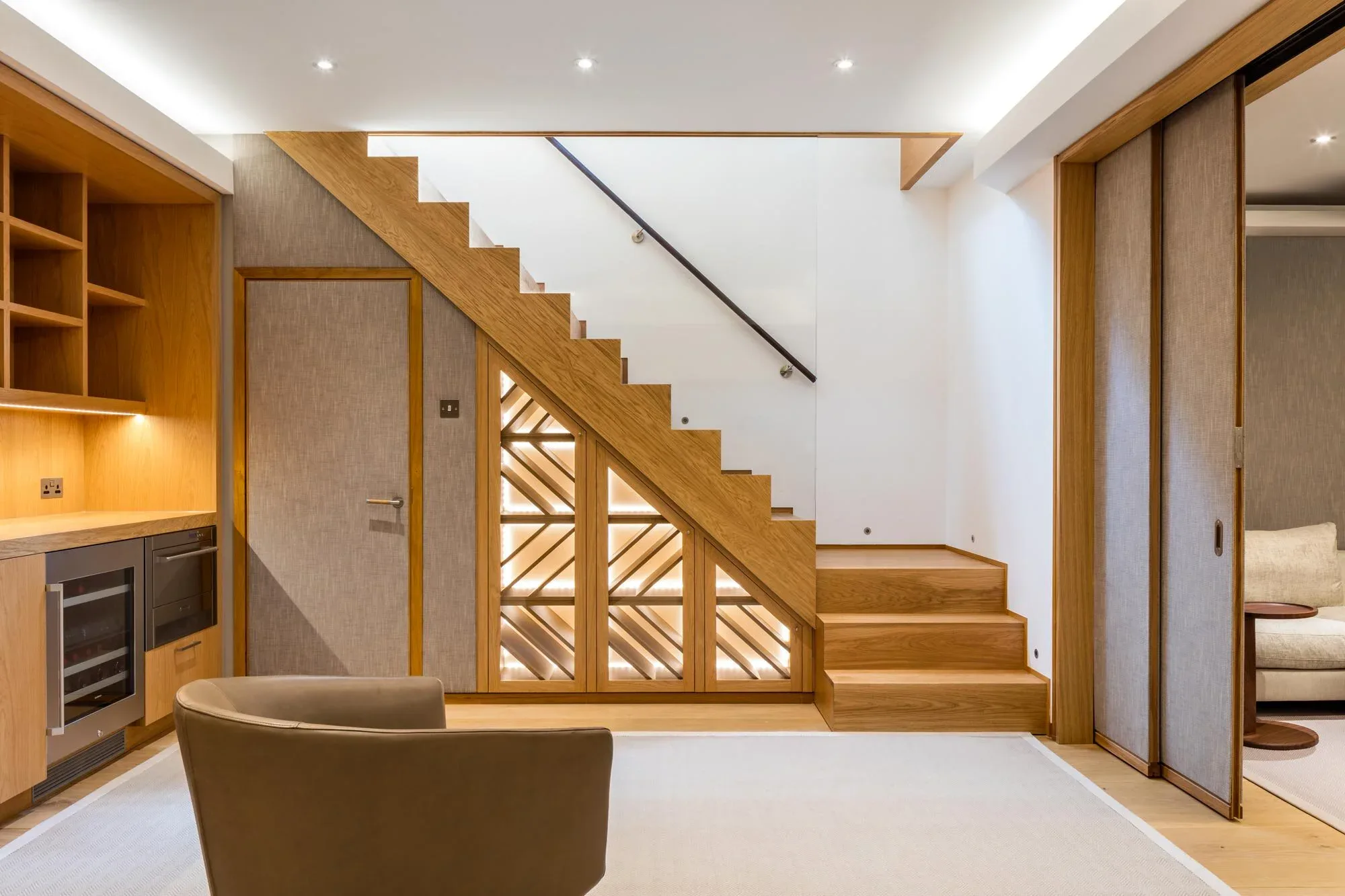
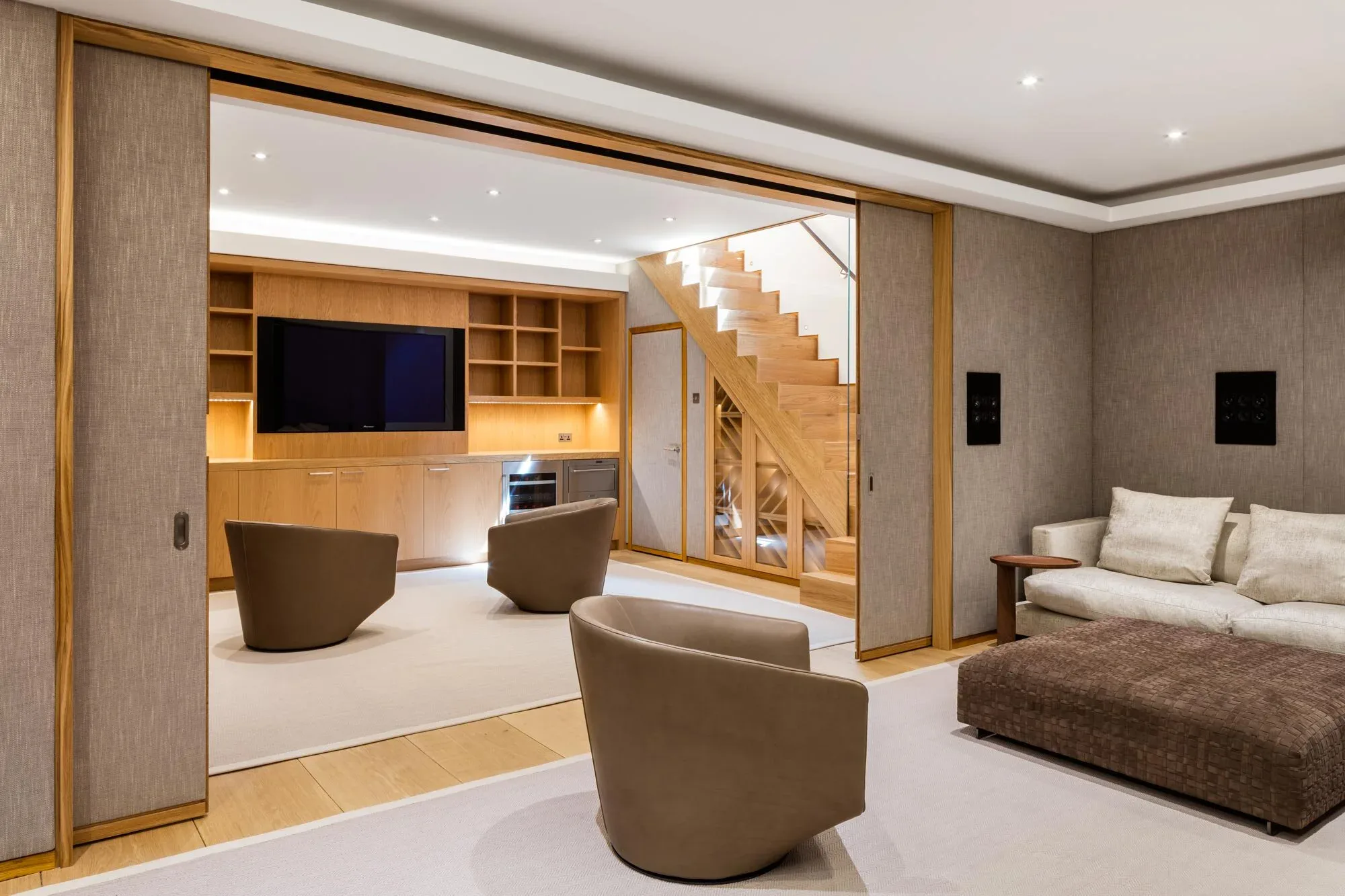
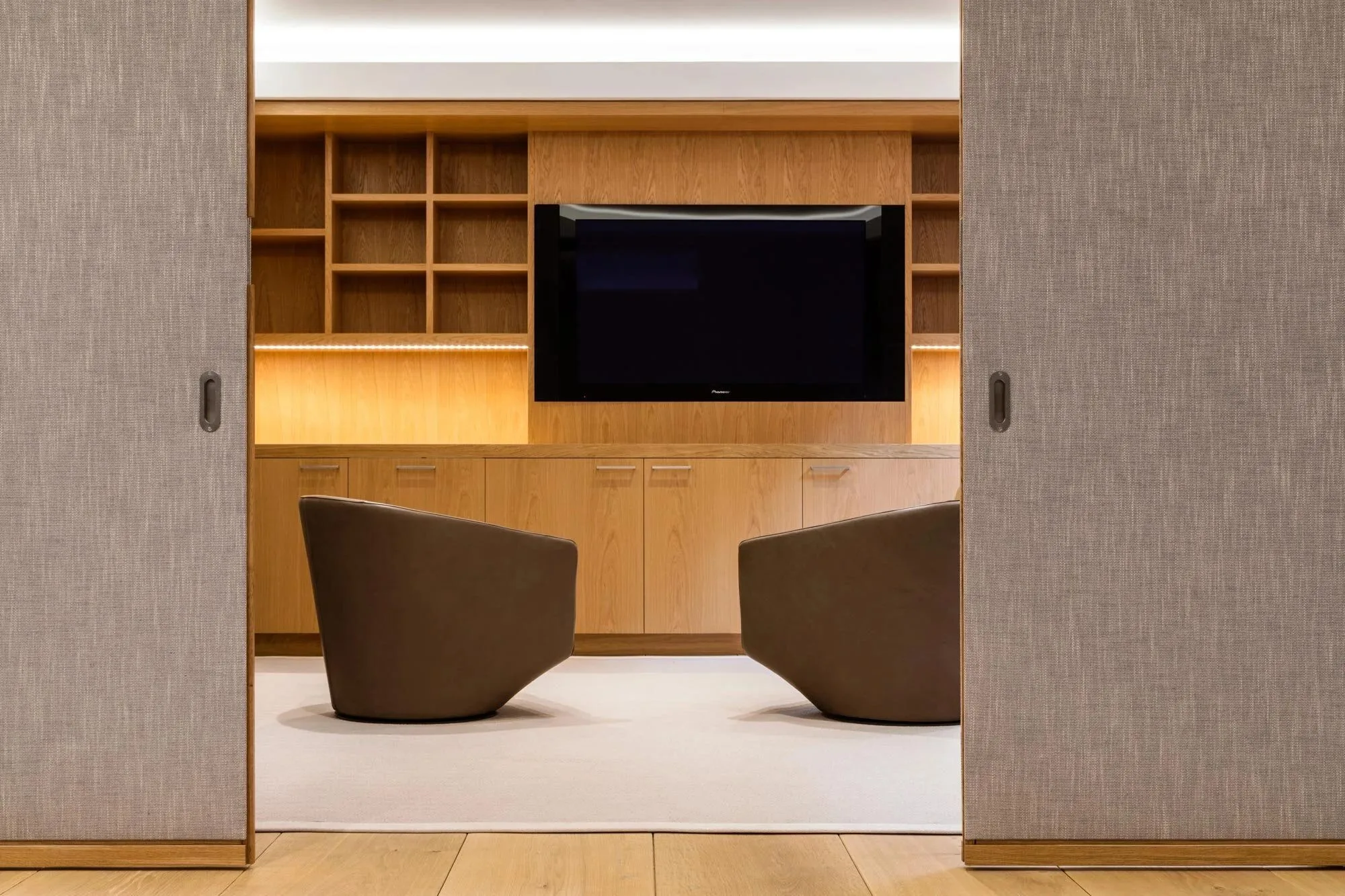
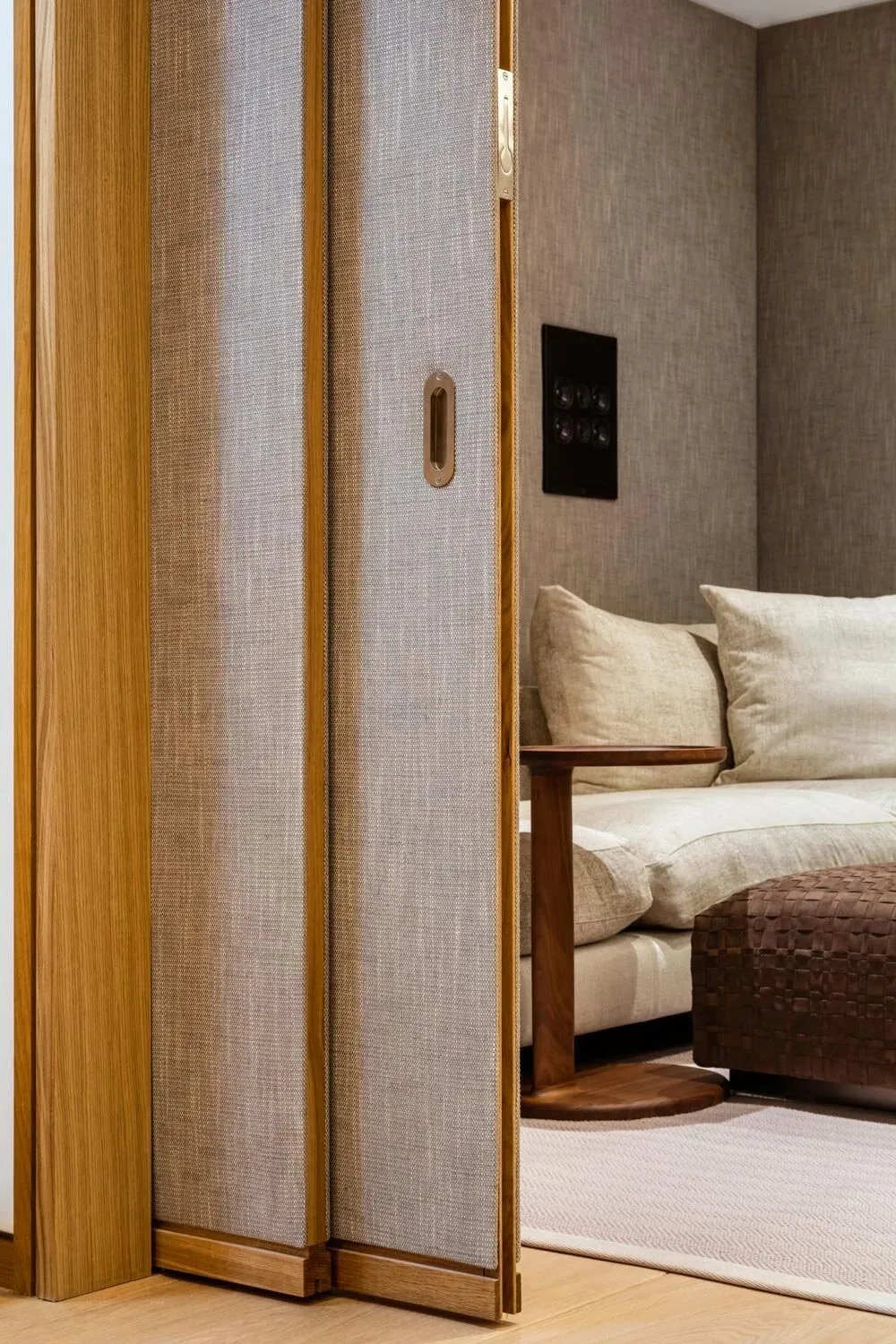
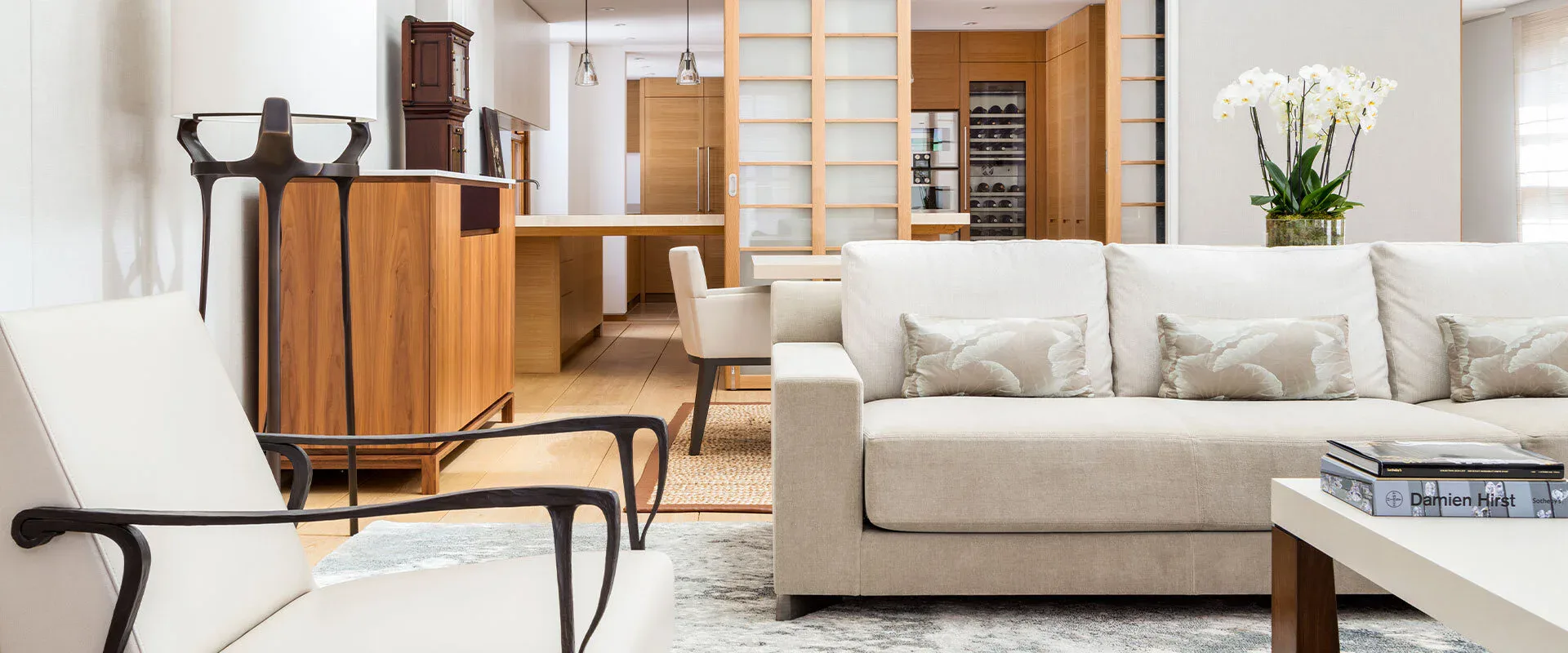
Our manufacturing partners produced the joinery and specialist loose furniture for this project, which included a light-filled kitchen fitted with Gaggenau appliances and a beautiful Avorio limestone worktop. The main cupboard units are made in European oak with a brushed open-grain finish, designed to complement the wide oak flooring. The wall units are painted with integrated recessed lighting, and a back-painted glass splashback. A Japanese inspired four-part sliding door system with Shoji paper inset panels laminated in glass. The doors slide right back into their pockets so that they become completely concealed. The sliding doors partition the kitchen and living space whilst maintaining a calm, clean and light feel. The living space features an elegant unit in American black walnut with an integrated TV rising mechanism.
The project demonstrates the studio's capacity to combine multiple joinery techniques within a single residential commission, from precision-engineered sliding pocket door systems to hand-finished cabinetry in contrasting hardwoods. All elements were produced in our partner workshops and installed as part of a closely coordinated fit-out, with the quality of each finish determined by the demands of a client brief that left no detail unresolved.
About Private Mews
Our manufacturing partners produced the joinery and specialist loose furniture for this project, which included a light-filled kitchen fitted with Gaggenau appliances and a beautiful Avorio limestone worktop. The main cupboard units are made in European oak with a brushed open-grain finish, designed to complement the wide oak flooring. The wall units are painted, with integrated recessed lighting and a back-painted glass splashback. A Japanese-inspired four-part sliding door system carries Shoji-paper inset panels laminated in glass; the doors slide right back into their pockets so that they become completely concealed. The sliding doors partition the kitchen and living space whilst maintaining a calm, clean and light feel. The living space features an elegant unit in American black walnut with an integrated TV rising mechanism.
The Shoji-paper sliding system is the technical centre of the joinery package. Traditional washi paper is fragile and not suited to a working London household; here the paper is laminated between two sheets of glass so that the look of the original Shoji is retained while the panel becomes wipeable, structurally stable and dimensionally consistent for a sliding rail. The four panels were set out so that they ran on a single concealed track and stacked into pocket recesses cut into the joinery on either side — the pocket faces dressed in the same brushed oak as the cupboards so the rail disappears completely when the doors are open.
The walnut TV unit in the living space hides an integrated rising mechanism behind a single flush front. Tolerances around the rising panel are particularly tight: the timber has to clear the steelwork on its travel but the gap, seen from a seated reading position, has to read as a deliberate shadow line rather than a clearance allowance. The carcase was prototyped at workshop, the mechanism cycled in test, and the front panel finished to match the surrounding grain before the unit was delivered as a single sealed assembly.
Project photography