Rattan is the stem of a climbing palm; cane is the outer bark of that same stem, stripped and woven, while wicker is not a material but the weaving technique used for any of them.
Press a thumb against a freshly set cane panel and it answers you — a small give, then a spring back, the open mesh breathing under your hand. There is a faint scent of dry grass and warm fibre, and when you tilt it to the light the weave throws a soft lattice of shadow across the bench. Rattan and cane are among the oldest decorative materials in furniture making, and they have returned firmly to the centre of contemporary luxury interiors. Woven into cabinet doors, set into chair backs, run as a textural panel across a headboard or a bar front, they bring warmth, lightness and a hand-made quality that no flat surface can match. The two words are often used interchangeably, but they are not the same thing, and the difference matters when specifying.
Rattan, cane and wicker: the difference
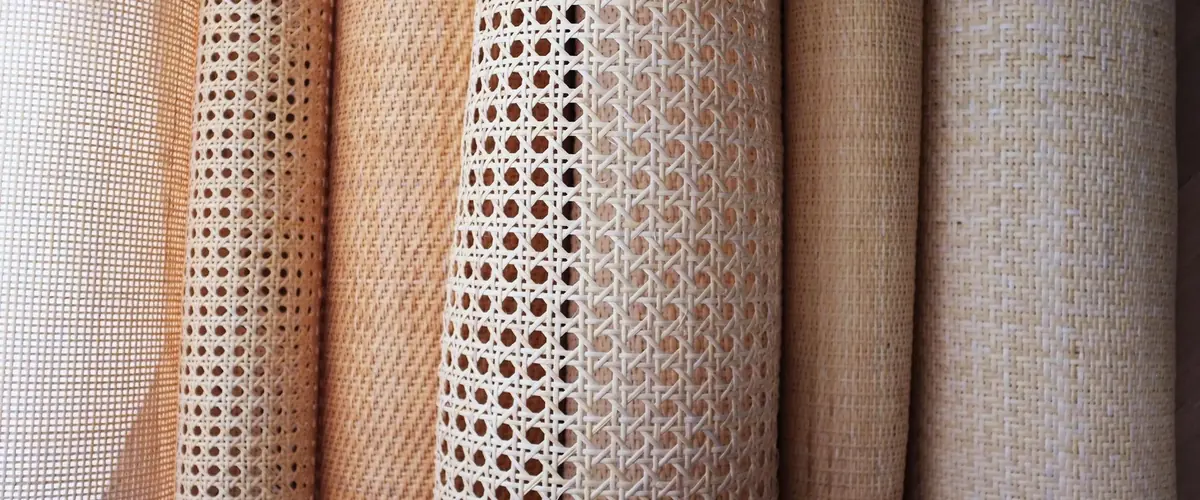
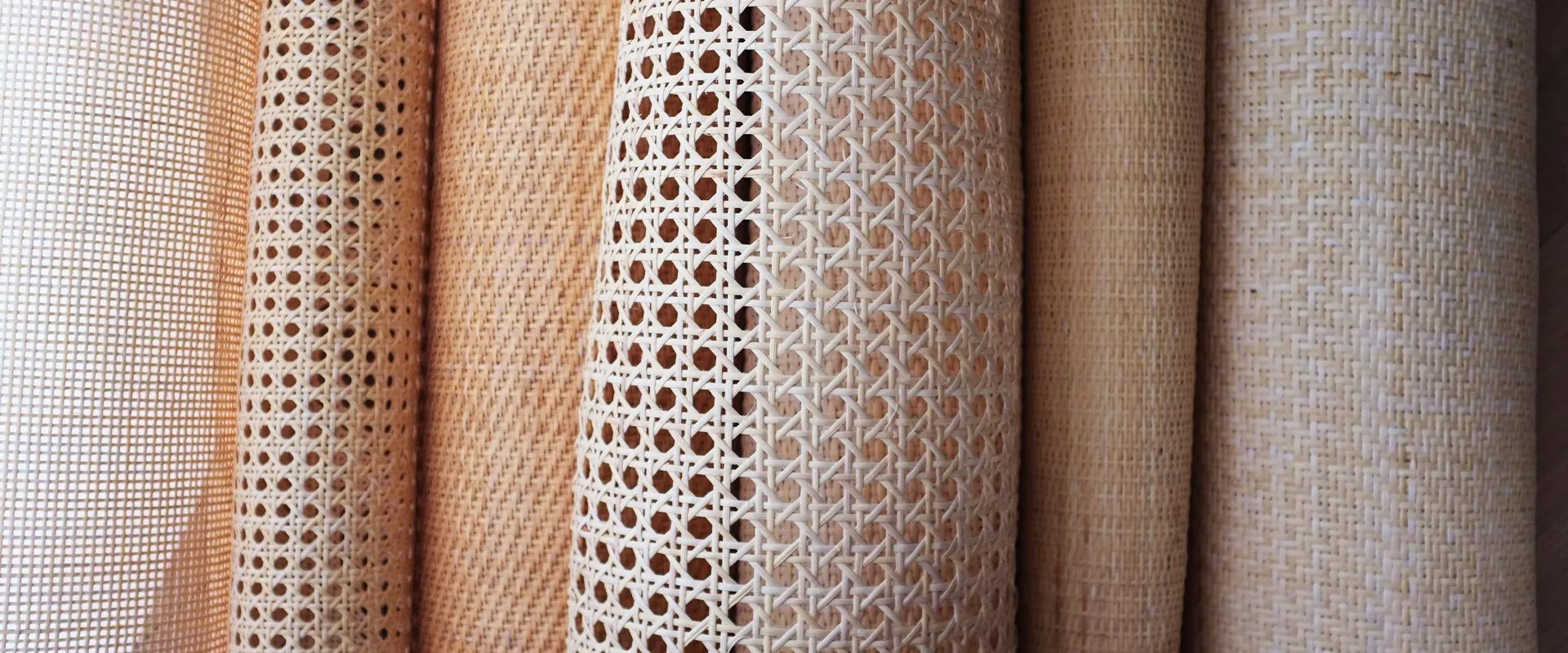
Rattan is the raw material: the stem of a climbing palm, solid (unlike hollow bamboo) and surprisingly strong, harvested in long poles that arrive smelling of the place they grew. Cane is the outer bark of that same stem, stripped into thin, glossy strips and woven — the fine, lustrous mesh seen in classic cane-backed chairs and the “cane webbing” sold in sheets. Wicker is not a material at all but a technique — the weaving method — which can be done in rattan, cane, willow or polymer. In bespoke furniture, the two forms we reach for most are woven cane webbing (the open, hexagonal mesh) and sheet rattan (denser, more closely woven panels), both set into a timber frame.
Where it is used
- Cabinet and wardrobe doors — cane webbing set into a timber door frame gives ventilation, lightness and texture; widely specified in casegoods and fitted wardrobes.
- Seating — cane-backed and cane-seated dining and occasional chairs, a classic that reads as both traditional and contemporary depending on the frame.
- Headboards and bed surrounds — woven panels bring warmth and acoustic softening to a bedroom wall.
- Bar fronts, screens and feature panels — larger woven runs used architecturally, where the play of light through an open weave is part of the design.
Natural vs polymer
Natural rattan and cane are beautiful but honest about their limits: they are sensitive to moisture and to direct heat, can dry and crack in a parched interior, and have no business beside a pool or out in the weather. For those settings — and for high-traffic hospitality where durability and cleaning matter — modern polymer rattan reproduces the weave and the colour convincingly while shrugging off moisture, UV and wear. The choice between the two is set by the location and the use: natural for dry, controlled residential interiors where the material's authenticity is the whole point; polymer where the setting would simply defeat the natural fibre.
Specifying rattan and cane
The decisions are the weave, the frame and the finish. Weave scale runs from a fine, formal cane mesh to a bold, open rattan pattern, and that choice sets the character of the piece more than any later decision. The timber frame around the weave is specified like any other joinery — species, finish, profile — and we produce the two together so the weave sits taut and clean within the frame, with no slack and no fight at the edges. There is a moment, when a freshly woven panel is wetted and then dries tight as a drum across its rebate, that tells us in seconds whether the frame was cut true; the cane is a quiet, exacting judge of the joinery behind it. Natural cane can be left in its honey tone or stained, then sealed appropriately for the interior. The material in full, including the weaves we hold, is set out on our rattan and cane page.
Rattan rarely travels alone. More often it is one voice in a piece that gathers woven panels alongside solid timber, veneer, metal or upholstery — coordinated as a single commission in our workshops rather than bought in as a finished component, so the weave belongs to the piece instead of sitting on it. That is the pleasure of it: a material as old as furniture itself, brought into a room and made to feel entirely of the present. The wider material palette is set out in our materials guide.