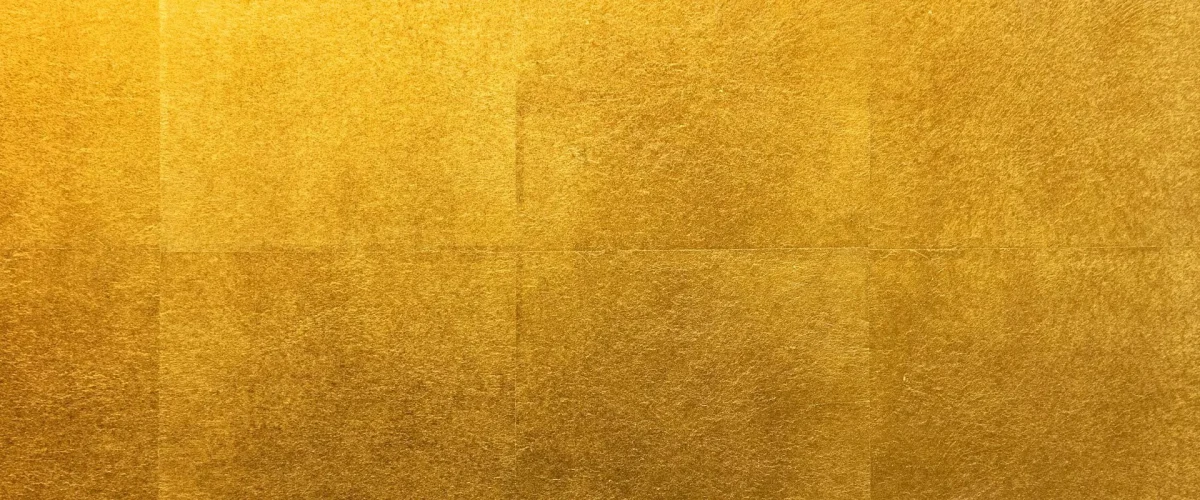
Cracked Gesso
Layer upon layer of gesso, finished with a controlled craquelure — a surface with the depth of lacquer and the patina of age
Gesso is a ground of chalk or gypsum bound in animal glue, applied in many thin coats and sanded between each. It has primed panels, frames and carvings since the Renaissance, valued for the smooth, slightly absorbent surface it gives. In cracked gesso work the ground is not hidden. The final layers are deliberately crazed, and the resulting craquelure becomes the decoration in its own right.
The crack is controlled, not accidental. It is governed by the recipe, the thickness of the layers and the rate of drying, then tinted, waxed, sealed or gilded so the network of fine lines reads as depth rather than damage. The finish can be left chalk-white, coloured through with pigment, or used as the ground for gold and silver leaf, where the cracks carry the metal like veins in stone. Every panel is unique. The pattern of the crack is the signature of the making.
Cracked gesso for a panel or a whole wall?
Tell us about the surface and the scheme.
Where cracked gesso is used.
A finish that rewards proximity — flat enough to live with, detailed enough to draw the hand. It pairs naturally with gilding and lacquer.
- Decorative wall panels and overmantels
- Cabinet and wardrobe door fronts
- Table tops and console surfaces
- Headboard panels and bed surrounds
- Gilded and tinted feature panels
- Framed artworks and decorative objects
How the finish is built
A cracked gesso panel begins with a stable substrate, usually a timber or MDF panel that has been sized and sealed so it will not move under the ground. Successive coats of gesso are brushed on and allowed to set, with sanding between coats to build a level body. The crackle is induced in the upper layers: a flexible coat is worked over a more brittle one, or a top layer is dried at a rate that draws it into a controlled craquelure as it shrinks.
The scale of the crack is a choice. A fine, close network suits large flat areas such as doors and tops, where the eye reads it as texture. A wider, more open net reads as pattern and works well on a single panel or a framed insert. Once the crack has formed and cured, the surface is consolidated so the raised edges of each fragment are stable to the touch.
Tints, gilding and sheen.
The cracked ground accepts a wide range of finishes. The choice sets the character of the surface, from quiet and chalky to reflective and gilded.
- Chalk-white, left close to the natural gesso ground
- Pigmented and tinted, with colour worked into and over the cracks
- Gold, silver or palladium leaf laid over the crazed surface
- Antiqued, where a darker glaze is rubbed into the crack lines
- Waxed for a soft, low sheen, or sealed for a deeper, harder finish
- Tonal schemes matched to a wider palette across a room
Sealing and durability
Gesso on its own is porous and soft, so the sealing stage matters. After tinting or gilding, the surface is sealed with wax, shellac or a clear lacquer, depending on the look and the demands of the location. A wax finish keeps the matt, chalky quality and is suited to vertical surfaces that are touched rather than worked on. A lacquer seal gives a harder, more wipeable surface for tops and doors that see daily use.
Cracked gesso is a decorative finish rather than a structural one. It is best specified for surfaces that are seen and lightly handled rather than subjected to heavy wear, standing water or direct heat. With the right seal it is stable, and the craquelure is set and consolidated so it will not continue to move. The finish belongs indoors, in controlled interior conditions, away from prolonged damp.
Care and questions
Day to day, a cracked gesso surface needs little more than dusting with a soft dry cloth. For sealed finishes, an occasional wipe with a barely damp cloth is enough, working with the surface and drying it straight away. Avoid solvents, abrasive cleaners and standing water, all of which can lift a tinted or waxed finish. Waxed surfaces can be refreshed in place by a maker, and small chips can usually be made good and re-leafed or re-tinted to match.
Will the cracks keep spreading over time?
No. The craquelure is induced and then cured and consolidated during making, so the pattern is fixed before the surface is sealed. It is a finished effect, not ongoing movement.
Can the crack pattern and colour be matched to a scheme?
Yes. The scale of the crack, the base colour, the glaze and any gilding are all set during sampling, so the finish can be tuned to a specific palette. We work to a sample sign-off before any panels are made.
How do we work with it?
Cracked gesso is made to order through our workshop network, applied to panels, door fronts and surfaces sized for a given piece or interior. Our makers prepare samples for the crack scale, colour and finish, then build the panels to suit the joinery or furniture they belong to. It integrates readily with gilding and lacquer, and can be combined with inlay or framing where a scheme calls for it.
Read more
Have a scheme that calls for
a surface without equal?
Need samples? Get in touch and tell us about your project.