Lots Road
Power Station
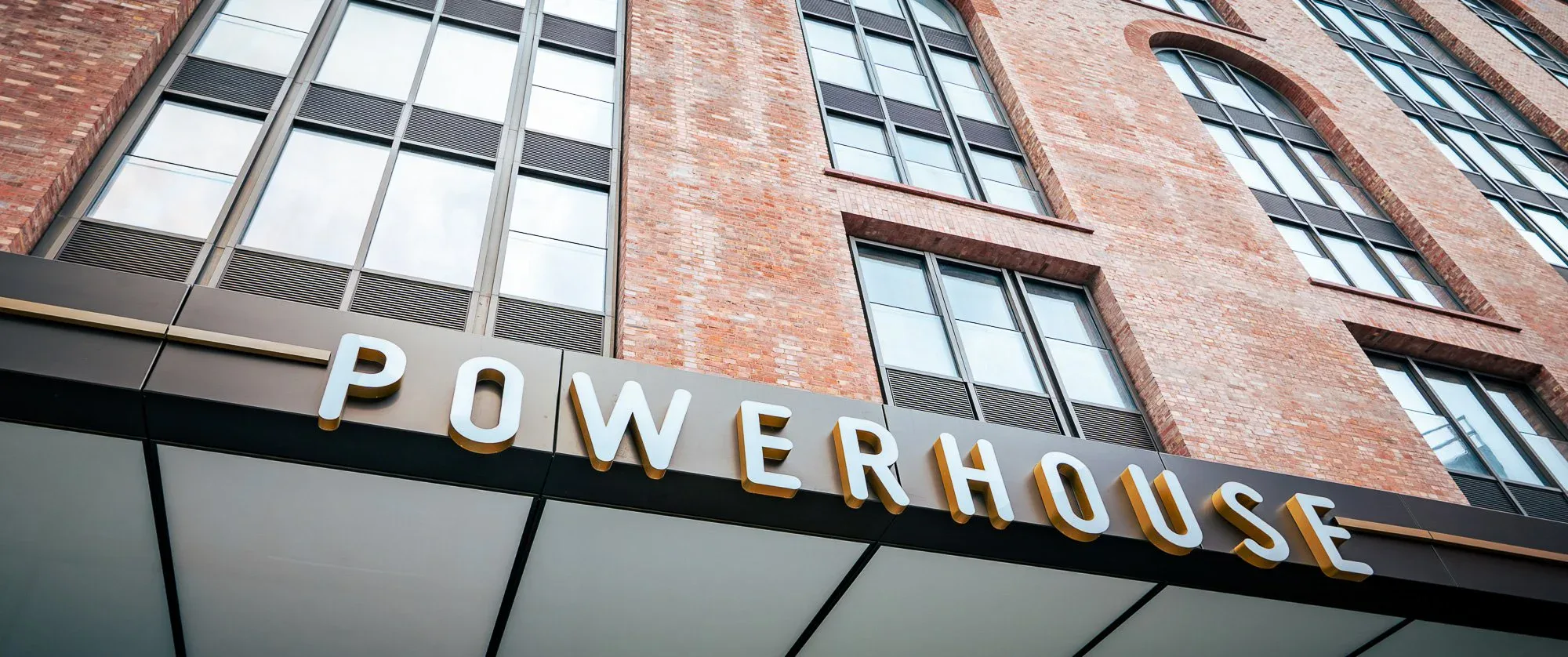
The Powerhouse — Chelsea Waterfront
A landmark reborn
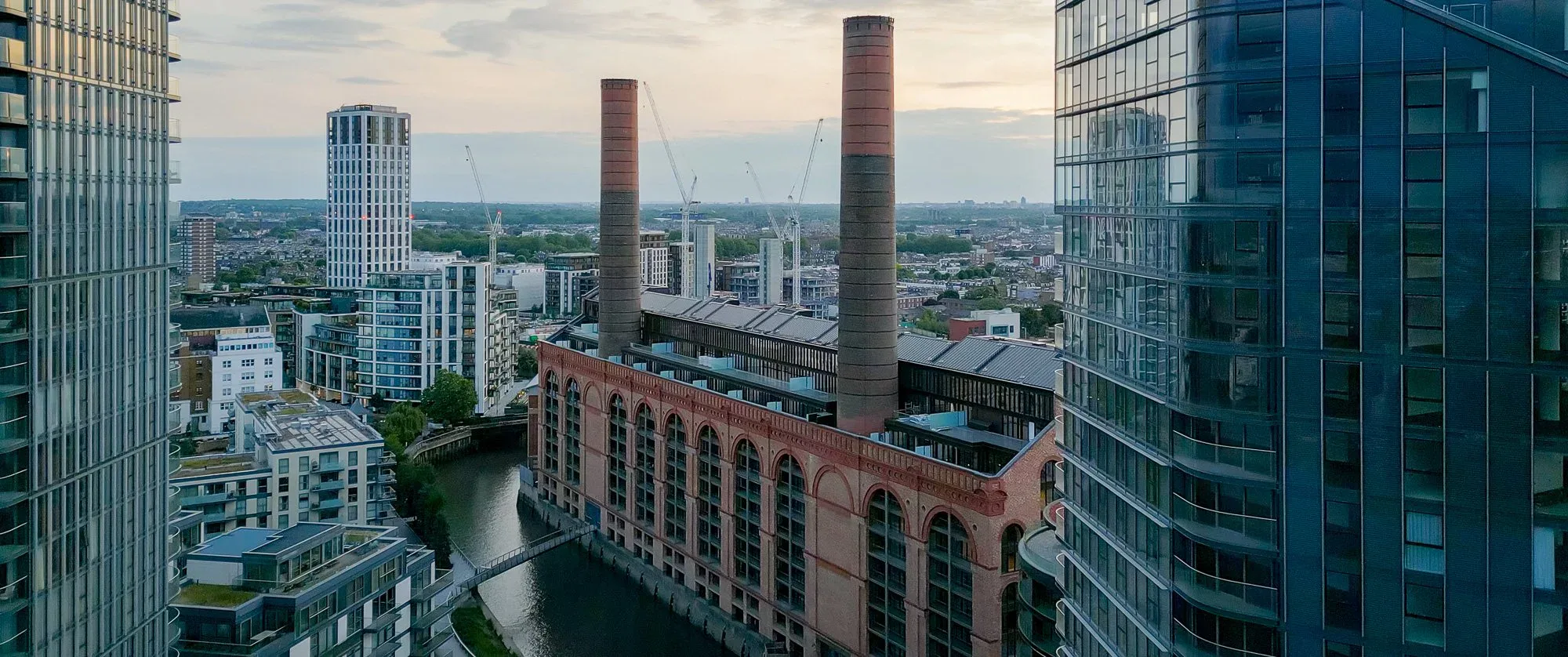
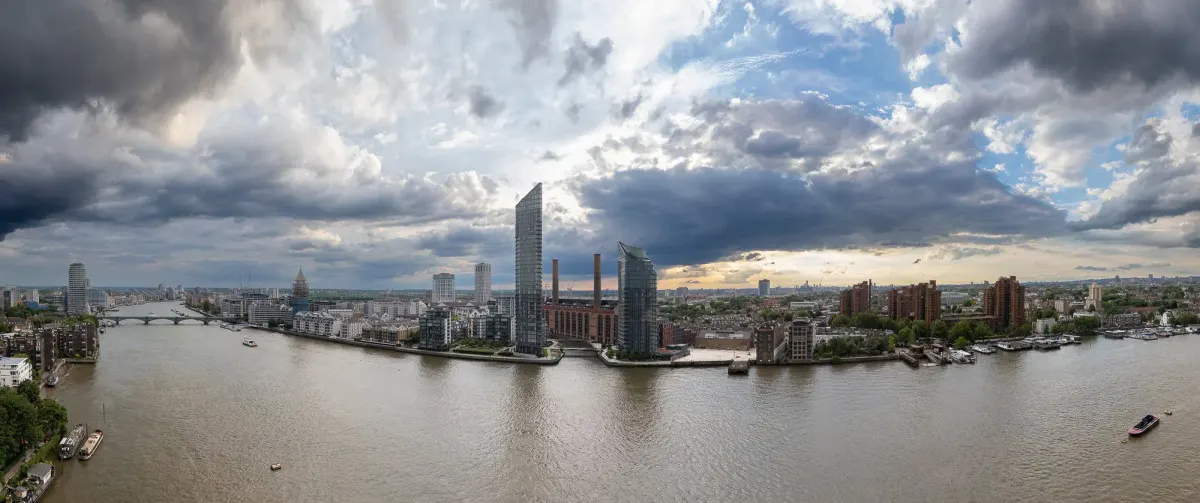
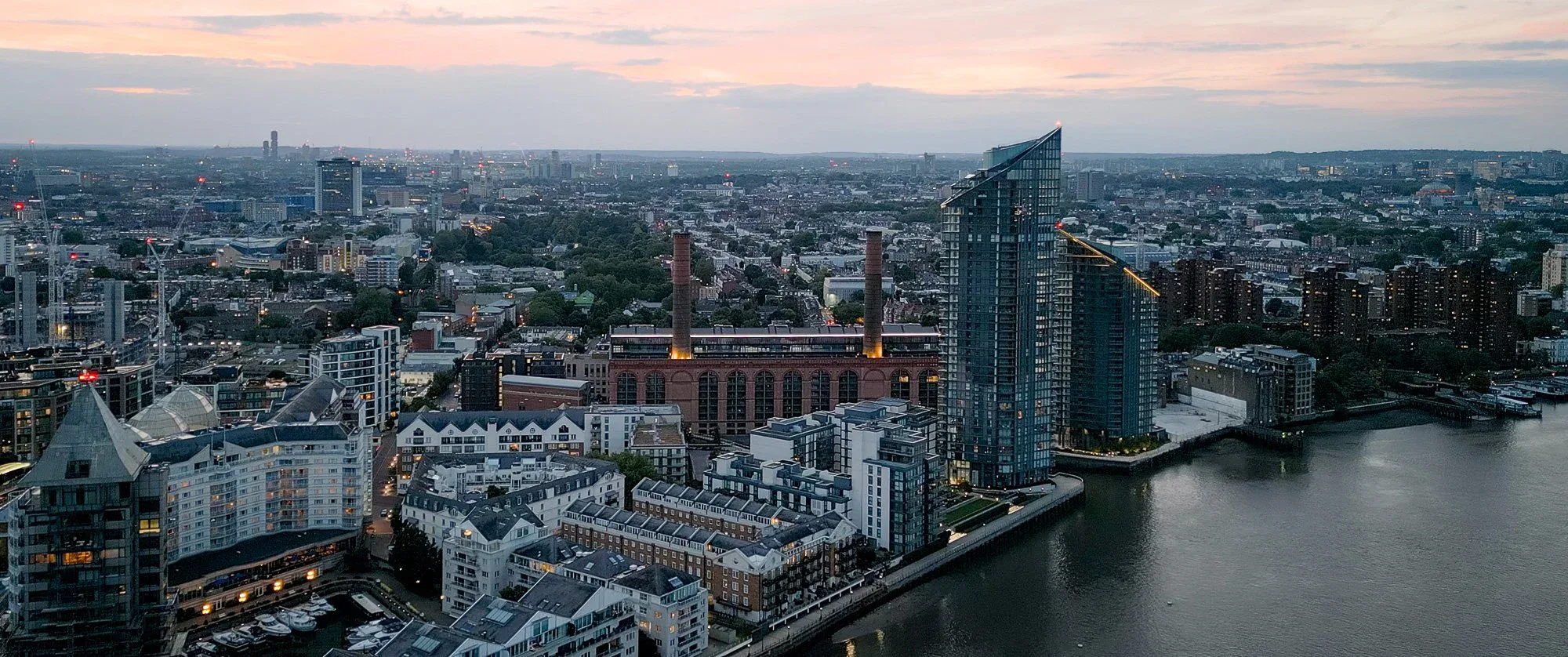
Lots Road Power Station has been transformed into the Powerhouse, the anchor building of Chelsea Waterfront — one of west London's most significant residential and cultural developments. Once a working power station that supplied the Underground network, the Grade II-listed structure now houses 260 luxury apartments alongside amenities that reflect the scale and ambition of the original building.
Make Bespoke Studio supplied bespoke furniture and joinery for interiors designed by Fiona Barratt Interiors, contributing to the Powerhouse's show apartments and residential spaces. The project demanded furniture capable of holding its own within architecture of genuine historic weight.
Built to power a city
Commissioned at the turn of the twentieth century, Lots Road Power Station opened in February 1905. Designed by engineer James Russell Chapman, it was conceived to power the newly expanding Underground network and represented a feat of industrial ambition on an extraordinary scale.
Measuring 453 feet by 275 feet, the station predated Battersea Power Station by 39 years. Its four distinctive chimneys became landmarks of the Chelsea riverfront, visible across a significant stretch of the Thames. At the time of construction, Lots Road was claimed to be the largest power station ever built. The scale of the undertaking was matched by its consumption: at peak operation, the station burned through over 700 tonnes of coal daily.
Construction began in 1902 and was completed in December 1904, with the station opening the following February. Coal was supplied by barge from a specially constructed tidal basin at Chelsea Creek, and from the adjacent West London Railway — a supply chain built to sustain an operation of extraordinary industrial scale.
Architecture with civic presence
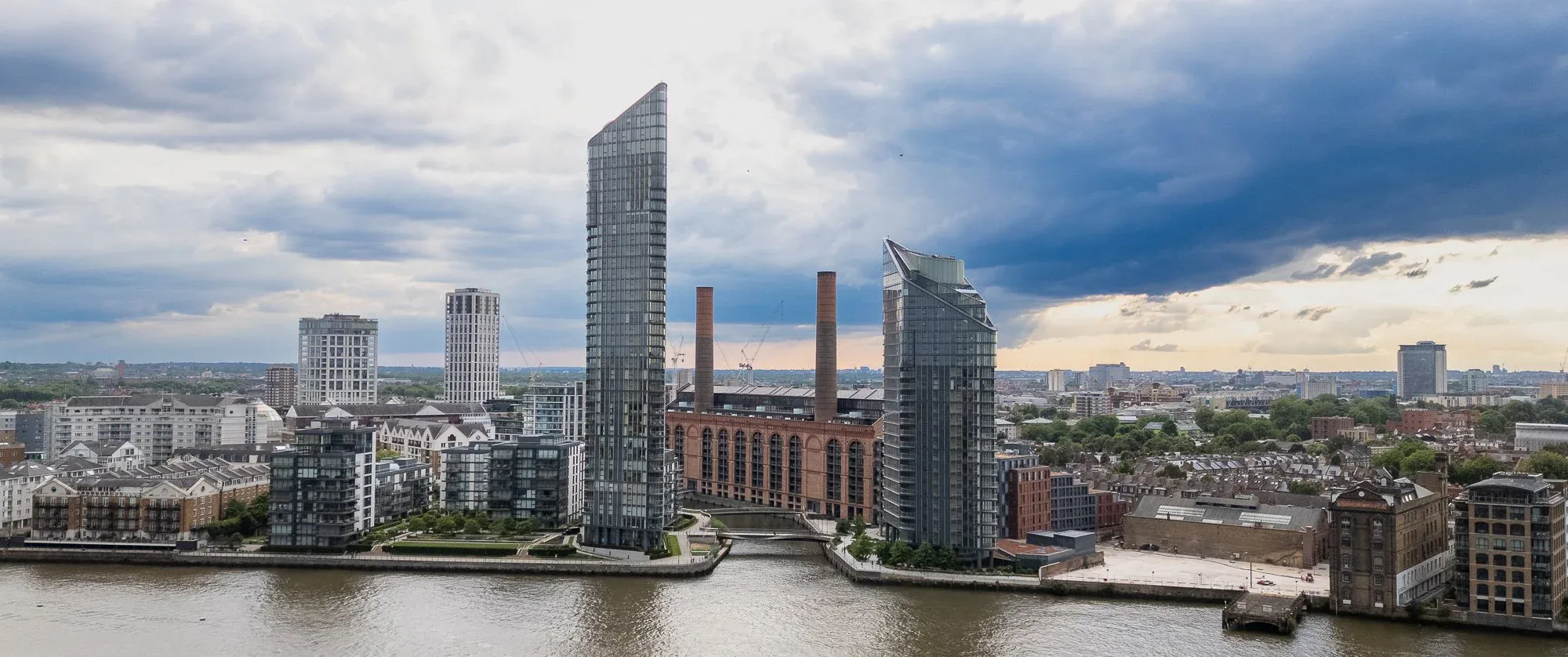
The architecture drew on Romanesque and Gothic Revival references, combining industrial utility with civic presence. The brick construction and ornate detailing gave the station a character that distinguished it from purely functional industrial buildings of the period. It was, in every sense, a structure built to impress as well as to perform.
For much of the twentieth century, the station ran continuously, providing power to the London Underground. Between 1974 and 1975 it also temporarily housed LBC and Capital Radio, adding a layer of cultural history to its industrial legacy before the broadcasters relocated.
Modernisation and closure
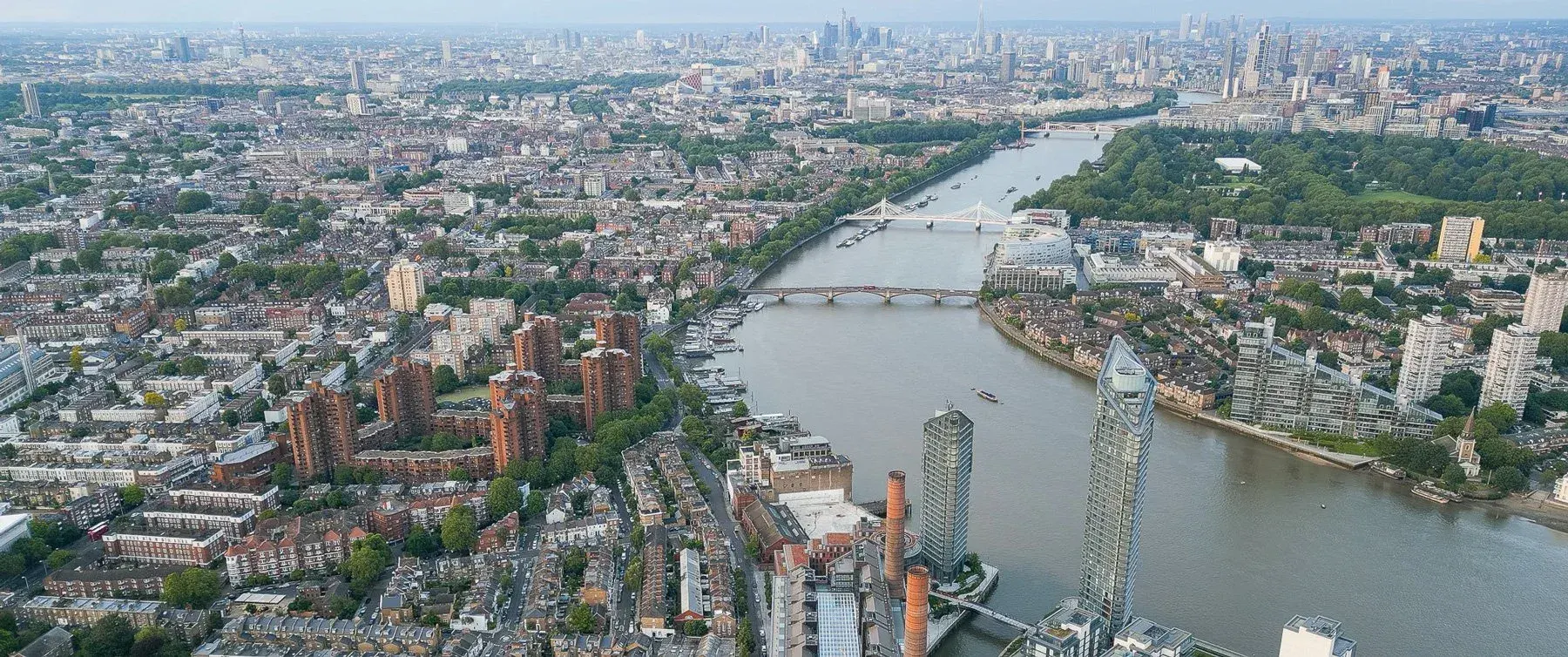
The mid-twentieth century brought significant changes to Lots Road. The station underwent a series of modernisations, including a switch from coal to heavy fuel oil and later to natural gas. The original four 275-foot chimney stacks above the boiler house were reduced to three in the 1960s and two in the 1970s, when the station ran on gas owing to rocketing oil prices.
Despite these upgrades, the station ceased electricity generation in 2002, ending nearly a century of continuous operation. The closure was attributed to high operating costs and the shift towards more sustainable energy sources — and left one of London's most architecturally significant industrial buildings without a purpose.
Protecting a landmark
Following its closure, the Lots Road Power Station faced the threat of demolition. Its historical significance and architectural character spurred efforts to preserve the structure. Preservationists and heritage groups rallied to protect the station, recognising its value as a tangible link to London's industrial past.
In 1999, London Transport sold the power station site to Circadian for £34 million. Circadian planned to convert the power station into shops, restaurants and apartments, and to construct additional buildings — including two skyscrapers — on the adjacent vacant land. Those plans were not ultimately realised, but they marked the beginning of a sustained effort to find a contemporary use worthy of the building's scale and history.
A New Dawn — Chelsea Waterfront
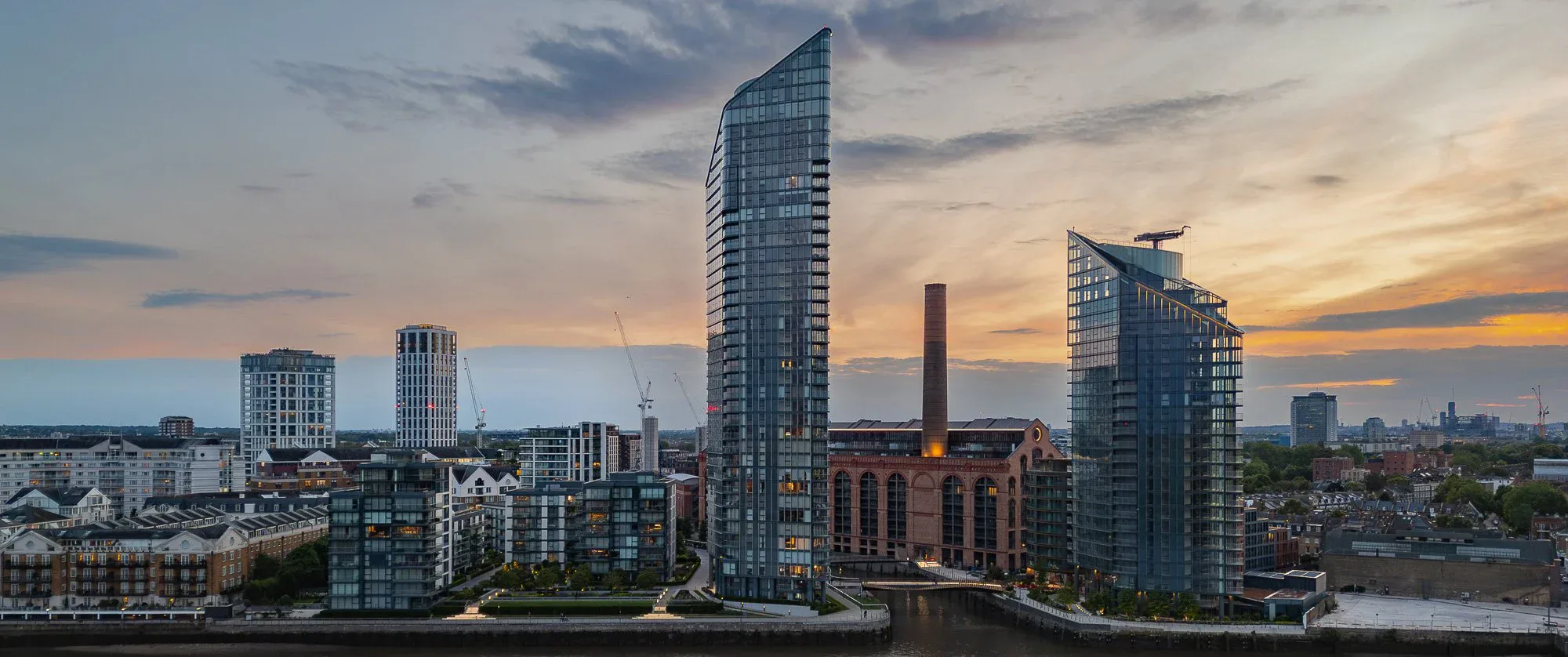
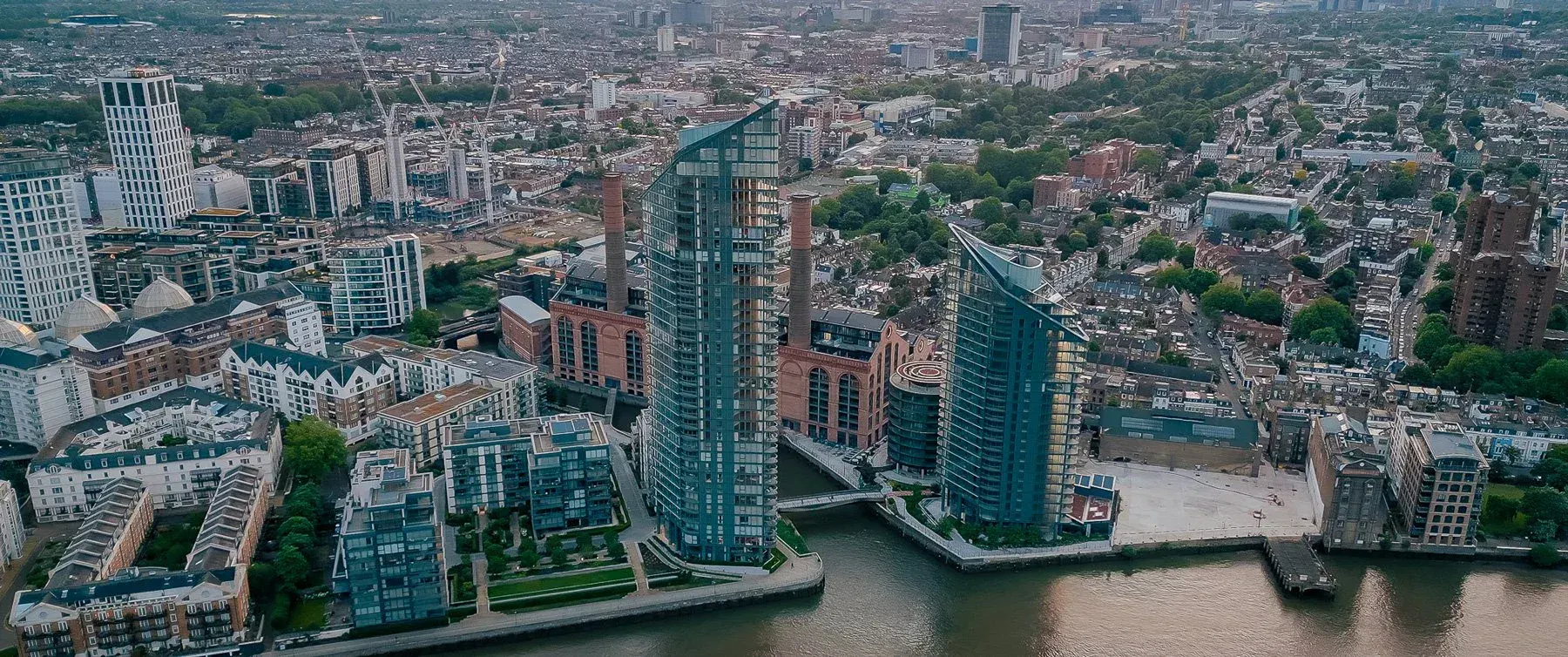
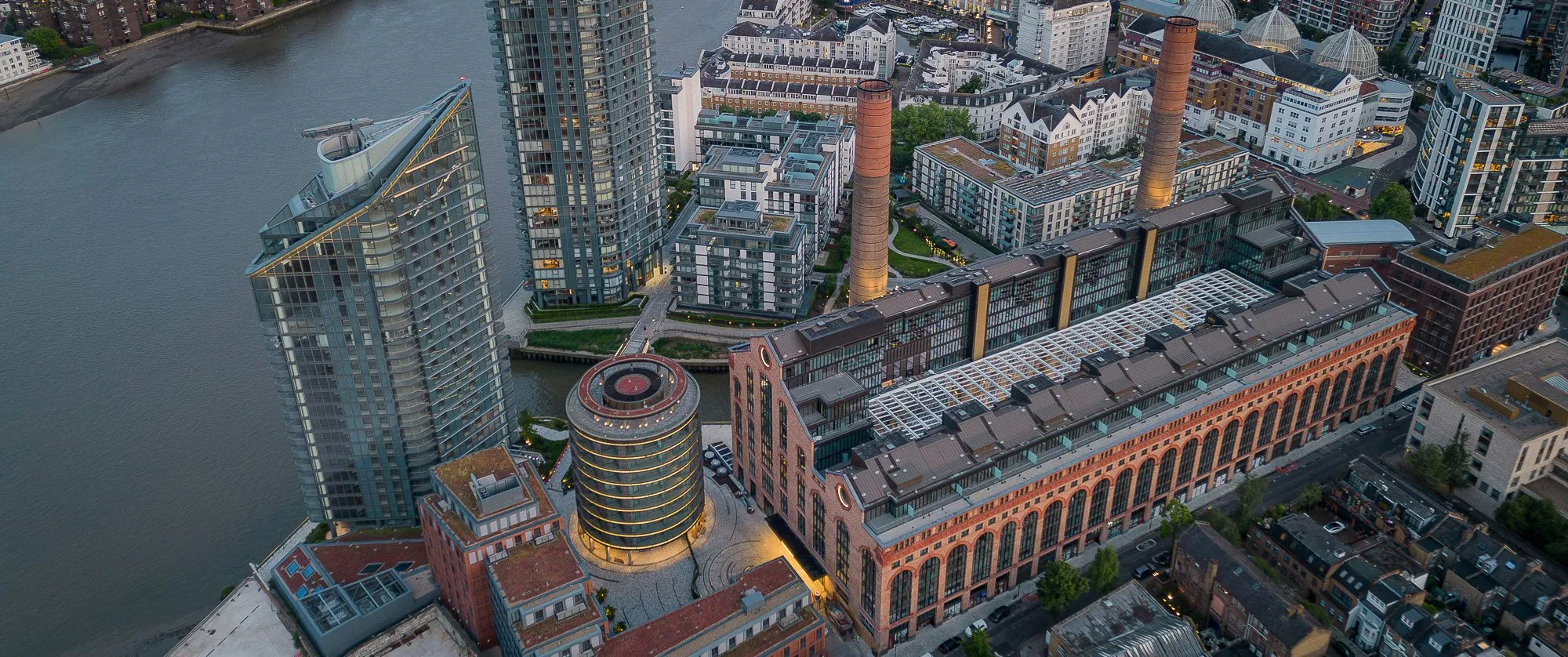
Hutchison Property Group acquired the site and appointed Terry Farrell as masterplan architect, with Formation Architects responsible for the residential towers. The landscape design was led by Randle Siddeley. The result is Chelsea Waterfront: a mixed-use development that preserves the historic power station envelope while introducing contemporary residential towers set back from the listed façades.
The Powerhouse itself contains 260 luxury apartments across one to four-bedroom configurations. Amenities include a 20-metre swimming pool, health and fitness centre, spa, 24-hour concierge and Club Lounge — all scaled to complement a building of this size and heritage. The development sits within the Chelsea Design Quarter, adjacent to the Design Centre at Chelsea Harbour.
Preserving the original, introducing the new
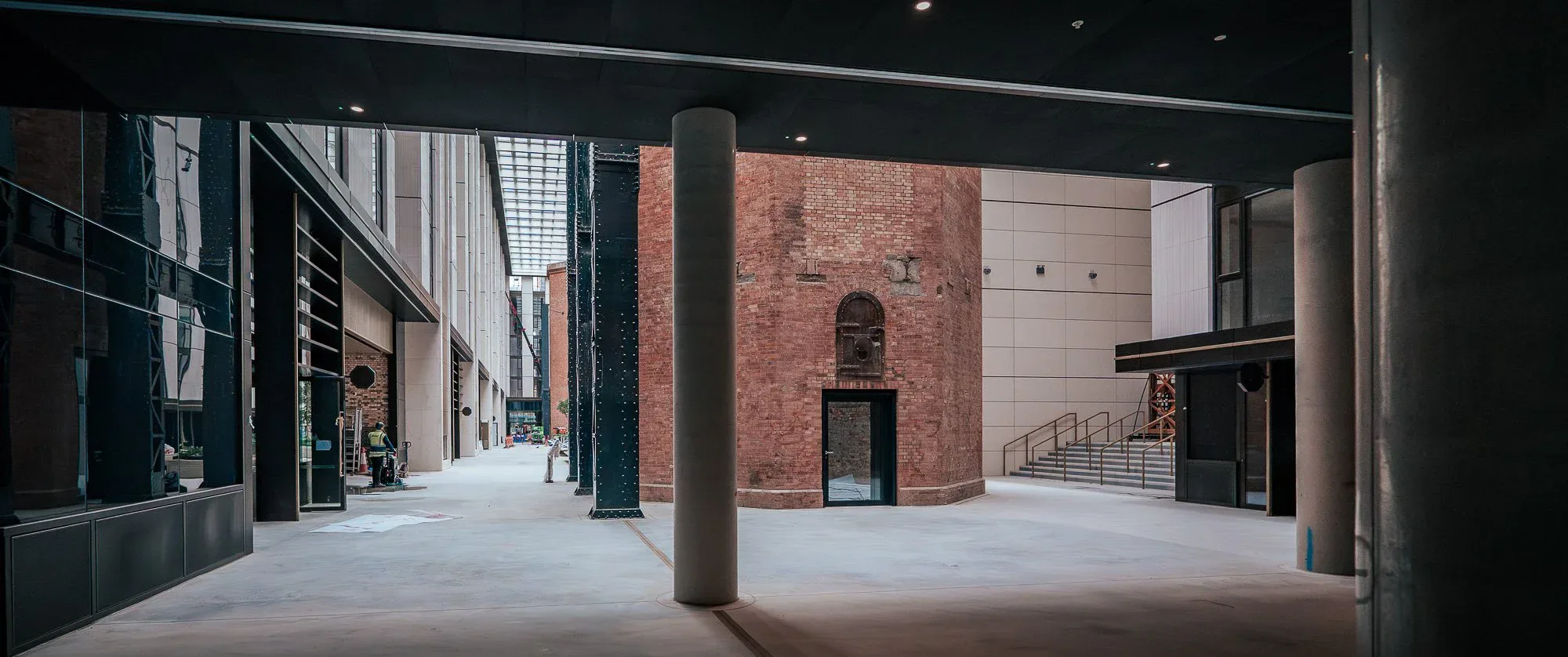
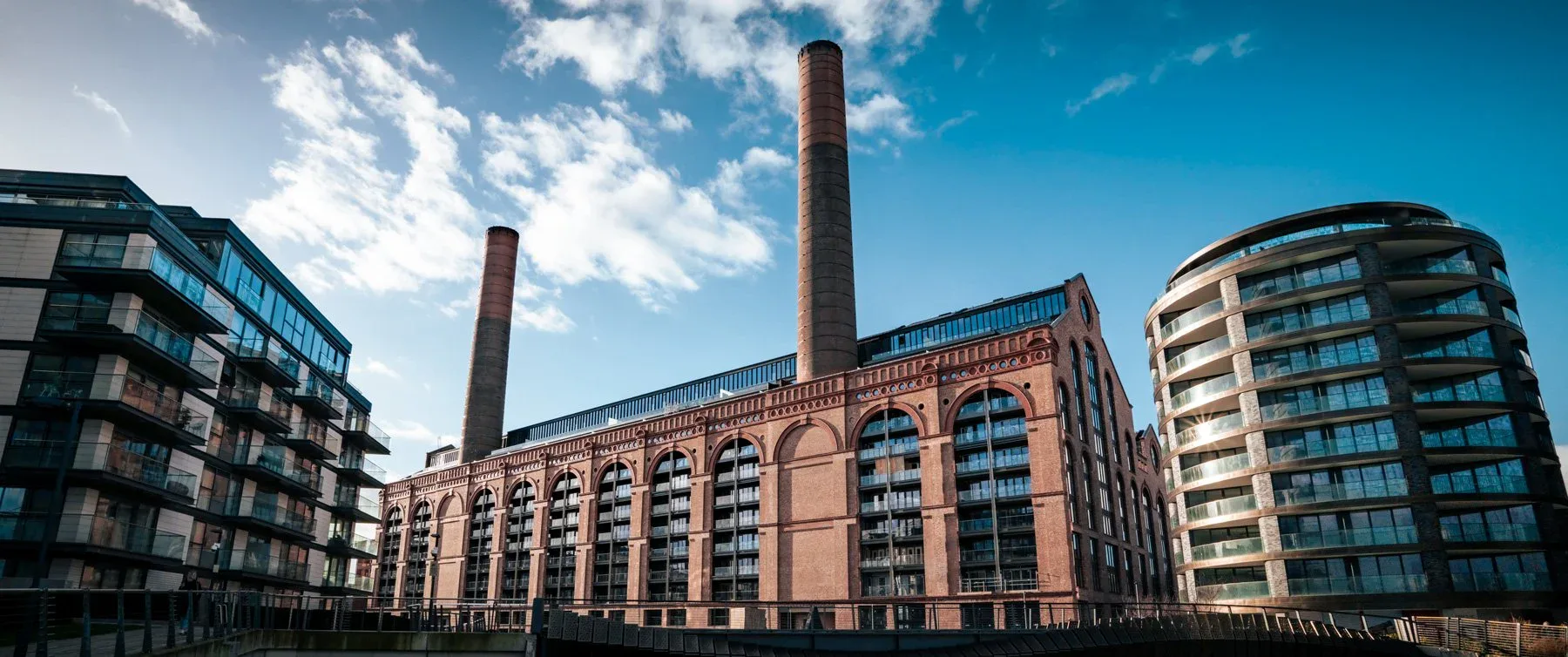
The redevelopment of Lots Road Power Station into Chelsea Waterfront is a masterclass in adaptive reuse. The project preserves the original structure of the power station — its distinctive brick walls and remaining chimneys — while introducing modern glass residential towers set back from the listed façades.
The residential buildings, designed by Formation Architects, feature luxurious apartments with private balconies offering views of the Thames. The result is an architectural composition that holds the scale and character of the historic building while providing a thoroughly contemporary living environment.
Heritage and environment
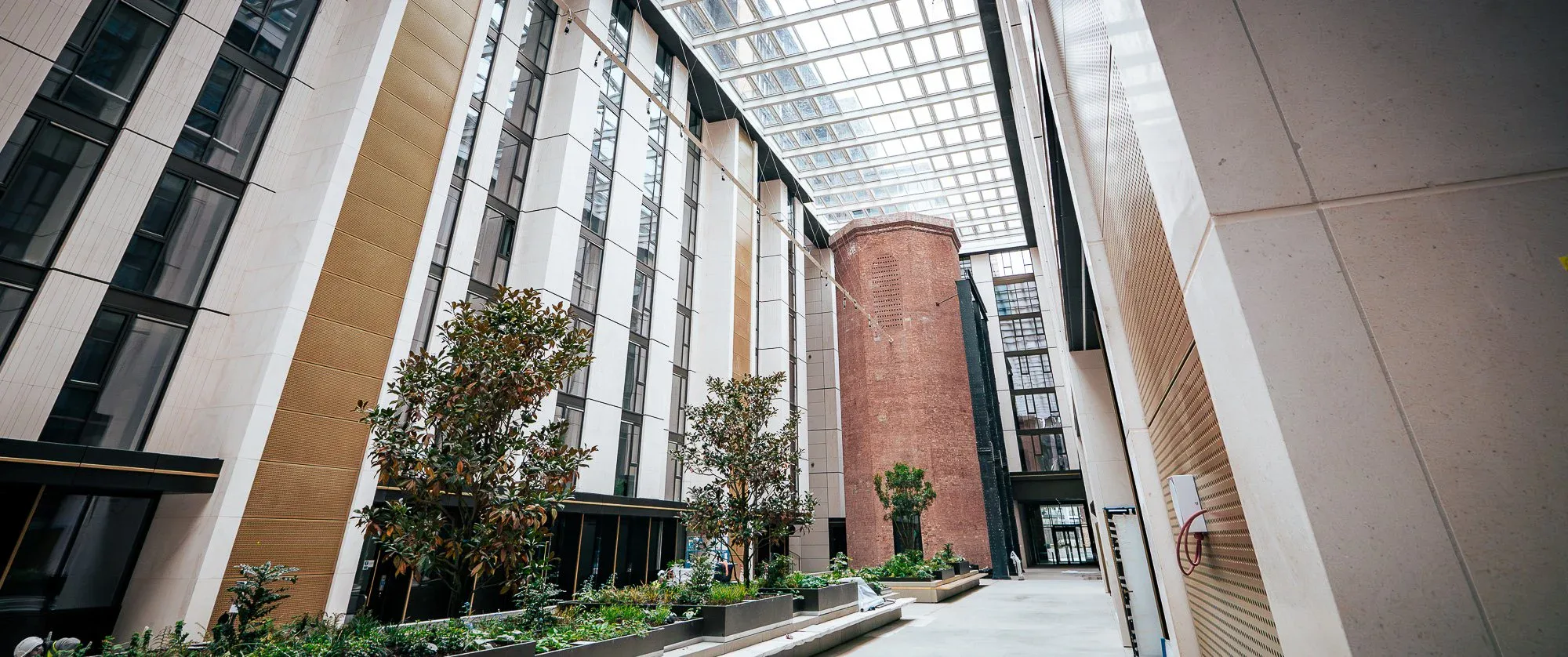
Sustainability is central to the Chelsea Waterfront development. The integration of eco-friendly technologies ensures a reduced carbon footprint, aligning with modern environmental standards. The development also includes beautifully landscaped gardens and water features, designed by world-renowned landscape architects Randle Siddeley, creating a serene environment for residents.
The decision to retain and restore the existing structure — rather than demolish and rebuild — is itself the most significant sustainable act. Embodied carbon in the original Victorian brickwork and steel is preserved, and the development demonstrates that heritage buildings can meet the expectations of twenty-first century luxury living.
Luxury apartments, world-class facilities
Powerhouse Chelsea offers a range of apartment sizes, from one-bedroom units to expansive four-bedroom penthouses. Each unit is designed to blend historical charm with contemporary elegance — high-quality materials, custom-made furnishings, and state-of-the-art appliances throughout.
Residents have access to a 20-metre swimming pool, a health and fitness centre, a luxurious spa, and a 24-hour concierge service. The Club Lounge offers a sophisticated space for socialising and relaxation. Beyond the residential offering, Chelsea Waterfront includes high-end restaurants, boutique shops, and landscaped riverside gardens with ample space along the riverbank.
The Powerhouse Interiors
Fiona Barratt Interiors was appointed to design the show apartments and public areas. Signature designs include sophisticated sofas, elegant tables, and beautifully crafted cabinetry that integrate with the historical features of the power station. The Powerhouse Chelsea also features a striking lighting installation designed by Fiona Barratt that mirrors the iconic chimneys of the historic building — a large-scale design that pays homage to the industrial heritage while creating a dramatic visual centrepiece.
The three-bedroom lateral show apartment was designed by Morpheus, featuring high-quality materials, custom-made furnishings, and state-of-the-art appliances. Morpheus's attention to detail highlights the unique architectural features of the power station, creating stylish and inviting spaces that offer inspiration for personalising each apartment.
Working within a listed building introduces constraints that can only be resolved through close collaboration between designer and maker. The interior design references the building's industrial heritage without pastiche: materials are robust, proportions are generous, and the craftsmanship is precise — the kind of relationship Make Bespoke Studio is built around.
Chelsea's vibrant atmosphere
Situated in the heart of the Chelsea Design Quarter, Lots Road Power Station enjoys proximity to a vibrant hub of creativity and innovation. The area is renowned for its influential boutiques, luxury concept stores, and design studios, making it a magnet for interior designers and art enthusiasts.
Just a short distance away is the Design Centre Chelsea Harbour, a premier destination for high-end interior design. This world-class facility houses an array of showrooms and galleries, offering a diverse selection of design inspirations and products — a direct neighbour to one of London's most distinguished new residential addresses.
The area's history stretches back further still. Cremorne Gardens, established in the mid-nineteenth century as a public pleasure garden, once provided Londoners with concerts, theatrical performances, firework displays, and the marvel of hot air balloon ascents. Its storied reputation — both celebrated and notorious — and eventual closure in 1877 is woven into the fabric of this stretch of the Chelsea riverfront.
The Lots Road Pub, a beloved Chelsea institution, has served this corner of London since the early twentieth century. Originally known as "The Balloon" — a name harking back to the era of ballooning that gave Cremorne Gardens its drama — it served the workers of the nearby power station before evolving, as the neighbourhood did, through successive iterations into the community anchor it is today.
Preserving the past, embracing the future
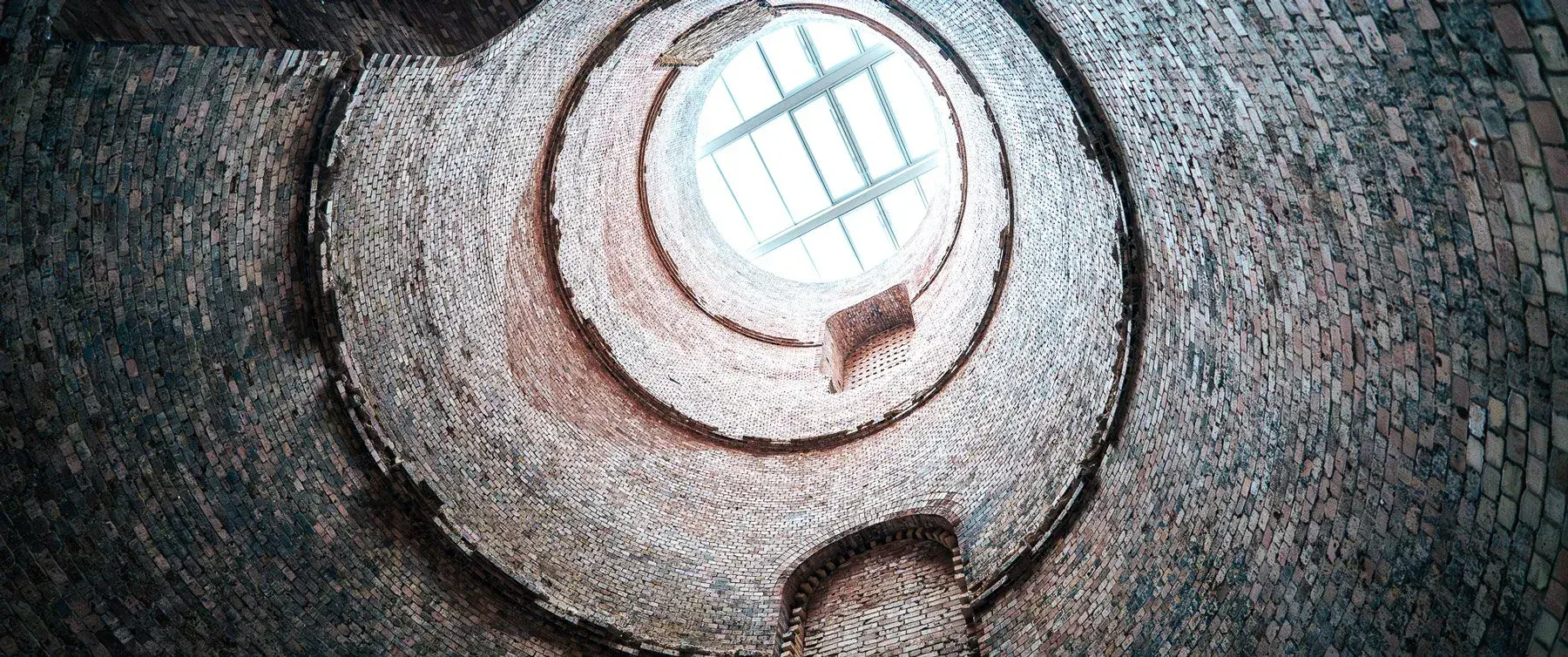
The redevelopment of Lots Road Power Station is a celebration of London's industrial heritage. The project meticulously preserves the original structure — the historic brick walls, the remaining chimneys, the scale of the interiors — ensuring that the building's historical significance is retained even as it is repurposed for contemporary living.
The glass residential towers and world-class amenities embody the best of twenty-first century high-end development. The transformed power station now stands as an iconic marker on the Chelsea riverfront — its twin-turreted powerhouse preserved and modernised, a beacon of the area's evolution from industrial hub to centre of luxury and culture.
A landmark for the twenty-first century
The primary contemporary use of the Lots Road Power Station is as a residential complex. Powerhouse Chelsea's 260 luxury apartments offer a living experience that combines historical charm with modern amenities — set to attract discerning buyers from around the world, including those seeking a prime London investment in one of the city's most distinctive new addresses.
The development also includes a range of commercial opportunities: boutique shops, high-end restaurants, and recreational facilities that make Chelsea Waterfront a vibrant community hub. With its mix of residential, commercial, and recreational spaces, the development is poised to become a cultural and leisure destination in its own right — where architecture, history, and contemporary living converge.
Local impact, long-term legacy
The success of the Chelsea Waterfront development is rooted in community engagement. The project involved local residents and stakeholders throughout the planning process, ensuring the development meets the needs and aspirations of the area. This collaborative approach has built a sense of ownership and pride that extends beyond the immediate residents.
The redevelopment has provided a significant economic boost to the area. New jobs were created both during construction and in the ongoing operation of the commercial spaces, contributing to the local economy. The influx of residents and visitors has spurred growth in neighbouring businesses — and the preservation of Lots Road Power Station ensures that the area's industrial identity remains a living part of Chelsea's story.
The Powerhouse — in pictures